





“We design and certify buildings for a single, specific moment in their life cycle rather than for their entire trajectory, which changes over time and is subject to many influences. Meanwhile, we should think about a building throughout its entire life cycle: from construction, through use, all the way to its ‘death’—demolition, reconstruction, or adaptation. This means we must design not only for its existence but also for its re-existence,” — says Marta Promińska.
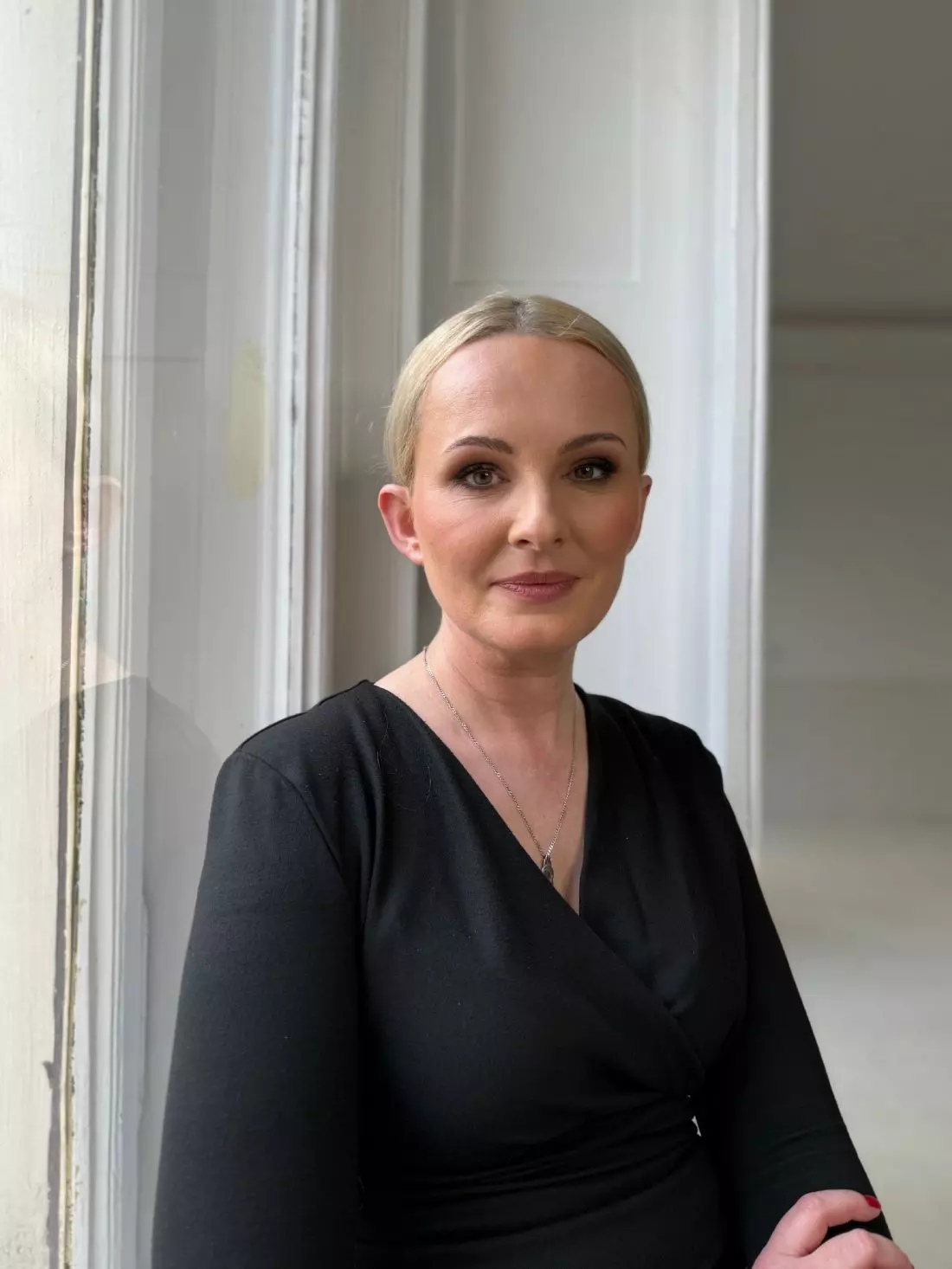
Marta PROMIŃSKA — Director of Sustainable Development at Strabag, Representative of the SARP Executive Board for the Environment and Climate Protection. Architect, urban planner, certified LEED O+M assessor. Graduate of the Kraków University of Technology. In 2020, she earned her Ph.D. from the Silesian University of Technology. Author of numerous scientific publications, including the books *Healthy Urban Planning: A New Standard for Spatial Planning* and *Healthy Architecture: A New Standard for Sustainable Design*. Expert and member of the Working Group on the Application of the EU Taxonomy at the Ministry of Development and Technology, as well as the IWBI advisory team within the WELL Materials Concept Advisory (2026). Member of the Polish Association for Green Building.
Ola Kloc: It seems that the “eco” trend has passed; we’re beginning to realize that this prefix guarantees nothing. In your opinion , where do we stand today in terms of understanding what ecology actually is?
Marta Promińska: At this point, the “eco” prefix and the term “ecology” guarantee us one thing: accusations of greenwashing. In recent years, we’ve observed a dynamic—and for many market participants, difficult to grasp—evolution of concepts: “ecology” has been absorbed by “sustainable development,” which in turn has been reduced to the acronym “ESG.”
The problem is that, over time, each of these terms has come to function as an empty declaration—as language that isn’t always backed by real action or measurable value. Meanwhile, the essence of sustainable development remains as crucial as ever: it is not a slogan, but a real direction for transformation that should translate into concrete design, investment, and operational decisions.
Today, we are at the cusp of another shift—we are beginning to talk about a building’s actual operational capacity. And perhaps that is precisely why it is worth looking at sustainable architecture in a completely new way.
Ola Kloc: What do you mean?
Marta Promińska: Not as a static structure, but as a dynamic environmental and socio-economic system that functions over time and is subject to constant pressure to change. We’re familiar with these concepts; after all, sustainable development has always been based on the relationship between the environment, society, and the economy. Today, however, we must add yet another dimension—time and the constant pressure for change associated with it—not only in terms of climate but also in terms of regulations.
Furthermore, we must finally realize that buildings are a vehicle for public health, as they shape users’ exposure to factors such as air quality, access to light, materials, and the chemicals they contain, and also influence long-term well-being. At the same time, a building is an asset that must remain resilient to climate change, changes in function, regulatory pressure, and resource constraints. It should retain its usability, safety—a key element—and value, despite growing and increasingly complex uncertainties.
A key element in understanding what sustainable development truly is becomes the design and incorporation into the architecture of a “scenario buffer” for the building—that is, the deliberate introduction of technical, spatial, functional, or operational flexibility, which means the building’s ability to adapt — to heat waves, floods, droughts, or deteriorating air quality—throughout its entire life cycle. The approach to existing resources is also changing: we are no longer talking only about efficiency—such as energy efficiency—but also about circularity, extending the lifespan of components, and designing for disassembly and reuse. All these elements must be based on measurable environmental, health, and economic criteria. Sustainable development is shifting from thinking in technical terms of energy, water, and air to thinking about health, resilience, and readiness for the future—these three elements are redefining the term “ecology” today —I can’t even bring myself to say that word! [laughter]
Ola Kloc: That ugly “e” word! [laughter] How do we deal with this shift in meaning? We have more and more studies, reports, conclusions, regulations, and certifications—how do we navigate all of this so we don’t fall back into the trap of greenwashing? Of convincing ourselves that a bike rack in front of an office building is enough to call it an “eco” solution? How should we design to keep up with this new paradigm?
Marta Promińska: There is a great deal of misinformation and “almost-true” messages circulating today in the field of sustainable development. This applies, among other things, to the implementation of EU directives, the interpretation of existing regulations, and announcements of upcoming changes. This information is often oversimplified, taken out of context, or outdated, which ultimately fuels uncertainty in the market. At the same time, the quality of available content varies widely. In an era of AI-based tools and mass-generated content, verifying sources has become particularly important. That is why it is worth consulting scientific studies and reports prepared by recognized institutions—those backed by specific names, a clear methodology, and accountability for the published content.
Ola Kloc: And what about certifications?
Marta Promińska: Contrary to appearances, the number of recognized certification systems on the Polish market is not large. BREEAM and LEED have dominated for over a decade, and WELL also operates alongside them. These are well-recognized systems, continuously updated through new versions, which gradually raise the technical standards of buildings. Importantly, they are based on a specific logic and clearly defined verification methods. Of course, they are not without flaws; each has its own limitations and specific conditions, but they remain a clear point of reference for the market. Reluctance toward certification often stems from a lack of knowledge or a superficial understanding of these systems. In reality, however, they establish the minimum requirements a building must meet, creating a foundation for sustainability that spans many areas. The real challenges begin at the stage of earning specific points. It is precisely then that design ambitions clash with the budget—and the need to choose solutions that are easier and cheaper to implement arises.
The European Union’s Taxonomy, designed to reduce the risk of greenwashing, and the “do no significant harm” (DNSH) principle have significantly changed the market. Under the Taxonomy, the benchmark for sustainable investments is based on Regulation (EU) 2020/852. This system does not use the levels or minimum thresholds typical of certification; there is no room for discretion in interpretation. Instead, there is a set of unambiguous, technical criteria that must be met in their entirety: a building is either compliant with the Taxonomy or it is not. This makes it possible to compare assets much more objectively. In contrast to a situation where we compare buildings with, for example, LEED Gold and BREEAM Outstanding certifications—where differences stem not only from the certification level but also from the assessment methodologies—the Taxonomy introduces a common, unambiguous standard.
The biggest problem today remains the language used in the specifications. Investor documents increasingly feature phrases such as “ESG project,” “low-carbon school,” or “DNSH-compliant building,” followed by a list of requirements that, in reality, have little to do with the definition of that principle. The same terms can therefore mean something completely different to a designer, a contractor, and a financial institution, and translate into different technical parameters, scopes of responsibility, costs, and risk levels. That is why the market continues to rely so heavily on certification systems. They provide a common language and an unambiguous reference point—we know what a specific level entails, along with its requirements, assessment methodology, and scope of verification.
Ola Kloc: However , a certified building can still be responsible for thousands of metric tons of CO2 emissions. So how do we do this right?
Marta Promińska: We design and certify buildings for a single, specific moment in their lifecycle rather than for their entire trajectory, which changes over time and is subject to many influences. Meanwhile, we should think about a building throughout its entire life cycle: from construction, through use, all the way to its “death”—demolition, reconstruction, or adaptation. This means we must design not only for a building’s existence but also for its re-existence. In other words, consciously embedding within the architecture the potential for continued existence in a transformed form. Only when we begin to understand a building’s metabolism— how it functions and how it can change over the course of five, fifteen, or fifty years —will we be able to effectively reduce emissions throughout its entire life cycle, rather than just at a specific, initial point in time.
Ola Kloc: You mentioned the EU Taxonomy; we also have the Energy Performance of Buildings Directive (EPBD), ESG criteria, and a whole host of guidelines and recommendations. What other regulations are still missing? What regulations have the potential to truly change the direction of the construction industry so that it becomes genuinely eco-friendly?
Marta Promińska: We need two key changes: in technical specifications and in building codes. It is precisely these regulations that should include clear provisions on sustainable development, public health, adaptation to climate change, and the treatment of existing buildings. Only their systematic integration into existing regulations can lead to real—rather than merely declarative—change in the market.
Ola Kloc: What exactly would these provisions entail?
Marta Promińska: The changes should primarily address the health of building occupants, establish separate requirements for existing buildings, introduce circularity and the concept of a building’s metabolism, as well as guidelines for the use of healthy building materials and products. This last area remains particularly problematic, both in Poland and throughout the European Union. In practice, materials and products that may negatively impact users’ health—including those containing toxic or carcinogenic substances—are still permitted for use.
We also need clear provisions regarding indoor environmental parameters, such as acoustics and air quality, and their relationship to the urban context and outdoor spaces. This relationship is still not sufficiently addressed in regulations, and it is precisely the relationship between a building and its surroundings that largely determines the health of its occupants, energy efficiency, and a chain of further consequences.
Ola Kloc: However, this is like working with a living organism—changes made to regulations now may not be suited to the challenges of the near future.
Marta Promińska: I feel that issues related to health and climate are among the few areas that remain relatively stable and will not undergo fundamental change in the coming years. These are our fixed points of reference. After all, we are able to predict where we will be in five or even thirty years, and already today address the technical requirements that will be necessary and justified at that time.
Paradoxically, however, this sense of instability—an information overload, a lack of interpretive certainty, and constant changes in the regulatory environment—leads to a kind of legislative paralysis. There is a growing belief that there is no point in introducing new regulations, since the legal framework is constantly evolving: new directives, regulations, and delegated acts keep emerging. As a result, we end up changing nothing.
Ola Kloc: Financial considerations are also significant , as they can sometimes act as a constraint during implementation. Can eco-friendly solutions alsobe cost-effective in the short term?
Marta Promińska: Financial considerations remain crucial. There is still a prevailing belief in the market that eco-friendly solutions are more expensive. And indeed, this is sometimes the case, but it often stems not from the nature of these solutions themselves, but from the timing of their implementation. The selection of materials with better environmental performance occurs too late—during the construction phase rather than the design phase. In the construction phase, there is no longer the flexibility or time to seek out solutions that meet specific requirements, which narrows the selection and drives up costs.
A second significant problem is the limited availability of such materials on the market, which directly affects their price. The differences are clearly visible when compared to other countries; for example, in Germany, interior paints tested for volatile organic compound (VOC) emissions are standard, whereas in Poland, only some products undergo such testing.
Ola Kloc: You also mentioned a building’s life cycle and planning for its dismantling or the reuse of materials once they’ve been used. What are the biggest challenges in this areatoday ?
Marta Promińska: Today, the problem isn’t a lack of new buildings, but rather the quality and longevity of existing buildings. Financial institutions are beginning to change this situation by increasingly requiring compliance with Regulation (EU) 2020/852, in which circularity is one of the key environmental objectives. A similar approach is also evident among insurance companies, which take into account parameters related to the functional adaptability of buildings.
At the same time , we still design buildings as if they were meant to last “forever, ” without considering the moment of their “demise,” dismantling, functional or programmatic rearrangement, or the possibility of changing their technical and socialfunctions . We do not design scenarios in which a building’s economic value can change throughout its life cycle. This leads to limited flexibility and a reluctance toward existing buildings and the very idea of circularity. Meanwhile, circularity does not begin at the stage of dismantling materials—such as tiles or stone—that can be reused. It begins as early as the design phase, with decisions that enable the building’s adaptation and continued life across various cycles: functional, economic, and technical.
Ola Kloc: On the one hand , we design for eternity, and on the other, we tear down thirty-year-old buildings. Let’s talk about the pros and cons of reusing existing architecture.
Marta Promińska: The pros are very concrete, and there are many of them. First, we preserve value that is often irreplaceable: material, architectural, urban, but also social. This is the quality of space, relationships, and detail that we cannot “buy” with a new budget.
Second, we conserve resources and reduce emissions—not only future ones, but also those already “invested” in the building. This is not only an environmental argument but also an economic one, one that is becoming increasingly important in the capital markets, where such parameters are actually taken into account when assessing financing opportunities.
Third, we gain flexibility. Contrary to appearances, many existing buildings have greater adaptability potential than new structures. A building that has been in use for years and has already undergone several transformations, in a sense, “learns” to adapt and strengthens this ability over time.
However, there are also drawbacks and challenges that must be addressed directly. The greatest of these remains uncertainty: technical, cost-related, and, above all, regulatory. When deciding to repurpose a building, an investor often enters a process in which we discover more during construction than we are able to predict during the project planning phase. These unknown risks effectively discourage investment in existing assets. That is why it is crucial to mitigate them and provide clear, reliable information that allows us to answer the fundamental question right from the start: should a given building be preserved, or should
consider its demolition.
Ola Kloc: On what basis are such decisions made?
Marta Promińska: Today we have a technical assessment, but that is definitely not enough. We need a much broader approach: social, economic, and climate assessments, as well as an evaluation of the building’s adaptability —both in functional and regulatory terms. A health assessment is also essential: determining whether the building poses a risk to its users. The recent detection of elevated levels of radon—a carcinogenic gas—at a school in Jelenia Góra shows that these are very real issues, not just theoretical ones. However, there is still a lack of a consistent assessment methodology that would support decision-making regarding whether a building should be preserved or demolished. If we decide to demolish a building, we should be fully aware of what we are losing—materially, socially, and in terms of urban fabric. Removing a building from the urban fabric is not just a technical operation but often also a loss of values that cannot be easily restored. The key question, then, is: Are these values reproducible? Is it worth reproducing them? And what will the cost be? And if we decide to create an entirely new urban fabric—will it truly improve the health of its users and the quality of life for the community for which it is being built?
Ola Kloc: Aside from this assessment, would additional tax breaks for investors serve as an incentive to preserve existing buildings?
Marta Promińska: Incentives for investors already exist. A significant portion of European Union funding in recent years has been directed toward renovations and projects that comply with the DNSH principle. At the same time, I am convinced that the methodology for assessing existing buildings could itself become a strong market driver. This is primarily because it would reduce the risk and uncertainty that currently pose the greatest barrier to investors. Reliable information and education are also essential: case studies, comparisons of demolition and modernization costs, rather than a narrative focused solely on the problems encountered during adaptations—problems often related to the involvement of a historic preservation specialist, spatial constraints, or requirements such as those for fire safety.
We therefore need both knowledge and tangible systemic support—regulations that can be implemented and, perhaps, a unit within the ministry that would provide investors with substantive and practical support in the decision-making process. Another key factor that can prompt modernization is the refinancing of a building—that’s often when there’s an opportunity to redefine its parameters and adapt it to new requirements.
Ola Kloc: Meaning?
Marta Promińska: A building is financed for a specific investment horizon set forth in the loan agreement or financing structure. When there is a change in ownership, the end of that period, or a need to update the terms of the agreement with the bank, refinancing takes place—under new terms that reflect current market and regulatory requirements. This poses a particular challenge for office buildings that are only a few or a dozen or so years old. During the refinancing process, it often turns out that these buildings do not meet current environmental, technical, or regulatory standards, which can affect financing terms, risk levels, and, in extreme cases, even the availability of financing. As a result, the owner is forced to carry out extensive, often costly retrofitting to maintain the property’s competitiveness and compliance with current market requirements.
Ola Kloc: So the impetus comes from the bank or the insurer?
Marta Promińska: Yes, and—importantly—these are not merely top-down regulatory requirements, but processes occurring from the bottom up. Insurance companies are increasingly identifying entire properties or even areas as uninsurable. In such a situation , climate risks cease to be an abstract concept; they become a very concrete, measurable challenge that directly affects a building’s ability to operate and secure financing.
Ola Kloc: You mentioned the need to provide examples and analyze case studies. Will we find all ofthis in your new book?
Marta Promińska: Yes, along with a methodology for diagnosing existing buildings. In it, I show how to consciously choose a course of action: whether to modernize, restore, revitalize, rebuild, or adapt a building. I also write about how to “restore” a building, how to approach historic structures, and how to assess the validity of the decisions made—that is, what the actual outcome of the intervention should be. I highlight what matters from an investor’s perspective when it comes to financing and what approaches are available: from decarbonization, through assessing a building’s capacity to continue functioning at a healthy standard, to energy security and climate resilience. I also address decision-making errors so that they can be consciously avoided, as well as the financial framework within which these decisions are made. However, there is something even more crucial: an attempt to define a new map of value and risk and to show how sustainable development is evolving toward the “re-existence” of buildings. This will also be the title of the book: “The Re-existence of Architecture. A New Perspective on Existing Buildings.”
Ola Kloc: In your opinion, do architects today approach climate changewith the appropriate level of commitment and responsibility ?
Marta Promińska: I’d like to say yes—but no, and it’s not their fault. Architects very often treat issues related to sustainable development selectively, because they take a back seat to the budget, schedule, or the client’s expectations. That is why, as a society, we must empower them—both symbolically and, above all, systemically. We need to give designers the tools so they won’t be forced to “cut” these requirements from their projects.
Most importantly , we must simultaneously strengthen the role of climate requirements in regulations so that they are not an option but a standard that cannot be ignored. It is equally important to clarify the provisions in public procurement contracts.
Architects should have a real decision-making mandate. They are the ones who should determine whether buildings will be resilient and healthy, because they are the ones responsible for them.
Ola Kloc: Thank you for the interview!
Ola Kloc
more: A&B 5/2026 – Ecology,
download free e-issues of A&B