



If a small or medium-sized town declines, then it’s clearly not needed, right? It turns out that’s not necessarily the case. The settlement network is a system of interconnected vessels, and when one of its elements disappears, the residents of the others feel the impact. Can we still help small and medium-sized towns recover from the crises they’ve fallen into over the past few decades? Or should we focus primarily on the development of metropolitan areas? Przemek Ciępka speaks with Karol Janas, head of the IRMiR Observatory of Urban and Regional Policy, about the functional hierarchy of cities, the causes of the crisis facing small and medium-sized towns, and ways to resolve it.
Karol JANAS — Deputy Director of IRMiR. Geographer and expert in urban development and urban policy. Co-founder and director of the long-term research program at the Observatory of Urban and Regional Policy at the Institute for Urban and Regional Development. His research interests focus on monitoring and evaluating urban policies. In his work, he combines scientific research with public policy practice. He is the author of the concept and co-author of the report “The Functional Hierarchy of Cities in Poland and Its Changes in 1990–2020.” He is a graduate of Jagiellonian University, where he earned a Ph.D. in Earth Sciences with a focus on urban geography. Professionally associated with IRMiR since 2009, he has carried out and coordinated numerous national and international research and implementation projects.
Przemek Ciępka: One of the main themes of this issue of A&B is the challenges related to the future and development of small and medium-sized cities. It is worth beginning any discussion of an issue by establishing a definition. So what exactly are these small and medium-sized cities?
Karol Janas: Classification based on population size is the most common way to categorize cities. Of course , the concept of a “large” city is understood quite differently in China than it is in Europe. According to the classification adopted in Poland by the Central Statistical Office (GUS), small cities are those with up to 20,000 residents, while medium-sized cities have populations ranging from 20,000 to 100,000. Cities with a population of over 100,000 are considered large cities.
Przemek Ciępka: There is, however, a huge gap between a city of 100,000 and one with nearly two million, like Warsaw. Should we categorize cities based on population?
Karol Janas: Traditional categories aren’t entirely useless, but they’re far from perfect. For example, we must take into account that population is measured within administrative boundaries, which in reality are artificially drawn. Take Kraków, for example, whose population, according to official statistics, exceeds 800,000. However, we realize that Kraków is not just the city itself, but also the entire suburban area, as well as the many people who live here without being officially registered and other visitors who come to the city for various reasons. It is therefore estimated that within the city limits, the actual population may exceed one million, and together with the metropolitan area—depending on how it is defined—it may reach as high as one and a half million.
Moreover, Wieliczka—which undoubtedly belongs to the Kraków metropolitan area and has a population of about 30,000 (within the urban area)—is a completely different kind of city than Szczecinek, with its population of 34,000 — not only in terms of population but also in terms of its connections to other urban centers. Wieliczka is, de facto, part of Kraków; in the past, we used to call such towns “satellite cities.” Szczecinek functions quite differently.
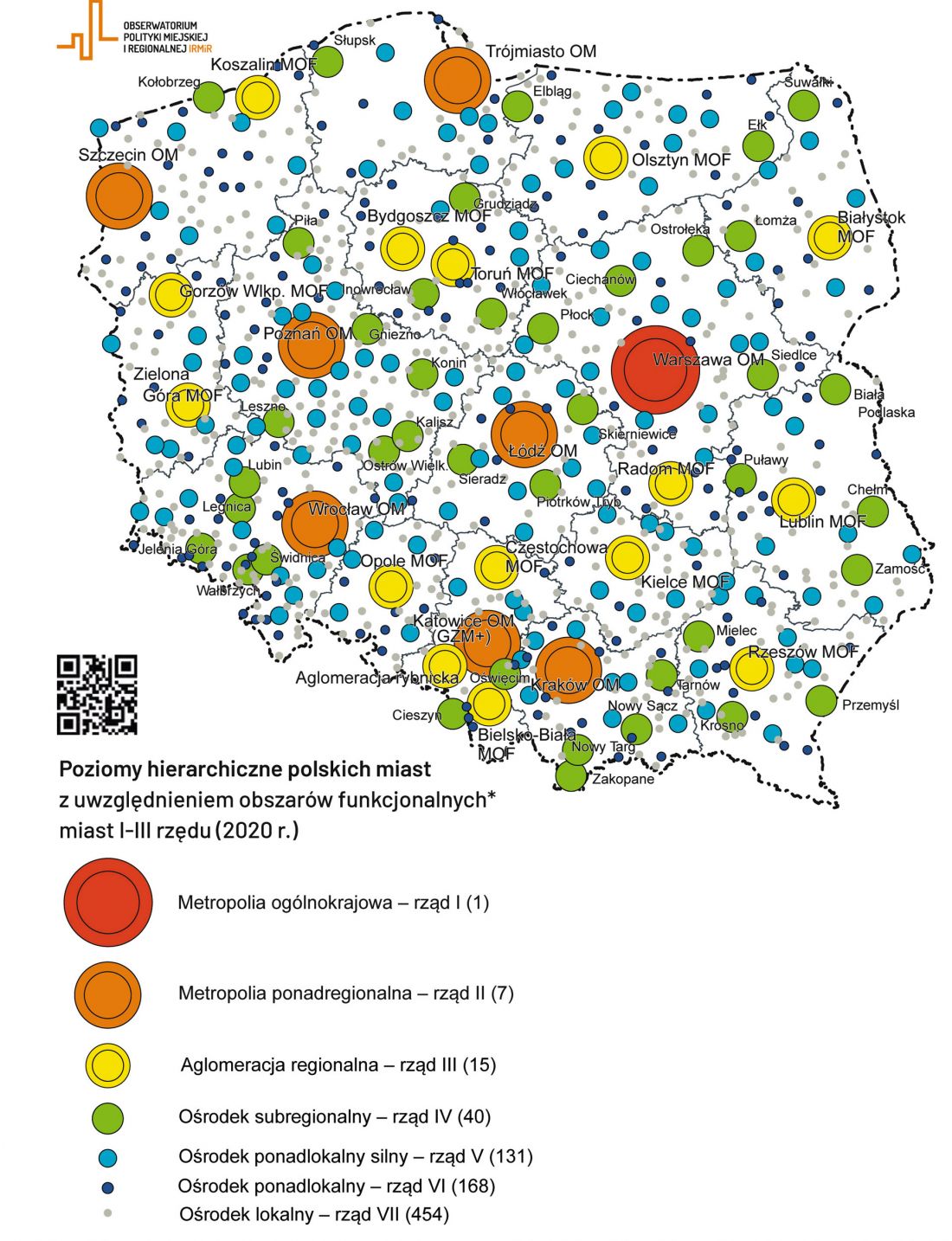
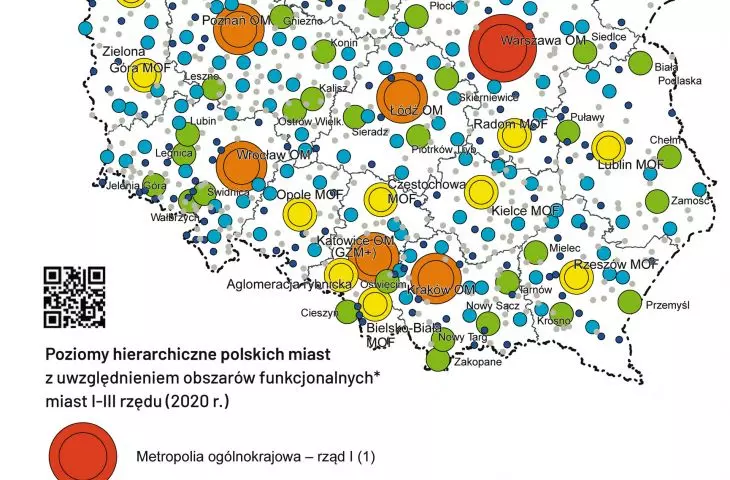
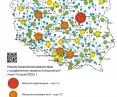
Functional hierarchy of cities in Poland, taking into account functional areas of the first through third orders — note: * Delimitation of urban functional areas (first through third order) based on: P. Śleszyński and T. Komornicki (2016); in the case of the Upper Silesian-Zagłębie Metropolis+, this refers to the Katowice metropolitan area as defined by P. Śleszyński and T. Komornicki (2016), which also includes four cities outside the GZM: Jaworzno, Orzesze, Poręba, and Łazy.
Source: study © Observatory of Urban and Regional Policy, IRMiR
Przemek Ciępka: How, then, should we categorize cities?
Karol Janas: Each discipline dealing with cities has its own perspective on this issue. At the IRMiR Observatory of Urban and Regional Policy, we draw, among other things, on Walter Christaller’s theory of central places. This classic theory of urban development, although nearly 100 years old and obviously requiring consideration of the many changes that have occurred since its inception, still proves useful in interpreting urban development and the interdependencies among cities. This approach focuses on the service functions (market-based and public) that a given center possesses, and in particular on their role in serving the city’s surrounding area, including the scope of their influence. These functions—given their frequency of occurrence and scope of influence—can be classified from lower-order to higher-order functions. In our 2024 report, we classified Polish cities precisely based on the roles they play for their surrounding areas, establishing a functional hierarchy of cities.
Przemek Ciępka: What are higher-order functions?
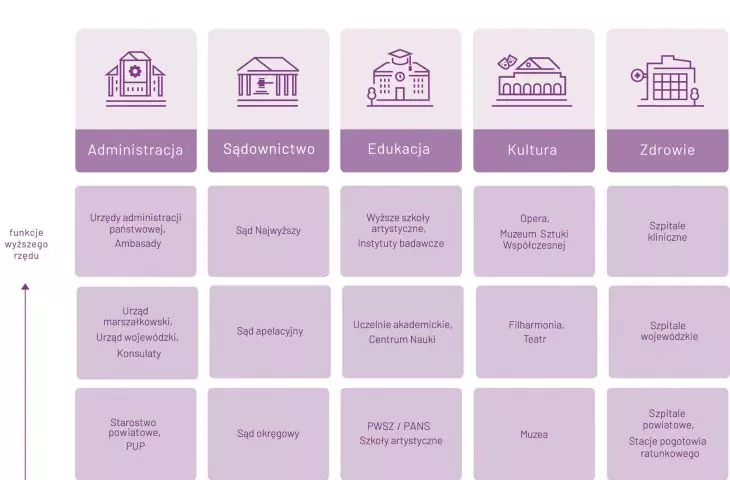
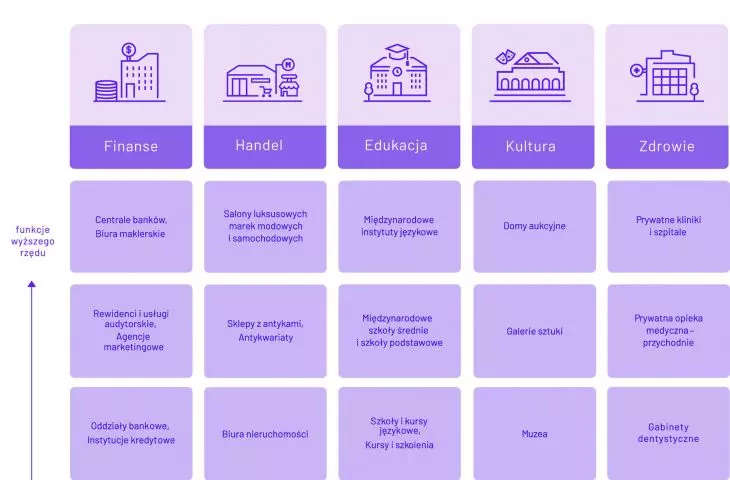
Karol Janas: Higher-order functions, such as a university, are found in fewer centers and have a wide scope of influence—national or supraregional. A lower-order function, such as a general secondary school, will be located in a much larger number of cities, as it must be closer to the user. Identifying these various functions allows us to classify cities and arrange them hierarchically within the settlement system. Of course, a city’s position in the hierarchy is determined based on many different functions—not only public ones but also market-based ones. A luxury car dealership fulfills a higher-order function, since there are few buyers of such vehicles; the economic viability threshold for a car repair shop, on the other hand, will be low, often not even extending beyond serving the residents of the city itself.
Przemek Ciępka: Doesn’t one follow from the other? Doesn’t a city’s size go hand in hand with the role it plays in the settlement network?
Karol Janas: This hierarchy often correlates with the traditionally understood size of a city, measured by population, but not always. Sometimes a city with a smaller population can be “more important” in terms of its role and functions for its surrounding area than a larger center that, for example, serves primarily as a residential area. Moreover, service functions are not the only factor shaping a city—there are also so-called specialized functions, including industrial or logistical ones, which may not be directly linked to the city’s surroundings, as production may be directed to other cities or countries. In fact, Poland has many examples of cities that “grew” on the back of industrial functions, and after losing them, are experiencing a crisis and, in a sense, “returning” to their place in the system based on service functions. This role is also changing due to technological advancements—such as the rise of online services—as well as shifts in transportation costs and transit times. Many of the smaller county towns served as regional centers with a supra-local reach related to their market function—to put it simply, their spatial distribution was determined by the travel time by horse-drawn cart to the market. It was possible to travel to and from such a center from rural areas within a single day. Today, horse-drawn carts have been replaced by delivery trucks, and the quality of roads, logistics, and the distribution of agricultural products has improved—this, of course, contributes in the long term to the loss or transformation of the functions of these small towns.
Therefore, when comparing the population of individual towns with the functions they serve, we can observe certain correlations; however, the significance of towns of comparable size varies greatly from the perspective of the settlement system—that is, the services provided “to the surrounding area.” Wieliczka, which is a relatively large town, serves a completely different function than Szczecinek. Although they are similar in size, it is Szczecinek that provides services across a very large area with a sparser settlement network, while Wieliczka, in turn, is “integrated” into the Kraków metropolitan system. If it were to disappear, the surrounding towns would still have access to services provided by the metropolitan area. Today, from the perspective of ensuring an adequate quality of life not only for residents of large cities but also for those in more peripheral areas and regions, the availability of services at what we refer to as the subregional level is of particular importance — for convenience, we can say that this is roughly equivalent to a medium-sized Polish city. When a subregional city disappears, an accessibility gap often emerges. The population of the area surrounding a subregional city loses easy access to various categories of higher-level services. Instead of traveling to the district court or hospital in Chełm, residents must travel to Lublin or even Warsaw.
Przemek Ciępka: Where do conventionally understood “small” and “medium-sized” cities fit into the functional hierarchy?
Karol Janas: We have identified seven levels in the functional hierarchy of cities. At the top is Warsaw, the only Polish city with the character of a national—and even European—metropolis. Larger Polish cities are supraregional metropolises and regional centers. In our terminology, subregional cities are what we most commonly mean by the term “medium-sized city.” They perform important functions for areas comparable to the provinces that existed prior to the 1999 local government reform, although this configuration is somewhat different today. Small cities, in turn, are primarily supra-local centers in our hierarchy. Seventh-order centers—that is, local centers—are the smallest towns: they formally hold municipal rights but, in reality, do not differ significantly from other municipal settlements; in some cases, rural settlements are larger and better equipped in terms of functionality.
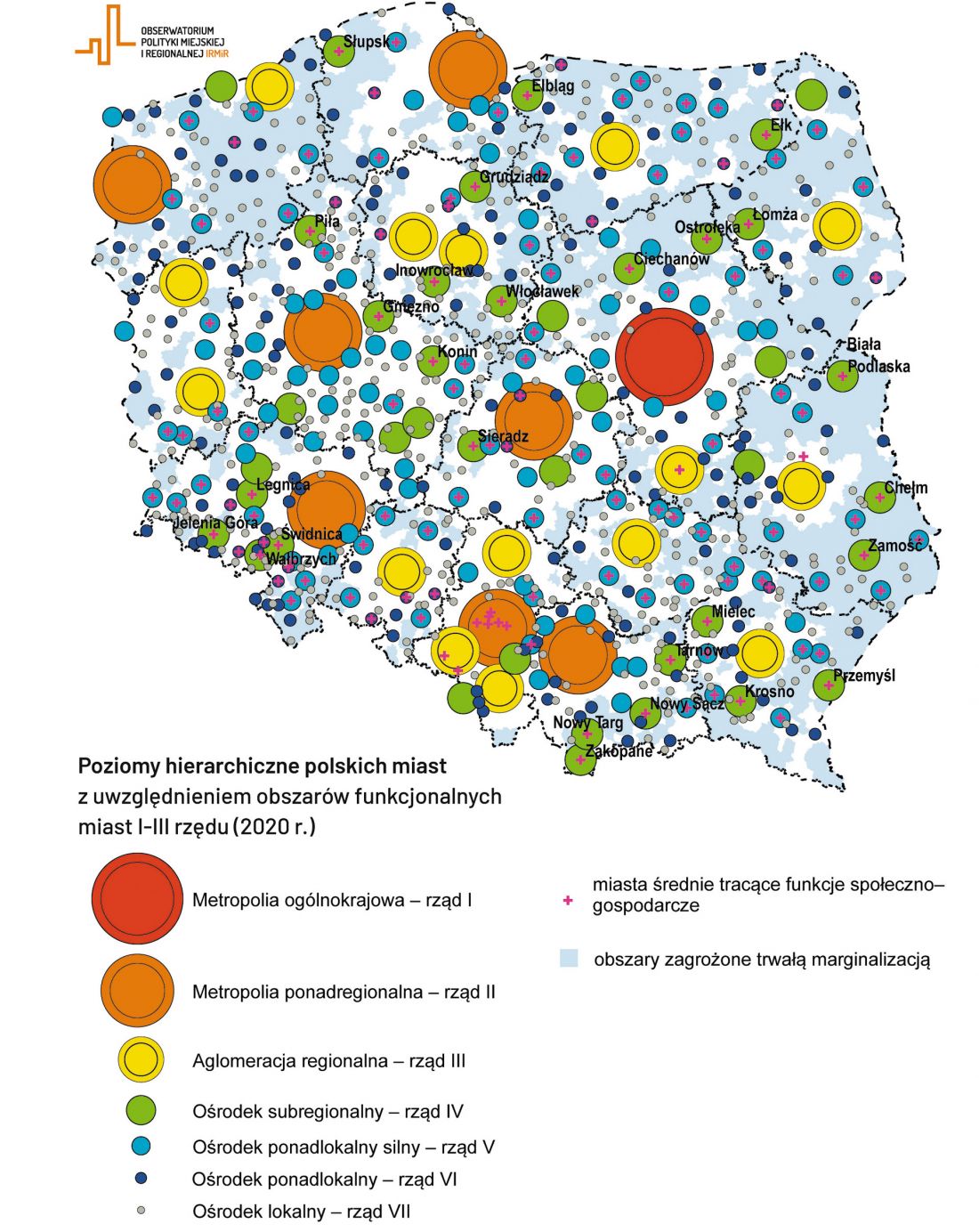
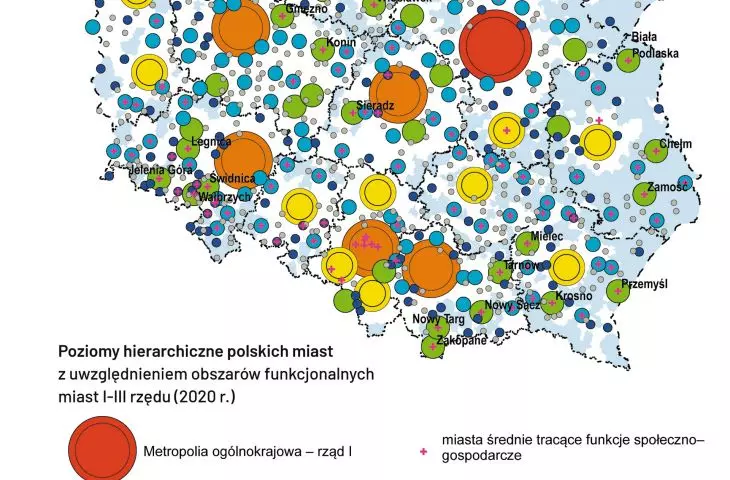
Functional hierarchy of cities, taking into account functional areas for the first through third tiers, and medium-sized cities losing their socio-economic functions—note: * Delimitation of urban functional areas (first through third order) based on P. Śleszyński and T. Komornicki (2016); in the case of the Upper Silesian-Zagłębie Metropolis+, this refers to the Katowice metropolitan area as defined by P. Śleszyński and T. Komornicki (2016), which also includes four cities outside the GZM: Jaworzno, Orzesze, Poręba, and Łazy.
Source: study © IRMiR Observatory of Urban and Regional Policy, cities losing socio-economic functions according to the Strategy for Responsible Development (SOR)—list of 139 cities
Przemek Ciępka: It has long been said that small and medium-sized cities are in crisis. What are the greatest challenges facing subregional and supra-local centers?
Karol Janas: There are three key phenomena: the demographic crisis, metropolization, and suburbanization. Metropolization refers to the growth of the largest cities—in our case, national and regional metropolitan areas—which concentrate and “draw in” residents from surrounding areas, that is, the most important resource for development from the perspective of a city’s economy and culture. This is a process well known from history, which in the past did not pose as great a problem as it does today, because these resources were naturally replenished. Its negative impact has increased in conjunction with the demographic crisis, which is a phenomenon characteristic of our times. This is all the more acute given that Poland is not a country whose population is significantly bolstered by immigrants, even when taking into account migration related to the war in Ukraine.
Przemek Ciępka: What has changed?
Karol Janas: A demographic crisis on this scale is a new phenomenon. In smaller towns and villages, fertility rates were generally higher. Even if some of the people born in these areas moved to metropolitan areas, the population in their hometowns remained relatively stable.
Przemek Ciępka: Is there anything we can do to address this?
Karol Janas: Countering the demographic crisis is very difficult, as is identifying its root cause. There is still an ongoing debate about the key factor: is it a lack of housing and adequate access to services, or rather cultural shifts stemming from the fact that, for various reasons, people simply do not want to or cannot have children. Of course, the reality is more complex, and we’re dealing here with the varied influence of many factors; however, it seems to me that conditions related to culture in the broadest sense and civilizational changes are of key importance here. The availability of daycare centers and preschools is constantly improving, as is the quality of life, yet the fertility rate is falling inexorably.
I do not wish to downplay the importance of building preschools or affordable housing; their availability is extremely important and makes it easier to decide to start a family, but this is not the decisive factor in the demographic crisis. If the roots of this problem are cultural, it is very difficult to combat them through various policies. We know for certain that there are no magic solutions that would help us tackle this problem. At the same time, the fact that we cannot reverse demographic trends overnight does not mean that we should not make every effort to improve this situation.
Przemek Ciępka: Since we’re unable to do anything about the demographic crisis, are there at least some ways to combat suburbanization? How does it affect small and medium-sized towns?
Karol Janas: Suburbanization weakens subregional cities the most; not only are they being “depopulated” by large metropolitan areas, but they also have to contend with a decline in the tax base caused by people migrating to the outskirts. Added to this is oversized infrastructure and the provision of services to residents who, while moving to the outskirts, continue to benefit from the city without contributing to its operation.
Przemek Ciępka: Does all of this together mean that the decline of small and medium-sized cities is inevitable?
Karol Janas: Some cities, especially the small ones, will inevitably shrink. Of course, there will be exceptions that manage to succeed by finding a niche for development, but most small towns will have to adapt to this reality. This does not mean we should write off these towns; rather, we should systematically ensure access to services provided by subregional centers. If those centers fail, the situation across entire regions will deteriorate dramatically.
Przemek Ciępka: What happens when a subregional city declines?
Karol Janas: It depends. Population density in Poland is not uniform—in southern Poland, we have a higher population density, so sometimes the functions of one city can be taken over or supplemented by another nearby center. In the north , the situation is quite different , and the role that Piła, for example, plays for its region is irreplaceable, because there is no other city nearby with such a comprehensive range of functions that could take its place.
Przemek Ciępka: What if there isn’t a single medium-sized city in a large area?
Karol Janas: We can strengthen supra-local centers. From the municipality of Lutowiska in Podkarpacie, it takes three hours to reach the nearest maternity ward, which seems unacceptable. The city that should be strengthened in this situation is Sanok, currently classified as a supra-local center—that is, a slightly smaller city. While working on a report we’re preparing about subregional urban service areas , we identified seven supra-local centers that we should strengthen from the perspective of access to public services in the region. In addition to Sanok, these are Szczecinek, Chojnice, Zgorzelec, Kłodzko, Ostrowiec Świętokrzyski, and Stalowa Wola. These are not cities that will become subregional centers, but they will be able to provide public services at a similar level if we focus our resources and efforts on them through public policies.
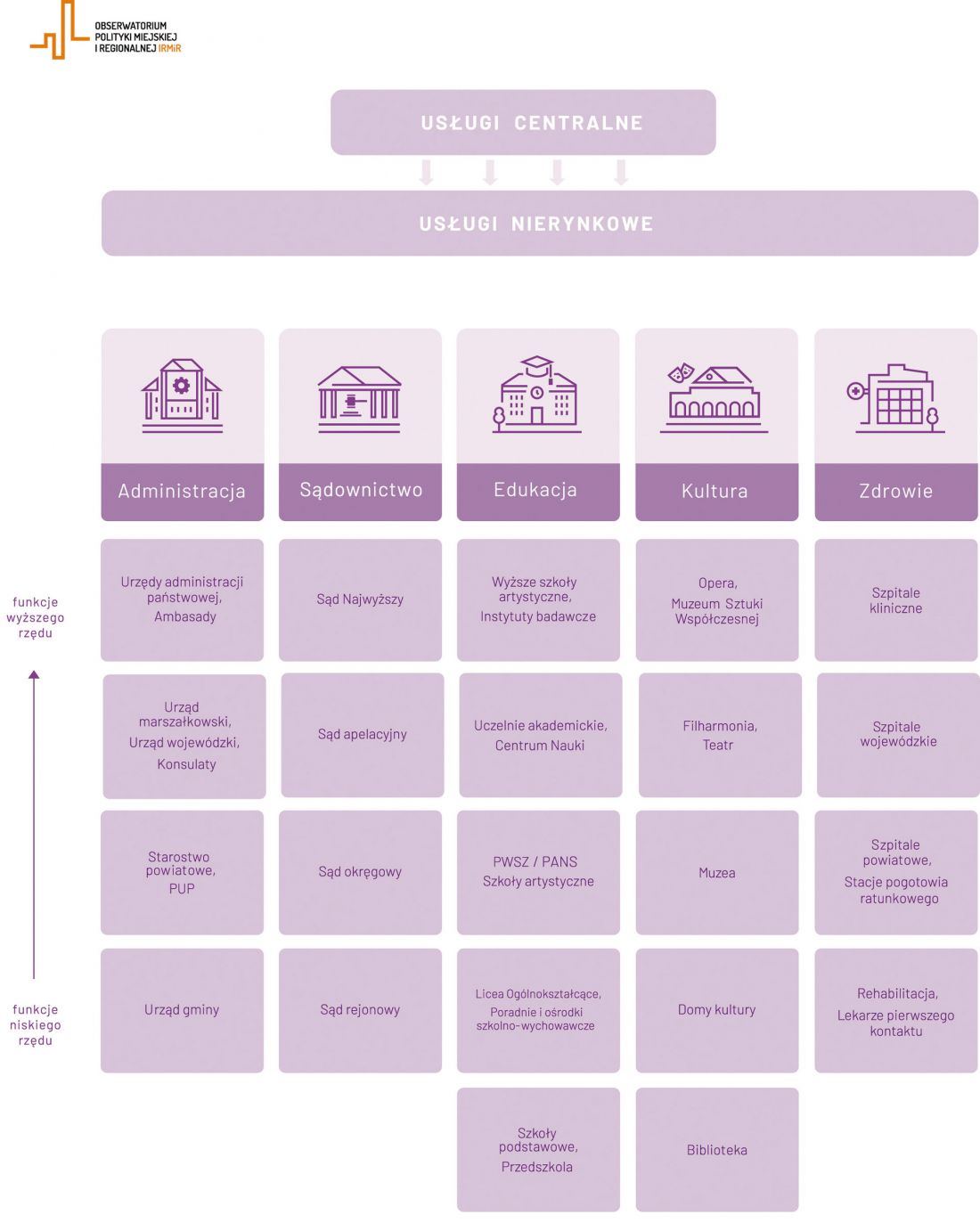
Examples of central non-market services of higher and lower order
Source: study © Observatory of Urban and Regional Policy, IRMiR
Przemek Ciępka: What should be done to prevent the decline of subregional cities? And is it even worth doing? After all, people migrate to large cities because, apparently, life is better there.
Karol Janas: We could, of course, do nothing—this approach prevails, for example, in the United States—if a small or medium-sized city goes bankrupt, it’s clearly not needed. From a purely economic standpoint, metropolitan areas are the most profitable; they reap the benefits afforded by their status as agglomerations and their “integration” into global networks. However, we believe that the polycentric network of cities, characteristic of our country, is a unique feature, and it is worth maintaining this aspect of Poland’s development to some extent. The territorial equity that results from it allows for relatively equal access to services regardless of place of residence. When cities disappear, areas deprived of this access emerge. Compensating for these areas—for example, by organizing transportation to distant centers—is, in turn, difficult and very costly, even by the standards of wealthy countries. As part of public policy, we should therefore do everything we can to strengthen the forty-seven cities of subregional importance that we have in Poland—and focus our particular attention on them.
Przemek Ciępka: What should the central government and local governments focus on?
Karol Janas: We are currently finalizing a report in which we examined subregional cities from the perspective of several key pillars of development. The first of these is the economy—that is, the economic base and the labor market.
The economic situation in our cities is generally not bad. High unemployment—the primary problem of the 1990s and 2000s—has disappeared, and most of these cities are able to pursue an active pro-investment policy. The availability of workers is becoming—or will soon become—an increasingly significant problem. This is linked to the demographic crisis and metropolization, which are also driving up expectations regarding the quality of jobs. Often, the jobs available in a medium-sized city are not attractive to young people and do not meet their aspirations—especially those of women.
The issue of housing is far more problematic. We are faced with a certain paradox here: even though subregional cities are becoming increasingly depopulated, this does not mean that housing is available there. Demand indicates that people want to buy new apartments in these towns, but supply within the city itself is insufficient, and the available options are inadequate, both in terms of the commercial market and public housing.
Przemek Ciępka: Why would someone choose an apartment in a medium-sized city rather than in a metropolis, where they have easy access to many services and a large job market?
Karol Janas: Although living in a metropolis seems attractive, it also has its drawbacks. Renting an apartment in a city like Kraków—not to mention buying one, which few people can afford today—involves very high costs.
It’s worth asking yourself: if we work in a metropolis, is living there the only option? Not necessarily—you could live in nearby Tarnów, for example. But for this to make sense, such cities must begin to implement sensible housing policies, increasing the supply of both commercial housing and public housing—even with the possibility of eventually owning the property—which is more important in small and medium-sized cities than in metropolitan areas. From the perspective of a city facing depopulation, home ownership is an attraction and a way to “anchor” people to the city. In our theory, we call this process “borrowing the benefits of the metropolis.” Residents of small and medium-sized cities benefit from the opportunities offered by major urban centers—such as specialized healthcare or access to culture—while also enjoying access to more affordable housing.
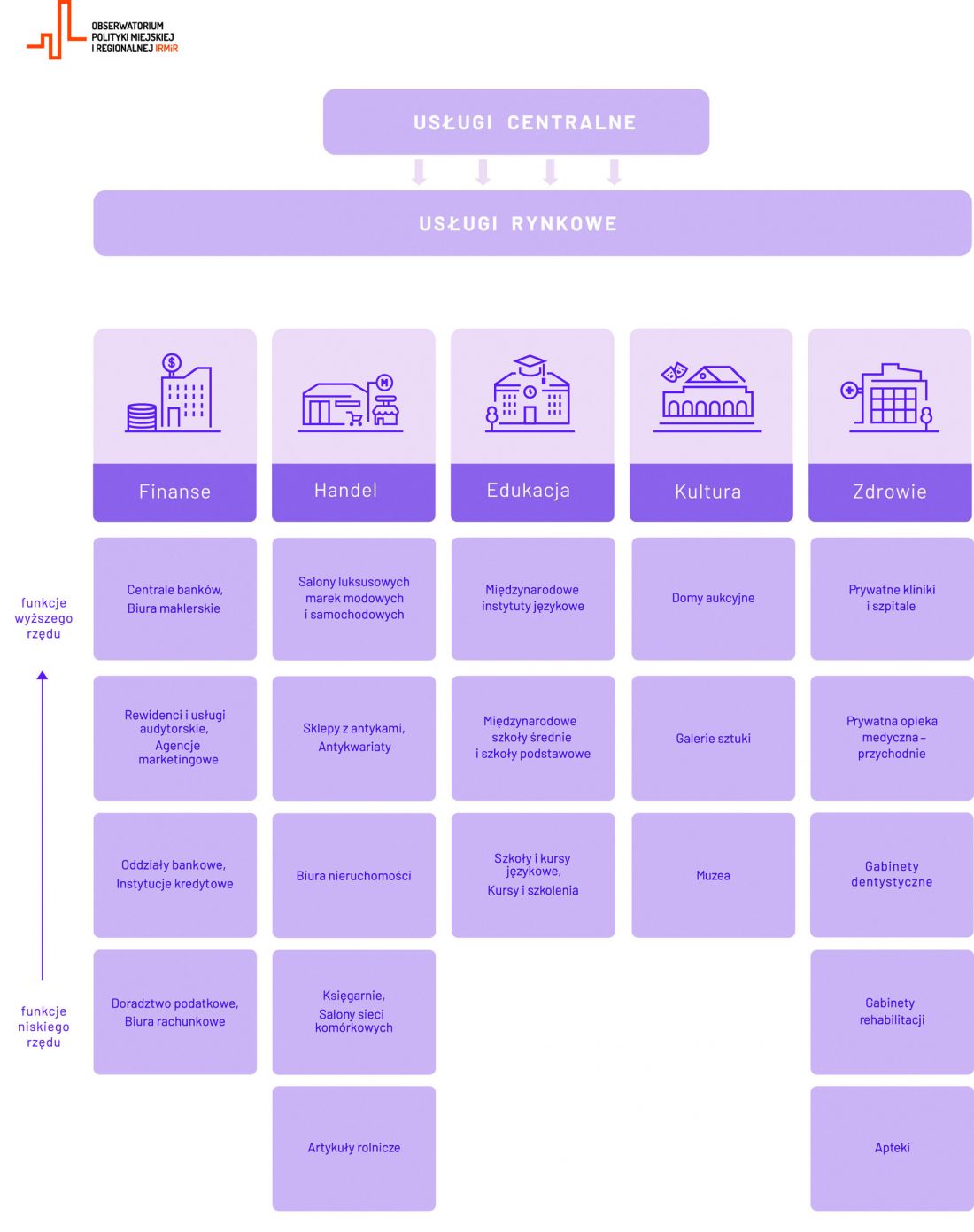
Examples of higher- and lower-order central market services
Source: Study © Observatory of Urban and Regional Policy, IRMiR
Przemek Ciępka: Is there a solution to the housing problems specific to medium-sized cities?
Karol Janas: We need to increase the supply of land for housing so that living in the city center becomes a viable alternative to a house in the suburbs—at least as long as there is demand. The point isn’t just to build anything, but to provide housing developments with good architecture and urban design.
Przemek Ciępka: The poor urban quality of residential areas seems to be a nationwide issue. How can we address this?
Karol Janas: We need to be clear that we’re not good at planning, and every new spatial planning reform only makes the situation worse. At the Observatory, however, we took a closer look at Special Economic Zones and Economic Activity Zones, which Polish cities have adapted very well to their needs. It turned out that local governments are able to acquire hectares—and sometimes even hundreds of hectares—of land, incorporate them into a development project, and equip them with utilities and a street network served by public transportation. Investors are coming forward on their own to take advantage of such sites. Excellent examples include the Niepołomice Investment Zone, where—despite the high fragmentation of plots—100 hectares of land were successfully “assembled” in a short time for a new MAN factory.
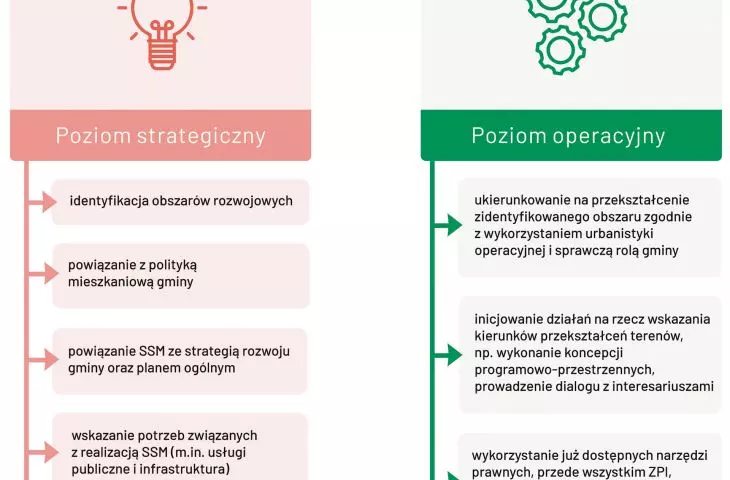
So if this has worked in the economic sphere, why not take a similar approach to housing? Why do new housing developments in Polish cities have to be built in a chaotic manner? Following the model of Special Economic Zones, we’ve created the concept of Special Residential Zones. We’ve playfully hidden a little trick in this name—after all, many successful projects in our country, such as highways, have been carried out under special laws. We concluded that, given our current realities, we can plan a “normal”—that is, a people-friendly—city only under special conditions.
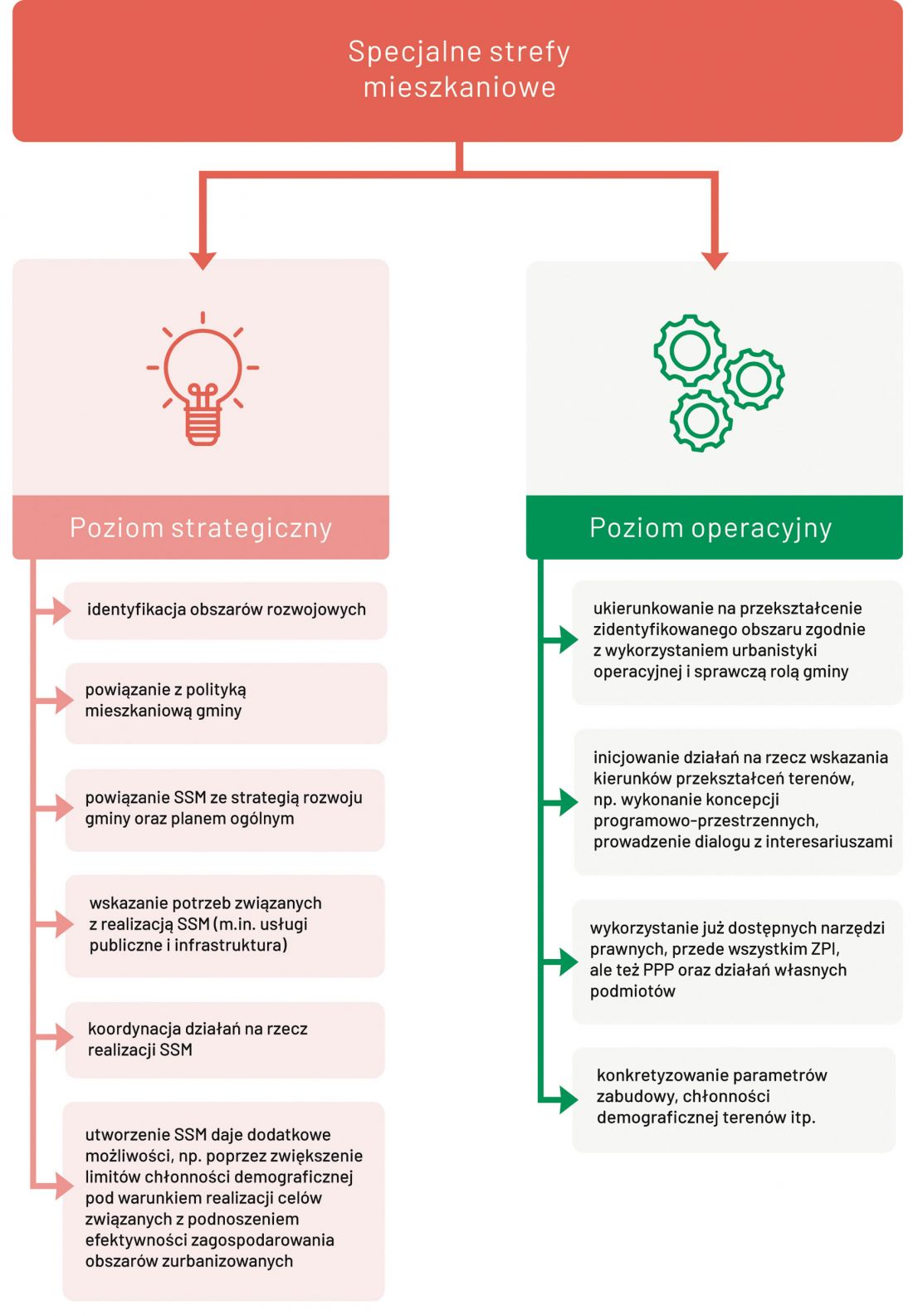
Operational levels of Special Residential Zones
source: study © Observatory of Urban and Regional Policy, IRMiR
Przemek Ciępka: How might this look in practice?
Karol Janas: In Stalowa Wola, where the emergence of highly specialized industry within a special economic zone has caused a “boom” in the labor market, there is a shortage of residents. Why? Suburbanization is driving them away; over the course of two decades, one-third of the residents have moved to neighboring municipalities because no new housing is being built in Stalowa Wola—precisely due to poor planning and a large amount of fragmented and undeveloped land that is suitable for development only on paper in local zoning plans.
It is for cities like this that we have developed the Special Housing Zone. We have a draft bill ready, which we worked on as part of a large team, together with Łukasz Pancewicz from the A2P2 Architecture & Planning studio and Daniel Piotrowski, president of the Warsaw branch of the Association of Polish Urban Planners.
Przemek Ciępka: In what other ways, besides housing and the economy, should we strengthen small and medium-sized cities?
Karol Janas: Another issue is transportation accessibility —not only within a given city, but above all an efficient and safe transportation system connecting it to its surroundings. Rail transport is very important here. Another pillar of development is the environment. It is often said that it is the most important element of public policy, a view with which we do not necessarily agree. Green spaces in a city are, of course, extremely important, but let’s not kid ourselves that creating a park will change the trajectory of a city’s development.
Przemek Ciępka: Does cooperation between local governments also play a significant role in strengthening supra-local and subregional cities, or do they tend to compete with one another?
Karol Janas: Cooperation always yields positive results, though it is often very difficult. Small and medium-sized cities that find themselves in a difficult situation, with limited access to resources, compete with one another. If Legnica, as a subregional city located near Wrocław, begins to develop rapidly, nearby cities such as Świdnica or Wałbrzych may end up losing out. Such a situation creates significant opportunities for regional policies. The development of medium-sized cities should be coordinated so that the services they provide are complementary. For example, one subregional city could have a hospital with an extensive cardiology department, while another could focus on the efficient development of oncology services. A counterexample here is Toruń and Bydgoszcz, which duplicate many of their functions and compete fiercely—not only to the detriment of the cities themselves, but above all to the region. However, there are also positive examples, such as Kalisz and Ostrów Wielkopolski, which have jointly formed the Kalisz-Ostrów metropolitan area. It is precisely such initiatives that public policies should promote.
Przemek Ciępka: Even if we implement these recommendations to varying degrees, not all towns will likely emerge from the crisis unscathed. You said, however, that we cannot write them off. Is it therefore possible to manage a city’s crisis in a way that minimizes the burden on residents and the harm to the surrounding area?
Karol Janas: Crisis management is possible, and of course it must be done; otherwise, the consequences of inaction will be painful. We still view our cities through the lens of their growth. We must accept that growth is not the only indicator of development, and not all cities will continue to grow. We should focus primarily on strengthening subregional cities, not only for their own sake but also because of the numerous services they provide to lower-tier centers, including small towns. As for smaller towns, they should be connected as effectively as possible by public transportation to larger centers—subregional cities—and those, in turn, to metropolitan areas. We need to be clear that many services will not be available in small towns because they simply cannot afford them. Therefore, the first priority should be to ensure easy access to services provided by subregional cities, so that they are within everyone’s reach.
Przemek Ciępka: What other measures can be taken in the face of the crisis facing small towns?
Karol Janas: An important step is cost reduction. Currently, readily available grant funds are being allocated to unnecessary, showy investments, such as swimming pools; these quickly become a significant—and not always necessary—financial burden. A rational investment policy saves money that can be allocated, for example, to the development of public transportation. Thanks to this, residents will be able to reach a swimming pool in a larger city, and the municipality won’t have to maintain a costly facility.
Przemek Ciępka: What about the urban fabric of a city whose population is beginning to shrink?
Karol Janas: In some cases, it may be necessary to systematically “downsize the city, ” adapting it to a smaller scale and a different age structure of its residents. Wałbrzych serves as a testing ground for such a process. In this city, an entire neighborhood—Dolny Sobięcin, colloquially known as “Palestine”—is being demolished. City officials concluded that it would be better to tear down the housing complex and plant grass there than to maintain the deteriorating housing stock indefinitely.
Przemek Ciępka: Thank you for the interview!
Interviewed by: Przemysław Ciępka
more: A&B 6/2026 – Small and Medium-Sized Cities / Architects’ Fees,
download free e-issues of A&B
link to reports © Observatory of Urban and Regional Policy, IRMiR:
https://linktr.ee/obserwatorium