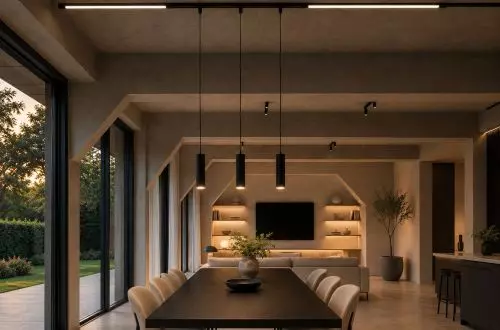









I enter the studio, boot up my computer. Instead of clicking on icons, I greet my AI assistant.
- Good morning. View the task list for today and play it by voice, and launch PROJECTOR with the latest BETA-07 project model.
The list appears on the screen, and I hear a pleasant synthetic voice in my headphones discussing priorities.
The first item: correcting a detail in the BETA-07 project, and after a while I'm already in the program. Making the correction, I issue a voice command:
- Based on views 1A and 2C, prepare three versions of the visualization. Apply the materials from moodboard 3, the one Kasia developed two days ago. And then send GDS5 to the client.
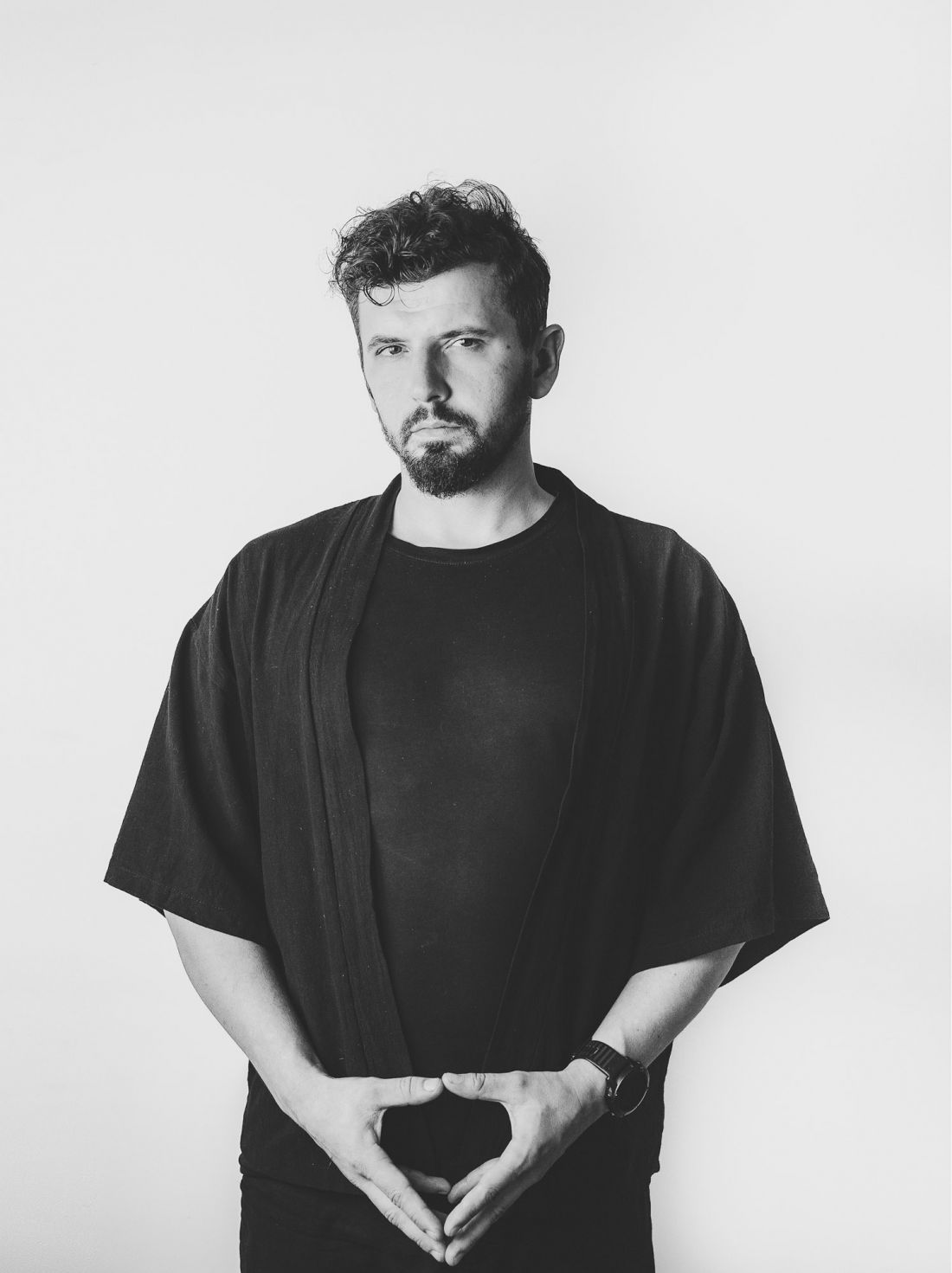
Artur BARANOWSKI - Architect with over 10 years of experience, founder and chief designer of SOURCE studio. Creates uncompromising, timeless architecture based on a deep understanding of context. He develops projects within two specialized lines: SOURCE Signature for residences and premium buildings, and SOURCE Commercial, focused on advanced industrial and commercial projects. His goal is to deliver not just buildings, but thoughtful, strategic solutions that generate value for years to come.
The visualizations generate themselves in the background, and when approved by me, they send themselves with automatically generated content: "Good morning, I am enclosing the revised detail and new material sketches. We are waiting for your feedback." And off it went. The whole process took less than 30 minutes.
I move on to the new order. I transfer scans of hand-drawn sketches and photos of inspiration to disk.
- Create a preliminary 3D model. Assume a structural layout and roof geometry analogous to the GAMMA-04 design. Save as DELTA-01 and add an assignment for Kasia for tomorrow: "Develop preliminary material proposals for DELTA-01."
After five minutes, a model appears on the screen. I make a few minor adjustments. That's another half hour. Now it's time to develop the company.
- Analyze our marketing activities of the last week and present key data along with suggestions for optimization.
After five minutes, I get a clear presentation with graphs. I discuss it with the Brand Manager, my AI assistant, who creates a list of tasks on the fly and assigns them to the appropriate people in the project management system.
After two hours of intense, strategic work, the desk tasks for today are finished. I go for a short walk, then pick up the RECORDER and head to the construction site. I will spend the rest of the day where the final decisions are made - in the physical world.
This scene is not an excerpt from a science fiction scenario, but a picture of everyday life, which is becoming more and more real for architects. However, the real AI revolution in architecture does not lie in the tools themselves, which are becoming more powerful by the day. It's a fundamental paradigm shift - from seeing the architect as an artist's craftsman to the role of creative strategist, conductor of complex processes, where technology is a partner, not just a program.
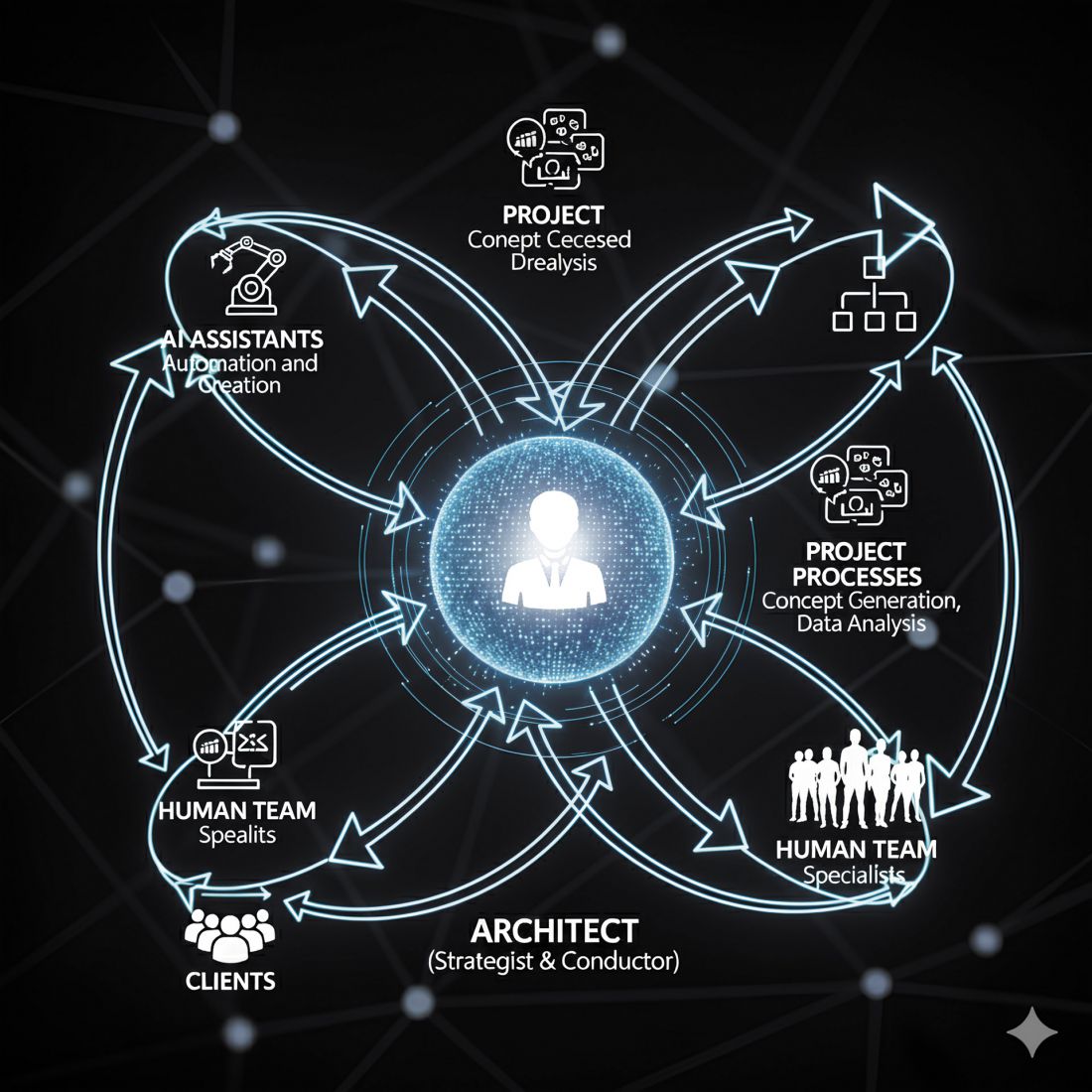
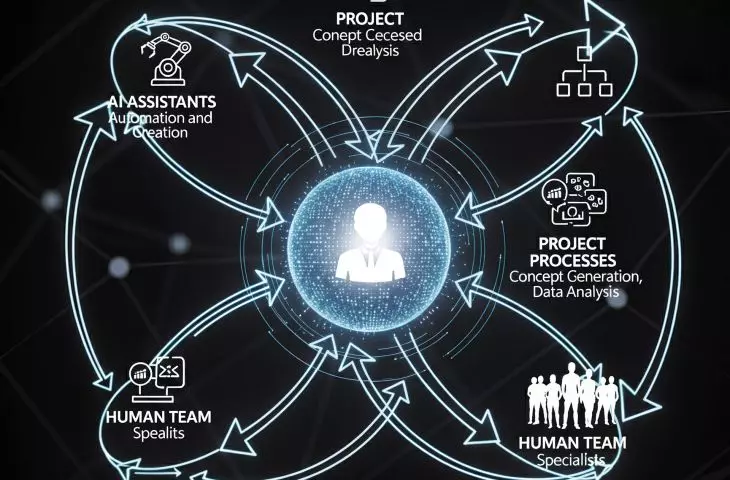
Architect as creative strategist, conductor of complex processes, where technology is a partner, not just a program
il: Gemini Generated
architect as conductor, not craftsman
In the history of the architect's work, we have already moved from the drawing board to CAD, from CAD to BIM, which has automated the creation of statements and sections, allowing us to think of a building as a coherent database. The next step is incomparable.
Artificial intelligence doesn't just speed up existing processes - it eliminates them, taking over repetitive, analytical and time-consuming tasks. We are living in the midst of a revolution, certainly comparable to the introduction of the steam engine or computers themselves. Here are some key aspects that are already affecting or will affect the architect's work in the coming decade. Hours spent analyzing, creating functional or stylistic variants will be reduced to minutes. This change significantly shifts the focus of an architect's work, making his or her value no longer measured by the number of hours spent on a model. Instead, the ability to ask the right questions, define problems and critically evaluate the solutions the machine suggests becomes crucial. The architect goes from being a performer to a conductor, someone who can manage an orchestra of specialized AI tools to create a harmonious and functional whole. Moreover, this is perhaps the greatest opportunity in years to reverse the progressive devaluation of our profession. An opportunity, however, that will only benefit those who dare to redefine their processes and fully adopt the possibilities of the digital age.
The studio is a data ecosystem
In the new paradigm, intuition and artistic skills, while still invaluable, gain powerful support from hard data. Design based on them (Data-Driven Design) is no longer a niche trend, but is becoming the standard for making better and more informed decisions. It's also a new universal language for communicating with investors, developers.
Take the example of a conceptual design, where AI tools (such as Autodesk Forma or similar solutions) analyze hundreds of design variants in real time for sunlight, noise, view potential or energy efficiency. Changing the geometry of a building automatically generates an updated cost analysis or estimated carbon footprint. Armed with such data, an architect does not present a mere aesthetic vision to the client, but a thoughtful investment strategy, optimized for return (ROI) and sustainability. This elevates his role from designer to strategic advisor.

Artificial intelligence doesn't just speed up existing processes - it eliminates them, taking over repetitive, analytical and time-consuming tasks
il: Gemini Generated
new work organization: who's who in the studio of the future?
Taking full advantage of AI's potential is not just about buying new software, but first and foremost about restructuring thinking about the team and its competencies. The understandable fear of being replaced by technology should give way to the excitement of evolving professional roles. New specializations will emerge in the studios of the future: from AI Prompt Designers, who are translators of human intent into machine language, to Architectural Data Analysts, who will extract strategic information from streams of data, to AI Workflow Managers, who take care of the consistency and efficiency of the entire digital ecosystem.
At the same time, soft skills, which a machine cannot imitate, will gain in importance. Creativity in defining problems, empathy in understanding client needs, negotiation skills and ethical reflection on project direction will become the architect's most valuable assets.
regain the freedom to create
The AI revolution in architecture is already happening, but its epicenter is not in cloud computing, but in our minds. It is a revolution in thinking about what design is and what our role in it is. Studio owners who start experimenting with new processes today and investing in developing the competencies of their teams will be market leaders tomorrow. Those who stay with old habits run the risk of becoming mere operators of outdated software, or newer tools to adapt to.
I know what I'm writing about, because I've been going down this road with my team for two years. Knowing nothing about coding, with the help of the first AI models, we programmed our own automation and data workflow improvements. Today we are working on an integrated workflow that will combine the precision of BIM with the analytical power of AI. The goal is the future described at the beginning of this article, as I am convinced it is within reach.
The question each of us must ask ourselves is not "Will AI take my job?" but "Am I willing to give up the repetitive to the machine and reclaim for myself what is most precious in architecture - the freedom to create?".
Artur BARANOWSKI
more: A&B 10/2025 - U40 - the business of a young architect,
download free e-publications of A&B