







The following text is the result of four years of collecting statistics, four weeks of work on the presentation and almost four hours of writing. It is an attempt to learn from the mistakes we made so that we don't make them again and so that others don't have to make them. The text is a case study of the operations and development of the management of a design studio of about ten people in a provincial city. It is probably not the best method, certainly not the only one, but it is reasonable and quantifiable. Understandable to our clients and allow them to negotiate in their language, not by comparing with cheaper ones and haggling a few zlotys per square meter. It tells the story of real people, and operates on real numbers of labor hours, salary amounts and square meters. While writing it, I regret that no one showed us how to count the value of our work and for many years we had to do it "by feel" at the rate of "no one in the market will give more." Take a critical look and develop or refine your project valuation methods. Enjoy your reading.
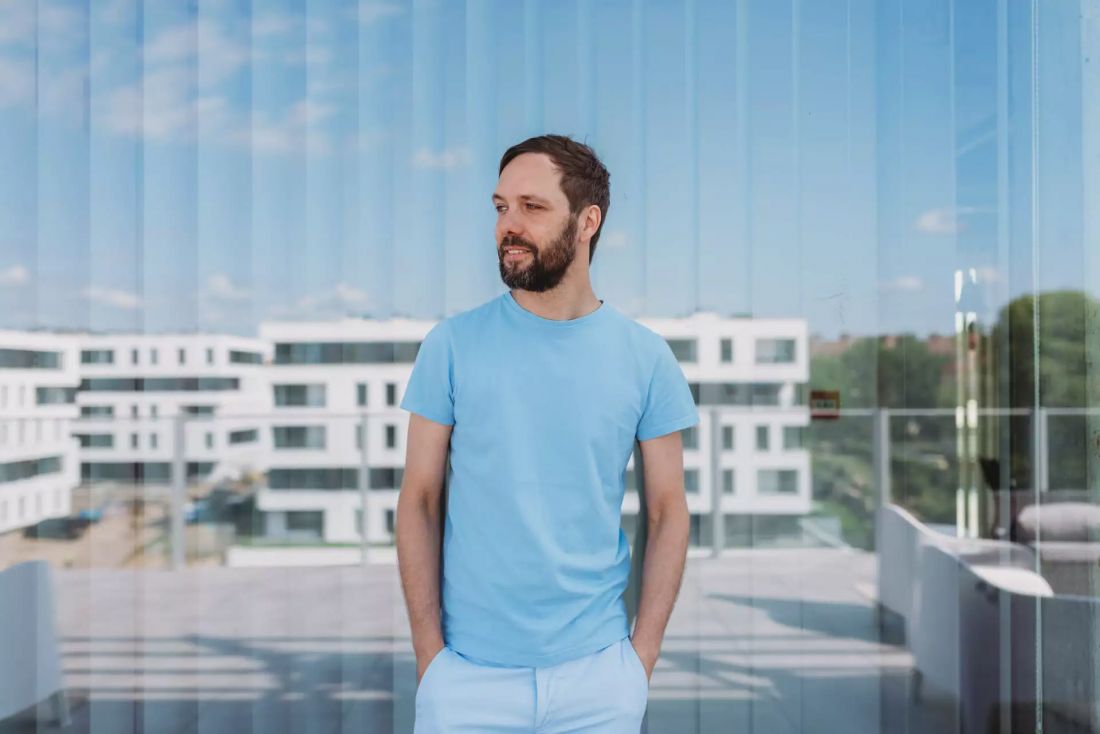 Karol NIERADKA - a graduate of the Faculty of Construction and Architecture of the Szczecin University of Technology. Since 2010 he has been running maxberg design office in Szczecin. He has been president of the Szczecin branch of SARP for two terms, and chairman of the Municipal Urban Planning and Architectural Commission in Szczecin since 2024.
studio = employees
Almost a decade ago, we wrote the vision of our brand on the website. It included this sentence: "We have the ambition to become the most desirable employer of this industry in the region." Written down somewhat intuitively at the time, it hasn't gotten old, although we are becoming convinced that we have accomplished a lot in this regard. This, unfortunately, means that we are fighting unfair competition from older colleagues who employ workers on minimum wage contracts. I write that it is we who are fighting, because it is not the company, partnership or its owner who creates the studio, but all those employed in it. 85 percent of our office costs are salaries of employees and management, which emphasizes the key role of the team in our industry. Only 15 percent are computers, cars, software, insurance, rent, fees, external services (outside the industry). Thus, the number and quality of people's work is what most determines a company's revenue, quality and ultimately profit. Taking care of them pays off for both parties.
measure your business
Architects very often consider their companies to be proprietary studios. Not companies, firms or enterprises just sculpting studios, where the artist only needs helpers, apprentices to realize his own ego, brand, art. Deadlines are less important, and revenues depend on negotiating "how much can you pay for my art?". Few architects are able to predict, or even determine after the fact, how much a project cost. Whether it brought a profit or a loss, and how big. Intuition tells them, however, that they lose on many projects. And this is most often true. According to the principle of You can't manage what you don't measure measuring your business and projects is necessary to understand where to get the money to operate and develop the studio.
I am against pricing design work based on some percentage of construction costs or per meter. Many times I have had to deal with resistance from ordering parties who do not understand why the cost of construction should be the basis for pricing a designer's work. "Why should I pay more for a gold facade than a sheet metal facade?" they ask. The "per meter of PUM" pricing doesn't apply to anything either. It has adopted only because investors have a comparison of whether it's cheap or expensive, but they don't compare the scope of the designer's work and the scope of the documentation, only the price. However, the cost of designing one square meter of usable area of an apartment depends on the unsold area (for example, garages), the level of complexity of the building, the number of installations, the complexity of facade designs, acoustics, the scope of interior design of common areas, visual identification and so on. In addition, by pricing in this way, we are competing with the worst in the market, who spend the least amount of time on design. The client is not able to compare the scope of this work before signing the contract. In this way, the designer has no quantifiable arguments to negotiate the price. Thus, we reduce negotiations to bargaining.
We can, of course, take it upon ourselves to educate all investors to try to understand our point of view and the level of complexity of pricing design work, interprofessional coordination, the geometrically increasing number of collisions and so on. I recently heard that redesigning a building at the detailed design stage - reducing it by 5 percent of the area - is not additional work that the client has to pay for, but a reduction in scope and should pay less than originally. Unfortunately, many investors don't have enough experience to understand our point of view, many are building for the first time, or don't want to bother. After all, it's our problem, not theirs. So instead of trying to convince investors to our way of thinking, we should tailor our communication to their perspective and language.
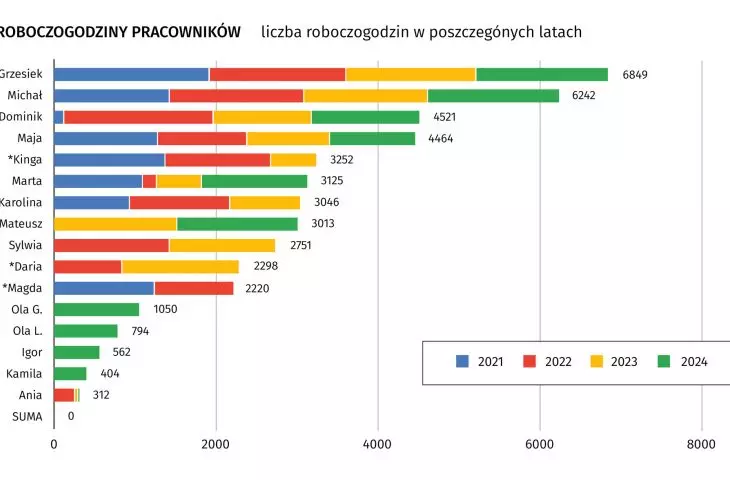
number of man-hours as of 2021 - 44,903 hours
costs
Every CEO and entrepreneur knows how much his time costs and how much he pays to specialists. He also knows how much he pays a lawyer, because those have been billing by the hour for years and charging by the minute, for example, every quarter of an hour. The rates of law firms, whose work is based on the time of assistants and those who manage them, is today in Szczecin a minimum of 200-300 zlotys per hour, and often more. The time of doctors, physiotherapists and other specialists is similarly priced. How much per hour does a design office earn? And how much does an hour of office work cost? Few of us count and check.
So let's divide the costs of our business into three simple factors: designers' costs, management costs and hard office costs. The costs of trades and external studies should be neutral for the studio, or should be billed directly to the investor at all.
Costs of designers, or how much an architect/architect should earn
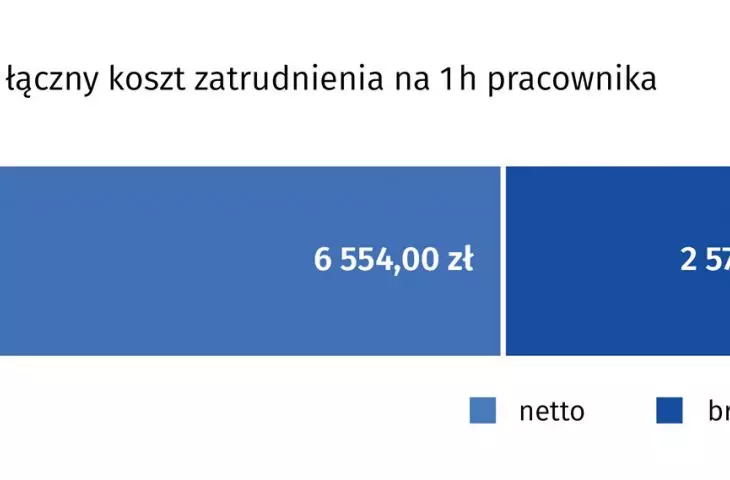
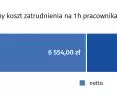
According to the Central Statistical Office, in November 2024 the average monthly salary in the enterprise sector was 8478.26 PLN gross. Thus, the national average at the end of 2024 was about PLN 6000 net in Poland. Adding the other burdens of the employer, that's just over 10000 PLN per month cost for the office. Assuming that a month has about 168 man-hours, this means a cost of about 60 zlotys per hour. That's how much it costs the design studio to work each person hired for the national average on an employment contract. Add to this the cost of the labor of the board of directors (boss/president, manager, possible secretariat) and other tangible and intangible costs - licenses, rent, depreciation of equipment and vehicles, leases, utility bills, trips, business trips, training, insurance, contributions, accounting costs, legal services. All this fairly counted gives the cost of one hour of work of an architectural designer without remuneration for specialists in other industries. These are fixed costs. We do not take into account for now the risk, development and profit for the company, which can be used for its development, bonuses or dividends.
Let's focus on the cost of employees to begin with, because as I mentioned they account for 85 percent of the cost of running a design studio. For many years there has been a discussion about low wages in our industry. My generation went through tragic forms of employment, contracts "on the mouth", money "under the table", no contributions to Social Security and salaries well below the national average. At the same time, today many of us are talking about the claimant generation, which immediately wants to earn a lot, and still can't do anything. If you think the younger generation, or employees in general, are demanding or "everything must be taught to them," then become an employee or hire someone your age without an architectural background. This can be a painful experience for all parties.
From an employee's perspective, I've heard many times that a tiler or roofer is better paid than them. But did any of them choose to do physical labor in the dust, dirt, noise, humidity, heat from dawn, as the Atlas glue commercial aptly showed - to professionals? How many gave up the office coffee chat, the chair, the computer? Gave up their clean, undamaged hands and abandoned their ambitions? Where does the belief that manual workers should earn less than us come from? Their work is just as important, physically more difficult and, in addition, much less replaceable by artificial intelligence. All this does not change the fact that wages in the industry are too low, and the employment contract is still not a common practice. How then to find a compromise? Fairly compensate employees, but also without overestimating their contribution and responsibility, because, after all, on a full-time contract, financial responsibility is reduced to a minimum, so also the salary can not be as much as the CEO.
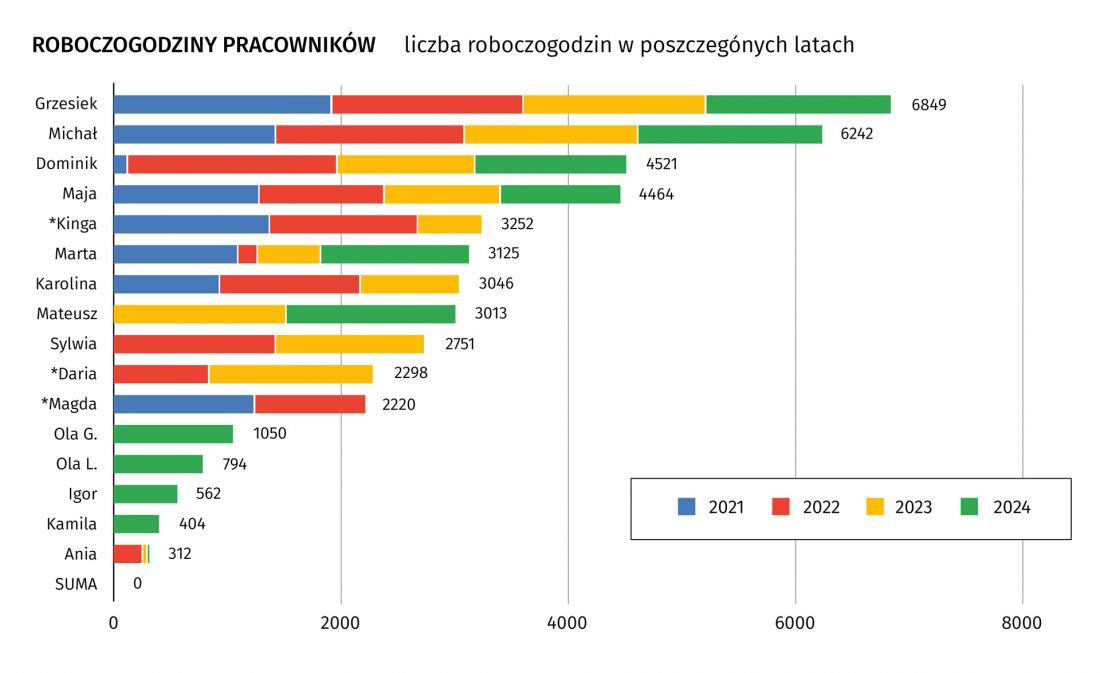
Employee man-hours - the number of man-hours by year
We reached for CSO data and a salary calculator. Since last year, the CSO publishes not only the national average, but also the median. The median is a value that much more realistically defines earnings, and certainly some social perception of earnings. After all, if nine people in a company earn 3,000 zlotys and one earns 20,000, the office average is 4,700 zlotys, even though 90 percent of employees earn much less. The median in the same company will be 3000, which is how much the person in the middle of the earnings rate earns. In 2024, the median earnings in Poland will be about 6700 zlotys gross, or just 4670 on hand. Thus, when creating the salary system, we considered that even a young architect should earn no less than the perceived salary of the average Pole after graduation. That is, about 5,000 PLN net. On the other hand, an experienced person, but on a full-time basis, who enjoys social protection, full vacation, who does not bear financial and criminal responsibility, does not influence strategic decisions for the company and does not provide new orders, should not expect a salary higher than twice the median, so about 9700. At the same time, this is a salary that 80 percent of employed Poles cannot count on (according to the National Salary Survey). So a person earning this much is among the top 20 percent of the highest paid employees in our country. I will point out that these figures are the assumption of our Szczecin office and should take into account the competitive environment and cost of living elsewhere in the country. I also hope that the growth of the office will allow us to raise the base amount from twice to, for example, 2.5-3 times the median. However, this is a goal, not a reality.
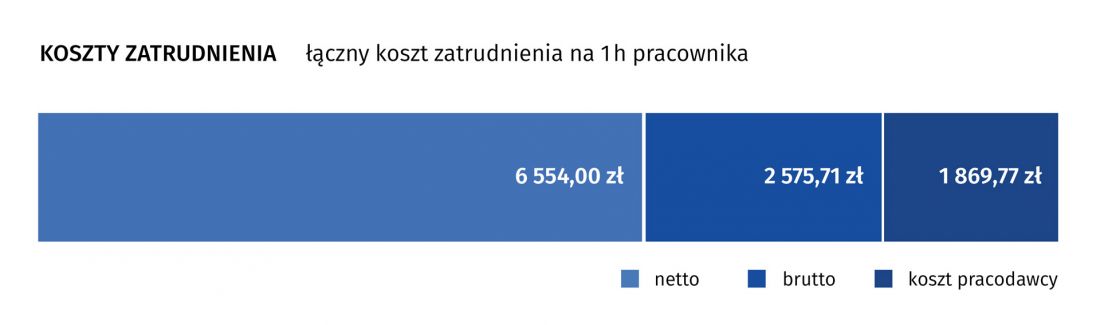
The assumed hourly cost of an average maxberg office employee in December 2024
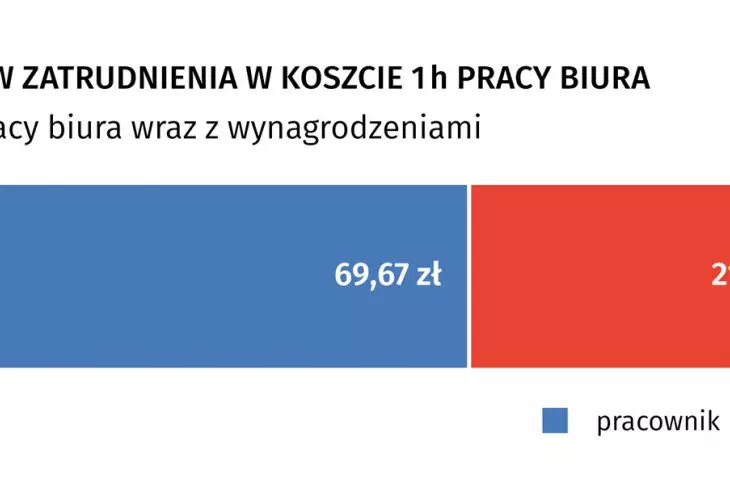
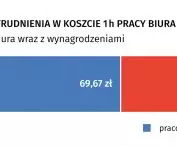
Having thus prepared salary forks, valorized annually by successive CSO reports, we assigned salaries to employees according to experience, seniority, productivity and overall cooperation rating. The cumulative factor from these evaluations determines where on the salary scale between 5,000 and 9,700 PLN net each employee is. At the same time, they receive information on what they should strengthen, improve, so that their salary increases. In doing so, we make sure that the average and median of the entire office is much higher than for the country, and that the salary structure is as flattened as possible, with no glaring differences in salaries. Thus, we determined that the average labor cost of a designer in the Maxberg office is 69.67 zlotys per hour. This is about 65 percent of the total cost.
- Average net salary in maxberg office (full-time, V 2025) - 7079 PLN net.
- Median net salary in maxberg office (full-time, V 2025) - 7625 PLN net
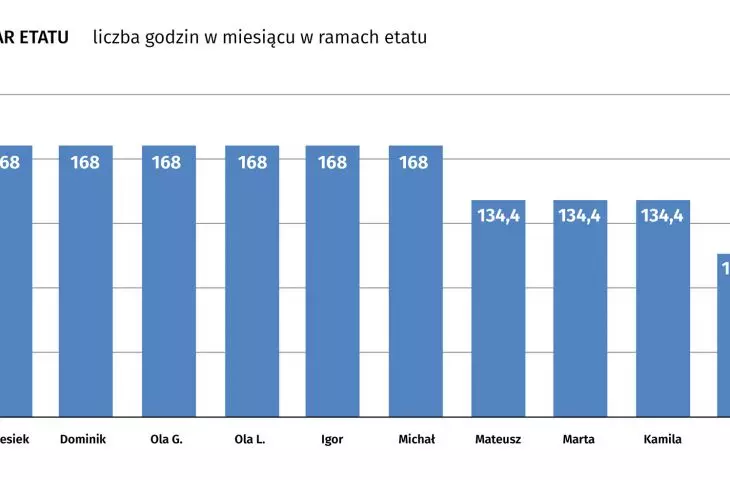
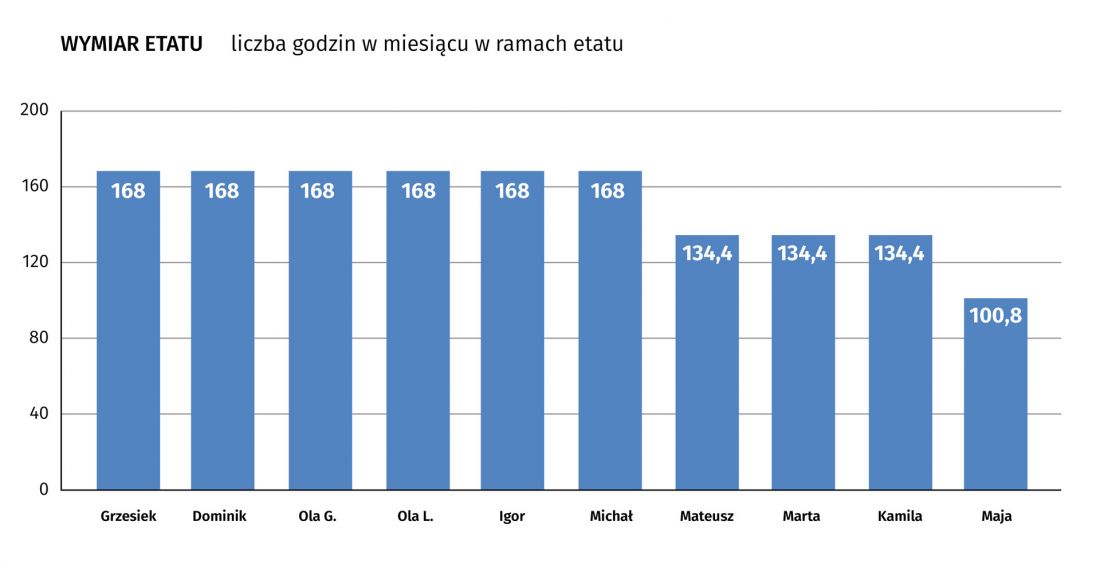
It is also a tradition of the maxberg office to hire in different full-time positions. Currently, four of the office's employees work part-time days or hours per day. Their salary is, of course, proportionally reduced, but they have the opportunity to pursue other sources of income, hobbies or spend time with their families. It is important that the working hours are not less than four days a week and six hours a day. Otherwise, the loss to the office is too severe. Workstations stand empty during their absence, software licenses do not get cheaper, and office rent does not decrease because of this. So the smallest FTE is four days a week of six hours each, and the others are 4 × 8 h, 5 × 7 h and full-time 5 × 8 h.
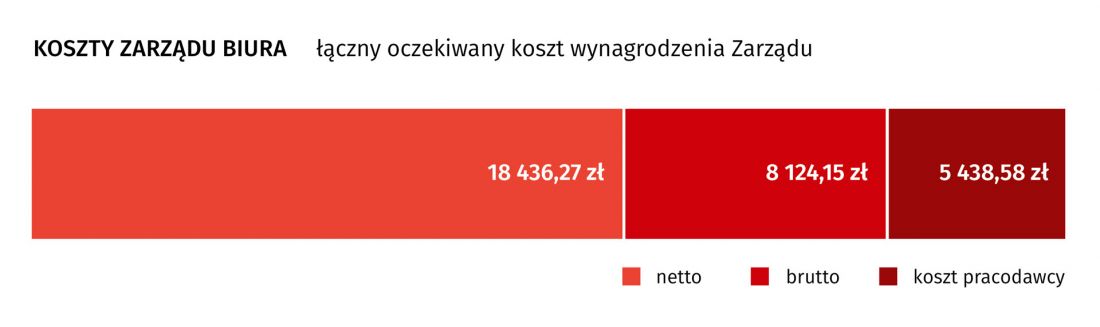
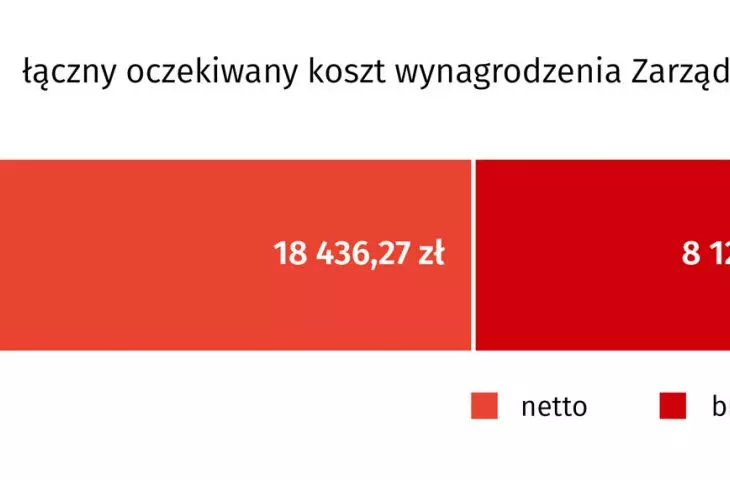
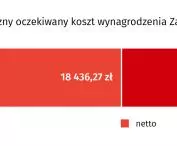
Office management costs - the total expected cost of the board's salary
management costs
The statement repeated by many architects that when they were a smaller studio they earned more and had fewer problems is not true. In a well-managed organization, a larger number of people making up the board's salary should translate into a higher salary for the board. Statistics in Poland clearly show that in larger companies average salaries are higher, which also means higher salaries for the board of directors. For our office, we made a working assumption that the chairman should earn at least twice as much as the employees and have a manager or at least a secretarial staff to help. Their work must be earned by the other employees. The more of them there are, the less important the board costs are in the costs of the whole company. At the same time, management costs do not increase linearly with an increase in the number of employees. In our office, management costs account for only 21.16 zlotys net per hour of designers' work. This is only 19.7 percent of the total office operating costs. The cost of management and designers' salaries is almost 85 percent of the total cost of the studio!
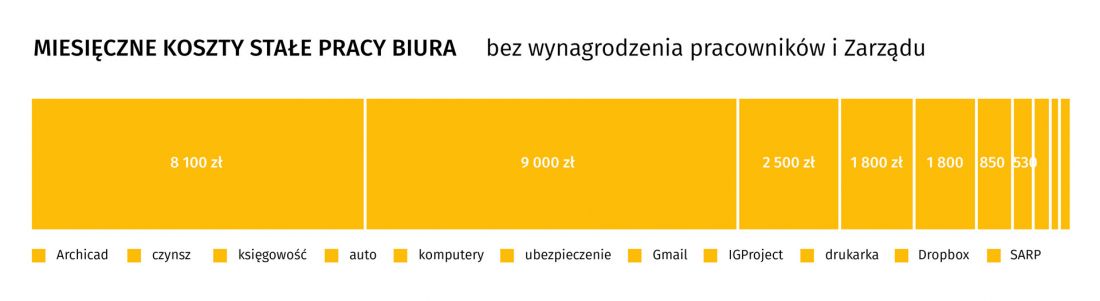
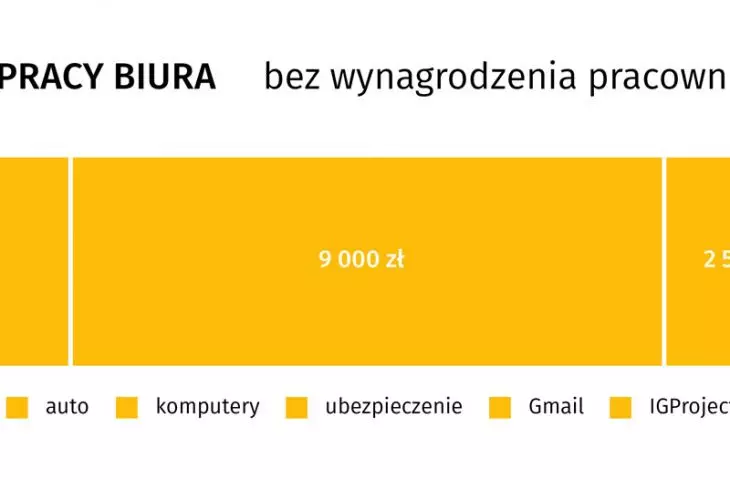
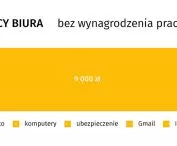
assumed fixed costs of maxberg office hours in december 2024
fixed costs
The last element is fixed costs. These are payments for rent, energy, cleaning, coffee, software, subscriptions for cloud tools, accounting and human resources, leases, necessary computer equipment replacements, insurance, printing, dues to the Chamber and SARP. We were able to estimate all these costs based on observations and invoices. Some were trivial. Like fixed fees for rent or bookkeeping. More difficult to estimate were perpetual licenses (expensive to buy, but they last for years) and computer hardware. However, if we assume that one license for 17,000 zlotys net is enough for about five years of work, it means that we should put aside 283 zlotys per month to buy a new one someday. Similarly with aging hardware. Ten computers aging in about four years means that we should replace 2.5 computers every year to keep the equipment in working order. That is, in a ten-person office, we should accumulate about 1,500 zlotys per month to replace the equipment. We divided the total amount of fixed costs by the number of man-hours of the entire office and found that it is only 16.81 zlotys net for each hour of work of the designers. Thus, this is the lowest cost of the entire business. Just 15.7 percent. This means that with good management, the cost of faster hardware, better software or office equipment that translate into comfort and speed of our work is negligible compared to the cost of hiring people.
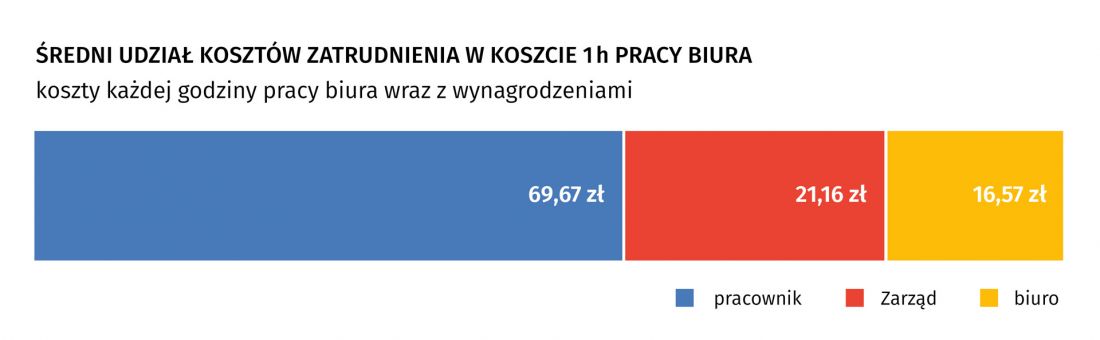
average share of employment costs in the cost of 1 hour of office work - the cost of each hour of office work including salaries
how much does architecture cost
So how much does a project cost? We took up the challenge in the office a few years ago to count what our costs are for running a studio and divided it by the number of hours we have to pay our ten employees. It turned out that in 2024 the pure cost, without profit, provision for risk, development, competitions, analysis and so on is 107.40 zloty per hour. Already knowing how much our work costs, we had to check how much it takes to do a project. Over four years we accumulated 44903 hours spent on design. This figure does not include management costs. The owner of the studio and the office manager treated themselves as fixed costs, which the design staff have to earn just like rent, electricity and software.
Since we know that the average cost of maxberg office labor in 2024 is 107.40 zlotys per hour, in order not to lose out on a project, we need to multiply this amount by the number of hours spent on each project. But how to gain on the project and not just come out at zero? You need to add to this amount the cost of risk (a protracted payment, the need for unforeseen corrections, additional development costs, equipment failure, inflation costs or others). Statistically, with ten projects, such a situation is bound to happen, so we assumed a minimum of 5 percent for the risk of the unforeseen. We already have labor costs, management costs, fixed costs and the cost of risk. This still does not ensure profit. Each designer must determine for himself what profit his business should generate. We are representatives of the creative industry and the rates for our ideas and time vary greatly. Suffice it to say that in Poland it is easy to find a designer of a single-family house for 15,000 and 150,000 zlotys, and this is still not the biggest price range. The most famous studios in the world demand several million euros for a concept design, and many of us do concepts for free. For us, the basis was the environment in which we work.
No entrepreneur will invest in a business that yields less than 10-15 percent, because the risks and costs will be disproportionate to the profit. Single-digit profits can be made with much less cost and risk. Developers assume margins of 20-30 percent on their projects, because these investments are very expensive, long-term, and the return is achieved by selling the last units after several years of investment. Poland's largest development company reports a turnover of 1.5 billion zlotys and a profit of just under 500 million in its financial statements. So let's work no worse than they do, because then we speak their language and negotiate based on facts. So let's add risk and a minimum profit to the costs.
To sum up: costs of 107.40 zlotys per hour add a risk of 5 percent and a minimum profit of 30 percent is about 146.60 zlotys per hour. So you can see that the work of an architect in a design office is even twice as cheap as the work of other specialists - lawyers, doctors, engineers. This appeals much better to our clients than whining about a few zlotys per square meter more. Here we reduce our work to the common denominator of cost of working time. I often tell our clients that they pay their lawyers 300-400 zloty per hour, and we are cheap because we only want 200 zloty per hour. Upon request, we report our work in monthly intervals.
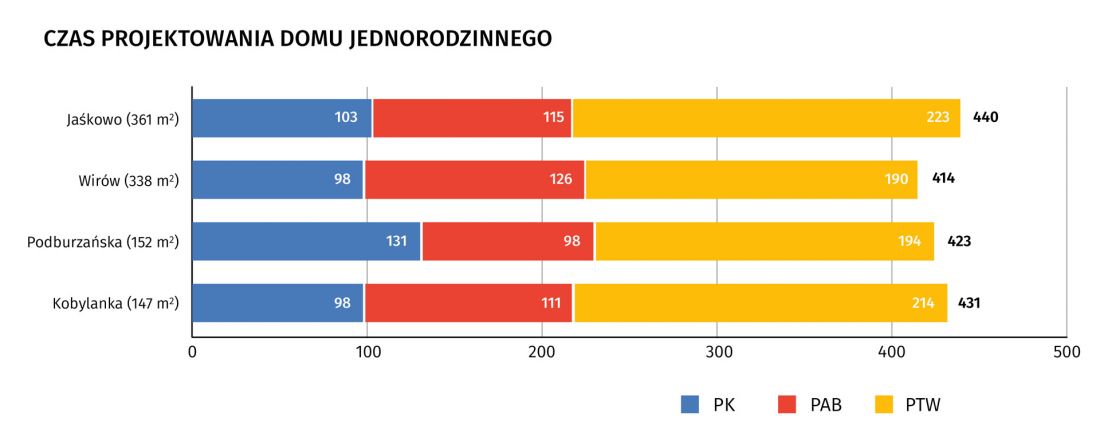
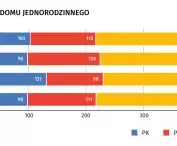
single-family house design time
how many hours it takes to design a house
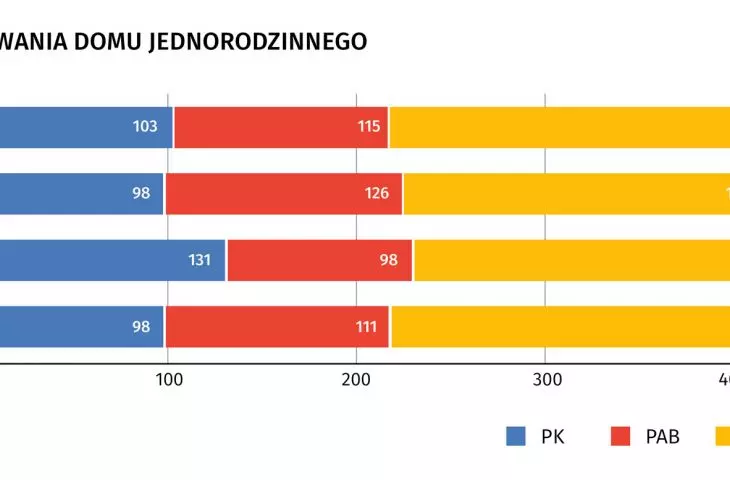
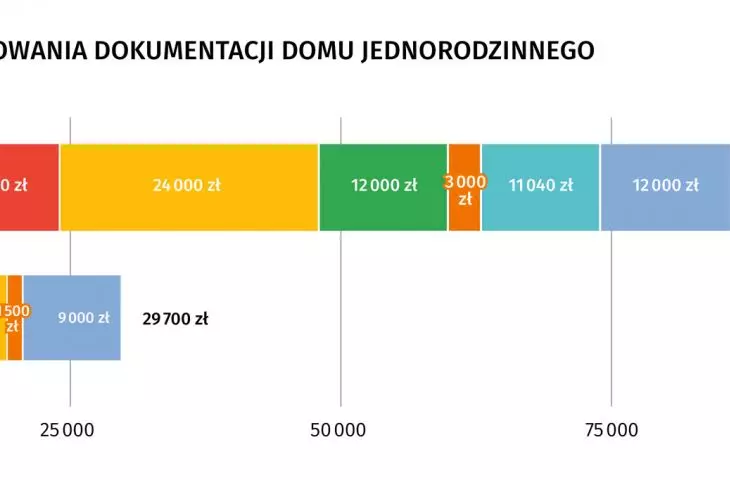
Since we started meticulously counting our design time, we have only designed four single-family houses. This is a part of our business that we have grown out of, but on which we are no longer able to make money. The houses designed were on different plots of land, in different counties and provinces, for different clients and with different floor areas, ranging from 140 to 360 square meters. They were designed by different assistants with the support of myself and the office manager. Despite the feeling that some clients were easier to work with, others more difficult, and that one project went more smoothly than another, it turned out that all the houses took almost exactly the same amount of time, and at each stage of the work. Concepts took 98-131 hours, construction projects 98-126, and detailed designs 190-223. In total, each house project took between 414 and 440 hours to complete. Regardless of the assistant, the client and the area of the house. This statistic allowed us to understand that a house project never took us less than 400 hours, and this means that at a cost of 107.40 zlotys per hour, this is almost 43,000 zlotys net of studio costs alone. Adding 30 percent profit, the risk that the next project will take longer, the cost of the trades and VAT, which an individual cannot deduct, comes out to a gross amount of about 86,000 zlotys. For a studio whose monthly costs are more than 100,000 zlotys, a profit of 15,000 is too small to base the company's strategy on such projects. Especially since the competition is ready to design individual houses for 15,000-20,000 zlotys.
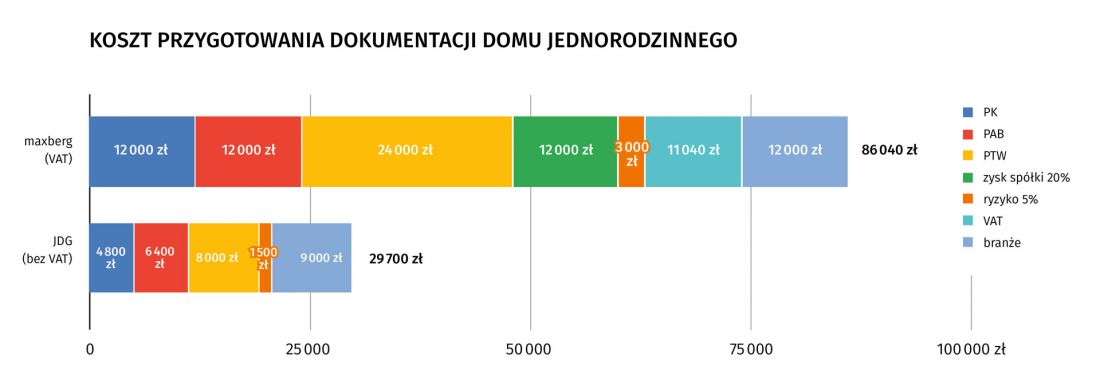
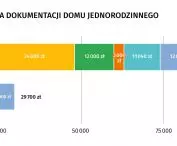
The cost of preparing documentation for a single-family house
So how much does it cost to design a house in a one-person studio, whose owner works on equipment and software from a grant from the Labor Office, in a small one-person office for 1,000 zlotys a month, using inexpensive tradesmen and not paying VAT? If he wants to earn 8,000 a month net, devotes no more than 240 hours of work to a project, and does at least twelve such houses a year (that is, he works nights without vacations, as the month has only 168), he should not price the project cheaper than 30,000 zlotys. Valuing at 15,000-20,000 zlotys, which is common, he can spend a maximum of 80-120 hours, i.e. two-three weeks of 8 hours a day for all stages (concept, PAB and PT), agreements, coordination, trips, meetings, drawing, writing and obtaining a building permit. It should also be assumed that despite the hard work, there will never be enough money to honestly hire assistants and develop the office.
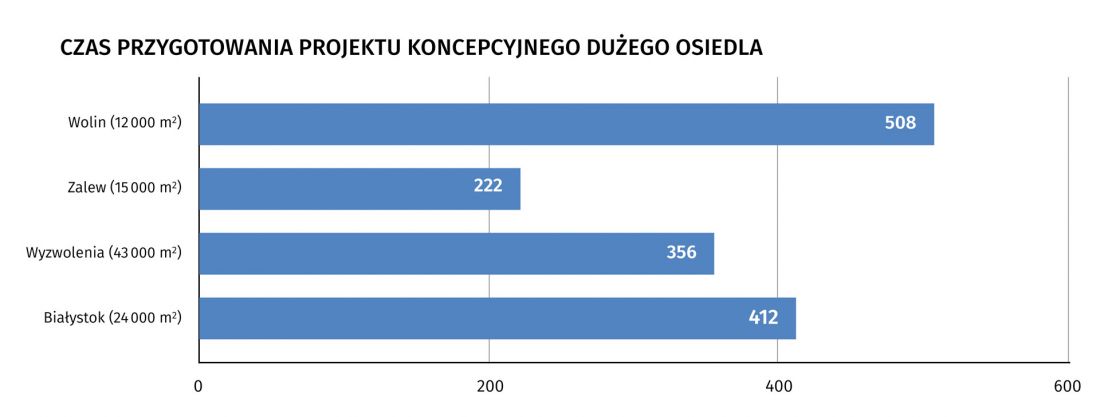
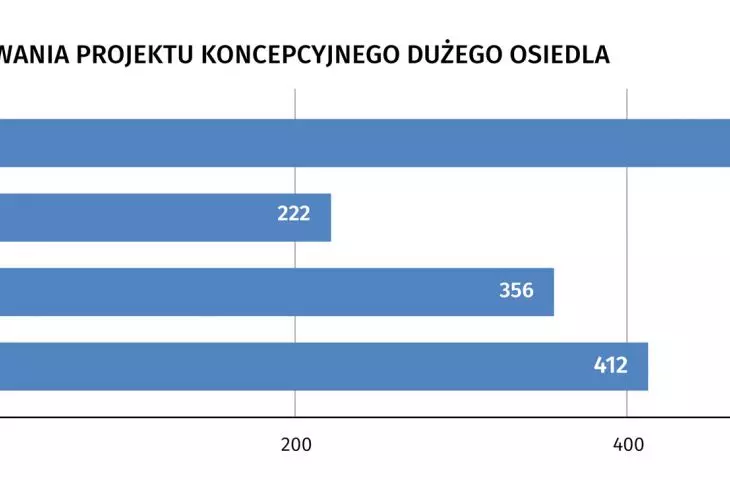
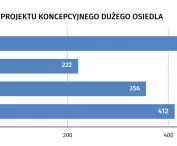
time to prepare a conceptual design for a large housing development
How much time it takes to design one square meter of housing
I have shown that the design time of a house is not significantly affected by its size. Of course, earlier we somehow tried to count the time we spent on house designs, but less precisely and not from the very beginning of the work. There were times when we spent much more time, but these were much larger houses, their pricing was much higher. However, the most complicated houses did not exceed 700 man-hours. We never managed to design a house faster than 360 hours. This knowledge still did not tell us how to price the designs of large buildings or entire estates. How to do it? Keep statistics!
Over four years, we examined many projects from the concept stage, through construction design, to technical/executive design and author's supervision during construction. It turned out that regardless of the scale, a conceptual design of a building or housing development does not take us less than 250 hours, while more difficult studies and development competitions require about 400-600 hours of work. Public procurement competitions require even more time. According to the estimated cost of our work (107.40 zlotys per hour net), this means that the preliminary concept stage of most large projects cost us between 26 and 64 thousand zlotys (not including profit, visualization costs and printing of any boards or presentations). We rarely get paid that much for this work, so we should add it to the profit from other projects!
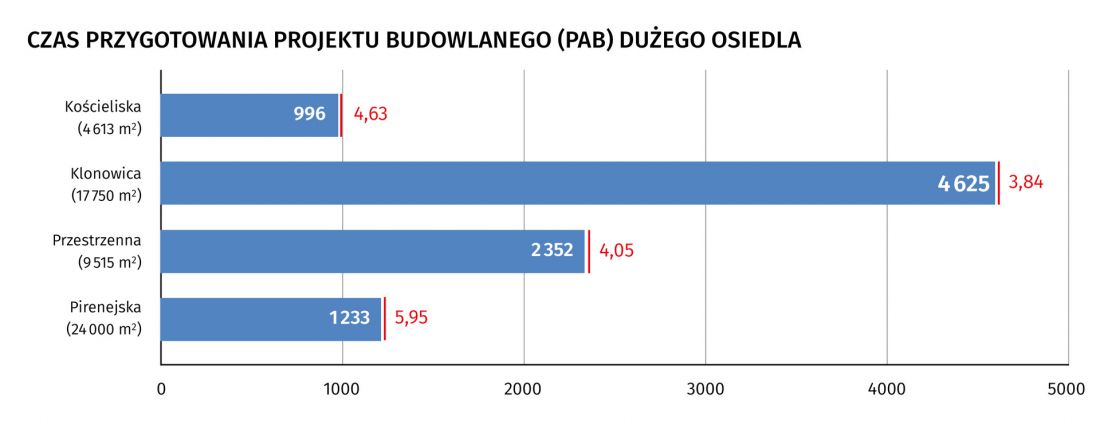
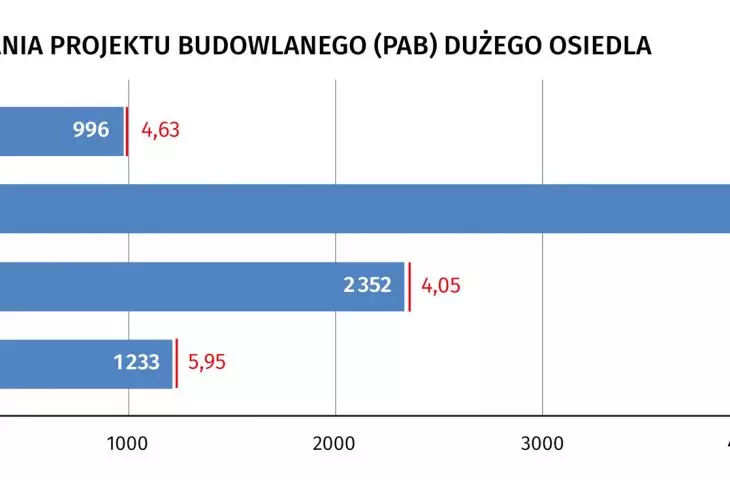
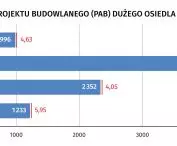
The time to prepare a construction project for a large estate - the average time to prepare 1 sq m of PAB - 4.65 h.
However, the concept is only the beginning. In addition, quite comparable. Here, regardless of the scale of the investment, creativity counts, and the number of boards, visualizations, drawings and diagrams is similar. In subsequent stages, the amount of work depends much more on the size of the project. However, it turns out that it is also quantifiable. Of the four projects we had at the building permit stage in December 2024, all were designed at a rate of about 4 square meters per hour. Whether it was an individual terraced house, a large residential development or an aparthotel with services on the first floor. The exception was the design of a simple residential building in Warsaw (almost 6 square meters per hour), but unfortunately it was not possible to obtain a building permit, the governor and the administrative court upheld the office's refusal and we will have to significantly redesign the entire building. We will certainly approach 4 square meters or even less for each hour of work.
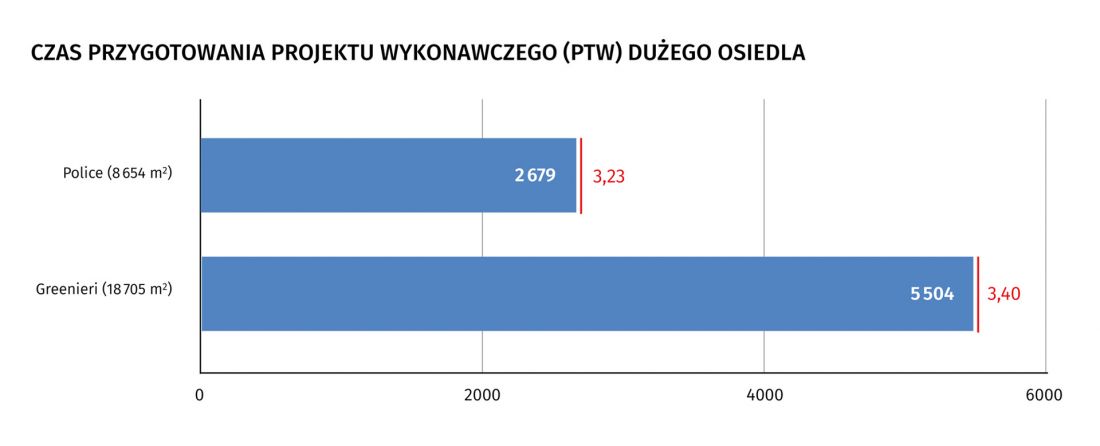
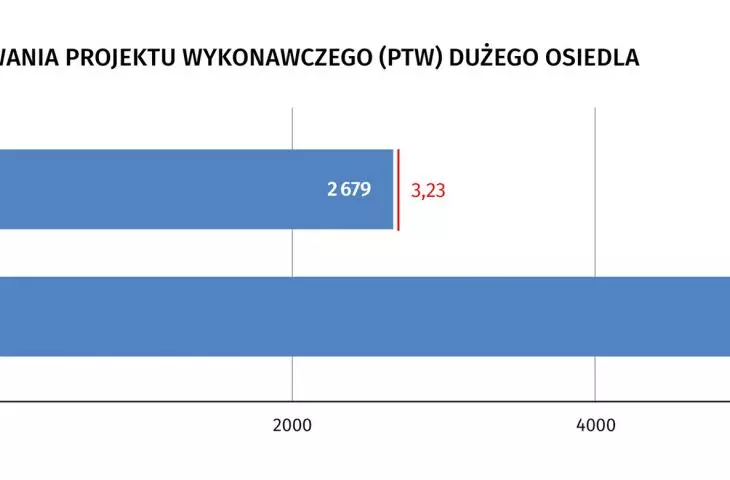
The time to prepare the detailed design of a large estate - the average time to prepare 1 sq m of PTW - 4.65 h.
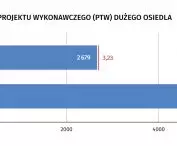
At subsequent stages, the projects were also not characterized by great time deviations. It took almost the same amount of time per meter (3.23 m²/h) to complete the construction design, obtain a permit and detailed design of an inexpensive housing estate in Police (8,600 m² PTW) as it did for a large complex apartment building (18,700 m² PTW) made of prefabricated elements, with an underground garage and a spa area (3.4 m²/h). Of course, the scale of the project and the repetitive nature of some elements played a role in the pace of work, but the deviation was minimal and allows us to predict the cost of projects in the future. This had a big impact on our office's subsequent bids. We could easily show a prospective client how long it took us to design each building and convince them that we could not do it faster without losing the quality of the design or the scope of the documentation. This makes investors very well aware of why there are such large discrepancies in the pricing of design work. We just want decent money for our time, not a "commission" per square meter of their investment. Counting office hours also helps with scheduling, anticipating workload and hiring. We simply know how much time we need to "buy" from our employees in the following months.
how much will a project cost your studio
Each studio has its own style, pace and scope of documentation that it considers complete. There are certainly offices that spend more or less time on design. This does not change the fact that few offices can determine how much time they spend on design and how much it costs. Count! Convince employees to record their work time. Not to hold them accountable. Remember that you pay for all hours worked, including vacations. This is the nature of our work. Count all the time the company has to pay for. Lunch breaks, trips to the restroom or coffee chats are all time the company pays employees, rent, licenses and taxes. If you can convince your employees that knowing how much time they spend on design won't be against them and you won't use it that way, you'll get valuable data. With them, you will be able to increase the profitability of your company and provide better working conditions for yourself and your employees.
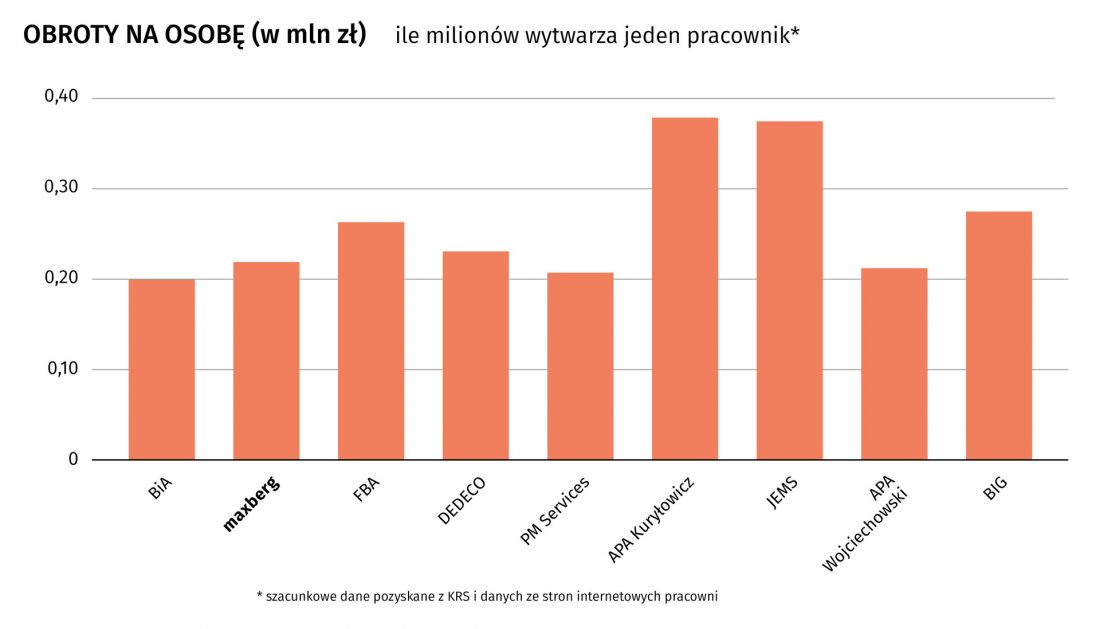
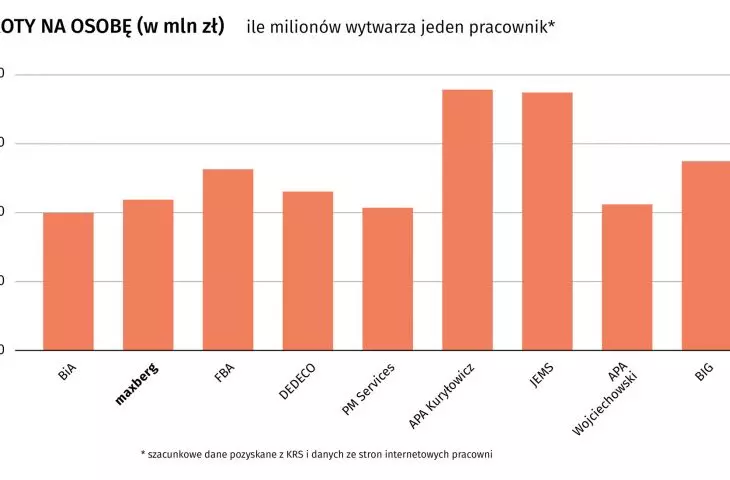
turnover per capita (in million zloty)
myths and facts
how to ensure cash flow
Office and employment costs are fixed and independent of the number of man-hours. They depend on the length of the project over time. Each month of maxberg studio operation is 1512 man-hours of work, which is more than 160,000 zlotys. So it is better to hand over a project faster, even working with more people, than to do it longer with one employee. Remember, too, that there are no "finished" projects. There are only "handed over." Try to match the scope of the documentation with the price the investor was willing to pay. If the project drags on through no fault of the studio, try to release it at some stage and settle it as soon as possible.
How to ensure profit
In the valuation of the project should be included not only the costs of the office and industries, but also the company's profit, a provision for analysis and conceptual studies, a provision for internal meetings, training and development, a provision for risks and taxes. A good designer should not assume a profit like the average entrepreneur, because his work is creative, unique, and the turnover is small compared to any contractor or manufacturer. The design is individual, so unlike a computer game or an armchair design, you usually don't make money repeatedly. Profit, therefore, must take into account the one-time nature. The cost of a work of art (painting or sculpture) is not just the cost of material, preparation time and a 20 percent markup!
where the money runs away
We try not to do anything for free. The cost of the concept is not recouped by the fee for the concept itself. It is only by determining the percentage of the concept in the total project that you can get reimbursement for the concept design itself. Therefore, we try to sign a contract on the basis of a simple analysis, before starting work on the target concept, after accepting the price offer for the entire project. The need to pay 10-20 percent of the price of the entire documentation after signing the contract is accepted by investors with understanding, although it is often hundreds of thousands of zlotys. The cost of the concept itself is still commonly valued (even by designers) at 20,000-30,000 zlotys.
* Sometimes the analysis shows a smaller number of square meters of usable space, so the contract should refer to the final number of them shown in the construction project, and not on the basis of pre-design assumptions.
how much development costs
In 2023, maxberg employees recorded 880 hours spent on internal meetings and training. For the company, this is a cost of about PLN 100,000, or about 5 percent of annual turnover. The time spent on training and meetings must be included in the profit of each project.
is there no money in architecture
The average real estate broker receives 1.5-2.5 percent of the value of the apartment sold from the developer. Some negotiate 3-3.5 percent for a greater range of services and wide access to a client base due to higher costs - visualizations, animations, stands at trade fairs, media campaigns, presentation of construction progress. This means that for each square meter of an average apartment in Szczecin, the broker receives 200-300 zlotys, and in the case of prestigious apartments by the sea, 400-700. This is a cost that the developer does not have to bear, but chooses to do so because it pays off for him. He doesn't have to organize a sales department on his own, hire people for one investment. Many investments in Poland are designed for less than PLN 100-150 per square meter!
Design companies are not listed on the stock exchange!
The largest design companies in Poland have a turnover of 20 million zlotys. The smallest company on the Warsaw Stock Exchange has an annual turnover of about 200 million. A large developer or manufacturer of building materials has an annual turnover of 2 billion zlotys. With high turnover, you can and even must compete with small margins. With low turnover, you can only compete with a higher quality of service, demanding a higher profit.
In 2023, Foster + Partners' office reached 2.16 billion zlotys in turnover. It employs about 1,500 people worldwide. The office has been in existence for almost sixty years (only since 1999 as Foster + Partners). As long as you don't have a billion-dollar turnover, you have to operate with high margins, but since you are "small" you also have low costs. That way, having a 100 percent margin, you'll still be cheaper than the big offices.
when I had a smaller studio, I earned more!
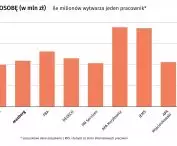
The cost of a maxberg design office is 85 percent the people who create it. The rest is computers, software, insurance and external services (excluding the cost of industries). The company's revenue depends on the number and quality of these people's work. Regardless of the scale of employment, each office employee brings in about 200,000-350,000 zlotys of turnover per year.
The maxberg office generates exactly as much money per person as the largest design office in Poland and almost as much as one of the largest in the world. Take care of your employees!
Karol NIERADKA
more: A&B 10/2025 - U40 - the business of a young architect,
download free e-publications of A&B