




#Artistic Education in Poland_Faculties of Architecture
How do Faculties of Architecture prepare students for the profession? What competencies should an arcitecture graduate have in 2030? We ask deans and deans of Architecture Faculties of Polish universities about this. Prof. Lech Licholai of the Faculty of Construction, Environmental Engineering and Architecture at Rzeszow University of Technology answered our questions.
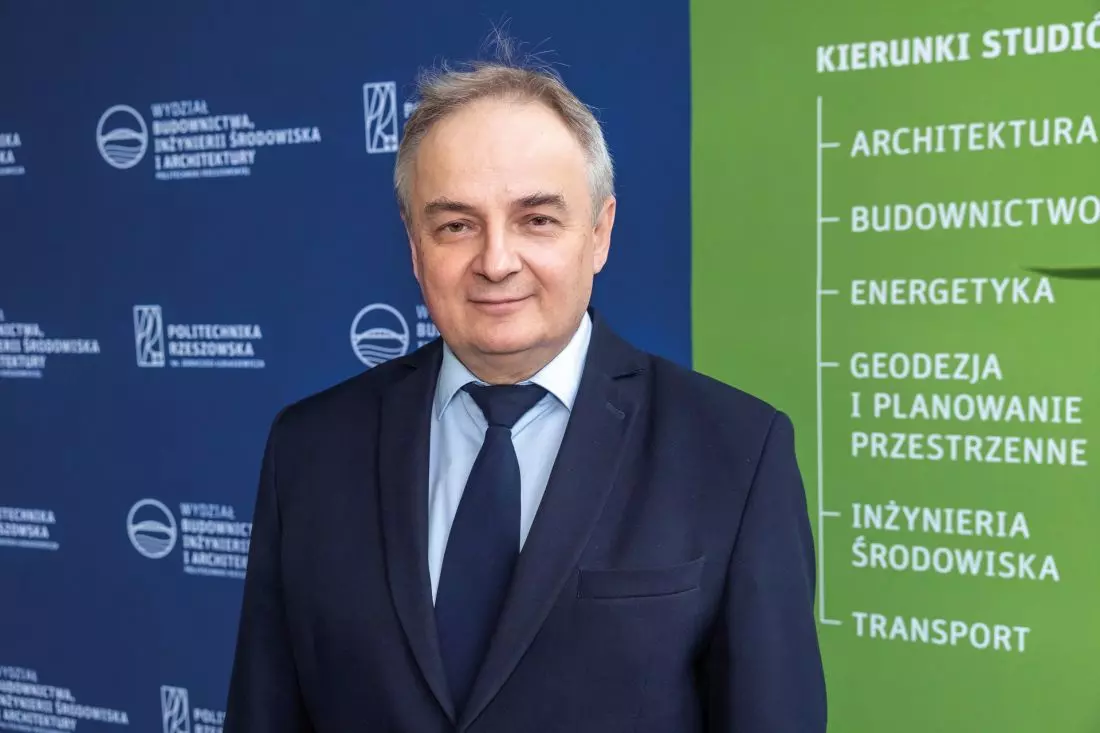
Prof. Lech LICHOŁAI - Employee of the Faculty of Construction, Environmental Engineering and Architecture at Rzeszow University of Technology, Dean of the Faculty and Head of the Department of General Construction. He teaches courses in general construction, energy efficiency in architecture and urban planning and sustainable development in construction. He actively participates in the scientific and organizational life of the academic and engineering community in Poland. He is chairman of the Building Physics Section of the Civil Engineering Committee of PaN in Warsaw. He also performs expert and organizational functions, including as a member of the Main Committee and the Scientific Council of the Building Knowledge and Skills Olympiad, as well as chairman of the jury of the District Committee of this Olympiad in Rzeszów. Member of the Senate of the Rzeszow University of Technology and the Council of the Discipline of Civil Engineering, Geodesy and Transportation. He is active in the Polish Solar Energy Society and the Science Committee of the Polish Association of Civil Engineers and Technicians. Serves as chairman of the organizing committee of the Solina conferences on issues of sustainable development, architecture, construction, engineering and environmental protection, and innovative energy-efficient technologies and renewable energy sources. Editor-in-chief of the Journal of Civil Engineering, Environment and architecture (JCEEa). His research interests include material and technological solutions in construction, energy efficiency in architectural and construction issues, use of renewable energy sources in construction, passive solar heating systems and sustainable construction.
How do you define the most important mission of your department in today's world of architecture?
The mission of our department is to educate architects who are aware of the social, cultural and environmental responsibility of their profession. In a world of dynamic change, it is architecture that must combine high quality inclusive built space with interdisciplinary knowledge. We want our graduates not only to design objects or spaces, but also to understand the context in which they are created and make a real difference to the quality of life of future users. We are committed to fostering critical and responsible attitudes that will allow future architects to actively co-create public and private space in the most conscious way possible.
What competencies should an architecture graduate in 2030 have - and how do you help develop them?
A 2030 architecture graduate should combine the ability to think creatively conceptually and have a solid designfoundation . The ability to work in a team, think critically and navigate the world of new technologies efficiently will be important. An architect in 2030 will be proficient in the BIM environment, consciously use the capabilities of AI neural networks, and present designs using immersive simulations and AR and VR visualizations. Equally important will be soft competencies: universal sensitivity, ability to conduct constructive dialogue and responsibility for design decisions. We develop them through project work in teams, interdisciplinary classes or practical workshops. We carry out some projects in cooperation with external partners.
Which elements of the curriculum do you consider key, and which need the most change today?
The core of the program remains architectural and urban design, supported by the history and theory of architecture and technical issues in construction, transportation and clean technologies. This is the foundation without which it is impossible to build a mature architect's workshop. We also consider it important to provide solutions to today's problems: an aging population, security, climate and technological changes. The biggest changes today require didactic methods and the way we integrate knowledge. We increasingly emphasize projects based on real-world problems, integrated design, and greater flexibility in learning paths tailored to individual student interests.
How does the university combine the traditional workshop (drawing, mock-ups) with new technologies such as AI and BIM?
We believe that the traditional architect's workshop is still extremely important. In the conceptual process, we use freehand drawing, working with a physical model or analyzing conditions and context, as they teach spatial thinking and design sensitivity. At the same time, we consistently develop students' digital competencies by introducing BIM tools, up-to-date design support software and elements of using artificial intelligence. It is crucial for us to consciously connect these worlds. We teach students that technology is meant to support the creative and decision-making process, not replace it. While pointing out the richness of the possibilities of writing, we emphasize the need to verify the solutions proposed by modern IT tools, encouraging the use of AI's causal power in the pre-design process and public participation.
How do you provide students with real contact with practice - architectural offices, construction sites, investors?
We consider real contact with practice as an indispensable part of an architect's education. We cooperate with many architectural offices, inviting practitioners to teach classes or give guest lectures. Invited speakers are prominent specialists from both home and abroad. The study program includes mandatory professional internships, visits to construction sites and projects carried out for real locations. As a result, students confront their ideas with the constraints and expectations of the market already during their studies.
What is the biggest challenge for architecture students today and how does the university support them in this?
One of the biggest challenges today is the intensity of architectural studies combined with high expectations and pressure for excellence. Students also face uncertainty about their future career path . We try to respond to these challenges through a mentoring system, clear organization of the didactic process and easy access to consultations with staff. We also attach increasing importance to building a supportive atmosphere and taking care of students' psychological well-being.
How do you integrate issues of sustainability and environmental responsibility into the curriculum?
Sustainability is integral to design thinking. Students analyze the life cycle of buildings, energy efficiency, climate change adaptation and socially responsible design. We teach that architecture has a real impact on the environment and that this impact can and should be shaped consciously.
How does the university build relationships with business, local governments and community organizations?
We consider building relationships with the external environment as part of the university's mission. We work with local governments on urban planning projects, with business on implementing innovations, or with community organizations on participatory projects. Course projects are often done through competitions. For students, this means the opportunity to work on issues that have a real impact on space and local communities. In doing so, they learn dialogue, responsibility and how to understand different stakeholder perspectives.
Prof. Lech LICHOLAI
Read more: A&B 2/2026 - Education,
download free e-publications of A&B