




#Artistic Education in Poland_Faculties of Architecture
How do Faculties of Architecture prepare students for the profession? What competencies should an arcitecture graduate have in 2030, and which elements of the curriculum need the most changes? We ask deans and deans of Architecture Faculties at Polish universities about this. Prof. Tomasz Bradecki, dean of the Faculty of Architecture at the Silesian University of Technology in Gliwice, answered our questions.
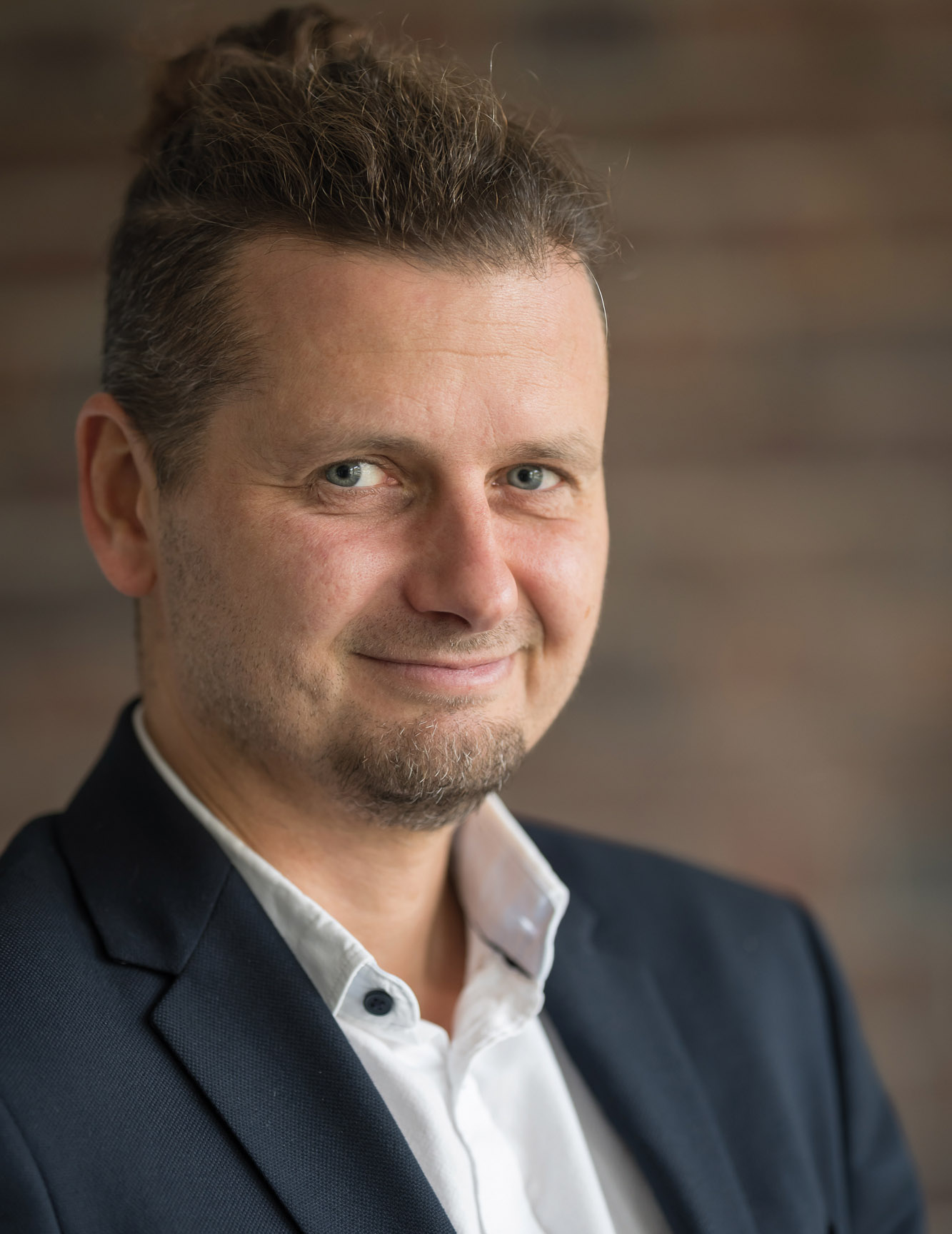 Prof. Tomasz BRADECKI - designer, didactician, researcher at the Faculty of Architecture of the Silesian University of Technology. Architect, urban planner, author of dozens of publications in the field of architecture and urban planning, expert in the study of urban spaces, especially residential and public with the use of 3d models and augmented reality, member of the commission of the Polish Academy of Sciences o. Katowice, active popularizer of science, creator of urban planning games "Game in the neighborhood", "Game in the metropolis", "Game in Katowice". Founder of UrbaNmodEL research group dealing with models in urban planning, co-organizer of conferences, workshops and summer schools. Active designer, member of the Chamber of Architects of the Republic of Poland, author and co-author of dozens of architectural and urban planning projects, multiple winner in professional architectural competitions. Winner of the Prime Minister's Award for Outstanding Achievements in 2023 and the Silesian Voivodeship Marshal's Award for the Best Public Space in the Silesian Voivodeship 2025.
How do you define the most important mission of your department in today's world of architecture?
Our mission is first and foremost a multifaceted preparation of young people to study architecture and urban planning. We also strive to take on more and more research and design challenges, in cooperation with industry and foreign universities. The promotion and continuation of the Silesian school of architecture, which already has its own brand, is also close to our heart.
What competencies should an architecture graduate have in 2030 - and how do you help develop them?
First and foremost, a graduate should have knowledge and skills in architecture and urban planning that he or she will be able to develop independently. Therefore, it is important that these competencies are multifaceted. It is also important to be aware of the possibilities of modern tools and technologies. The development of competencies is helped by student research clubs led by committed professors. At the Faculty of Architecture at the Silesian University of Technology, we have more than a dozen such circles, of which we are very proud. It is the students themselves who organize additional training, trips, take part in scientific research, publish scientific articles or file patents and utility models.
Which elements of the curriculum do you consider key, and which need the most change today?
What needs change are the elements of the program that deal with sustainability, that is, designing in a more environmentally friendly trend. This applies to building materials and the way we think about buildings and their overall use cycles. In terms of urban planning, the social, local and participatory aspects are key.
How does the university combine traditional workshops (drawing, mock-ups) with new technologies such as AI and BIM?
We still teach painting, freehand drawing and realize mock-ups during didactics. In our opinion, knowing the basics of the workshop is important. AI allows us to experiment, we conduct experiments with students. However, I think patience is needed when it comes to AI - it will take some time before we learn how to use AI to consciously support the design process, rather than generate vague prompts. BIM technology is already becoming a standard, so we are trying to impart knowledge about its capabilities, but we do not teach it during the standard didactic path. We offer postgraduate studies, during which prominent specialists in the field talk about BIM.
How do you provide students with real contact with practice - architectural offices, construction sites, investors?
A mandatory internship in an architectural office is an important part of the development path of young people on our course. It happens that some of the topics developed allow contact with investors and construction sites. This is an important aspect of the didactic process. Internships are also sometimes held in offices, which provides an opportunity to learn about the formal and legal aspects of the profession.
What is the biggest challenge for architecture students today, and how does the university support them in this?
We believe that the biggest challenge today is preparing to work in design teams. That's why we implement many classes in the project-based learning (PBL) formula - many people work on one joint project. Some are implemented in interdisciplinary teams - with students from other majors. The need for a role-based project with a specific deadline has a lot in common with working in large design offices, where you use specializations and experience in selected areas.
How do you integrate issues of sustainability and environmental responsibility into the curriculum?
Sustainability issues are implemented at every stage of the study program, with most subjects. Where possible, we use technology, such as software, or implement experiments using apparatus: smog sensors, noise, thermal imaging and others.
How does the university build relationships with business, local governments and community organizations?
Our department has extensive cooperation with business and local governments. Every year we carry out more than a dozen targeted projects or student competitions, in which students are confronted with a real problem and solve it by design. Often, as part of this cooperation, we manage to prepare in situ consultations, to present local needs that need to be properly assessed and be able to respond to them. Importantly, it also manages to prepare prizes for the authors of the best works, which makes the students very happy.
Prof. Tomasz BRADECKI
more: A&B 2/2026 - Education,
download free e-issues of A&B