




#Artistic Education in Poland_Faculties of Architecture
How do Faculties of Architecture prepare students for the profession? What competencies should an arcitecture graduate have in 2030, and which elements of the curriculum need the most changes? We ask deans and deans of Architecture Faculties of Polish universities about this. Prof. Grzegorz Swit, dean of the Faculty of Construction and Architecture at Kielce University of Technology, answered our questions.
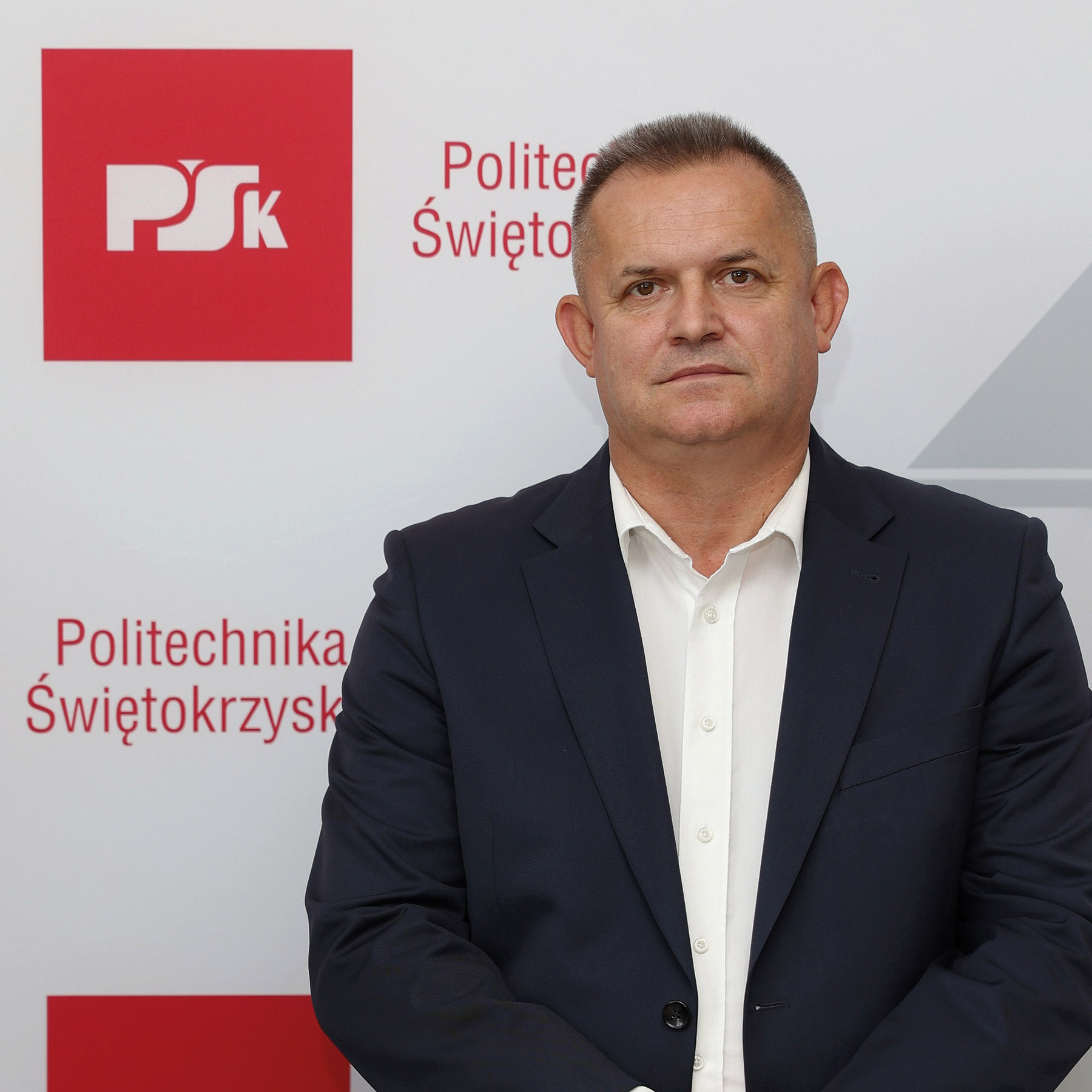 Prof. Grzegorz ŚWIT - dean of the Faculty of Construction and Architecture at Kielce University of Technology in the 2020-2024 and 2024-2028 terms. He specializes in the diagnosis of building and engineering structures, especially using the acoustic emission method based on pattern recognition, solid state mechanics, as well as strength of materials and structural health assessment. His main scientific achievements are in the applications of the acoustic emission method for the detection of defects and anomalies in working engineering structures, and the use of artificial intelligence, machine learning and statistical-mathematical methods of clustering acoustic waves for structural health assessment. He has authored or co-authored more than a hundred publications, including more than a dozen in JCR-listed (Philadelphia list) journals. He published two scientific monographs in 2008 and 2011. His articles have received more than five hundred citations in foreign journals. Author of more than thirty reviews for journals on the Philadelphia list. Manager of five research projects funded by the National Center for Research and Development and the European Union; promoter of four doctorates, including two awarded; member of international and national scientific associations, including The International Association for Bridge and Structural Engineering (IABSE), The International Federation for Structural Concrete (FIB), Russian Academy of Architecture and Construction Sciences (RAACS) and the Concrete Structures Section of the Committee on Civil Engineering of the Polish Academy of Sciences. Member of scientific committees of several national and international conferences. Author or co-author of eight patents and more than four hundred expert opinions on engineering structures and buildings. Expert of the Polish Center for Accreditation in NDT methods.
How do you define the most important mission of your department in today's world of architecture?
Its mission is to educate young people so that in the course of their studies they gain a solid theoretical and practical foundation in construction and architecture while using modern technologies. They also knew how to combine practical knowledge with theory, care about the environment, know how to cooperate in a group and manage their time, and are resilient to stress.
What competencies should an architecture graduate in 2030 have - and how do you help develop them?
An architecture graduate in 2030 should be able to combine elements of the traditional design workshop with proficiency in the use of modern technologies, such as BIM, AI, demonstrate the ability to collaborate in a team, be environmentally conscious, strive for inclusive design, open to the needs of all people. The development of these skills is a result of the adopted curriculum, the scope of semester projects, as well as any activities that the Faculty of Construction and Architecture implements, for example, outdoor, inclusive and other trips.
Which elements of the curriculum do you consider key, and which need the most change today?
The most essential elements of the curriculum are the combination of theoretical and practical knowledge. The instructors place great emphasis on making sure that graduates easily find their way in the labor market and are valuable to employers. To meet this, students' semester projects are not only polished and graphically attractive, they also include a scope consistent with construction studies, thus teaching solid design skills.
How does the university combine the traditional workshop (drawing, mock-ups) with new technologies such as AI and BIM?
The curriculum includes both traditional architectural and urban design and integrated design. In this area, students gain knowledge of BIM programs, construction guidelines, installations, fire, H&S and sanitary requirements. The instructors give them practical knowledge, which they will use in real projects of large buildings. A modeling studio has been set up at the Faculty of Construction and Architecture, where students create spatial visualizations of designed buildings.
How do you provide students with real contact with practice - architectural offices, construction sites, investors?
A valuable element of contact with offices is now student internships, which take place during the course of studies and last a whole semester. Internships carried out in the studios provide an opportunity to come into contact with the construction and design process from the concept stage, through the construction project, to the detailed design. Students can then develop not only construction drawings, but also formal documents and participate in the procedure of administrative proceedings or obtaining various types of permits. In addition, students participate in plein-air painting workshops organized in picturesque towns in the Świętokrzyskie Voivodeship, draw up inventories of buildings, such as historic buildings in the Kielce Village Museum or schools in the Świętokrzyskie Voivodeship. They also participate in architectural competitions organized by companies interested in the selected solutions.
What is the biggest challenge for architecture students today and how does the university support them in this?
The biggest challenge is to gain competence in practical design knowledge, the ability to work in a team, use new technologies while taking care of the psyche and hygiene at work. They are helped by the study program, project scopes, teamwork and student internships. Also important are the student trips supported by our faculty, meetings in study clubs, university meeting initiatives and participation in charity events. They enable the expansion of knowledge, teach better interpersonal relations, cooperation, and sensitivity to others.
How do you integrate issues of sustainability and environmental responsibility into the curriculum?
The curriculum of the Bachelor's and Master's degrees in architecture includes subjects in integrated architectural and urban design, and we emphasize, among other things, the use of local materials, respect for nature, integrating buildings into the landscape, the use of environmentally friendly technologies such as heat pumps, photovoltaic cells, gray water recovery and others.
How does the university build relationships with business, local governments and community organizations?
Swietokrzyska University of Technology has been cooperating with local government organizations for years. Examples include competitions organized with the Swietokrzyskie District Chamber of Architects, local authorities and other institutions and private companies. The companies co-organize architectural, painting and photography competitions with the university, in which students can use the skills they acquired at university and realize their passions.
Prof. Grzegorz ŚWIT
more: A&B 2/2026 - Education,
download free e-issues of A&B