




#Artistic Education in Poland_Faculties of Architecture
How do Faculties of Architecture prepare students for the profession? What competencies should an architecture graduate have in 2030, and which elements of the curriculum need the most changes? We ask deans and deans of Architecture Faculties of Polish universities about this. Prof. Magdalena Baborska-Narożny, dean of the Faculty of Architecture at Wrocław University of Technology, answered our questions.
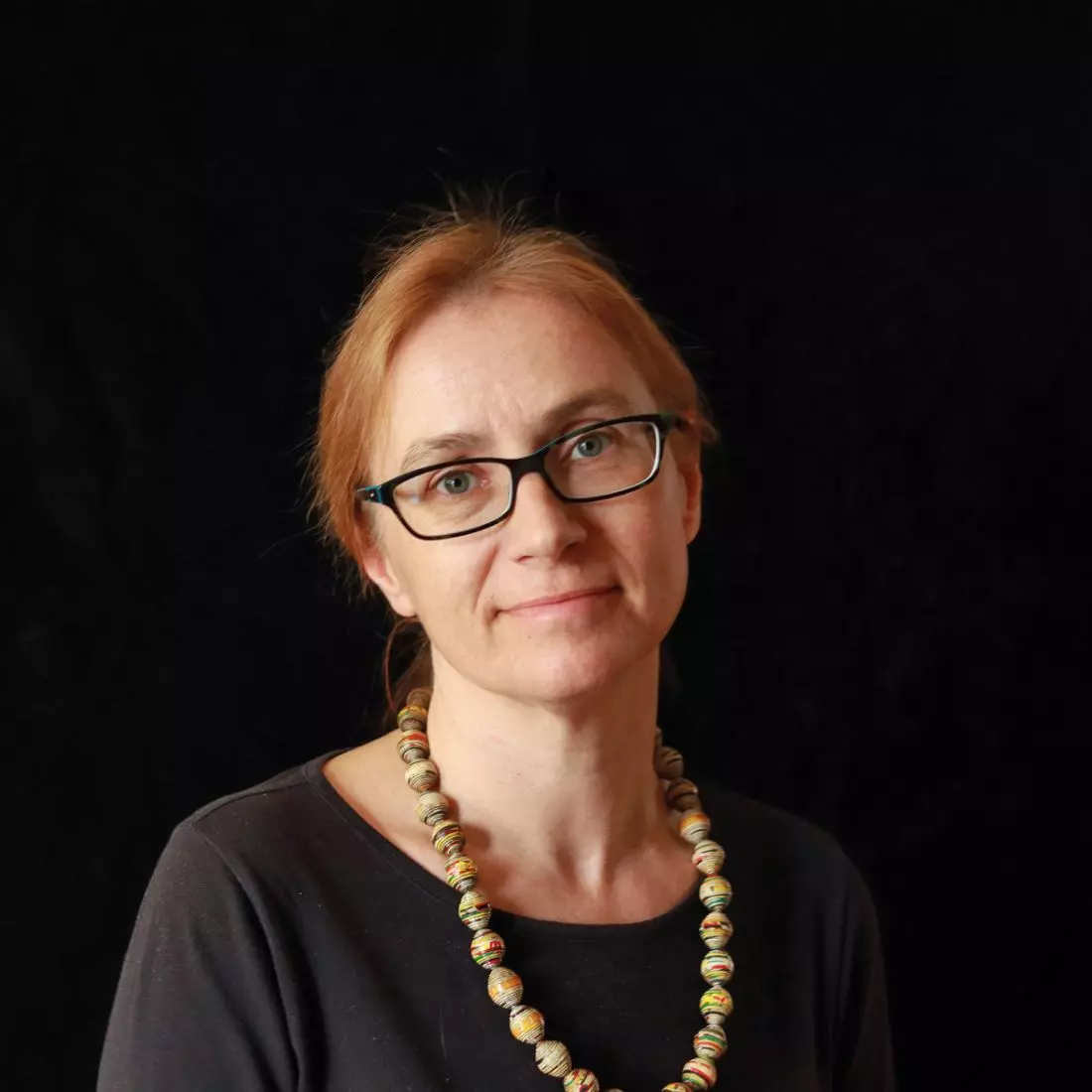 Prof. Magdalena BABORSKA-NAROŻNY - architect, PhD, professor at the Department of Architecture and Visual Arts at the Faculty of Architecture of Wrocław University of Technology, where she has served as dean since October 2025. From 2013 to 2015, he was a Marie Curie IEF Fellow at the University of Sheffield in the UK. As part of a Fulbright STEM Impact Award, she conducted research at the School for the Future of Innovation in Society at ASU in the United States in 2024. She serves on the board of the journal Buildings & Cities. She is an international expert in the field of residential architecture performance evaluation. Her research focuses on the challenges of climate catastrophe and energy poverty. She seeks to understand the well-being of residents, particularly in terms of securing thermal comfort, air quality and energy consumption. She is interested in the quality of the residential environment as a product of the user's interaction with the context. She links energy consumption to the way people live in buildings of different locations, typologies and energy standards.
How do you define your department's most important mission in today's world of architecture?
Recently, our department developed a Development Strategy. In the document, we define the mission as three key areas:
Conducting relevant research, collaborating with the environment, and educating creative and competent professionals capable of shaping space and architecture based on knowledge, ethics, and sensitivity to social needs and local and global challenges.
Thus, our goal is to educate graduates who are convinced of the causal role of architecture and spatialorder in shaping the quality of life and in building social ties. The belief in causality should be followed by a sense of responsibility, for example, for striving to minimize the burden on the environment. The essence of research at the Department of Architecture, for me, is to constantly ask questions about the validity of existing ways of thinking about design, heritage protection or planning, about priorities, goals and not always obvious connections, such as the shape of regulations in the face of the climate catastrophe. I understand cooperation with the environment as our co-responsibility for initiating and participating in activities that allow the exchange of knowledge, experience and development of public interest in architecture and space.
What competencies should an architecture graduate have in 2030 - and how do you help develop them?
The profile of a graduate outlined in the answer to the previous question requires a variety of competencies, both "hard" and "soft." Competencies and responsibilities that allow our graduates to creatively seek and discover, within the framework of architecture and planning, answers to the complex crises of modern times, first and foremost the climate catastrophe or the decline in biodiversity, also social crises such as growing inequality, migration or aging populations. This search for answers requires expanding students' sensitivity to a wide variety of issues, learning to observe and analyze the context in all its layers: social, cultural, spatial, technological, economic or environmental. The study program is extensive and allows students to expand their interests, and thus choose a variety of professional paths. Students develop independent and critical design thinking, as well as teamwork and interdisciplinary communication skills, among other things, during design classes, seminars and internships, where they encounter different ways of perceiving the environment and responding to its needs.
Which elements of the curriculum do you consider key, and which need the most change today?
The key seems to be a move away from teaching methods that give (lectures) towards problem-based and practical methods that develop thinking skills and develop the need to explore. Architecture is a very complex field, its boundaries are ambiguous, making it almost impossible to define the scope of universal architectural knowledge. Therefore, it is important to develop curiosity and show the multifaceted nature of the processes occurring in architectural, urban and planning design. It is important to strive for flexibility in the study program, which would allow a freer choice of study paths.
How does the university combine the traditional workshop (drawing, mock-ups) with new technologies such as AI or BIM?
We treat the traditional workshop as a foundation. Sculpture or painting present in our faculty develops a sense of observation, teaches artistic sensitivity and composition. Sketches, working mock-ups or hand-drawn design drawings are tools that foster creative and individual thinking about architecture, yet require a certain discipline in the creative process and thus have their place in the educational process. We also see the great potential of new technologies as tools to support the design process. We teach students to consciously use BIM or GIS - as tools for analysis and optimization, and AI as a space for experimentation to support design thinking with authorial control. At the concept stage, skillfully used VR tools are excellent for communication even among experienced design teams. Similarly, 3D scanning is invaluable, for example, in the inventory of historical objects or stages of conservation work. At the department, we strive to provide exposure to as full a range of project recording tools as possible, so that students can see for themselves which are most effective for them and at what stage. We provide access to specialists and classes in art studios and laboratories with appropriate software and equipment. Both traditional workshops and new technologies have their own student research clubs, which group enthusiasts under the guidance of instructors who deepen their explorations in their chosen areas.
How do you provide students with real contact with practice - architectural offices, construction sites, investors?
The most direct cooperation with studios, builders and investors is provided by semester-long internships in offices. At the same time, we are developing joint activities with IARP and SARP, which, for example, prepares guest lectures by architects at the faculty. Individual instructors organize tours of buildings they co-create, invite outside architects to review projects, develop workshops with active colleagues and participate in them. We also plan to develop cooperation with practitioners in graduation and by activating and expanding the external faculty development team.
What is the biggest challenge for architecture students today and how does the university support them in this?
The challenges are varied and partly unchanged over the years, such as choosing one's own professional path, managing time in an extensive program of study often linked to gainful employment. New challenges are related to awareness of the dynamics of legal, technical changes or expectations of architecture and space, for example, in connection with the climate catastrophe. To be able to recognize key decisions in the growing complexity of the investment process, in which one must remain proficient, one needs constantly updated knowledge in many areas and the ability to work as a team. And here design classes prepare you to reconcile the technocratization of the design process with the preservation of the creative element, and practice teamwork skills. In addition to ensuring the development of practical and social competencies, the role of the university is to provide mental support for students and promote a balance between work and leisure - appropriate university-wide programs are being introduced, including those proposed by students and doctoral students.
How do you integrate issues of sustainability and environmental responsibility into the curriculum?
Wise introduction of complex sustainability issues into the education of future architects, so as not to stop at the level of greenwashing or legal requirements for energy efficiency, is both necessary and very difficult. This is a process that we have begun, among other things, based on our staff's ongoing research in this area. A sustainability team has been established in the department, whose role is to coordinate this issue in various classes during the course of the studies, so that we do not talk about sustainability in a separate subject module, but in integration with many problems, scales or programs.
How does the university build relationships with business, local governments and community organizations?
Our relations with the local, but also international environment are based on engaging in mutually beneficial initiatives in research or expertise, as well as various aspects of education. It is also important for us in the relationship to be active in dialogue with a wide audience about architecture and space, for example by supporting external partners in organizing competitions that have study or implementation objectives. Relationship building is a dynamic process of finding interfaces for cooperation, building an understanding of resources, needs, a community of goals, and creating trust. Trust stems from positive experiences of cooperation with us, our own or a network of trusted partners, the basis for it is the prestige of Wroclaw University of Technology as a reliable partner with extensive experience and competence. At the same time, we have great flexibility in the formats of cooperation - permanent or occasional, adapted to the purpose of cooperation. Some of the course projects or activities of scientific circles, for example, are in response to the demand of external investors. Employees and students of our faculty are involved in work in areas affected by natural disasters or war in Ukraine. Such cooperation usually occurs through the relationships and contacts of our instructors. In turn, at the institutional level, we agree on access to data or documents that are used in the courses we teach.
Prof. Magdalena BABORSKA-NAROŻNY
Read more: A&B 2/2026 - Education,
download free e-issues of A&B