






Architects create spaces for others, but often lose their own. Until we start talking about health and balance in this profession, burnout will be included in the price of beautiful architecture.
 Karolina MAJCZAK - a licensed architect since 2017. On a daily basis she leads projects at K+Architekci, and in parallel develops her own studio. Her specialty is large investments - residential, industrial and healthcare-related. At work she focuses on reliability and an honest approach to the design process, believing that good architecture is created when it combines the needs of the investor with concern for people and the environment. After hours, he is happy to switch from AutoCAD to a sewing machine, a barbell, a paintbrush or a hammer. He sews, paints, draws, tinkers - in a word, he enjoys creativity in any form. She reads and travels, seeking inspiration both in everyday life and in encounters with other cultures.
the scale of the problem
Each of us sometimes faces the difficulties of everyday life: demanding clients, difficult co-workers or financial problems. Excessive responsibilities, time pressures and deadlines also add to the problem. Perhaps in no other profession do the words "creative work" and "pressure" stand so close together. Architects' professional problems are often reduced to financial issues: low salaries, insecure contracts, lack of stability. Meanwhile, there are real mental and physical costs behind these numbers. To find out more, I analyzed available research and conducted my own survey of architects.
architects in numbers
In the national survey "Success at the Weight of Health - About Mental Health and the Future of Work" (2025), 97 percent of respondents admitted that they feel stress at work, and 33 percent believe it damages their mental health. Although the survey covered a variety of industries, architects are no exception.
Poland still lacks thorough research about architects' well-being. Kamila Doniec attempted to look at architects' job satisfaction in the 2022 study: "Professional Commitment of Architects." 526 people took part in it. Nearly 19 percent of respondents said they were satisfied with their work. 33.5 percent were not satisfied with their pay, and 42.3 percent of respondents said they do overtime. The seemingly simple question yielded complex and multidimensional answers. From this report, one can conclude that we are satisfied with work itself, but not necessarily with wages anymore.
Foreign data also leaves no illusions. In 2021, a survey of 2,066 architects in Australia was conducted on a study group on the condition of the profession. Forty-two percent of respondents indicated that their careers had a negative impact on their well-being. In the United States, a report compiled by Bespoke Careers - "Architecture and Design Market Report 2025" - was published. According to it, 38 percent of people surveyed are satisfied with their jobs, in Texas as many as 67! 53 percent would change jobs in the next twelve months to one that guarantees greater work-life balance.
The Royal Institute of British Architects (RIBA) also presented its findings from the report. They surveyed 1,450 people, 57 percent of whom were between the ages of 25 and 34. 90 percent indicated that they do overtime; 55 percent are dissatisfied with their pay and working conditions; 54 percent declare that their work harms their mental health and well-being. Only 27 percent assure that they are not exposed to excessive stress at their workplace.
Survey of architects' mental and physical health
© Karolina Majczak
voice of architects
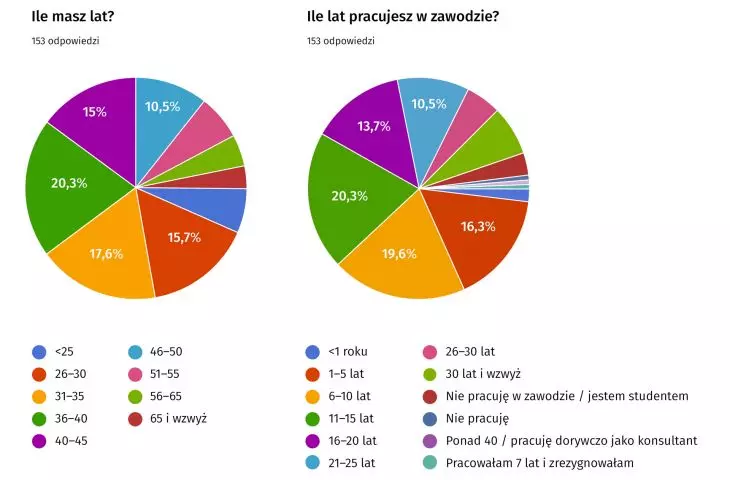
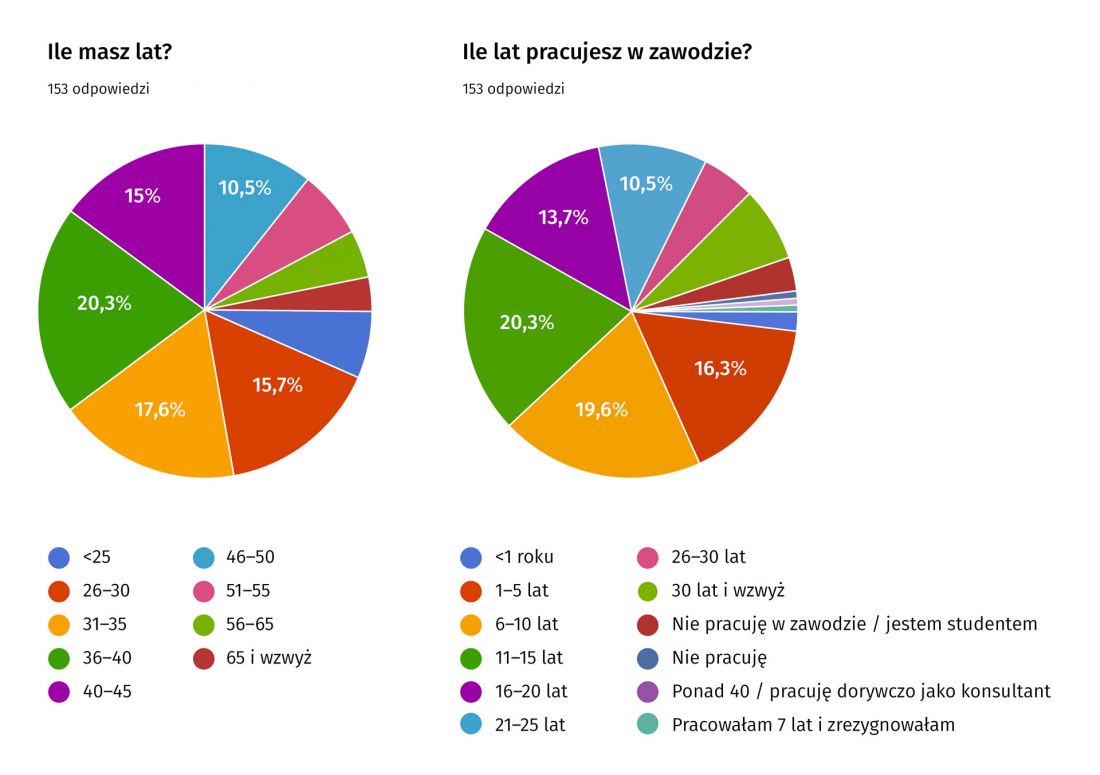
My survey included 153 respondents, more than 81 percent of whom are active architects. The questions were about mental health, physical health and interpersonal relationships.
On the verge of burnout?
The responses regarding mental health seem disturbing. 19 percent of respondents declared a diagnosis of mental problems. Another 21 percent have no diagnosis, but "feel that something is wrong." Architects wrote primarily about diagnosed depression, problems dealing with stress. Fatigue, anxiety, and a sense of meaninglessness were also common responses. One respondent wrote:
After graduation I started working in an architectural office, where I worked for more than two years. The job was very demanding, too many responsibilities for one person, constant overtime (I happened to leave work at 10 pm), and I was often left alone with project problems. Feeling that I needed a change, I moved to another city, but it took almost a year before I returned to work. During this time, I treated my depression and went to therapy. Even though I wasn't working, I was still experiencing tremendous stress and was unable to rest or return to work even part-time. Currently, I only work from home, on my own, and will not return to work for someone
Survey on mental and physical health of architects
© Karolina Majczak
everything is written in the body
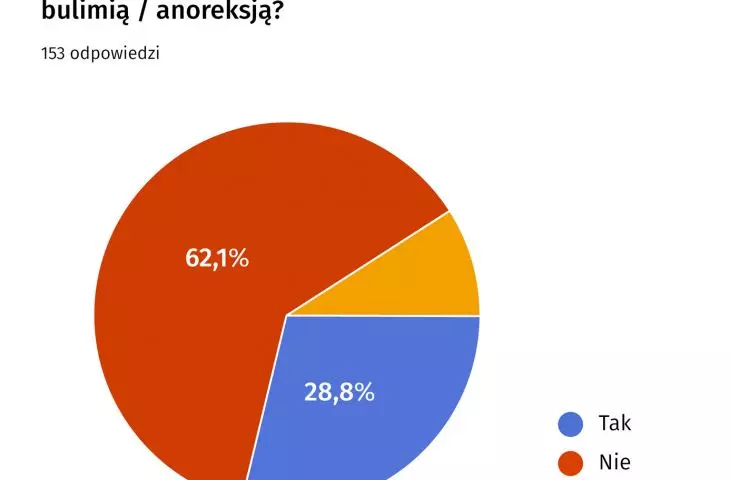
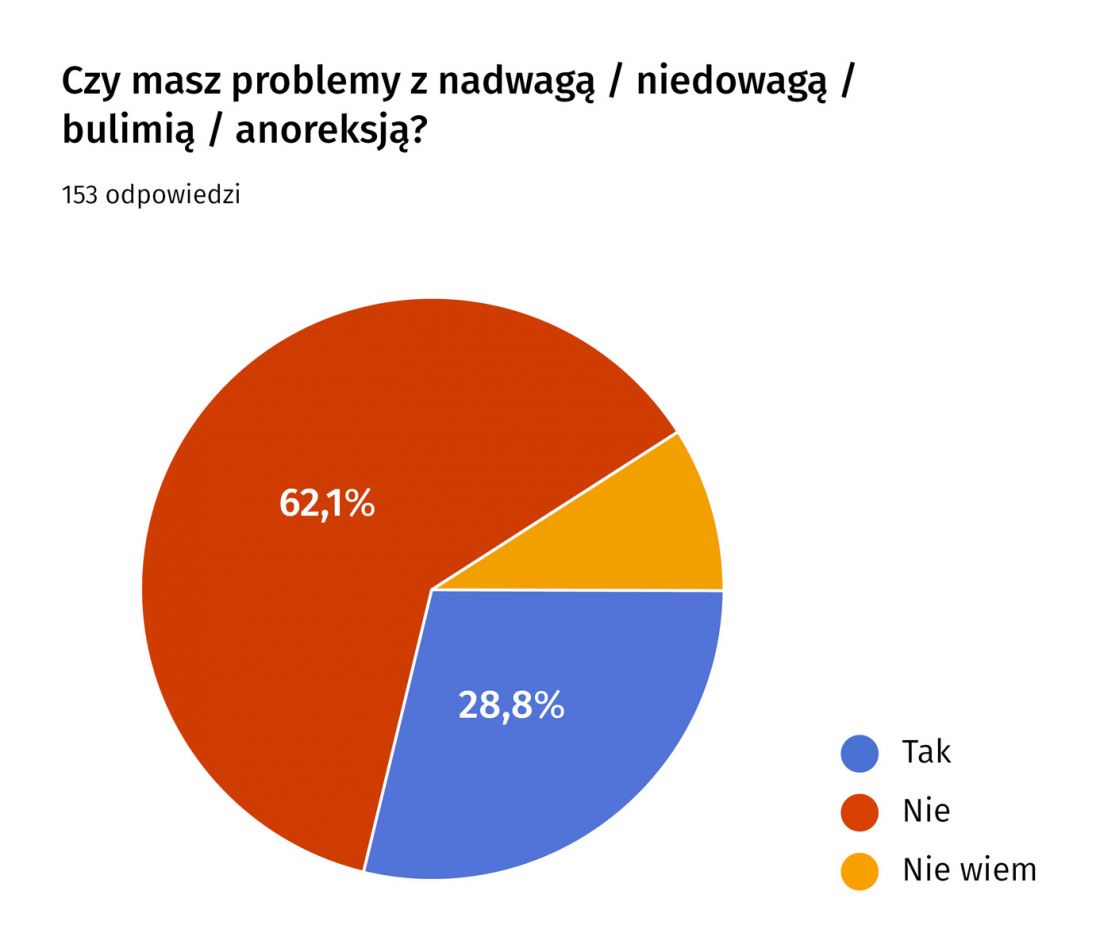
Mental health problems translate into physical health. More than 18 percent of respondents indicated hormonal problems, and 29 percent indicated weight problems - overweight, underweight, bulimia, anorexia; overweight was the most common response. More than 3 percent of respondents indicated fertility problems, which, in conjunction with hormonal problems, is not surprising.
not by architecture alone does man live
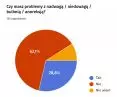
To the question "Do you have problems with your mood?" more than 6 percent of people answered definitely yes. Nearly a third of respondents are stressed and see a connection between stress and work.
19 percent have passions, but don't have time to pursue them.
I have a lot of passions, however, I don't have time for them. It's hard to find time when you work several hours a day
Survey on mental and physical health of architects
© Karolina Majczak
people-based design
On a positive note, the aspect of interpersonal contacts is positive. Almost 1/3 of respondents like their supervisors and co-workers.
My work is daily contact with people who are like family to me not only during working hours. I am very happy that I can grow in this industry precisely under the guidance of such co-workers and superiors!
what's next?
The survey was conducted on a small research group, but it still emerges a picture of the architect as an overworked and stressed person. The cure for the ills of the profession for some is to re-brand themselves:
I worked in the profession for 9 years after graduation. The last 4 years I worked under my own brand. I changed the industry to accounting. Stepping outside of the architectural community allowed me to start standing my ground, rather than being stuck among people - architects - who have an inflated opinion of themselves and their idealized mission, which in no way meets the real needs of people - clients. I got rid of a lot of frustrations that stemmed from the notion that was forced into my head in college about the importance of the architectural profession and its actual role in society. It's time to get on with your life and work in a healthy proportion
Others are looking for harmony in their daily lives
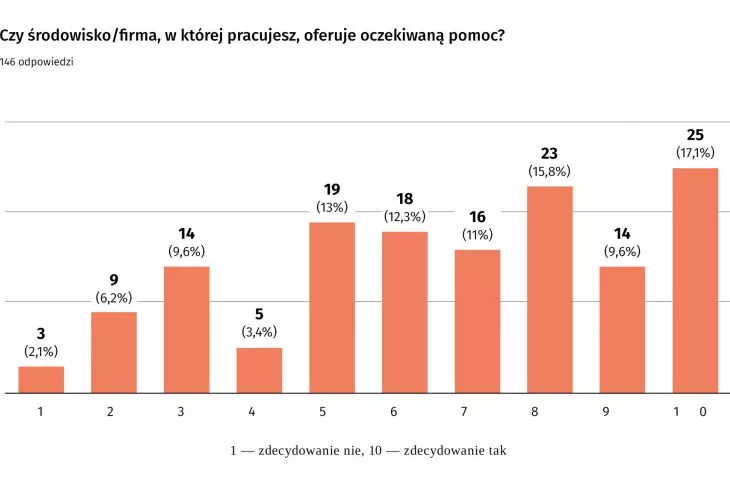
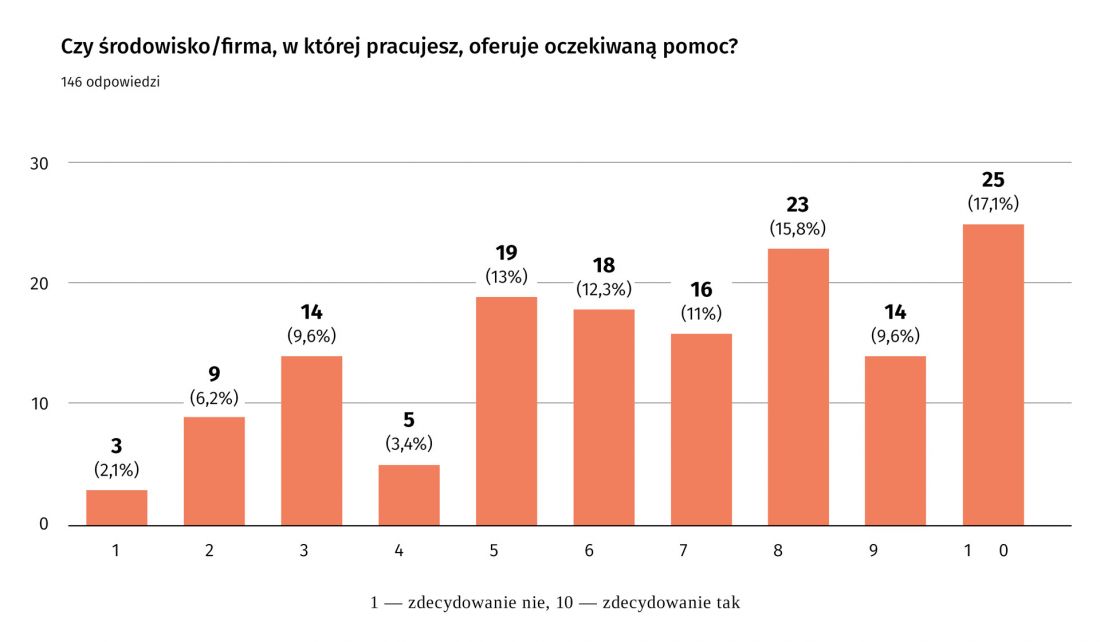
Help and support is sought in the immediate environment, more than 17 percent of those surveyed said they could definitely count on such support. One person surveyed wrote:
I am glad to see that more and more attention is being paid to the mental and physical condition of those working in the architectural profession. From the perspective of a young person who is increasingly experiencing the effects of many years of overexertion, and has only just experienced the work (even such a short one), I can firmly state that the whole system gives out to the world individuals who unknowingly agree to the stagnant state of affairs - which is first instilled in studies and then cemented in the office, giving no other choice, showing no other way. The culture of working above and beyond the stipulations of the labor contract is doing well, but it's good that we are starting to talk about it and remind ourselves that we are only human
commentary by Joanna Szczerbaty, psychologist
Architects are a professional group that is often seen by those around them as exceptional - because of their ability to see proportion, order or aesthetics where others see chaos. However, this is only one side of the coin. Equally important is the fact that architects - just like psychologists, doctors or other specialists - have the right to be ordinary people. They experience fatigue, stress and burnout, and their private lives do not have to be structured like a project.
It is worth emphasizing that the ability to "let go" and separate work from personal life is one of the most important competencies to develop today - both in creative professions and in any other industry. Architecture requires great commitment and responsibility, but at the same time one should not forget that in order to create spaces for others, one must first take care of one's own space - mentally and physically. Therefore, learning to balance and recharge resources becomes crucial. Only then are architects - and all those who work under great pressure - able to maintain their health, grow professionally and truly contribute value to society.
summary
The studies carried out - both Polish and foreign - and the voices of architects themselves show unequivocally: the mental and physical condition of those working in the industry is a serious problem that is still not talked about enough. High demands, responsibility, time pressure and overload of duties make architects increasingly on the verge of burnout. At the same time, a picture of passionate people, dedicated to their work and ready to make huge sacrifices also shines through from the collected responses. It is this passion that makes architecture come into being despite obstacles. But passion, if not supported by balance, can become a source of suffering.
Two conclusions are most important: first, it is necessary to talk openly about the mental and physical condition of architects, treating it as an integral part of the discussion of the profession. Second, each of us - as architects, colleagues or employers - should seek solutions to help restore balance: from systemic changes to everyday individual choices.
Karolina MAJCZAK
more: A&B 10/2025 - U40 - the business of the young architect,
download free e-publications of A&B