






Gliwice is taking care of its residents - not only the two-legged ones, for whom three large social estates will be built in the coming years, but also their smaller companions. A burial ground for pets will be built in the western part of the city, near the Central Cemetery, Gliwice's largest necropolis. The local studio VISIO architects and consultants Rafał Schurma, which has already designed several other green spaces in Gliwice, is responsible for the prepared concept. Is a pet cemetery a necessity or another unnecessary investment?
Conditions in many Polish shelters have rightly become one of the louder topics in the national discussion on animal protection in recent times. And while there is still much to be done in this regard, spaces are also being created that - within limits - attempt to provide abandoned quadrupeds with the best possible conditions, a good example being the new shelter in Walbrzych.
Fortunately, not all pets have to rely on the shelter for help; many have their own loving caretakers, who do their best every day to make sure their pets get the most out of life. The emotional bond they form with their charges means that when pets "cross the rainbow bridge," owners feel the need to commemorate and bury their companions with dignity. Few Polish cities offer such an opportunity, but Gliwice plans to join this narrow group in the near future. Is a pet cemetery different from a typical necropolis?
Pet cemetery in Gliwice
design: VISIO architects & consultants © UM Gliwice
Pet cemetery in Gliwice
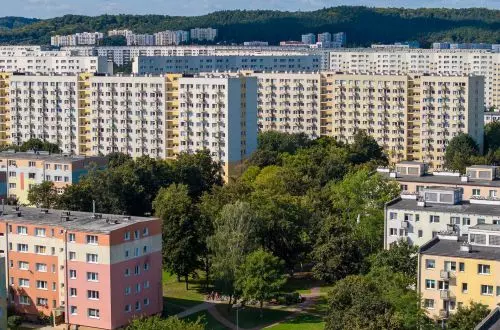
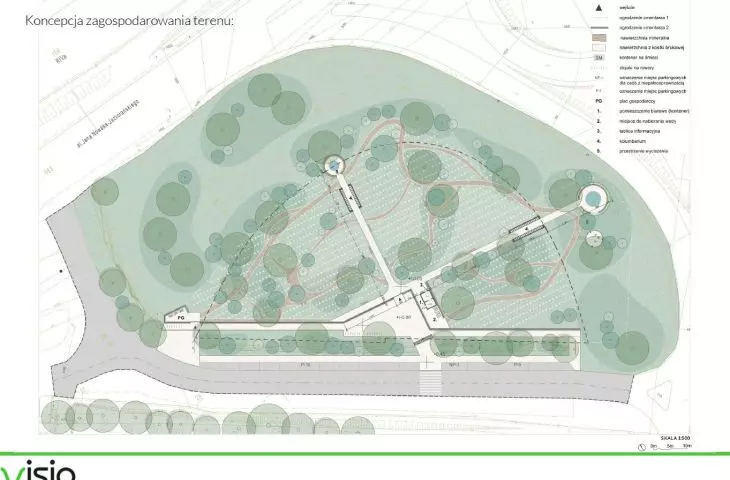
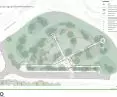
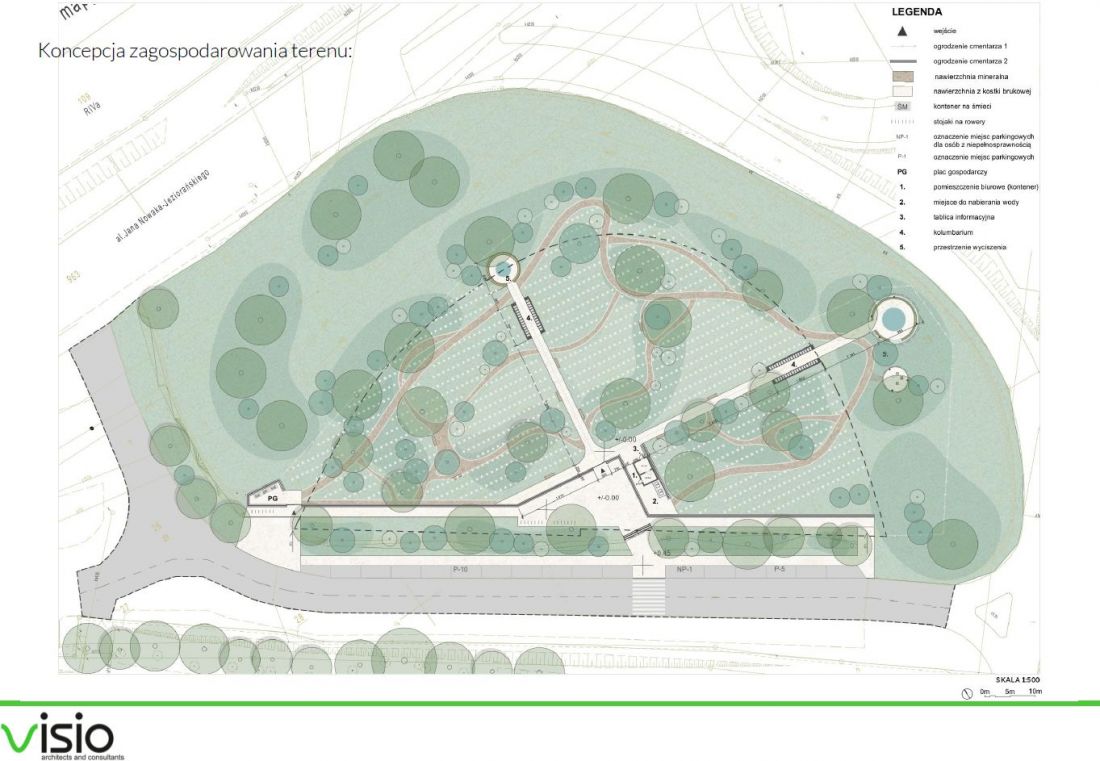
Construction of a new pet cemetery in Gliwice is planned near one of Gliwice's largest necropolises - the Central Cemetery, dating back to 1920. The new burial site is to be located north of the interwar establishment, amidst greenery surrounded by the access road to the cemetery and the intersection between Jana Nowaka-Jeziorańskiego Avenue and Leopold Okulickiego Street.
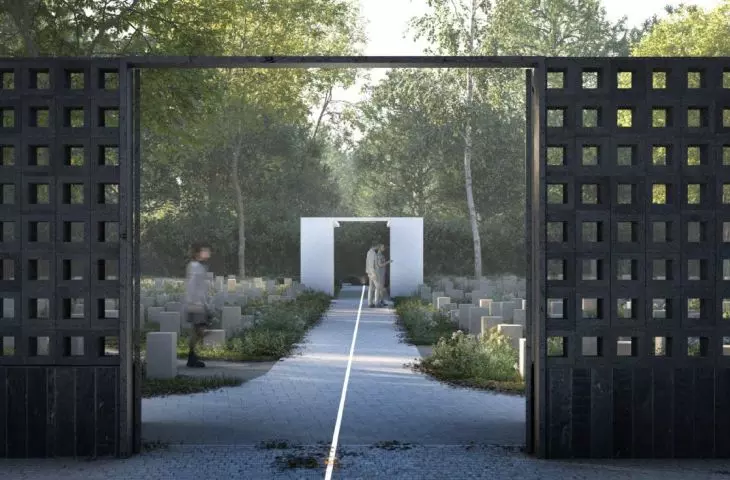
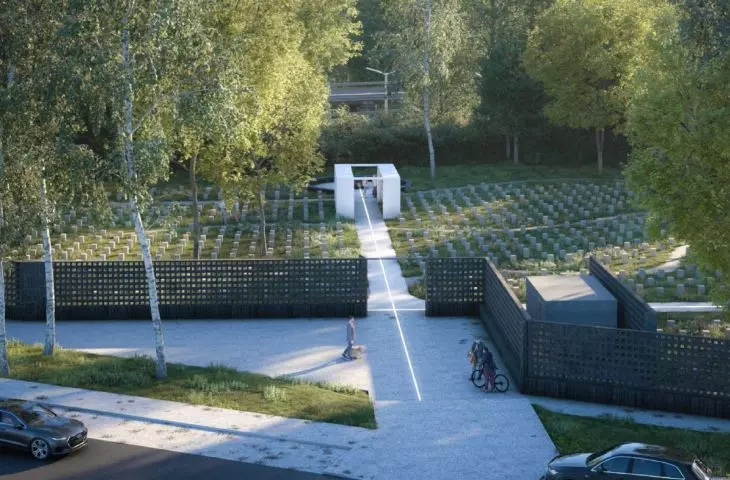
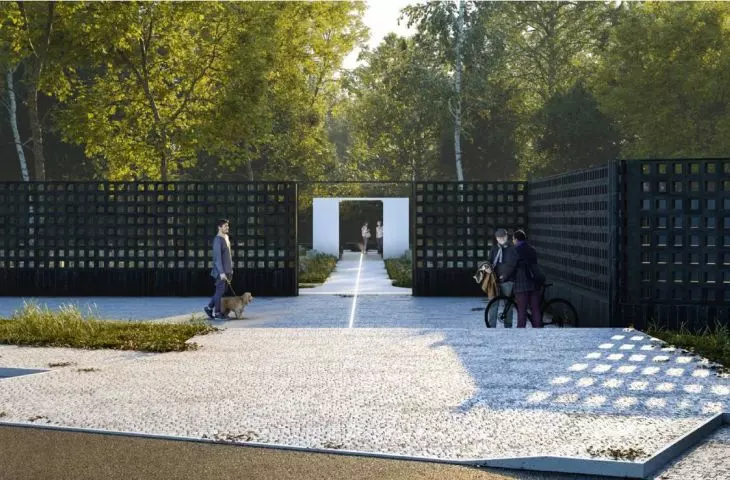
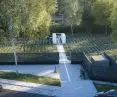
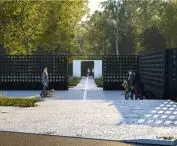
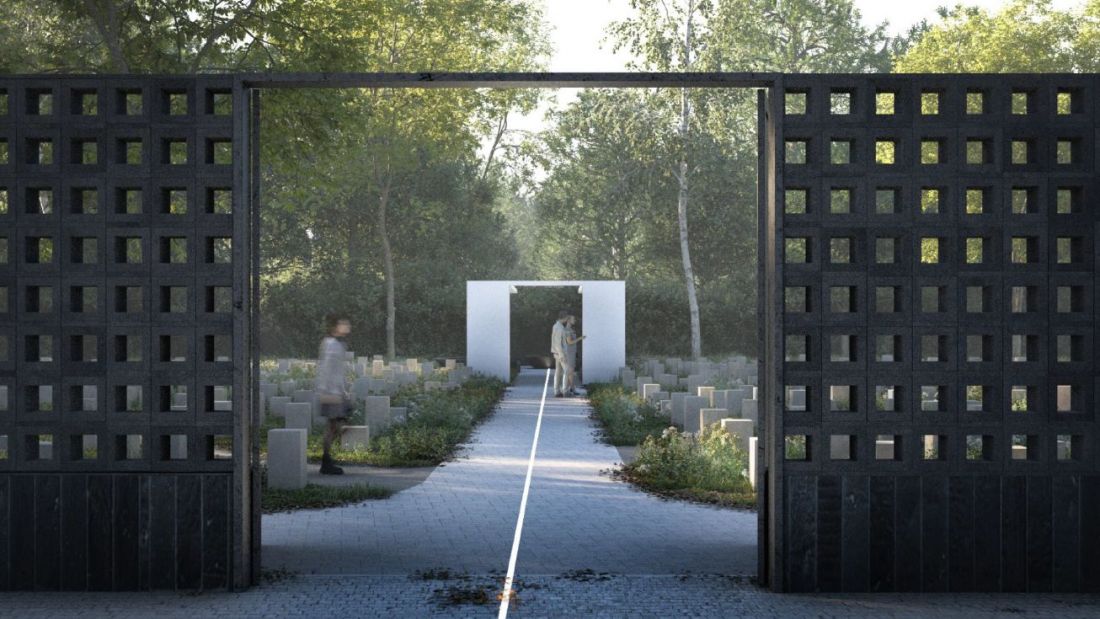
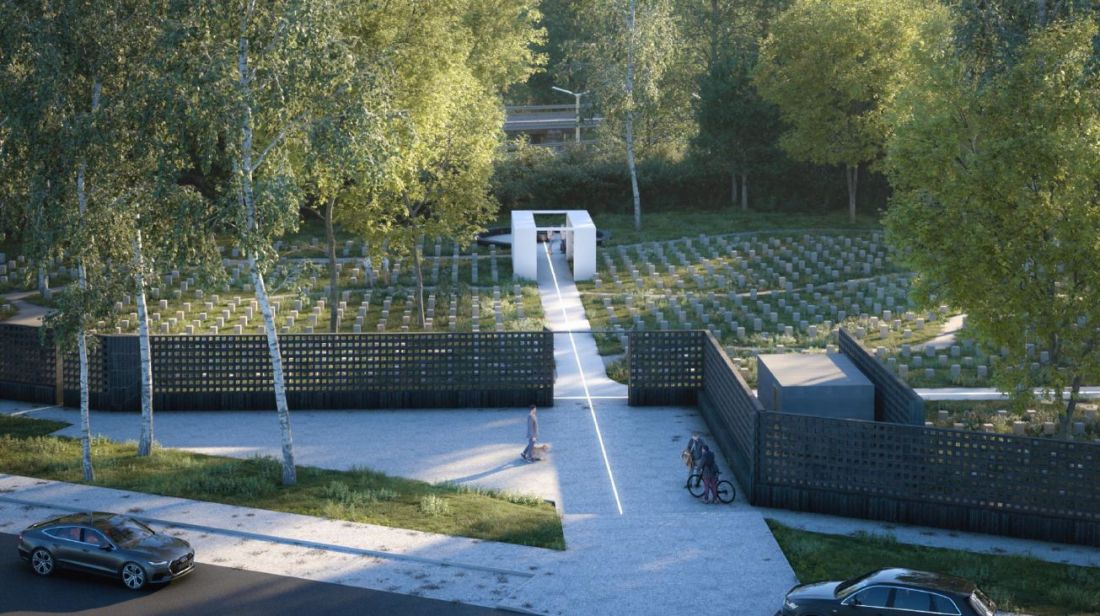
The main entrance to the Gliwice animal cemetery will be from the access road to the Central Cemetery. It will be separated from the rest of the area by a small, triangular square and a high, openwork wall. Behind it, near the entrance square, there will be an administrative container, an information board and a place to draw water, while other functions, mainly of an economic nature, will be located near an additional entrance, designed in the eastern part of the cemetery.
Animal cemetery in Gliwice
design: VISIO architects & consultants © UM Gliwice
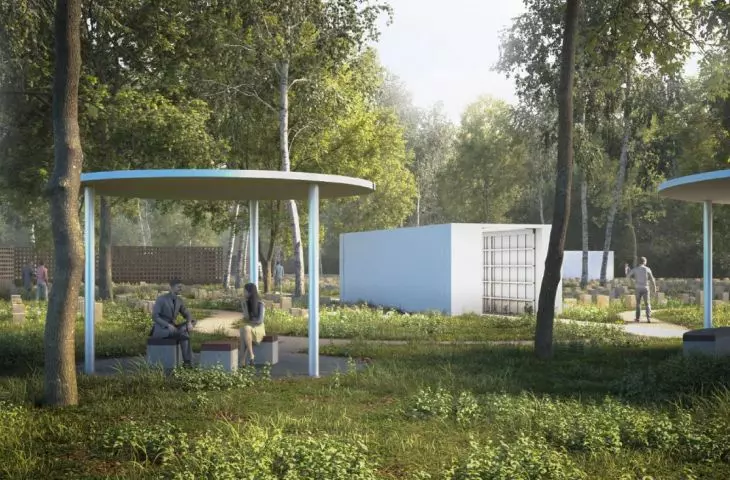
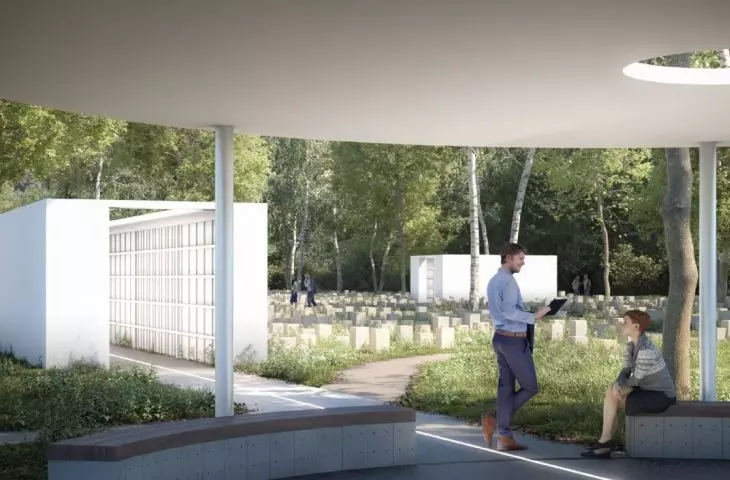
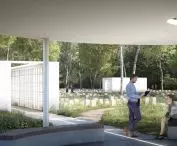
An area of approximately 7.5 hectares will be used as a burial place for 4806 animals, in addition to four columbariums in the form of architecturally sparing structures flanking the main avenues. In them the ashes of 310 pets will be laid to rest. The whole is to be arranged in a naturalistic manner, that is, without division into quarters, with tombstones freely arranged in the area.
dignified burial for pets
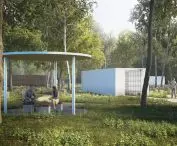
The area of the burial site will be arranged in an orderly fashion with a traffic system consisting of two main avenues, perpendicular to each other, with a common beginning located near the entrance to the cemetery, as well as a thicket of paths winding between tombstones and larger clusters of vegetation. The axes of the main avenues will be highlighted with discreet illumination, which - unlike typical streetlights - is expected to cause less light pollution in the cemetery, and there will be spaces of tranquility at their ends.
Animal cemetery in Gliwice
design: VISIO architects & consultants © UM Gliwice
On the eastern side, they will take the form of two gazebos, designed on a circular plan, equipped with seating areas and skylights. Along with the entrance plaza, the alleys will be the only fully paved surfaces and will account for only 14% of all paving in the cemetery. The winding paths will be made using water-permeable mineral pavements, so the water retention capabilities of the necropolis will not be significantly affected.
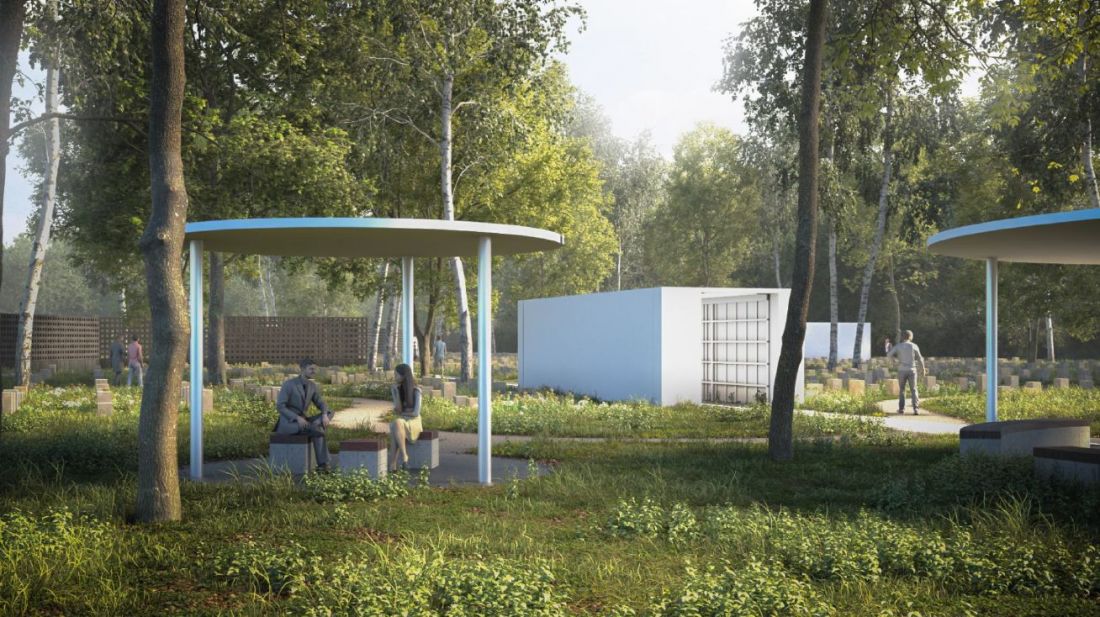
Animal cemetery in Gliwice
design: VISIO architects & consultants © UM Gliwice
Garden of remembrance in Gliwice
Cemeteries, especially the oldest ones, in addition to performing funerary functions, play a role in cities as important enclaves of nature with a high degree of biodiversity. The same is to be true of the animal cemetery in Okulickiego Street in Gliwice:
Spaces between burial sites will be filled with a flower meadow of native melliferous perennials, such as mullein, yarrow and viper's bugloss, forming a food base for pollinating insects. Along the front fence, an irregular row of warty birch trees is planned, whose light-colored trunks are to contrast with the dark, representative wall - designed in reference to the architecture of the Central Cemetery columbarium. Fruiting shrubs, including wild rose and hawthorn, important for birds, will appear near the wall. The central part of the garden will be filled with single, exposed trees - pedunculate oaks and common maples - which in time will dominate the landscape, becoming natural landmarks.
- reads the Gliwice City Hall website.
The area is also to be cleared of invasive species overgrowing this currently undeveloped part of the city.
When will an animal cemetery be built in Gliwice?
The establishment of an animal cemetery in Gliwice is not yet definitively determined, the City Hall stresses. At the same time, the first field work is underway, complete design documentation is being prepared, and even an approximate date for the completion of the project has been made public, the first stage of which would be finalized later this year, while the entire necropolis is expected to become available in 2027. The amount the city plans to spend on the project has not been disclosed to the public.
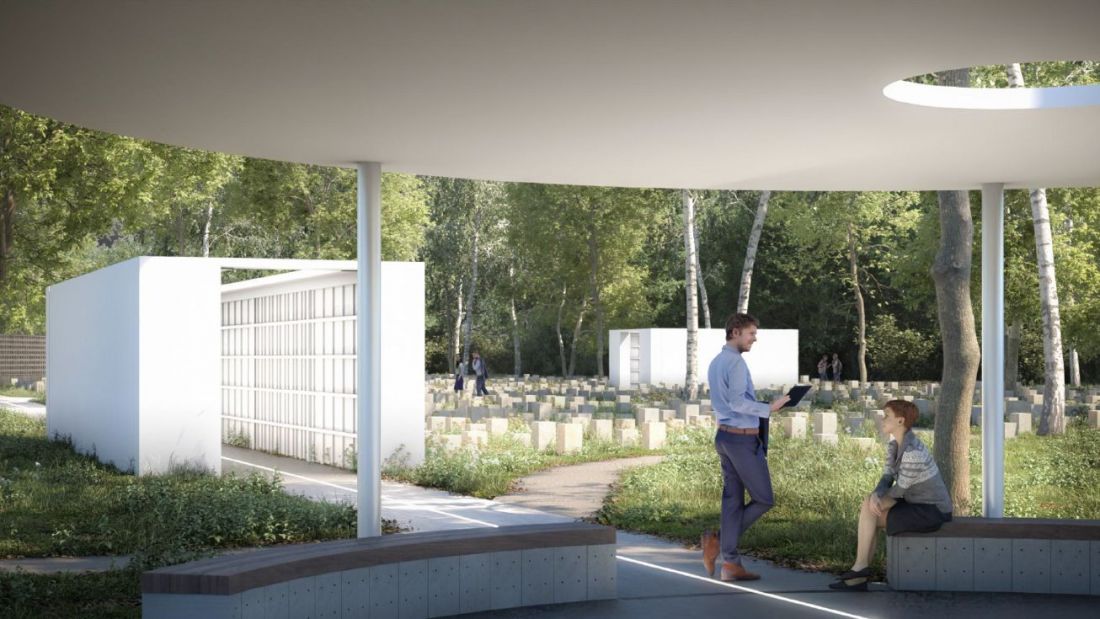
Animal cemetery in Gliwice
design: VISIO architects & consultants © UM Gliwice
A necessity or an unnecessary expense?
The construction of a farewell site for animals is not just an "unnecessary expense," as some commentators on Gliwice's announced investment would like. Pets - in addition to those naturally occurring in public spaces - are an important component of the urban population. According to a report by the European Federation of the Pet Food Industry, FEDIAF, there are about 16 million dogs and cats in Poland. Added to this are small mammals such as rabbits and hamsters (1.3 million), as well as birds (1.17 million) and animals living in terrariums and aquariums (396,000 and 226,000, respectively). This brings the total number to more than 19 million pets living in Poland. This is a number equal to almost half of our country's population. Many deceased pets are cremated or buried in places not intended for this purpose - in backyards, parks or forests.
Meanwhile, Polish cities don't seem to notice this statistic or the consequences of the number of quadrupeds living in them. According to a list by the Chief Veterinary Inspectorate, there are only 15 pet cemeteries in Poland. Of the provincial cities, only Bydgoszcz, Toruń, Gdańsk and Szczecin have specially designated burial areas for quadrupeds. Warsaw's community is further served by the "Psi los" cemetery in Konik Nowy, the oldest of its kind, dating back to 1991, while Wrocław's pets are buried in Kąty Wrocławskie. However, there are entire provinces where there is still not a single such necropolis - for example, Małopolska, Lublin or Świętokrzyskie provinces.
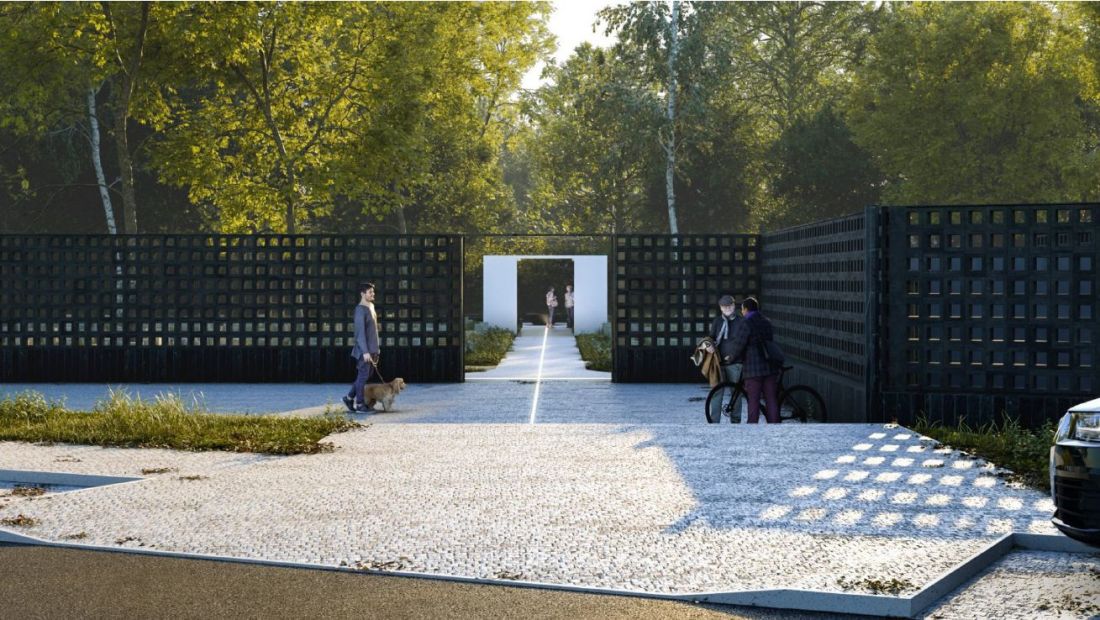
Animal cemetery in Gliwice
design: VISIO architects & consultants © UM Gliwice
Farewell before going over the rainbow bridge
Designating a burial site for animals in a city is also an important undertaking for the emotional well-being of its human inhabitants. Since the dawn of time, we have understood the need to properly bury the closest dead of our species. However, research indicates that the human psyche similarly demands that our four-legged friends be memorialized [1]. What's more, the ambiguous positioning of pets between the "human" and "animal" worlds makes their burial sites spaces for experiencing mourning and funerary practices of a unique nature not found in human cemeteries [2].
Will Polish cities - especially the largest ones - finally take these needs into account and set aside places where caregivers can say goodbye to their pets with dignity?
Przemysław Ciępka
[1]M. Cleary, S. West, D. K. Thapa, M. Westman, K. Vesk, R. Kornhaber, Grieving the loss of a pet: A qualitative systematic review, "Death studies" 46(9), 2022.
[2]N. Schuurman, D. Redmalm, Transgressing boundaries of grievability: ambiguous emotions at pet cemeteries, "Emotion, Space and Society," 31, 2019, pp. 32-40.