





Contemporary interior design is increasingly moving beyond aesthetics and functionality, becoming a response to the needs for well-being, tranquility and harmony in daily life. Anna Maria Sokolowska - owner of the design office Anna Maria Sokolowska Architektura Wnętrz, an architect with more than 20 years of experience and brand ambassador of Kontakt-Simon - talks about how space design can support the rhythm of the residents' day, why the quality of materials is crucial today, and how the role of the architect is changing in a dynamic reality. In the interview, she shares her approach to design based on attentiveness to user needs, the importance of neuro-architecture and the challenges facing the design industry today.
- How do you define the role of an interior designer today in the context of today's design challenges - functional, aesthetic and social?
- Designing interiors with today's lifestyles and clients' needs is an experience-based activity, not a possession-based one. What's important to clients is peace, harmony and care, and it's important that a place to live is calming and soothing, not screaming with an excess of elements and stimuli. Getting to know the daily functioning of the space, favorite objects, tried-and-true solutions, favorite activities. Listening to the rhythm of the day and the rhythm in which residents function both as individuals and collectively as a family. Learning how particular materials, colors, textures affect the well-being of the client and anything based on neuro-architecture will become increasingly important, as we need a moment of pause and tranquility in our daily run-through.
- Which aspects of daily design work do you consider crucial to maintaining high quality of execution, and which require the most flexibility from architects today?
- What we are not able to give up is the high quality of materials and details. That's why before a potential client starts working with us we start the conversation with what many find uncomfortable, namely money, or more precisely, budget. We don't agree with shoddiness and design that looks good on the surface, but underneath the aesthetic coating is a poor quality material that will begin to degrade in a small range of time. That's why even working with investors on apartments for rent, or developers, we assume work on budgets that give the opportunity to use materials that will resist the passage of time, because no one cares that the interior is only "for a while".
- What directions of development - professional, design or business - do you consider the most important in the coming years?
- For the past 6 years we have been living in a process of constant change. Managing change is the most valuable skill we can possess, because only then are we able to become immune to the stresses associated with them. Businesses that have operated for years under the belief that there is one right direction to stick to and have not evolved further now have a lot to work through and redefine in terms of the changes they should undertake. Many companies have realized too late that operating on the beaten track no longer produces the intended results, and acting in haste has led to further crises. Flexibility and the ability to base a business on several legs can guarantee greater peace of mind and greater resilience to changing conditions.
- How do you see your role as a Kontakt-Simon brand ambassador, and how does your design experience translate into informed cooperation with the interior design solutions manufacturer?
- For me, it's important to have a dialogue and solutions tailored to the needs of both myself and my clients. I have been working with the Kontakt-Simon brand continuously since 2008, so when I was invited to join the graon of ambassadors, it was a natural step for me. If you have confidence in the brand and in the products that you have been using for years in projects, such cooperation has a completely different dimension, also beyond design. Technical support, training, meetings for architects, this is something that every company should provide at the highest level.
- What determined your choice of profession as an interior designer, and was there a mentor on your professional path that had a significant impact on your way of thinking about design and creative work?
- From the age of 15 I knew what my professional direction would be and the following years were a consistent pursuit of my goal even if there were difficulties along the way. I am a cubic architect by training, but interiors have always been my greatest passion. This year my poracownia is celebrating its 20th anniversary, and I have been personally designing for over 20 years. The greatest support in my path to the profession has always been my grandmother, who wanted to become an architect, but her family peerturbations effectively prevented her from going to college. It was not her goal that I should be the one to make her dream come true, but you can see the love for architecture must have been passed on to me in my genes.
- What Kontakt-Simon products do you use most often?
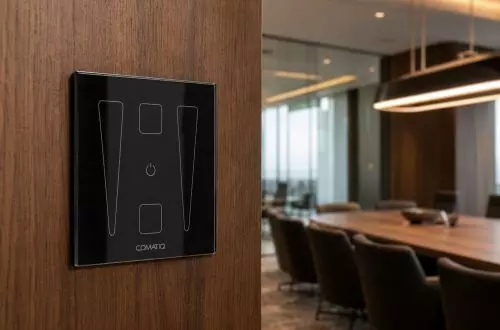
- Simon Go series and 55 series .