




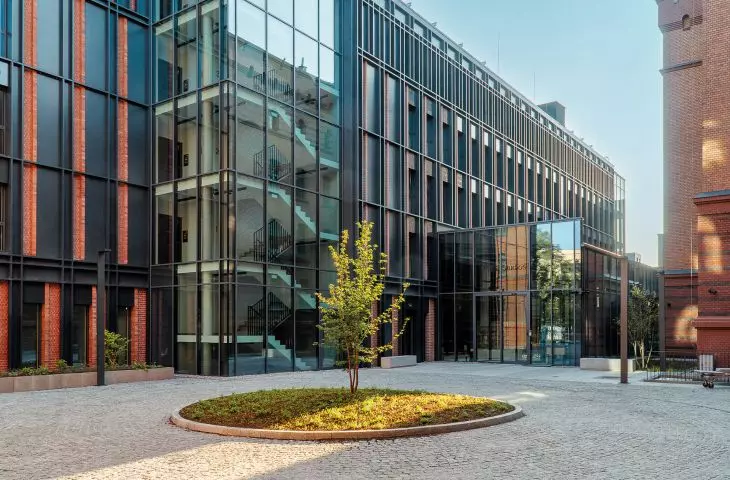
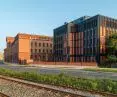
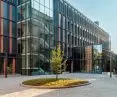
After almost two years, the "Scala History" investment, which included the restoration of the historic "red barracks" building in downtown Gdansk, has come to an end. The result of Moderna Holding's intensive work is the first such advanced and sustainable readaptation of the city's historic urban fabric carried out in accordance with contemporary trends, requirements and assumptions of modern construction, confirmed by a BREEAM certificate.
The 19th-century post-school building, deprived of its utilitarian and representative function for decades, required an in-depth conservation analysis. One of the biggest challenges was to adapt the building to its new functionality, while preserving its rich architectural heritage, without interfering with its volume. The entire work was agreed with the provincial conservator of historical monuments, so the start of activities was preceded by thorough archaeological research. Most of the barracks' existing substance was exposed and restored, and missing parts and cavities were supplemented with suitable similar material substitutes.
The revitalization of the more than 100-year-old barracks building is an absolutely pioneering project. The scale of the implementation challenges of the investment at Łąkowa Street, was enormous, and we are extremely proud of the final result. From the macro-scale activities, assuming the adaptation of the new architecture of the two buildings under construction to the existing building of the old barracks, to the smallest detail of the finishing touches," saidAdam Małaczek, CEO of Moderna Holding.
Adapting the historic buildings in accordance with the assumptions of, among other things, BREEAM certification, the principles of sustainable development and a possible change of function in the future, are just a few elements that we had to take into account in the design process of the investment. Using available building and construction technologies, we were able not only to take care of the reduction of operational emissions and embedded carbon footprint, but above all to adapt the building for maximum energy efficiency, thanks to, for example, the geothermal drilling system," explains Moderna Holding's Production Preparation Director Norbert Cendrowski.
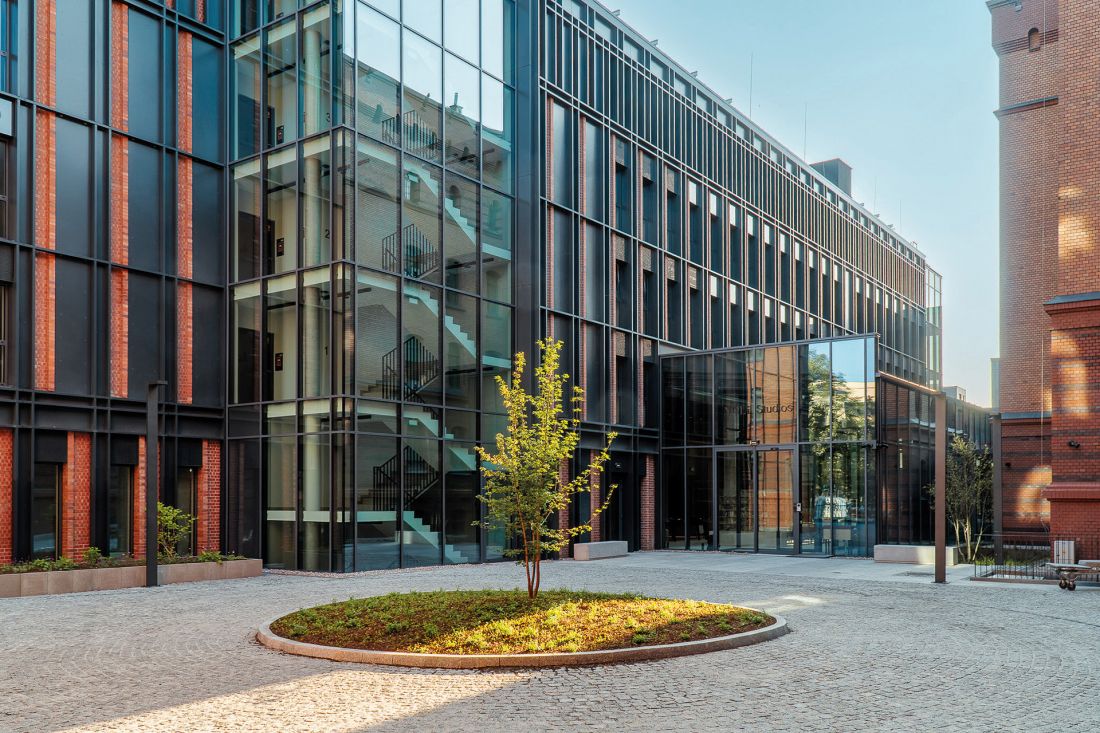
Scala History
© Moderna
More than 13 kilometers of geothermal boreholes have been drilled under the buildings. This is one of the most advanced installations of its kind in the country, integrated with heat pumps and the city's district heating network. The entire system was placed under the investment's foundation slabs, which makes it unique also in terms of engineering (the boreholes alone took 4-5 months).
Out of concern for the environment, materials with a minimal carbon footprint were used, confirmed by environmental EPD declarations. Some of them were created according to an original recipe with significantly reduced emission values. With a 49 kWp rooftop photovoltaic system and a ventilation system with heat recovery of 85%, "Scala History" is powered almost exclusively by renewable energy, and the operation of the integrated equipment is controlled by an automated BMS management system.
"Scala History" is an example of revitalization with respect for the urban traditions of Gdansk, but also a forerunner of new standards for the design of sustainable investments in an eco-friendly spirit. The building will accommodate nearly 400 studio apartments. Scandinavian fund Nrep has become the new owner of the property.