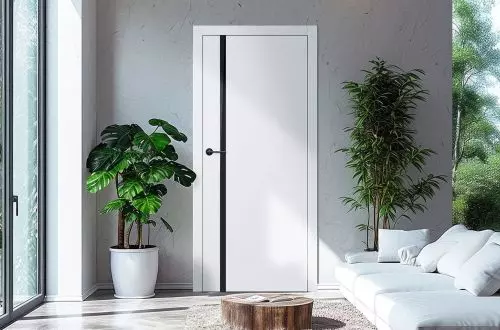




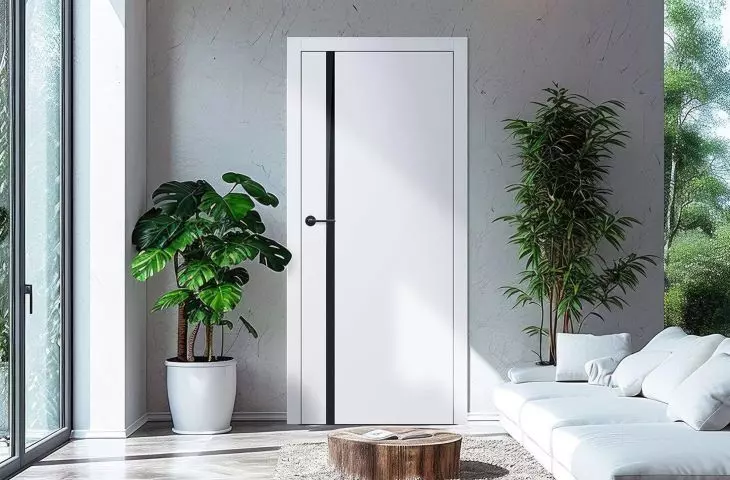


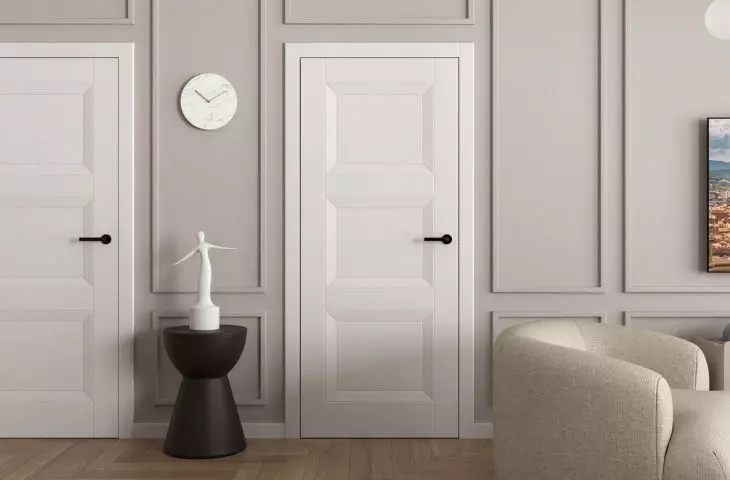
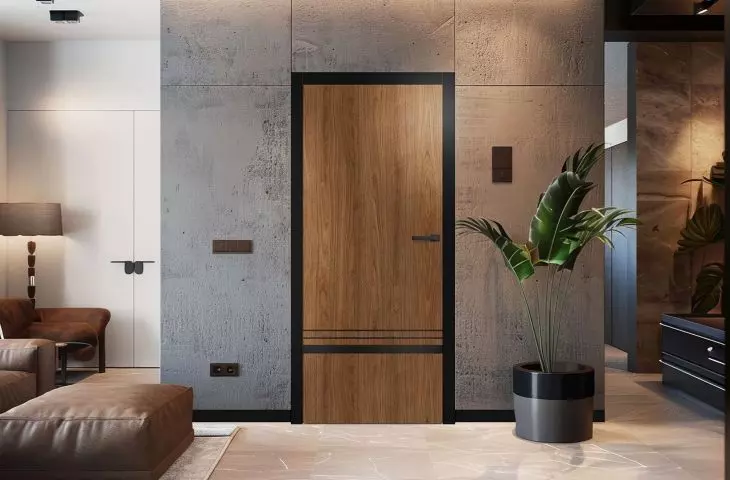



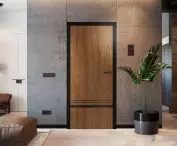


Non-rebated doors are one of the most popular choices in modern interiors today—the door leaf aligns flush with the frame, creating a smooth, minimalist wall surface. But aesthetics alone are only half the battle. What really determines the opinions of customers and installation crews happens “behind the scenes”—in the quality of the hinges, the precision of workmanship, and the details that only become apparent after months of use. We examined exactly what makes ERKADO non-rebated doors perform so well in practice.

© ERKADO
A non-rebated hinge in the MASTER SLAVE system that eliminates the need for return visits to the customer
Among installation crews, the hinge is the number one topic whenever the conversation turns to non-rebated doors—and for good reason. Cheaper, less precise solutions tend to “settle” after a few months: the door leaf starts to rub against the frame, the magnetic lock stops responding, and the installer has to return to the customer to fix what, in theory, should work right away.
The hinges used in ERKADO non-rebated doors are structurally designed to avoid this problem. They allow for full adjustment in three planes—up-down, left-right (width), and front-back (seal pressure)—using a simple Allen wrench, without removing the door leaf. The entire door set typically includes two or three concealed hinges (depending on the selected configuration), which ensures even load distribution and geometric stability over years of use. It is also worth noting that the hinges in the MASTER SLAVE system come with a 10-year warranty on opening reliability.
For the installer, this means less time spent on a single job—adjustments are made once, precisely, and do not need to be revisited. For the end customer—no more creaking, “wobbly” doors after the heating season, when humidity levels in the home fluctuate dramatically and traditional hinges most often reveal their weaknesses. It is precisely this quiet, invisible component that most often comes up in recommendations from professionals—because they know best how many times they’ve had to go back to fix competitors’ doors.
Half-width options—a perfect fit without chiseling into walls
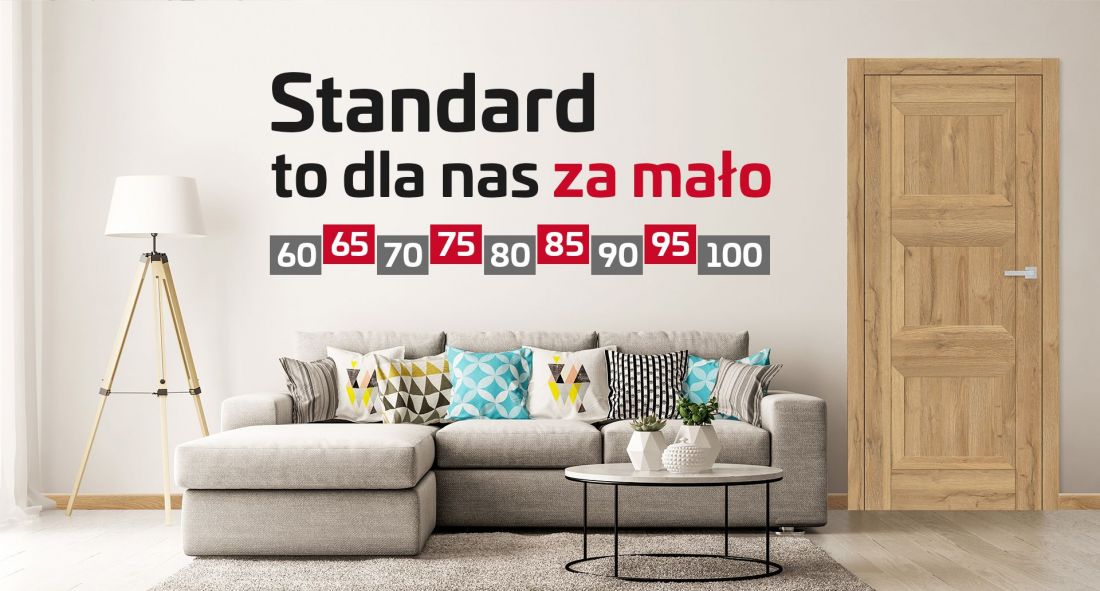
One of the most practical—yet least appreciated—features is the availability of half-width options: 65, 75, 85, and 95 cm, in addition to the standard 60, 70, 80, and 90 cm. It sounds like a minor detail until you run into a typical renovation problem: a door opening in an older building that doesn’t fit any standard size.
© ERKADO
In practice, this means the end of the dilemma of “whether to alter the opening or force a door that’s too large into it.” Instead of chiseling and widening the wall—which generates additional costs, construction mess, and the risk of compromising the wall’s structure—all you need to do is order a door in a non-standard width. ERKADO offers these widths at no extra charge, making them a real option—not just a theoretical one in the configurator.
This solution is particularly appreciated by renovation crews working in tenement buildings and older structures, where door openings rarely meet modern standards—as well as by investors for whom every additional hour of construction work represents a cost.
© ERKADO
Factory-drilled holes for door handles—less work on-site
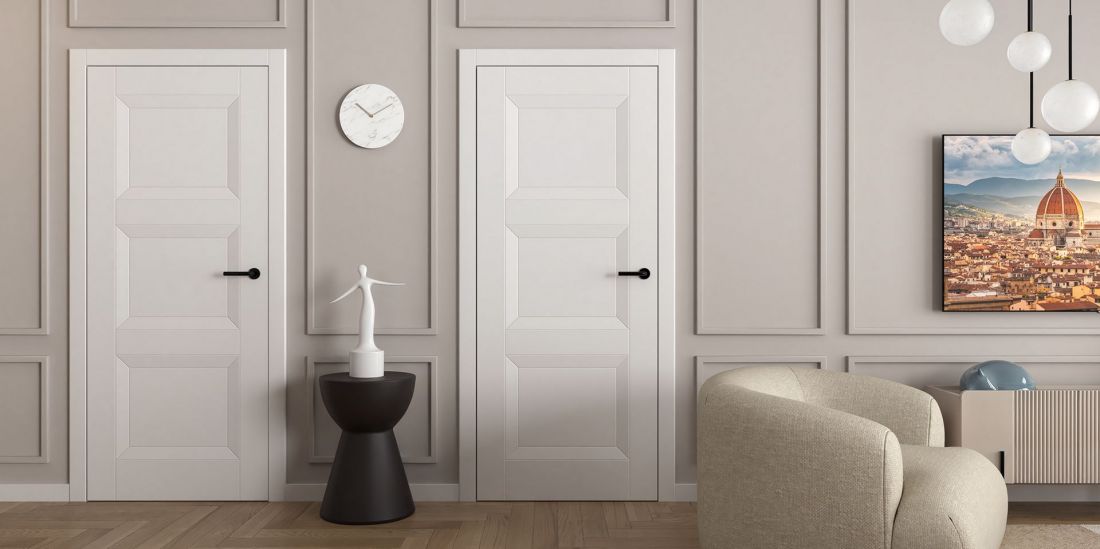
Another detail that directly impacts installation time and quality: the door panels arrive at the construction site with factory-drilled holes for the door handle. The installer does not have to drill the holes on-site—which, when done by hand, always carries the risk of inaccuracies, chips in the veneer, or misalignment of the handle axis.
The result is twofold. First, installation takes less time—fewer steps on-site mean fewer billable hours for the customer. Second, the finish around the handle is clean and precise, with no risk of damaging the door panel’s surface during drilling in construction conditions, where stability and accuracy are harder to achieve than in factory settings.
© ERKADO
Anti Finger Surface—doors that look good despite daily use
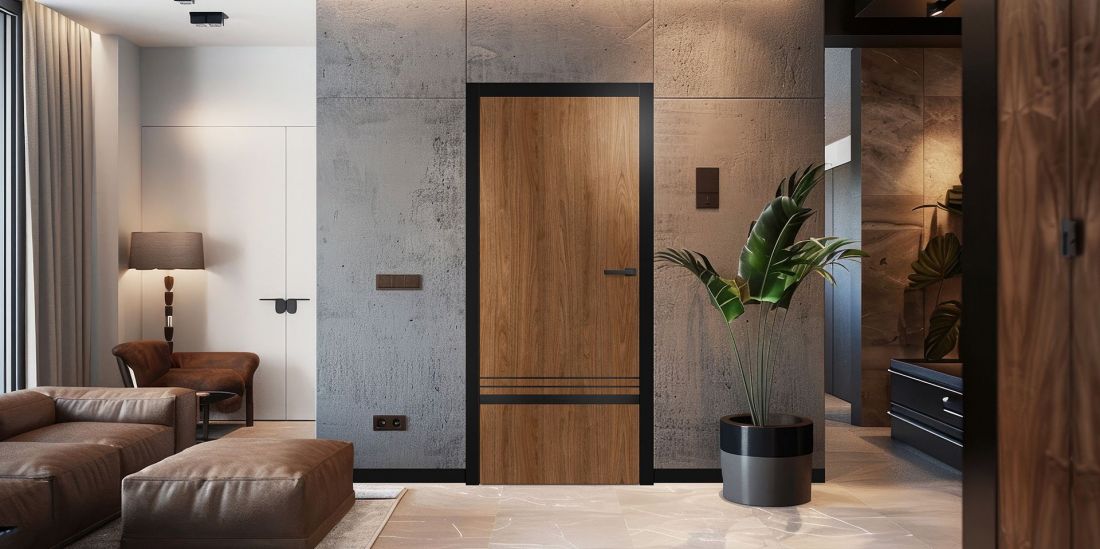
Interior doors, especially those with matte and dark finishes, are one of those interior elements that most clearly “betray” the daily lives of household members—fingerprints around the doorknob, smudges left by touch that are visible at certain angles of light. This is particularly bothersome in homes with children and in high-traffic areas, such as hallways or kitchen entrances.
The Anti Finger surface, used in select ERKADO door finishes, was designed to minimize the visibility of such marks. As a result, the door panel retains its attractive, uniform appearance for longer, and household members don’t have to polish the door every time they walk through the hallway. This is one of those features that’s hard to appreciate in a showroom but easy to notice after a month of daily use.
Aqua Stop Door Frame—No More Swelling from Moisture
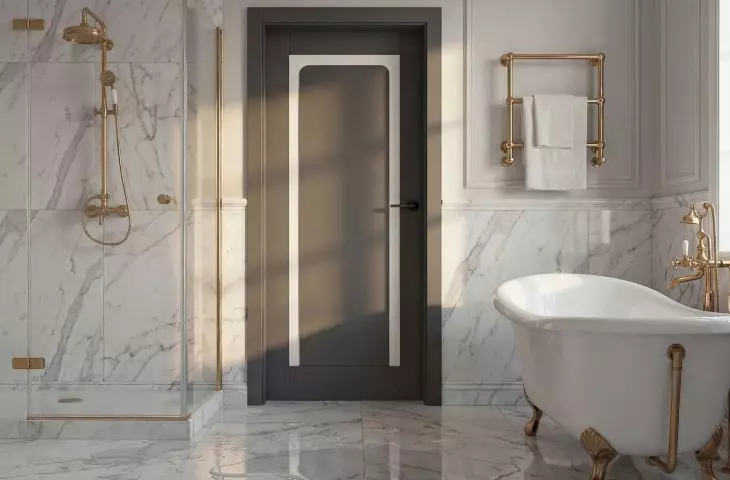
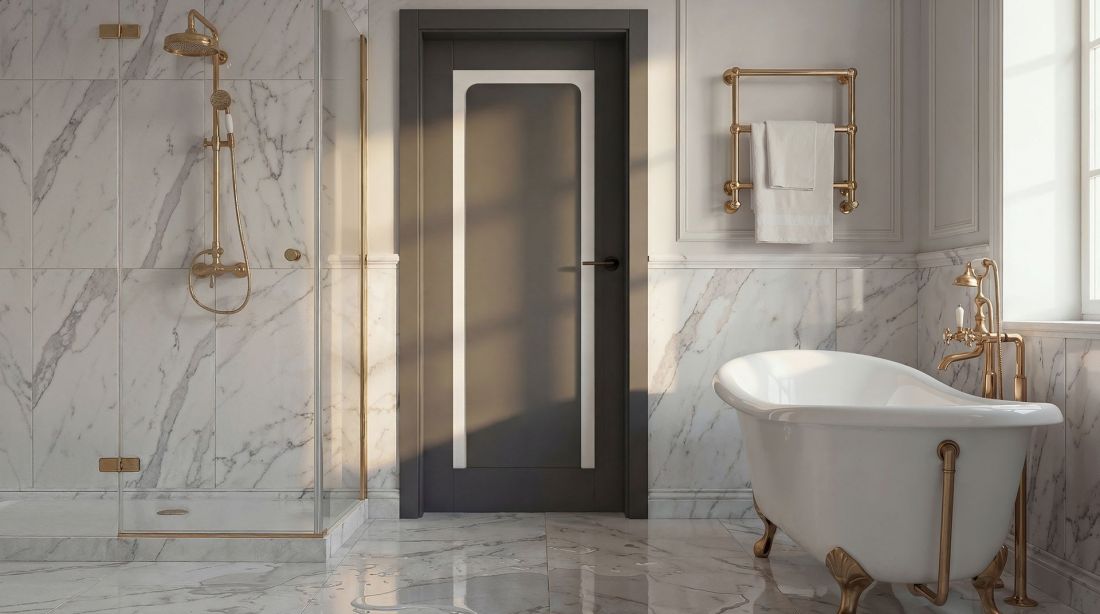
The traditional Achilles’ heel of MDF door frames is moisture — in bathrooms, kitchens, or rooms with high humidity, classic door frames eventually swell, delaminate, and lose their original shape, leading to door sagging and deterioration of the finish.
© ERKADO
ERKADO’sAqua Stop hybrid door frame was designed specifically for such environments. Made from materials that do not absorb moisture or water, it maintains dimensional stability regardless of environmental conditions—it does not swell, warp, or delaminate, even when in direct contact with water. This solution is particularly important for bathroom and kitchen doors, as well as in public facilities, where a standard MDF door frame will sooner or later begin to cause problems. Importantly, installing Aqua Stop requires no special procedures—the installation team installs it exactly the same way as a standard adjustable door frame.
Positive reviews come down to the details
None of the above features sounds revolutionary on its own—it is their combination that ensures ERKADO non-rebated doors consistently receive positive reviews from both individual homeowners and installation crews. A durable, fully adjustable hinge eliminates the need for readjustments. Half-width profiles and factory-drilled holes reduce installation time and cost. The Anti Finger surface and the Aqua Stop door frame address real-world problems of everyday use, not just catalog aesthetics.
It is precisely this combination—solid engineering hidden within the hinge and well-thought-out installation features—that builds trust, which later translates into word-of-mouth recommendations among both customers and professionals.
For more information, visit the ERKADO company page on the PdA portal.