







Some species of jellyfish have an ability envied by other animals - if only given the right conditions, they become virtually immortal. Such jellyfish can indefinitely regress their cells to earlier stages of development. Interestingly, it turns out that this ability was possessed not only by jellyfish that are part of the animal kingdom, but also by those belonging to the world of architecture. Just off the beach in Sopot, the modernist pavilion "Medusa" has rejuvenated by several decades, gaining a second life. Its new youth is the result of a joint effort by three studios - Sikora Wnętrza Architektura, Design Corps and MRV Architects. Has a tree returned under the roof of "Medusa"?
Of the components of the Tricity metropolis, Sopot is perhaps least associated with modernist architecture. Gdynia is widely regarded as a symbol and mecca of Polish modernism, especially when it comes to the architecture created in its first, interwar edition. In the case of Gdansk, the matter is no longer so clear-cut; after all, this is a city with centuries of history, which became the canon for post-war reconstruction - nevertheless, one can easily point to realizations that have become a permanent part of the canon of Polish post-war architecture. We will certainly count among them the spectacular Olivia Hall, but also the no less impressive bus station in Gdansk or the famous wave towers and LOT pavilion.
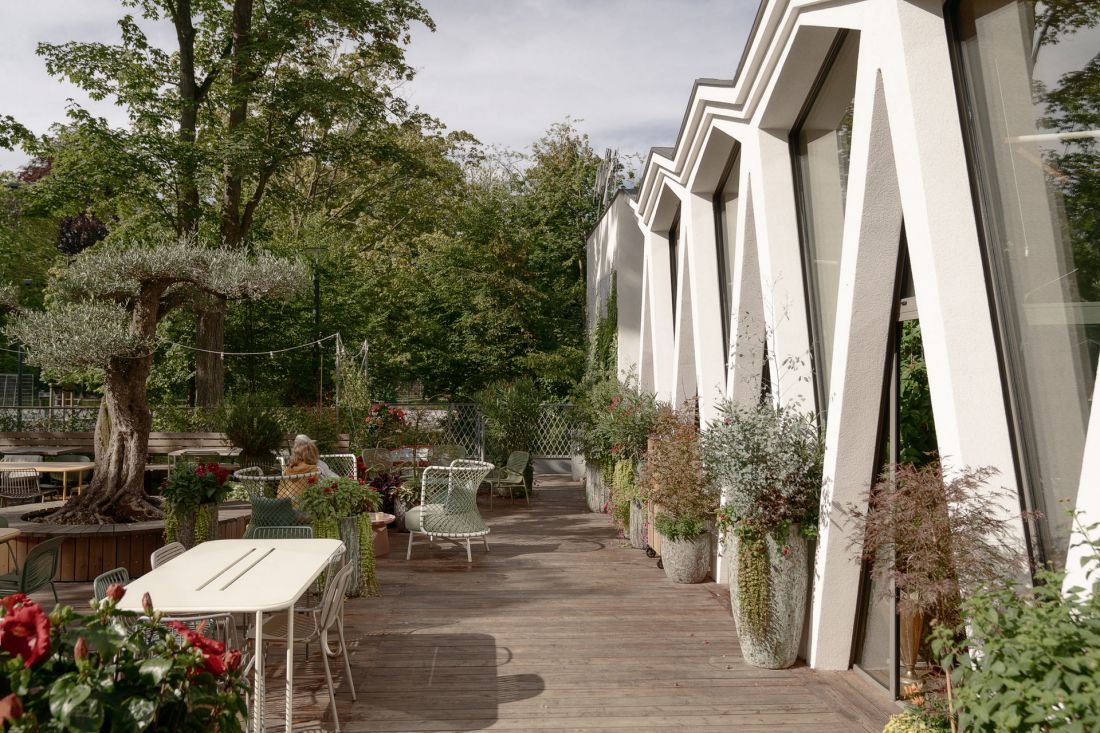
Revitalization of the Meduza pavilion in Sopot
photo: Tom Kurek © Sikora Wnętrza
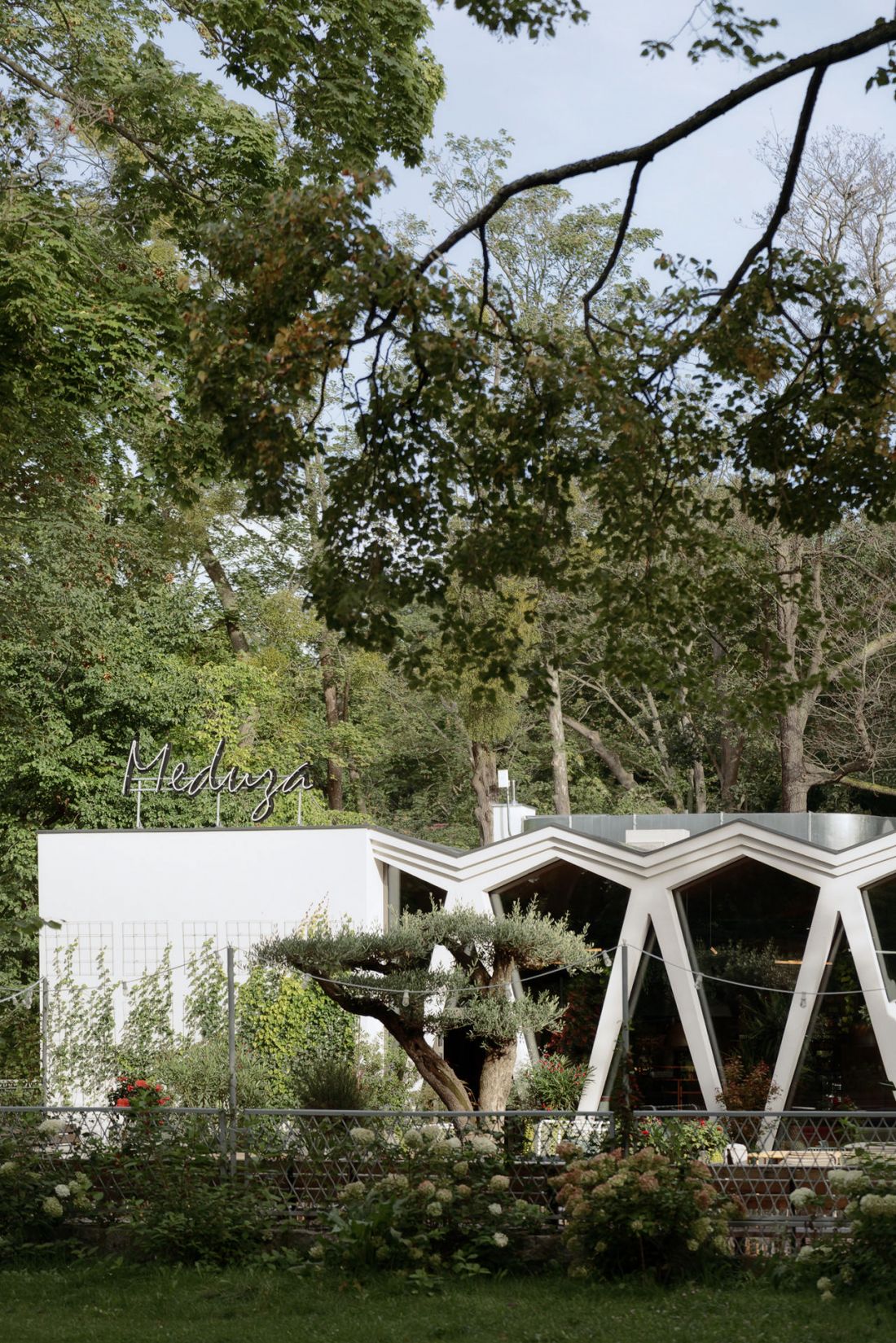
It will be much more difficult with Sopot - perhaps the most interesting of the few examples of modernist buildings in this city disappeared irretrievably in 2010, when the Northern Baths were demolished, along with the accompanying, famous snail. In return, it would be untrue to say that modernism no longer exists in Sopot.In 2019, the Landscape Resolution uncovered from under the signs the structures forming the Alga complex at the Friends of Sopot Square, and in the Northern Park , at Franciszka Mamuszka Avenue, the tentacles of the famous Medusa peek out from between the trees, which - unlike the aforementioned Alga - has recently seen a comprehensive revitalization. Has the spirit of the frenzied 1960s returned to the architectural parsimony?
Revitalization of the Medusa pavilion in Sopot
Photo: Tom Kurek © Sikora Wnętrza
a diamond of sopot modernism
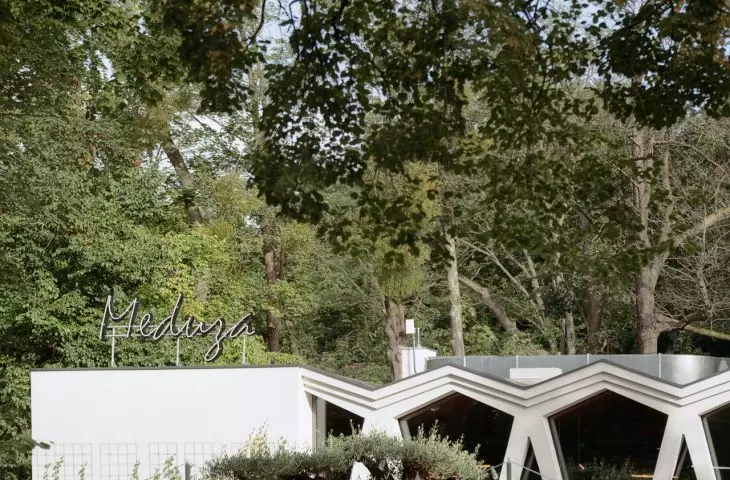
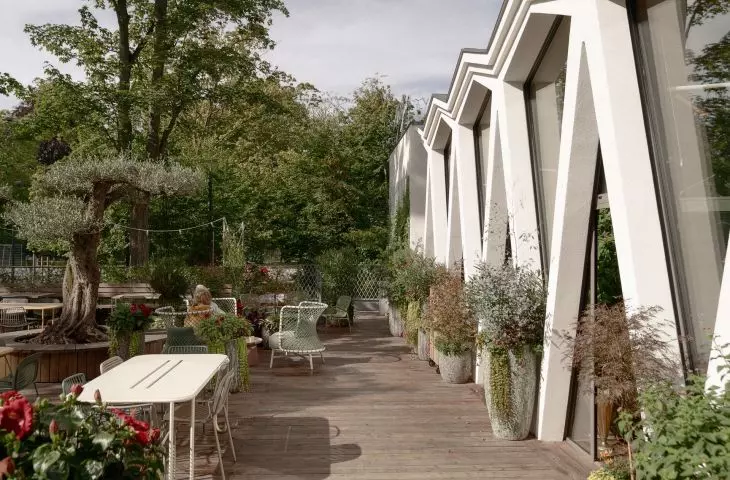
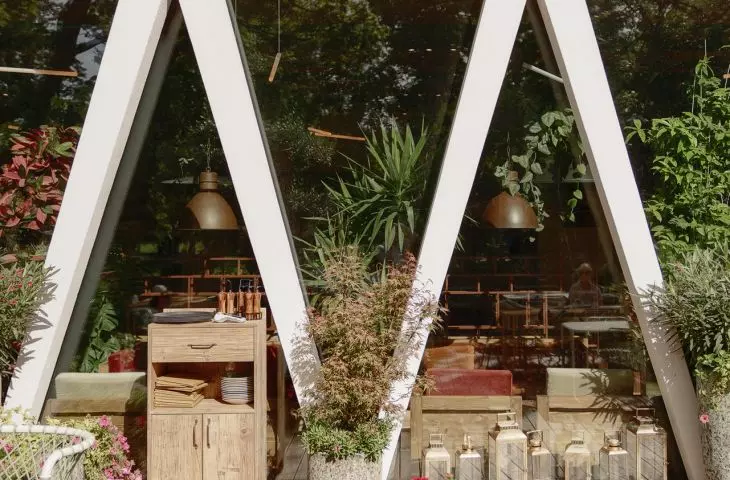
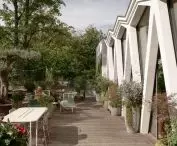
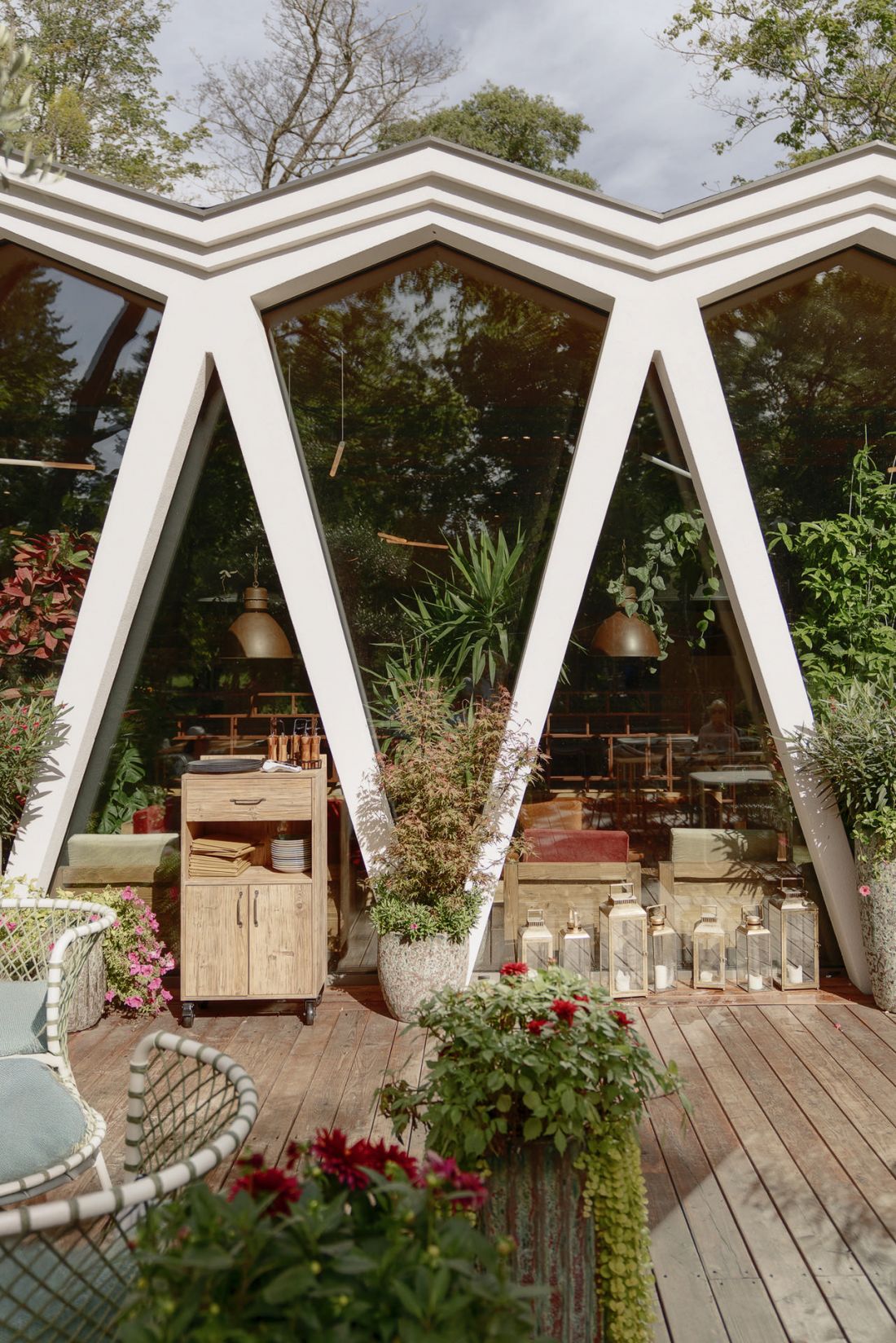
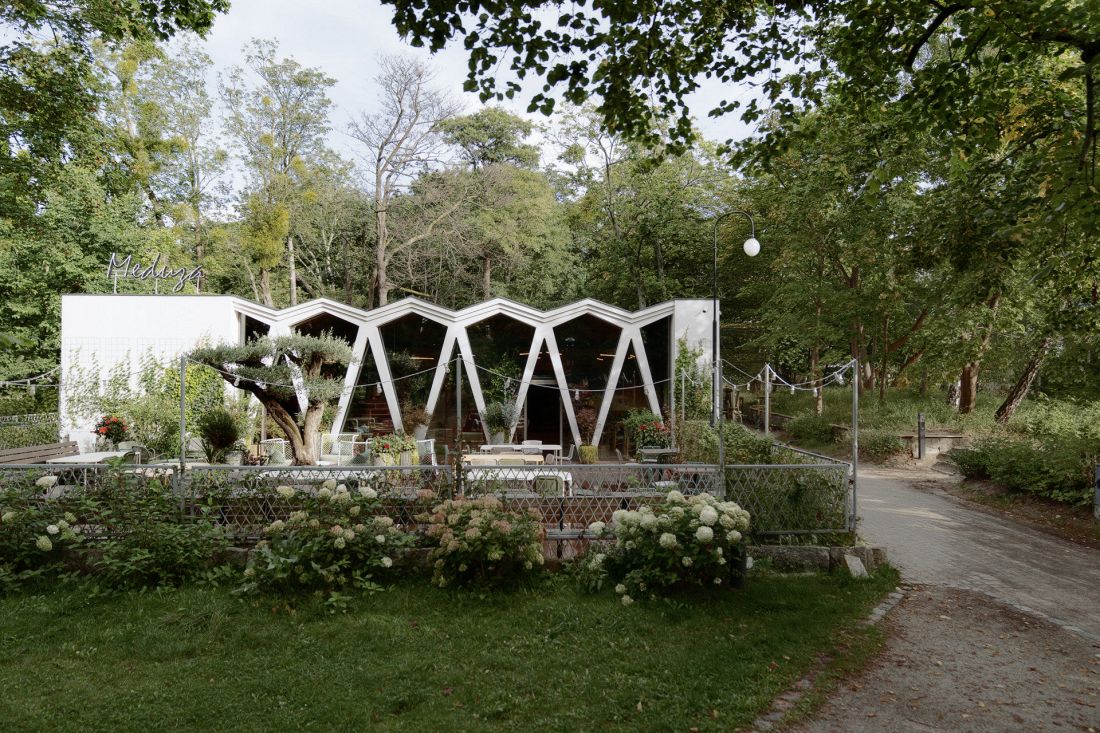
The distinctive building stood near one of the entrances to Sopot beach, at 21 Franciszka Mamuszki Avenue, back in the early 1960s. The author of the architectural concept was Janusz Maciej Kowalski, a designer at the General Building Design Office in Gdansk. From his design, a small, one-story pavilion with an unusual facade was built in the North Park. The name of the restaurant that was located inside - Medusa - seems in its context not coincidental. On the north side, Janusz Kowalski designed a cuboid block, which housed the restaurant premises. From the south, in turn, it was preceded by a high arcade with an accordion roof, supported by five pairs of characteristic angled pillars. The clearances created by them will be associated by some with the cross-section of a diamond, while by others.... with the silhouette of a sea jellyfish!
Revitalization of the Medusa pavilion in Sopot
Photo: Tom Kurek © Sikora Wnętrza
Jellyfish in the tentacles of investors
It's hard to say whether it was the conspicuous arcades that gave rise to the name of the first restaurant to be located there. However, as time passed, both the names and uses of the modernist pavilion in Sopot changed. The Medusa was followed by the Kontiki Club and then Enzyme. Even then, the building lost its original architectural expression - glazing with contrasting muntins appeared between the pillars, and the elaborate moldings that once adorned the supports and roof front disappeared from the structure.In 2011, when a small oceanarium operated in the former Medusa, much of the southern elevation was obscured by large-format prints showing multicolored fish. Shortly thereafter, the HaH club began operating in the pavilion, which revitalized the Janusz Kowalski building for several years. In all this, however, the Medusa itself was missing....
Revitalization of the Meduza pavilion in Sopot
Photo: Tom Kurek © Sikora Wnętrza
Medusa's next life
Until June 2025, when the modernist pavilion above the Sopot beach reopened its doors after two years. The comprehensive renovation and revitalization of the building, which dates back to the early 1960s, is a work that was created with the cooperation of three architectural studios - Sikora Wnętrza, MVR architects and Design Corps. Their collaborative effort has ensured that from the outside, Medusa has regained its former elegance and architectural detail.
Revitalization of the Meduza pavilion in Sopot
Photo: Tom Kurek © Sikora Interiors
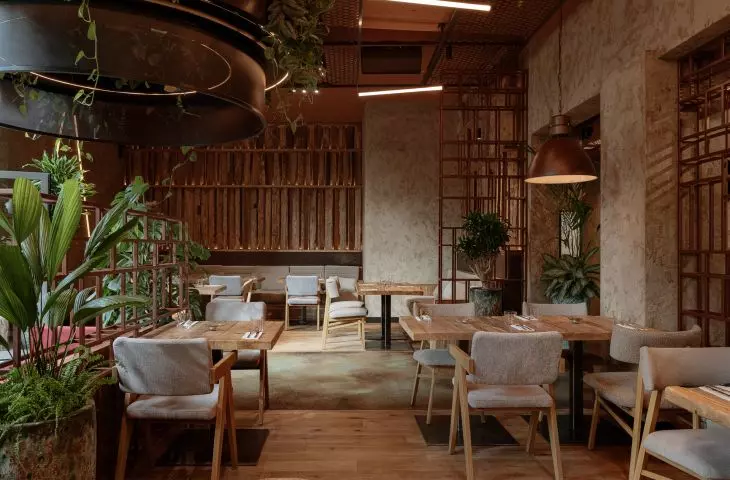
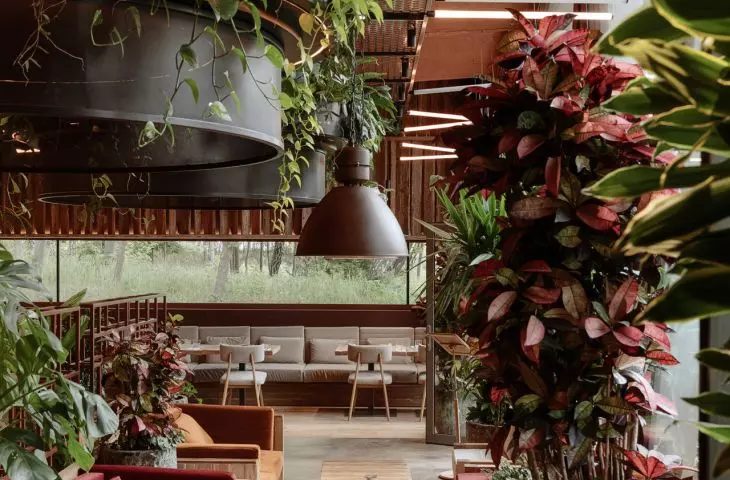
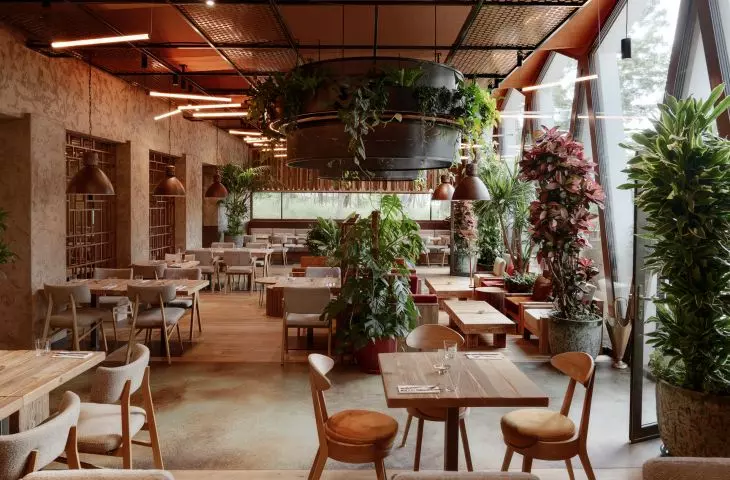
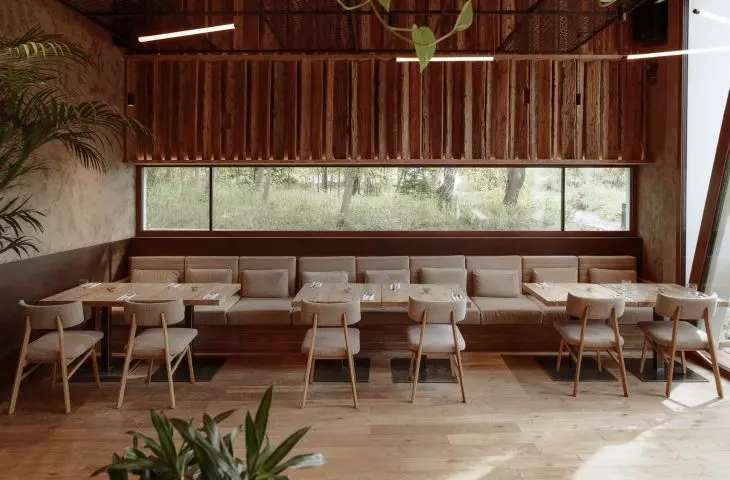
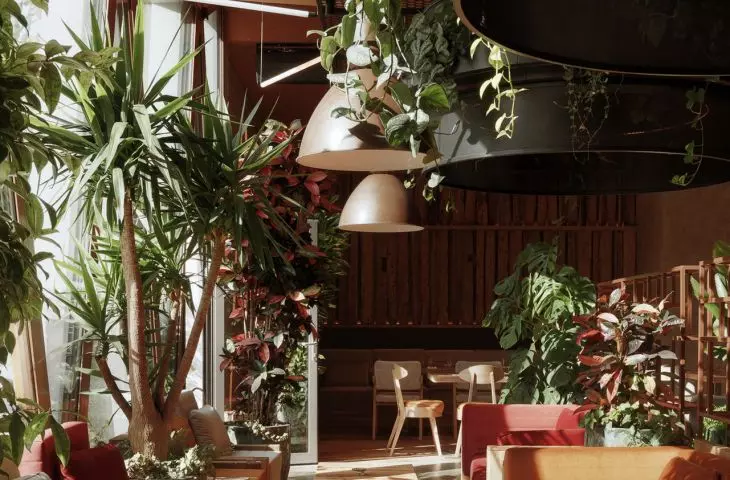
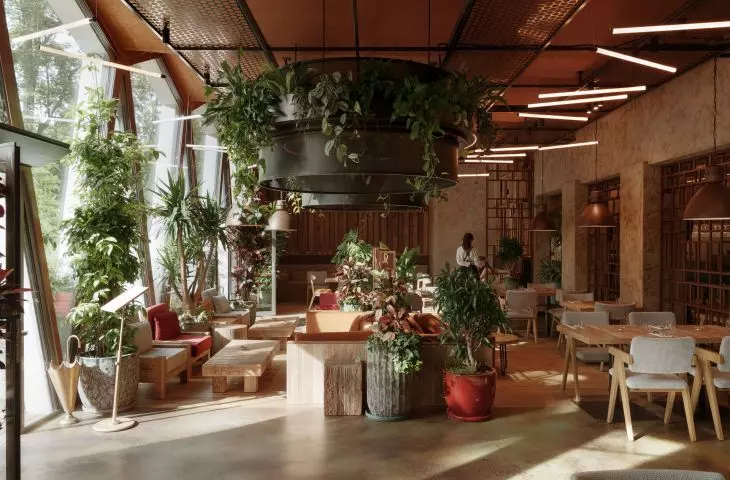
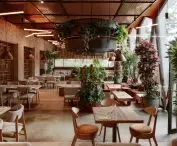
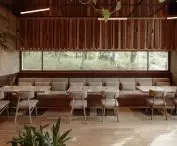
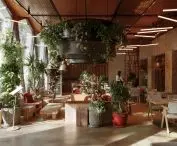
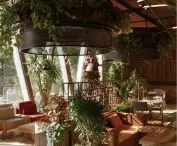
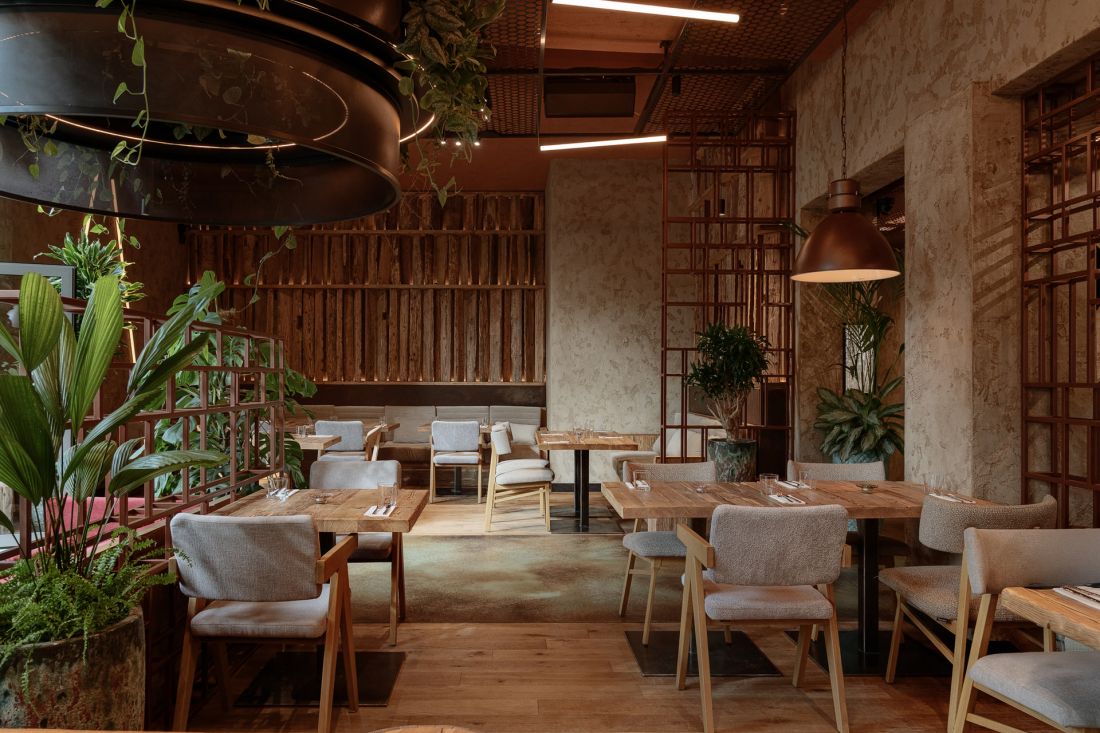
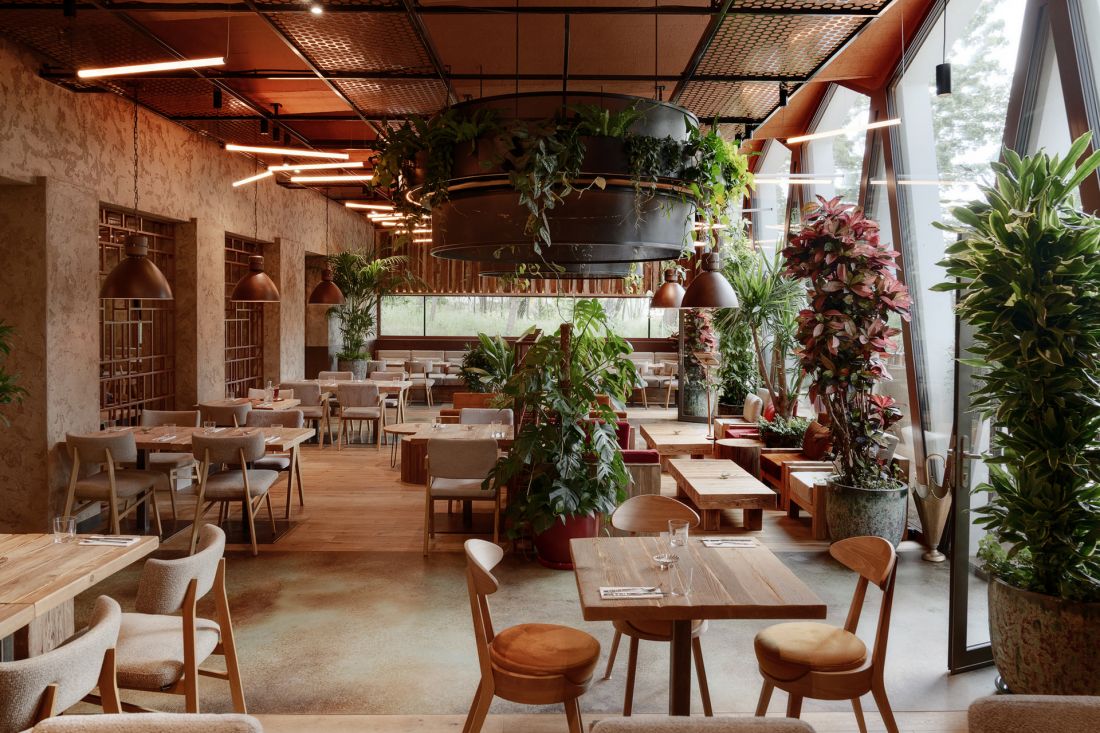
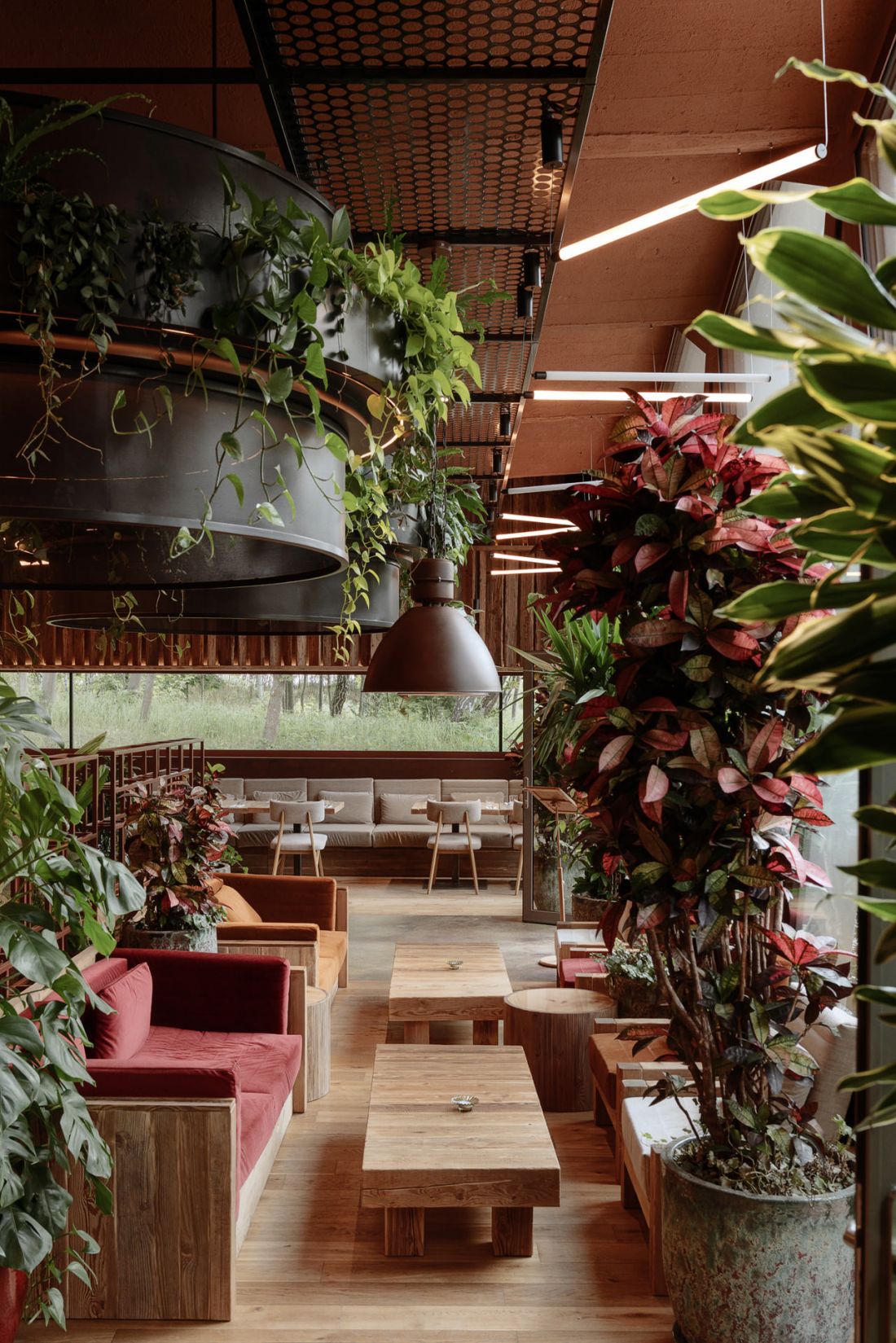
Most has changed in the interior, which - necessarily - in no way resembles the austere modernist space of the 1960s. Perhaps the only reminder of the purity of form of the former Medusa is the exposed structure of the slightly sloping accordion roof, which - like the rest of the interior - was painted in a warm, tending to orange color. The entire interior of the pavilion was also kept in warm tones. The wall above the bar is covered with textured plaster, while there is also room for aged planks of distinctive texture and geometric partitions, separating the space of the former restaurant from the room that used to be an arcade of the pavilion.
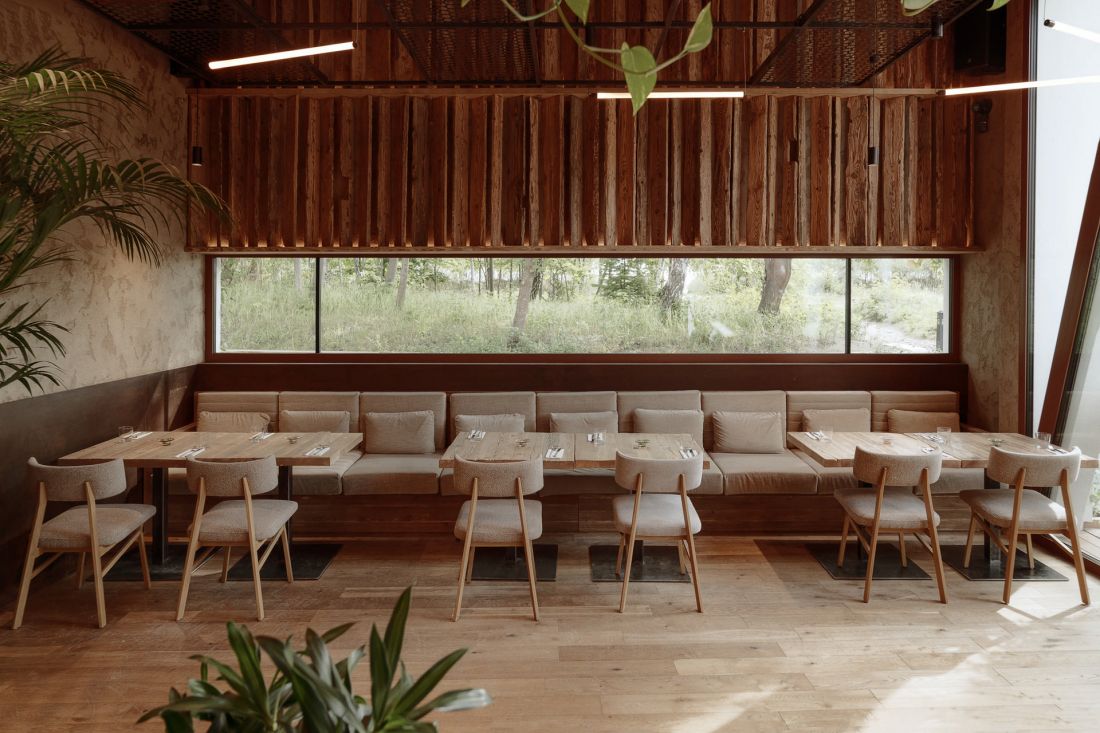
Revitalization of the Meduza pavilion in Sopot
Photo: Tom Kurek © Sikora Wnętrza
green counterpoint
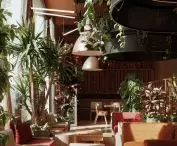
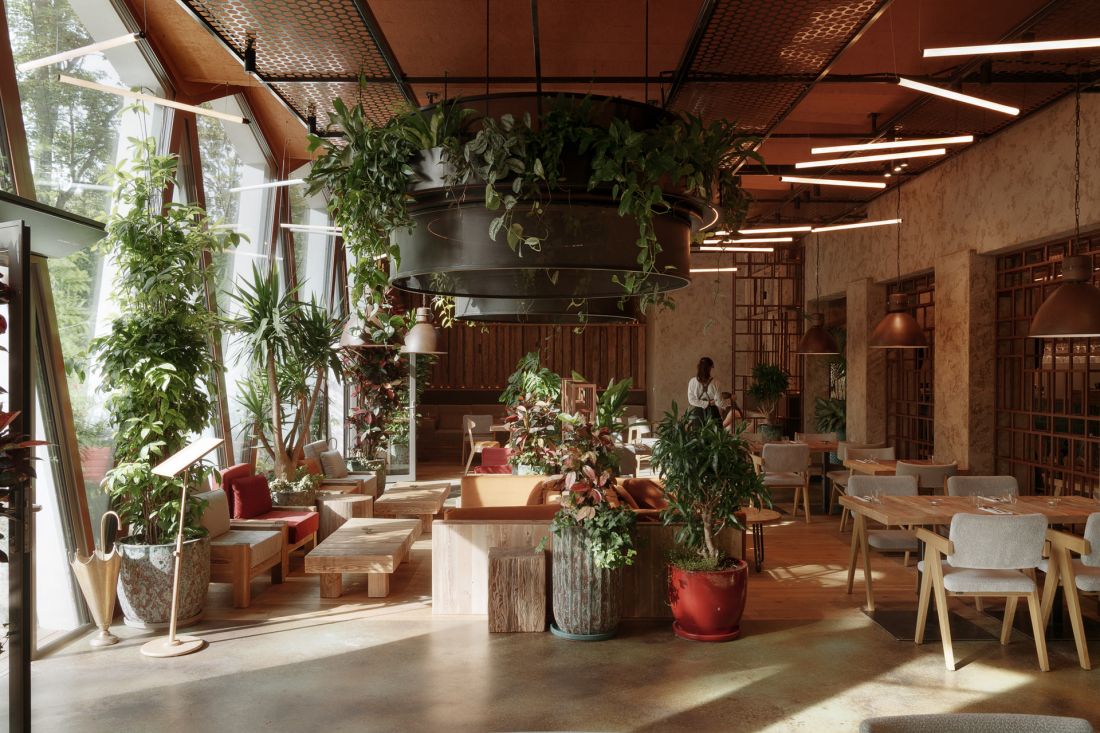
The counterpoint to the warm tones is vegetation in the interiors of the new Medusa. This one played an important role already in the first years of the building's operation, which was designed with respect for the tree that grew there before. Its trunks ruthlessly squeezed between the structure of the accordion roof as if trying to prove that nature can coexist with architecture without conflict.
Revitalization of the Medusa pavilion in Sopot
Photo: Tom Kurek © Sikora Wnętrza
Over the years and subsequent alterations to the building, the trees have disappeared. The recent modernization of Meduza has restored the greenery - and with a fair amount of improvement.
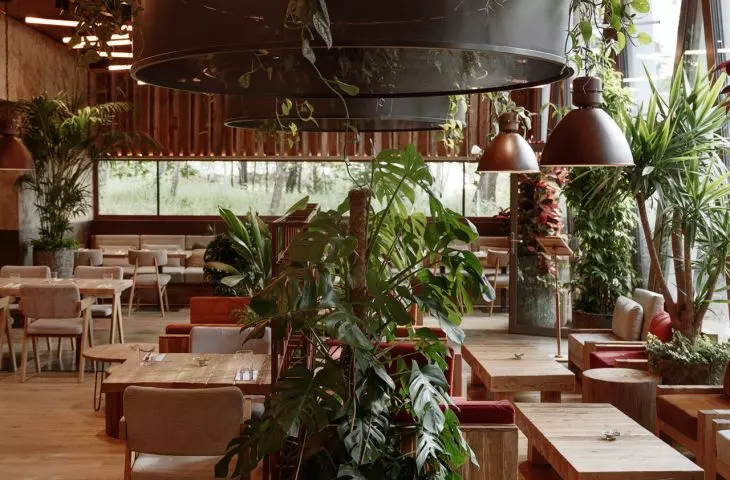
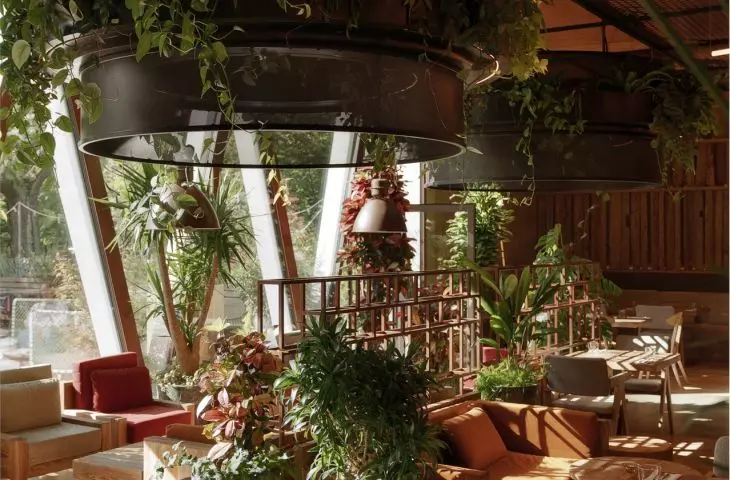
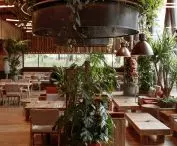
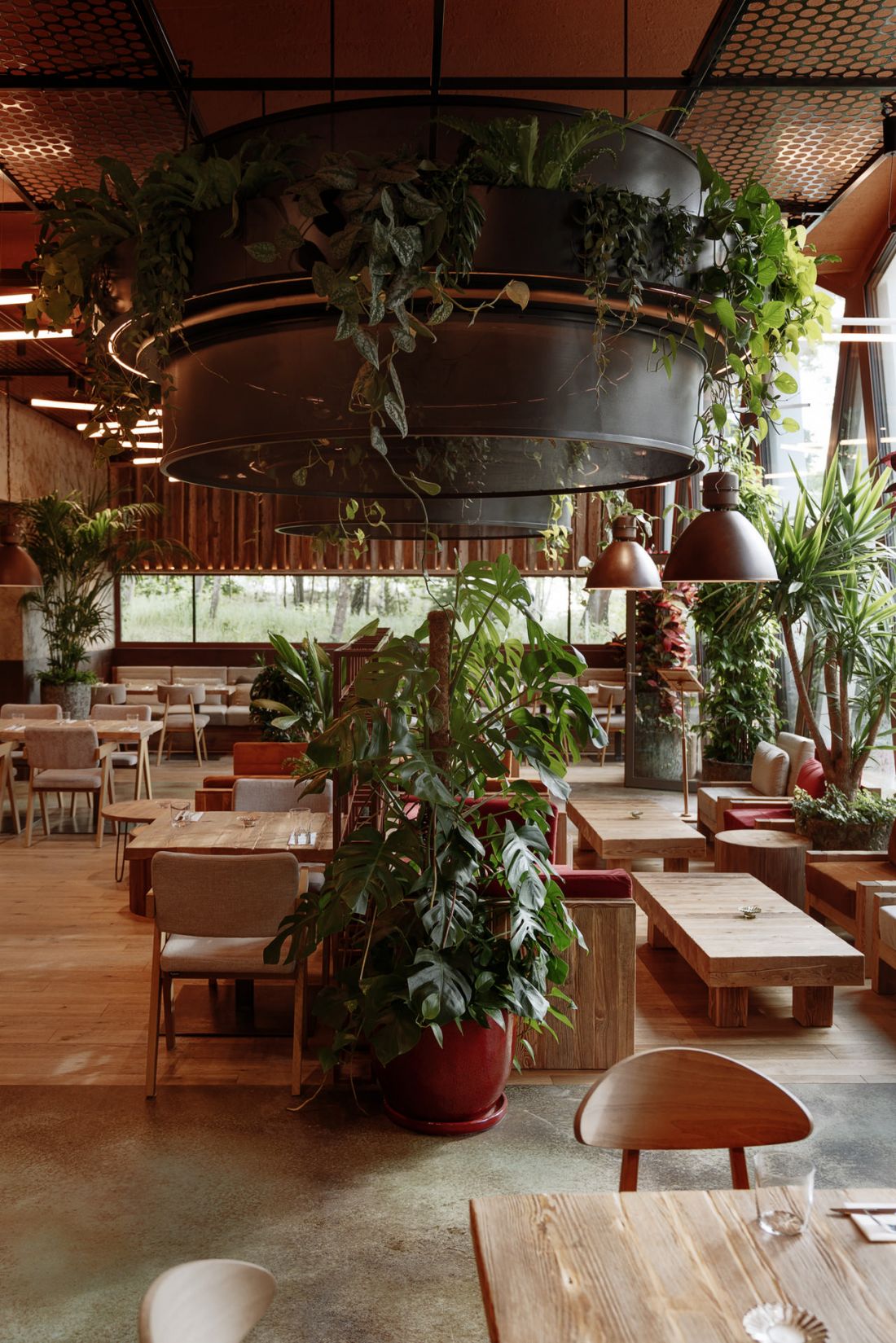
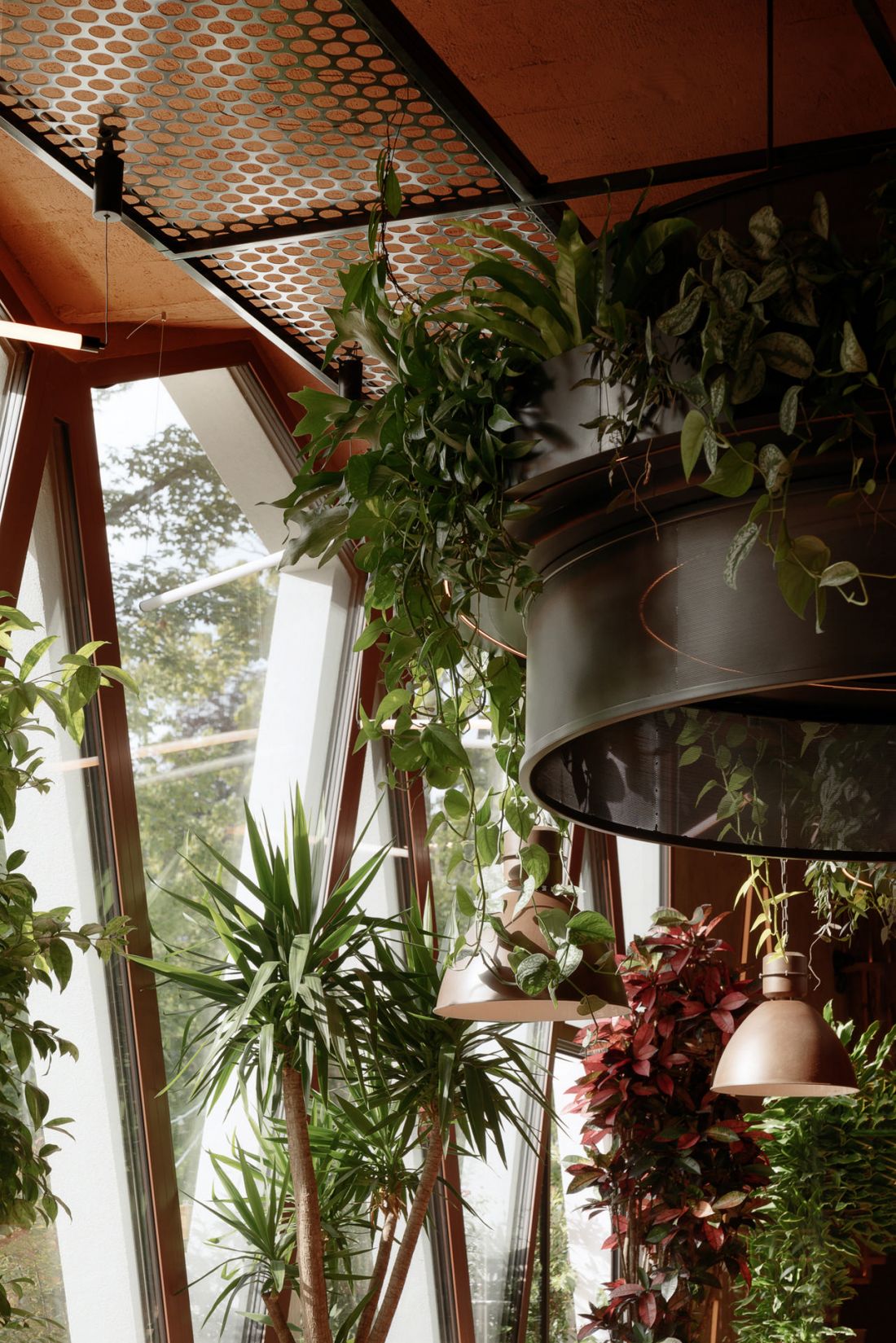
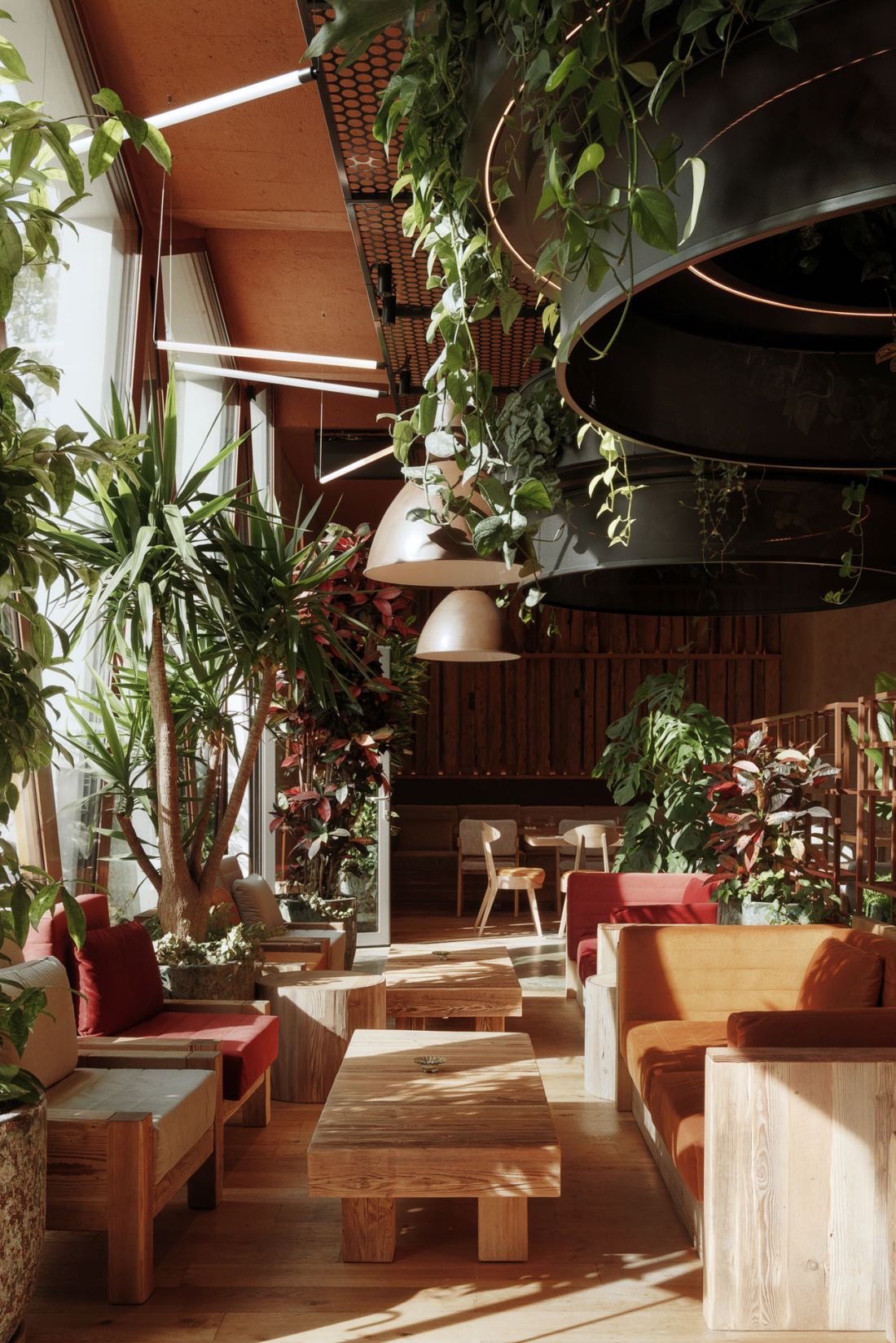
This time the idea was to surprise and abstract space that "moved in" to the modernist pavilion. It is in vain to look for the occurring white inside, but there are dozens of types of plants around, with a 200-year-old olive tree at the forefront. This is due to the Investor and his watchful eye for plants.
- write the architects from Jan Sikora's studio.
Revitalization of the Meduza pavilion in Sopot
Photo: Tom Kurek © Sikora Wnętrza
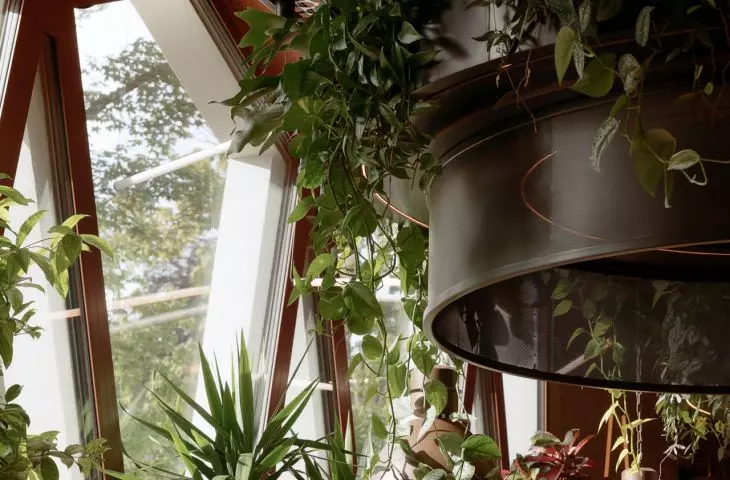
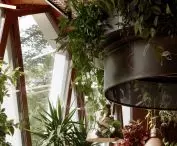
Plants thus occupy numerous pots, scattered throughout the interior, climbing the walls and steel frames, and finally hanging from special round pots, suspended like chandeliers above the tables. The natural character of the interior is to be complemented by wooden chairs and tables, made at the Lake Regalia manufactory.
Revitalization of the Meduza pavilion in Sopot
Photo: Tom Kurek © Sikora Wnętrza
Many modernist buildings could envy the history that befell Sopot's Medusa. Although its interiors have undergone significant revisions, the architectural structure has been exposed from under later layers and restored to its former glory, reminding us of the pavilion's past. Can the Alga, located on Monciak Street, count on similar luck?