






Wesoła, the space that the City of Krakow bought from the University Hospital in 2019, at first glance hasn't changed much in recent times. However, this doesn't mean that nothing is happening in the matter of transforming one of the most valuable parts of Krakow. For the time being, Wesoła is undergoing numerous in the projects and on the maps of city planners, and, as it turns out, in the virtual space. The digital reality is the creation of the Invisible Sculpture Park, which was inaugurated on Friday, December 12, 2025. The event was also an opportunity to announce an architectural competition that could change thinking for good about what Krakow Wesoła might look like in the future.
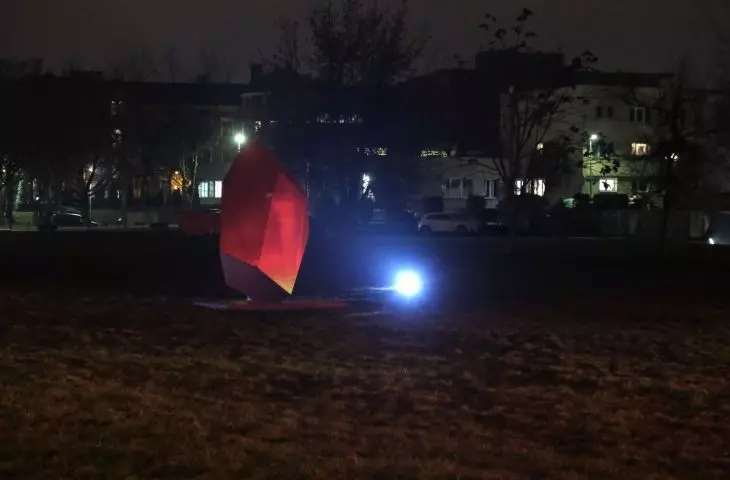
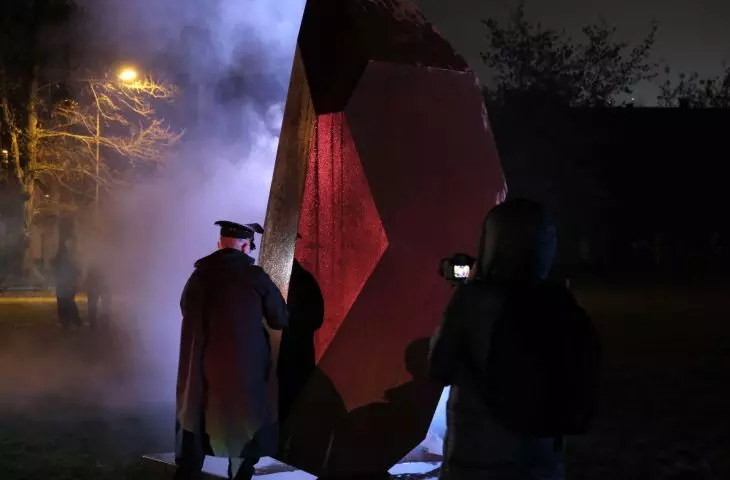
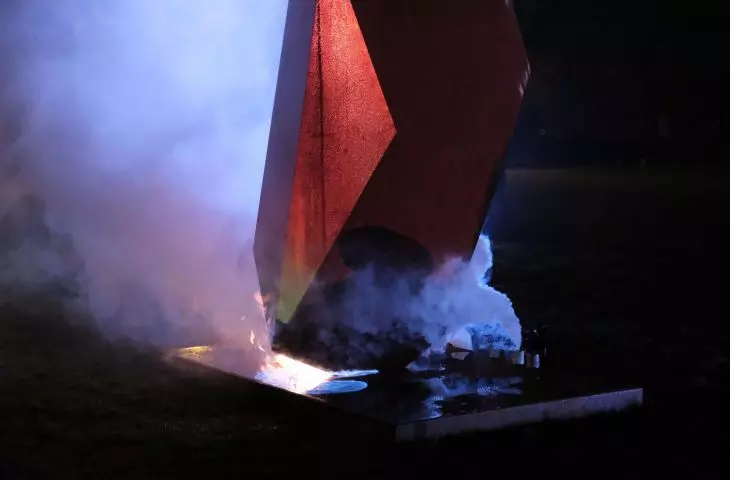
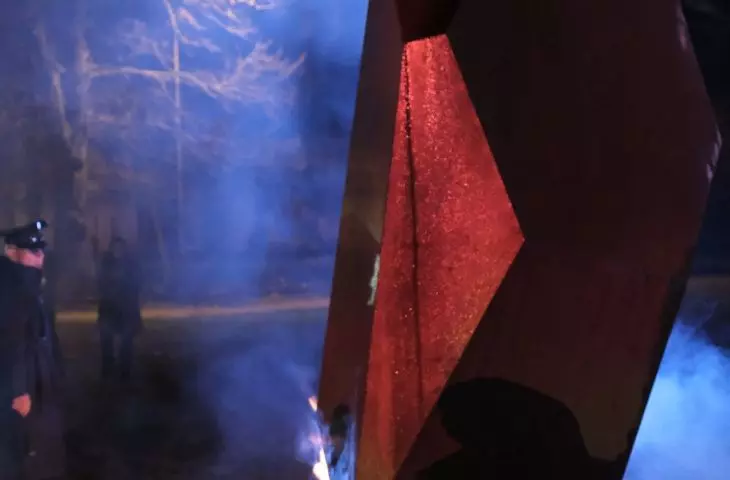
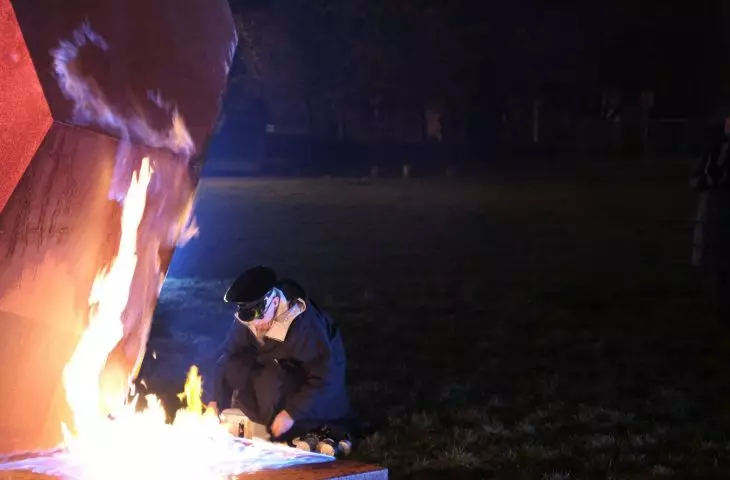
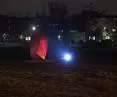
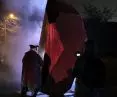
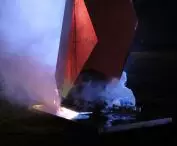
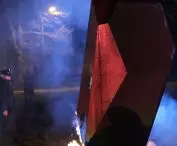
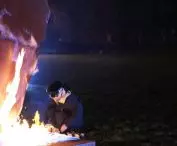
As part of the Second Interdisciplinary Biennial of Future Art and Technology, Culture Futura e-POLIS in Krakow's Wesoła was created as a space to immerse oneself in a virtual reality mediated by technology. The visual manifestation of the new institution, anchoring the Invisible Sculpture Park in the material world, is the obelisk Elements, by Aleksander Janicki. During the unveiling of the steel sculpture, the artist performed a performance, surrounding the object with smoke candles and then pouring a flammable liquid that allowed it to burst into flames. The obelisk, which today sits in the center of the "meadow on Wesola", in front of the Design Pharmacy, is an object signaling the existence of a parallel digital reality of art in this space. As Wiktoria Kozioł writes in the text Ode to Deliberate Omission, or the Park of Invisible Sculptures:
[...] The vortal to the world of technology becomes the steel obelisk "Elements," but that's the end of the object-based intrusions. "The Element" provides a pretext for immersive AR, VR and AI experiences. It is a portal connecting the physical with the mediated.
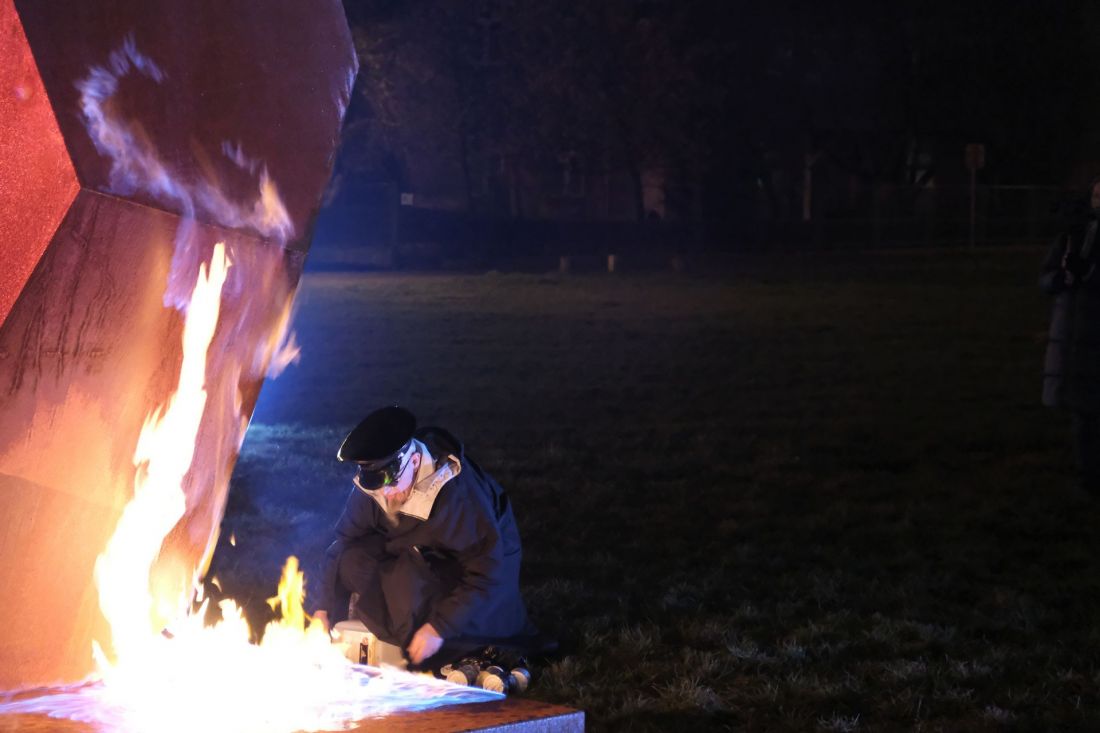
Inauguration of the Invisible Sculpture Park in the Wesoła district of Krakow.
Photo: Przemek Ciępka
a photogrammetric slice of wartime reality
The author of one of the digital sculptures created as part of the Invisible Sculpture Park's activities is Marcin Korbus, who presented a work titled "VR Project - Ukraine," set in augmented reality (VR).
The war in Ukraine and other armed conflicts affect our reality and shape the way we see the world. How we learn about these events and how we experience their consequences is also important. My project is an interdisciplinary endeavor combining art, documentary and modern virtual reality technologies to provoke reflection on the contemporary image of war and its consequences, and to broaden the debate on the role of new technologies in documenting reality and creating historical memory. The scanned record of the destruction becomes a testimony to human experience and history, allowing us to better understand the impact of war on the environment and public consciousness.
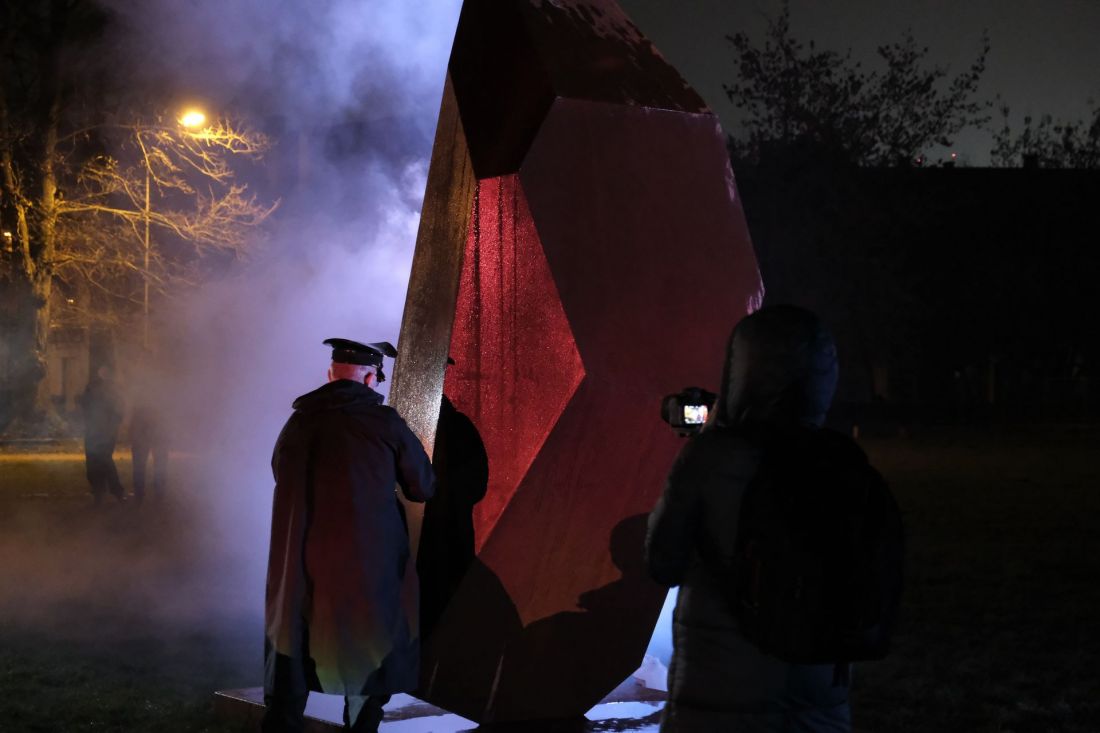
Inauguration of the Invisible Sculpture Park in the Wesoła district of Krakow.
photo: Przemek Ciępka
Entering the digital world, mediated through the work of Marcin Korbus, viewers are transported to a school building in Ukraine, where the Russian military held 300 citizens and nationals of the invaded country in a small space.
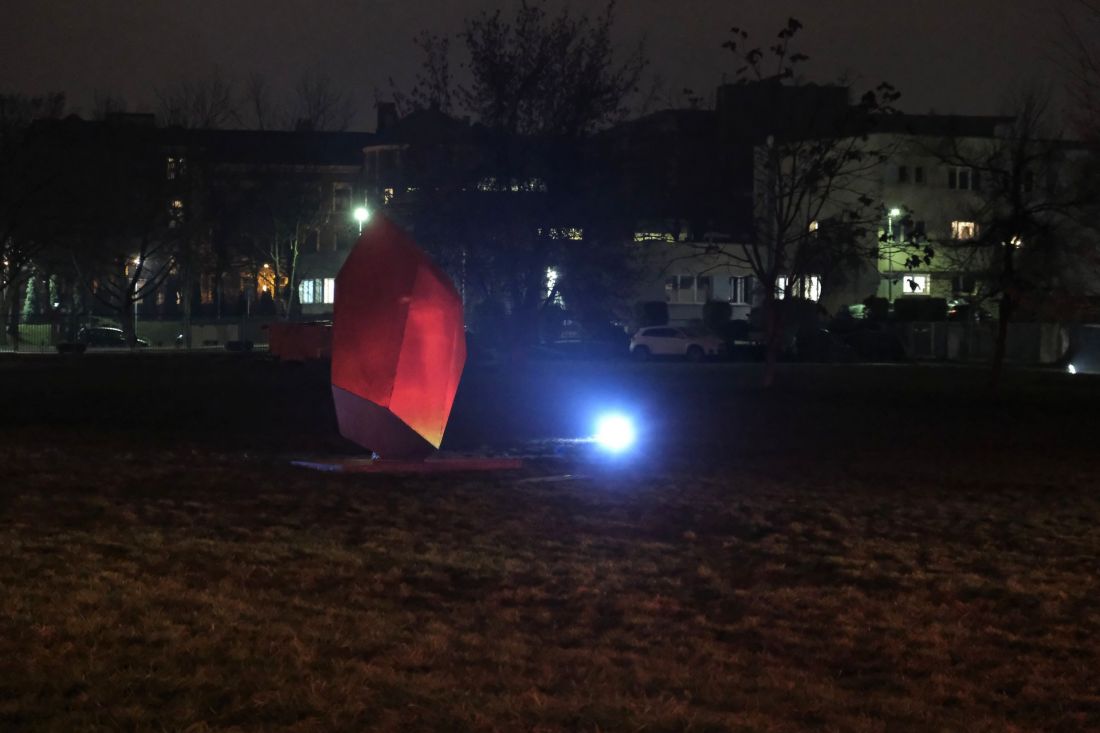
Inauguration of the Invisible Sculpture Park in Krakow's Wesoła district
photo: Przemek Ciępka
During the event, art functioning in virtual space was explored by participants using augmented reality goggles. The digital works are also accessible from a smartphone, which integrates the image received by the device's camera with spatial and photogrammetric data. To view the exhibits at the Invisible Sculpture Park, all you need is a QR code and the proper positioning of the device.
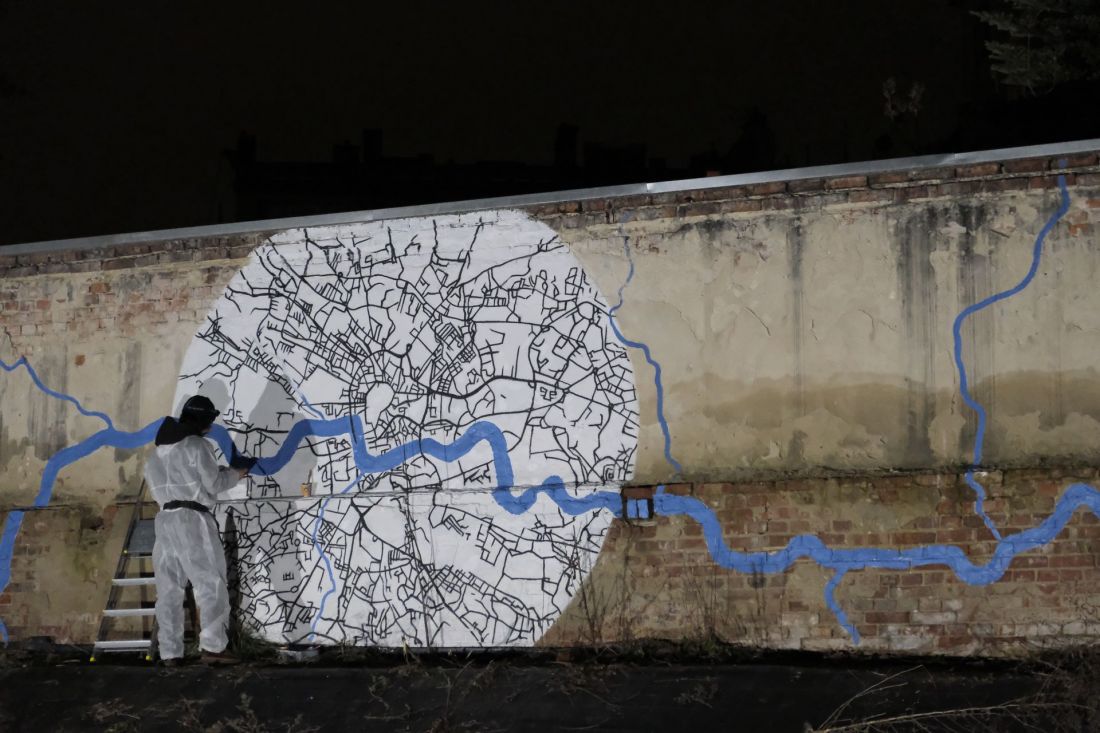
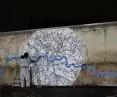
Invisible Sculpture Park on Wesola Street in Krakow - Mural Mapping the City: Mikołaj Rejs, Bartolomeo Koczenasz, Marcin Costilla-Kamiński
Photo: Przemek Ciępka
A new map of Krakow
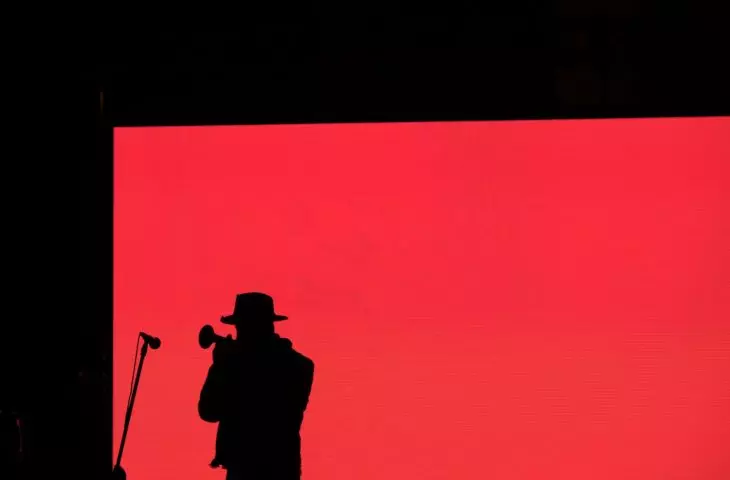
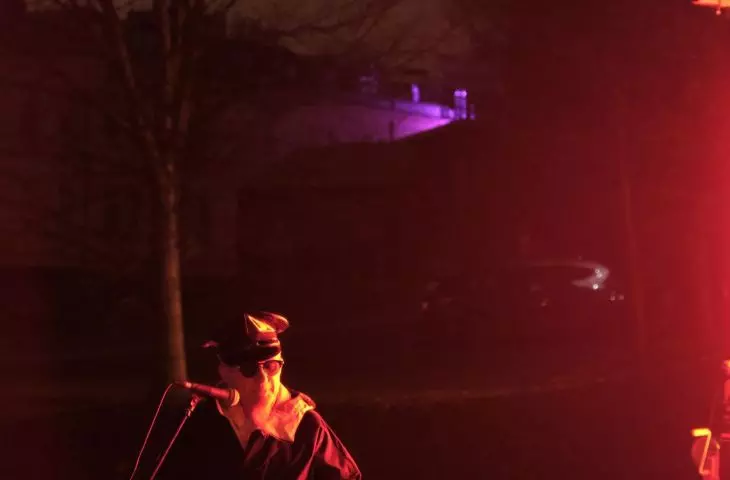
The multisensory nature of the event was complemented by the playing of the anthem of Merry by Antoni Gralak. The opening of the Invisible Sculpture Park was also accompanied by a presentation of the progress of work on the mural being created as part of the "Mapping the City" project. Artists from the Salt Storehouse - Mikołaj Rejs, Bartolomeo Koczenasz and Marcin Costilla-Kamiński - are responsible for the monumental composition.
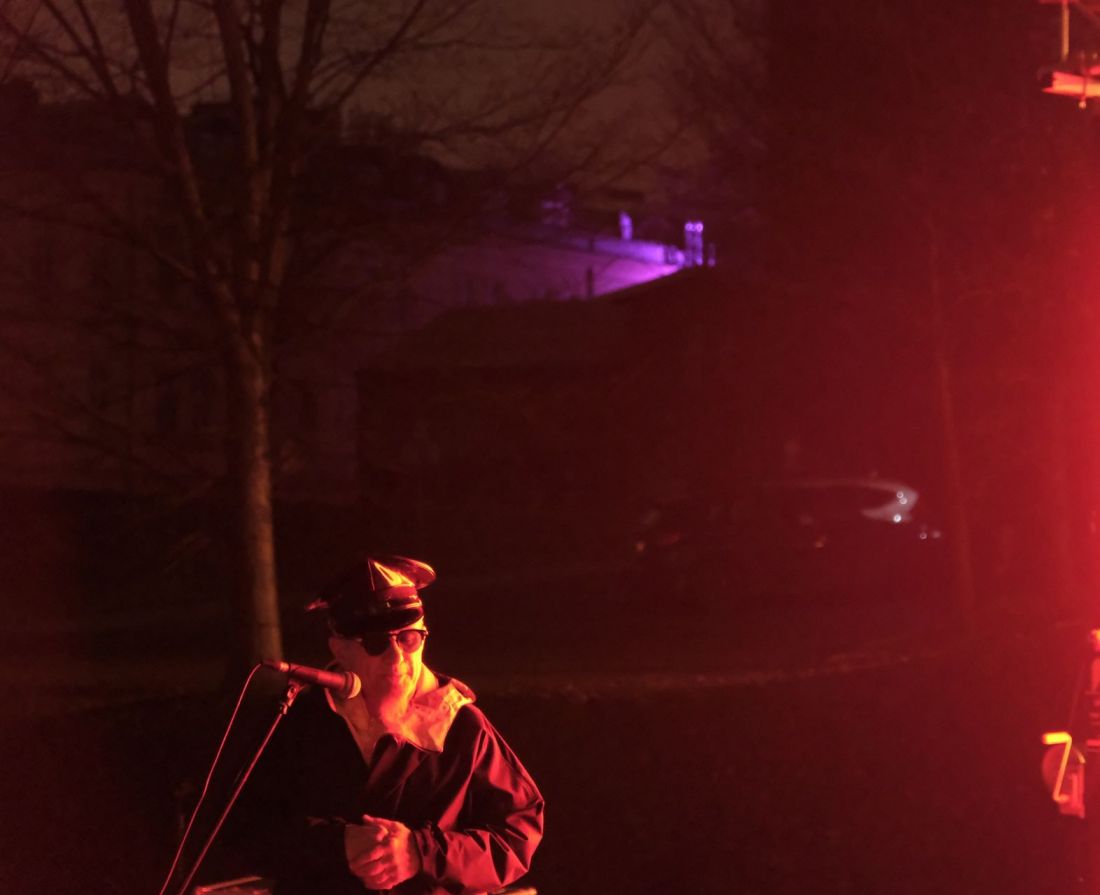
Inauguration of the Invisible Sculpture Park in the Wesoła district of Krakow.
photo: Przemek Ciępka
"Green Wesoła" architectural competition
The inauguration of the Invisible Sculpture Park in Krakow's Wesoła district was also an opportunity to announce the first information on a new venture that could help shape green space in the center of Krakow. As Aleksander Janicki announced during the event, the Biennale of Future Art and Technology Kultura Futura intends to announce an international ideological competition to develop a concept for the development of green areas within the Wesoła district:
The planned competition is the aftermath of the Distributed Energy Congress, which took place two years ago at the ICE Congress Center under the auspices of the AGH University of Science and Technology in Krakow. During the congress, I proposed announcing an architecture hackathon with a specific formula. Instead of limiting participants to the field of architecture, it brought together teams consisting of people associated with different disciplines. We invited artists, urban actionists and economists, as well as a group of 150 Distributed Energy Ambassadors representing the University of Science and Technology. Their work proceeded under the guidance of numerous tutors, including architects, including Piotr Urbanowicz. Already after the first day of the hackathon, they were surprised by the level and sophistication of this work, bringing together the interdisciplinary competencies of the participants and the use of artificial intelligence. I thought this approach could be applied a bit more broadly. That's how the idea for "Green Jolly" - an international, interdisciplinary architectural competition organized by the Culture Futura Biennial of Future Art and Technology in cooperation with theSARP Krakow Branch, the Board of Urban Greenery in Krakow, Krakow's Academy of Fine Arts, AGH University of Science and Technology, Krakow University of Technology and the University of Agriculture, which will moderate the entire endeavor. We also intend to involve the Board of Urban Greenery in Krakow and the local community in the "Green Wesoła" project, implementing the principles of participation.
- says Aleksander Janicki, spiritus movens of Friday's event in Wesoła.
Inauguration of the Invisible Sculpture Park in the Wesoła district of Krakow.
photo: Przemek Ciępka
On May 5, 2025, at a press conference, the city presented the Masterplan for Wesoła - a set of guidelines and a preliminary design for the development of the area, which Krakow bought back from the University Hospital more than six years ago. The concpecation gave residents a glimpse into the scope and form of the transformation that is expected to turn Wesoła into the cultural center of Krakow. For planners, in turn, the document provides a basis for further work in developing more detailed projects. The results of the interdisciplinary "Green Wesoła" competition may be an important voice in the discussion of the final form of a creative district in Krakow:
The results of this competition could be extremely useful for the development of Wesoła, which, after all, is still waiting to be developed - of course, we already have a master plan, but it raises the fundamental question: what next? In the "Green Wesoła" project, we are looking for a vision for this complex but very effective spatial structure. An interdisciplinary approach can give the planners responsible for the final shape of this space new insights into the possibilities this place offers. In the early 1990s, I followed the discussion about the future of the La Défense neighborhood in Paris. Not everyone knows that Magdalena Abakanowicz took part in the ideological competition for the development of this place, whose proposal, which included the construction of "Arboaria" skyscrapers, won international recognition, although it was not strictly an architectural concept. We, too, are looking for a vision based on interdisciplinary competencies - not only architectural, but also artistic, engineering or circular economy.
- Aleksander Janicki explains.
Will Wesoła soon become a laboratory of concepts trying to find an answer to the question of what green spaces in cities of the future should look like?