






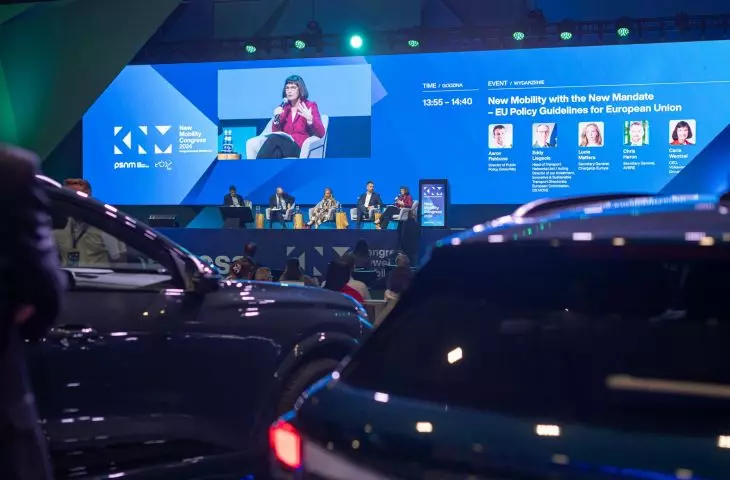
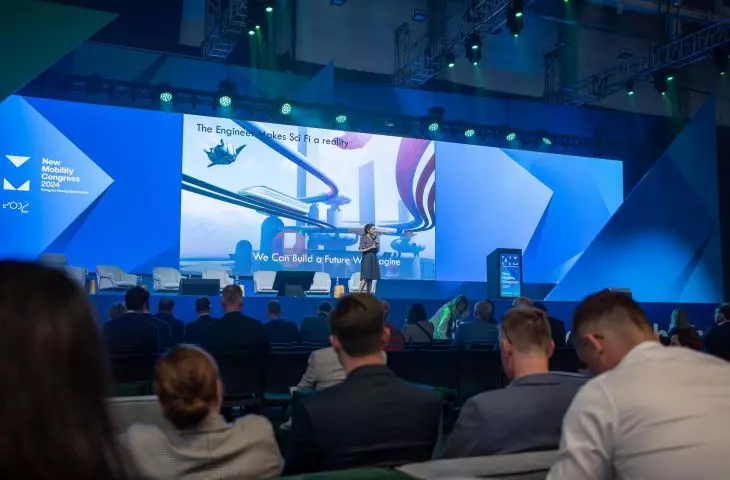




Is it possible to talk about urban mobility without taking urban planning into account? Filip Springer - an acclaimed reporter and author of books on space and architecture - has no doubt: a city is a movement, and the conversation about its future must take into account how we move, communicate and build a community. These issues will be the focus of the Urban Innovation thematic track at September's New Mobility Congress in Katowice.
Thinking about a city without considering its transportation systems is like trying to understand an organism without knowing its bloodstream
-says Filip Springer, synthesizing the concept of the Urban Innovation track at the New Mobility Congress.

Filip Springer
© Polish New Mobility Association
We want to talk about the city and architecture during the KNM, because the city is movement, constant movement and change. It is communication that in large part shapes the daily lives of residents and determines the quality of their relationship with space. A city is also a network of social and economic connections, and the capacity of this network, its inclusiveness and democratic nature determines whether the city functions as a community or breaks up into isolated islands. Mobility is the key to integrating space, to building local identity and to creating conditions in which residents can truly co-create their surroundings. Without efficient, accessible and sustainable transportation, there can be no question of a city that is friendly, equitable and resilient to the challenges of the future
-explains Springer.
Modern cities are complex systems - not only physically, but also socially. Mobility is no longer just an engineering issue, but a key factor in integrating space and community.

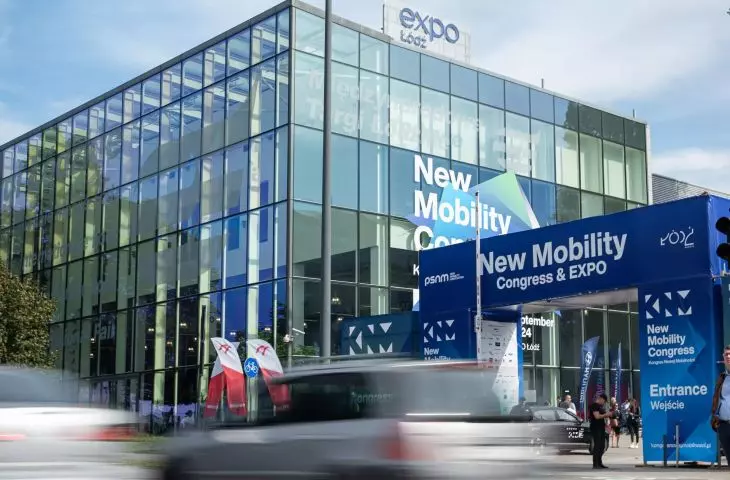
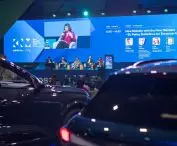
New Mobility Congress
© Polish New Mobility Association
The Urban Innovation track is meant to be a response to this challenge - a conversation about mobility as a condition for an equitable, inclusive and resilient city. It's a space to reflect on how data, technology and innovation can coexist with local history, place identity and residents' needs.
The discussion panels, lectures and workshops that will take place as part of the Urban Innovation track at KNM are aimed at everyone who thinks about urban space not as a set of solids, but as a living, evolving organism. KNM is a meeting place for urban planners, architects, city managers, designers and activists who are not afraid to ask difficult questions - about boundaries, responsibility and the meaning of design in the 21st century.

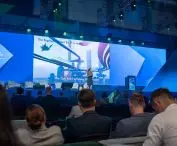
New Mobility Congress
© Polish New Mobility Association
From Oslo to Kielce - voices from all over Europe
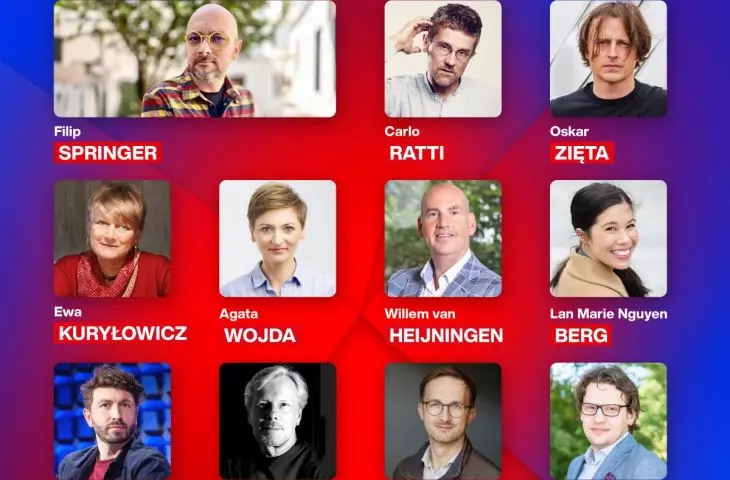
The path program is a kaleidoscope of experiences and perspectives - from futuristic visions to pragmatic, local experiences and actions. Speakers will include:

speakers and presenters of the New Mobility Congress 2025
© Polish New Mobility Association
Carlo Ratti
MIT professor, a world-renowned urban planner whose research connects digital technologies to the physical space of cities. Curator of this year's Venice Architecture Biennale.
Ewa Kurylowicz
WAPW professor and experienced designer who focuses on social responsibility and sustainability in architecture.
Agata Wojda
mayor of Kielce, a local government official who thinks about the city from the level of relations, everyday life and openness to the needs of residents.
Wilem van Heijningen
director of mobility strategy in Amsterdam , a city that turns mobility into a tool of urban democracy.
Lan Marie Nguyen Berg
mobility and climate expert from Oslo, a member of the Norwegian parliament who combines politics with grassroots action.
Damiano Cerrone
urban planner and creator of Urbanist AI, combining urban planning with algorithms and data analysis.
Jakub Heciak
partner at BBGK Architects and lecturer at WAPW, involved in urban participatory processes and designing "with the people and for the people."
Oskar Zięta
architect, designer, creator of spatial forms from the borderline of sculpture and engineering.
Piotr Kuczia
designer of mobility systems, including the solar Sunglider.
Szymon Ciupa
Smart City and geoinformation expert, specialist in digital models of cities.
Moving away from "placemaking" and creating buildings as finished works
It is not meant to serve academic debate, but to be a laboratory of ideas, where theory is confronted with practice.
What happens to a space when designers disappear from it and residents appear? Can we design places that not only look good, but work well?
- Filip Springerasks, provoking a discussion.
The curator of the Urban Innovation track emphasizes that the idea of flexible design will also be at the center of the conversation - moving away from thinking of buildings and spaces as finished works, to thinking of them as processes open to change, dialogue and adaptation.
This requires a change in the attitude of investors, designers and politicians - but also a change in the expectations of residents. Because only then will the city become a co-created space, rather than one imposed from above.

Gil Penalosa
© Polish New Mobility Association
About the New Mobility Congress
TheNew Mobility Congress will be held September 23-25, 2025 at the International Congress Center in Katowice, Poland. This is the sixth edition of the largest event in Central and Eastern Europe dedicated to the decarbonization of transportation and equitable mobility transformation.
The congress brings together market leaders, representatives of public administration, academia and developers of innovative technological solutions. The program of this year's KNM includes six thematic program tracks.
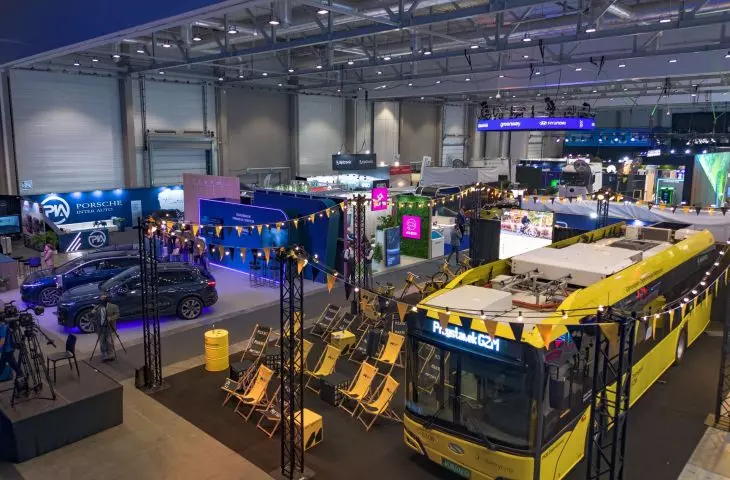
The debates and meetings will be complemented by an exhibition space of more than 12,000 sq m, dedicated to manufacturers and suppliers of innovative technologies and solutions for the mobility sector.
The Congress is organized by the Polish New Mobility Association, and this year's editionis hosted by the Upper Silesian and Zagłębie Metropolitan Area (GZM).
More information about the event is available at: www.kongresnowejmobilnosci.pl