




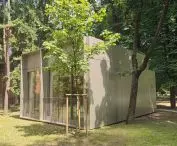

When the Venice Architecture Biennale almost coincides with the Milan Triennale, the eyes of the whole world turn to the Arsenale and Giardini. This is where architects and journalists from all corners of the globe gather. Among the Venetian canals and palaces, an amused crowd seeks inspiration and, over prosecco, has heated discussions about architecture. Just a week after the inauguration of the Biennale, the Palazzo dell'Arte in Milan opens its doors, inviting architects and urban planners to the Triennale (the 24th edition of the Triennale runs until November 9, 2025).
The main exhibition, titled "I nequalities," already cites data on global disparities on the entrance columns - such as the fact that the poorest countries account for only 12 percent of global carbon emissions. One step further, however, it perpetuates inequality itself, selling admission tickets for 24 euros. The exhibition features projects selected by an extensive curatorial team from among the most interesting voices from around the world, as well as displays prepared by individual countries. The Norman Foster Foundation, among others, is also showing its work here.
The Triennale is taking a bolder approach to contemporary big politics. On the staircase connecting the ground and second floors, the installation "471 Days" by Filippo Teoldi - an Italian journalist and visual artist working in London - is presented, telling the story of the brutal invasion of Gaza. The 471 maroon sashes suspended from the ceiling symbolize each day of Israeli aggression. The length of each corresponds to the number of casualties that day. The installation transforms the data of war into a visual, tangible experience, bringing the visibility of individual lives lost closer. The work goes on to present the profiles of several people who died.
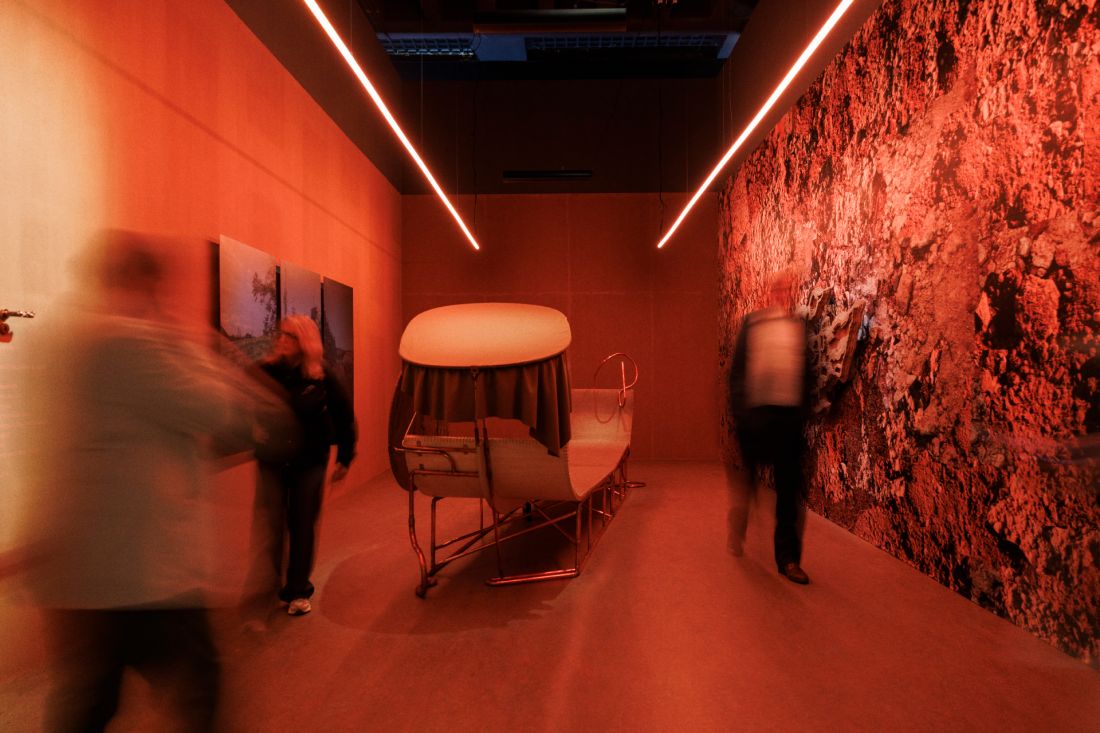
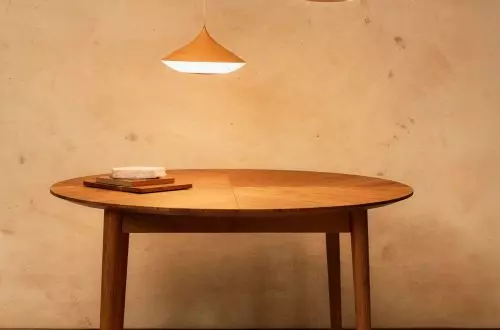
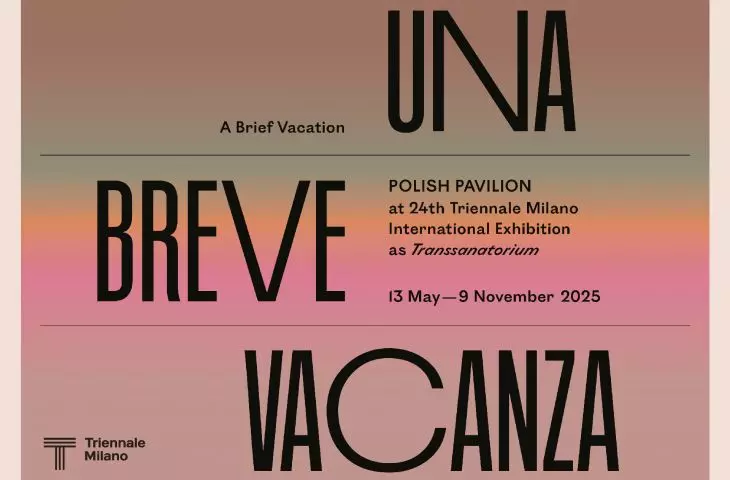
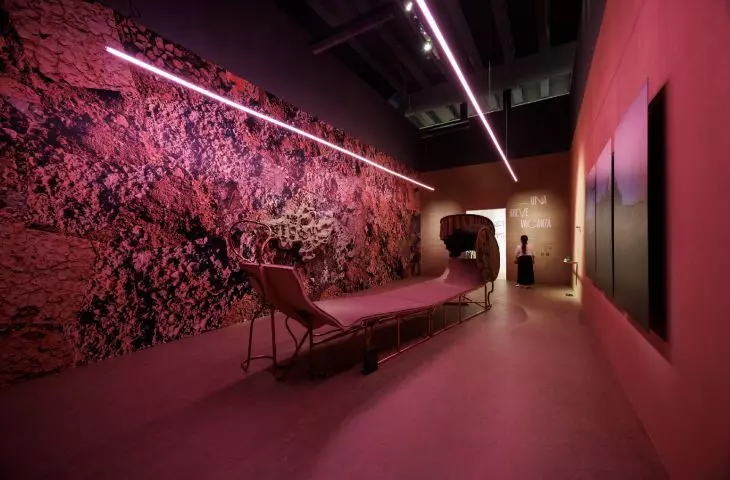
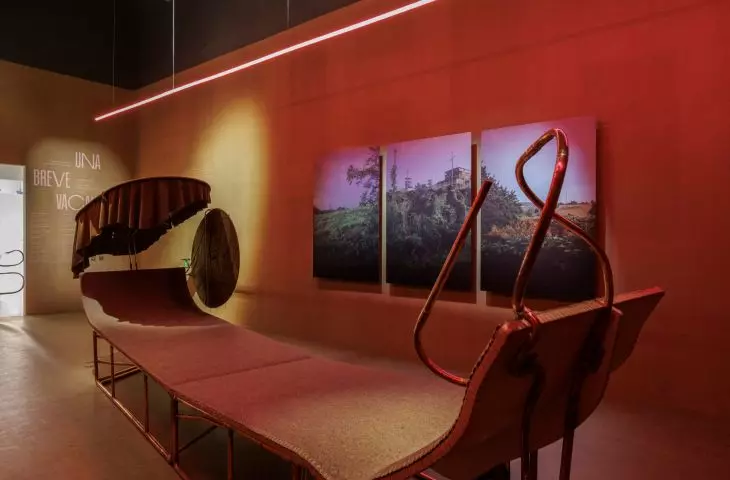
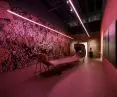
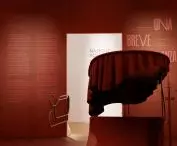
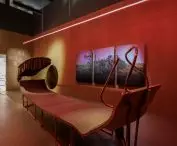
"Una Breve Vacanza" exhibition, Polish Pavilion, Milan Triennale, 2025
photo: Jacopo Salvi | Altomare.studio
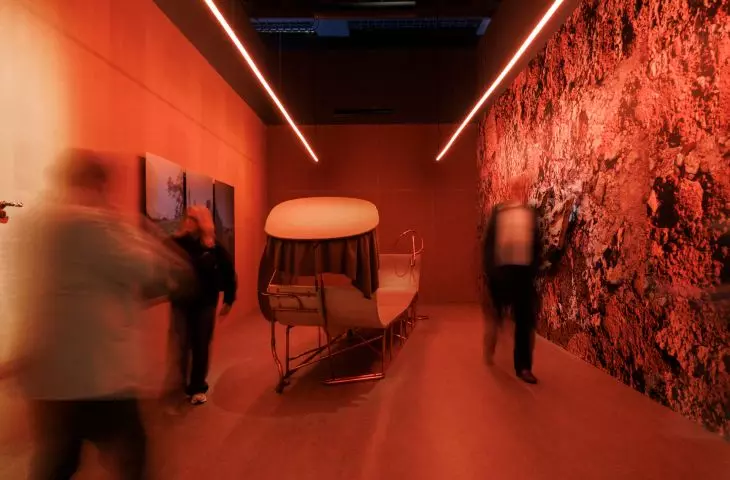
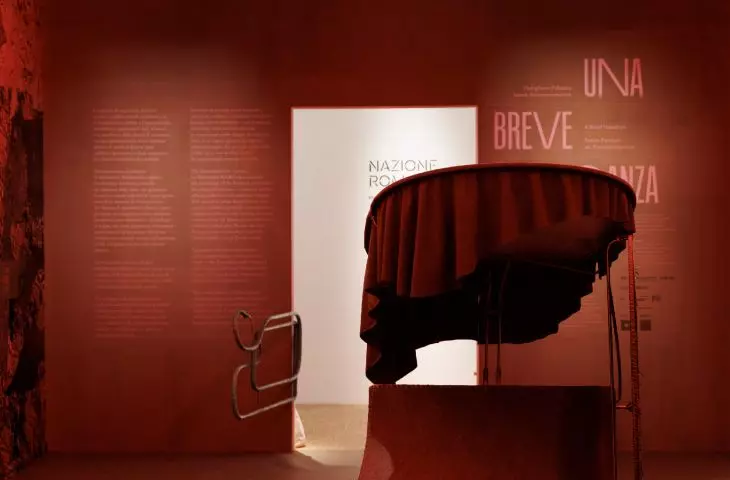
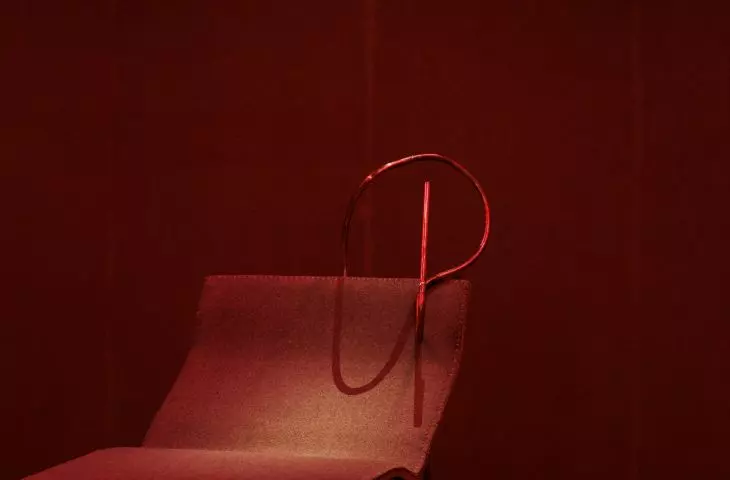
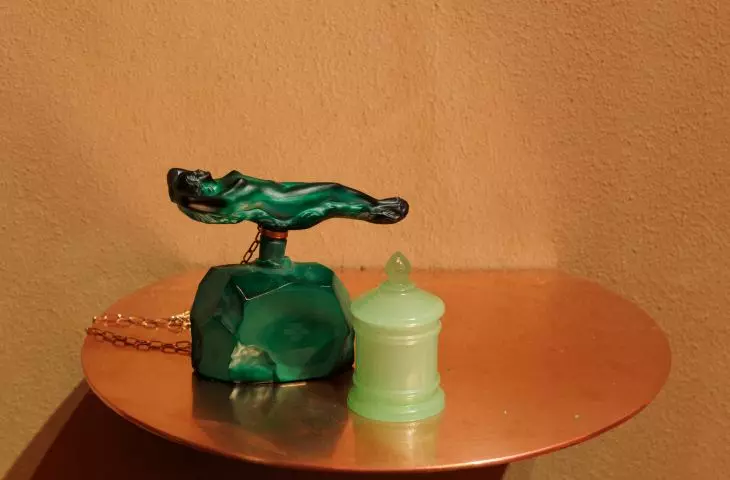
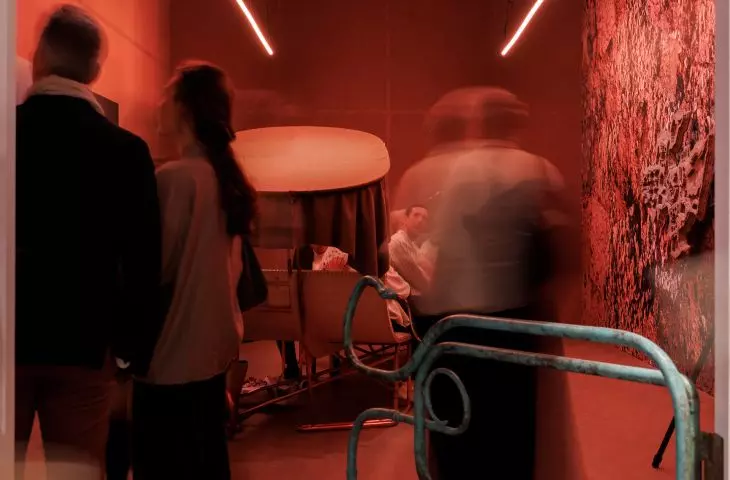
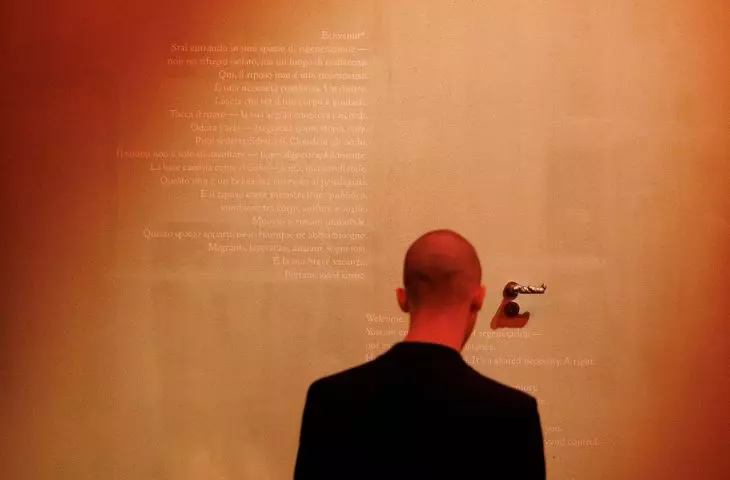
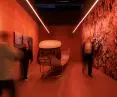
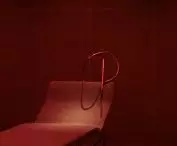
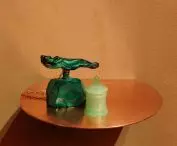
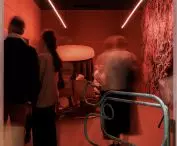
Polish readers are probably most interested in what their country has to say. Katarzyna Roj of BWA Wrocław, curator of Zyjnia, together with architect Aleksandra Wasilkowska, present the project "Short Vacation." Inspired by the tepidarium, a place in ancient Roman baths designed for relaxation and socializing, it allows visitors to relax for a while. After passing through a metalwork gate, well known from Polish spas, one is greeted by pleasant smells and soothing sounds. In a discreetly lit space stands a large, comfortable (I checked) recliner designed by Olaf Brzeski, where one can stretch out and rest and recuperate after an intense tour of the exhibitions. Interestingly, a similar theme in a completely different context was taken up by the Argentine pavilion at the Biennale. The project "Siestario" (curators: Juan Manuel Pachué, Marco Zampieron) evokes a moment of hot summer in Argentina's northern provinces, where siesta is an essential part of culture and well-being. Both projects show that in today's world, driven by a neoliberal economy, no matter where we are, we long to slow down and relax. The rush of unlimited economic growth - the engine of the climate crisis and widening social inequalities - negatively affects our physical and mental health.
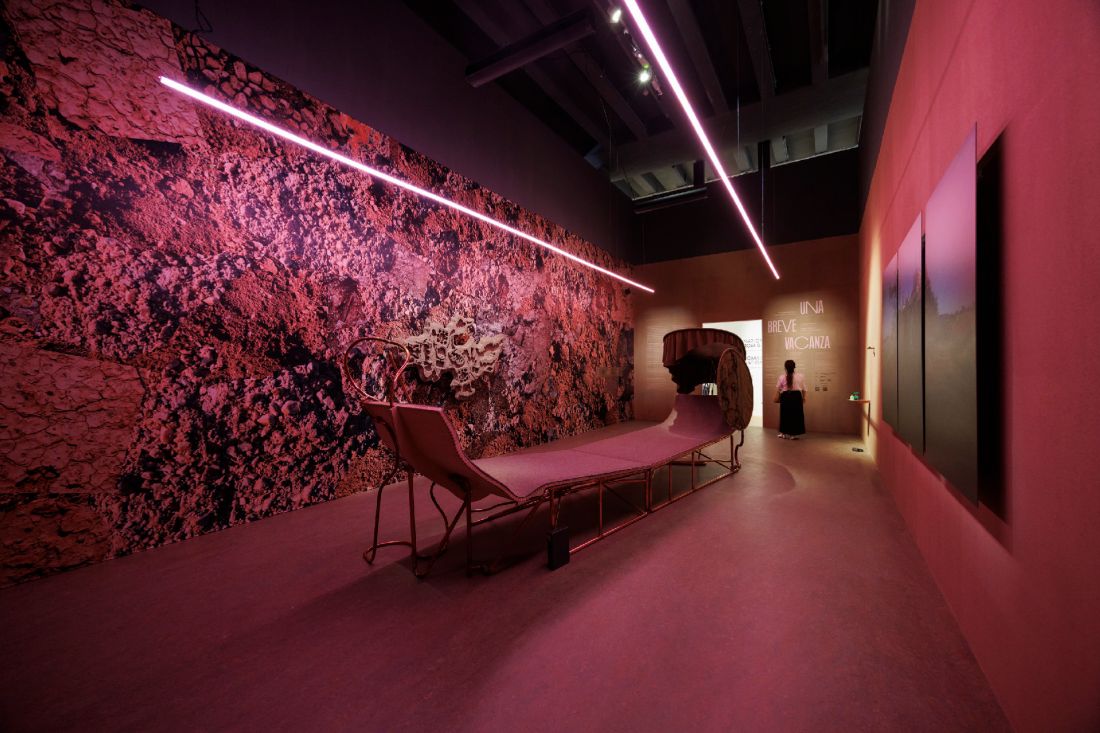
"Una Breve Vacanza" exhibition, Polish Pavilion, Milan Triennale, 2025
photo: Jacopo Salvi | Altomare.studio
The project is part of the artistic line developed by BWA Wrocław, which celebrates regeneration as an integral part of well-being. It doesn't so much offer a ready answer to the crisis of modernity, but rather creates a space for reflection: what would happen if we treated rest as a right rather than a privilege? Could we envision a society in which care for self and community comes before the pursuit of continuous growth?
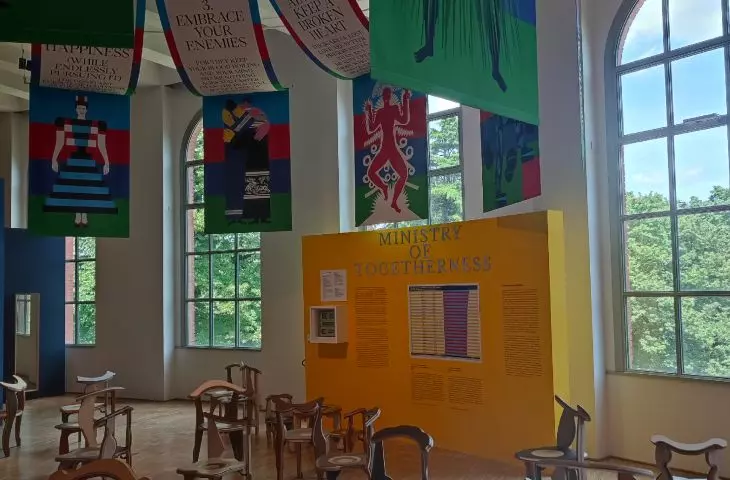
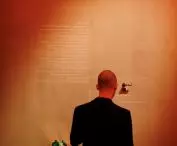
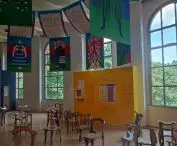
The exhibition "Republic of Longevity - In Health Equality We Believe" (curated by Nic Palmarini and Marco Sammicheli) explores a similar theme. Five fictional ministries: Purpose, Equal Sleep, Food Democracy, Physical Freedom and Community, indicate the paths followed by contemporary capitalist society. In the structure of the Ministry of Equal Sleep, the curators propose, among others, an Undersecretary for Joyful Uselessness and Deep Boredom, an Institute for Legalized Procrastination, and a Department for Anti-Efficiency Design and Radical Comfort. While the names of these institutions may seem amusing, at the same time they draw attention to serious problems related to global social inequality. Among other things, the curators show the conditions under which people in different parts of the world and from different social classes sleep. Sleep here becomes a symbol of broader disparities: access to health, peace and security. The project asks to what extent, in a world dominated by the logic of productivity and constant work, we can talk about the right to rest as a human right.
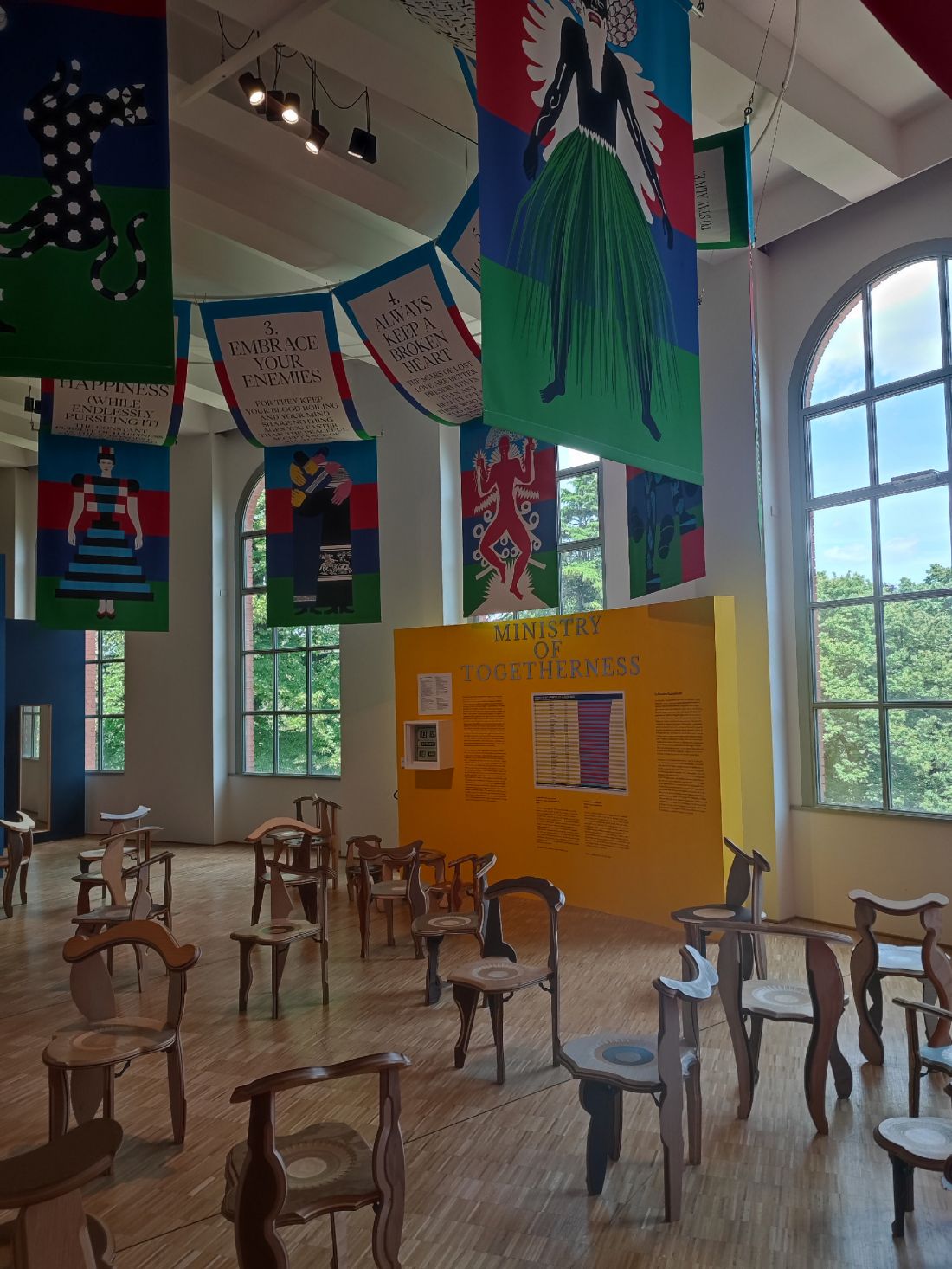
The exhibition "Republic of Longevity - In Health Equality We Believe" raises the issue of well-being and an aging population at a time of environmental crisis
photo: Adrian Krê¿lik
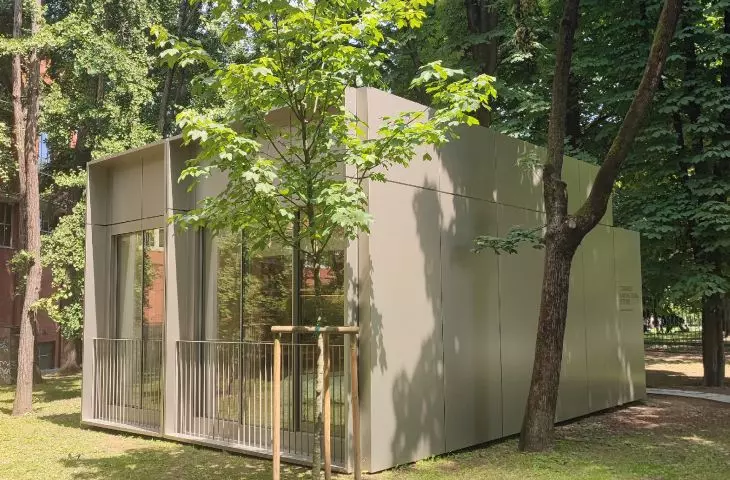
I also visited "Toward a More Equal Future," a narcissistic exhibition that is a paean to Lord Norman Foster. The exhibition shows how the global, corporatized studio functions in the world of late capitalism, pointing out, among other things, the only right - in its view - ways of development in the periphery. Among the projects on display were proposals for the post-war reconstruction ofUkraine, villages in Costa Rica and prefabricated dormitories in Portugal. The Krindzian feeling did not leave me for a moment. I'm writing about it because every now and then we announce the twilight of the grandfatherhood. And he is still doing well.
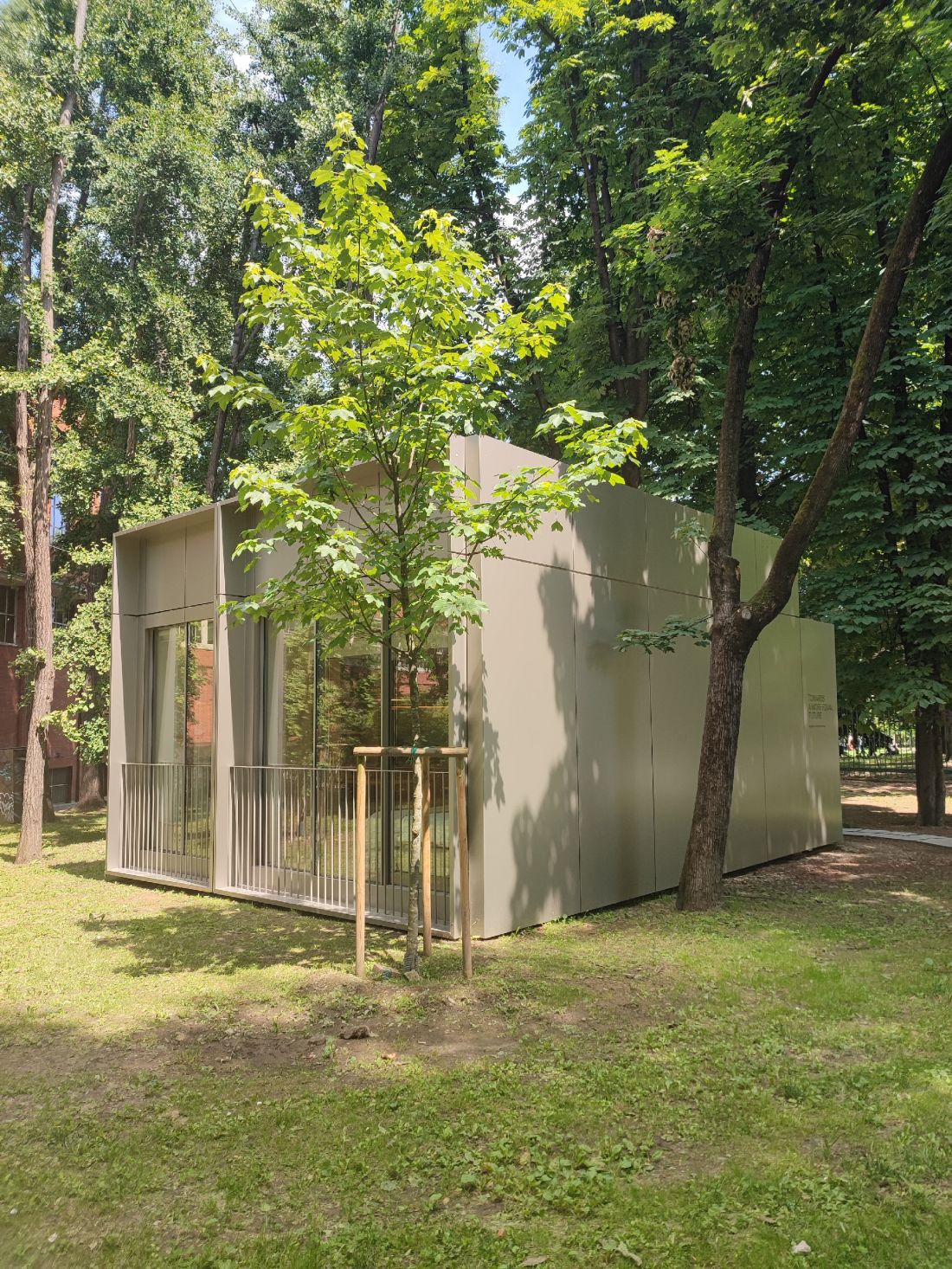
Foster+Partners shows how not to design prefabrication
Photo: Adrian Krężlik
Some of the projects were already known to a wider audience, some exhibitions I had seen at previous Biennales, in museums. However, the large number of projects and proposals caused information noise. It is difficult to fathom the multitude of topics and opinions. A visit to the Triennale is a reminder of how hard contemporary architecture is grappling with the tension between the need for regeneration, the climate and biodiversity crisis and the pressure of relentless growth. On the one hand, there are projects proposing spaces of rest, equality and community that treat well-being as a new critical dimension of design, while on the other, narratives of big names and corporate studios that seek to redefine the global periphery according to their own rules of the game are still present.
Adrian KRÊŻLIK
Architect, PhD student at the Department of Architecture, University of Porto, MIT Portugal program. Lecturer at the School of Form, founder of Dosta Tec, a company that focuses on regenerative design.
Illustrations provided courtesy of the author and BWA Wrocław
more: A&B 9/2025 - Venice Architecture Biennale 2025,
download free e-publications of A&B