



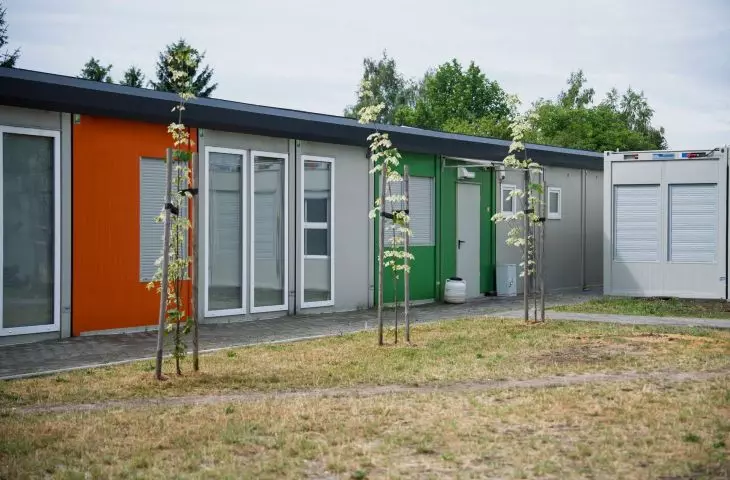
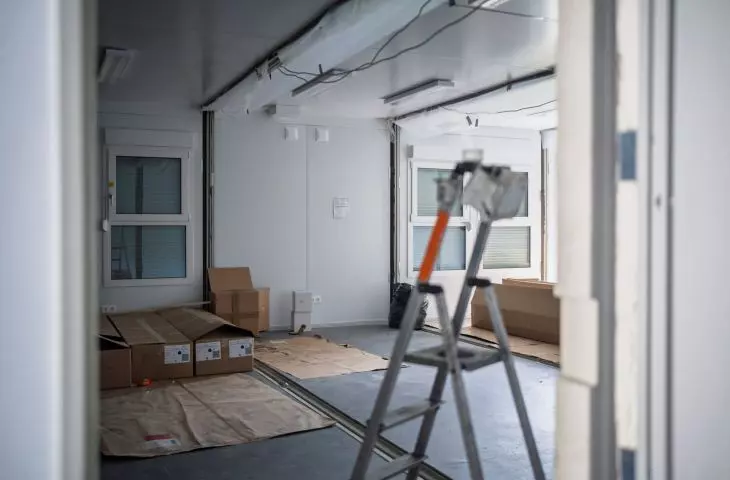
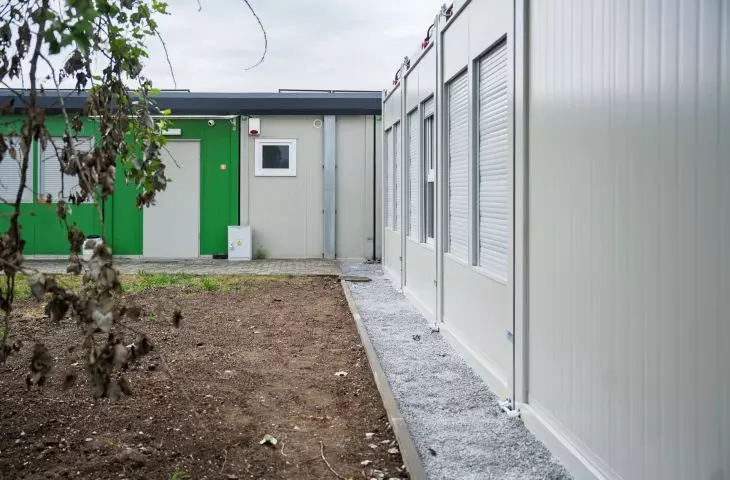



Extreme situations require unique solutions. The town of Zelazno in the Klodzko municipality has found this out, where a temporary modular school made up of shipping containers was opened on October 30, 2024. A similar structure was also erected in Stronie Slaskie. The idea was a quick (the structure in Zelazno was built in 8 days) reaction to the tragic events of last year's flood, which destroyed the previous school. Children are expected to spend about a year and a half in the new complexes. The cheap and fast way to education is being used by local governments in other cities - including Wroclaw. But can conditions in these cities be described as "extreme," justifying the long-term use of solutions with a temporary purpose and questionable aesthetics? Can containerized educational facilities be the standard?
Reasons for erecting container schools can vary. Sometimes local governments areforced totake such steps by extreme climatic events, as was the case with the September 2024 floods . It is not uncommon for renovations to prompt the choice of modular solutions - children need continuity of education, and as we know - remote learning, in addition to its many advantages, also has serious drawbacks. The moment a school serving children living in the area undergoes renovations, the search for a replacement facility begins. If one is not found, container schools or kindergartens turn out to be a good temporary solution.
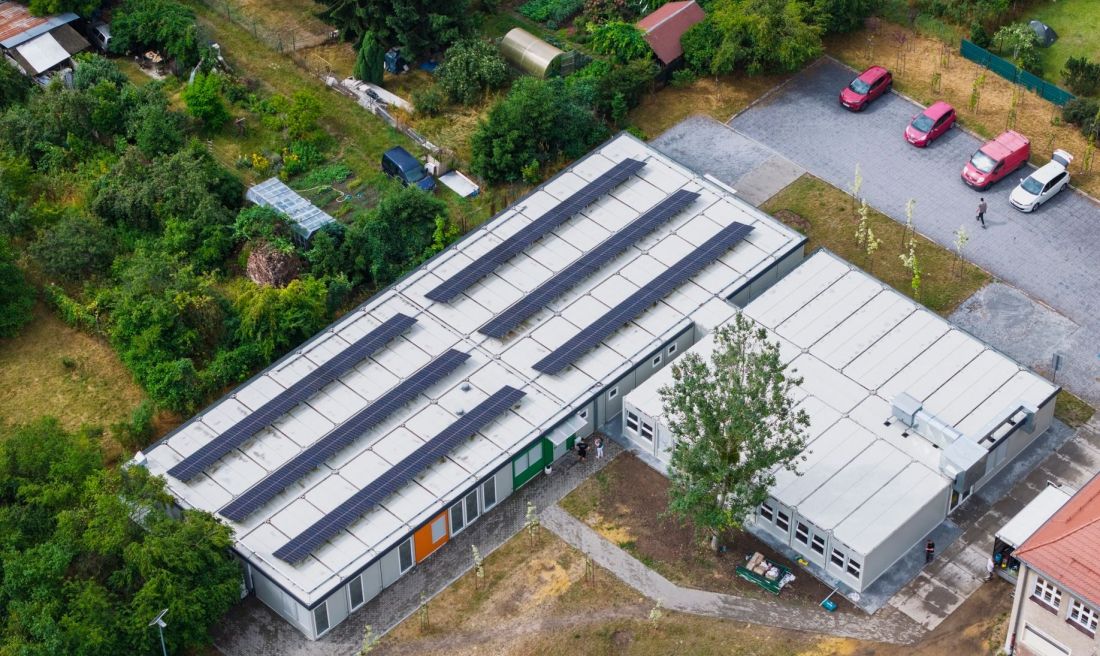
Expansion of SPECTO school in Maślice
Photo courtesy of the Press Office of the City of Wroclaw
school at the last minute
The emergence of such facilities, however, may be a symptom of processes that are much larger in scale than renovation, and at the same time not as unpredictable as disasters - above all, intensive urbanization, when housing estates are being built much faster than the infrastructure necessary to serve the population living in them. In the context of Ma¶lice, where the SPECTO container school was built two years ago, such a thesis is confirmed in the words of the mayor himself:
In an urban area, our non-public partner is creating either a kindergarten or a school, doing so at an express pace, which is particularly important in places where residential development is growing rapidly and there is a need for this basic social or educational infrastructure.
- said Wroclaw Mayor Jacek Sutryk to Radio Wroclaw in August 2023.
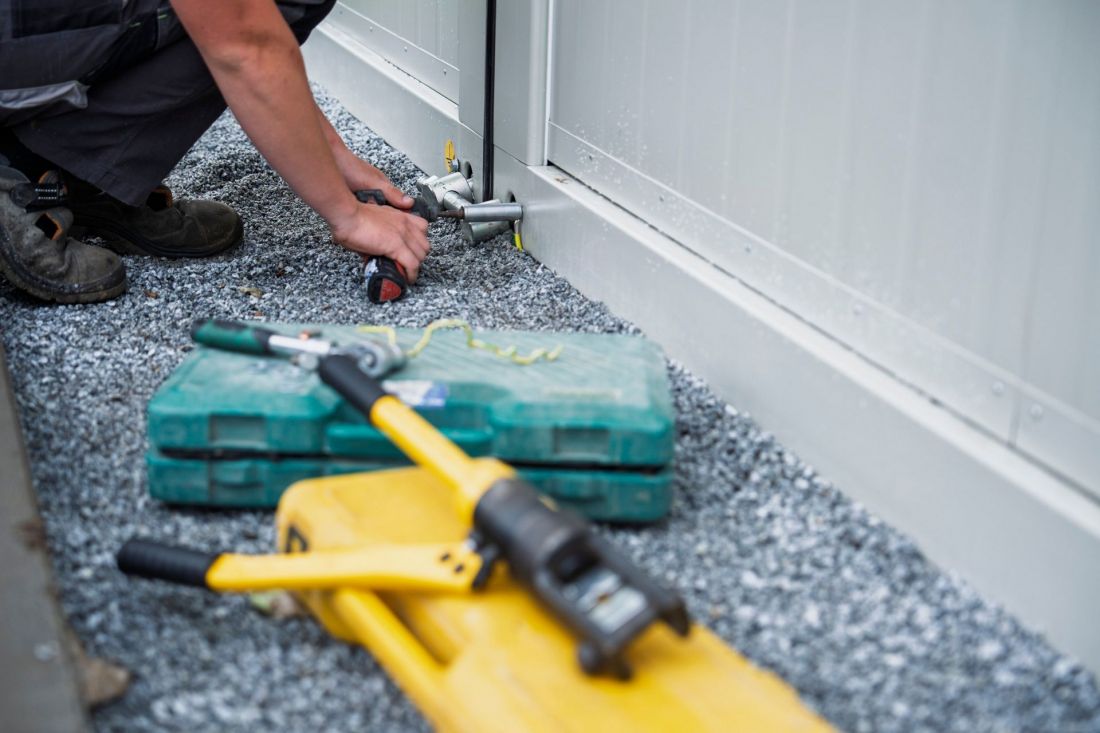
Expansion of the SPECTO school in Maślice
Photo courtesy of the Press Office of the City of Wroclaw
spectacular pace
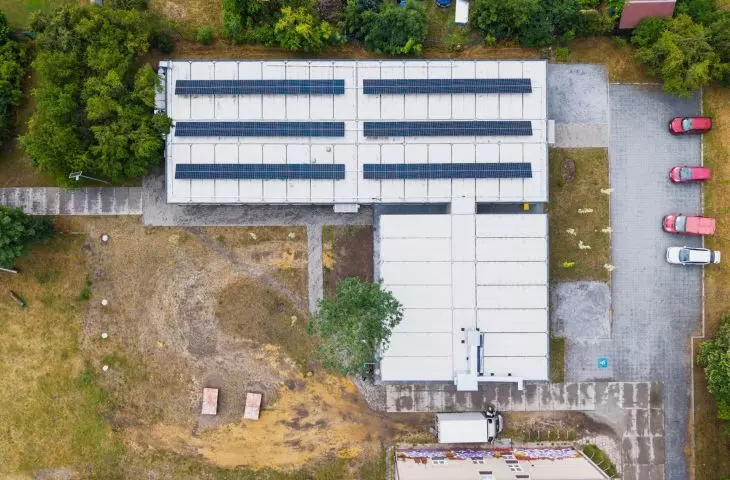
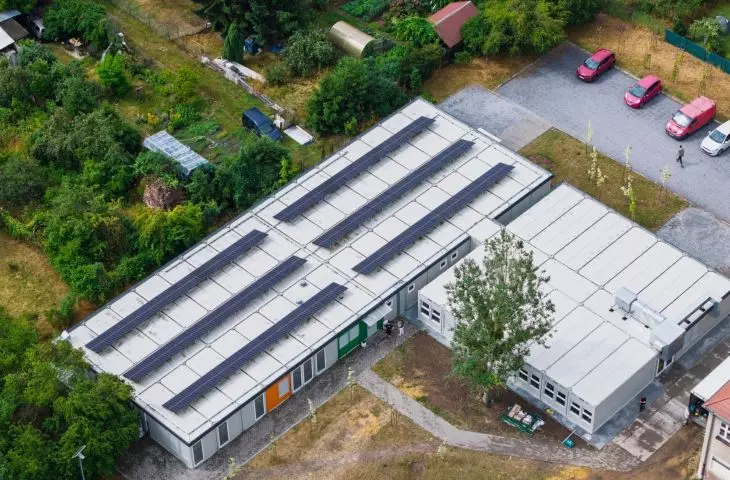
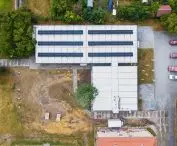
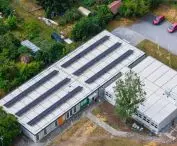
The SPECTO school, was built on the initiative and, importantly, with funds from the National Education Operator Foundation. Its construction has proceeded - so far - in two stages. The first took place in 2023, when a facility capable of serving a total of one hundred children was built in five months. At the time, it offered them four classrooms, as well as the basis of the infrastructure necessary for the school - locker rooms, corridors and even a canteen with meals provided by catering. The building, whose erection cost the foundation 4 million zlotys, also featured environmentally friendly technologies such as photovoltaic panels, recuperators and heat pumps, as well as installations reusing gray water. The classrooms have been decorated minimalistically, but do not seem to deviate strongly from the standard found in typical brick schools.
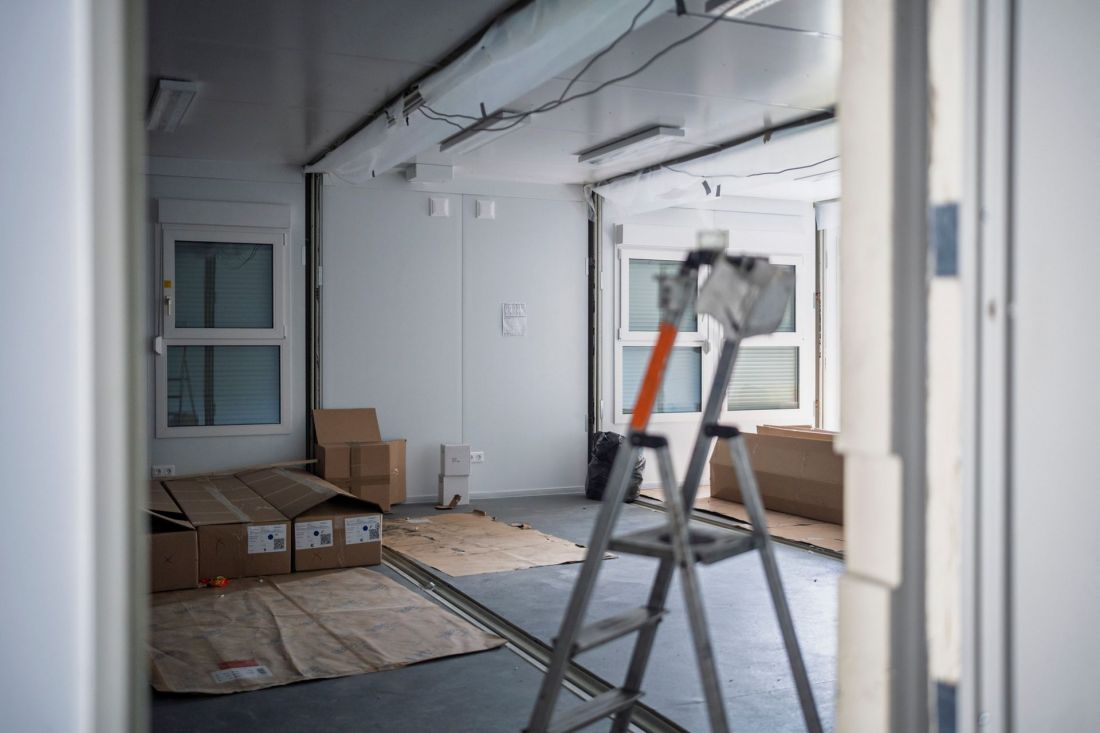
Expansion of the SPECTO school in Maślice
Photo courtesy of the Press Office of the City of Wroclaw
bigger modular school
In the second stage, which is currently under construction, the National Education Operator is taking advantage of one of the biggest advantages of modular solutions - the possibility of seamless expansion. Currently, further containerized modules are being added to the SPECTO School, which will house two new classrooms and a toilet. Thanks to the expansion, the number of seats in the school will increase by 48. "Facades" of the new modules were implemented in a slightly more interesting way than was the case in the first stage - the entrances to the various segments were marked with sheet metal in a color that stands out from the gray technical covering of the other walls.
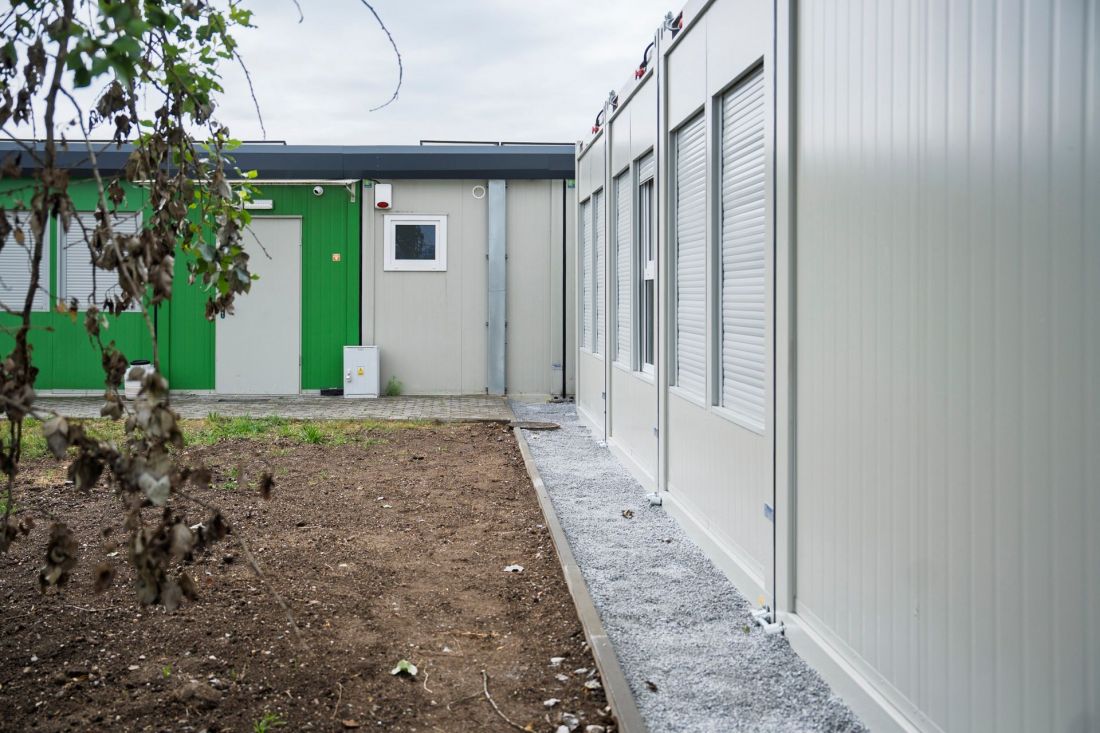
Expansion of the SPECTO school in Maślice
Photo courtesy of the City of Wroclaw Press Office
logistical aesthetics
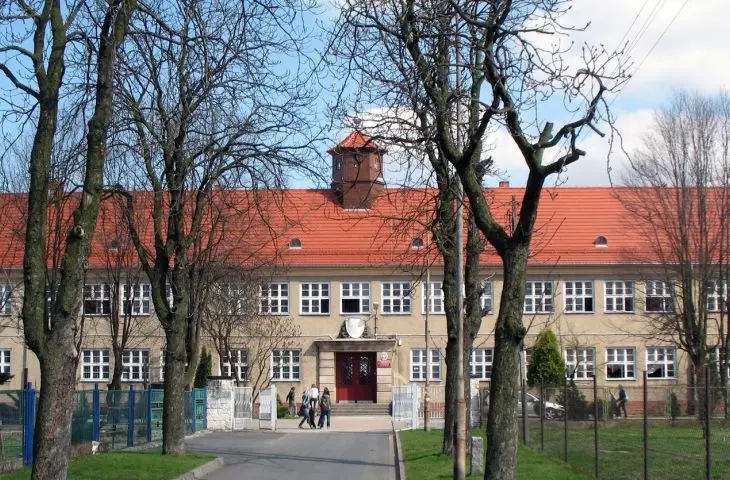
Despite their neat interiors, modular kindergartens and schools, including the one built in Maślice, do not set the highest standards for urban aesthetics. They are usually one-story buildings that often do not fit in with the surrounding development. In the case of the SPECTO school at 95A Lubuska Street, the surroundings are quite different, as it stands right next to the imposing, historic edifice of the former Volkschule, for years the Lotar Herbst Gymnasium No. 22, and recently the Lotar Herbst Elementary School No. 26, built in the same building. Piasts of Silesia, built according to a design from 1935. Although it performs educational functions well, the container school can hardly be considered a valuable addition to the historic layout of the post-German educational complex.
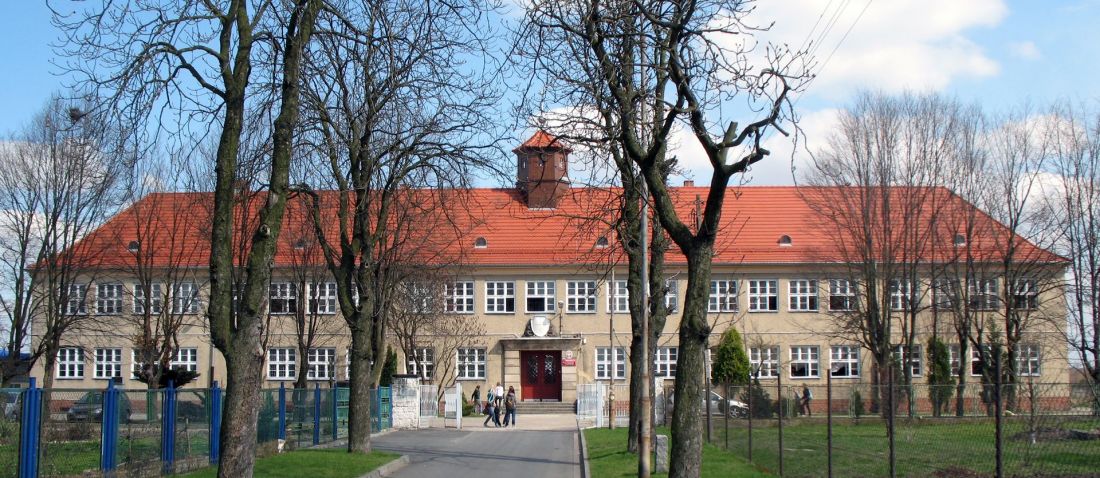
The school building at 95 Lubelska Street in Wroclaw
Photo: Masur © public domain
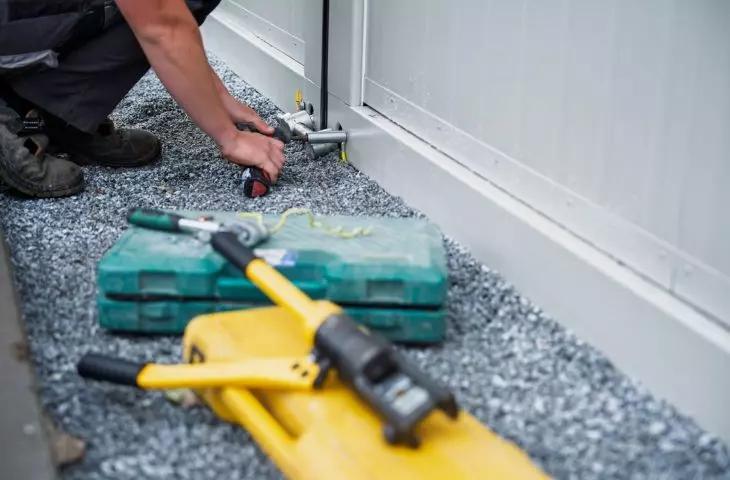
The window woodwork, the divisions on the facades and the budget finishes of the container schools do not give the impression of being solid or aesthetically pleasing. Often such structures are also set on concrete slabs, leaving empty clearances underneath. In the case of the Ma¶lica facility, a lot is also left to be desired by the way the surrounding space is arranged, or rather, its lack - leaving aside, of course, the pedestrian routes leading to the steel buildings. Shaping a sense of aesthetics, including spatial sensitivity, is an important element in the upbringing of school-aged children, and the container building is not a good example in this regard.
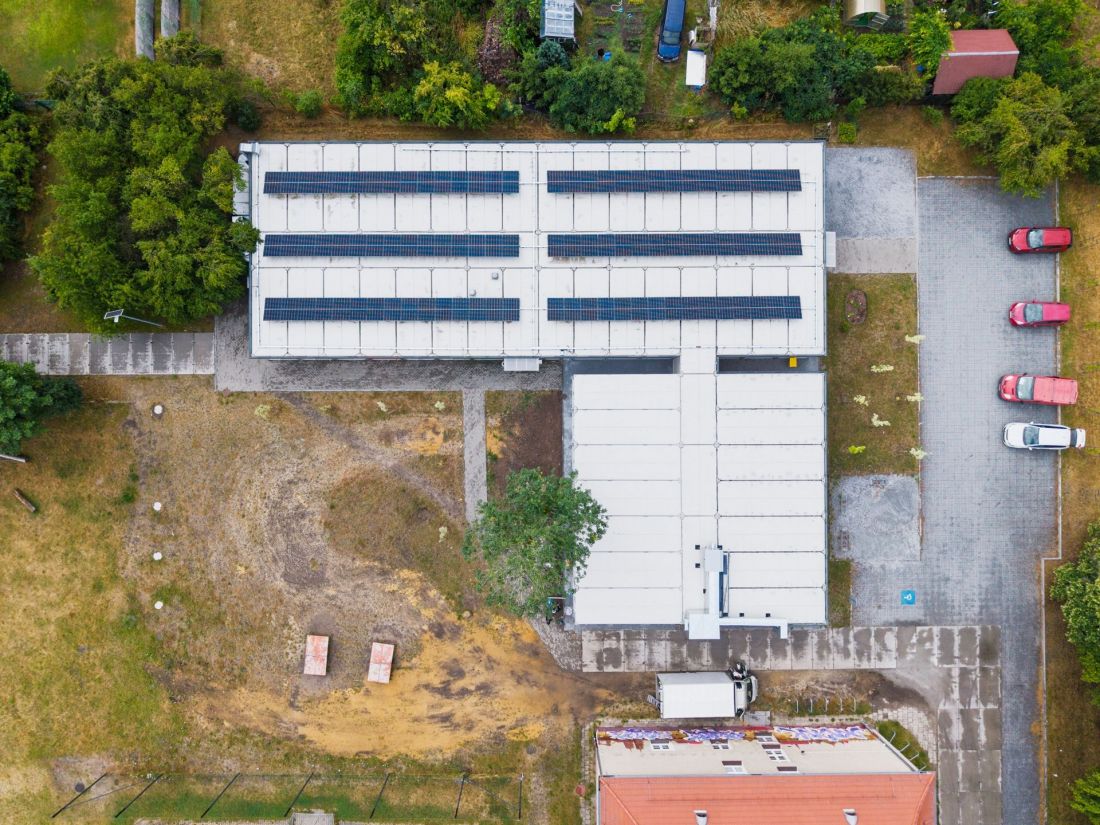
Expansion of the SPECTO school in Maślice
Photo courtesy of the Press Office of the City of Wroclaw
temporary solution or new standard?
When reading about the container schools in Zelazno or Stronie Slaskie, we learn that these are temporary solutions, used until a new school is built. In communications about the school operating in Wroclaw's Maślice, we do not find similar declarations. Nor is it indicated by the ongoing expansion program, and declarations in 2023 about the possibility of superstructuring the steel structure with an additional floor. The modular school at 95A Lubelska Street is, by the way, neither the first nor the only educational facility built for the city using container technology. In 2012, Wrocław opened several containerized kindergartens, some of which - like the one at 4 Monterska Street - are still in operation today, being - on the one hand - a response to the most urgent needs of the local community, and on the other - infamous elements of the urban landscape.
the cult of cargo architecture
In most cases, container architecture is associated primarily with construction sites or other "temporary" solutions, where aesthetics or the way it fits into the neighborhood are secondary issues. However, there are some exceptions to this rule. One of the most interesting projects created in our country using containers is the office building in Poznan's Szeląg garden, which Adam Wiercinski designed for Ewa and Zbyszek Lovzyl.
Cargo architecture - that is, arising from shipping containers - can be a remedy for infrastructural problems while at the same time being an example of well-thought-out design solutions, both in terms of innovative construction technologies and responses to the individual needs of user groups, and finally the aesthetics of public space. Such a realization was created, for example, in the French city of Le Havre, where in 2010 Cattani Architects designed the Cité A'Docks dormitory complex. Unlike the modular schools and kindergartens that are being built in our country, the container city, in addition to the advantages arising from the use of steel modules, also operates with interesting spatial relationships, the height of the buildings is adapted to the surrounding buildings, and the area around the buildings has been sensibly developed.
can we repeat the success of the thousand-year schools?
The construction of container educational facilities in itself should not be interpreted as a negative phenomenon - after all, more schools allow children to learn in smaller groups, and thanks to sufficient class sizes, lessons do not end as late as in overcrowded facilities. However, this does not mean that they are automatically a positive phenomenon. Instead, they can be viewed as a symptom of inefficiency on the part of local governments, which are failing to keep up with accelerating urbanization and migration to centers higher up the urban hierarchy. It seems that there are two ways out of this situation - we can either take care of infrastructure in real time, using cheap and fast, but also, with many drawbacks, modular solutions, or properly estimate the future needs of neighborhoods that have a construction boom yet to come. Since in the 1960s it was possible to build well over a thousand "millennial" schools in less than a decade, perhaps we can also now provide quality educational architecture for all children without crippling the urban landscape?