




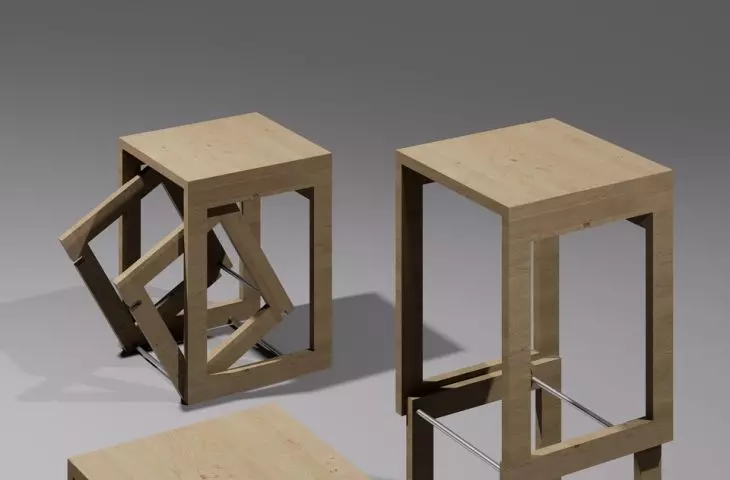
The "Rotation" project by Julia Barylka of the Jan Matejko Academy of Fine Arts in Krakow, was created as part of the "Design of Furniture and Interior Elements" class taught by Prof. Lukasz Sarnat and Veronika Kadeja. The concept combines simplicity of form with functional transformation - a stool transforms into a full-size hocker with a single movement.
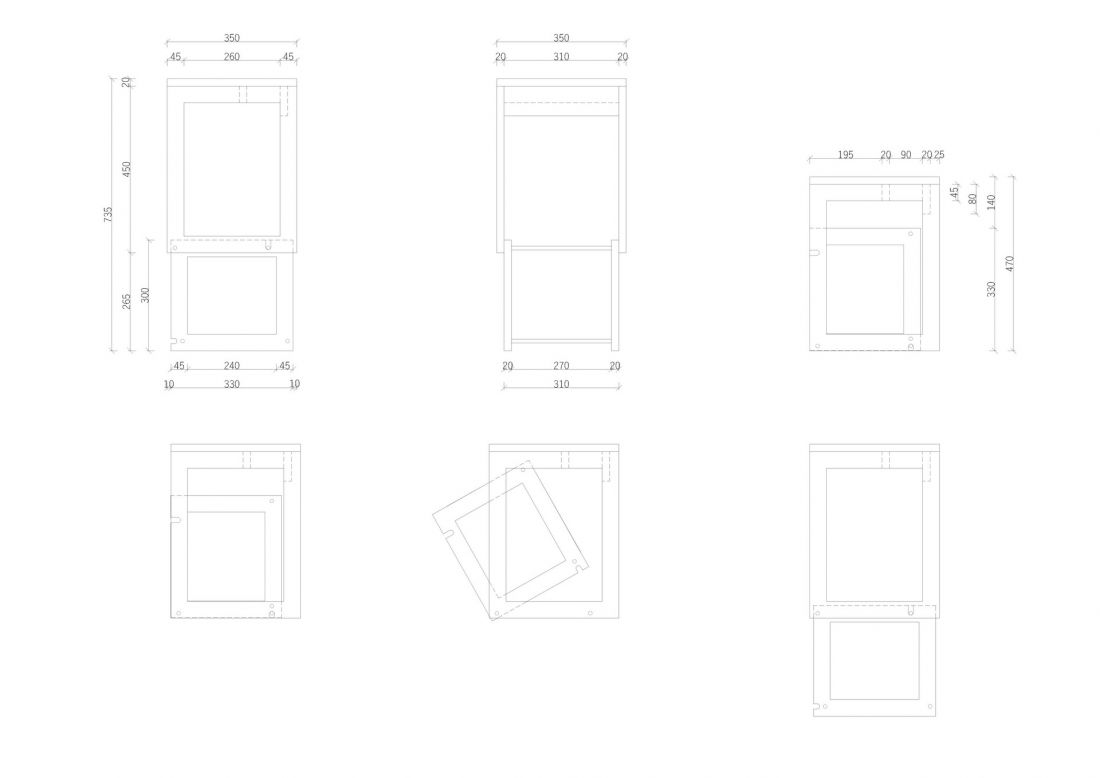
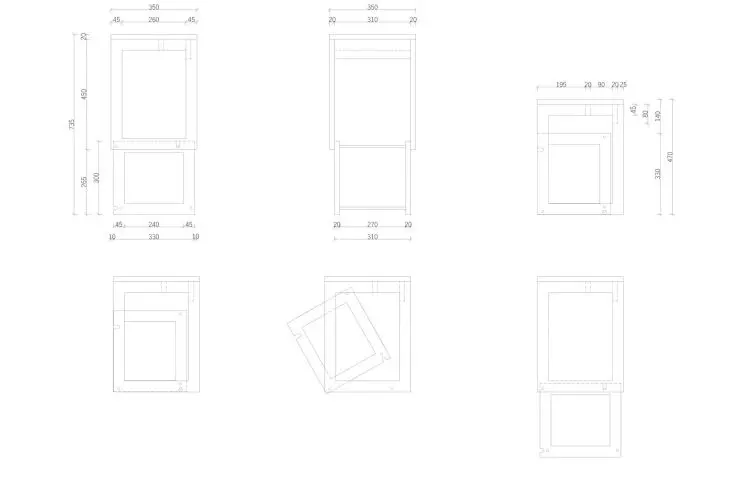
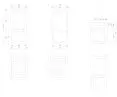
technical drawings
© Julia Baryłka
furniture in motion
The "Rotation" project was created as a response to the task of designing a stool that can be folded or stacked. Instead of classic solutions based on the disassembly of elements, the author focused on the integrity of the structure.
All parts of the piece of furniture remain connected, and its functionality is based on movement - specifically, rotation, which changes its height and use.
one axis - many possibilities
A key element of the design is the axis of rotation, which allows the furniture to be transformed. Initially it was located at a central point, which allowed free movement, but did not guarantee stability.
The breakthrough moment was to move it. This made it possible to achieve two stable settings - corresponding to the function of a stool and a hocker - along with a natural blocking resulting from the geometry of the structure.
As the presenters emphasize, the project is distinguished by a clear idea and consistency in its implementation, and the transformation itself was solved in an intuitive and structurally consistent way.
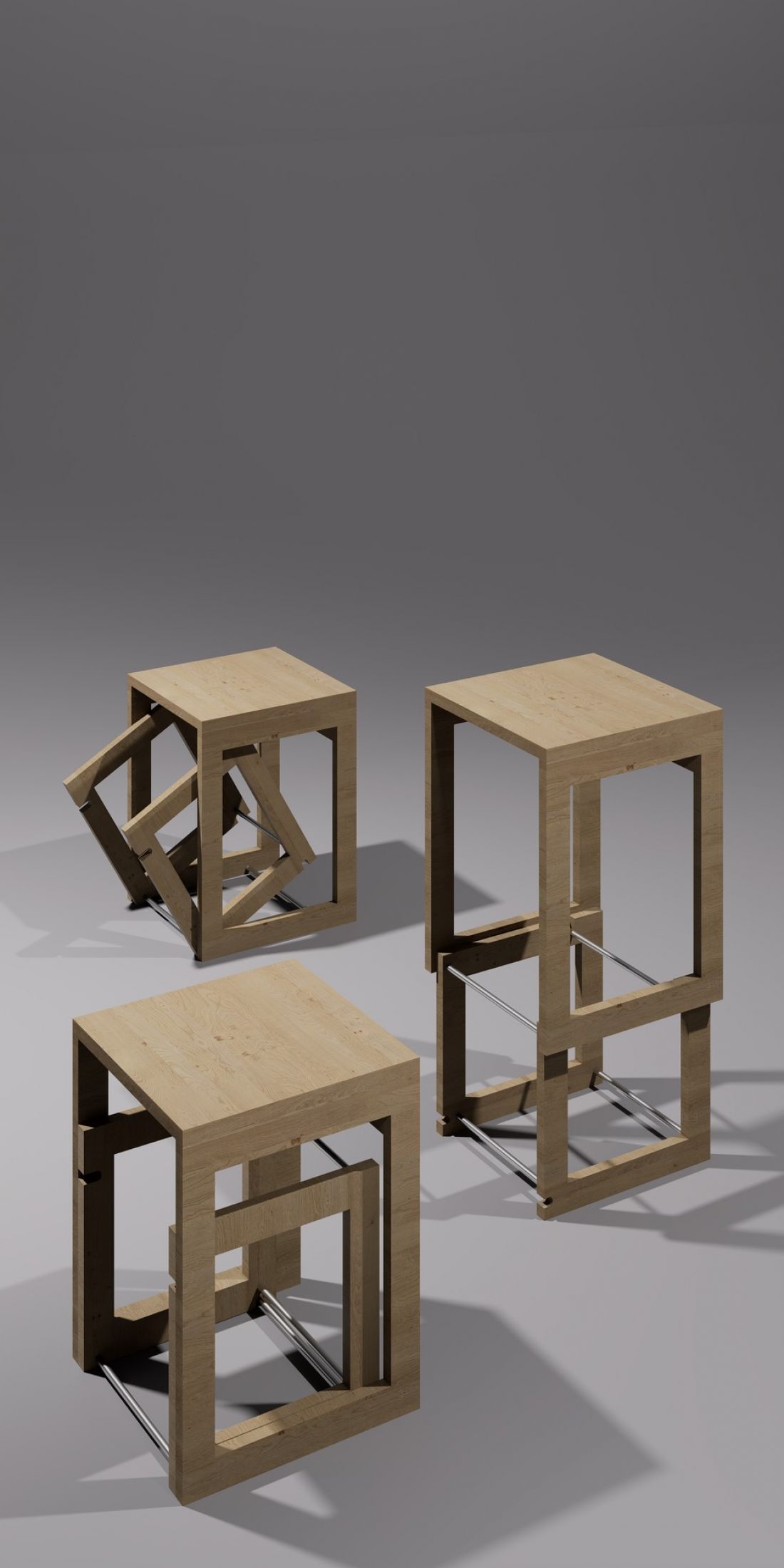
stool
© Julia Barrel
two levels, one piece of furniture
As a result of the 270° rotation, the furniture changes its height:
-
from 45 cm - typical for a stool,
-
to 70 cm - corresponding to a hocker.
The transformation takes place through the movement of the inner plates, which in one position remain hidden, and in the other become a load-bearing element of the structure.
construction without unnecessary additions
An important aspect of the design is the abandonment of additional locking mechanisms. The stabilization system has been fully integrated into the structure.
Holes cut in the inner plates slide over a metal rod placed in the outer elements. The rod acts as both a pivot and a reinforcing element of the whole, providing rigidity in both configurations.
lightness and strength
In the design process, great emphasis was placed on finding a balance between the stability and weight of the furniture. The side panels were relieved through cutouts, which helped reduce the weight of the structure.
Additional reinforcements under the seat in the form of wooden beams improve load distribution and increase the durability of use.
form resulting from movement
The "Rotation" design is based on a clear relationship between movement and form. The change in function does not require the addition or subtraction of elements - it is a direct result of the geometry and mutual position of the parts.
It is the movement that becomes the main design tool, defining both the function and aesthetics of the furniture.