




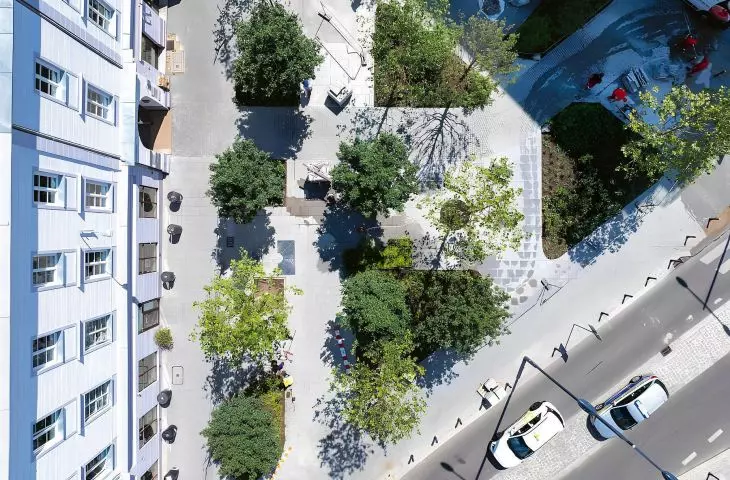
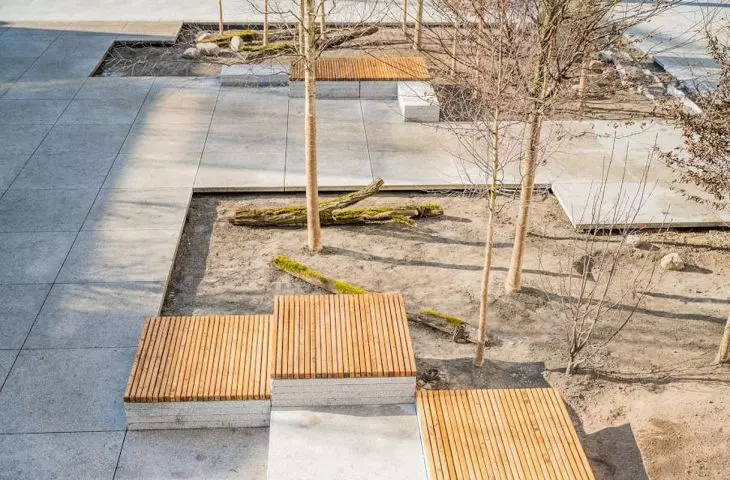
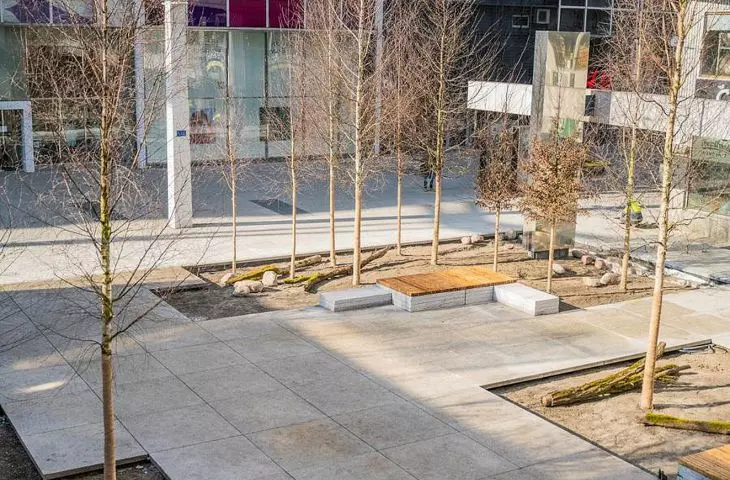
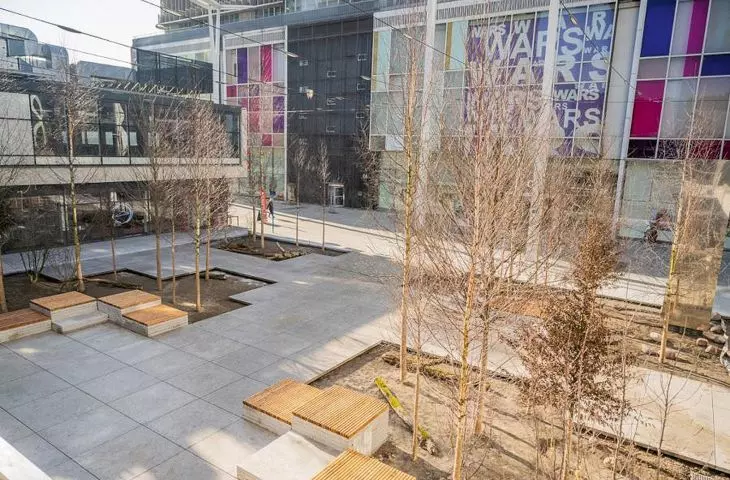
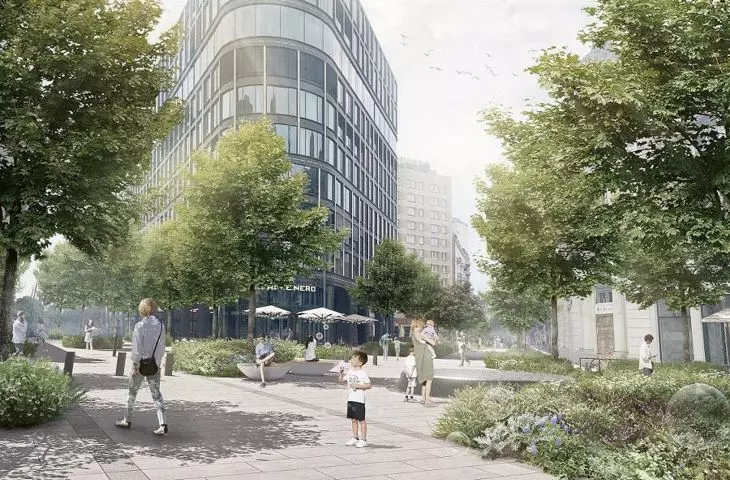
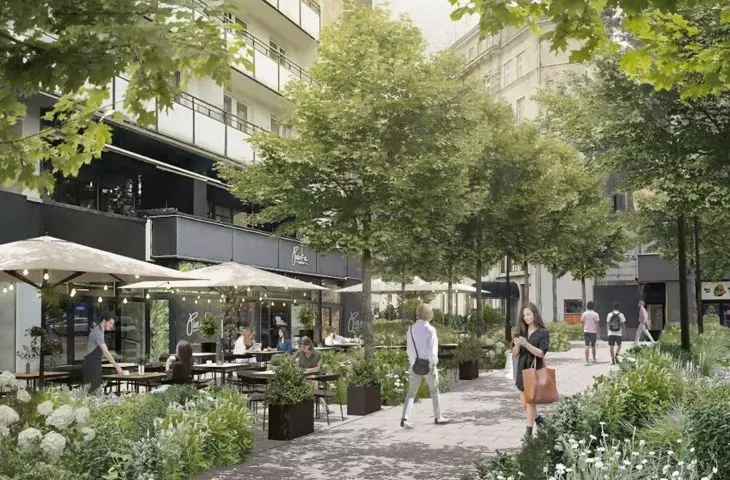

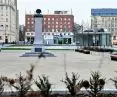
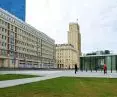
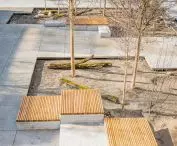
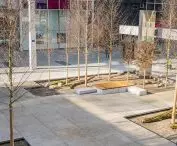
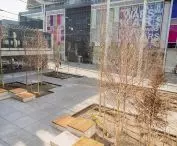
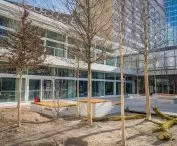
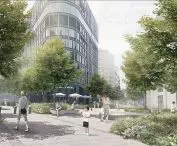
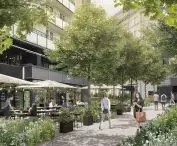
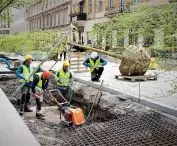

It's 2025, along Krucza Street - rebuilt on the model of Barcelona's Rambla - pedestrians stroll, along segregated roads cyclists speed to Bank Square, bathed in greenery. Rows of trees and greenery effectively shade Marszalkowska Street - a street once more reminiscent of an airport. Pedestrians can walk freely in the lanes along Bracka or between Saxon Garden and Zelazna Brama Square, which was modernized two years ago. Sound familiar? Not necessarily, although most of the New Warsaw Center project was supposed to be completed in 2023. Two years later, the changes, though visible, are still being implemented in spots. However, not everyone likes them - why?
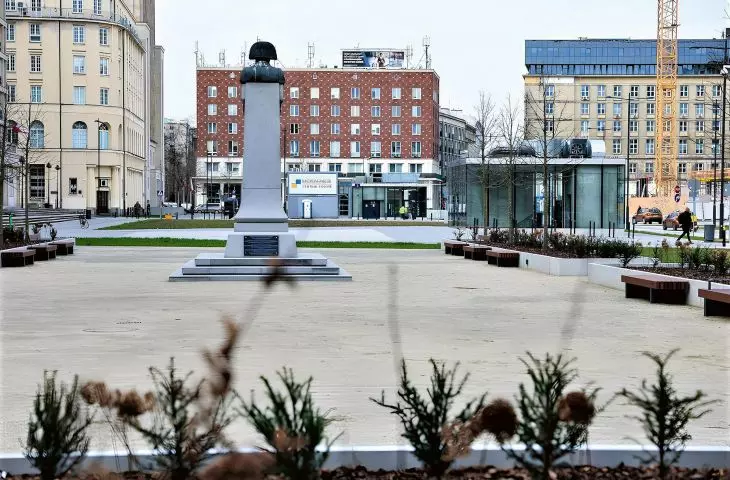
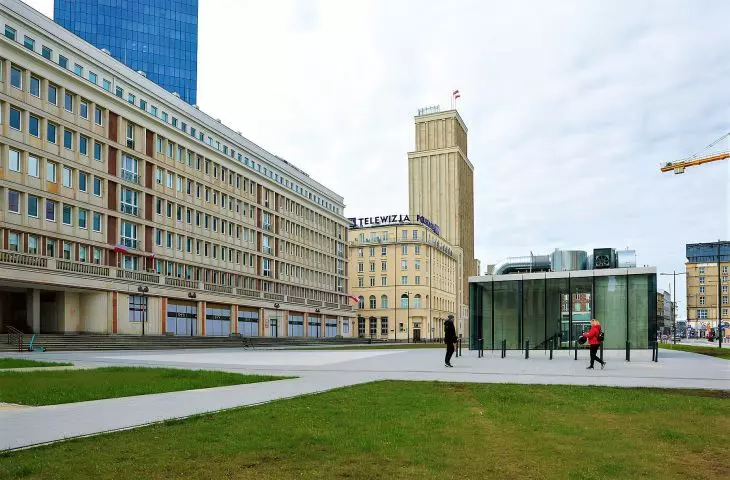
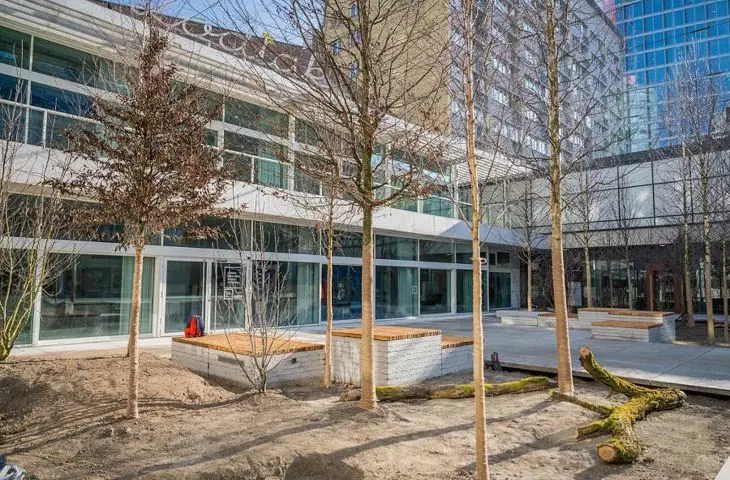
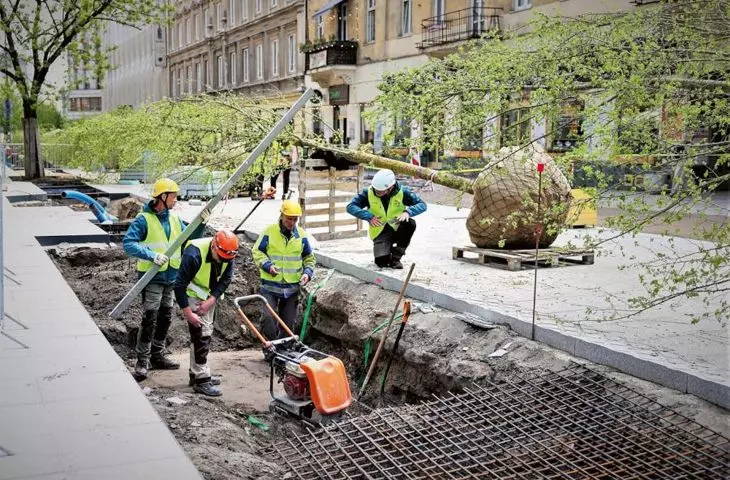
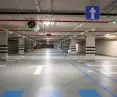
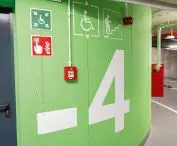
Krucza, Bank Square, the Bracka Crossing, Za Żelazną Bramą Square or Green Marszałkowska - all of these were elements of the New Warsaw Center project presented in 2019 by Rafał Trzaskowski. None have been realized, some have not even entered the design stage. Elements of the strategy to transform the center of the capital that have been successfully introduced include the reconstruction of Jana Pawła II Avenue, surface crossings at the Dmowskiego and Czterdziestolatka traffic circles, the Five Corners Square, the recently completed Chmielna Street or the ongoing work on Defilad Square and in the area of Zlota and Zgoda Streets. Minor adjustments have been made in several other places - in Trzech Krzyży Square or Bankowy Square, which is being renovated without a coherent strategy. A parking lot under Powstańców Square has also been opened, but the final development of the space above it is yet to be planned.
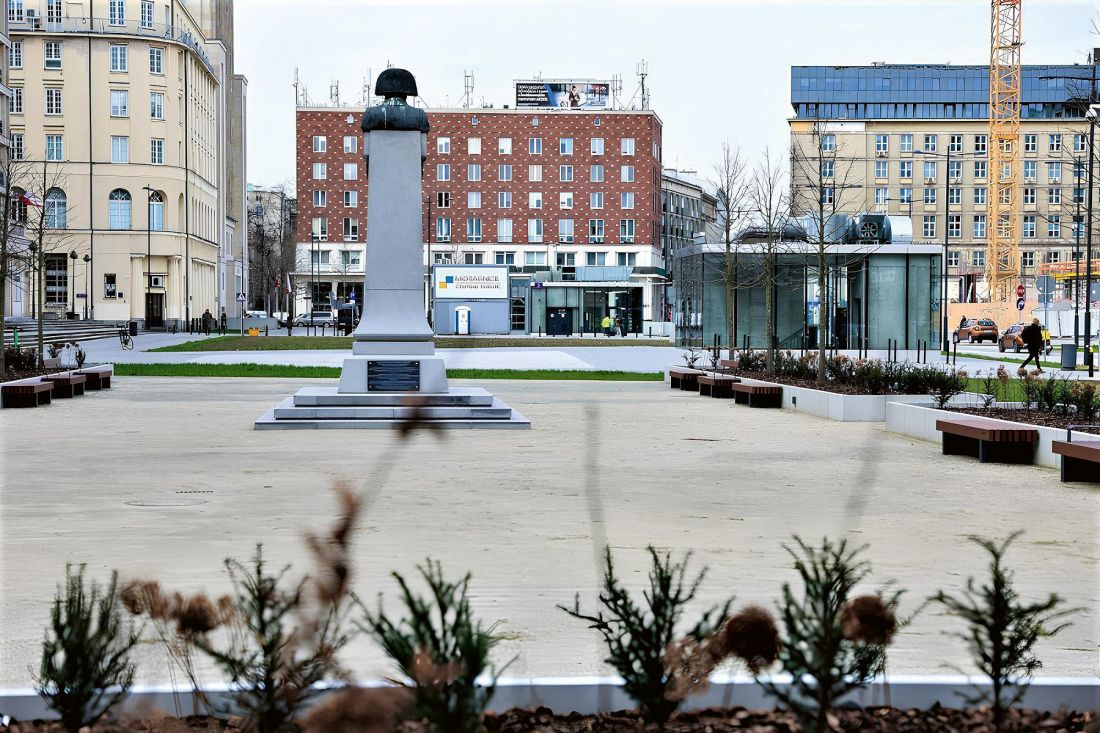
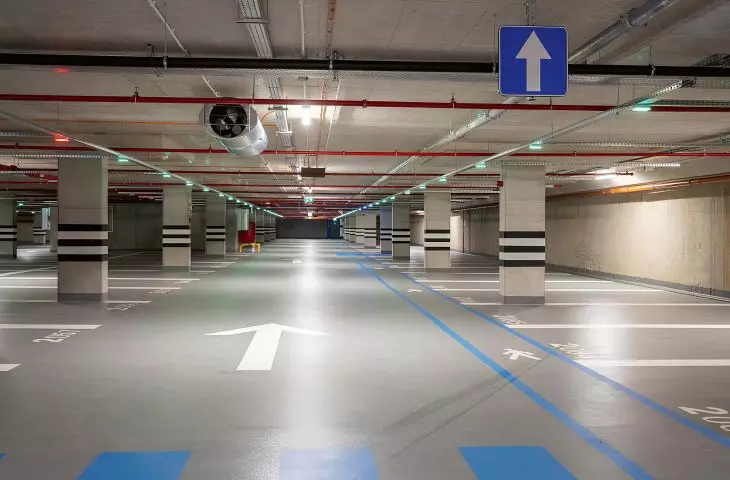
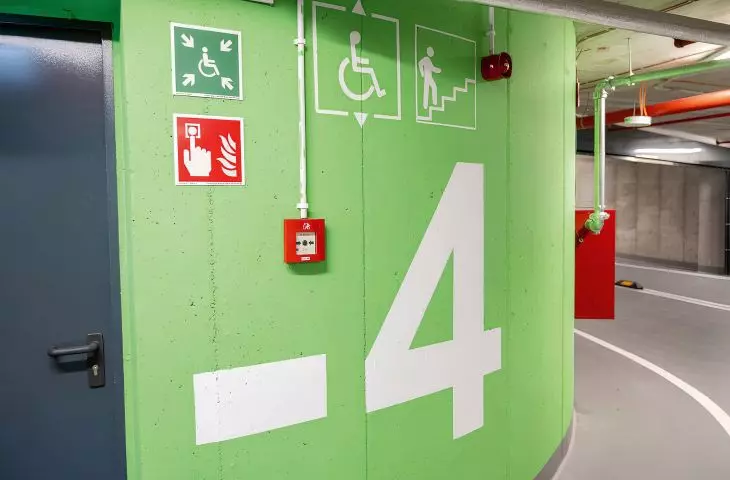
Underground parking at Powstańców Warszawy Square
© illustrations courtesy of the Warsaw City Hall
half of projects delayed
In 2023, 80 percent of the changes announced by the capital's mayor were to be ready. Two years after that date, we can count on the completion of roughly 42 percent of the plans. Monstrous delays are also catching other investments that are not strictly part of the "Smile of Warsaw" focused on the southern downtown and the Marszalkowska axis, such as the reconstruction of Niepodległości Avenue and Chałubińskiego and Andersa streets. Where to look for the causes? The easiest way is to point to the pandemic, which has thwarted many plans and derailed city budgets. It's just that cities such as Paris, Berlin and even Krakow took advantage of the pandemic to accelerate changes on previously car-dominated streets. Temporary solutions were introduced, bicycle lanes that were later turned into permanent ones in many cases. Warsaw took no such steps at all.
Inflation, rampant prices of construction materials - this is obviously a problem and can prolong the investment process, but by as much as two years? This argument is misguided, also if we take into account the fact that some of the investments scheduled for completion by the end of 2023 have not even begun to be designed. Warsaw's budget, by the way, would be able to bear even these increased costs - at the end of 2024 there was a budget surplus of 806 million zlotys. The same was true in 2023 and 2022. Despite this, the investments are only half done. Or perhaps the problem is the complexity of the project? After all, changes on Jerusalem Avenue are waiting for the reconstruction of the railroad cross-country route running underneath. The investment regularly catches delays, with the Polish Railways giving a different start date and even changing the scope of the work. When the New Center strategy was announced, the plan was to start reconstruction in 2023 and finish it three years later.
If it was indeed going to take that long, we will not wait with some of our plans
- President Trzaskowski declared at the time.
drivers put on the brake
Unfortunately, delays concerning the implementation of investments that change the function, quality, accessibility and usable parameters of public spaces in Warsaw, primarily squares and streets, last for years and are common. The implementation of tasks that are not controversial to drivers accustomed to convenience is going much more smoothly - the boulevards have been successfully rebuilt, the Storm Action Park or the footbridge over the Vistula River (to which, however, access roads are still waiting for modernization) have been a hit. The best example of such delays may be Five Corners Square. It took more than six years from the first announcements and public consultations in 2016 to its opening. The design of this small square grew old before it was realized, which was met with a wave of often unjustified criticism pointing to its excessive concreting. Indeed, the expectations of residents and residents have changed in six years. During this time, no other square in the center of Warsaw has been redeveloped.
graying
The lack of ongoing investments in Konstytucji Square, Bankowy Square or Teatralny Square, which are closer in character to large-scale parking lots today, does not mean that nothing is happening. Warsaw has specialized in conducting workshops and consultations, engaging the resources and time of residents without a concrete perspective of implementing the solutions worked out. Thus, successive concepts are often created in a methodologically correct way, but instead of building involvement and a sense of shared responsibility for the common space they most often waste this potential, becoming a tool for visualizing aspirations and distant plans, often used at the next election as a promise of imminent change. This was the case with local centers almost a decade ago, and it is still the case now with the aforementioned squares.
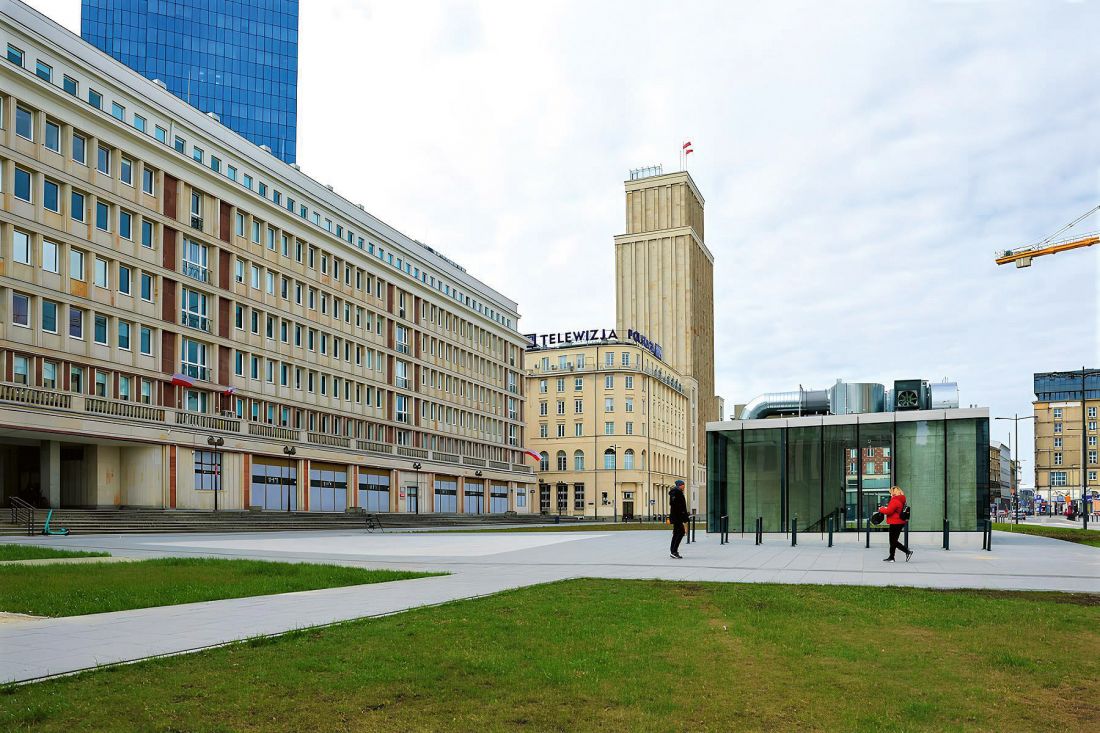
The underground parking lot at Powstańców Warszawy Square
© illustrations courtesy of the Warsaw City Hall
From the method used in this process - the charette workshop - even the term "gray-titling," that is, collaborative design for the official drawer, has already been coined in the space of online forums. While changes have begun to be made in Bank Square (although no one knows the final form of its development), the implementation of the results of the 2023 workshop on Theater Square has no more specific timetable. Thus, there is a high risk that, as in many other cases, by the time any redevelopment begins, the results of the workshops will have become outdated, and the residents of the area who participated in them will not necessarily still be using these spaces.
revitalization
Involvement of residents and social revitalization are issues that seem to have escaped discussion about the changes being made to the New Warsaw Center. Should it be limited only to a facelift of public spaces? No, and he knows, or at least the mayor of the city once knew. Rafał Trzaskowski, when announcing the changes to Downtown in 2019, said:
Something I care a hell of a lot about is profiled competitions for the rental of city premises, so that on Marszalkowska there are not just banks and chain stores alone. We want to revitalize this street.
Unfortunately, six years later, in terms of the range of services on offer in city premises, there are no significant changes, many of them are still empty, there is a high turnover. This is, by the way, an affliction not only of this street, but a broader systemic problem affecting the entire city. Even if there is already a socially valuable grassroots initiative in Warsaw that supports revitalization processes, it cannot count on the support of the city authorities.
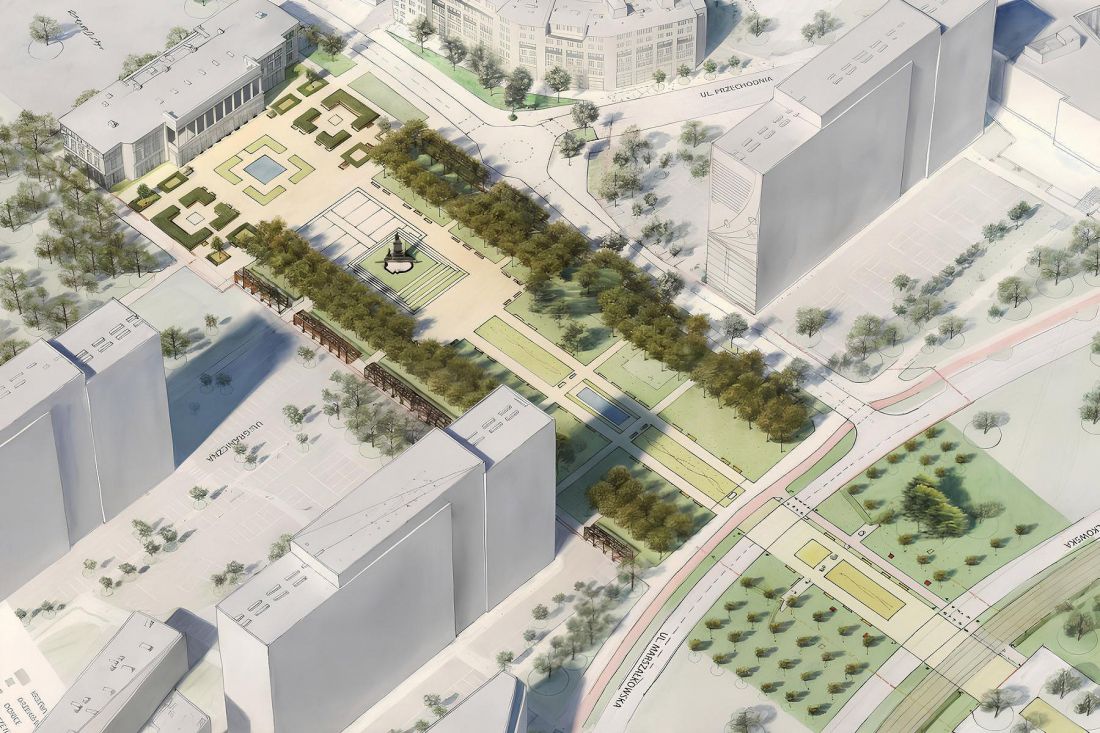
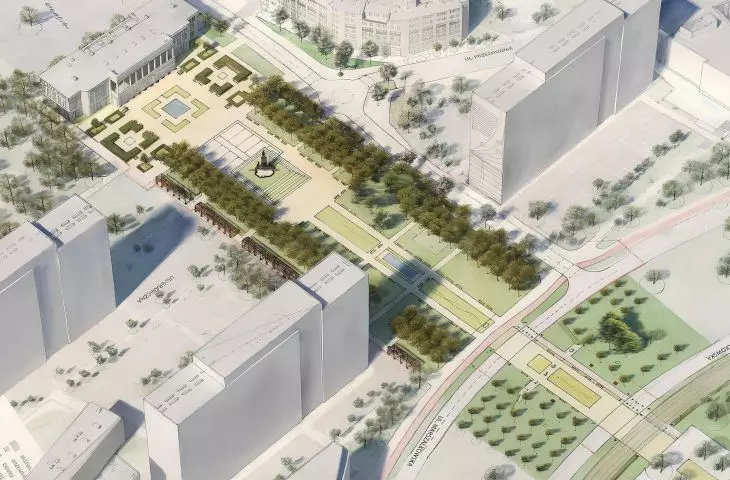
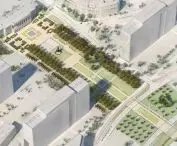
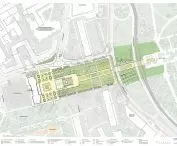
Zelazna Brama Square - concept, bird's eye view
© illustrations courtesy of the Warsaw City Hall
These sad stories have been repeated many times. Reverberation - a music club, also a grassroots community center run as a social cooperative - lost its headquarters leased from the city in 2022. Its creators appealed in a petition to the city government for help in finding a new place. Unfortunately, with no result. Three years have passed, during which time the city managed to demolish the Reverberation building... and that's it. The plot stands empty, no buyer has been found. The history of Pogłos is not the first such action by Warsaw authorities, where as a result of decisions motivated by economic motives and the desire to achieve an ill-conceived spatial order, important centers of animation of urban life are erased from the map of the capital. Państwomiasto, an establishment not so distant from Pogłos, changed the face of Muranów, bringing life to a dead section of Andersa street. After six years of operation, however, the Project:Poland Association, which ran the establishment, was unable to cope with subsequent rent increases imposed by the city. Eventually the club café had to vacate the premises, which then stood empty for several months, with no interest from tenants. Thus, the city not only lost a valuable activator of public space, but its finances were also affected. Państwomiasto in its new formula began operating in one of the Finnish houses in Jazdów. Another example is Nowy Świat Muzyki: located in the very center of the city, the premises have also been standing empty for years - the city did not extend the contract of the previous tenant, while the new one, chosen in a tender, has not launched any activity there.
These devitalizing measures support gentrification fueled by the sell-off of municipal assets. In 2024, Warsaw went to a real estate fair in Cannes, where City Hall presented its offer. It included seven investment plots, four of which were earmarked for multifamily residential development, and even WZ decisions had been issued for some of them. In theory, investment could have started immediately. Instead, City Hall is getting rid of the plots, including those located in Downtown and its immediate vicinity - on Dobra or Waliców Streets.
In May 2025, a huge controversy among tenant activists arose over the decision to sell a tenement at 66 Marszalkowska Street, still home to twenty-six families in 2019, which the city had moved to other units. City Hall argues that the sale of the property is due to its poor technical condition and the restrictions associated with the building's inclusion in conservation protection. The City Is Ours association notes that the tenement is to be sold at an undervalued price, and that the sale of units in the Downtown contributes to the neighborhood becoming a place accessible only to the wealthiest. The issue of the sale of the tenement became the subject of an extraordinary session of the Warsaw Council. However, the session was interrupted at the request of Civic Coalition councilors, who immediately after the opening of the session requested a three-week recess, community activists were not allowed into the hall, because all the seats were taken by... the mayors of eighteen districts with their deputies and officials, effectively preventing any dialogue.
New Center or City Centers?
The main idea of the new study was to take care of the polycentricity of Warsaw. City Hall diagnosed that Downtown has the most social services, green space and public spaces, which are definitely lacking in other districts. I am very much in favor of this postulate - the sustainable development of the city must be based on polycentricity, this reduces travel, increases the comfort of life for all residents
- admits Zofia Piotrowska, architect and downtown councilor for the Razem party.
Work on the new study dragged on for so long that in the end it was not passed at all. The document initially did not have the support of Civic Coalition councilors, whose majority on the City Council did not want to adopt it. Then, in 2023, a new law was introduced at the end of the work, replacing the study with a master plan. So the work has to start anew, albeit using already collected material and developed solutions.
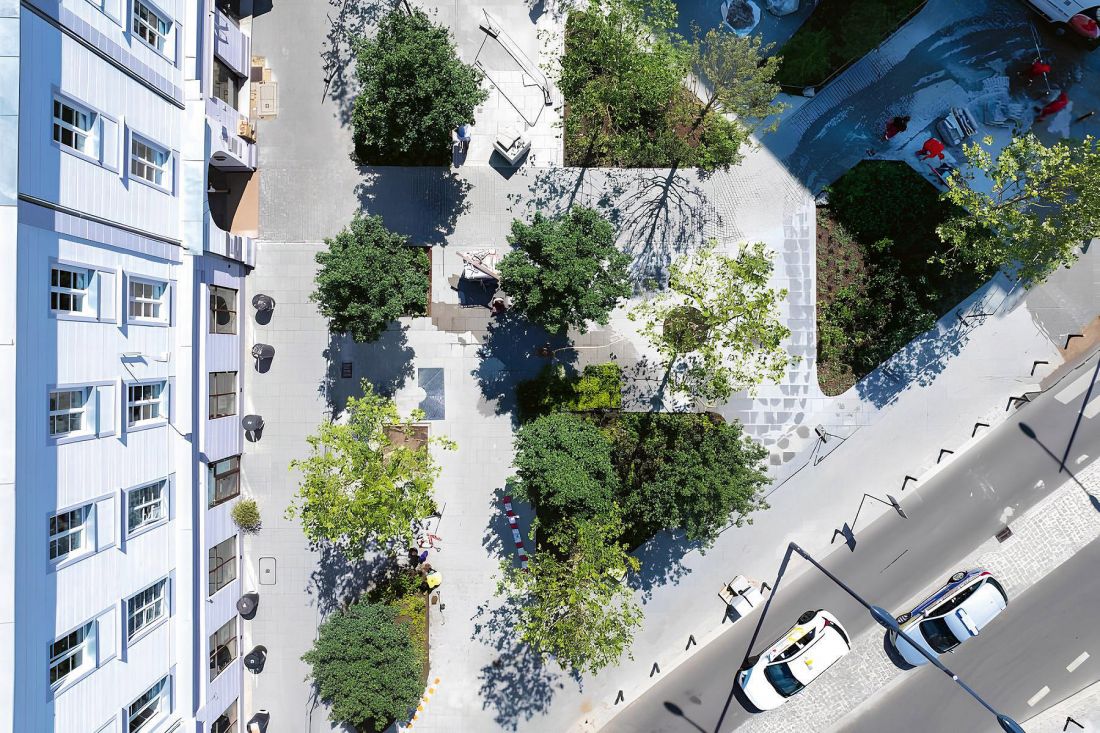
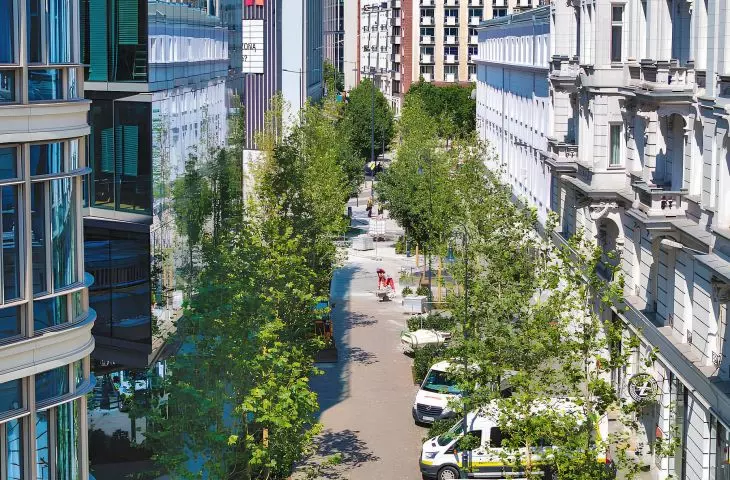
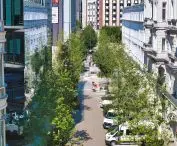
Reconstruction of part of Bracka Street in the Downtown area
© illustrations courtesy of the Warsaw City Hall
The draft study prepared envisaged strengthening district and local centers in line with ideas such as the 15-minute cities. Each district and neighborhood was to be equipped with full infrastructure, and the city was to develop more harmoniously, according to City Hall's plans.
However, the same City Hall acts against its demands and strategic plans - all significant investments in improving the quality of public spaces are being made in the Downtown - Chmielna, Central Square, Swietokrzyski Park. In my opinion, even the Museum of Modern Art, according to the study's diagnosis, should have been built on the right bank of the Vistula River....
- notes Piotrkowska.
Investments in local centers, however, are going even worse than those in Downtown. Among other things, the project for the Skwer "Orsza" Local Center is lying in the drawer . - The competition was decided in 2016 and to this day no further work has been undertaken. The same happened in Rembertów, where the AB-PROJEKT Design Bureau was selected to design the Local Center located on Gen. A. Chruściel Avenue. Nor did the consultations carried out at the time on local centers in Grunwaldzki Square (22architekci's concept), Moldova Street in Rakowiec or Haller Square have any real effect. Such actions waste public involvement and undermine trust in the city government. Why take part in public consultations if the city does nothing further with them?
private public centers
Local centers have accidentally become spaces that the city did not plan at all. These are developer developments such as the Warsaw Breweries or the Powiśle Power Plant, and soon Towarowa 22. However, they cannot form the core of the city's system of public spaces, but only supplement them. This is because they are highly regulated, private spaces with a narrowed offer and a profiled audience. Their lack of social and public functions excludes many people from using them. These places are purely transactional spaces, more like shopping malls in their logic. Although needed and often useful on an urban scale, they cannot be Warsaw's only offer.
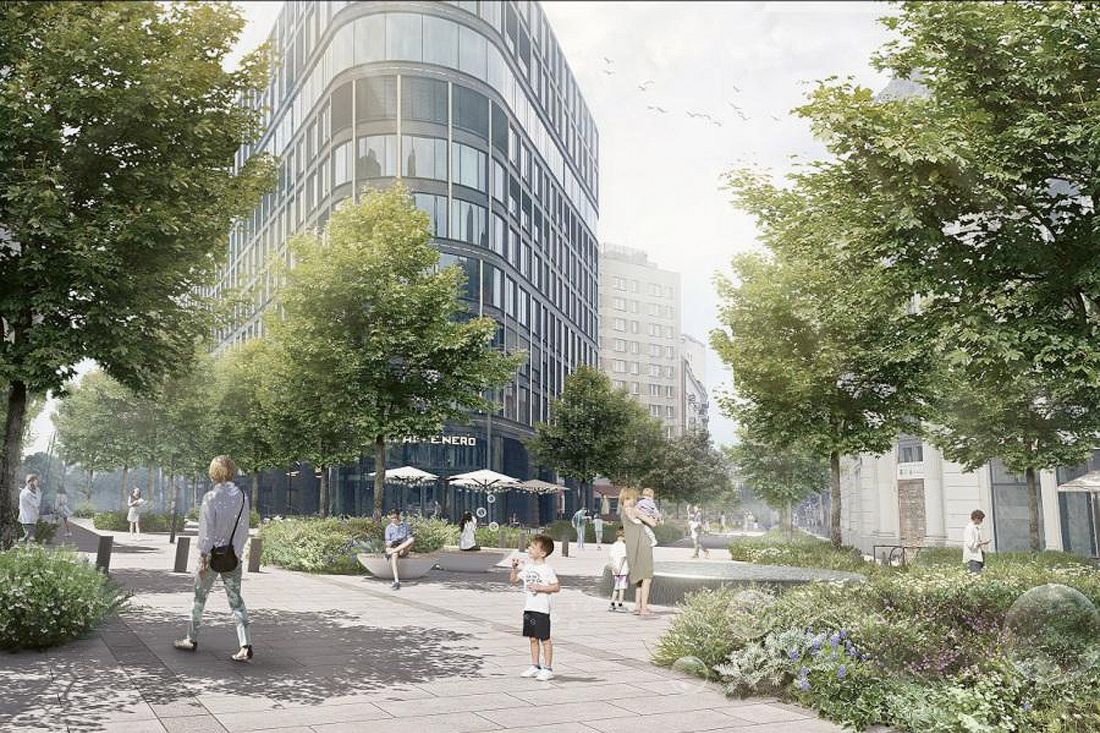
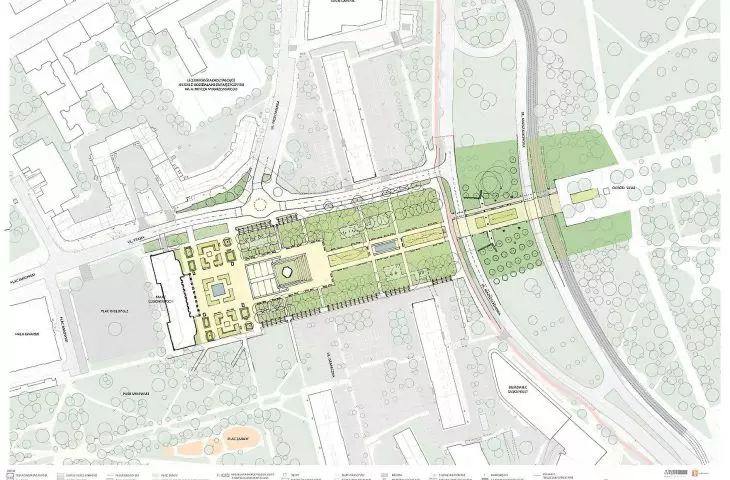
development plan for the quarter of Złota, Zgoda, Sienkiewicza and Jasna streets
© illustrations courtesy of the Office of the Capital City of Warsaw
summary
The New Center of Warsaw is a large, complex and ambitious project. That is to say, it is tailored exactly to the needs of the rich capital of a European country. It is not a groundbreaking project, it is evolutionary rather than revolutionary. And yet it is catching huge delays, being trimmed from successive parts, broken into dozens of stages. As part of its implementation, mediocre (the reconstruction of John Paul II Avenue), good (Five Corners Square) and potentially outstanding(Central Square) spaces are being and are likely to be created. Often, however, the interests of pedestrians, cyclists and the climate must give way to cars. At the same time, prolonged procedures and the impossibility of introducing target solutions, blocked by, among other things, the postponed reconstruction of the cross-city line, are not compensated for by temporary solutions, prototyping and urban experimentation known from Western capitals. And can one imagine a better space for experimentation than a large parking lot at the foot of the Palace of Culture and Science? Green visions and charette-drawn concepts leave out social threads. Downtown is one of the most rapidly depopulating districts in Warsaw. Even if we assume that investment in this area can be reconciled with strengthening the polycentricity of the city, this process must take place not only at the level of investment in public spaces, but also in social, housing and housing policies. And here no strategy for the new center is in sight.
Kacper Kępiński
illustrations provided courtesy of the Warsaw City Hall
more: A&B 6/2025 - WARSAW,
download free e-publications of A&B