




A city is not just a collection of buildings and streets. It is also a system of symbols, gestures and narratives that determine who feels at home in it and who remains on the margins of visibility. Who has the right to manifest their identity in public space and on what terms? Representatives of three perspectives discuss queer presence in the city, the tension between grassroots activism and institutional support, and the role of media and art in shaping shared space. A conversation as part of the Mile widzianx - queering the city project .

visibility as a political process
Kacper Kepinski: Our conversation is about who is visible in public space, understood as urban space, common space, but also the space of institutions, schools and all places that function in the city. How this visibility, the right to express oneself, but also the right to manifest one's separateness, one's identity or the symbols associated with it, is shaped, respected or restricted. We will talk from three perspectives, activist, local government and art and media, about how symbols and actions are present or their presence is restricted in our common space. I'll start by asking Peter to outline, perhaps a bit historically, what the evolution of the approach to queer symbolism in Wroclaw's public space, both physical and media, has looked like from the perspective of Equality Culture. How has the right to be visible and manifest one's belonging changed in Wroclaw's public space? Do you see specific turning points that were milestones in this process?
Piotr Buśko: I look at it primarily from the perspective of my activities at the Equality Culture Association. Queering and queer presence were present in Wroclaw even before my involvement and before the establishment of the association. The Wroclaw Equality March is one of the most important examples of symbolic but also real visibility of people from the LGBTQ+ community, queer people and allies in the fight for equality. The first march was held in 2009, that is, even before the Culture of Equality Association was founded. It's worth watching how the march has evolved, from a space of strong demonstration of demands to an increasingly socially creative event, to a symbolic celebration. In this history, the first march gathered about a hundred people, and last year's march gathered about fifteen thousand participants. Currently, the march is held under the honorary patronage of the Delegation of the European Commission and Mayor of Wroclaw Jacek Sutryk. This shows a change in thinking about who we want to see in the city and to whom the city belongs. Of course, for years this was accompanied by a great distance from the demands of the community. The March was sometimes equated with parades from Berlin, and counter-manifestations using such images appeared during our events. At one point, a strong political context, eight years of rule by Law and Justice, clearly affected the mobilization of the LGBTQ+ community, but also more broadly the civic mobilization in defense of human rights and women's rights. Since 2016, with the black protests, a clear increase in engagement was evident. The Wroclaw Equality Marches became more and more numerous and were no longer just a demonstration of allyship, but also an expression of opposition to vilification, violence and discrimination. The March became a litmus test of social change. The paradox, however, is that even a crowd of several thousand people does not translate directly into legislative change. We can observe changes in our local community, but there is still silence in the nationwide law. This raises the question of what to do with this mass of energy and how not to stop at symbolic visibility. June is important, but beyond that is the daily work of community building. The second important moment was the opening of the Equal Place LGBTQ+ Community Center in 2017. At first it functioned thanks to small project grants, then by working with the City and renting a community space. Last year, for the first time, it was subsidized by the Municipality of Wroclaw. This is important, because it means that the City recognizes the value of a permanent space for this community.
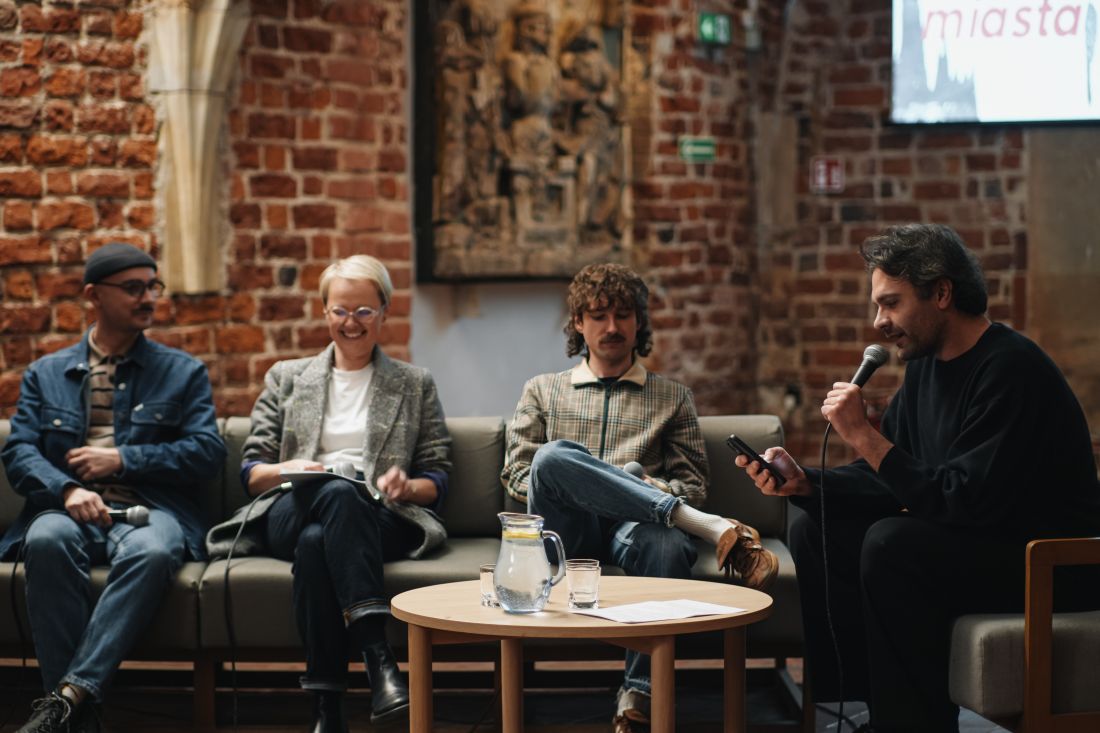
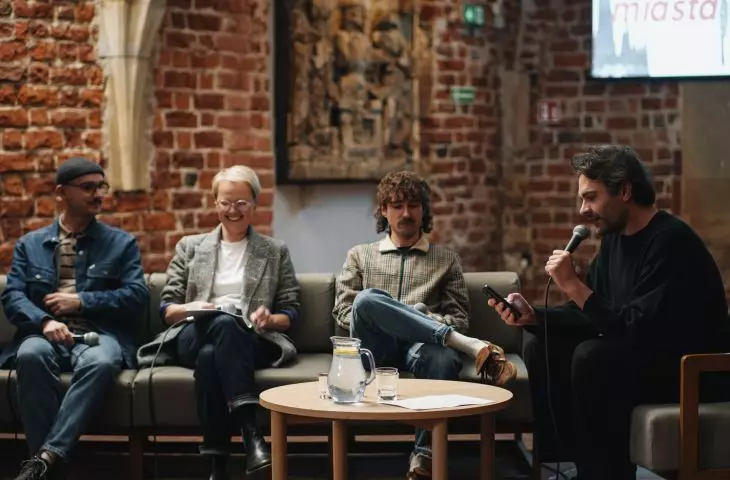
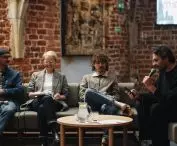
Panel discussion Mile widzianx - queering the city at the Museum of Architecture.
Photo: Iga Bałchanowska | © Museum of Architecture in Wroclaw
Kacper Kępiński: The reaction to the actions of the central government was an integrating and motivating moment. Didn't you face attempts at restriction at the local level, for example by banning marches, as in Poznań? Were these rather reactions to the nationwide political context?
Piotr Buśko: In Wroclaw, there were no formal attempts to ban the march. However, it should be remembered that the city has a difficult history and was sometimes referred to as the "wild west," with a strong presence of brown communities. In moments of high visibility, such as the Equality March, we had to face aggression from nationalist and fascist groups, which was sometimes dangerous. Over time, however, their influence was met with public resistance and a response from the City. Nowadays, we rather face the actions of groups associated with the Pro-Right to Life Foundation, organizing counter-manifestations, homophobes or campaigns equating homosexual orientation with pedophilia. These are the main challenges today.
The city in the face of pressure and counter-manifestations
Kacper Kepinski: There has been talk of the City taking action at some point. We are talking about security, which should be provided by institutions, not by the community itself. Alina, from your perspective as a proxy, what are the biggest challenges today for the equal treatment efforts to further strengthen? What tools do you have at your disposal as an office?
Alina Szeptycka: This is always a reminiscing moment for me, because, as we discussed before the meeting, I was involved for many years in organizing the Equality March, among other things, so I know the process from a different side. I have been working at the City Hall as a plenipotentiary for almost three years. And importantly, I would like to emphasize this: I speak as a civil servant, not as an "authority." This is an important distinction. I am referring not only to clerical work in the formal sense, but also to how the city works. When we say "the city does something," "the city helps," or "the city provides security," it is worth asking: the city, that is, who exactly? It's a question of tools and being able to recognize from this position how the city works, who is responsible for particular issues, and how to make, for example, the Equality March have patronage and cooperation with the police effective. This is a long story, because this cooperation was not always easy, even though the common goal was one, safety. On the one hand, it is very important that being in the office, we have recognition of who is responsible for what, and we can directly address, intervene and postulate on issues concerning public space or various interventions. In terms of tools and procedures, many of them are not fundamentally different from those available to community organizations. I'm not just talking about marching, but, for example, creating a mural or organizing an event. Of course, it is more difficult for an NGO to navigate all this. From my perspective, it is very important that the office has a Department of Social Diversity, an office that deals with these topics, sometimes in cooperation with other units, sometimes supporting and sometimes owning the topic. In terms of challenges, we are indeed able to bring people together, build dialogues, and we have more access than community organizations to the City Council and to finances, which is important, because everything costs money. However, we do not operate in a vacuum. National politics and political will come into play here. From my perspective, this is one of the biggest challenges, topics concerning the LGBTQ+ community are still sometimes considered controversial and are used politically instrumentally. There is always a risk that when we reach for these topics, whether it's rainbow flags in public spaces, patronage of a march, funding for a center or even today's event, there will be a reaction, and decisions will be judged through this prism. I am glad that in Wroclaw, the very appointment of the position of plenipotentiary shows a willingness to see something very basic: that LGBTQ+ people are residents and citizens of our city. Like others, they have specific needs, first and foremost the need for safety. As a city, we have a responsibility to take care of this. One of the most important challenges is also to build a strategy for the next decades, not just for today. Development is not linear. We see backlash in many areas, and things may look different in the future. As long as we have the tools, we should think about building this long-term.
media as a space of representation
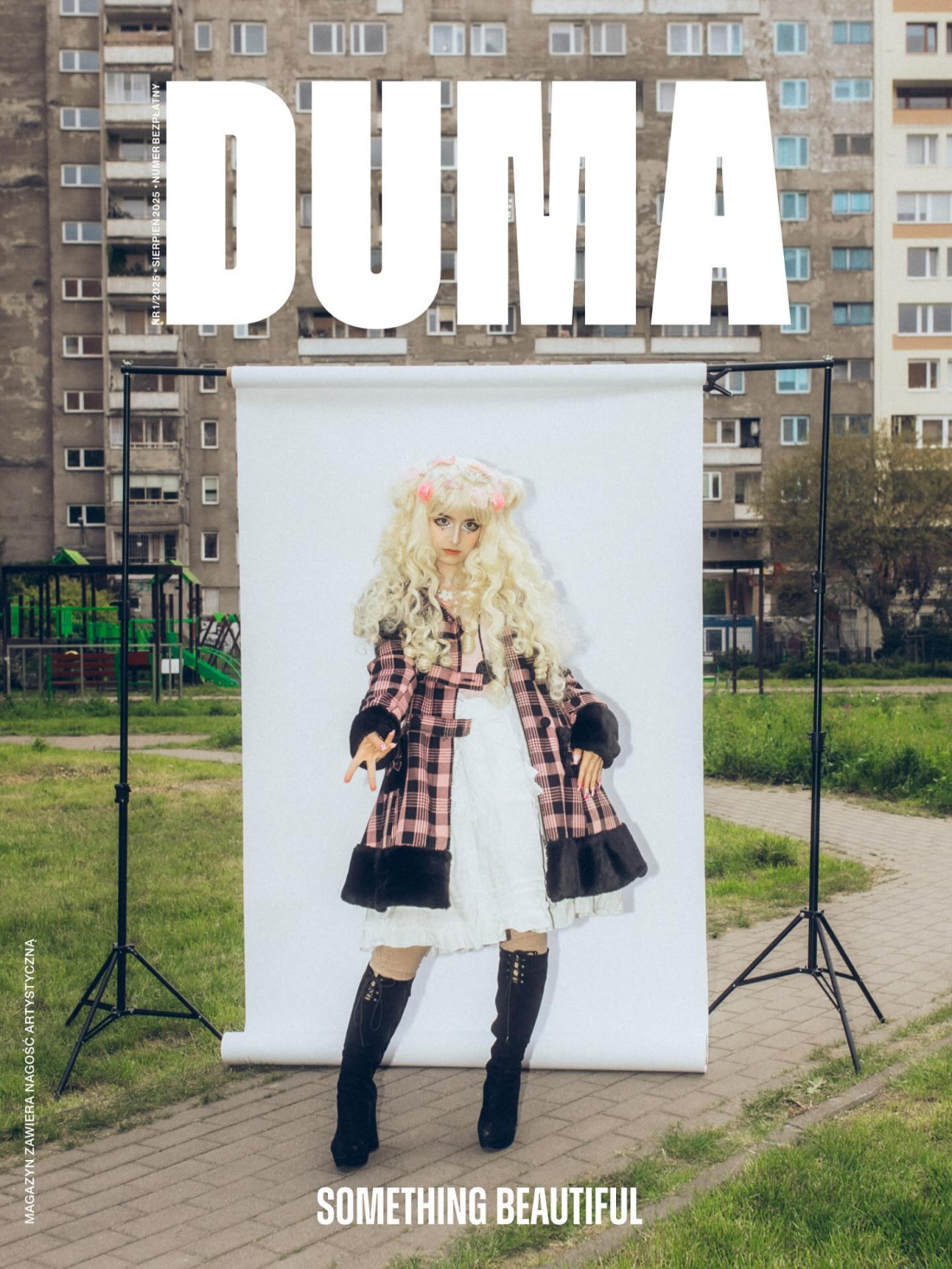
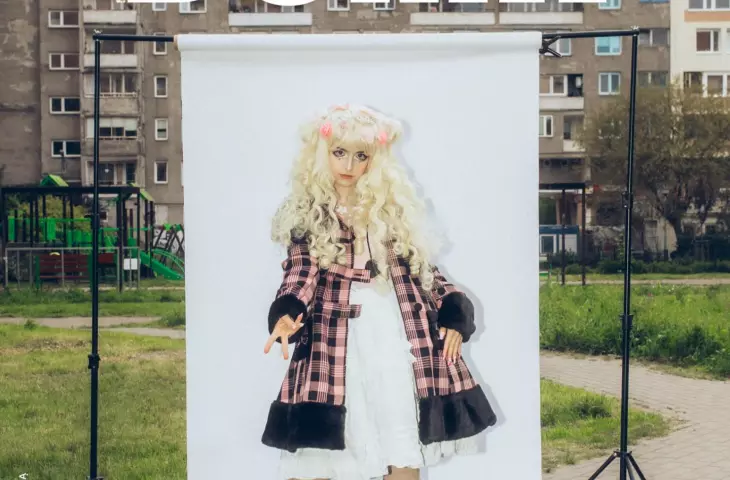
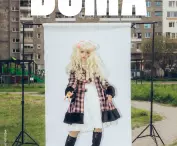
Pride magazine cover
© Pride
Kacper Kepinski: Matthew, your path led from architecture to media. What led to the creation of Pride? Was it a lack of representation, a lack of medium, or more of a personal impulse? Was it a response to a broader lack of representation in the media space? And are the tools you gained during your architectural studies in any way useful in your current practice?
Matthew Jaskot: "Pride" was created in 2021, during the pandemic. It was a moment when mass gatherings were blocked and we couldn't, as the Equality Parade, take to the street to celebrate diversity and show our visibility. I was a volunteer for the Warsaw Equality Parade at the time, and we thought about how we could reach out to as many people in the community as possible and unite in these difficult times. Several ideas arose and we implemented some of them. One was the Equality Parade online, broadcasting various performances. Another idea was a canoe trip, which had to be limited in numbers because each person was then counted. The third form was a printed magazine. Initially we assumed that we would publish one issue. We wanted to invite key organizations and people active in the community to participate. We wanted to reach people living in small towns in the form of a magazine, so that they could physically feel the community, see that we are together, and learn something about organizations or people in the community. After the first issue was published, the question arose: when is the next one? It turned out to be a needed platform. In addition to "Pride" there are several other publications, but in practice there is one regular LGBTQ+ magazine. The content published in "Pride" deepens topics that are important to the LGBTQ+ community, as well as to other marginalized people. We provide a platform for self-expression and fulfillment of dreams. Being on the cover of a magazine is not obvious, especially in the context of mainstream media canons. At Pride, we look first and foremost at what the person represents and what they want to convey. For four years we have been publishing a magazine whose main core is to show diversity.
symbols of conflict and persistence
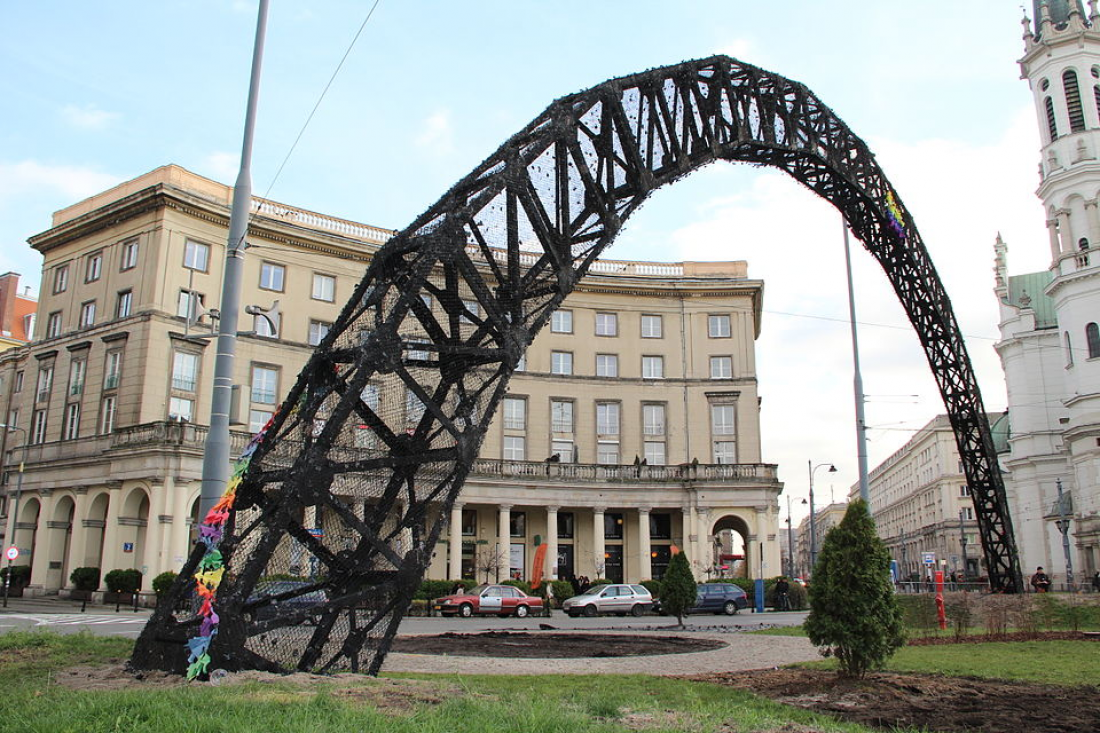
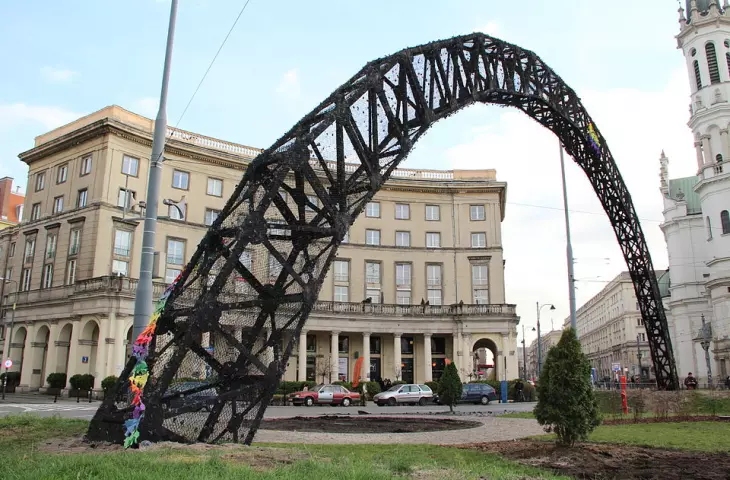
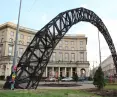
Burnt "Rainbow" in Savior Square.
Photo: Wistula | Wikimedia Commons © CC BY-SA 3.0
Kacper Kępiński: The most recognizable symbol of queer people in public space in Poland was Julita Wójcik's "Rainbow" on Zbawiciela Square. Actually, not the "Rainbow" itself, but the discussion, controversy and violence it caused. Years later, it is to be rebuilt as a result of the vote in the Civic Budget of Warsaw, although this too is not without controversy, also the group submitting the project raises doubts in the environment. Do you think this symbol is needed in Warsaw and in the community today?
Mateusz Jaskot: In my opinion, it is very much needed. Let's start with a simple look at this example and juxtapose it with other monuments in Poland. If we look neutrally, the "Rainbow" was made of thousands of flowers, symbolized diversity and brought color to the urban fabric of Warsaw. We can juxtapose it with the most popular form of monument in Poland, which is a boulder or a figure of a hero on horseback. Traveling around Poland and observing these types of monuments, I think the "Rainbow" was something really special, even if we look at it completely neutrally. It also carried representation and support for the community. As a result of events that most are familiar with, it became an element of social division and a symbol of the culture war. I am glad that the community and many people are fighting for the "Rainbow" to return. The installation was unveiled in 2012 and was set on fire several times in the following years. In 2018, when I was still a volunteer for the Equality Parade, we organized a happening, created a water installation on which the "Rainbow" was displayed. In the hearts of the LGBTQ+ community, this is a very important symbol. That's why I'm glad it's coming back. It was submitted this year, and after many attempts, this form of monument will, I hope, be part of the fabric of Warsaw for as long as possible. It is an important symbol for the LGBTQ+ community, but for me it is also a more interesting form of monument. Traveling around other European cities and beyond, I have the impression that the monuments there are more diverse than those we encounter in our country. This is an element that enriches the everyday experience of space.
Piotr Buśko: This is interesting, because if we look at who we commemorate, even when we commemorate people from the LGBTQ+ community, we never do it as LGBTQ+ people. In Poland, paying attention to community membership when commemorating people is virtually non-existent. We don't have our own monuments. It's not like we have a monument to Maria Konopnicka as a lesbian who wrote "Rota." We simply have a monument to the author of "Rota." Our stories in the commemorations do not exist. What I find particularly interesting about "Rainbow" is its symbolic dimension. In addition to the fact that the documentary film "Hotspot" was made, it became a symbol of persistence. It was rebuilt, restored, returned. Even if it was rebuilt in connection with the artist's contract, this constant return to it, its reappearance, first in the form of a non-burning rainbow on a water curtain and now in material form, has a symbolic meaning. It's a story about the country's LGBTQ+ community who will assert themselves. The story shows persistence in being.
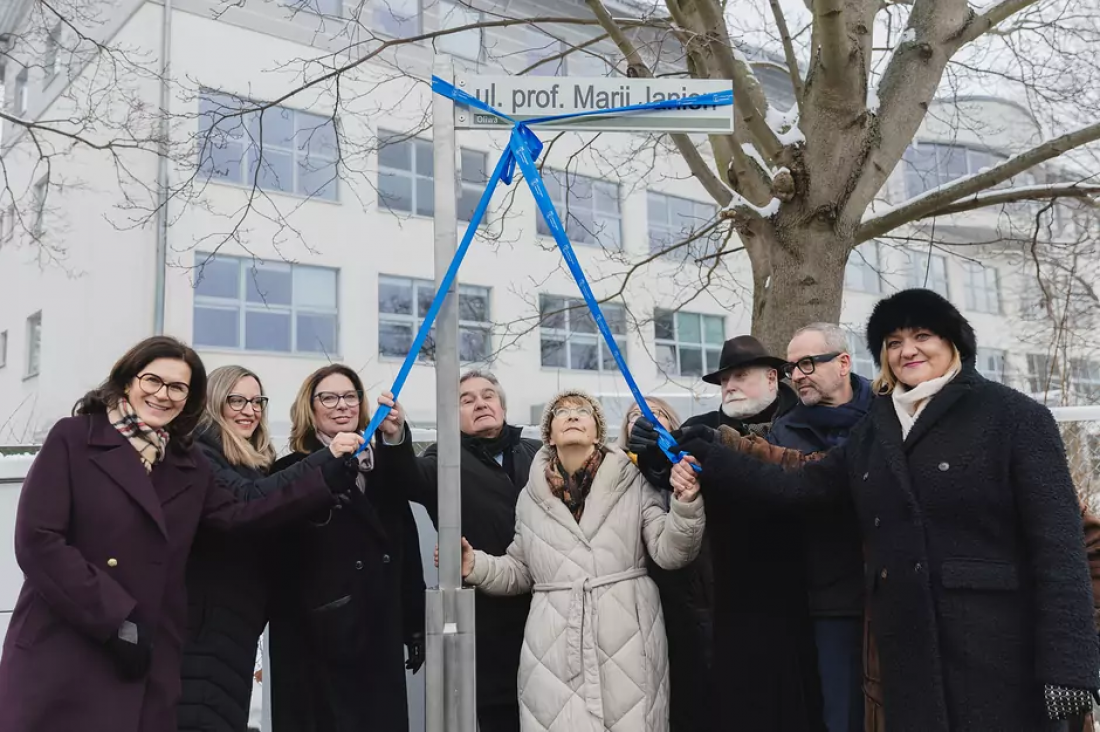
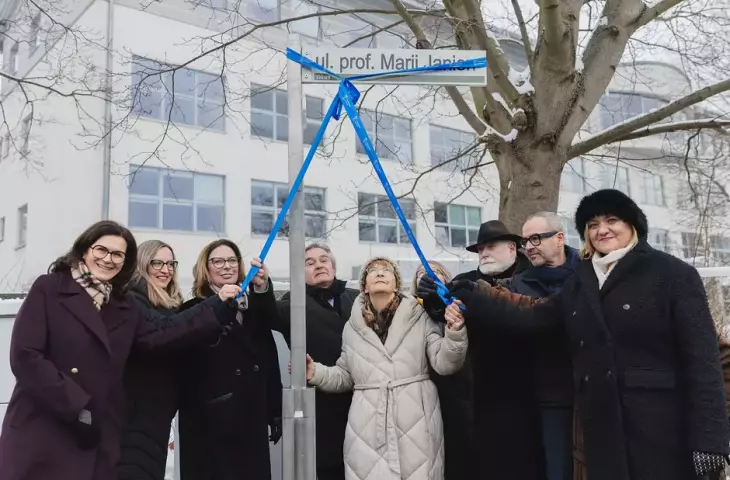
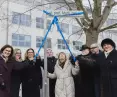
Naming a street after Prof. Maria Janion
Photo: Dominik Paszlinski | © www.gdansk.pl
Kacper Kępiński: What form the "Rainbow" will return in and when, we don't quite know yet. As it happens with the Civic Budget and projects implemented based on this mechanism, everything can still change. From our perspective, Warsaw's, your mural of the Culture of Equality, destroyed while it was still being created, was a bit of such a local rainbow. What did this story teach you? Have you changed your approach to this type of intervention in public space after this event? Are you more cautious, or on the contrary, more courageous? The mural was intended to be temporary by design. Is there a place or plans in Wroclaw for a permanent commemoration of a symbol or space that speaks directly about this community?
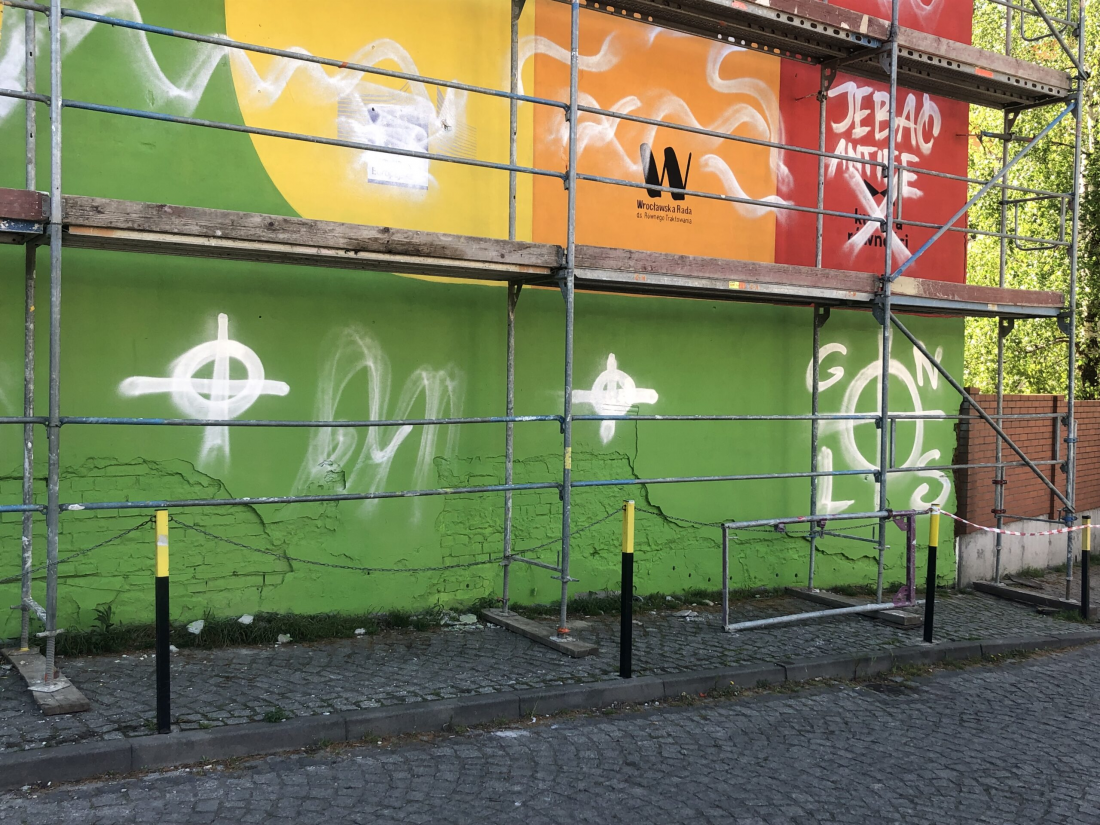
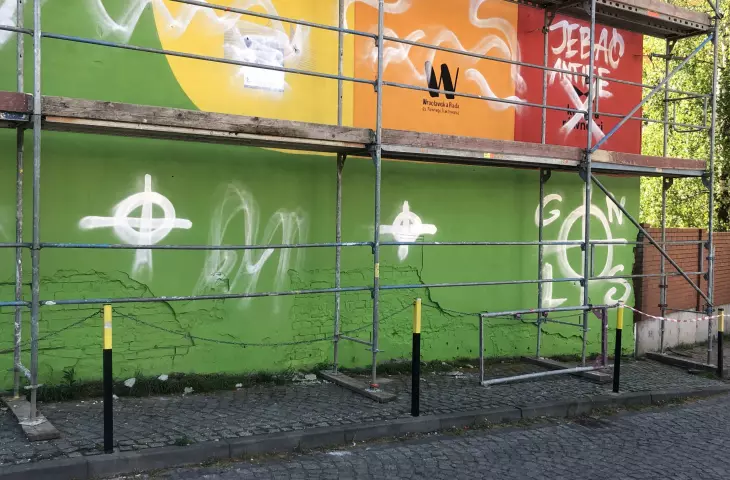
Destroyed "Climate for Equality" mural in Wroclaw
Culture of Equality
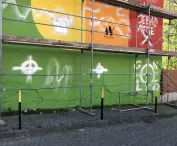
Piotr Buśko: The story of our mural began in 2022. It was created on Księż Mały, on the so-called "refrigerator" of Wrocław. I don't know if this building is still standing or if it has already been demolished, so the mural is physically no longer there. We did it together with the European Commission representation in Wroclaw. It was a rainbow mural with the slogan "Climate for Equality." At the time we combined two important themes: equality and ecological sustainability. The mural was painted with ecological paints that neutralize CO₂. On a symbolic, small scale, they were supposed to convert some of the smog into oxygen. It was an attempt to combine the idea of equality with climate responsibility. We planned the opening for May 17, IDAHOBIT, the International Day Against Homophobia, Transphobia and Biphobia, which in Wroclaw opens the festival that precedes the Equality March. It was a moment of anticipation. The mural was still in the process of being painted, when at six o'clock in the morning I received a message with a photo that something had happened. It turned out that because the scaffolding was still standing, the mural had been vandalized. There were banned symbols, Celtic crosses, white power slogans, and inscriptions inciting violence against the LGBTQ+ community. We had a moment to come together and decide what we were doing. We took it as a call to action, an invitation to others to stand up against this devastation and advocate for a "climate for equality." We organized a collection and in less than 24 hours raised almost 20,000 zloty to restore the mural. We succeeded in restoring it. The opening was not about pretending that nothing happened. We didn't blur the history. We made it a happening, the people present at the opening actively participated in painting over the hateful symbols. It was a gesture showing that we don't agree with violence in public space and that we are reacting together.
Kacper Kępinski: So again, reactionary.
Piotr Buśko: Yes, we had to react. We couldn't imagine leaving this mural as a space of our failure. It stood for about three years. We couldn't leave it with the signs. This is similar to the "Rainbow" story. You have to go back to it and take care of it. Even if it's not "yours," when it's attacked it becomes shared. The community reacts: this is ours and we will defend it.
Alina Szeptycka: At the time, I was still working at the Culture of Equality, but I was also co-chair of the Wroclaw Equal Treatment Council, which is an advisory body to the mayor. The City's reaction was very clear, the council, the mayor's office and the European Commission Delegation, which co-financed the project, got involved. It was classic crisis management, but it also showed the power of cooperation. The neighborhood council, residents and residents of the neighborhood got involved. The reaction was unequivocal: opposition to vandalism. People said, "How can something so beautiful be destroyed? This is already our mural." By definition, a mural is temporary, up to five years. However, there are times when it fits into a space so strongly that its removal provokes resistance. This story was a story of cooperation between the City, the neighborhood council and residents. Individuals came and said: "We will watch with you to make it in time for May 17." And we made it in time. Also worth mentioning is the Wroclaw Center for Restorative Justice. It's a city program to respond to hate speech and hateful symbols in space. Anyone can take a photo of such a sign and report it through a form or social media. The institution checks who is the administrator of the building and removes the signs. More than three thousand such signs are removed annually. In the case of the mural, there was also a quick response, by the time we arrived at the site, some of the symbols had already been painted over. It was a crisis, but it showed who stands with us. I would also like to return to the issue of symbols. We often discuss rainbow elements in the city in the context of tourism and image, that it would be good to have a passage like in Reykjavik, a place to take pictures. This is important, but we lack an in-depth conversation about what kind of symbol the community itself needs. What kind of monument, what kind of form of commemoration that would speak of our Breslau-Breslau history and give not only symbolic recognition, but also a sense of security.
When it comes to officially decorating the city, it is always a discussion between the expectations of different parties. For some there is always too much, for others always too little. Flags appear, for example, on Olawska Street or Świdnicka Street, but not on City Hall. They appear in cultural institutions. These are decisions that also have a formal and legal dimension. It's important to remember that if we postulate the presence of one flag, other groups appear who also want visibility. This is a broader discussion about who has the right to visibility in the city and on what terms.
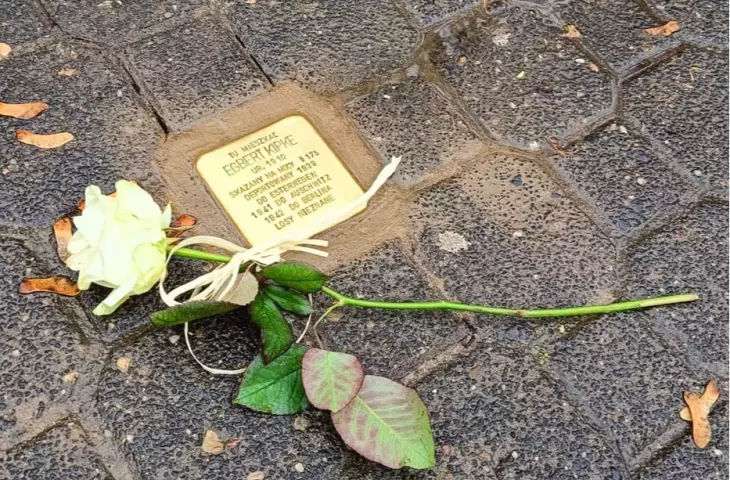
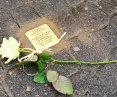
If we are talking about "hard" monument infrastructure, I think this is still ahead of us on a large scale. But we are already acting. In Wroclaw, we unveiled the first memorial stones in Poland commemorating the victims of Nazi persecution under Section 175, homosexual men, our residents. This is part of the building of the city's queer history, including in cooperation with Joanna Ostrowska. It's a small but very important symbol. We went through a long formal process to make it happen. The second area is working with queerstory through exhibitions and walks. We tell the history of the city anew, bringing back the silent threads. We are working with the City Museum of Wroclaw and we are saying directly: queer people co-created the history of this city. Let's do something about it, an exhibition, a walk, a project.
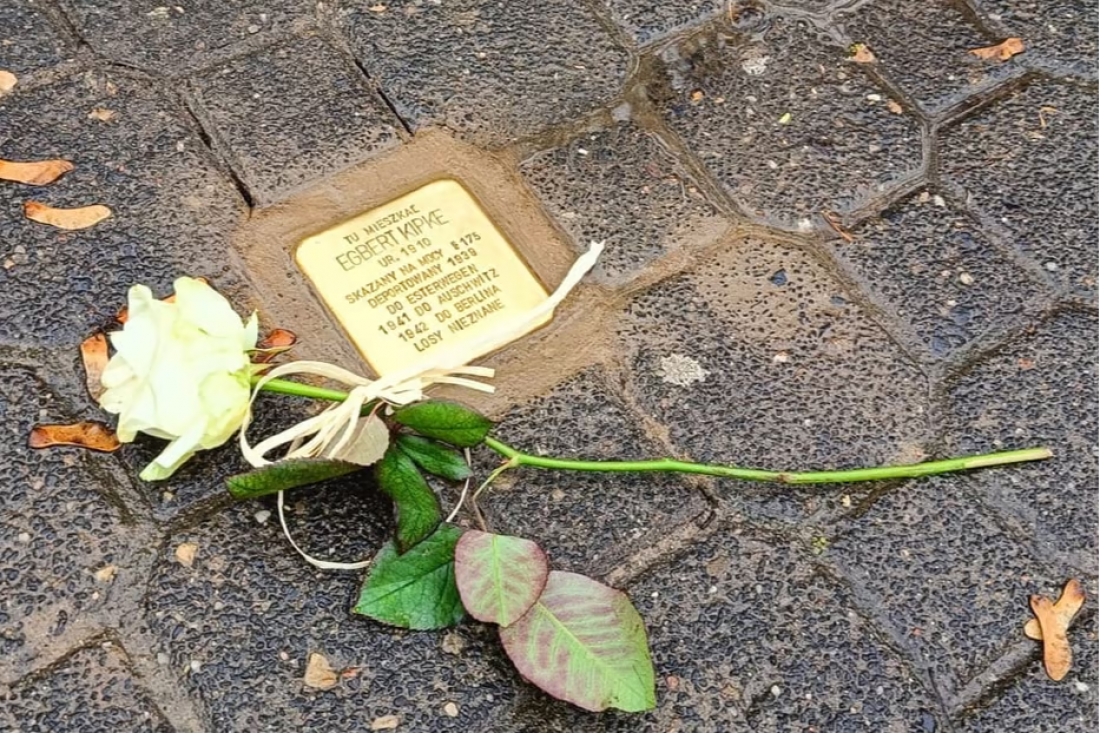
Poland's first Stolpersteine commemorating the victims of Paragraph 175 - Wroclaw.
Photo: Marek Księżarek | © Wroclaw.pl
Piotr Buśko: This is also a question of mainstreaming LGBTQ+ topics. Since LGBTQ+ people are residents of Wroclaw, it is natural that the City is concerned with their issues. As an organization, we want these topics to be present in city policies and resource allocation. But space can also be reclaimed from the bottom up. When the Stop Bullshit collective hung rainbow flags around monuments in Warsaw, it sparked a huge debate. In Wroclaw, someone spontaneously wrapped statues in the Old Town Park with rainbow flags, and dwarves were given flags to hold. This was not an institutional action, but a gesture by people who decided to act. We as an organization also did queer trolling in the media space, for example, a photomontage of the Chrobry monument with a rainbow flag attached to a spear. This caused a lot of resonance. It's also a way of showing that we have the same right to this space.
warsaw and wroclaw: two models of action
Kacper Kepinski: There's also the question of whether symbols introduced in an official way work differently than grassroots ones. And in general, how can a community queer a city, change its aesthetics in a more permanent way, going beyond safe spaces? In Warsaw, such a more permanent way of queering space is the grassroots Queer Museum and its activities, institutionalizing something that these people have been doing for years, but not in such an official form that you can come to, that you can name. It's a concrete, named place. How can the community change the space? Is it through semi-legal activities, performance? Or is it precisely this changeability, this undefined form, that is the property of queerness and pushing it into the form of a monument is not an adequate medium for this phenomenon?
Mateusz Jaskot: For me, an example of such a publicly accessible space is the Warsaw club La Pose. It is located on Mazowiecka Street, the main party street, where heteronormative clubs dominate. And suddenly a queer club appears in this space. The most interesting thing is that it was absorbed into the urban fabric. It turned out that a place where we feel safe doesn't bother anyone. Everyone can be themselves there and function together, without conflict. It's a club with tremendous reach, not least because of the people who contribute and promote it. The club space is extremely important to the community, including in the context of the global history of queer movements. Safety and a sense of community in an entertainment space are of great importance. At the same time, such spaces in Warsaw exist, but they are also increasingly disappearing.
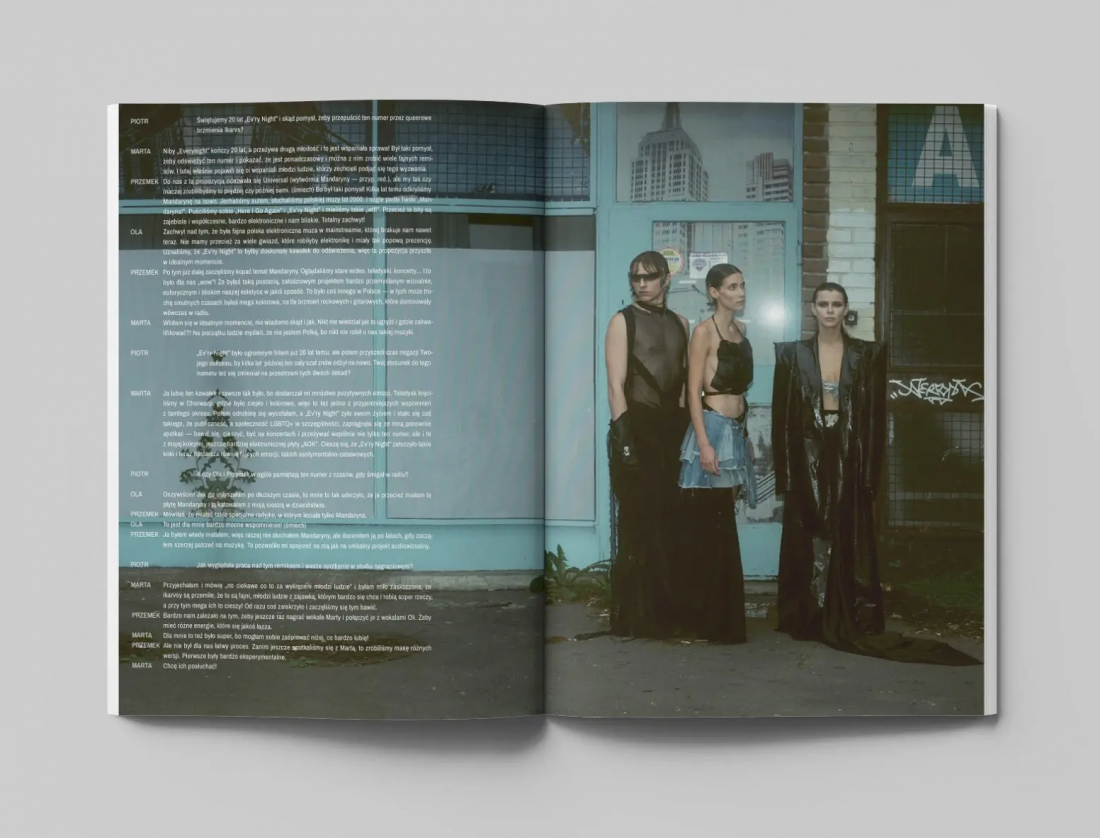
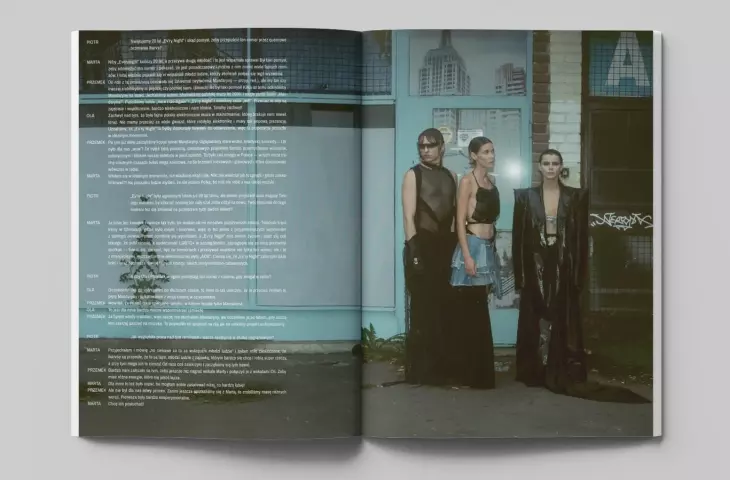
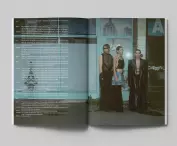
Pride magazine spread
© Duma
Kacper Kępiński: Sometimes they disappear for purely political reasons, as happened with Pogłos. It was a grassroots community center for everyone, not just queer people. It disappeared because a particular political and economic interest emerged. And the plot of land after the demolished Pogłos has still not been sold, so the economic argument turned out to be a pretext.
Piotr Buśko: In Wroclaw, an interesting example might be the celebration of Backyard Days on Ruska Street. Ruska is a space where, in addition to pubs and restaurants, there are NGOs and BWA Wrocław. It is an intense place, full of life. The Backyard Days celebration is interesting because it shows that the space can be communal and hybrid, combining institutional, grassroots culture and people's everyday presence. We are not hiding anyone in our pockets. A drag show organized in a courtyard, open to everyone, where anyone can come and see it, while at the same time viewing the Neon Museum, is just as valuable as other artistic activities. In the catalog of creative and cultural activities, a performance by a Norman band and a queer activity should be equivalent to each other. The idea is to include them side by side, keeping them distinct, but making them more widely available. A drag show doesn't have to mean going down to a basement club. It can be available in an open space. Even if someone is not familiar with the culture, they can get to know it precisely because the space allows it.
Alina Szeptycka: It's worth doing different things in parallel. Telling queerstories is important for us, because I want certain activities to be anchored in the fabric of the city and have a structural and systemic dimension. It's about solutions that will survive political changes, and there will always be those. Political will varies, but if we have structural solutions, such as the City's funding of the festival or formal partnerships, if we have an LGBTQ+ community center functioning like senior centers or community activity centers, recognized and funded, these are changes with greater sustainability than purely event-based or ephemeral activities. At the same time, what you are talking about is very important. As a civil servant, although I don't work in the culture department, I work with it and try to create space for grassroots artistic activities. I mentioned Equal Place because we have long discussed the need for a non-commercial, inclusive space where a financial barrier will not be an obstacle to participation in events or meetings. Looking from a broader perspective, we lack in Wroclaw the more extensive club or cultural infrastructure that Warsaw has. We have clubs, but it's still an area to work. It all functions at the intersection of artistic and social activities.
Infrastructure, culture and mainstream risk
Kacper Kepinski: It is important that soft, cultural and artistic activities precede infrastructural, spatial activities. For it may end up like in Kielce, where rainbow benches were selected for implementation in the Civic Budget. They were built, but were not narratively taken care of by the city council. They became the object of repeated vandalism and were exploited in the media by politicians. They were realized and left alone. This shows that not every space and community is ready for physical intrusion if they have not previously been prepared for it and learned to talk about it. It's one thing to mainstream, tame and build security. But at some point, in trying to become more mainstream, isn't there a danger of self-censorship? Queer language, visuals and aesthetics often do not fit into the canon to which the general public is accustomed. The rainbow is a very safe symbol. Of the entire canon of queer symbolism, it is probably the safest sign. So the question is where are the limits of introducing this language into a public space that is not necessarily ready for it, and at the same time how to do it with respect for the community and for herself, not limiting herself only by reference to the external and foreign, but coming out of her own identity.
Alina Szeptycka: The risk of self-censorship always exists. It's hard to draw one hard line, it depends on the situation. Mainstreaming often requires compromises or the choice of language and tools appropriate to a particular addressee. We will speak differently to the LGBTQ+ community, differently to city councilors, differently to senior citizens. These are basic communication issues. For me, it is important that these different languages and strategies are not mutually exclusive. So that I don't take the attitude that since I'm mainstreaming, because that's my strategy and that's my position, someone who acts "against the grain," more radically or even illegally, is acting against me. I believe that no. Sometimes such actions hinder dialogue, it is true. But in my view, all these methods and ways of acting are important. Instead of getting offended or looking at each other with superiority, it is worth recognizing that someone can act differently. We used to have a slogan: "Feathers up your ass are not stupid." I know it doesn't sound like an official slogan, but I still use it. One can simultaneously work on diversity politics, talk about equal treatment, security and visibility in an institutional context, and recognize the value of anti-system, performative, happening actions that expose the system and show something different. It's also a matter of diversity of outlooks and needs. The key is to see and respect each other, and not fight each other just because someone acts differently.
authenticity as a survival strategy
Piotr Buśko: Authenticity is key. If we start speaking with a different voice, it will be very easy to sense falseness. Then the value we are fighting for and our credibility can be quickly undermined. As the organization responsible for the Equality March, we face various dilemmas. We try to solve them in accordance with what is authentic to us as the voice of a part of the community. It's not about sucking up or losing our own language, but about maintaining authenticity. I also take this from my artistic practice as a drag performer. How I present myself is far from the mainstream image of a drag queen. The decision that I become a mustachioed queen is not the most mainstream choice. But there's something about the authenticity of one's voice and one's distinctiveness that allows one to persevere and stay true to oneself. That's probably the most important thing, not to lose yourself along the way.
Matthew Jaskot: There was a very important statement from the audience, that we should also look at how much good comes out of our actions. That we should not focus solely on the anguish of the constant struggle, but see the successes. In retrospect, the fact that we can take to the streets in a March or an Equality Parade shows the scale of the change. We can see that there are more and more of us, that more and more people have the courage to come out and be visible. We can also observe how the comfort of participation is changing. And after all, this is the core of what we do: to feel accepted, safe and noticed. In Warsaw, I see this very clearly. The first parade I went to was quite dangerous, there were many counter-manifestations, roundups. In recent years, going out on the street, one no longer encounters such situations. This is what I'm striving for: our actions are hugely important to achieve this goal, a sense of security and acceptance. Finally, I would like to thank you for this conversation, because I myself saw more clearly how our actions differ depending on the city we live in.
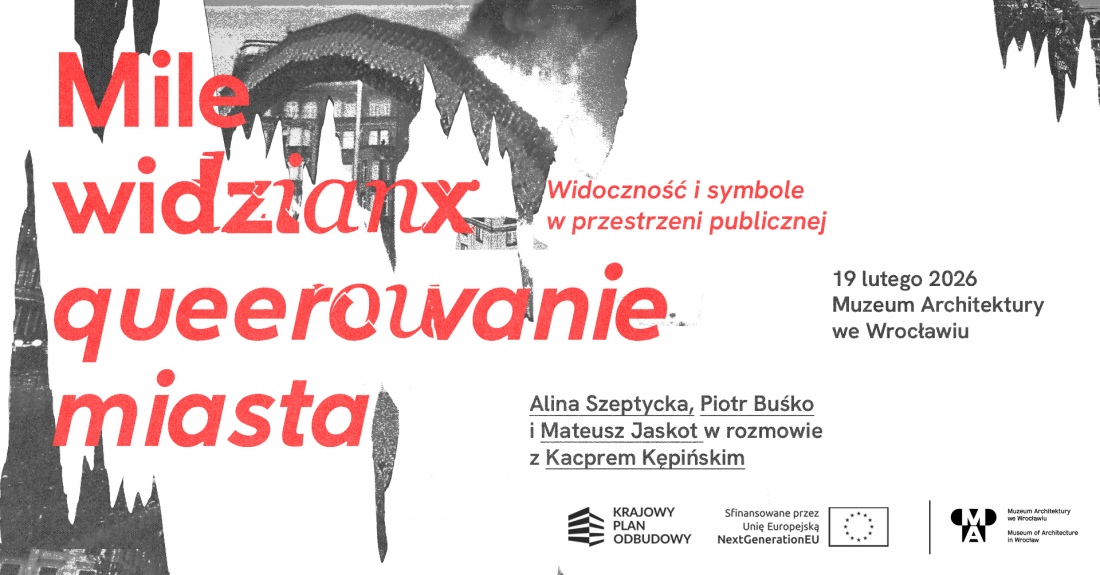
Mileianx - queering the city
Chairing:
Kacper Kępiński - architect, architecture critic, curator of architectural exhibitions. Deputy director of the National Institute of Architecture and Urbanism.