





"Without a systemic change, I don't see the purpose of introducing such a weak law. It will create another administrative apparatus, raise the cost of public administration, and the problems of cities will continue to remain unsolved," Jakub Pietruszewski, director of the Pomeranian Regional Planning Office, general designer of the Pomorskie Voivodeship Spatial Development Plan 2030 and the Gdansk-Gdynia-Sopot Metropolitan Area Spatial Development Plan 2030, comments on the draft law on sustainable urban development.
Ewa Karendys: Will the bill on sustainable development of cities bring spatial order?
Jakub Pietruszewski: I am in favor of a law that would regulate the development of cities and their immediate surroundings, i.e. urban functional areas. Such changes are needed as much as possible. However, the draft law on sustainable urban development, despite many announcements, does not touch the core of the problems of cities and their surroundings.
Ewa Karendys: Why?
Jakub Pietruszewski: It largely focuses on the mechanisms of spending European funds and related documents, such as sustainable urban mobility plans or climate change adaptation plans. This is a rather shallow treatment of urban problems, and not very effective. From the point of view of spatial governance, the law should focus first on the mandatory transfer of authority for drawing up a master plan to the level of the development association.
Both the city - the central center, and the municipalities directly adjacent to it that join the association should, by law, when forming the association, transfer general plan competencies to the association. And leave to themselves only the competence to draw up and adopt local development plans. Such a change would make it possible to solve a number of problems in transportation, environmental protection, public services. And especially those generated by the processes of urbanization that have been taking place since the 1990s, development of ecological corridors, ventilation wedges or significant transformation of agricultural land.
Ewa Karendys: The introduction of a development association - a new form of cooperation between local government units - is not enough for this?
Jakub Pietruszewski: The law should give the development association strong executive tools to effectively solve problems at the interface between the city and its immediate surroundings, and not solely reduce its role to coordination functions. Stronger solutions were given by the drafters to the association with regard to the mechanisms of territorial instruments like Integrated Territorial Investments, which are familiar from the previous two financial perspectives of the European Union. At this point it is worth asking the question: have these mechanisms brought about any fundamental changes in the functioning of cities and their surroundings? No, because they are exclusively soft solutions. Therefore, the coordination mechanisms provided for in the Law on Sustainable Urban Development will not produce the expected results. The legislator does not force the municipalities joining the union to obligatorily transfer the relevant own tasks to the union level. The result will be the perpetuation of pathological mechanisms of competition between local governments, such as the struggle for residents, through the oversupply of land for development in suburban areas.
Ewa Karendys: Development unions are supposed to strengthen joint planning in theory....
Jakub Pietruszewski: The "planning for the development of the union area" provided for in the bill on sustainable urban development is a very broad concept. We already have the Law on Spatial Planning and Development, which defines the general plan, local plans or the provincial development plan. We also have a number of other strategic documents like municipal, supra-local and provincial strategies. Already in past years, urban functional areas had their strategies, adaptation plans, low-carbon management plans, sustainable urban mobility plans, and, unfortunately, that's where it ended. Yes they defined the projects that were implemented, but often these were projects that resulted primarily from the particular interests of individual municipalities, rather than from an objective assessment of needs across the functional area.
Ewa Karendys: There was a lack of joint planning?
Jakub Pietruszewski: There wasn't, what was missing was primarily spatial planning balancing needs and opportunities on a supra-local scale. It is in space, spatial planning and ways of shaping space that the contemporary problems of Polish cities and their immediate surroundings have their sources. We have a number of good experiences developed by local governments, but at the same time we have a legislator who, instead of introducing good systemic legislative solutions - tailored to our needs - creates sham projects.
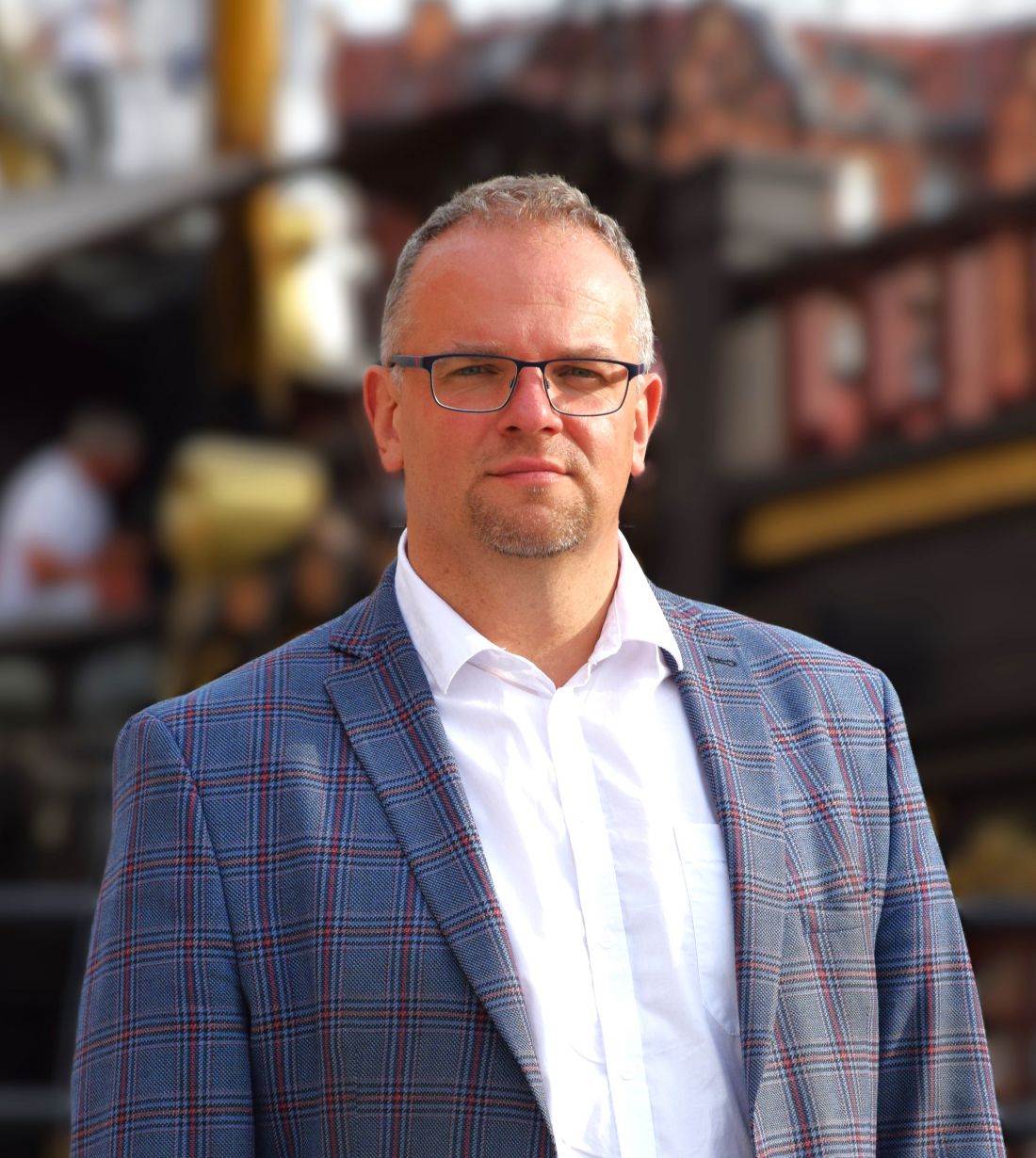
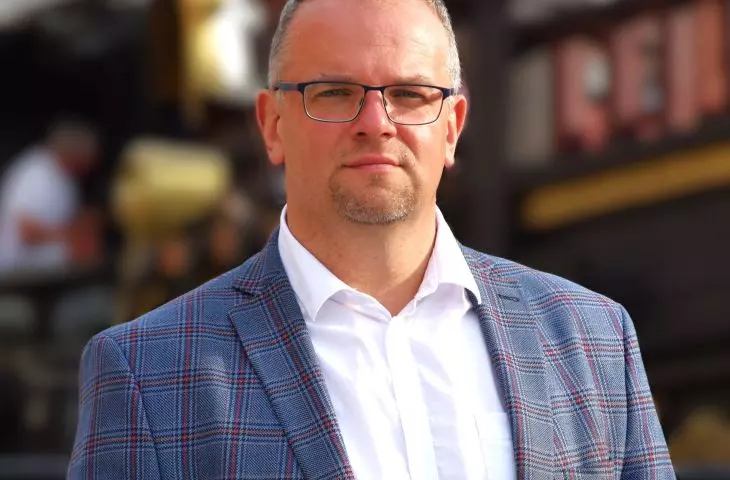
Jakub Pietruszewski, director of the Pomeranian Regional Planning Bureau.
private mat.
Ewa Karendys: What, then, would help municipalities to better establish spatial order?
Jakub Pietruszewski: The development association should have real competence in matters of spatial policy formation and guidance. Through proper empowerment in the law, it should take over the municipalities' own competencies in general plan matters. Without this solution, the union's role will be very apparent. Dealing with regional planning and seeing the problems of local planning, I believe that it is advisable to strengthen the position of the provincial government and increase the importance of the provincial spatial development plan. However, this requires rethinking the entire system. Perhaps because of the dependence of development association bodies on municipal authorities, the role of the regional plan should be much greater, but in conjunction with the master plan drawn up for urban functional areas by urban development associations. This really requires a comprehensive rethink.
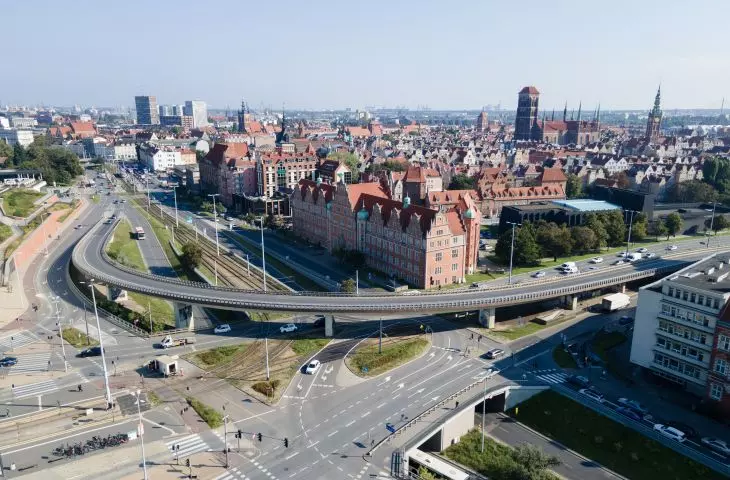
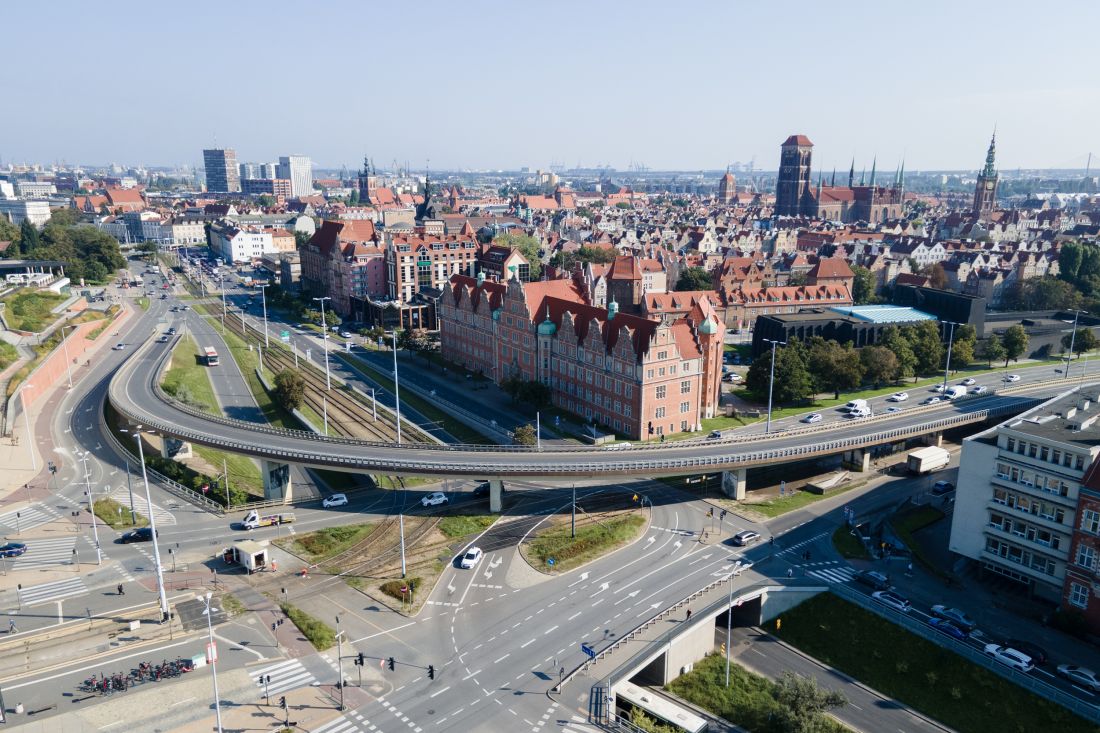
Today, cities and surrounding municipalities are competing for residents - taxpayers. Cities are looking for new land for residential development in line with the idea of a city of short distances, while neighboring municipalities are opening up new land for the same developments on a grand scale. The municipalities have cheaper land than the cities, and basically the effect is that urbanized areas are spilling out in all directions. The result? Energy- and transportation-intensive settlement structures without basic public services, without kindergartens, schools, public spaces or green areas, etc.
Meanwhile, cities are demographically shrinking, their tax base is shrinking, and they are unable to maintain social, technical infrastructure. As a result, the city maintains supra-local infrastructure, which also benefits residents of neighboring municipalities, but taxes go to neighboring municipalities. Everyone acts in their own way, because there is a lack of joint planning and decisions made in the name of the common good in relation to the entire area. If there were a single entity responsible for such a plan, it would be possible to rationally determine where to develop development and where to restrict it. Today, however, each municipality has its own planning authority, and this breeds competition instead of cooperation. This is something that the planner has not solved, and this problem is a fundamental development challenge for Polish cities and their surroundings.
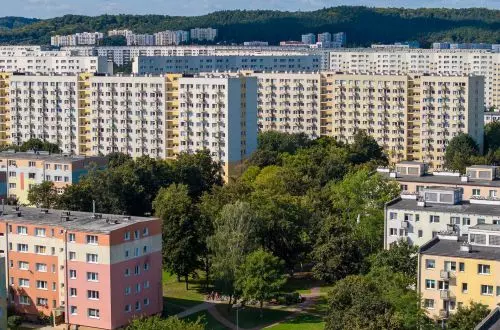
City of Gdansk
Photo: Piotr Wittman | © Gdańsk.pl
Ewa Karendys: Development associations are also supposed to coordinate "environmental and climate change adaptation activities"....
Jakub Pietruszewski: Yes, the development association is supposed to enact a climate change adaptation plan and that's where it ends. After all, in theory this is already happening, municipalities are enacting such plans. And the effect is none. It seems that at the level of general strategic slogans everything works great. But as we look at the development plans, the airing wedges of cities are often developed in the suburbs, ecological corridors do not maintain continuity, areas of natural water retention are drained because space is needed for the development of new buildings. All this does not serve the environment, natural natural processes, and in fact often contradicts the need to adapt to climate change. If we are to create an adaptation plan and write generalities, and then each municipality will do everything its own way anyway, why such coordination?
Ewa Karendys: I asked the creators of the law about the delegation of authority in the context of the general plan and whether the association could write the general plan and the municipalities could already only write local plans. I heard that it was too late for such changes, because the municipalities are already creating these plans and it would make chaos.
Jakub Pietruszewski: If the creators of the law accept such a justification, it's terrible. As urban planners, we raised the problems of general plans from the beginning. We anticipated everything we have witnessed in the last two years.
Ewa Karendys: What are these problems?
Jakub Pietruszewski: It will not be possible to draw them up in such a short time, there are too few professionals. The changes should be preceded by a pilot. Zoning decisions should not be issued more than a few months after this "local planning reform" comes into force. Chaos is already underway.
In Poland we need a real change in the management of cities and their surroundings. Without systemic change, I don't see the purpose of introducing such a weak law. It will create another administrative apparatus, raise the cost of public administration, and the problems of cities will continue to remain unsolved. Today, already, in the Law on Municipal Self-Government, there are legal solutions for inter-municipal cooperation - municipal unions. Cities do not need another general soft formula, but real tools.
I am as much in favor of the Municipal Law as possible, but a law that will bring real change, not the appearance of change.
Ewa Karendys: Thank you for the interview.