





We used to romanticize the combination of architecture and art, speaking somewhat less affectionately of its relationship with engineering. However, there are projects whose construction comes to the fore, and whose creative technical solutions are just as intriguing as the exquisite details. About these relationships, as well as about crossing borders (not only geographical) and the career of Boguslaw Babicki, one of the most prominent constructors of Polish origin on the occasion of the exhibition "Architecture Without Borders" we talk with Aleksandra Kucy, Consul General of the Republic of Poland in Vancouver, Canada, and architects: Greg Borowski, a representative of the second generation of designers active in Vancouver, and Piotr Pasierbinski, who has recently joined the Canadian architects' community.
Ola Kloc: On November 6, 2025, the exhibition "Architecture Without Borders" opened in Vancouver, a tribute to the achievements of Boguslaw Babicki and other architects and engineers whose work has had a lasting impact on the architectural identity of the Canadian city, where did the idea for such an exhibition come from?
Greg Borowski: The original exhibition was conceived in 2015 at the initiative of Jan Böttcher. He put a lot of effort into collecting and presenting these works, and was convinced that interesting projects were being created in Vancouver. Among other things, he wanted to draw attention to the work of Boguslaw Babicki, one of Vancouver's most well-known and respected structural designers and engineers. A coherent identity can be seen in his projects, and he co-designed some of the most important buildings in modern Canada: the complex in Robson Square or the Museum of Anthropology in Vancouver.
Aleksandra Kucy: In 2015, the 90th anniversary of Mr. Babicki's birth, they wanted to commemorate his figure. His works are all over Vancouver, but everyone remembers the architects, forgetting the role of the engineer and the importance of seismic design to be robust. The main part of the 2015 exhibition was the boards dedicated to the figure of Boguslaw Babicki, now it is much more extensive - we discovered that there are many Poles in the architectural industry in Vancouver, so we wanted to show their works.

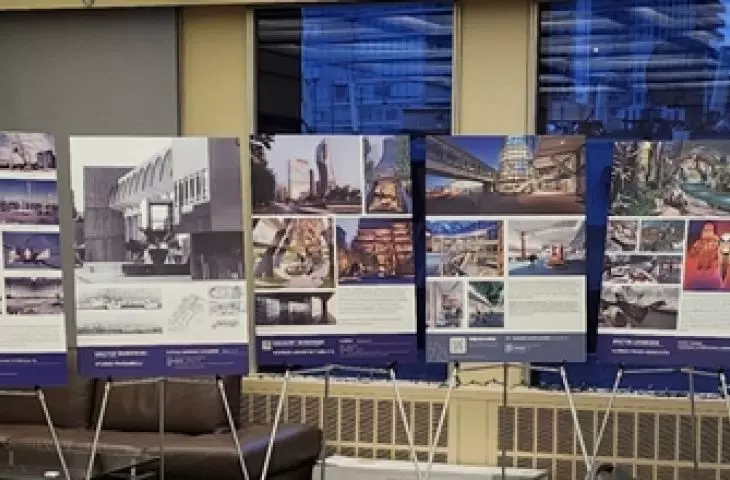
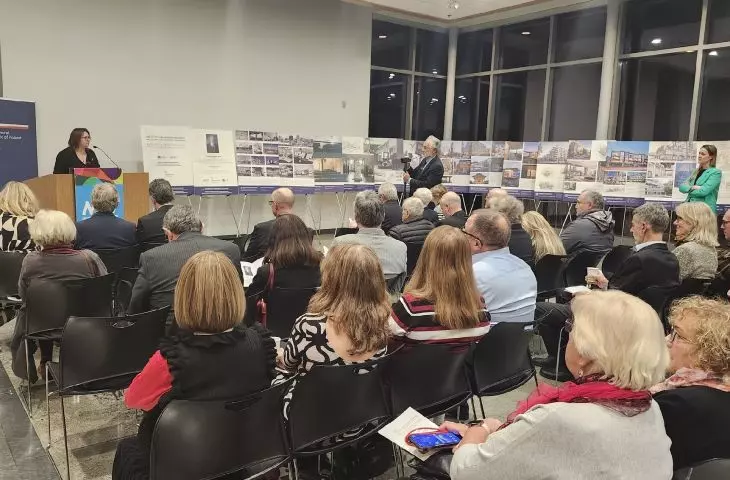
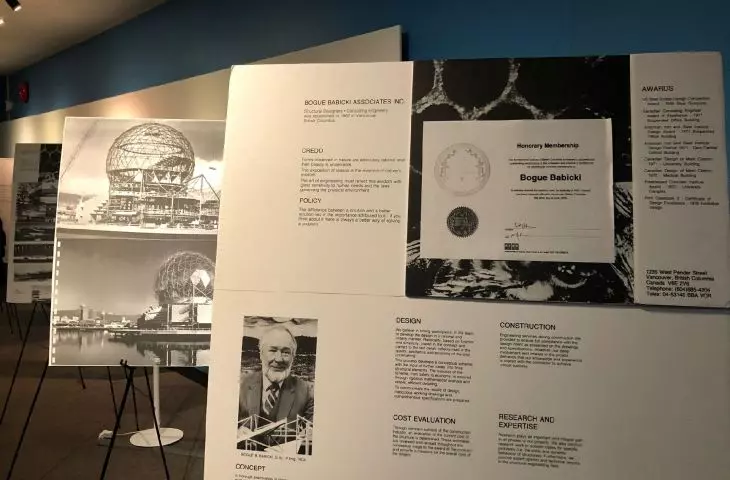
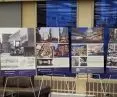
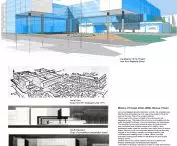
boards presented at the exhibition
© Consulate General of the Republic of Poland in Vancouver
Ola Kloc: The exhibition presents nearly 70 projects, 12 authors and is still growing. What attracts Polish architects to Vancouver? What distinguishes the presented objects?
Aleksandra Kucy: Vancouver is the postcard of Canada, the country's architectural mecca. It is said to be one of the most beautiful cities in the world, and certainly the prettiest in Canada, so architects here have room for improvement. This could also be a magnet for Poles. The architects whose works we present on the exhibition boards are people who either came here from Poland - like Mr. Piotr Pasierbinski, or are - like Mr. Grzegorz Borowski , for example - already the second generation of architects active in this country. So we wanted to show Canadians that Poles are actively involved in building Vancouver.
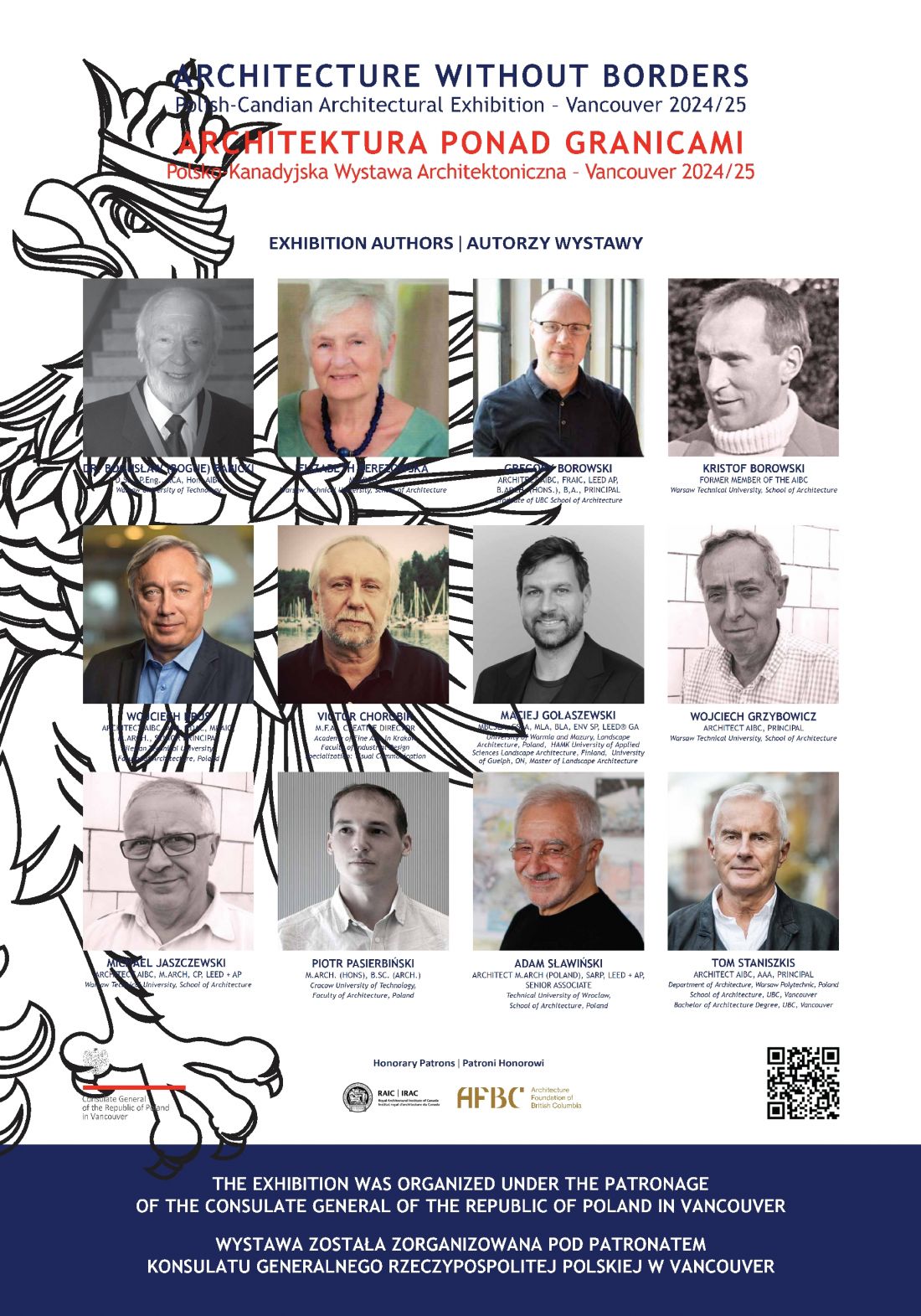
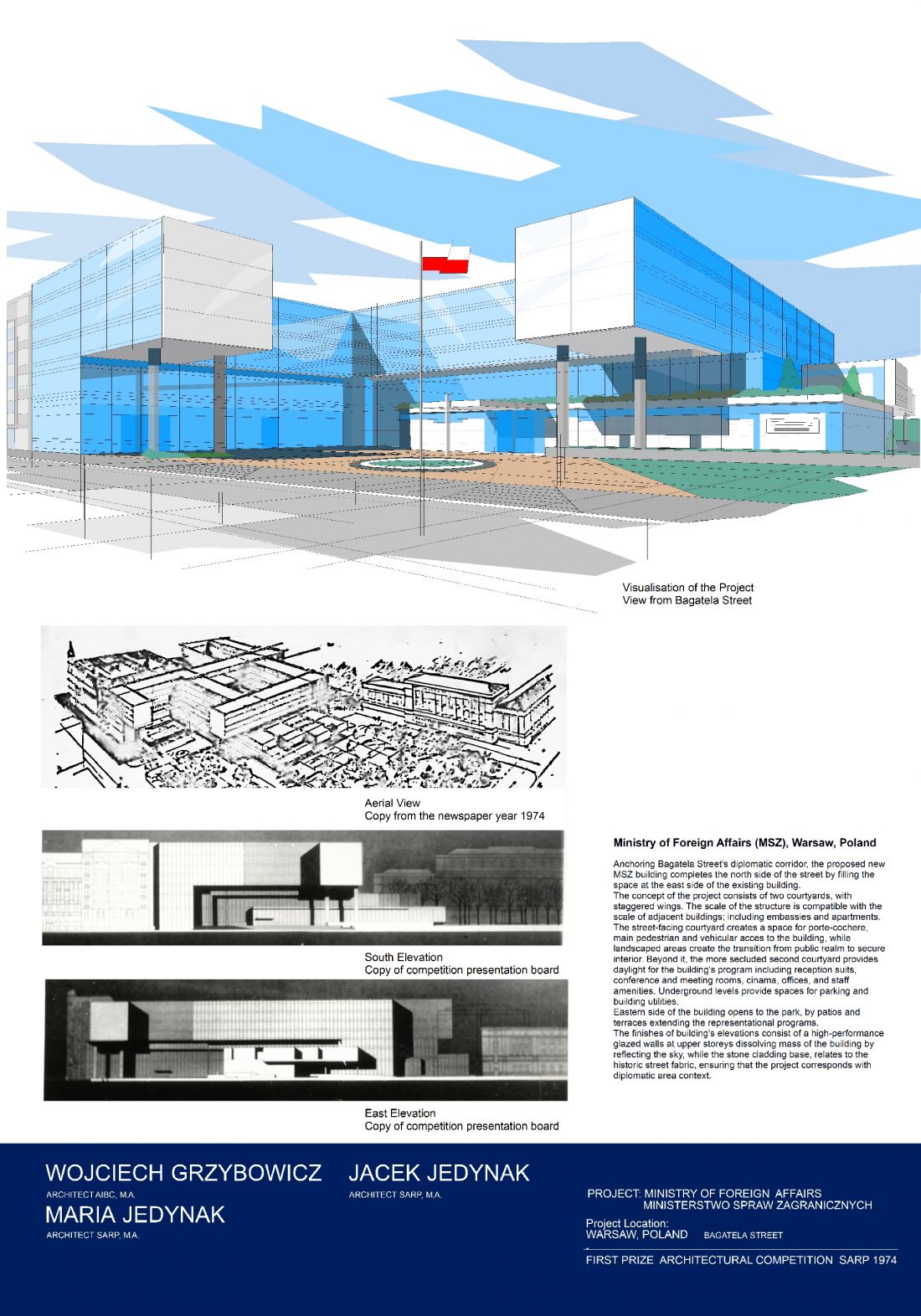
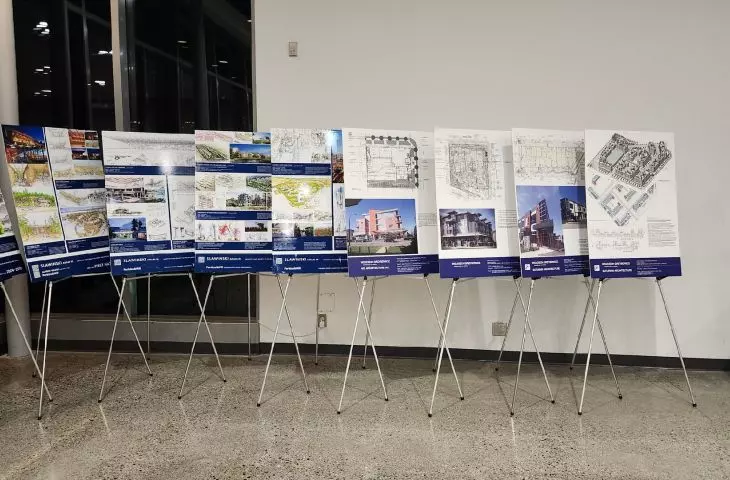
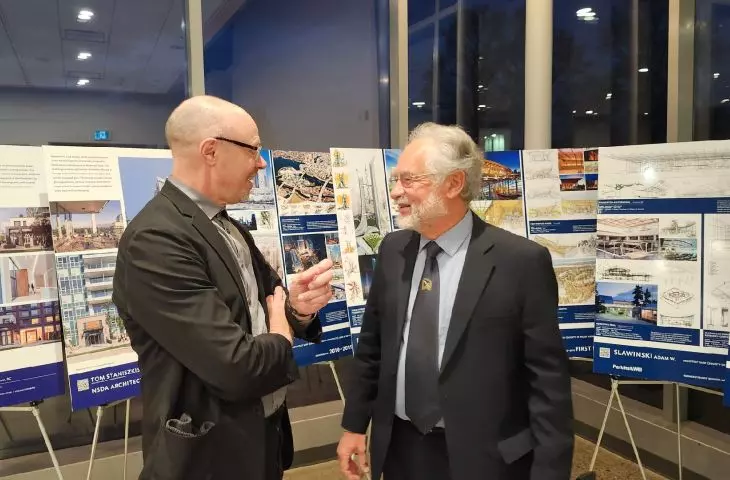
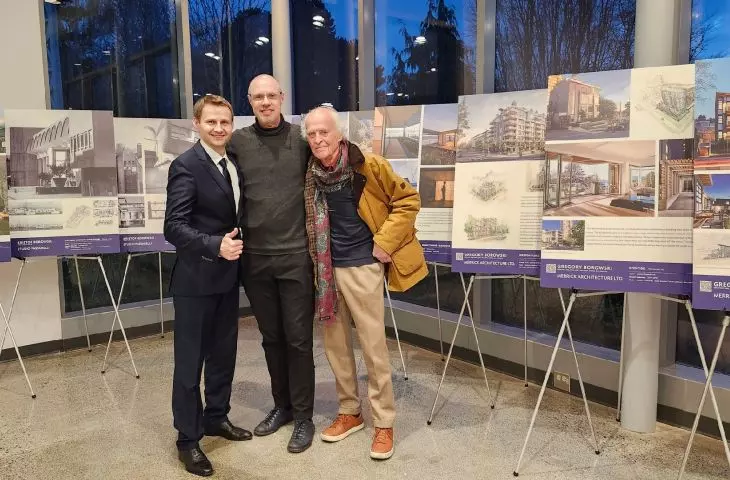
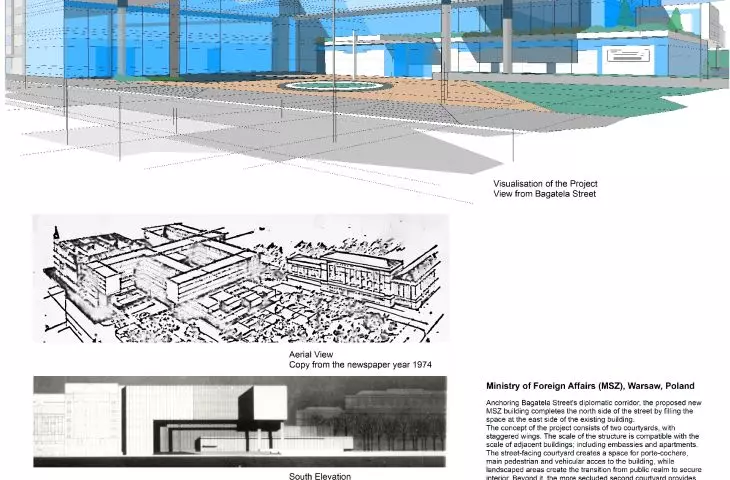
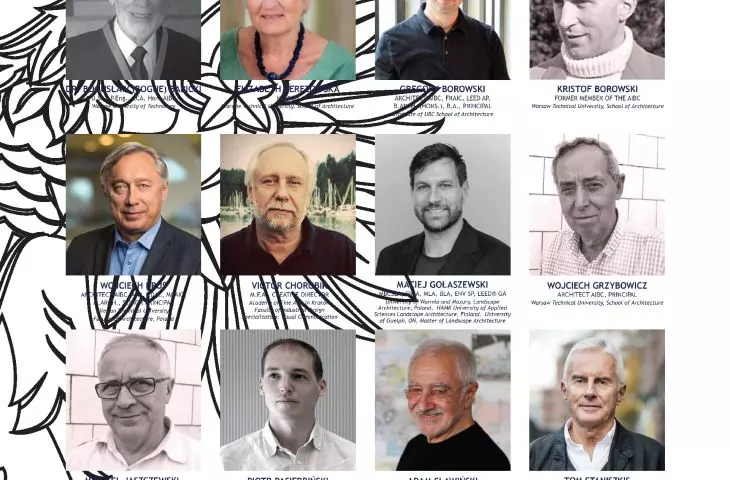
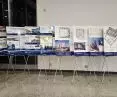
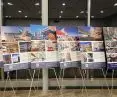
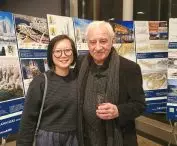
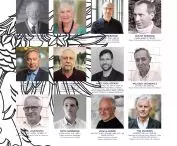
The authors of the exhibition and one of the boards presented at the exhibition
© organizers of the exhibition
Ola Kloc: What does working in Canada look like from the perspective of architects creating here?
Greg Borowski: My father, before coming to Canada, traveled all over North America. After seeing various cities, he decided that Vancouver was the most interesting of them and offered the most opportunities. At the time, the city was not yet very developed, so the Poles who came here had a chance to create something new. These new opportunities allowed them to build their careers here and work on interesting projects.
Piotr Pasierbinski: I came to Vancouver in a completely different reality - the city today is densely built up and has a different status than 30 or 40 years ago. I was attracted by the opportunity to participate in projects of high-rise buildings, skyscrapers, especially in the center of the city, which blend in with the characteristic silhouette of the mountains known from postcards.
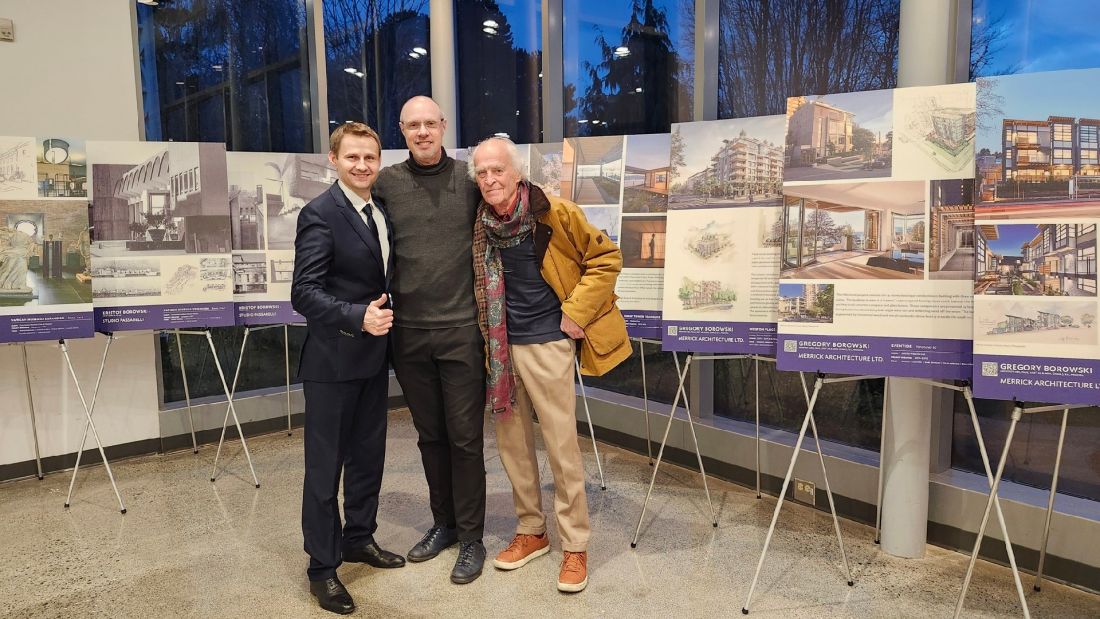
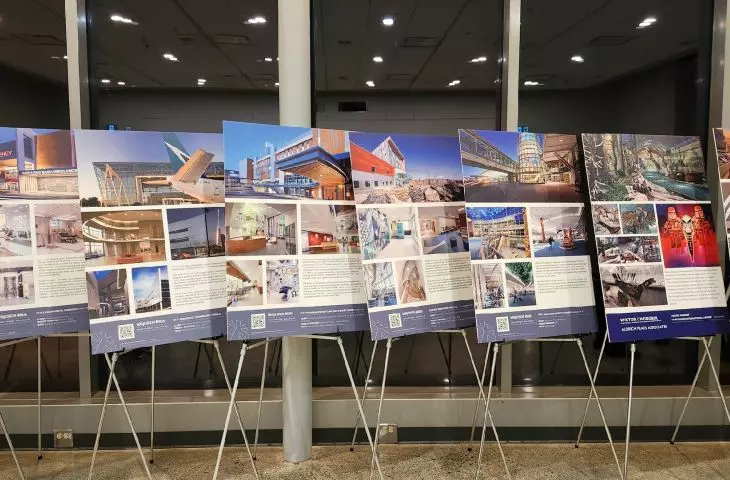
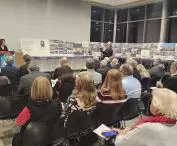
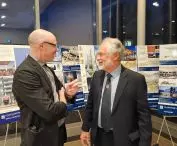
exhibition opening
© Consulate General of the Republic of Poland in Vancouver
Ola Kloc: Piotr, you also have other experiences working abroad - do you see differences in the approach to the profession in Poland and Canada?
Piotr Pasierbinski: The architectural profession is much more regulated in Canada - there are more regulations on the protection of the profession, competition rules and architectural work ethics. The chamber of architects realistically protects its members and builds their prestige and position in the market. It also translates into a different financial situation for architects than in Poland.
Ola Kloc: Is it possible to find some common denominator of the presented projects and realizations?
Greg Borowski: The exhibition shows a lot of different trends, which result from the diversity of approaches of individual artists and include different types of works - from a small cemetery project in Westerplatte by Piotr Pasierbiński to huge skyscrapers. This makes it quite interesting.
This installment of the exhibition also covers a slightly broader time frame than the previous one, and we decided to show also older or distant projects that seem relevant and interesting. For example, the works of my father [Krzysztof Borowski - editor's note] from Rome in the 1970s, or Adam Slawinski, who worked a lot in the Middle East.
Piotr Pasierbinski: There is no uniform "Polish style" or distinctive accent, what is common, however, is the great ability of Polish architects to adapt to the context of a given place, to get rid of formal trappings in favor of conscious design for a specific space - taking into account the context and cultural, political and economic realities. A significant portion of Vancouver's population is made up of immigrants, so architecture must create a new home for all cultures, while shaping a harmonious, cohesive silhouette of the city.
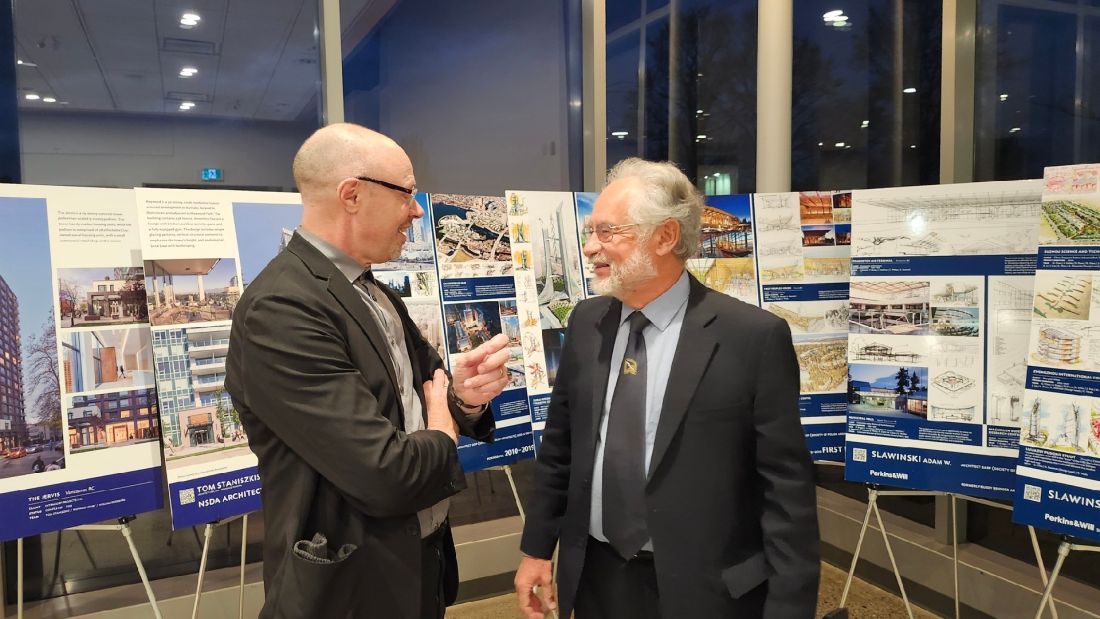
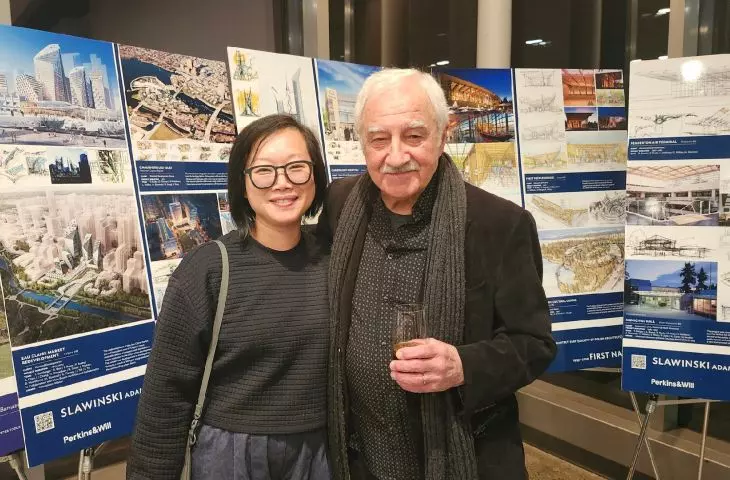
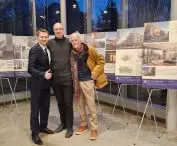
exhibition opening
© Consulate General of the Republic of Poland in Vancouver
Ola Kloc: The main character of the exhibition is Boguslaw (Bogue) Babicki, a designer from Otwock, a graduate of the Warsaw University of Technology, who moved to Vancouver in the 1950s and quickly established his own company. He was doing well in Poland, he was involved in important post-war projects, he even received the Prize of the Minister of Construction for creating, together with Zygmunt Kleyff, a prototype of the first large-block residential building in Poland, he worked with Jerzy Soltan, among others. Nevertheless, he chose Canada. How did his career progress here?
Aleksandra Kucy: Poles are very creative, we are not afraid of challenges! The fact that Mr. Babicki came to Vancouver and opened his company here shows that he wanted to do what he knew and could do best. The fact that he achieved success here and became an honorary member of the local association of architects proves something.
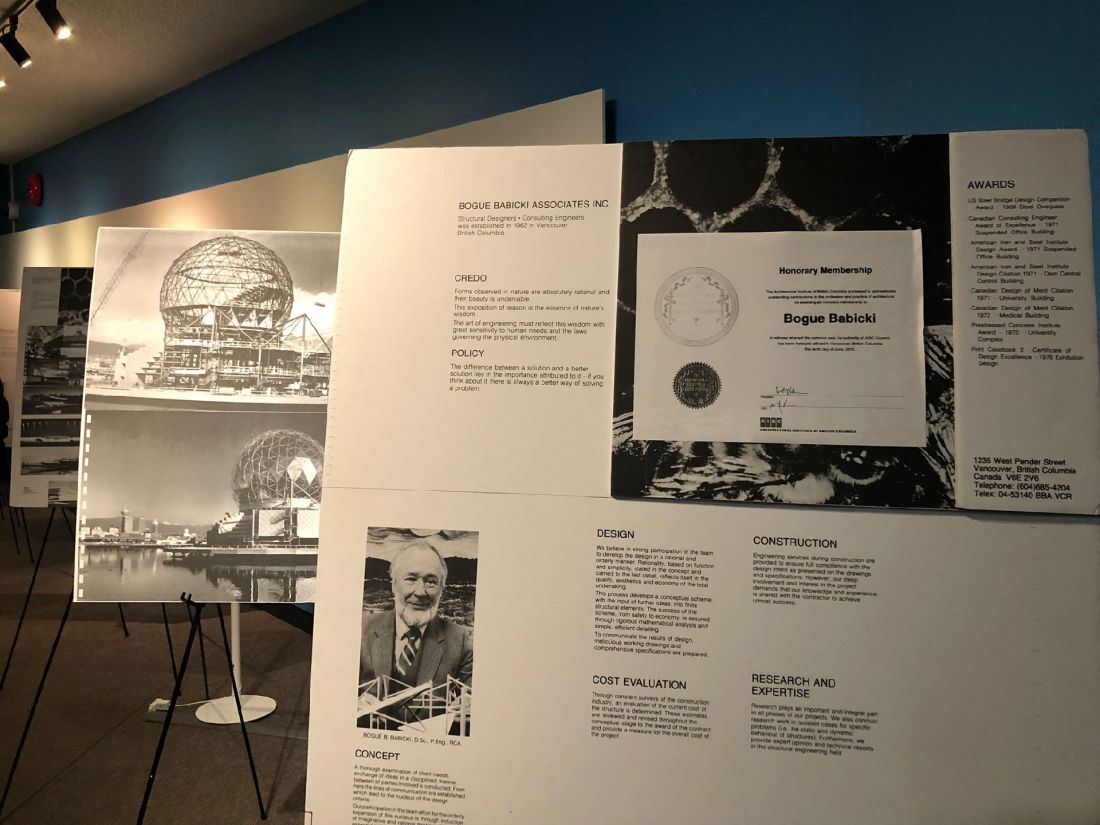
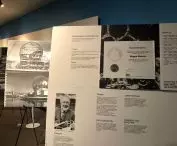
Excerpt from an exhibition presenting Boguslaw Babicki's work
© Consulate General of the Republic of Poland in Vancouver
Greg Borowski: Both Babicki and my father, coming here to start their own business, were very determined. My father left Poland in 1957 on a scholarship and was very motivated to achieve something. He initially worked in the UK, Italy, and then decided to come to Vancouver, feeling that the opportunity was there to work in Canada and find a place for himself here.
I think Babicki had a similar approach, although he came to Canada earlier and had one of the most remarkable careers we are showing in this exhibition. He was an extremely determined person. This Polish ability to overcome adversity helped them both. Babicki left Poland after the war and was determined to make his mark. He famously said: "Life is not about happiness, it's about accomplishment." My father had a similar attitude, so we always understood each other well with Dominika, Babicki's daughter, because we came from families where education and achievement were very important. I think they brought these values with them from Poland. The experience of the difficult times of the war fueled this ambition not to miss an opportunity and achieve something in life.
Ola Kloc: I hope these achievements brought him at least a little happiness!
Greg Borowski: Both Babicki and my father were complex characters. Very interesting, but their strong determination was sometimes difficult. Bogue liked to put others in a difficult situation, to ask questions you couldn't answer - he liked to "torture" people a bit. I think his idea was: "it shouldn't be easy, you need to push harder". You can see this in his projects - they could not have been accomplished without incredible determination. That speaks for itself. He couldn't relax [laughs].
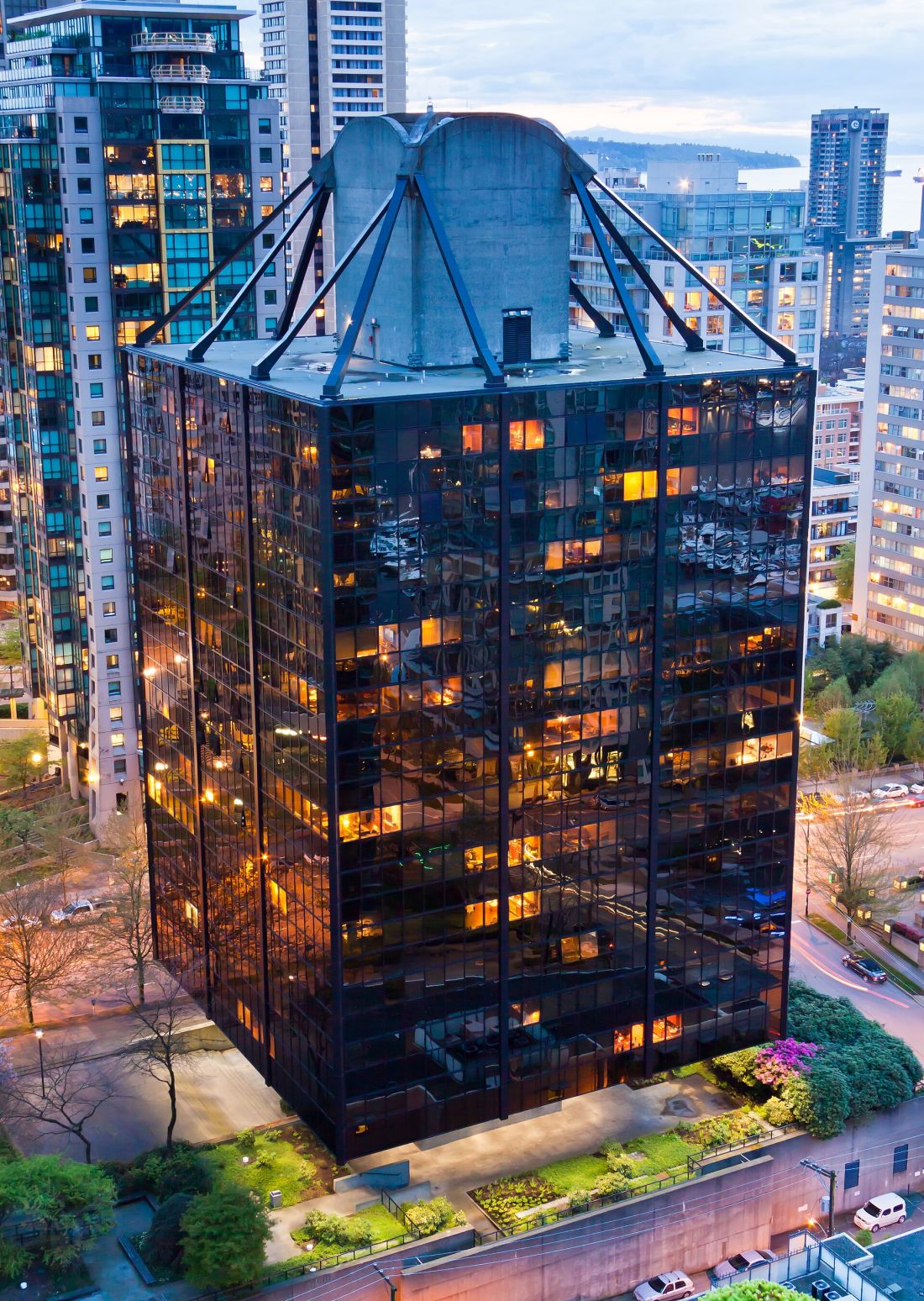
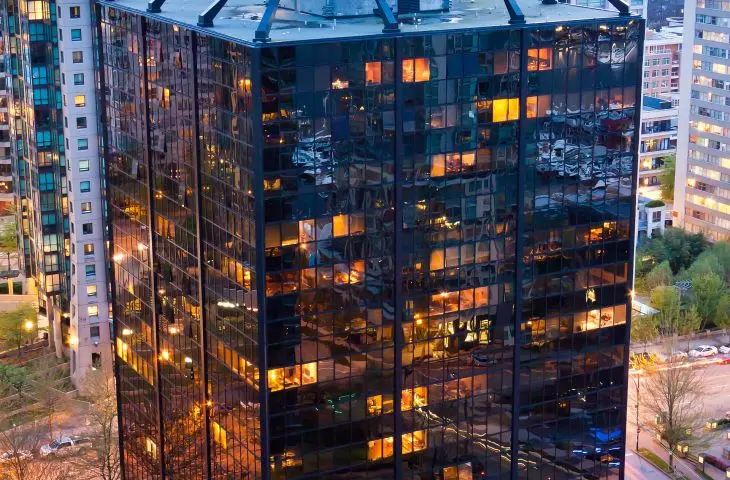
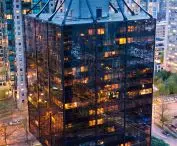
The Qube, a three-rigged ship in Vancouver, 1969, projet: Rhone and Iredale, constr.: Boguslaw Babicki
Photo: Abirkill | Wikimedia Commons © CC BY 3.0
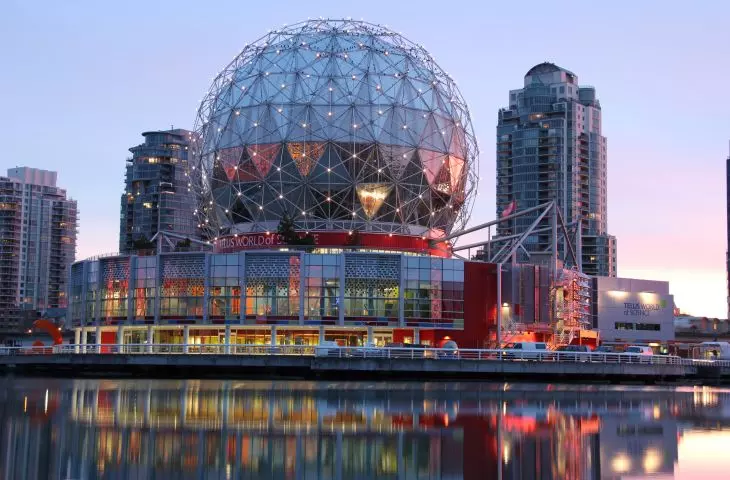
Ola Kloc: This willingness to keep pushing the boundaries can be seen in his realizations, such as the Qube, a turning point in his career, a building tailored to the seismic challenges in that part of the world, or the circular center at the 1986 Expo, which today is an icon in the city's skyline. How are his realizations perceived by locals or other designers?
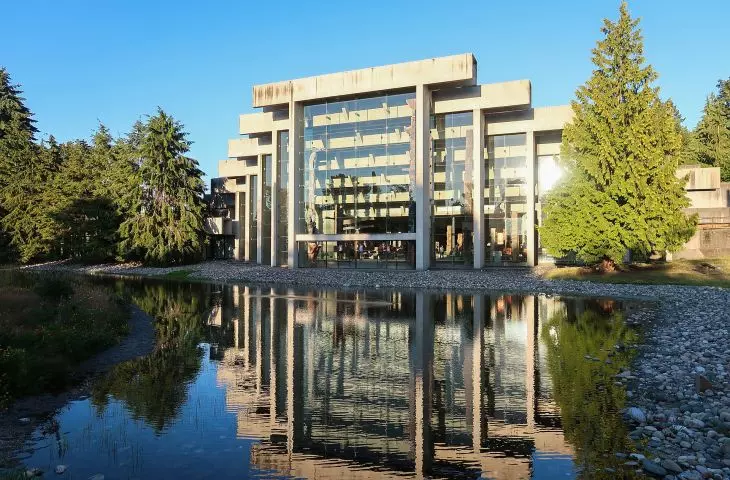
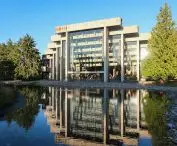
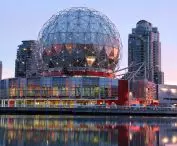
Aleksandra Kucy: Babicki's works have become part of the fabric of this city: the Qube, is an architectural icon. The Science World, a sphere that can be seen from the bay, is always impressive, illuminated it looks like a spaceship. The Anthropological Museum in the University of British Columbia complex is a place that locals brag about, it is one of the most recognizable museums in Canada, or at least in Vancouver.
I don't think the average Vancouverite or Canadian knows that the construction of these buildings is the work of a Pole, but I think they can't imagine Vancouver without these icons.
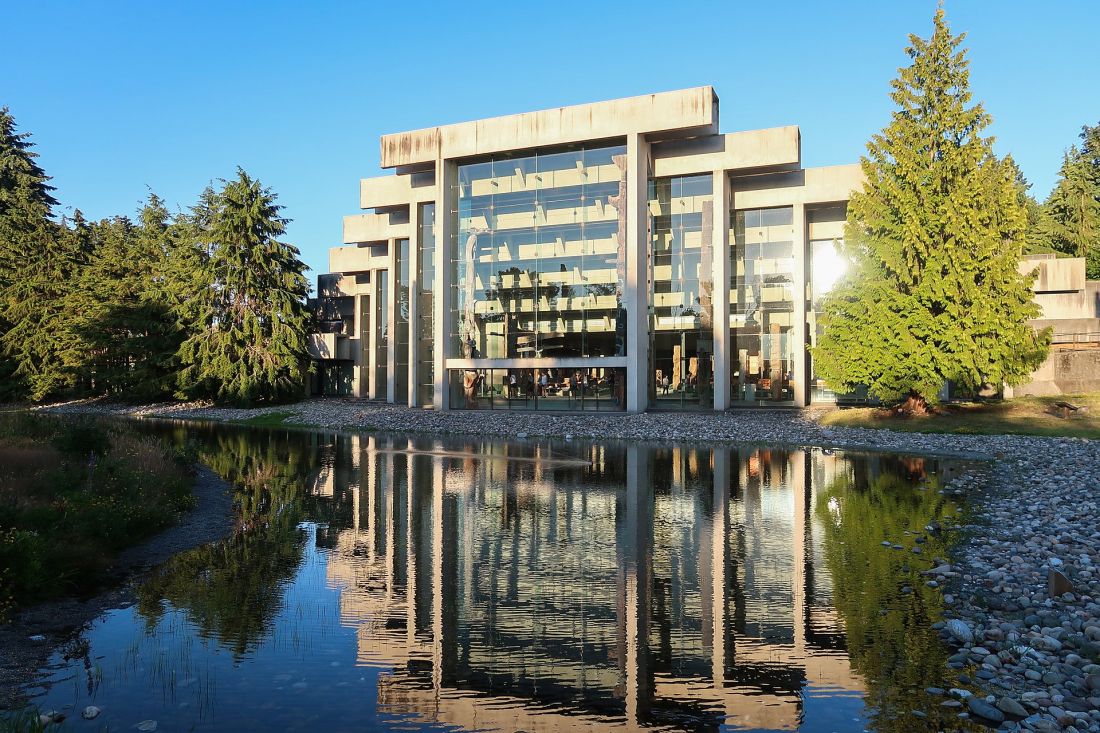
Museum of Anthropology in Vancouver, 1976, design: Arthur Erickson, construction: Boguslaw Babicki
Photo: Wpcpey | Wikimedia Commons © CC BY 4.0
Piotr Pasierbinski: Walking around the streets of Vancouver, I would pick out realizations that particularly caught my attention, to which I often returned and which I studied. Over time, it turned out that Boguslaw Babicki was behind the construction of all these buildings. In his realizations, construction is inseparable from aesthetics - there is no architecture without construction and no construction without architecture.
Greg Borowski: Expo '86 in Vancouver, which you mentioned, was a very important event - at that time a secondary, provincial city turned into a world city, entered a new era. One of the symbols of this moment were the pavilions designed by Boguslaw Babicki in collaboration with other architects. You can see continuity, coherence in his work. The architects of the time were very interested in buildings where the structure was the architecture, which is why his involvement in the creative process was so important.
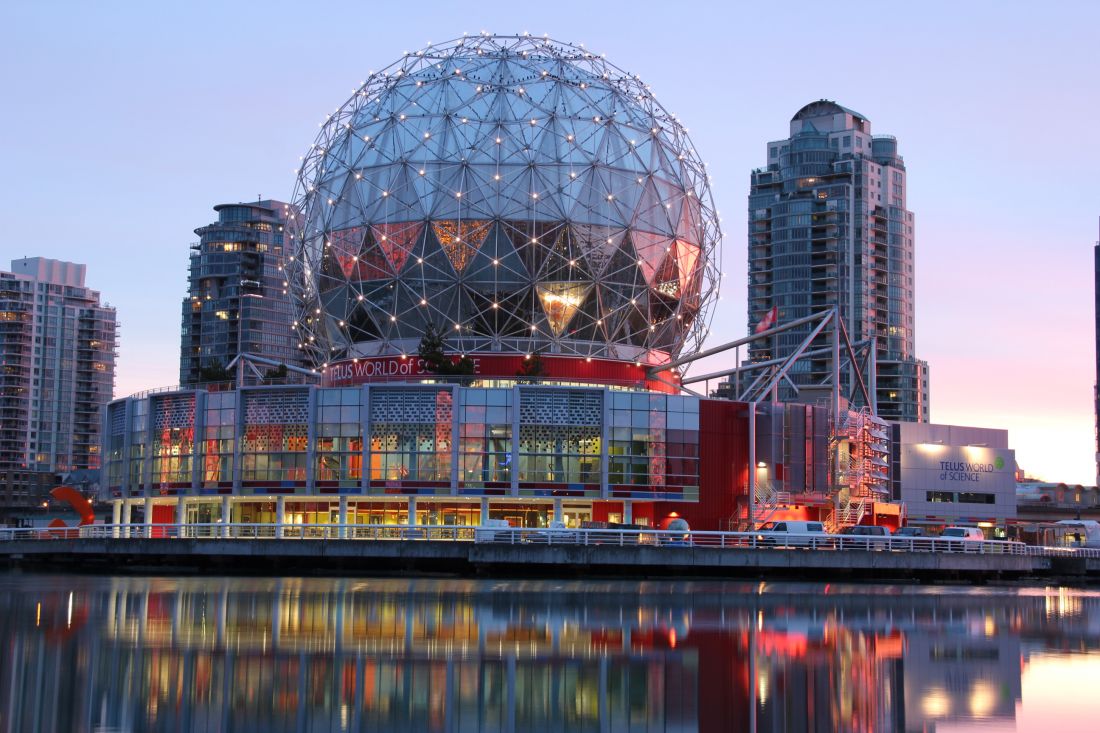
Science World in Vancouver, 1986, proj.: Bruno Freschi, constr.: Boguslaw Babicki
photo: Differense | Wikimedia Commons © CC BY-SA 3.0
If one were to compile a list of the city's most interesting buildings, one would be able to find on it buildings in the design of which Babicki was deeply involved, such as the aforementioned Anthropological Museum and the District Court complex in Robson Square. These buildings are well known to the city's residents, the architects who designed them are known, but the engineers and designers are not. The exhibition is therefore an opportunity to understand how important their involvement was. Babicki was respected for the integrity of the buildings he created, in his projects the combination of structure and architecture was not merely decorative, it showed a high level of creativity. There are few buildings in Vancouver built since then that can compare with Babicki's buildings from the 1970s.
Ola Kloc: The project has been developing since 2015, will there be any follow-up?
Aleksandra Kucy: In the exhibition we try to show the works of Poles and their role in what is happening in the urban fabric. We want the exhibition to grow, expand and live, so we also moved it to the Internet. We would like to create a map where you can see the buildings that Poles have designed.
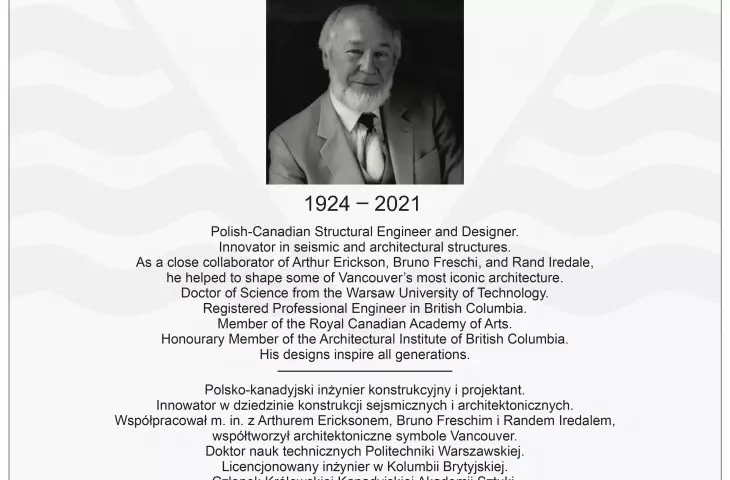
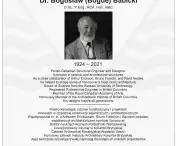
We also plan to hang plaques commemorating this figure, with descriptions in Polish and English, on buildings that are particularly associated with the figure of Babicki, so that everyone can learn who Boguslaw Babicki was, because he was a person of extraordinary importance to the image of the city.
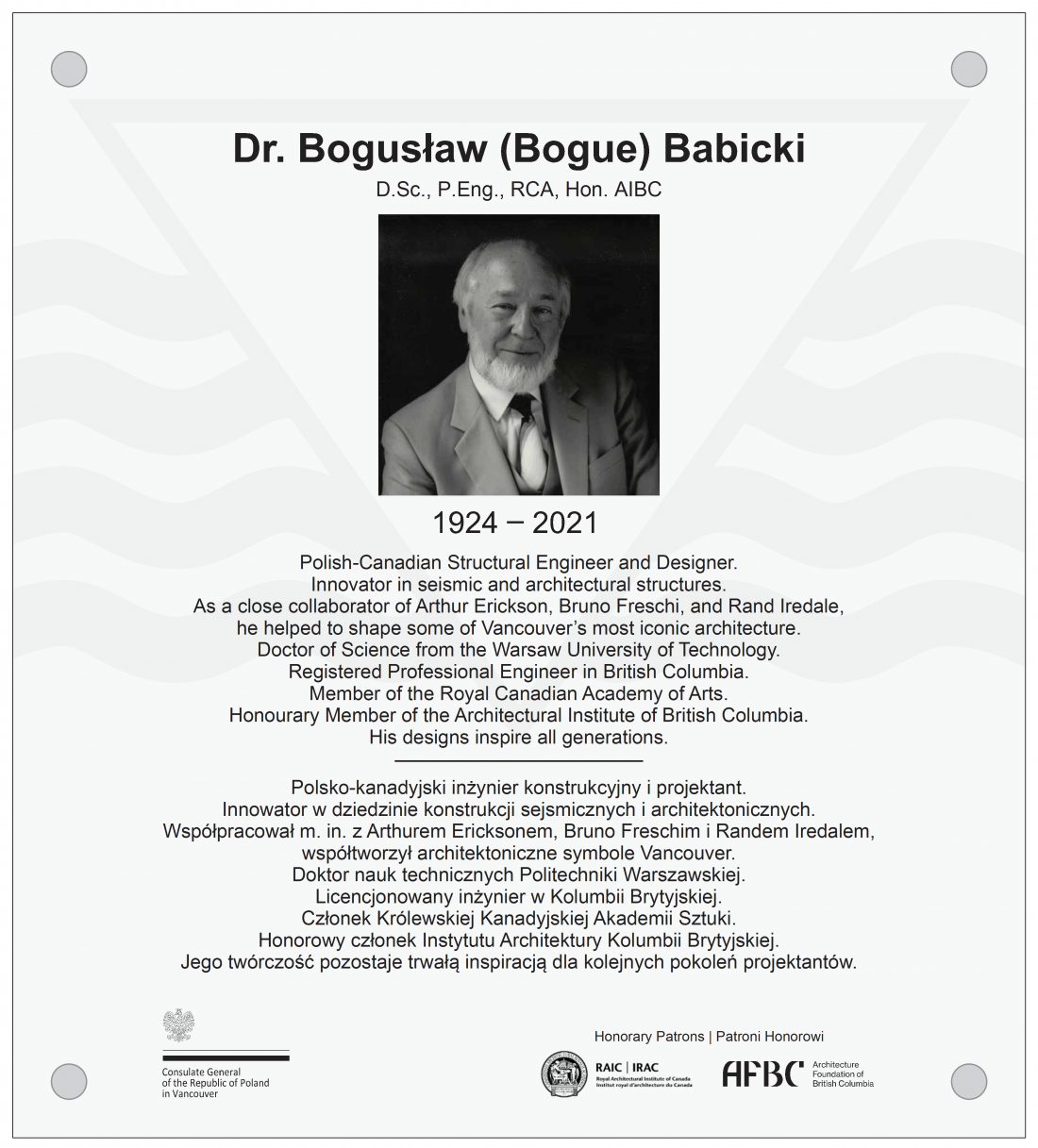
Draft plaque commemorating Boguslaw Babicki
© Consulate General of the Republic of Poland in Vancouver
Ola Kloc: Thank you for the interview.
The projects presented at the exhibition can be seen on the Architecture Without Borders website