




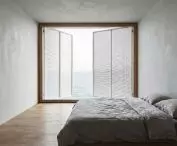

Work submitted for the competition
"Best Diploma Architecture".
Contemporary architecture is at a turning point that is forcing a redefinition of the role of the designer. In the face of the climate crisis, the overriding challenge is no longer to erect more buildings, but to be able to give new functions to structures that already exist. This approach is the only real answer to the fact that the construction sector is responsible for nearly 40 percent of global carbondioxide emissions , and that cement production alone puts more strain on the planet than all air and sea transportation combined.
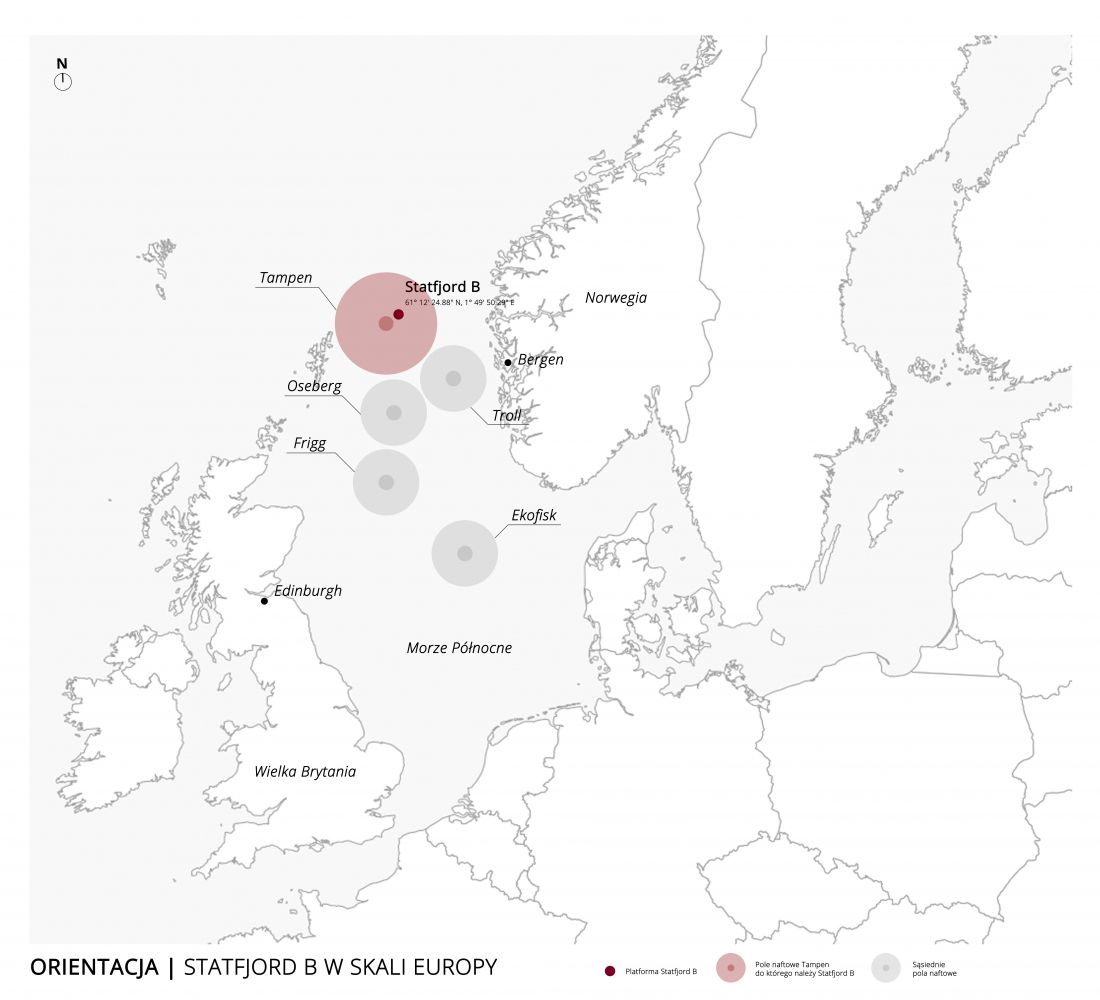
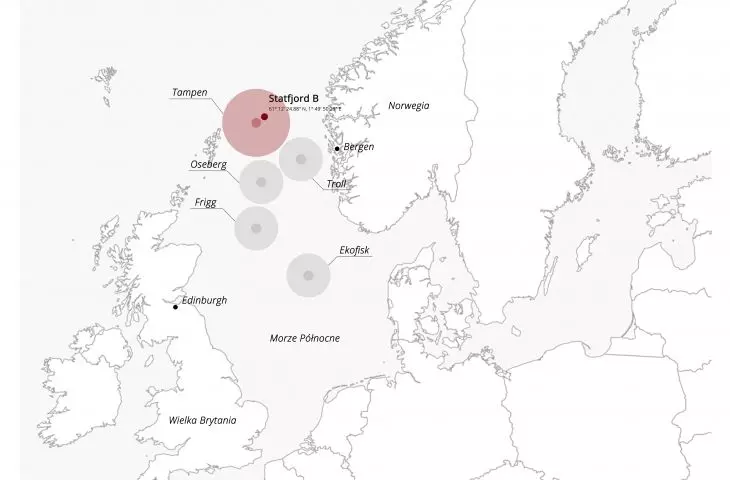
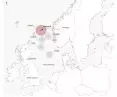
location
© Wiktoria Gocałek
The Living Rig project is a manifesto for an architecture that, instead of exploiting resources, manages them according to a circular economy.
Statfjord B as a foundation for regeneration
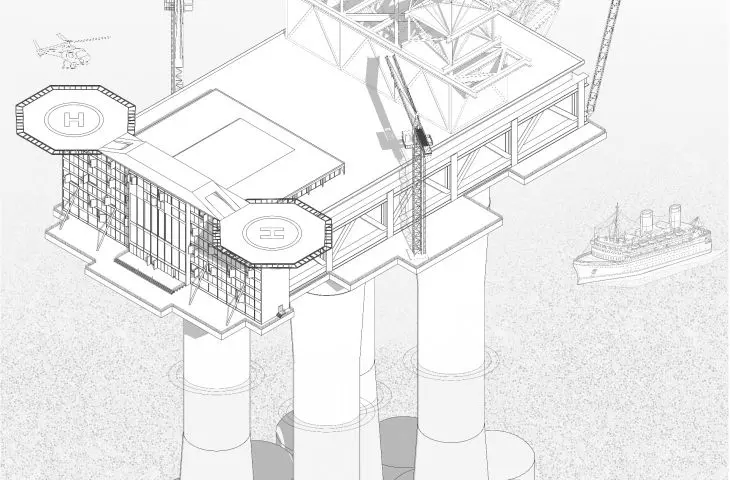
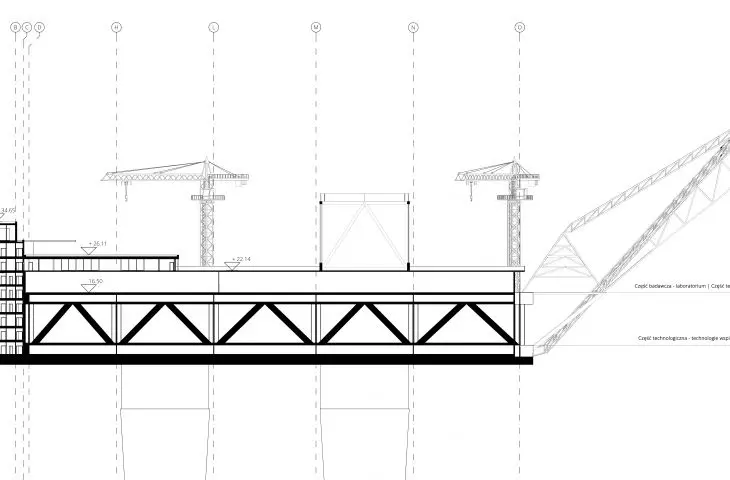
The project focuses on offshore oil rigs - monumental structures previously associated only with environmental devastation, but now a unique engineering resource. The Norwegian Statfjord B platform in the North Sea was chosen as the model for adaptation. I treat its massive structure of concrete and steel as a store ofembodied energy. Reusing this skeleton avoids the emissions that accompany the construction of a new structure. The valorization strategy involves preserving the reinforced concrete underwater section and the steel support frame, changing the facility's status from a mining machine to a "living" foundation for a new function.
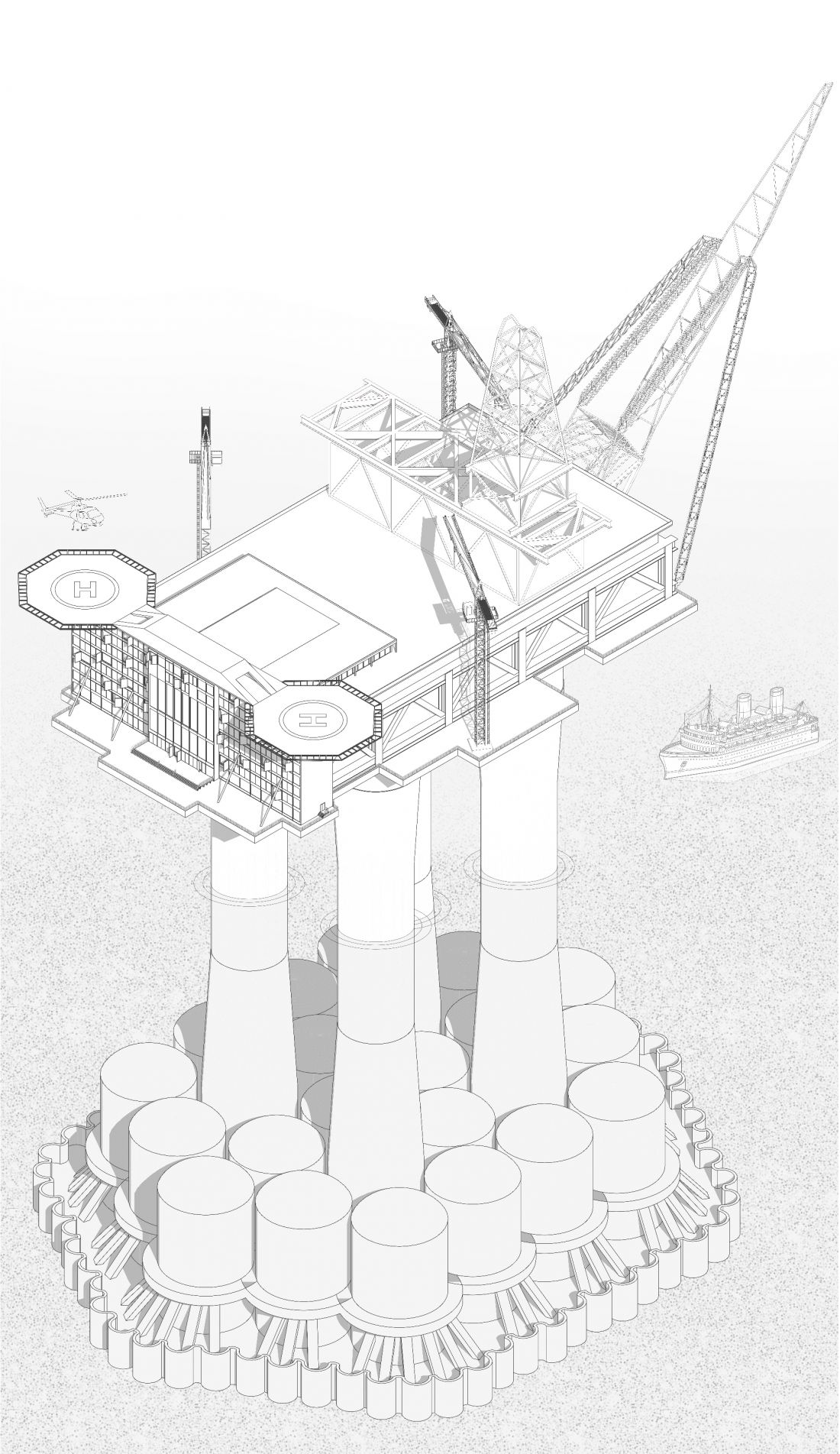
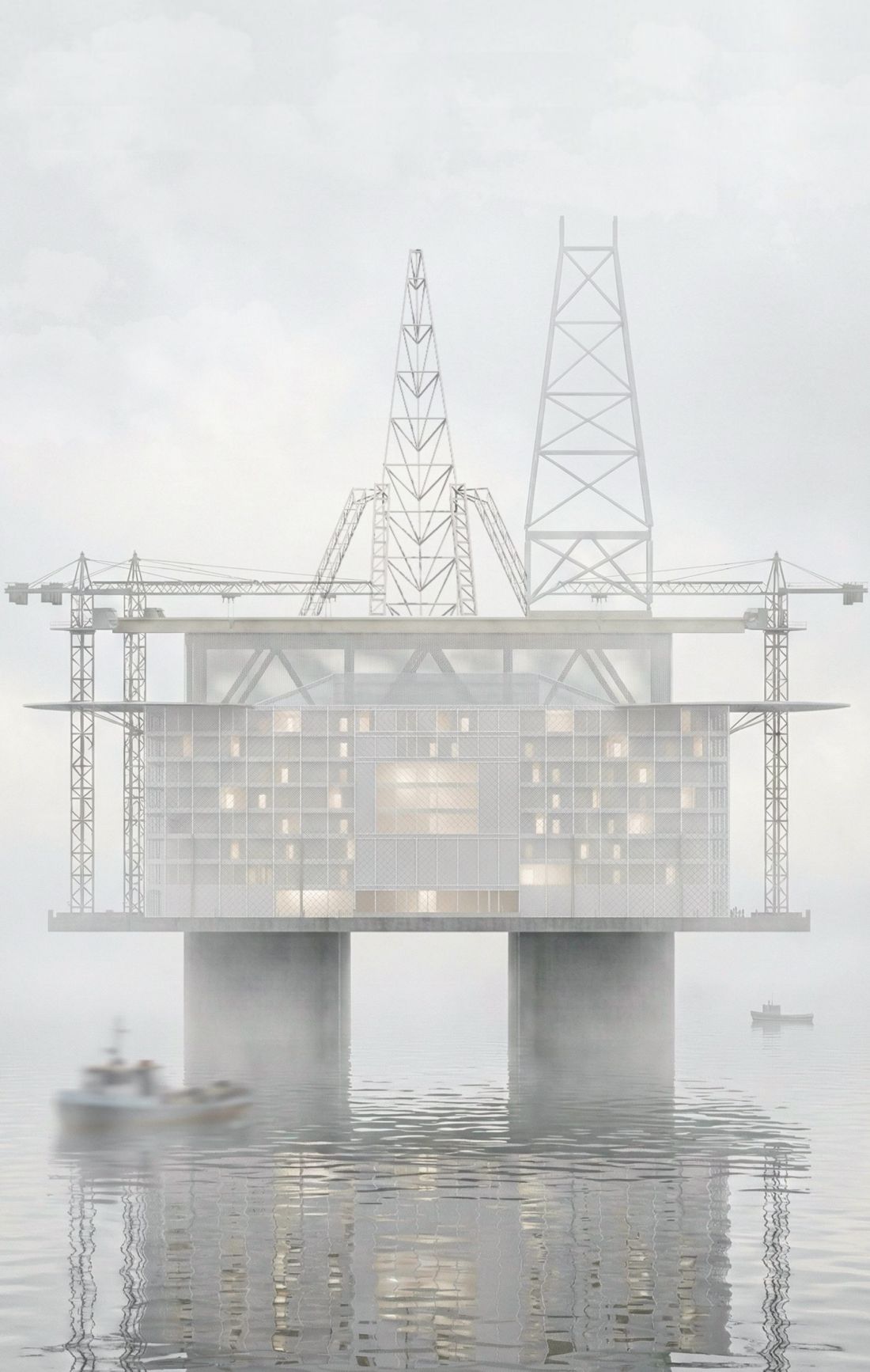
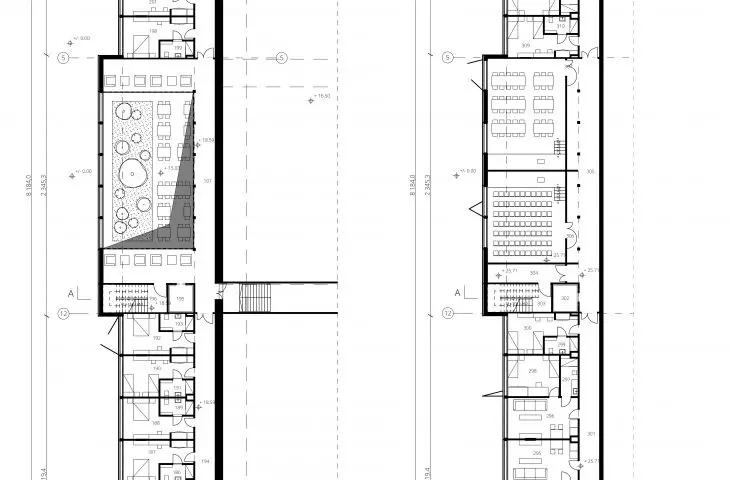
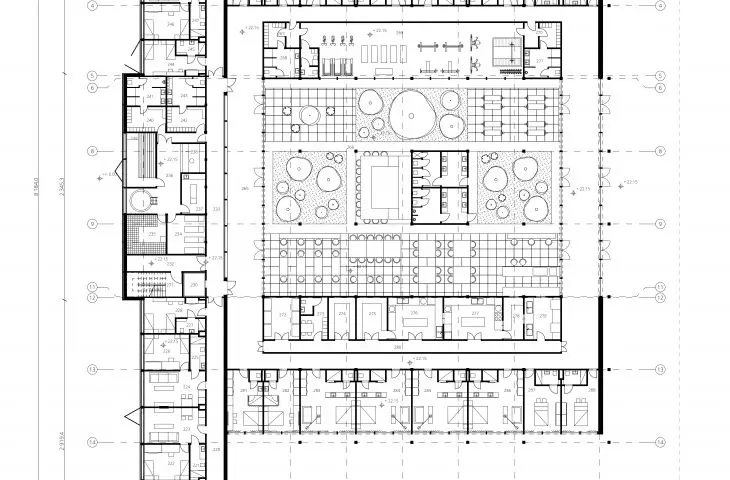
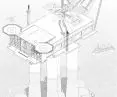
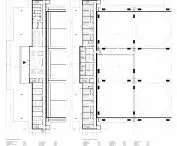
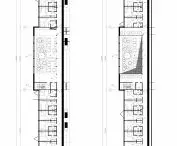
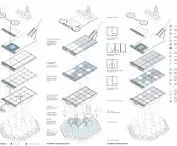
axonometry and visualization of the residential module
© Wiktoria Gocałek
The new life of the platform: science, tourism and ocean experience
The project transforms the platform into a multifunctional research and tourism hub, where technology coexists with a unique experience of life on the open sea. The facility is designed for interdisciplinary scientific teams and "research tourists" seeking authentic contact with nature and science.
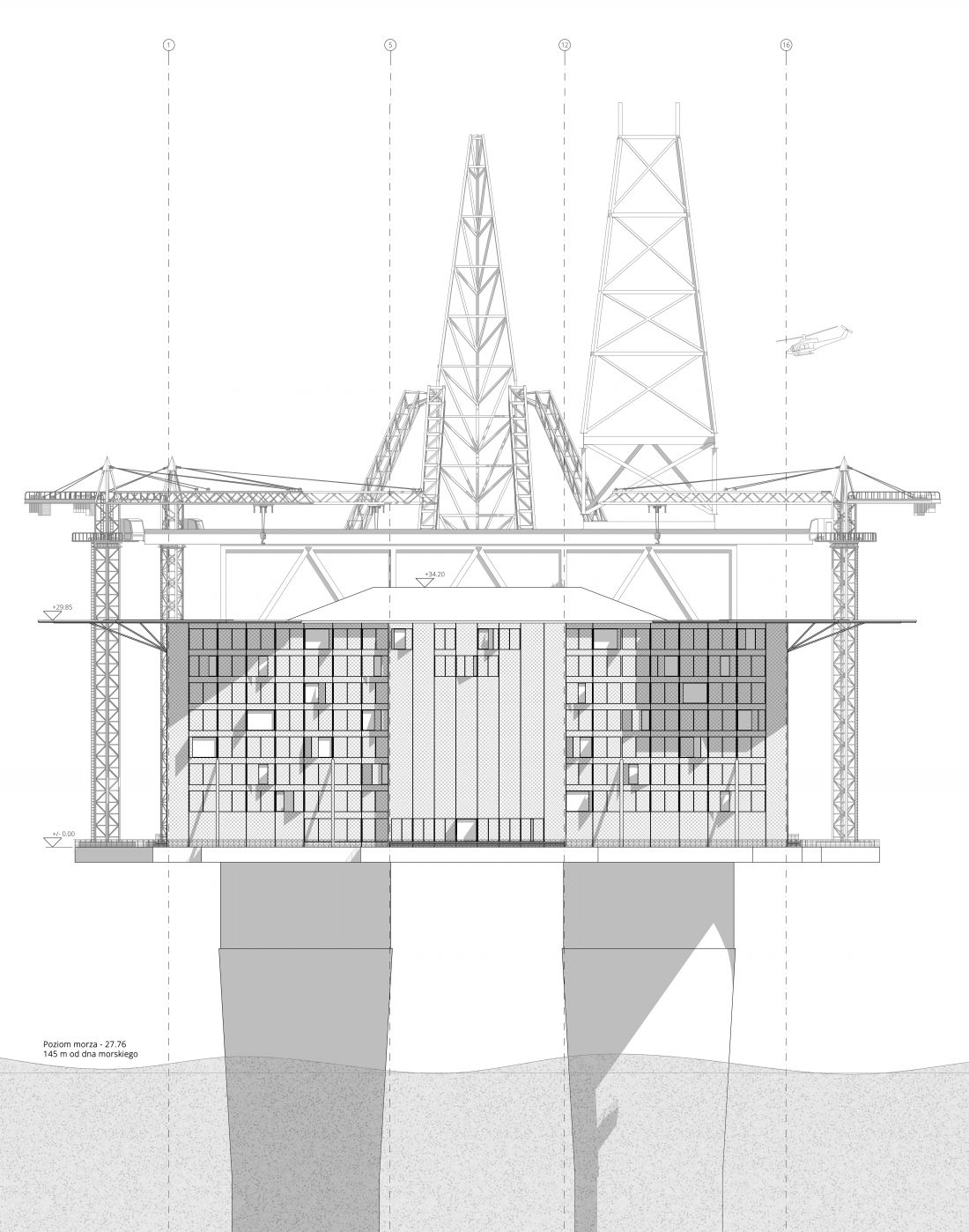
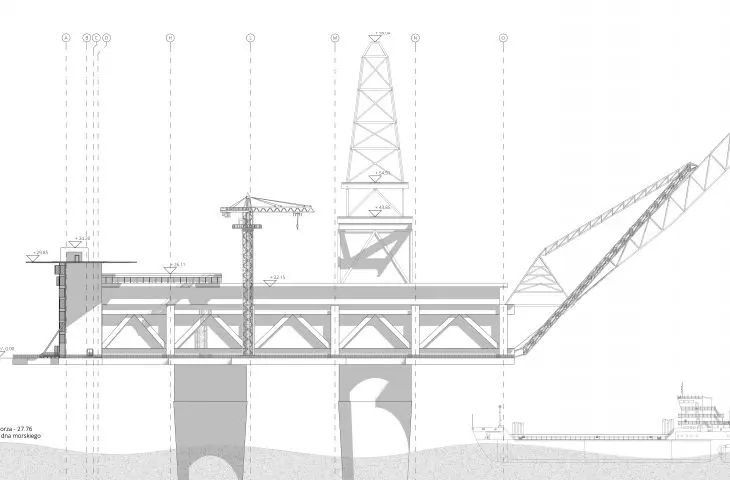
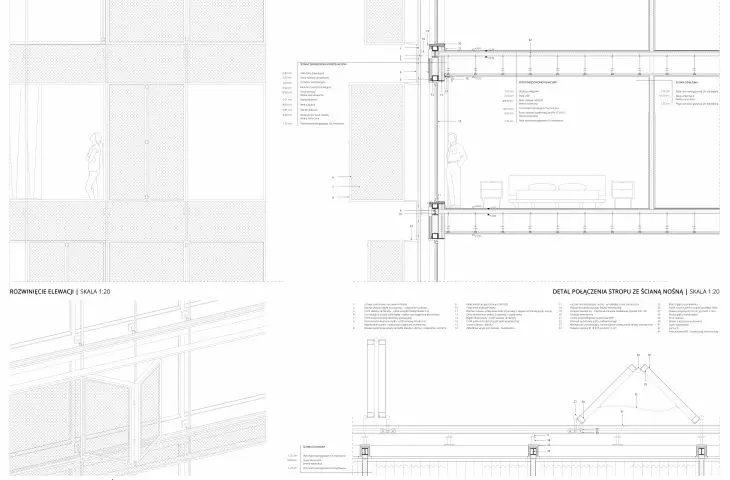
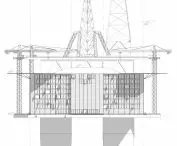
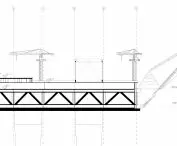
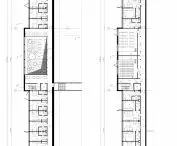
elevation of the residential module
© Wiktoria Gocałek
At the heart of the platform are state-of-the-art laboratories, closely integrated with the dive center. This allows guests to participate in citizen science projects - from monitoring underwater "algae forests" to directly observing the artificial reef that flourishes on the platform's foundations. The program is complemented by an innovative spa zone using the resources of the North Sea. It offers thalassotherapy treatments: salt baths and wraps made from locally cultured algae, creating a relaxation space infused with ocean minerals. It's architecture that teaches empathy with the environment while offering comfort in complete isolation.
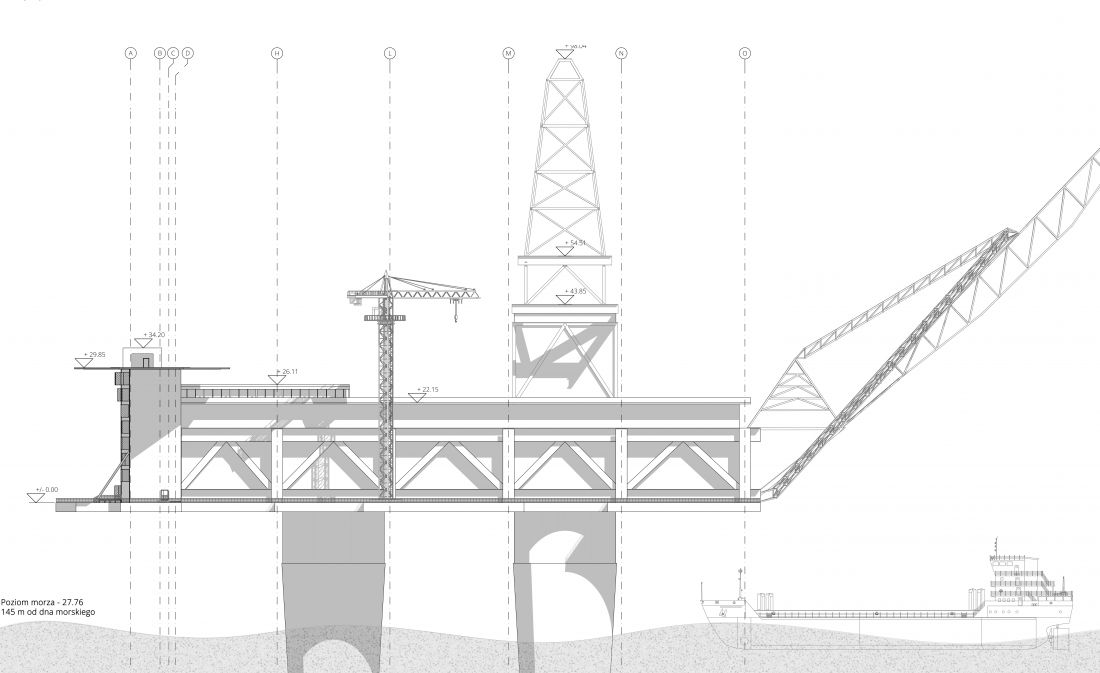
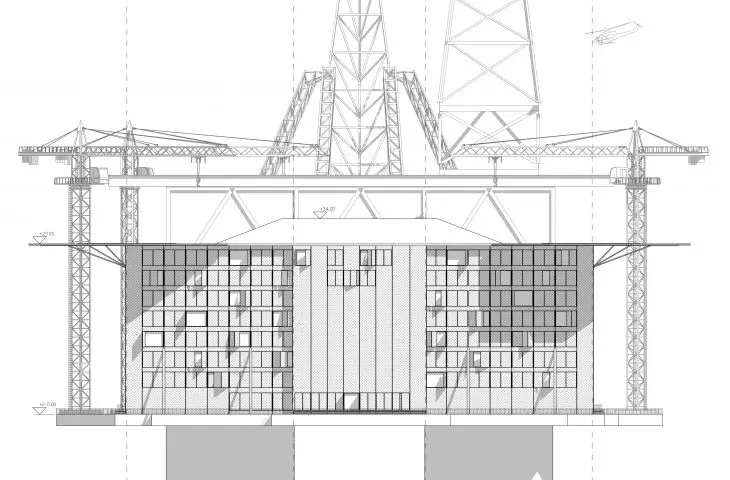
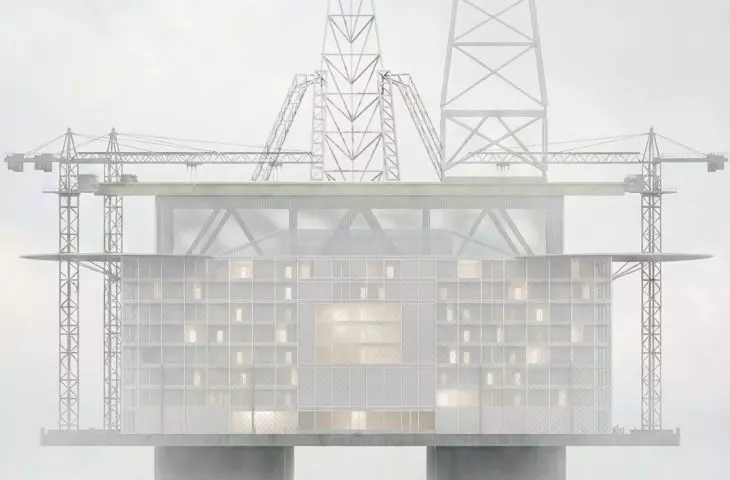
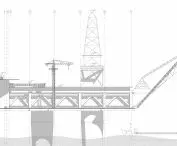
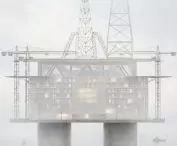
south elevation
© Wiktoria Gocałek
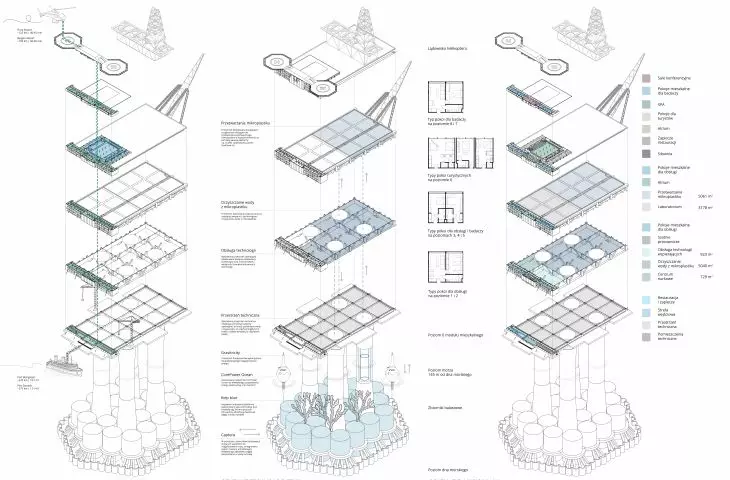
restorative technologies
Parallel to its social functions, The Living Rig acts as an active restorative system. The architecture integrates technologies for carbon sequestration (CO₂ capture from seawater), ecosystem revitalization through Kelp Blue algae farming and systemic microplastic filtration. Energy autonomy is based on wave energy (CorPower Ocean) and Gravitricity's gravitational storage using the platform's shafts. Calculations prove that this configuration provides a self-sufficient living zone for twenty-two days without external power.
human scale in an extreme landscape
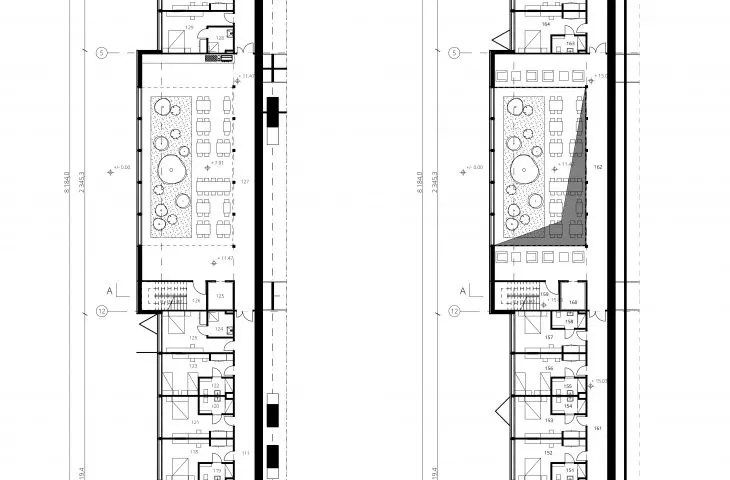
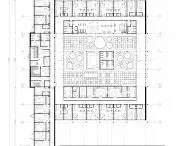
To offset the harshness of the industrial landscape, the interiors were organized around green atriums that act as psychological climate buffers, offering contact with vegetation inside the steel structure.
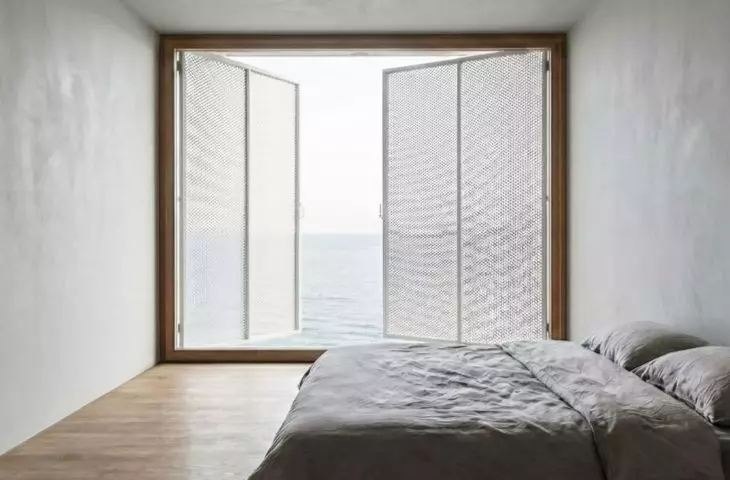
A key element is the two-layer kinetic facade. Exterior openwork panels protect the structure from storms, and thanks to the residents' ability to adjust them, the bedrooms and laboratories are filled with a dynamic play of light, humanizing the technical nature of the building.
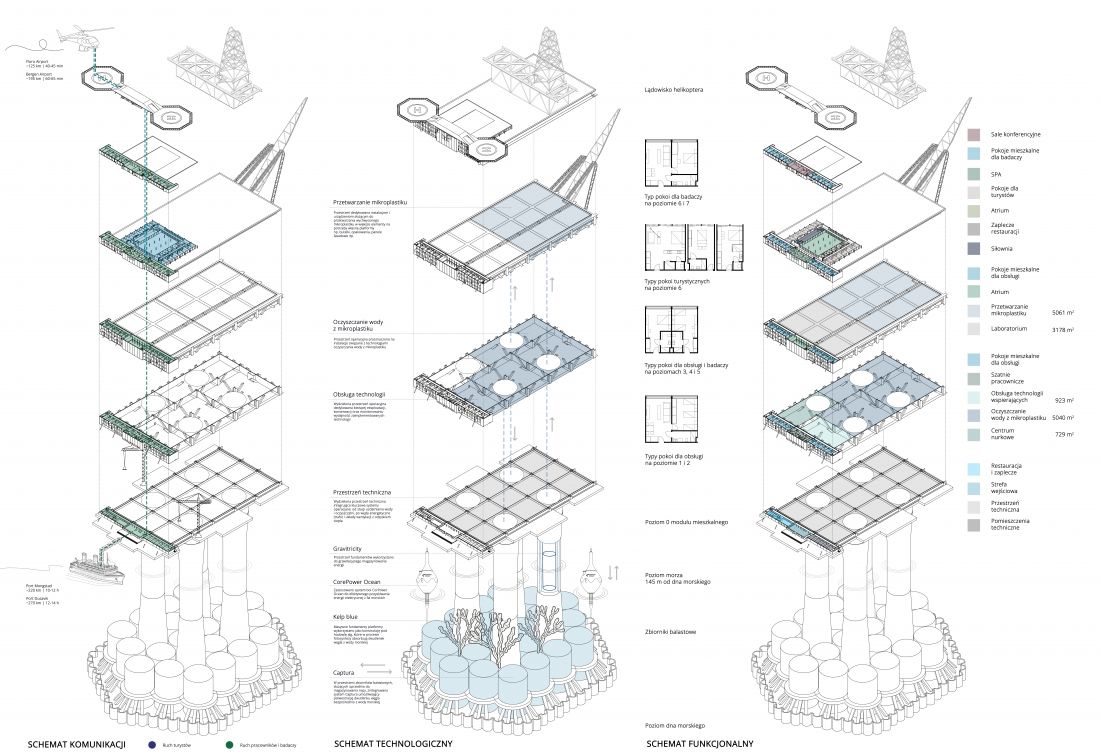
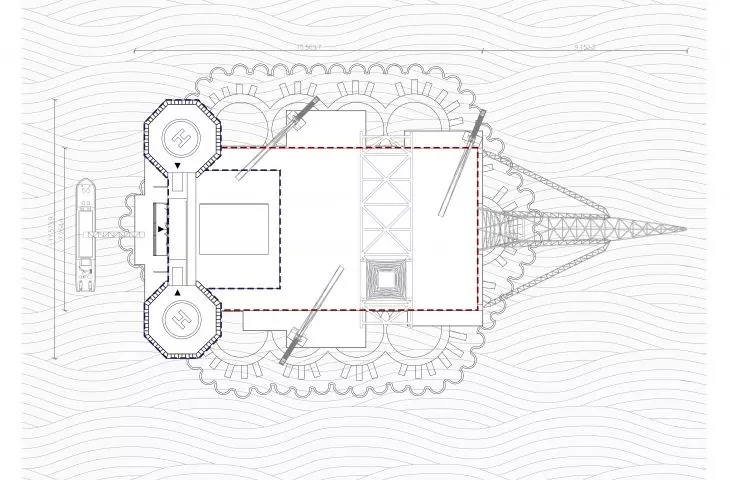
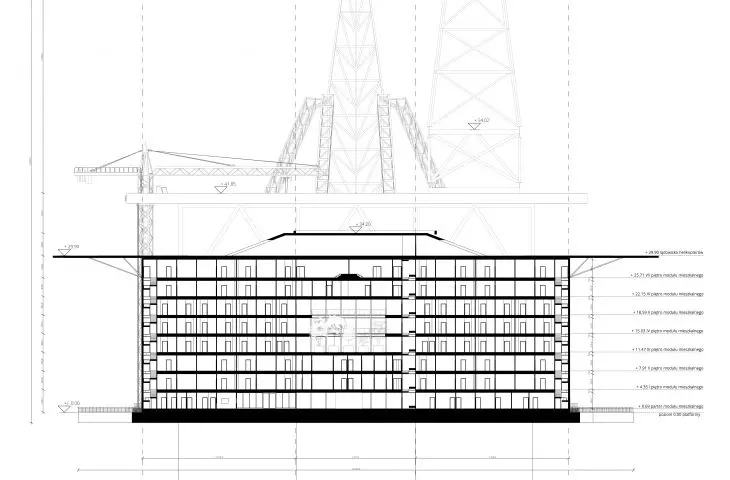
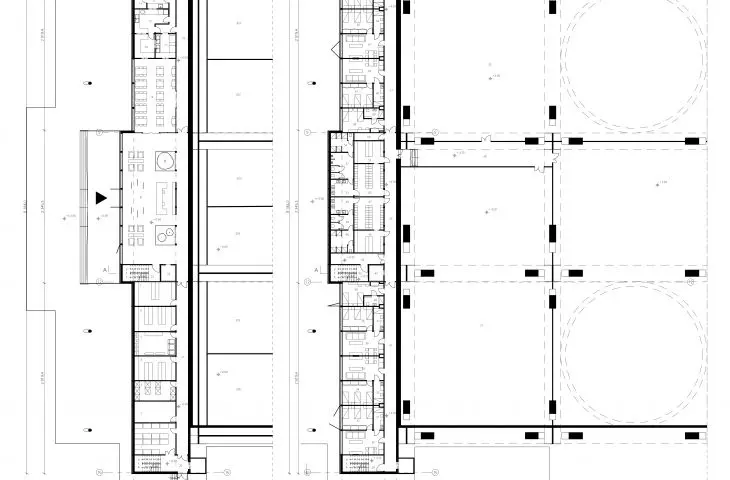
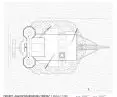
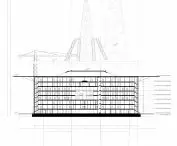
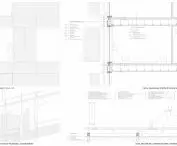
schematics
© Wiktoria Gocałek
summary
The life cycle analysis (LCA) conducted confirms that the Statfjord B adaptation is the most pro-environmental solution, reducing the carbon footprint of the investment. The goal of the project was to prove that offshore platforms are a ready-made, powerful resource. Instead of dismantling them and generating more emissions, it is better to realize their potential by adapting them to functions that meet today's needs.
Victoria GOCAŁEK
Illustrations: © Author