




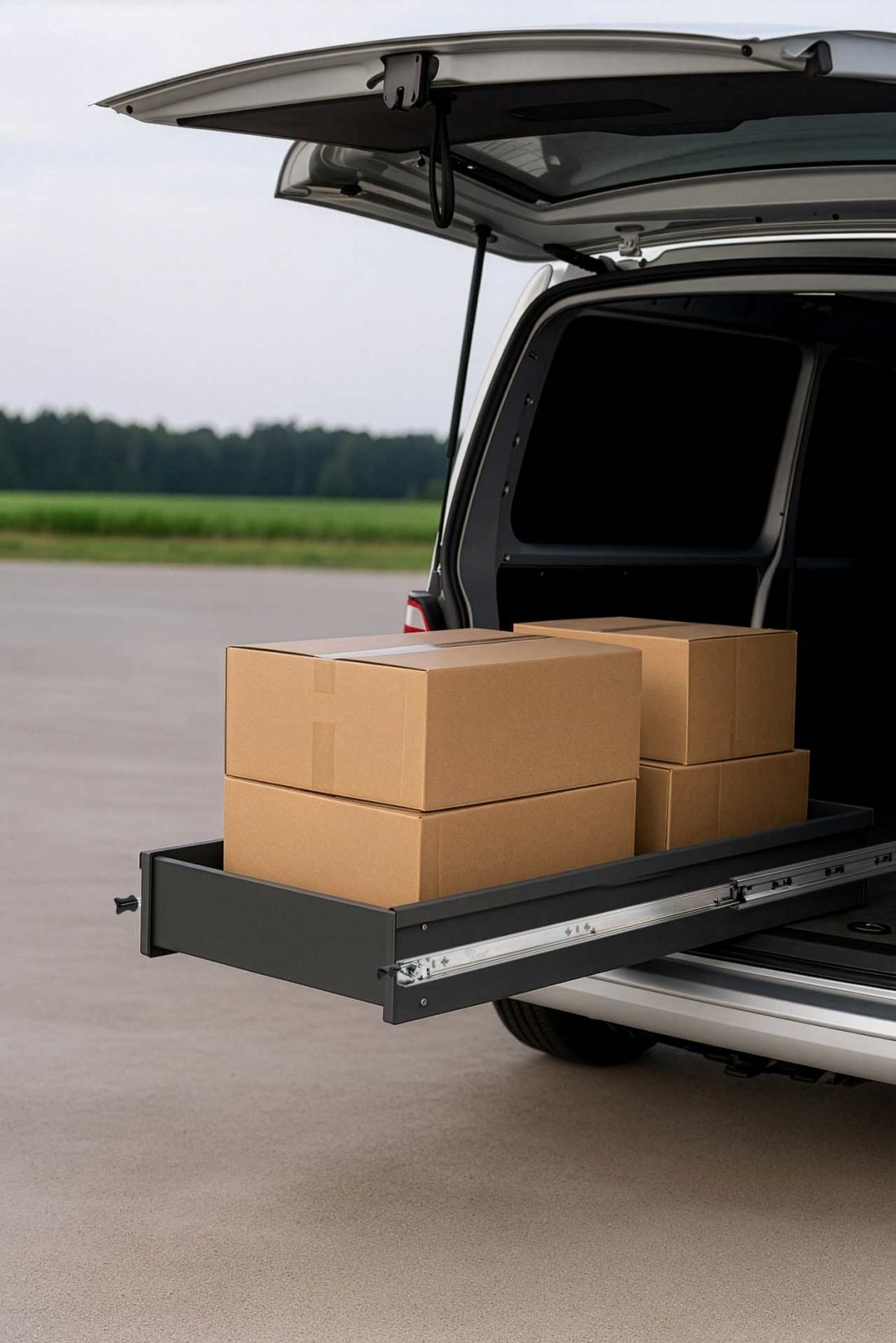
Slide rails are typically associated with drawers. Drawers, in turn, are associated with furniture such as kitchen and office furniture. And rightly so. But not entirely. Because the applications for slides are much broader—especially those with a high load capacity. They work great in RVs, specialized workstations, and transport enclosures. See how they can be used.
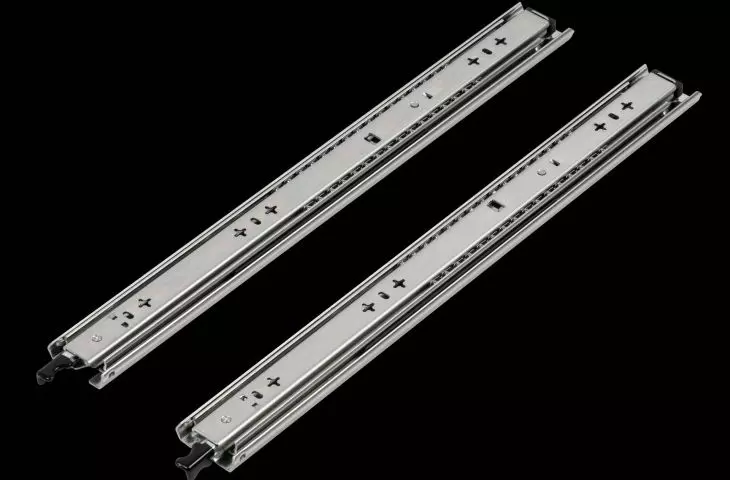
H53 Slide with Lock
© AMIX
Increasingly, in modern manufacturing facilities, warehouses, and laboratories—as well as in RVs and mobile workshops—designers are moving away from standard furniture toward complete functional systems engineered to withstand very heavy loads and intensive use. In such designs, safety, durability, and the reliability of every component are paramount. Here, a drawer ceases to be a place for storing small items. It becomes a pull-out work platform, a base for machinery, a tool module, a storage compartment for heavy equipment, or a component of a vehicle’s interior. In each of these applications, the slide mechanism operates under significantly greater loads than traditional furniture slides, which is why the comfort and safety of daily work depend on its quality.
Just a few years ago, slides with a load capacity exceeding 100 kg were a niche product. Today, we are seeing a marked increase in interest in them from manufacturers of RVs, service body kits, and workshop equipment. Modern hardware must be ready to operate under much harsher conditions than it did a decade ago. Solutions originating in the furniture industry are becoming components of professional structures used across many sectors of the economy. This is a clear trend that the entire industry is observing. – says Grzegorz Staśkiewicz, Sales Director at AMIX.
Growing demands on hardware
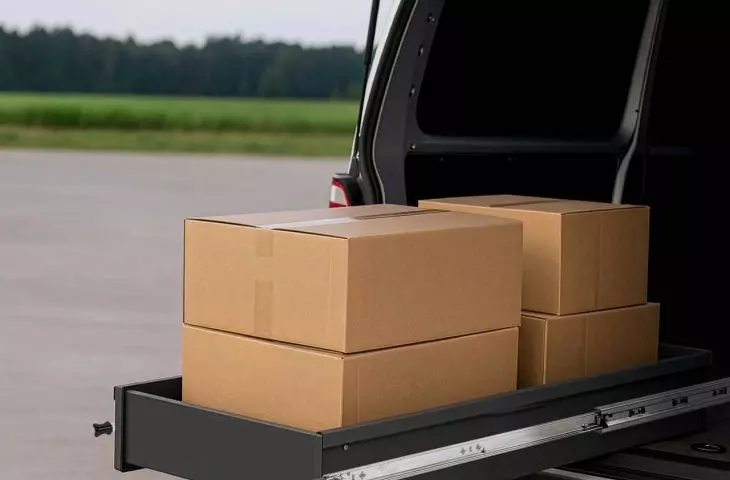
What do we expect today from “special-purpose slides”? High load capacity, the ability to achieve very long extension, and stable operation even under full load are becoming increasingly important. In many projects, an opening lock is also becoming a crucial element. Thanks to this feature, an extended platform or drawer remains in its working position, which is of great importance in vehicles, mobile workshops, or anywhere the equipment operates while in motion or on uneven ground. The new AMIX H53 and H76 ball-bearing slides, designed for professional applications, meet these needs.
H53 and H76 – High Load Capacity and Full Extension Control
The H53 model is a slide designed for applications requiring high durability and reliability during intensive use. With a load capacity of up to 100 kg and lengths ranging from 250 to 1,500 mm, it enables the design of both compact technical drawers and very long sliding platforms.
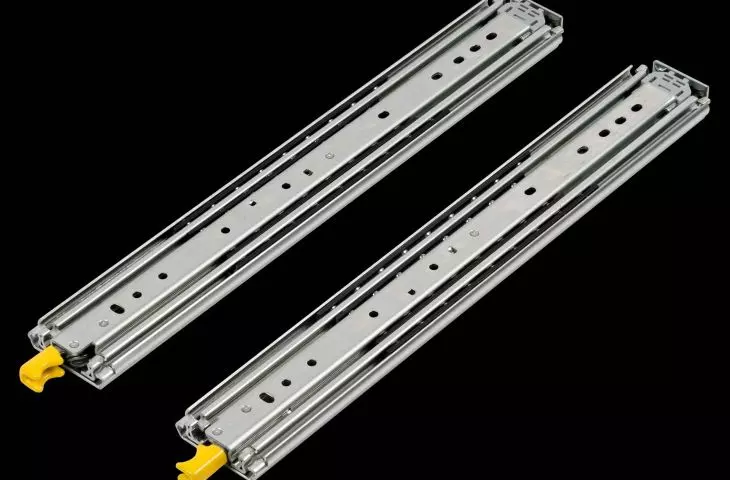
The H76 model offers even greater capabilities, designed for the most demanding applications. The slide achieves a load capacity of up to 230 kg while maintaining smooth and stable extension even under full load. It is available in lengths ranging from 350 to 1,200 mm, allowing for the construction of large pull-out modules and work platforms.
The H53 is ideal for applications such as heavy-duty toolboxes, workshop drawers, under-stair storage, and specialized furniture projects. The H76 slides, on the other hand, were designed for heavy-duty platforms installed in RVs and vans, pull-out beds, workshop enclosures, storage modules, and various types of industrial structures requiring very high load-bearing capacity.
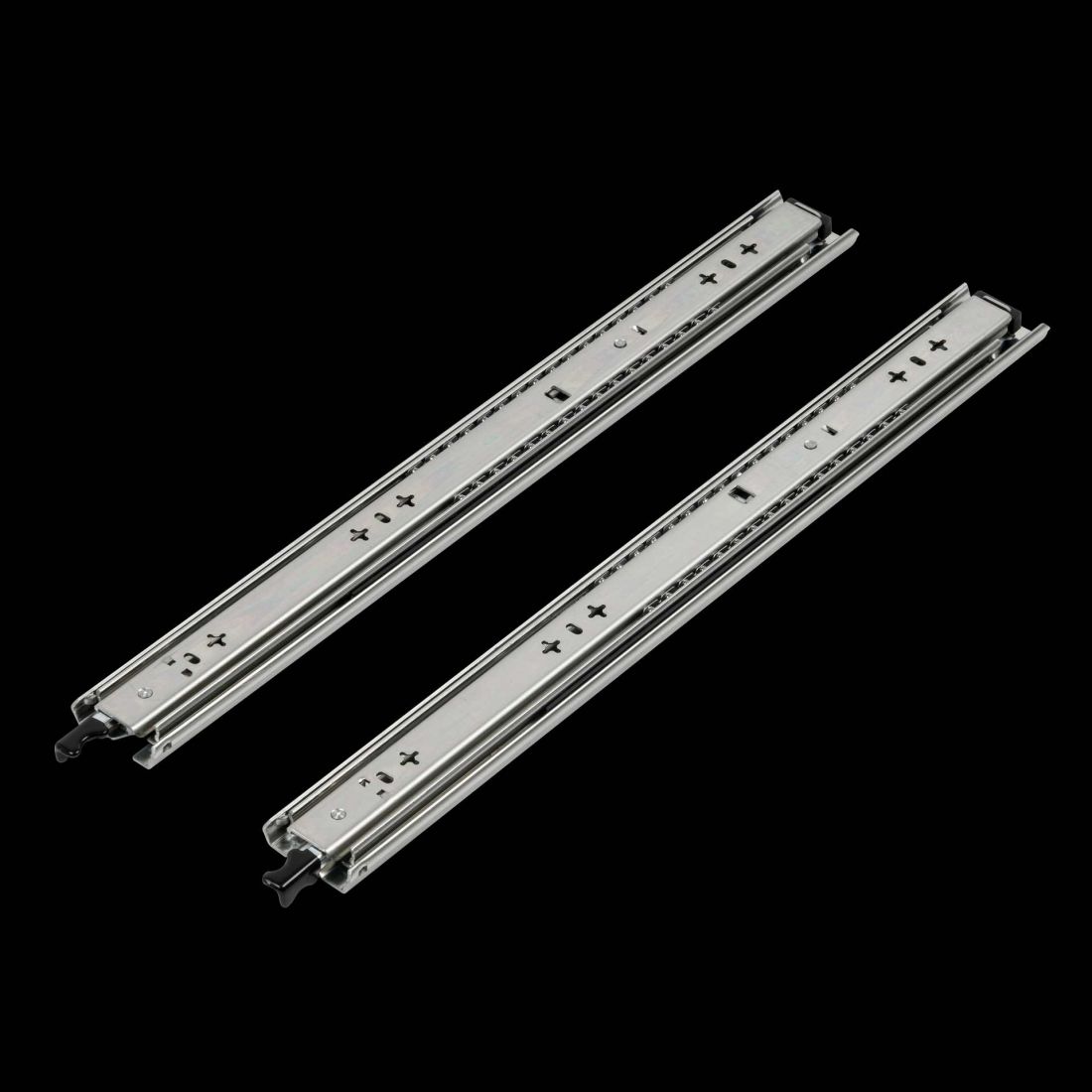
H53 slide with lock
© AMIX
A major advantage of both slides is the movement lock (for opening and closing), which holds the extended drawer or platform in the working position and prevents it from closing accidentally. This solution enhances comfort and safety in work environments where structural stability is critical.
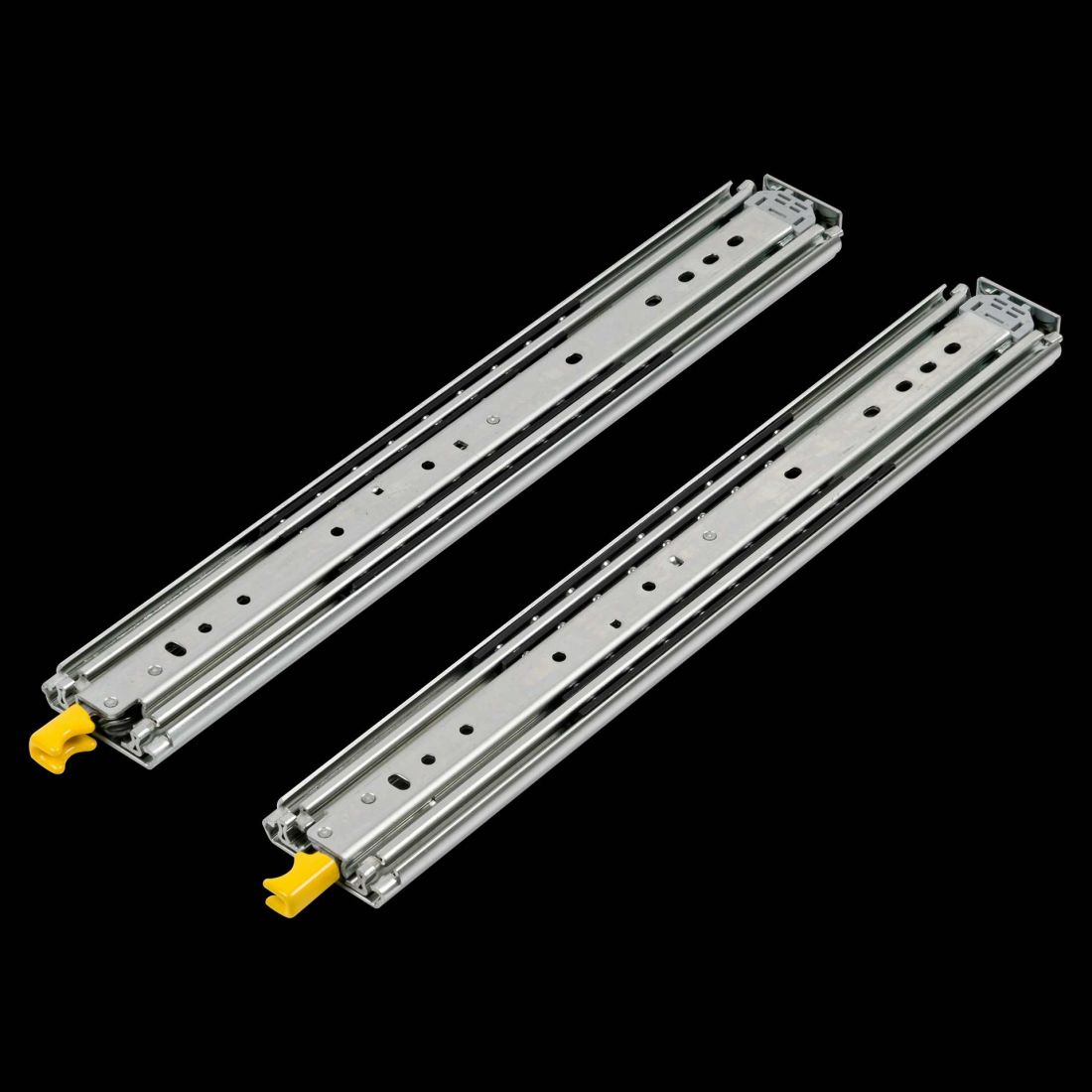
H76 slide with lock
© AMIX
Furniture goes beyond the home
Where did the idea come from to introduce slides with such a high load capacity to the product line? It’s a response to market needs. Designers are looking for components that will allow them to build durable structures capable of withstanding many years of use, while also providing users with complete freedom to operate heavy pull-out modules. This shows that the line between traditional furniture-making and industrial solutions is becoming increasingly blurred,” adds Grzegorz Staśkiewicz.