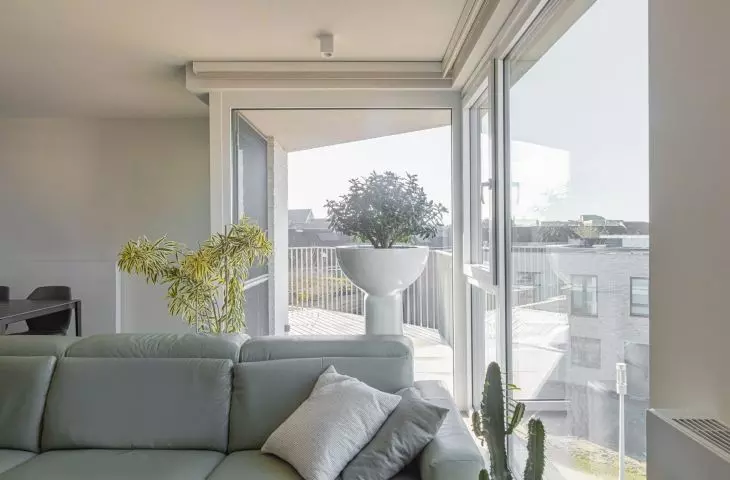

For years, the design of energy-efficient homes has been dominated by the question of how to reduce heat loss in the winter. Today, protecting buildings from overheating in the summer has become an equally important challenge. Increasingly frequent heat waves, large glazed areas, and the popularity of dark window frames mean that windows must be evaluated not only in terms of winter insulation but also in terms of stability, airtightness, and comfort during high temperatures.
© DECEUNINCK
In the summer, indoor comfort is determined by the balance between heat gains and losses. Rooms heat up primarily due to solar radiation, which penetrates through the glazing and affects the facade, roof, and window frames. In practice, this means that a window is not merely an element that brings light into the interior, but one of the key components influencing a building’s microclimate.
In modern construction, windows must perform effectively year-round. In winter, they limit heat loss, and in summer, they help protect interiors from the influx of hot air and the effects of intense sunlight. “That’s why, when choosing windows, it’s important to look not only at the glass but also at the profile’s construction, its insulation properties, airtightness, and how the material behaves at high temperatures,” says Artur Kruszewski, Product Application Manager at Deceuninck.
What causes a house to overheat?
Rooms facing south and west, converted attics, and living rooms with large windows are most prone to overheating. It is there that solar radiation acts the longest and most intensely, especially in the afternoon, when outdoor temperatures reach their highest levels.
The building’s design is also a key factor. Large west-facing windows without a roof overhang, a pergola, exterior roller shades, or natural shading can significantly increase heat gain. It is also a mistake to rely solely on interior shading. Blinds or shutters installed on the inside improve visual comfort but only block heat once the sun’s rays have already penetrated the glass.
When it comes to windows, three factors are important
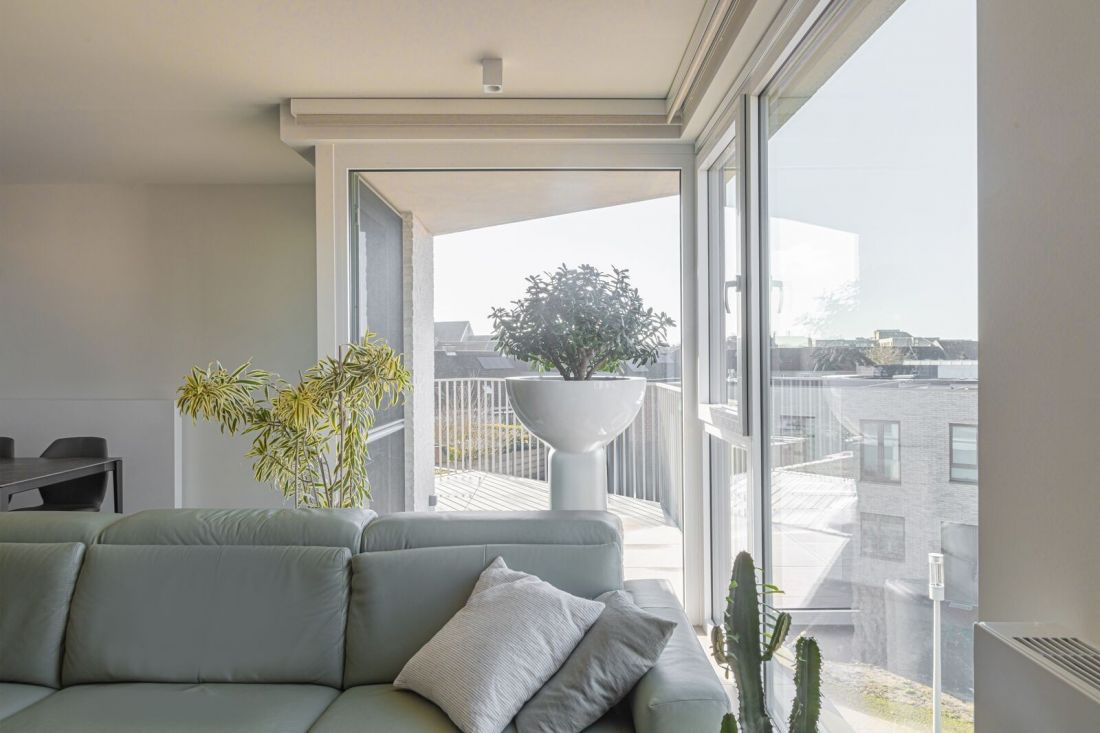
The first is the thermal insulation of the entire window, measured by the Uw coefficient. A good window works in two ways: in winter, it limits heat loss, and in summer, it reduces the transfer of heat from the outside into the cooler interior. The second is the system’s airtightness, which limits the uncontrolled inflow of hot air through micro-gaps. The third element is the properties of the glazing unit, including the solar energy transmittance coefficient g. The lower it is, the less solar energy enters the rooms.
© DECEUNINCK
The window profile also matters in the summer
When discussing overheating, the focus is usually on the glass and sunshades. However, the window profile is also important. The Uf coefficient determines the thermal insulation of the profile itself. Although it is usually associated with protection against heat loss in winter, it is also important during hot weather.
If the outside temperature is high and we want to maintain a comfortable indoor climate, the profile should limit heat transfer through it. This is important both in homes with air conditioning and in buildings that are cooled by nighttime ventilation and shaded from the sun during the day.
The glazing unit alone does not solve the entire problem. A window is a system in which the glass, profile, seals, hardware, and installation method all work together. “If the frame has poor performance or loses stability under the influence of temperature, user comfort decreases, and the window may cease to function as intended during the design phase,” emphasizes Artur Kruszewski.
Dark window frames require the right technology
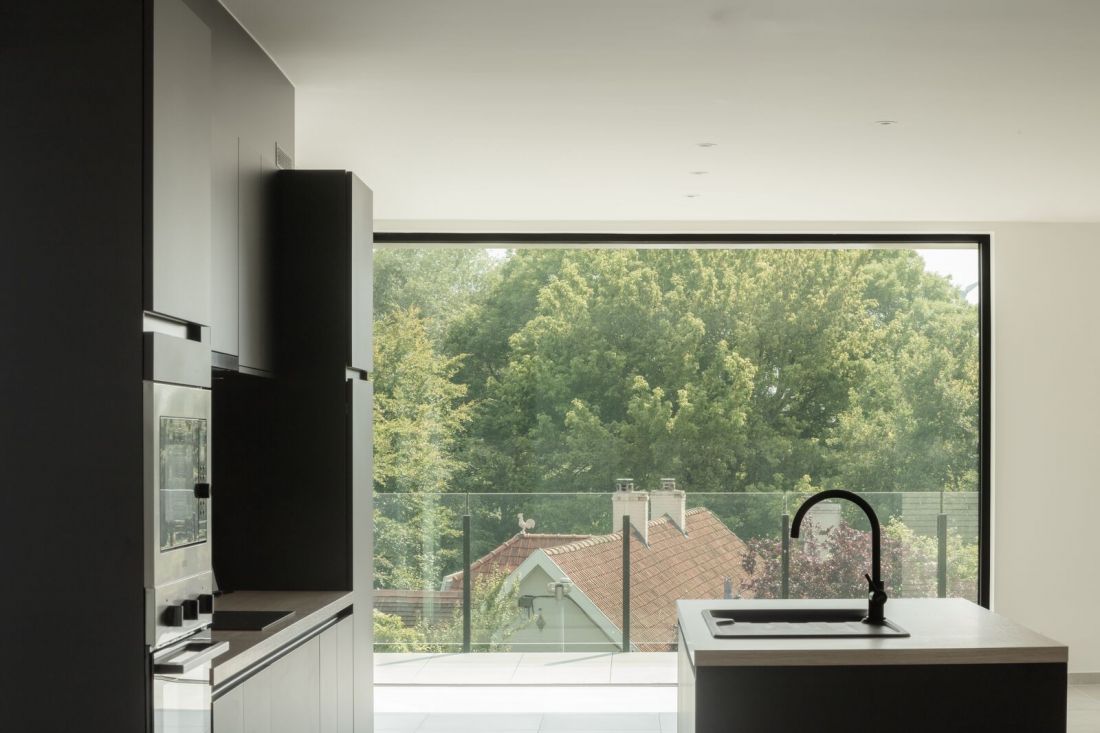
In contemporary architecture, dark profiles—such as anthracite, black, graphite, and dark wood tones—are clearly popular. Such finishes fit well with the modern aesthetics of buildings but require appropriate technological solutions.
Classic dark PVC profiles exposed to direct sunlight can heat up to as high as 70°C–80°C. At such high temperatures, the material tends to expand due to heat, which can lead to warping of the sashes, problems with closing, and loss of airtightness.
To prevent this, modern premium windows and doors use smart, next-generation decorative films with infrared (IR) radiation-reflecting technology. Modern decorative films, used by manufacturers such as the Belgian company Deceuninck, can reduce the material’s temperature by up to 15°C. Equally important, however, is the stability of the entire system—that is, how the profile behaves under prolonged exposure to the sun.
Deceuninck’s Energy-Efficient Technologies
Deceuninck’s response to the need to maintain thermal comfort even in the summer is a line of window systems in which insulation, stability, and a modern appearance are treated as a single design standard. The Elegant system is a prime example.
Selected variants of the Elegant system utilize ThermoFibra technology, which reinforces the sash with continuous bundles of fiberglass. This reduces the need for traditional steel reinforcements in the sash, thereby minimizing the risk of thermal bridges. This means a reduction in unwanted heat transfer through the profile—both in winter, when heat escapes to the outside, and in summer, when high outdoor temperatures try to penetrate the building’s interior.
When combined with the Forthex composite thermal reinforcement in the frame, the system can achieve very good thermal insulation performance for the profile. Additionally, the profile’s six-chamber design and central sealing system enhance airtightness and limit uncontrolled air exchange.
In systems such as Elegant, it’s not just about a single parameter. A good window must maintain its geometry, airtightness, and insulation properties over many seasons, even when exposed to intense sunlight. This is particularly important for large glazed areas and dark colors, which are very often chosen by developers and architects today,” adds Artur Kruszewski.
Less overheating, lower energy consumption
Protection against overheating also has an energy-related aspect. The less heat that enters the building, the lower the need for cooling. Well-chosen windows, supplemented by external sunshades, proper installation, and sensible ventilation practices, can reduce the need for intensive air conditioning.
Summer thermal comfort, therefore, does not depend on a single product or a single parameter. It is the result of the interaction between the building’s design, shading, ventilation, glazing units, window profiles, and the quality of installation. Windows and doors play a particularly important role in this system, as they form the boundary between the interior and the external environment.
When selecting windows for a home exposed to intense sunlight, it’s important to consider not only the design but also the technical specifications. This is especially true for large glazed areas, south- and west-facing exposures, and dark-colored window frames. Under such conditions, advanced window systems—such as Deceuninck’s Elegant series, featuring ThermoFibra and Forthex technologies—help combine modern aesthetics with durability, airtightness, and protection against excessive heating of the building.
For more information, visit the Deceuninck Poland Sp. z o.o.. website on the A&B portal.