




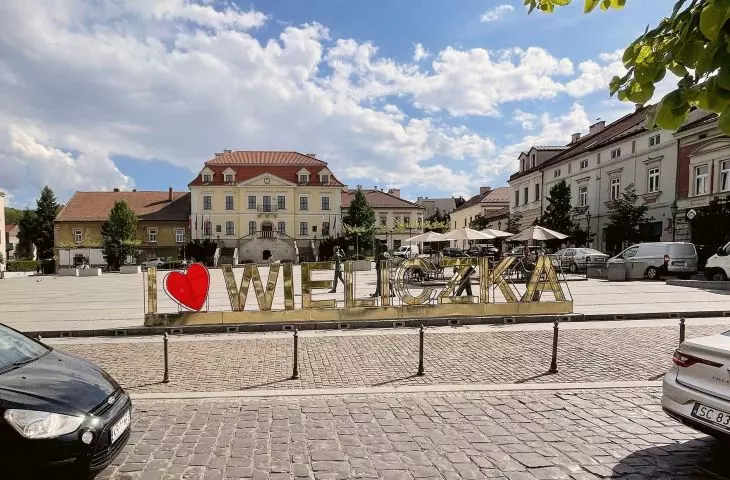
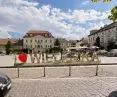


A young Asian woman is standing in the courtyard. She’s holding the camera so she can capture both herself and what’s behind her. She’s trying to get the entire building in the background. I imagine she’s filming a segment for her episode, which she’ll title“Exploring the Most Beautiful Places in Poland.” It’s not easy. Right next to her, a group of Spanish tourists is talking quite loudly, and school field trips are passing by. For the young Asian woman, the Spanish tourists, and the school group, it’s a special day. In the back of the souvenir booth, a saleswoman is finishing her cigarette. For her, it’s just another day.
A Huge Success
Wieliczka has two lives. The first is its tourist life, known from guidebooks, banners, and flyers. Travel agencies invite visitors to experience it, lured by the Mine—which ranks high among attractions and is also a must-see on many school field trips. For many, the town is associated with licking the walls in fourth grade. It’s true: the Mine is breaking records. Last year, nearly 2 million people passed through its salt corridors. This is a historic figure—proof that the tourism slump caused by the pandemic and unrest across the eastern border is now a thing of the past. There was an increase of over 10 percent compared to last year. At the ticket office and underground, English, Italian, and French are the dominant languages, as foreigners account for nearly 70 percent of the visitors to the Wieliczka underground.
This enormous success has forced changes. To manage the crowds and answer the thousands of questions coming from every corner of the globe, the mine had to turn to technology. Since April 2025, virtual assistants powered by artificial intelligence have been overseeing visitor traffic. Eight themed chatbots have taken on the burden of front-line service. They respond in twenty languages, advise on route selection, help book hotels or plan conferences, and operate around the clock. Nearly one in five customer interactions now takes place through them, and almost half of these conversations occur in the evenings, outside of standard call center operating hours. Technology is meant only to support processes that, given the current scale of traffic, are becoming increasingly difficult to manage using traditional methods. A labyrinth of nearly 245 kilometers of corridors, carved out since the mid-13th century, has become a powerful tourist attraction, listed as a UNESCO World Heritage Site for nearly half a century.
It is a heritage site that defines the city’s economic ecosystem and shapes its image to the outside world. I’ve always had a specific perspective on this. For many years, as a resident of Wieliczka, I was ashamed that the underground—so magnificent and so popular with visitors—did not drive a desire to transform the surface. Tourists admire the chambers carved out at a depth of over 300 meters, but they don’t magically teleport there. To reach the famous chambers, you have to make your way through chaotic urban development, a sea of advertisements and signs, parking lots, and various revitalized buildings. Above ground, Wieliczka is constantly trying. However, it isn’t doing so in a particularly spectacular way.
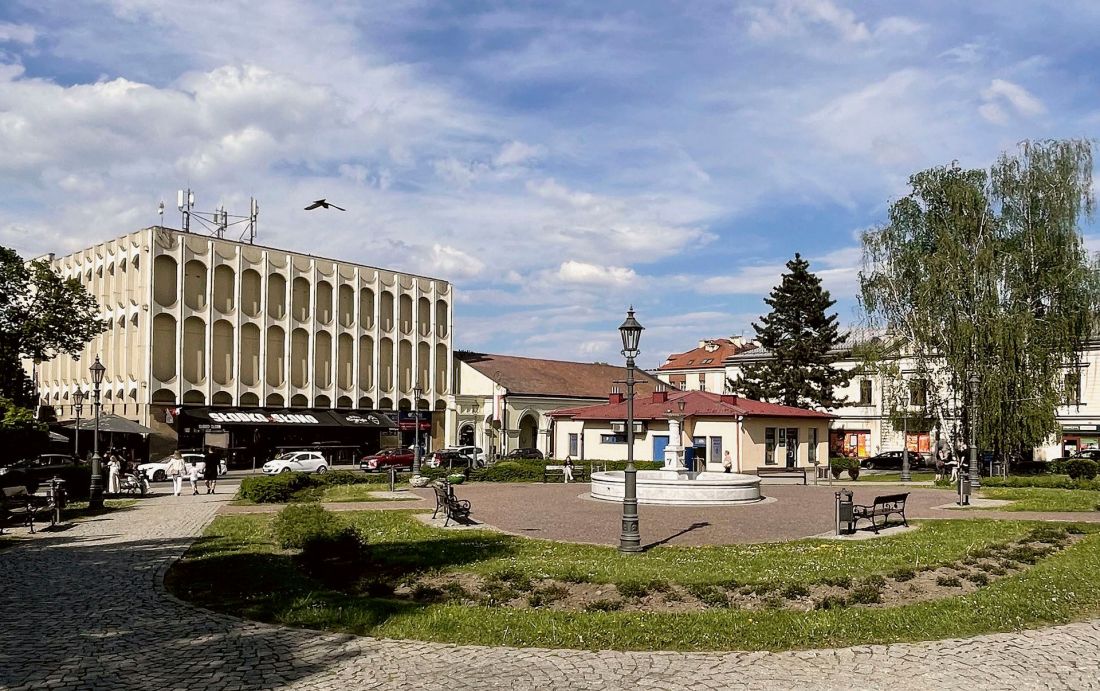
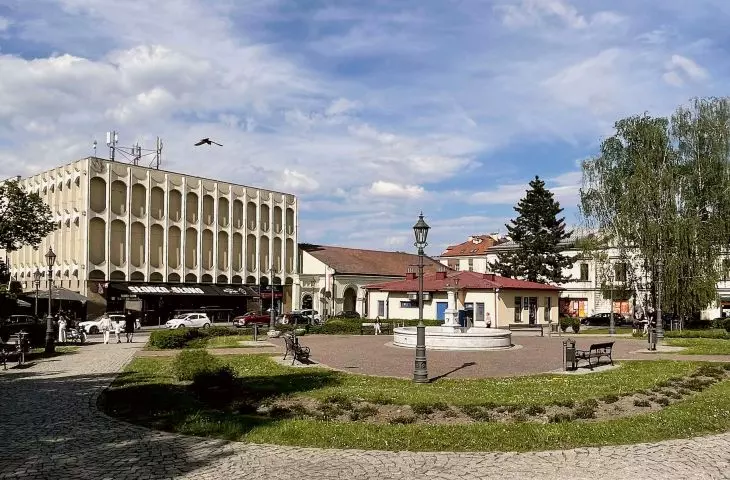
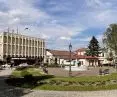
The “Kinga” Department Store and Kościuszko Square
photo: Magdalena Milert
Go all out
Many things in tourist towns are designed with tourists in mind. It’s up to foreign visitors to determine what image the municipality will project. My own sense of shame, which I’ve already mentioned, stemmed precisely from this—the fear of what others might think of my city. Euro 2012 was a prime example. The city underwent a metamorphosis back then, much like the contestants on the TV show “The Swan.” Everything that could be renovated was renovated, because Wieliczka served as the base for the Italian national soccer team, and fans arrived along with them.
A month before the grand opening, the city became one huge construction site, driven by a collective fear that Italian soccer players and tourists would notice what we had been trying to ignore on a daily basis. The renovation of the “King” Department Store became a prime example of this aesthetic exorcism . The building, widely regarded as the city’s architectural black sheep and perpetually covered in advertisements, suddenly, just after Easter, received the facelift it had been waiting for for decades. Inside, floors and shelves were being frantically replaced, but it was the exterior that mattered most in the battle for the city’s image: the distinctive modernist facade was finally renovated and unveiled. When pressure from foreign observers arises, it turns out there’s a quarter of a million zlotys in the budget.
Even the city’s green enclave, Mickiewicz Park—intended to serve as the “Solne Miasto Fan Center”—had to undergo a crash course in aesthetics. The renovation of the park’s paths and the installation of a floating fountain on the pond cost over 120,000 zlotys, though the harsh reality of the budget put a damper on plans for full-scale splendor — the new shrubs and small architectural features never materialized because the bidders’ prices proved too high.
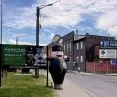
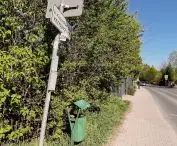
At the same time, a major advertising cleanup was underway—a battle against visual chaos that reached its symbolic conclusion at the intersection of Dembowskiego and Daniłowicza Streets. Officials waged a battle against the legendary, exceptionally shabby sign reading “guarded parking lot” (original spelling). This unfortunate spelling blunder, which had been an eyesore for years right across from the entrance to the Salt Mine, suddenly became a major problem in the run-up to Euro 2012. Discussions about correcting this error and tidying up the area became a priority, because while local residents had grown accustomed to this sight, European tourists—who, after all, know the Polish language perfectly well—might draw the wrong conclusions.
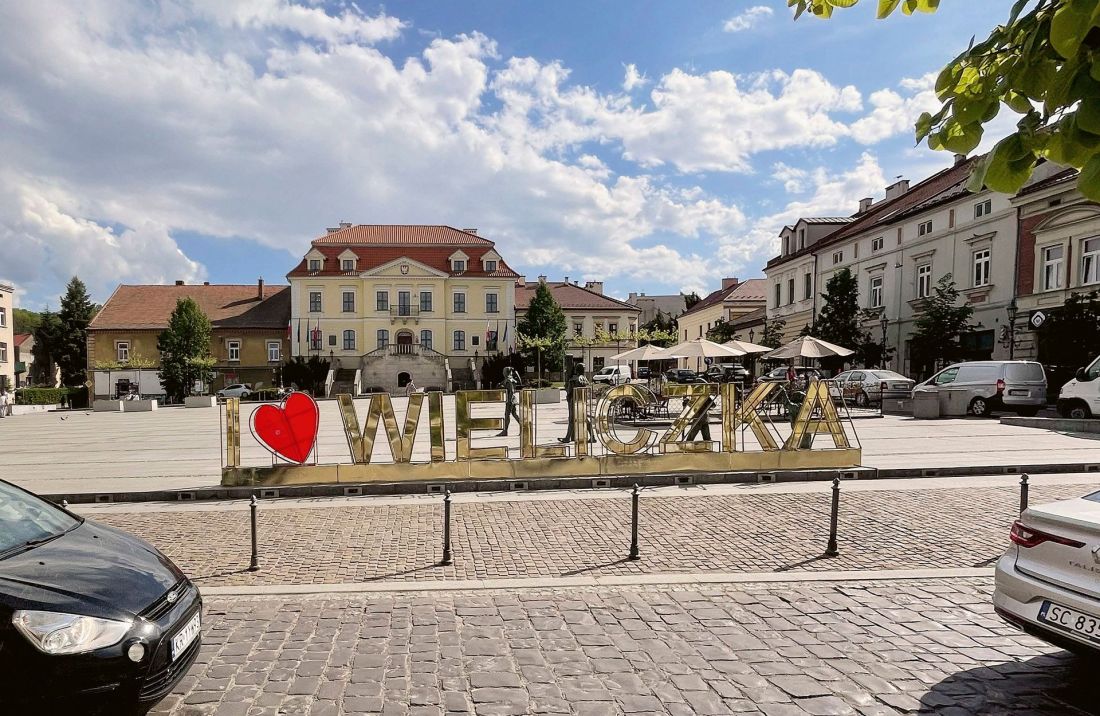
Wieliczka’s Market Square today—there’s no trace of the mural left
Photo: Magdalena Milert
In the same spirit of aesthetic revitalization, just a few hundred meters away, on the Upper Market Square, something appeared in May 2012 that was meant to be a showcase of modern Wieliczka—“Solny Świat” (Salt World). Ryszard Paprocki designed and created a gigantic 3D mural there, covering an area of over 350 square meters, which, through optical illusion, was meant to transport the interior of the mine—with St. Kinga at its center—right at the feet of passersby; at the time, it was the largest 3D mural in Poland and likely the second-largest in the world, second only to the London mural “Reebok CrossFit: 3D Street Art.” The official unveiling of the mural was intended to mark the visit of the Italian soccer players. The town square was bustling with activity: the municipality set up tables with umbrellas for residents and tourists eager to catch a glimpse of the soccer stars, and a special photo booth allowed people to take a souvenir photo “over the abyss” and send it via email to the world. “The Salt World” introduced Wieliczka to the world of 3D street art. Such works, due to their anamorphic nature—that is, the deliberate distortion of the image—are extremely difficult to execute. The illusion of depth and the full clarity of the scene are visible only from a single, precisely designated vantage point. Only from there can one take a photograph in which the image regains its correct proportions. Originally, it was intended to be an extremely durable technique, utilizing modern chemistry, supposedly resistant to Polish weather conditions and mechanical damage resulting from heavy foot and vehicle traffic. Reality put those plans to the test. In 2021, another attempt was made to save the artwork through a costly restoration and the use of modern printing techniques, but time proved unforgiving. Today, there is no trace left of the famous attraction.
However, it wasn’t just the mural that was trampled under the feet of arriving Italians and soccer fans—the entire city’s logistics were also overhauled for them. One could say that the Euro had magical effects. A previously suspended train service to Kraków was hastily reinstated, and a popular bus route was modified to run more frequently. It turned out that new stops had also appeared—for example, Wieliczka Park, strategically located near Mickiewicz Park and the “Turówka” Hotel, to make life easier for those who came to Wieliczka to check out where the soccer players were staying.
So let’s hope that all municipalities get to host the Italian team at the Euro—an event we should organize more often! Looking back years later, of course, I view these efforts quite positively; the event was the catalyst for change that the city needed. We haven’t managed to permanently resolve the issue of advertising; the banners keep coming back like a boomerang (there’s no landscape resolution), but the train and the stops remain. The revitalized spaces still look quite fresh. What hurts, however, is the message that can be read into this: Mr. Areczek, Wieliczka had to shine for foreign officials (i.e., tourists and a mass event); there’s no money for your dreams of revitalizing the neighborhood. The glamour is therefore incomplete, applied at the last minute, created just to avoid that paralyzing shame in the eyes of the world.
One could say that this is a nod to tradition. After all, the noble motto “spend lavishly to make a statement” is invoked here. I think, however, that we should now approach such a tradition somewhat differently. This “last-minute” approach contrasts with the long and arduous history of systematic preservation of Wieliczka’s historic monuments, which did not always stem from a fear of the outside world’s gaze.
The tradition of conservation work in the city dates back to the late 19th century, when the local community worked to save the 16th-century larch Church of St. Sebastian. As early as 1892, an initiative was launched to create an inventory of historic monuments in the Wieliczka County. Initially, this met with a lack of understanding, but it ultimately led to the establishment of the Preservation Committee, which raised funds for the church’s renovation through, among other things, the sale of colorful postcards that served as donation receipts. Outstanding experts, such as Sławomir Odrzywolski, oversaw the technical aspects of this work, and the interior polychromes were executed by Włodzimierz Tetmajer in 1906.
During the interwar period, the 14th-century defensive tower was restored according to designs by Zygmunt Hendel. The postwar reconstruction of the Saltworks Castle, however, proved to be a real challenge, as it had been severely damaged by aerial bombs in January 1945. The struggle to restore this historic seat of the saltworks administration lasted for decades and required immense determination on the part of the conservators, who for years fought against bureaucratic delays and a lack of funding, finally managing to open the site to visitors.
The crowning achievement was the Salt Mine’s inclusion on the first UNESCO World Heritage List in 1978. In the 1980s, comprehensive historical and urban planning studies were also conducted by Zbigniew Beiersdorf and Bogusław Krasnowolski, analyzing nearly 300 historical buildings in the city. These studies became the foundation for a professional revitalization plan for the Old Town, prepared between 1984 and 1986 by Andrzej Dobrowolski. All of these efforts were aimed at improving the city’s aesthetic appeal and, perhaps above all, at restoring a sense of community among the residents of a city with centuries of history.
Compared to the sudden rush of activities in recent years, interventions carried out so hastily—merely for the sake of foreign tourists—pale in comparison.
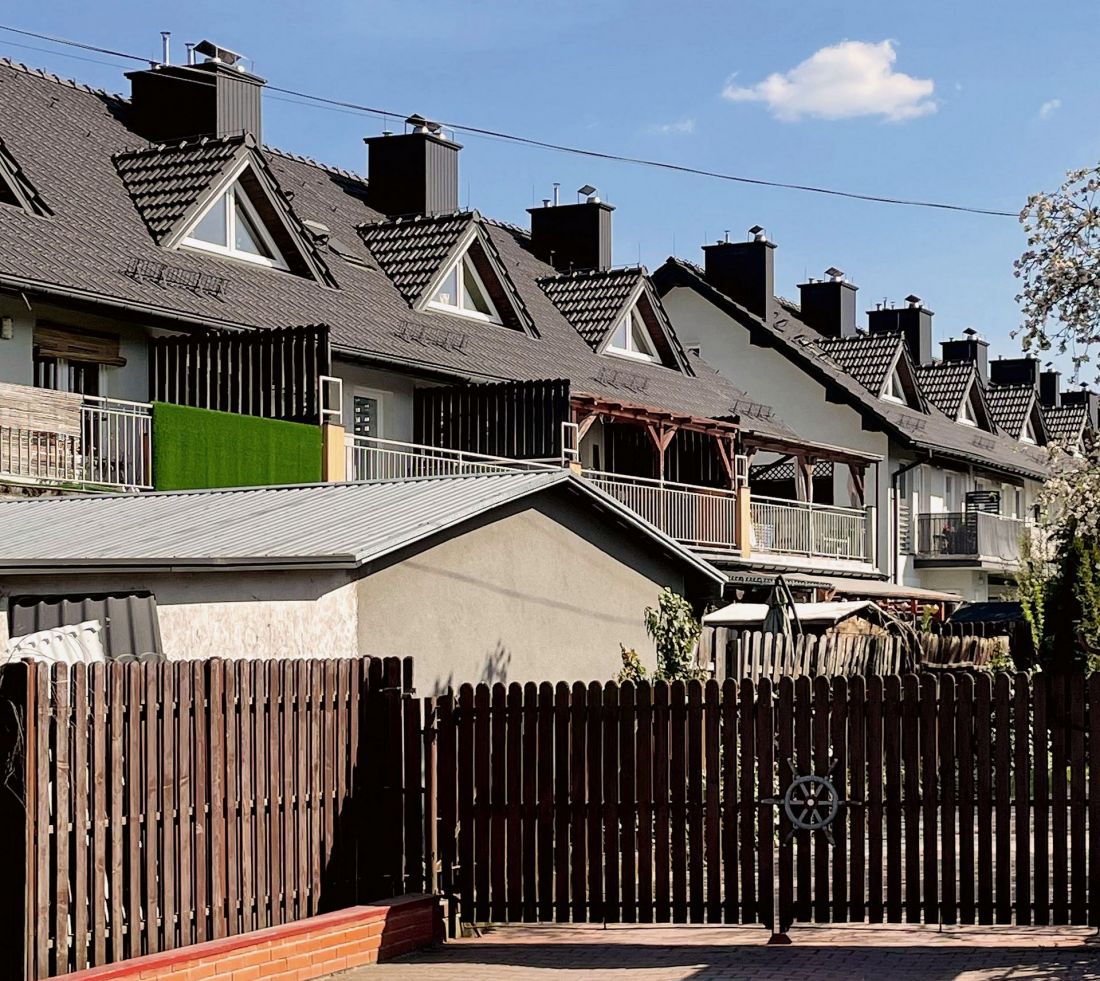
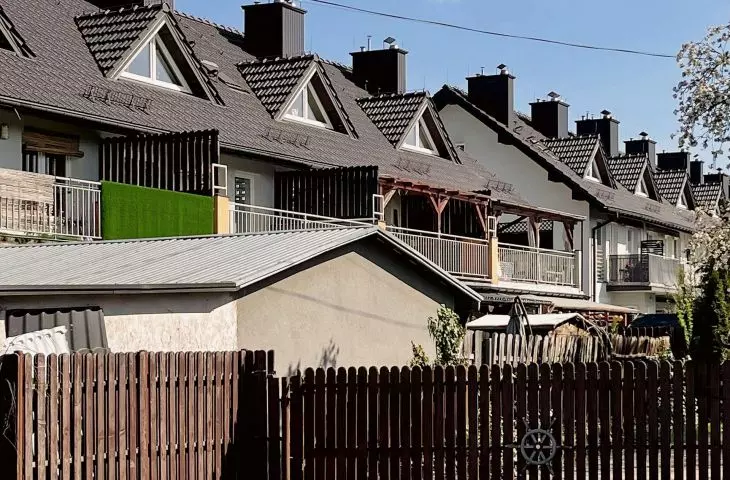
Field-based urban planning in Krzyszkowice, Wieliczka
Photo: Magdalena Milert
A Scavenger Hunt
Wieliczka was founded in a rather unusual manner, under Frankish law. One would search in vain for such a unique case in the surrounding area. It was likely a series of rather specific events that led to this approach. Without delving into those details, however, the most important thing is that the discovery of salt deposits created a need for new labor and capital here. So they began inviting skilled professionals to come. And that’s how the city came to be populated by people eager to work.
The city’s everyday life, outside of the Mine, is ordinary and down-to-earth. Despite its immense popularity with tourists, it is simply a Kraków suburb, where people can build a home on the outskirts of a large city. The city has just over 28,000 residents, while the municipality has over 70,000. It stands out from the general trend with a slightly higher birth rate. It serves as a bedroom community for Kraków. The municipality is aware of this, though it speaks of it rather laconically. It does mention the topic in its strategy, in which it even uses the term “suburbanization,” but aside from defining the problem, no far-reaching measures are evident. In response to my request for public information, I was told that the Wieliczka City and Municipality Office does not have a developed strategy or analytical study regarding the management of areas subject to intensive suburbanization (urban sprawl).
This is an approach I call “urban half-measures.” While we supposedly have phenomena named and defined in strategic documents, this takes the form of scattered, ad hoc, and piecemeal actions. We’re following the arrows toward the goal, but it keeps eluding us. We cannot say, however, that we are doing nothing. Symptoms are being treated, but there are no preventive measures. Instead of comprehensive spatial management—which would limit development pressure on green spaces—the city government focuses on individual projects, often reliant on external funding.
In its official response to the aforementioned letter, the city lists initiatives intended to mitigate the negative effects of the current situation. The first monitoring tool is… the Airly system, which provides real-time air quality reports. It is worth noting that this model relies on an external, commercial technology provider. This is an increasingly common phenomenon (not only in Polish local governments), which involves shifting the burden of data collection from public institutions to private platforms operating on a subscription model. This allows the municipality to quickly access clear visualizations and a dense network of sensors without having to maintain its own complex research infrastructure, but it also fits into the trend of reactive management. The municipality becomes a subscriber to information about the state of the environment, rather than a creator of policy based on its own in-depth analysis. Of course, it’s better to have such data than not to have it at all. But it’s hard to speak of anything more than a confirmation of the problem here.
As for other pro-environmental initiatives by municipalities, they focus mainly on the energy sector and the replacement of outdated heating systems. Among other things, boiler replacement projects were carried out as part of the Regional Operational Program, as well as the “Ekopartners for Solar Energy in Małopolska” program, which promotes renewable energy installations in private households. The municipality is also involved in advisory and networking initiatives, such as the LIFE project and EKO TEAM, developed in collaboration with the Kraków Metropolis Association. The municipal office employs eco-advisors whose task is to support residents in the energy transition process. This “soft” approach, based on education and grants, appears to be the main line of defense against the environmental costs of suburbanization.
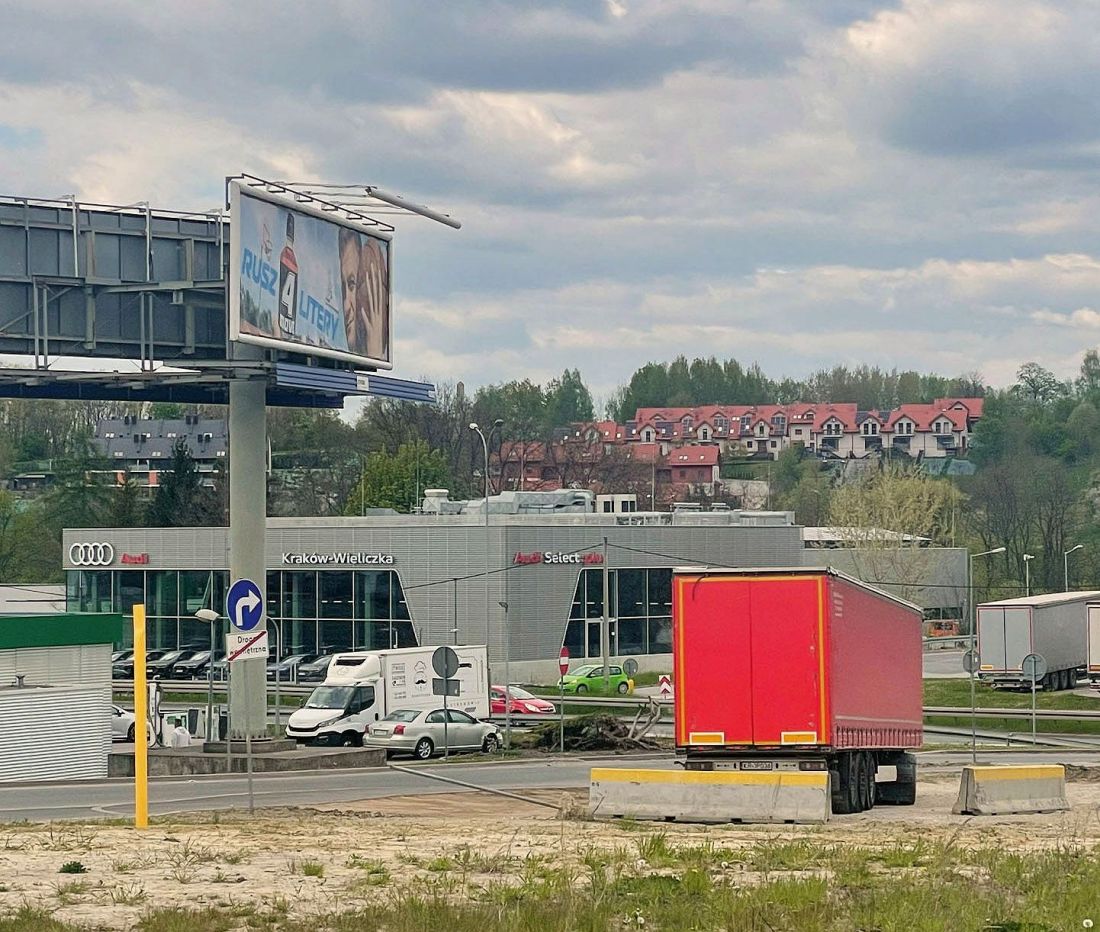
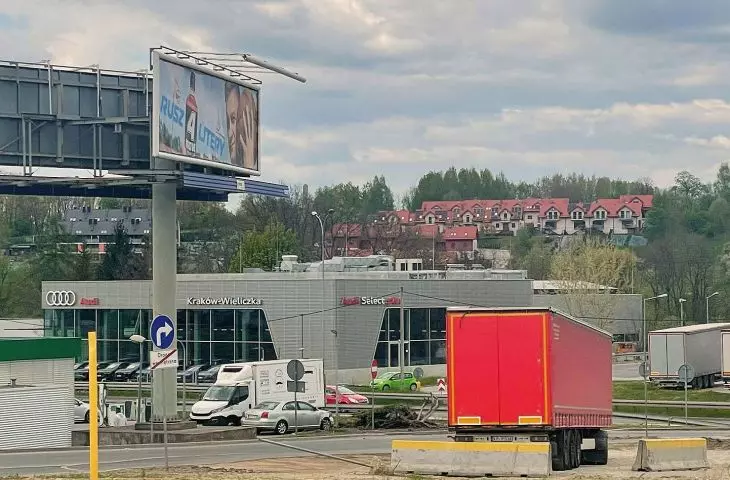
“View” of Kaim Hill
Photo: Magdalena Milert
I’m sending an SOS
There is much to consider, as the scale of demographic and construction pressure facing Wieliczka places it among the leading cities in the country grappling with rapid suburbanization. Data from the National Census (NSP) for 2011–2021 show that the municipality’s population grew by over 25 percent over the decade, which in absolute terms means an influx of over 13,000 new residents. This demographic surge places Wieliczka on the list of municipalities with the highest population growth rates in all of Poland, right alongside the fastest-growing satellite towns of major metropolitan areas, such as Piaseczno near Warsaw and Siechnice near Wrocław.
Even more telling are the statistics on the dynamics of the housing market. In the urban area of Wieliczka alone, the number of housing units increased by exactly 50 percent between censuses. This rate significantly exceeds the average for the entire Lesser Poland Voivodeship (19.3%) and for Kraków itself (31.6%). Such a massive increase in the built environment in such a short time largely shapes the daily lives and quality of life of the residents.
The most striking evidence that this statistical volume of housing does not always go hand in hand with quality planning is the northern part of Wieliczka, where Kaim Hill is becoming a veritable testing ground for real estate development. The hill, once a historic landmark featuring an obelisk commemorating the repulsion of Russian troops in 1914, is now increasingly obscured by chaotic development. The monument, designed by Henryk Nitra and Karel Korschann, was unveiled in 1915 with great fanfare in the presence of Kraków Mayor Juliusz Leo and Cardinal Adam Sapieha. Wieliczka, however, seems to treat this heritage with a great deal of bureaucratic amnesia. As recently as 2017, the mayor’s representative promised to purchase the land surrounding the monument, build a grand staircase leading from Winnicka Street, and establish a 15-meter buffer zone as mandated by the historic preservation officer. Reality has put these plans to the test: none of the promises have been fulfilled, and the historic symbol has been left to the mercy of fate amid a sea of sprawling, dense development.
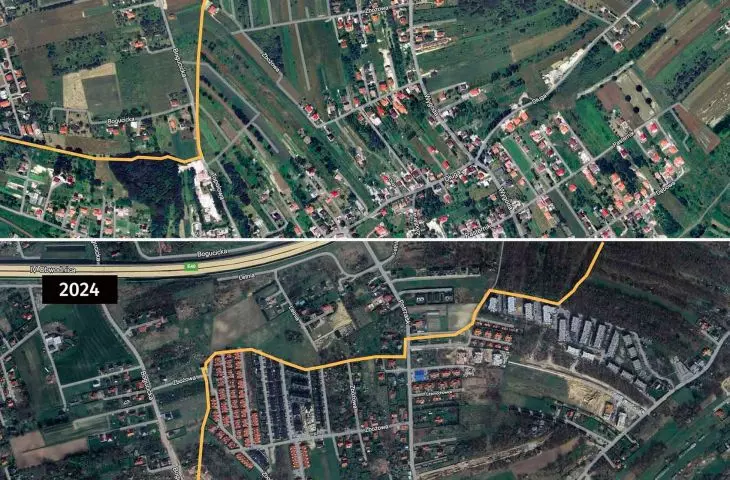
Today, Kaim Hill is a textbook example of the inefficiency of a system in which a local zoning plan exists, but its quality and permitted development ratios prioritize profit over spatial order. Wieliczka is effectively “squeezing” development right up to the border with Kraków, issuing successive permits for high-density housing developments that offer residents virtually no public services or new infrastructure. The initial, almost visionary road designs in the form of mountain spirals were ultimately replaced by straight sections and a layout of buildings resembling chaotically scattered building blocks. Worse still, this concrete offensive is taking place on geologically challenging terrain consisting of flysch and macroporous soils, which lose stability when overwatered. We saw the consequences in 2021, when a slope collapsed on Winnicka Street. Although developers and the city often pass the blame back and forth, experts point to mistakes made as early as the construction phase, such as the lack of drainage at the top of the slope.
Residents organized under the “Rescue Action for Kaim Hill” initiative have been calling for years to protect this site as a cultural park or ecological reserve, seeing it as the last chance to preserve green spaces in the face of advancing urban sprawl. Although the monument itself was listed as a historic monument in 2018, the authorities in Wieliczka have shown a puzzling lack of interest in effectively protecting the surrounding area, and the new mayor, Rafał Ślęczka, by planning to sell more plots on the hill, appears to be following in his predecessor’s footsteps. This approach stands in stark contrast to the actions taken on the Kraków side of the border, where the city is gradually buying up plots in the area surrounding the monument. All this chaos comes at a measurable cost—not only aesthetic but also economic. According to the Polish Economic Institute, the lack of control over urban sprawl costs Poland over 84 billion zlotys annually, resulting from the need to expand infrastructure and the negative impact on the environment [data for 2021 — ed. note]. Wieliczka, proudly showcasing its growth statistics, forgets that building a bedroom community on a landslide, historical sites, and flysch is a strategy for which future generations will pay the highest price.
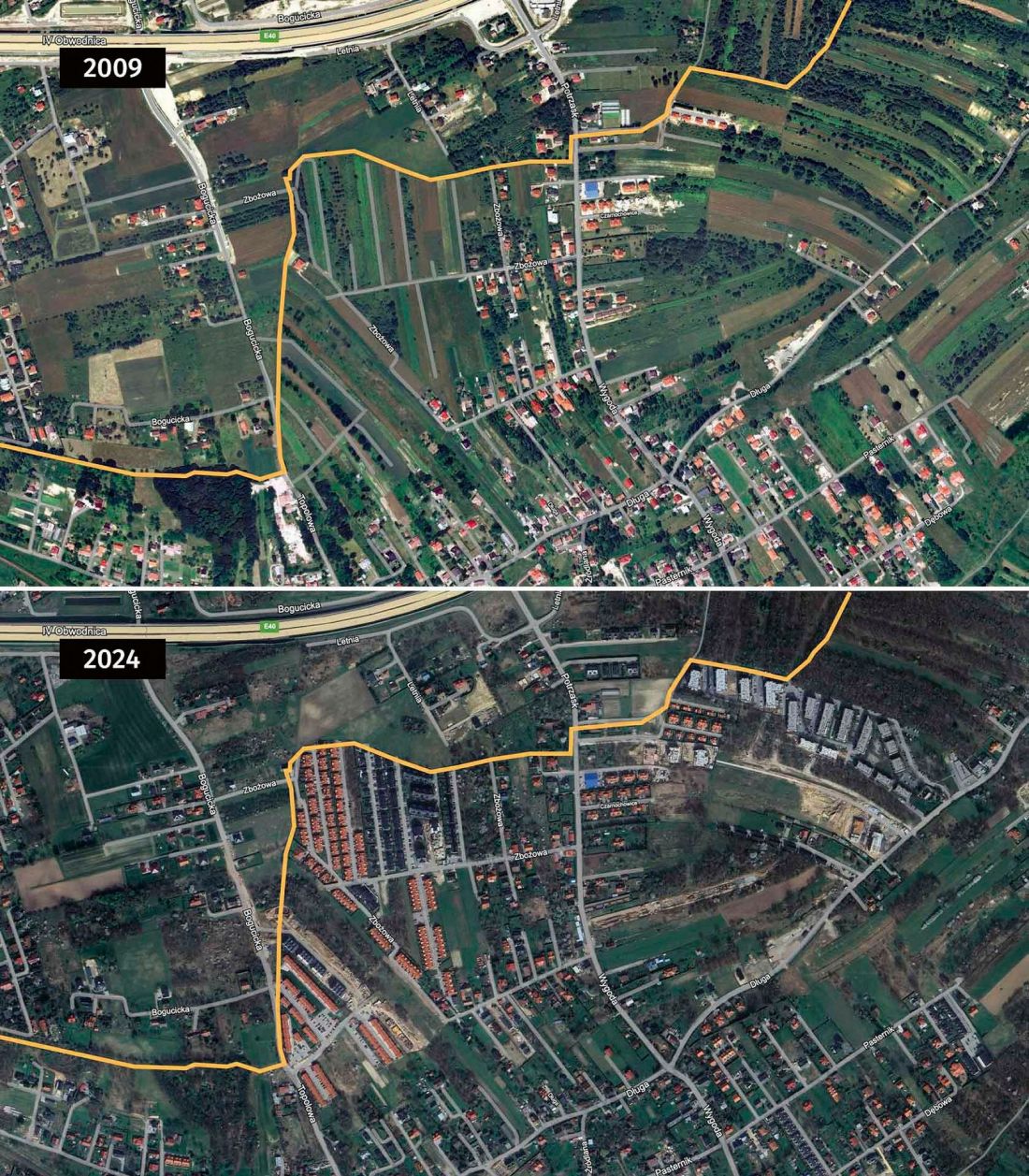
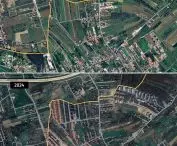
Satellite images of the border between Wieliczka and Kraków showing the intensity of sprawl
Photo: Magdalena Milert
We’re trying, aren’t we?
At the same time, efforts are being made to reorganize transportation, which, in the case of Kraków’s bedroom communities, is quite significant for reducing transportation emissions. I’m deliberately using the word “attempt” here, because the project to purchase low-emission buses and integrate the infrastructure is intended to serve as an alternative to the thousands of private cars leaving Wieliczka every day. However, without an overarching planning strategy to curb urban sprawl, even the most modern transportation fleet will remain merely an attempt to catch up with a reality in which new homes are being built faster and farther away than bus routes can reach. The municipality is therefore choosing the path of technological modernization, leaving the issue of structurally controlling urban sprawl without a clear answer. Its approach to management is reactive and based on addressing problems after they arise, rather than being proactive.
Wieliczka is, admittedly, a key element of the Rapid Agglomeration Railway (SKA)—the SKA1 line connecting Wieliczka Rynek-Kopalnia with Kraków and the airport was the foundation of the entire system’s success in terms of ridership. However, the data point to a troubling phenomenon: despite an initial, rapid increase in passenger numbers in the region (from 7 to 13 million by 2017), a visible downward trend had already emerged even before the pandemic. Rail transit is no longer sufficient as new developments are springing up farther and farther from train stations, even those with their own P+R parking lots. In a situation where every other residential unit in the city is relatively new, and most new developments are located on formerly agricultural land, the lack of an overarching planning strategy perpetuates dependence on private cars. Maps showing population changes in the Kraków metropolitan area clearly indicate that Wieliczka is located right at the center of the zone experiencing the most intense growth. In the absence of systematic spatial management, it has become a textbook example of the challenges faced by modern “bedtowns” of large cities—a situation here further exacerbated by tourist traffic.
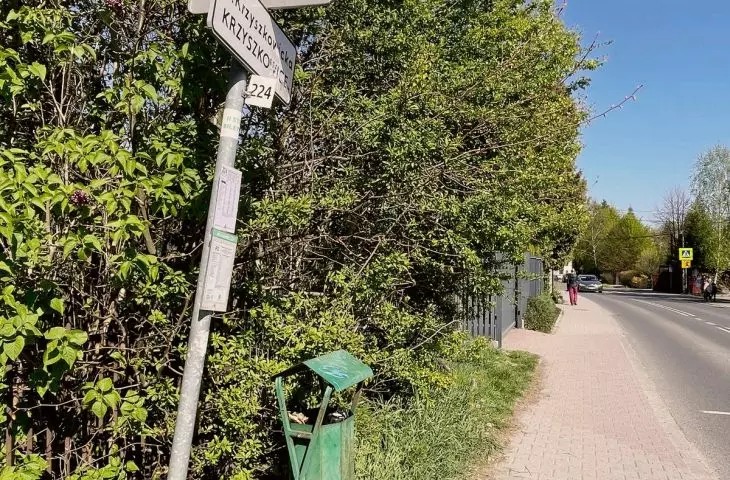
For as long as I can remember, commuting to my hometown has been a nightmare. At first, it was old, inefficient, smoke-belching minibuses; then newer buses—but perpetually overcrowded; and finally, the train, which is the most convenient but has the least well-adapted stop network. Of course, over the years I’ve seen how the city is changing, developing, and achieving new successes. It’s just a shame that this progress is uneven, dictated by the influx of euros rather than environmental considerations or a vision for the aging population in this sprawling urban landscape.
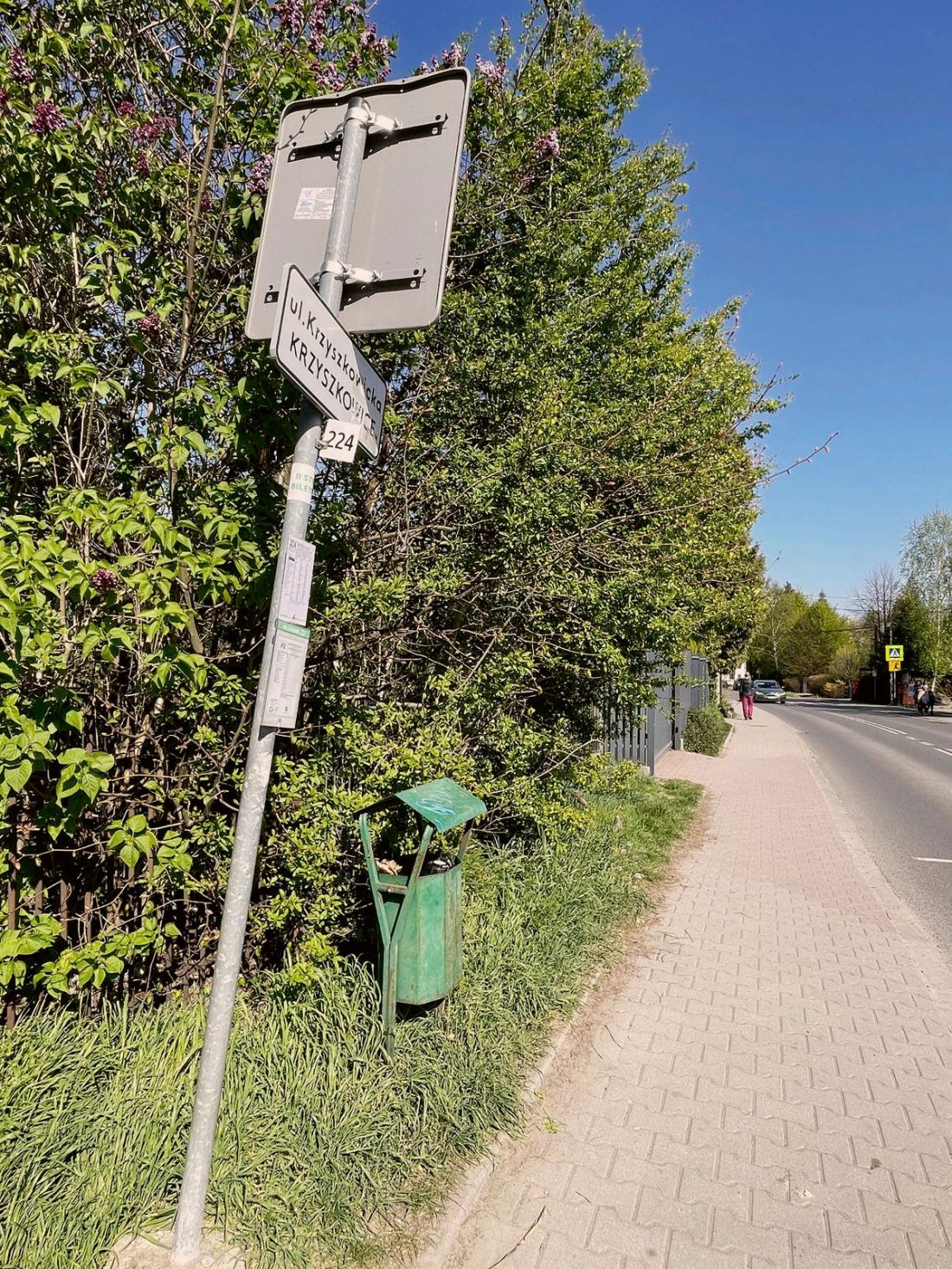
one of the stops in the suburbs
Photo: Magdalena Milert
My parents’ dream was to live in a house that wouldn’t be cramped, like the apartment they had to share with their in-laws. My dream was not to make the mistake of believing in a little house outside the city. I wanted to escape, to break free from the cycle of endless commuting, from the hours swallowed up by waiting for the next mode of transportation. Katarzyna Kajdanek described people like me as “returnees.” These are all the people who have returned to the city because they’d had enough of traffic jams, transfers, and social, cultural, and service-related exclusion. Fortunately, there are more of us.
I have no idea how many people have fled Wieliczka, or how many will leave in the future. I do know, however, that all signs point to a problem: these people, lured by cheaper housing prices per square meter, will end up living in a house on the outskirts of the city in their old age. I also know that this won’t change without strategic action on housing (at both the municipal and national levels). The municipality will come to realize this more and more acutely, while also losing valuable natural areas, which will be covered by an increasingly thick layer of smog.
Wieliczka has some nice places to go for a walk. The city center itself is looking nicer and nicer. If I still carried the shame from years past, it certainly wouldn’t be as great as it once was. Today, I no longer feel that emotion—at least not regarding this issue. It has shifted within me toward a fear about the quality of life here in ten or twenty years.
Magdalena Milert
more: A&B 6/2026 – Small and Medium-Sized Cities / Architects’ Fees,
download free e-issues of A&B