



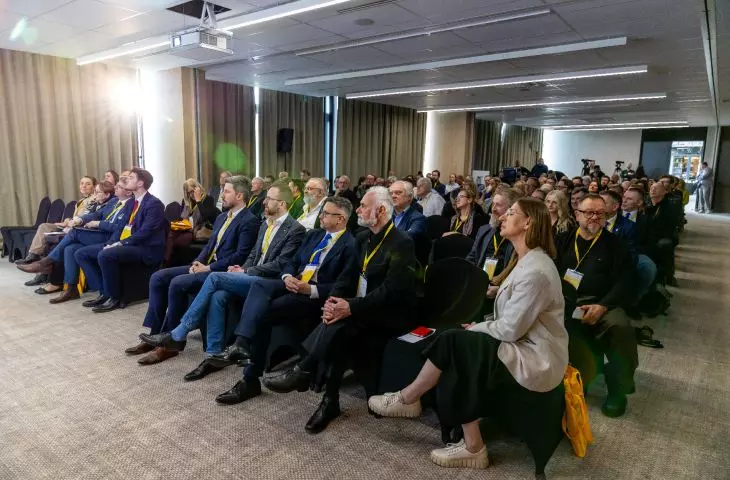
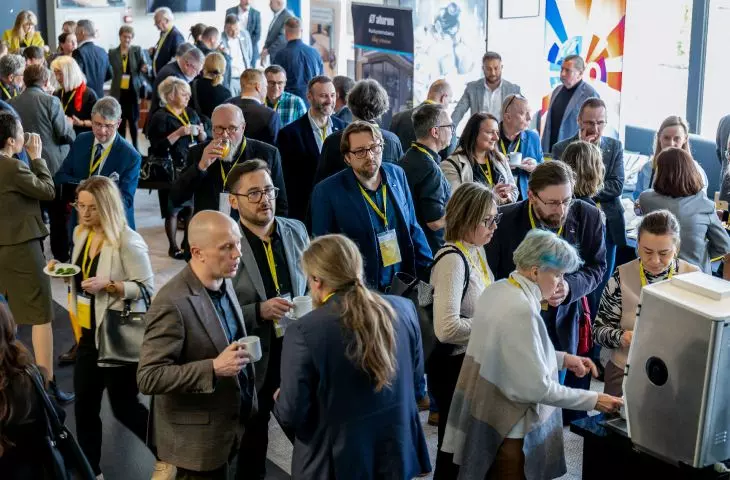
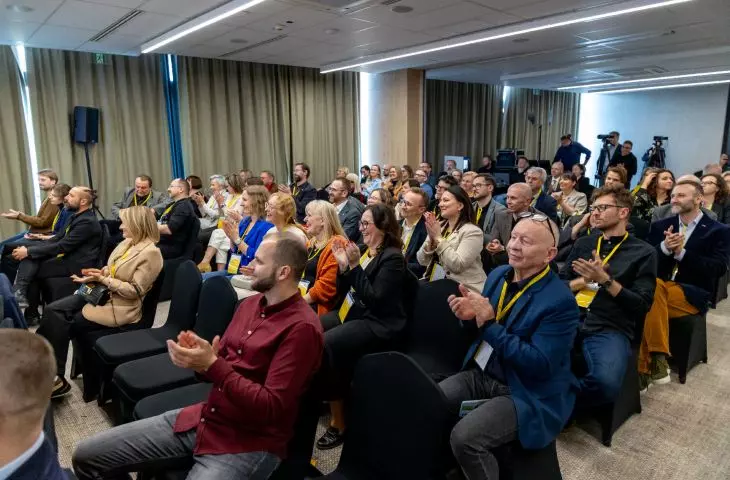




On April 10-11, 2025, a groundbreaking conference was held in Lublin: Local Government and Professional Fields of Cooperation, organized jointly by the three District Chambers of Architects of the Republic of Poland: the Lublin, Podkarpackie and Świętokrzyskie ones. The event brought together representatives of local self-governments, architectural and construction administration bodies, construction supervision bodies and the architectural community. The purpose of the meeting was to identify areas of cooperation between local and professional self-governments, to exchange experiences and to try to develop constructive solutions in the area of legislation, administrative and investment practice.
common ground for action
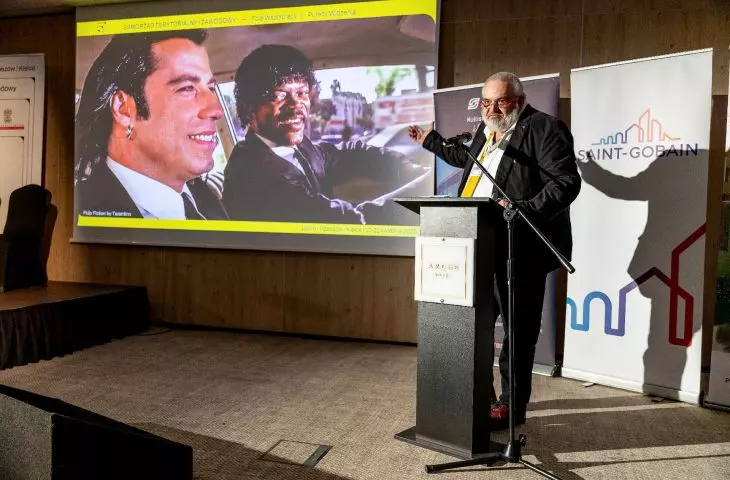
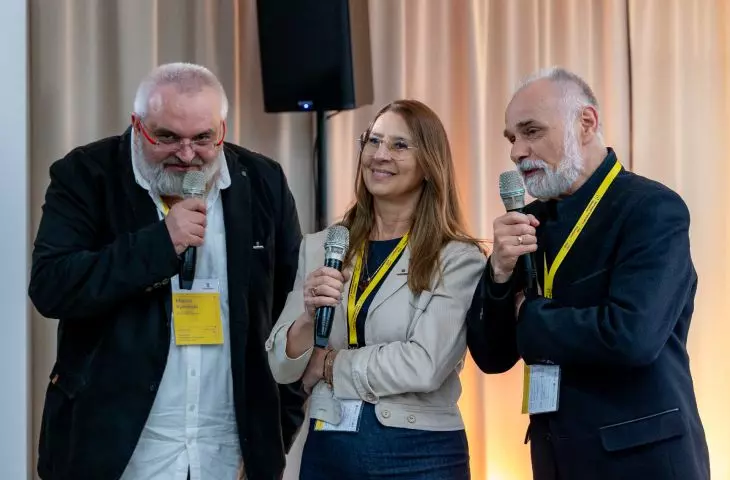
The keynote of the event was the need to bring the community of architects and public administration officials closer together through a deeper understanding of their mutual roles in the investment process. The symbolic beginning of the conference was marked by a presentation by Marcin Kaminski, chairman of the Council of the Swietokrzyskie OIA of the Republic of Poland, who with humor but also accuracy juxtaposed the differences between Europe and America, known from the movie "Pulp Fiction," with the subtle yet crucial differences between the functioning of professional and local governments. Such comparisons, as it turned out, inspired further, very specific and constructive discussion.
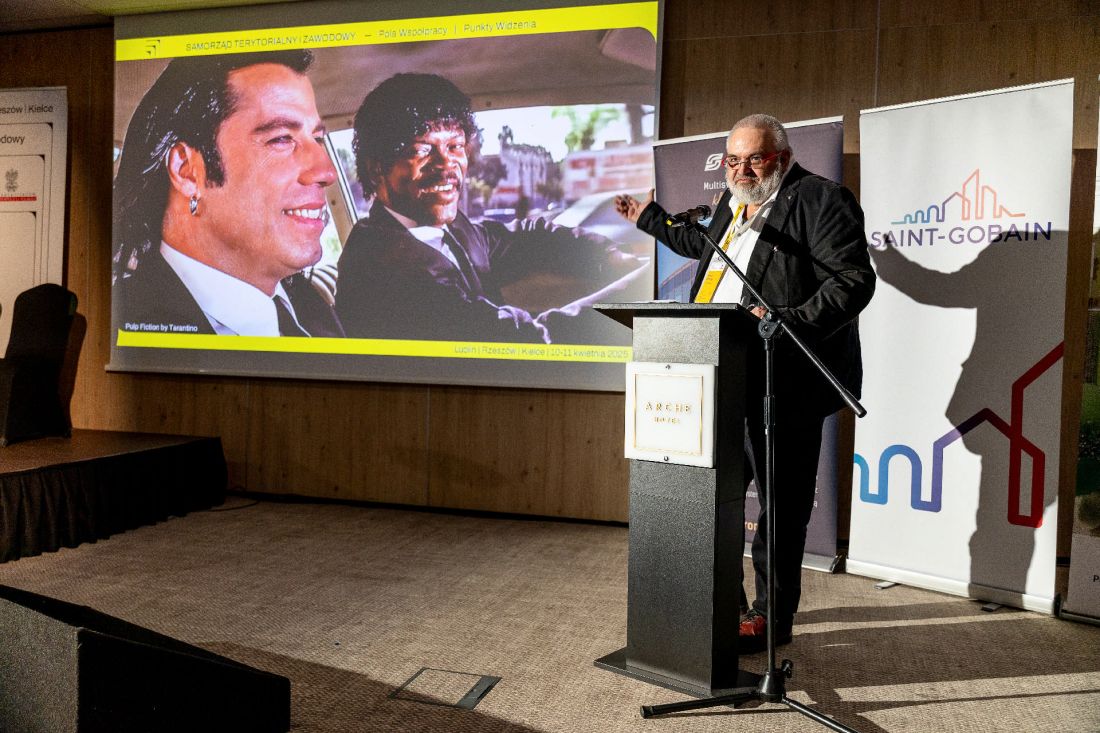
Marcin Kaminski comments on the similarities and differences between professional and territorial self-governments
© organizers archive
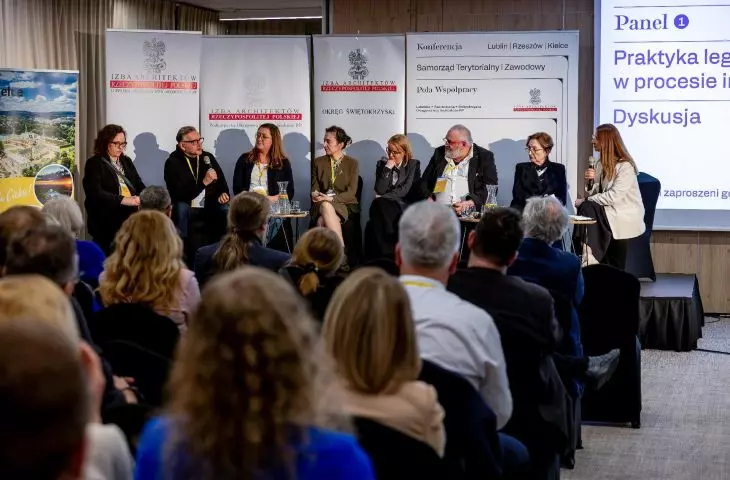
The first panel of the conference, entitled "Legislative practice in the investment process," was devoted to the application of law by administrative bodies. The paper by professors Arkadiusz Bereza and Marzena Świstak of the Maria Curie-Skłodowska University (UMCS) highlighted the dilemma between discretion in official decisions and the certainty of the law. The notion of "legitimate expectations," that is, the right of a citizen - including an architect - to predictability of administrative decisions, turned out to be particularly important. According to the speakers, the problem is not the law itself, but its different interpretation and practice of application in different offices.
Representatives of the General Office of Construction Supervision - Krystyna Pędrakiewicz-Sarachau and Sebastian Mazur - discussed the planned directions of digitalization of the investment process. They also showed proposed solutions to streamline the issuance of construction decisions and increase their transparency.
Elżbieta Bartman-Cupryś, Deputy Director of the Department of Infrastructure at the Podkarpackie Voivodship Office in Rzeszów, presented a paper on the difficult day-to-day reality of applying the prescribed procedures in the context of issuing a construction permit decision and its further legal circulation, and Aleksandra Wojtczak-Duch, member of the legislation team at the National Council of the Chamber of Architects, acquainted the audience with the efforts of the Chamber of Architects to improve the law.
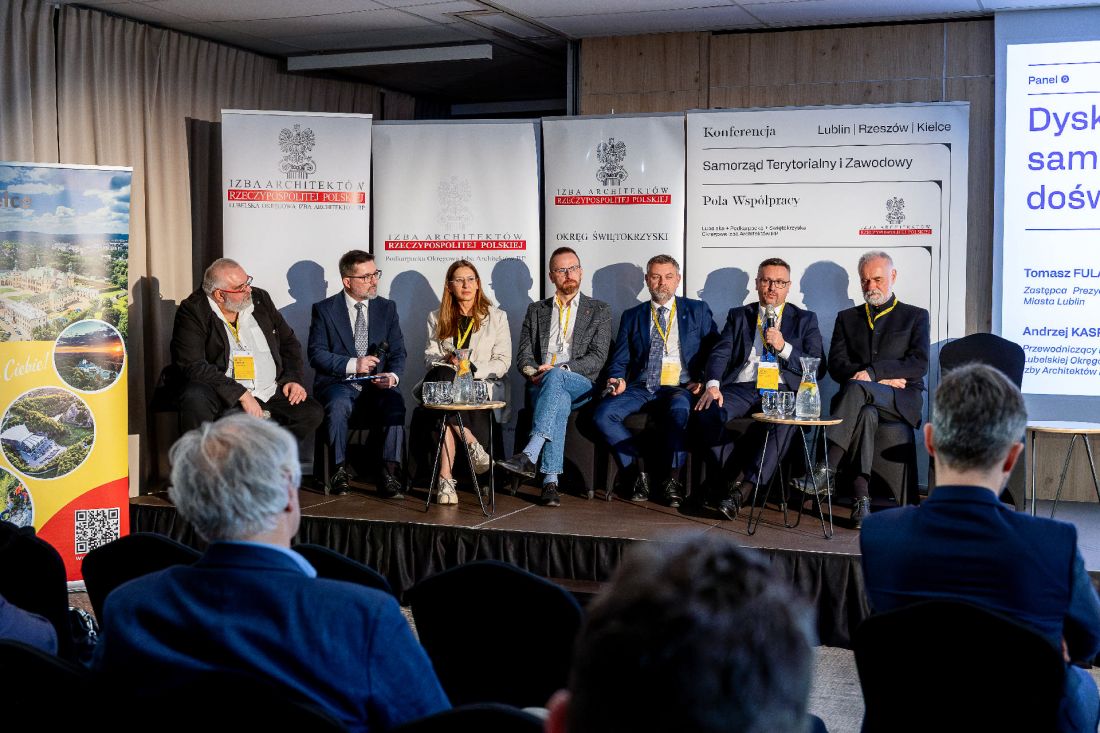
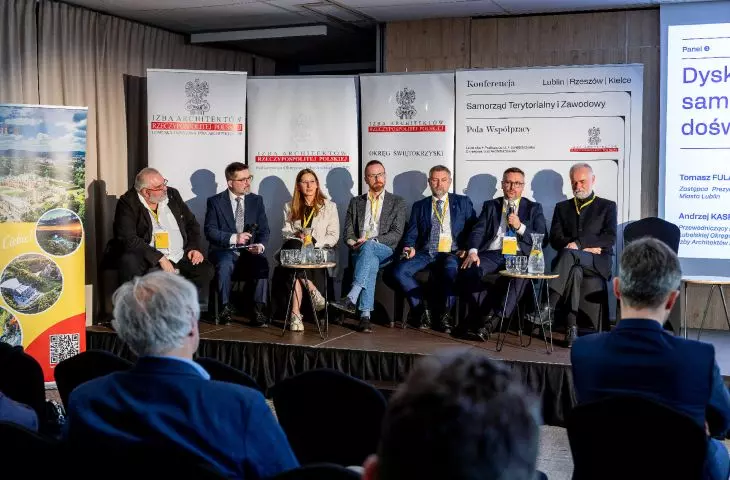
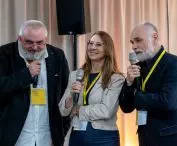
Introduction to the conference - from left: Marcin Kaminski (chairman of SWORIA), Artur Kalicki (announcer), Renata Swiecińska (chairman of PKORIA), Łukasz Syska (First Deputy Mayor of Kielce), Grzegorz Wrona (Deputy Mayor of Rzeszów), Tomasz Fulara (Deputy Mayor of Lublin for Investment and Development), Andrzej Kasprzak (chairman of LBORIA)
© organizers archive
As part of the panel, Wojciech Gwizdak presented the activities of the Inter-District Expert Panel, established in May 2024 by the six District Chambers of Architects of the Republic of Poland: the Lublin, Opole, Podkarpacie, Podlasie, Świętokrzyskie and Warmińsko-Mazurskie Chambers. The Kuyavia-Pomerania Chamber also joined in 2025. The ESM is composed of experienced practicing designers, delegated by the individual Councils of the District Chambers of Architects of the Republic of Poland. The team develops opinions on the application of the law in practice and other issues related to the practice of the architectural profession, providing substantive support to members of the Polish Chamber of Architects and architectural and construction administration bodies. These opinions do not constitute an official interpretation of the law, but serve as supporting material in the investment process. The team's activities are financed by the District Chambers of Architects of the Republic of Poland, which are signatories to the agreement, and the development of opinions is free of charge.
The second day of the conference was filled with two panels. The first of these, "Decision on construction permits - pitfalls and challenges," addressed pressing problems of administrative practice. The main topics were formal barriers and delays in the permit process, the most common mistakes in project documentation and the professional responsibility of architects.
The speakers drew attention to the problem of designing by people who do not have the appropriate authorizations or are not enrolled in the Chamber of Architects of the Republic of Poland. The question of whether the issuance of a building permit based on documentation created by an unauthorized designer constitutes a gross violation of the law received an unequivocal answer: yes. It was emphasized that despite the existence of relevant regulations, in practice they are often not respected - often with the tacit acquiescence of offices.
Adriana Sędłak, director of the Department of Architecture in Zamość, and Jacek Horoszczaruk from WINB in Lublin discussed the most common irregularities occurring in offices and ways to eliminate them. An important element of the panel were the voices of architects - Małgorzata Pilinkiewicz - deputy chairman of the Council of the Silesian OIA of the Republic of Poland, Renata Święcińska - chairman of the Council of the Podkarpacie OIA of the Republic of Poland, Bartosz Bojarowicz - chairman of the Disciplinary Court of the Świętokrzyskie OIA of the Republic of Poland and Wacław Matłok - District Professional Liability Ombudsman of the Podkarpacie OIA of the Republic of Poland - calling for consistent defense of the role of the profession as the most important guarantor of high quality public space. The statistics cited by Renata Swiecinska, obtained from the database of the Main Office of Construction Supervision, relating to the dramatically low number of decisions on building permits, to which the construction project prepared by an architect was attached, provide an answer to the question about the genesis of the unsatisfactory state of space in Poland.
spatial planning - between hope and risk
The last panel, "New Planning Tools - Opportunities and Risks," was devoted to the amendment of the spatial planning system and the analysis of new tools such as the General Plan and the Integrated Investment Plan.
A lot of controversy arose over the recently introduced legislative changes - on the one hand intended to organize the planning process, but on the other hand carrying the risk of marginalizing the role of architects and moving away from coherent urban planning concepts. As Alicja Strojny - Member of the Provincial Urban Planning Commission in Rzeszow - pointed out, the General Plan of a municipality can only be a starting point, and only on condition that it is created with the participation of IARP architects.
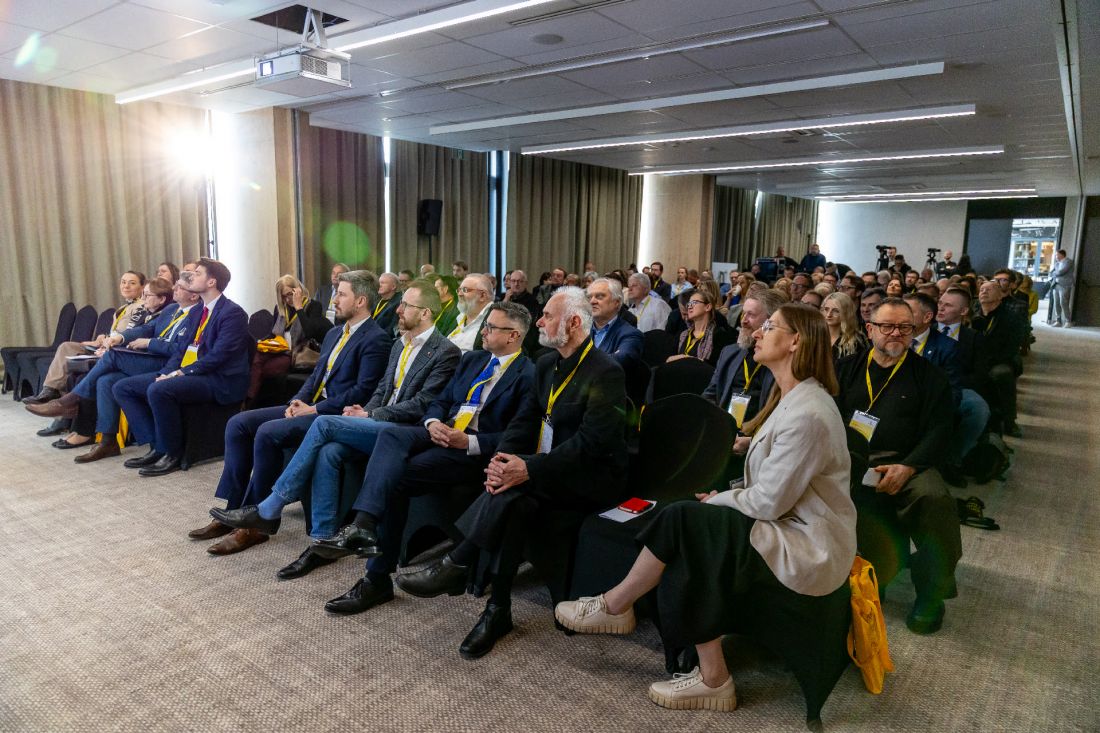
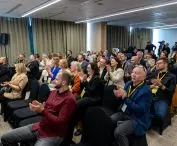
Report from the conference in Lublin - in the first row (from left): Arkadiusz Urzędowski (Acting Director of the Department of Infrastructure and Assets of the Lubelskie Voivodeship), Łukasz Syska (First Deputy Mayor of the City of Kielce), Tomasz Fulara (Deputy Mayor of the City of Lublin for Investment and Development), Andrzej Kasprzak (Chairman of LBORIA), Renata Święcińska (Chairman of PKORIA).
© organizers archive
An example of implementation of ZPI in the New Żerniki housing estate in Wroclaw was discussed by Piotr Fokczynski - former Architect of the City of Wroclaw and current President of the National Council of IARP, planning of residential investments from the investor's point of view was presented by Krzysztof Giemza, proxy of Echo Investment - one of the largest developers in the country, and Paweł Pedrycz presented the value of planning workshops and public consultations as tools for real co-determination about space. Anna Dwurnik - director of the Kielce City Development Office - presented modern methods of digital management of urban space.
architect - a partner, not a supplicant
The words that were said at the opening of the conference became its summary: "An architect should be a partner, not a supplicant." For two days in Lublin, voices resounded in support of the postulate to build a relationship based on mutual respect between local and professional government and understanding of the role imposed on these institutions by society. Only then will it be possible to shape space efficiently, responsibly and qualitatively, in accordance with the needs and requirements of the law.
The conference showed that a common platform for dialogue is possible. What is needed, however, is consistency, the courage to enforce regulations, and the recognition that architectural design - as a profession of public trust - is not a service, but a mission to serve the common good. And while today "not every building has an architect," the future should move toward ensuring that every environment bears the mark of conscious and responsible design. The initiative taken will continue in the coming years, and the organizers are already inviting to the next installment of the conference Local and Professional Self-Government Fields of Cooperation, because the dialogue should be continued and transformed into concrete, joint actions.
Michal HAGEMEJER
Architect IARP, Member of the Lublin District Council of the Chamber of Architects of the Republic of Poland