





Bernadetta Budzik, a Polish architect who has been successfully working in Paris for several years, collaborating with French designer Rachel Rouzaud (we saw their work last year at Arselane, the main exhibition at the Venice Architecture Biennale), has another success to her credit!
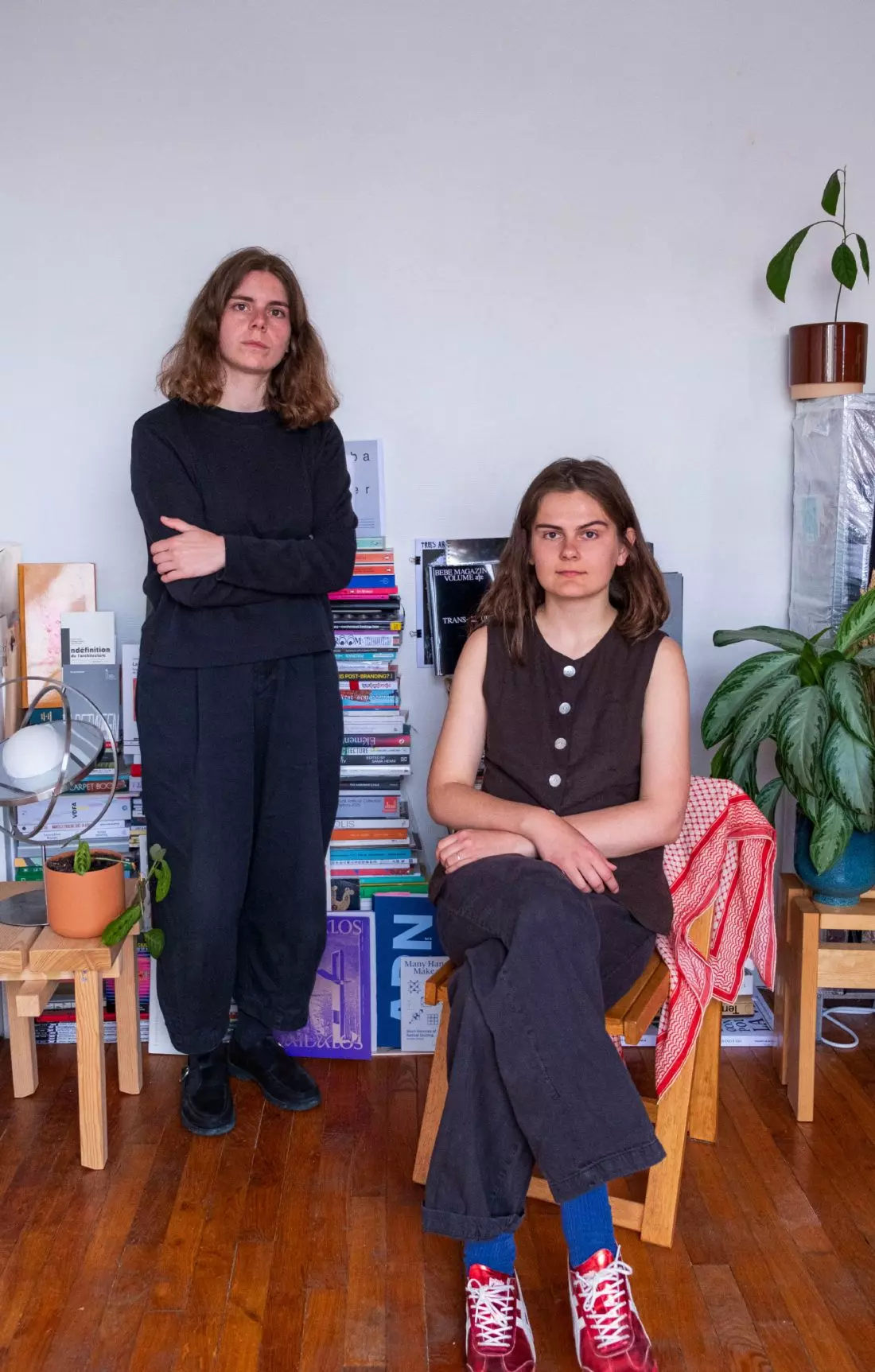
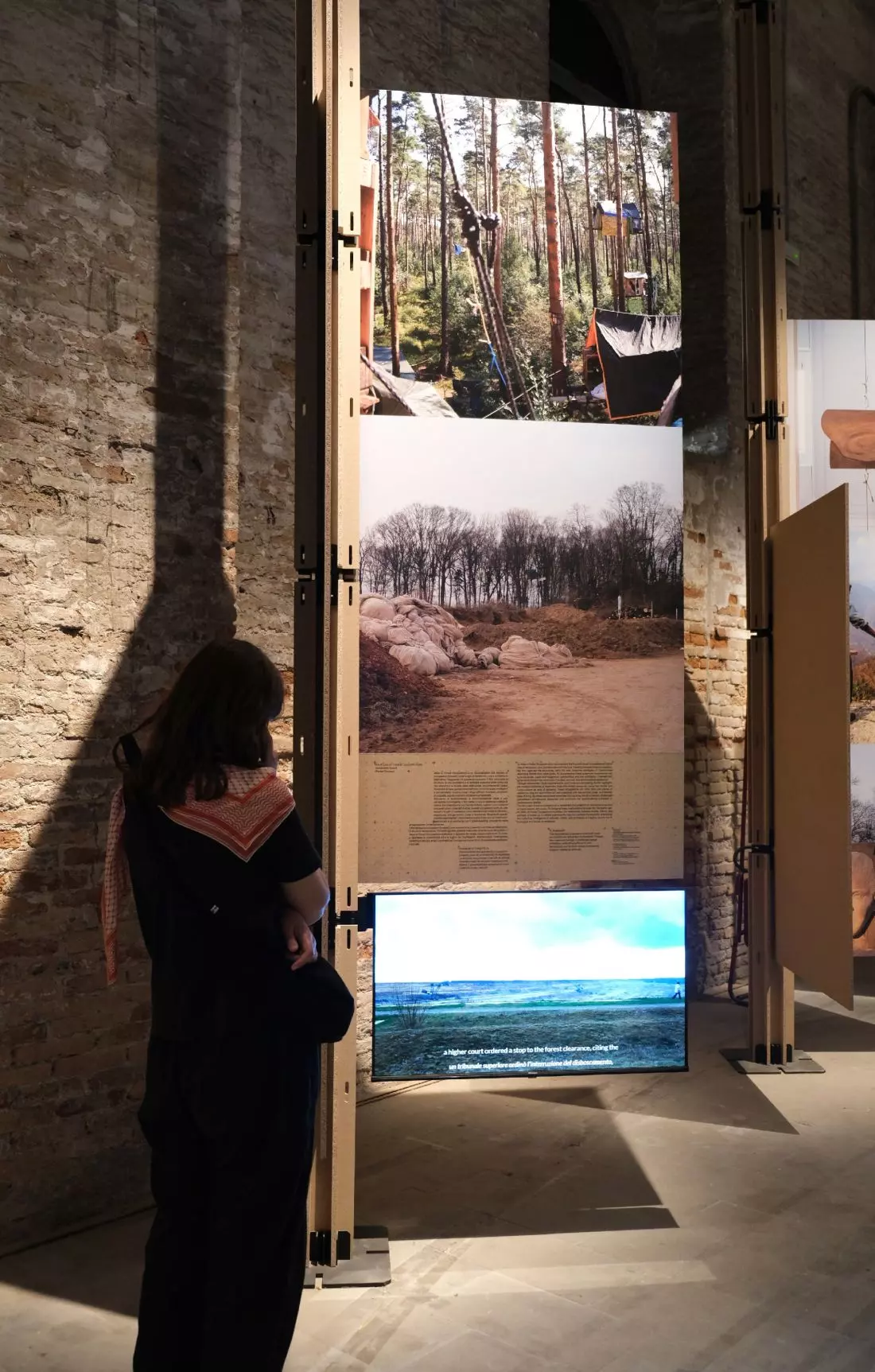
Bernadetta Budzik and Rachel Rouzaud and their project at the Arsenale during the Venice Architecture Biennale 2025.
© Bernadetta Budzik archive
read more: Polish architect's project at the main exhibition of the Venice Architecture Biennale!
The work of Bernadetta Budzik and Rachel Rouzaud was included in the "Émulations II" exhibition at the Pavillon Comtesse de Caen in Paris. The exhibition features the designs of four finalists of an architectural competition organized by the Academy of Fine Arts, which operates within the Institute of France - the Charles Abella Prize competition. In this biennial competition, four projects by male and female artists under 40 years of age representing new treds in contemporary architecture are awarded.
The works were judged by a jury consisting of: Marc Barani, Bernard Desmoulin, Anne Démians, Pierre-Antoine Gatier, Dominique Perrault, Alain Charles Perrot, Jacques Rougerie, Aymeric Zublena, Jean-Michel Wilmotte, François Chaslin, Sabine Frommel, Francis Rambert, Philippe Trétiack and Chris Younès. The projects that qualified for the finals were: Bernadetta Budzik and Rachel Rouzaud, Etienne Gilly and Gianluki Bugel, Iris Lacoudre, and Mathieu Lucas, who won the grand prize.
In addition to an exhibition presentation and financial prize, the finalists were able to spend a month in residence at Domaine de Frapotel, a research campus owned by Dominique Perrault and Gaëlle Lauriot-Prévost, with Villa Weil, a modernist design by Jean Dubuisson, at its heart.
© Académie des beaux-arts
The common theme of the works on display was "Migration."
Migration shatters the binary oppositions that have shaped the lives and knowledge of the present: it requires complex rethinking, and poses both political and intellectual challenges. We are participants and witnesses of these changes, let's become an engine of them. Can architecture become migratory, subject to transformation itself? Architects, urban planners, landscape architects - how do we rethink the relationship to fences and what actions can we take to make these unclear territories and borders habitable?
- asked the organizers of the competition.
How did Bernadetta Budzik and Rachel Rouzaud respond to the set topic? Their project "La rivière et le placard," or "The River and the Wardrobe," is a story about rivers, blue ribbons threaded across the landscape, which can be a natural boundary, but also a kind of repository of information and resources, a link between cultures, and even a form of transportation.
The authors of the project "La rivière et le placard" are Bernadetta Budzik and Rachel Rouzaud
© Bernadetta Budzik
"La rivière et le placard" ("The river and the placard") tells the story of a Grand Tour-type journey, leading from its source near Zakopane in the Polish mountains to its mouth in Le Havre, France. The route follows waterways through territory imagined as a hyper-bassin versant [hyper basin - editor's note] in the heart of Europe. We were interested in the resources of the territories crisscrossed by rivers and canals, and how materials and savoir-faire [practical knowledge - editor's note] could and can circulate within this common catchment area today.
Former mining sites and existing structures make it possible to recognize materials that were once available locally, before globalization redefined supply circuits. The project is an attempt to observe and collect traces of these local material economies, as well as reflect on the contemporary return to water transportation, supported by the European Union's environmental policies, as an alternative to road transport
- Bernadetta Budzik explains.
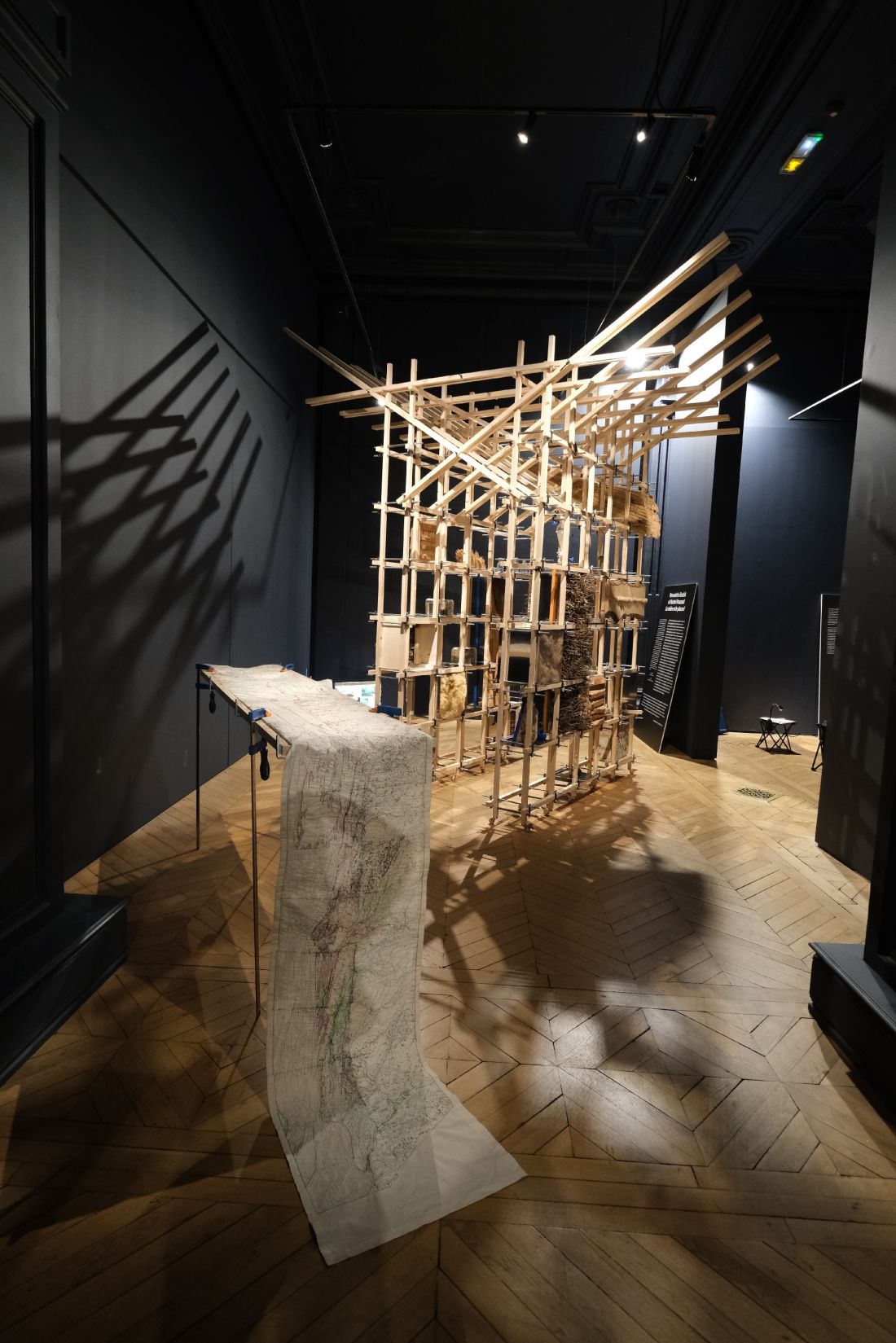
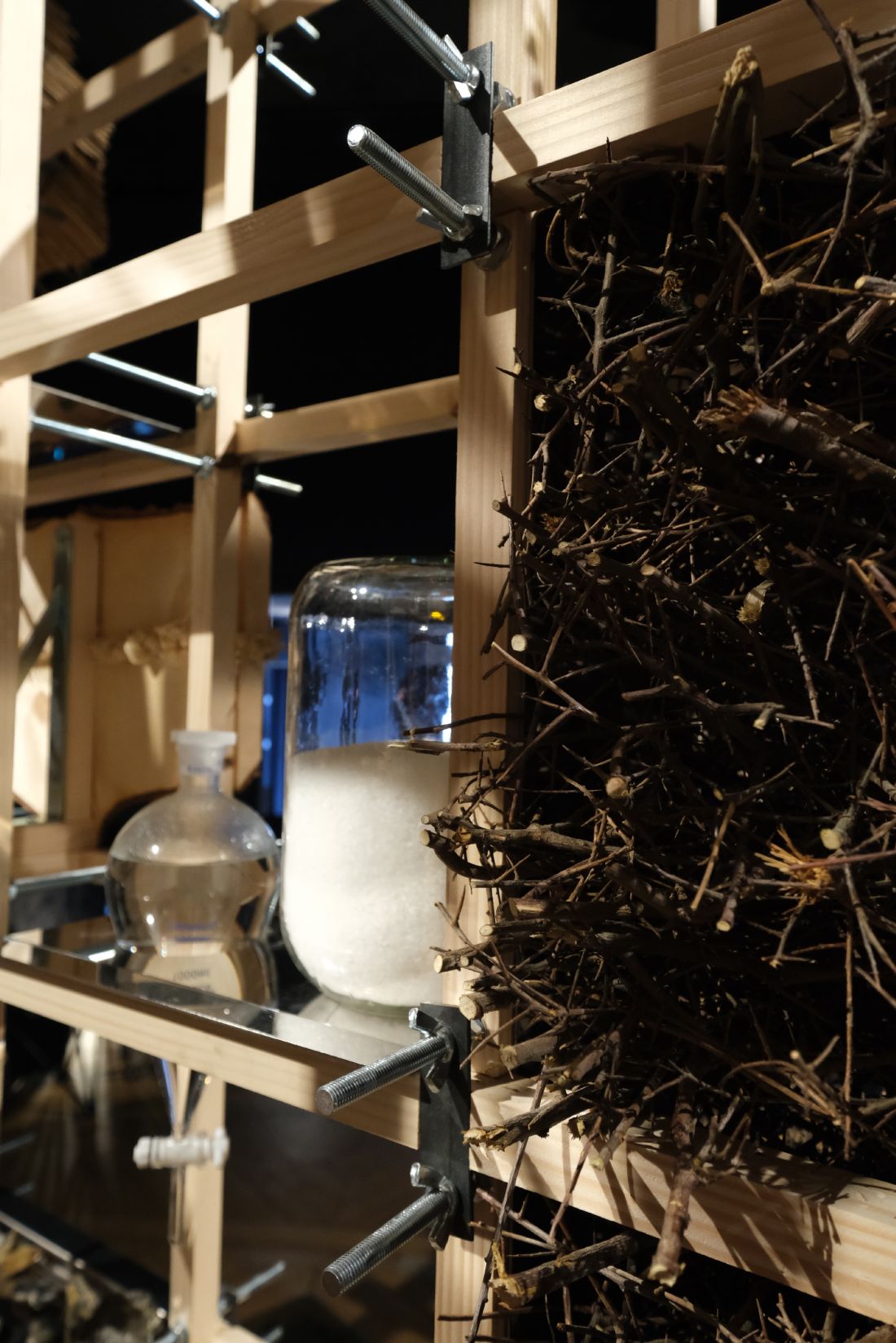
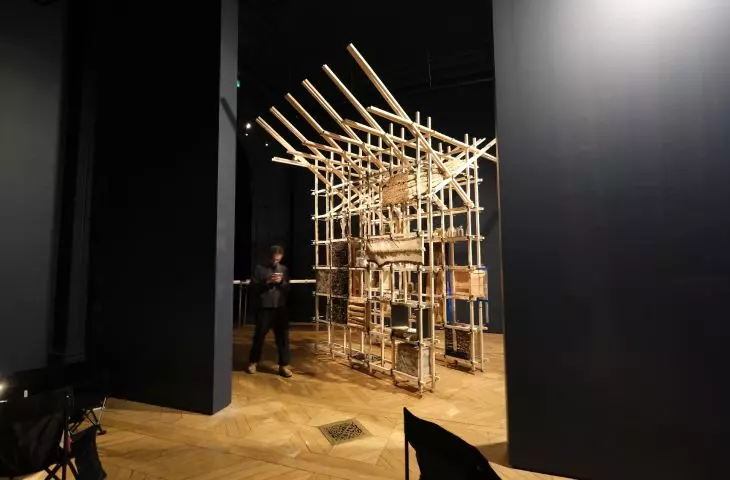
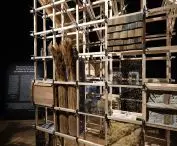
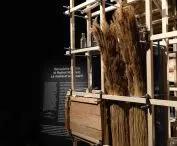
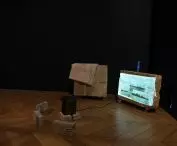
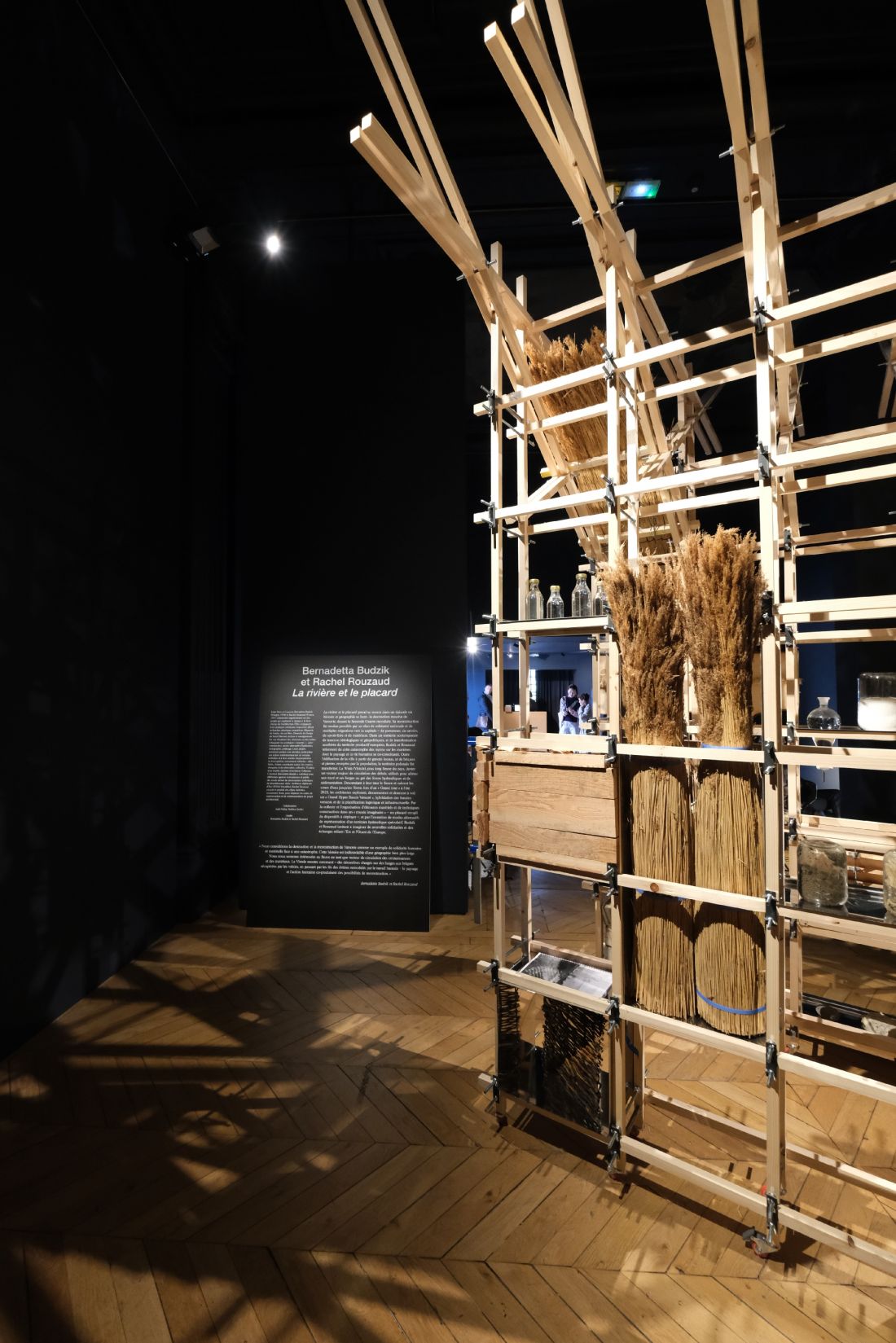
exhibition view
© Bernadetta Budzik
Inspired by the work of French geographer Élisée Reclus and Scottish biologist Patrick Geddes, the architects read the territory not through its administrative boundaries, but the complex hydrographic system. The reconstruction of Warsaw after the destruction of the war was also an important point of reference for them, as an example of a landscape transformed by the process of reconstruction.
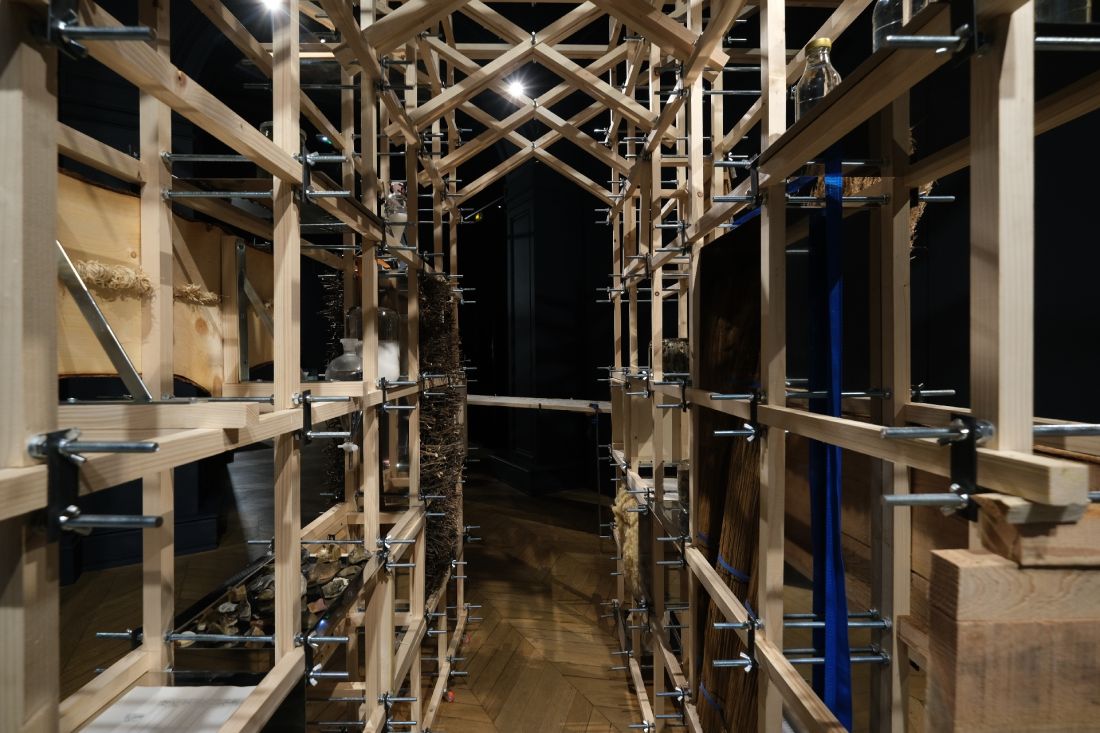
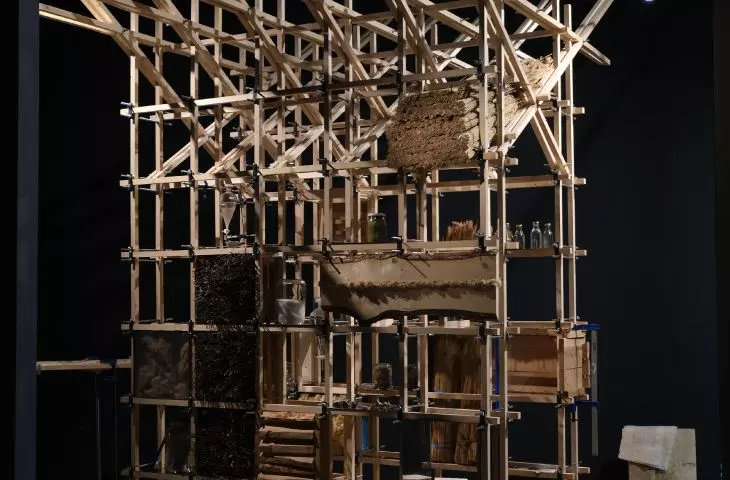
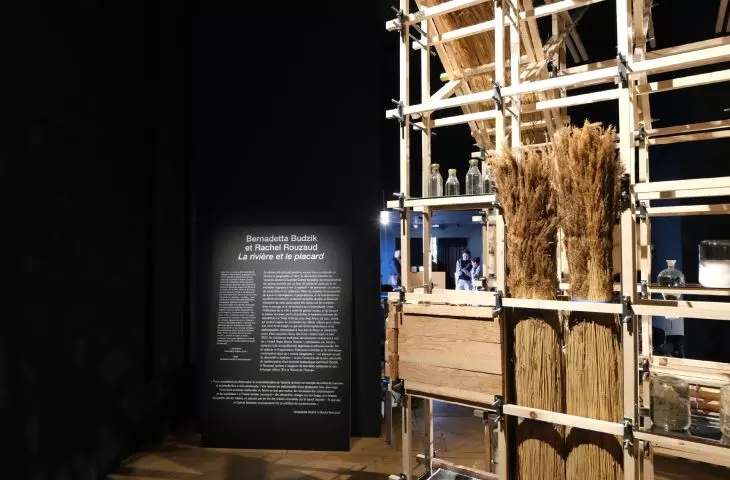
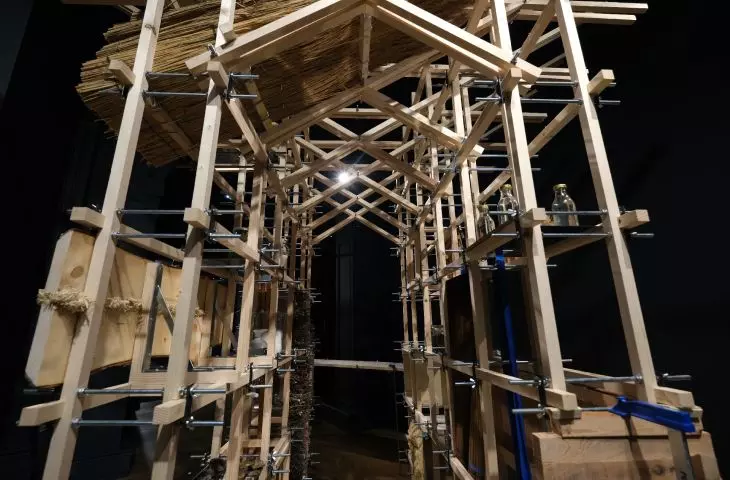
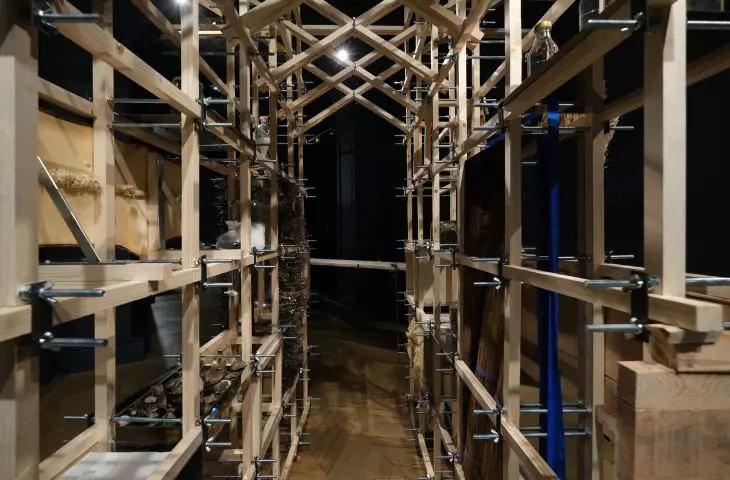
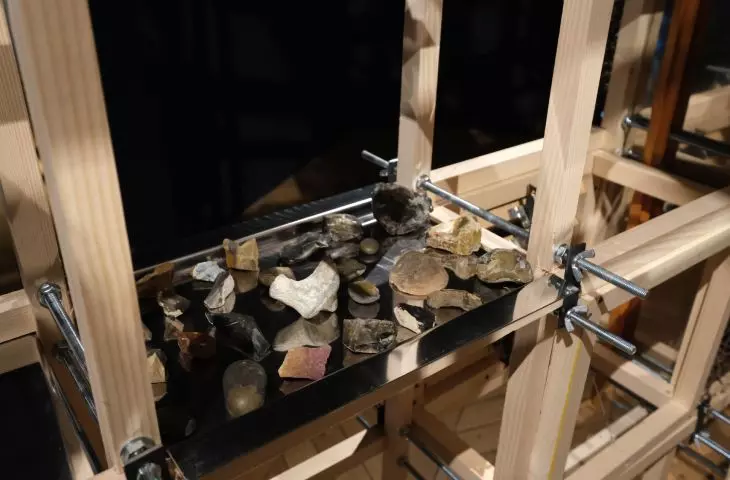
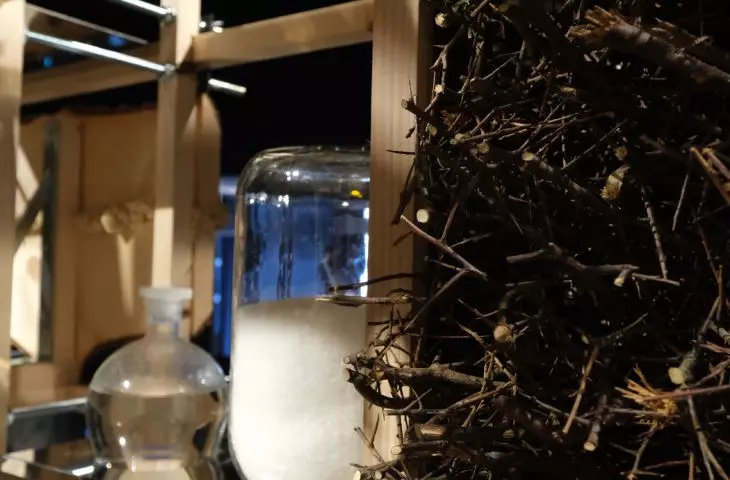
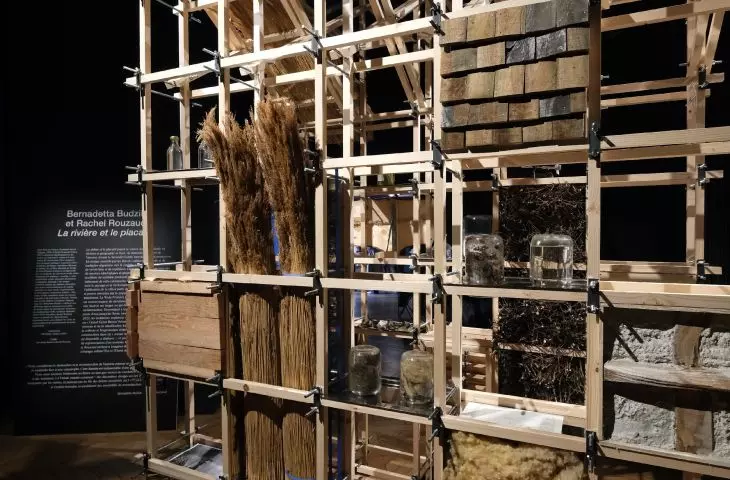
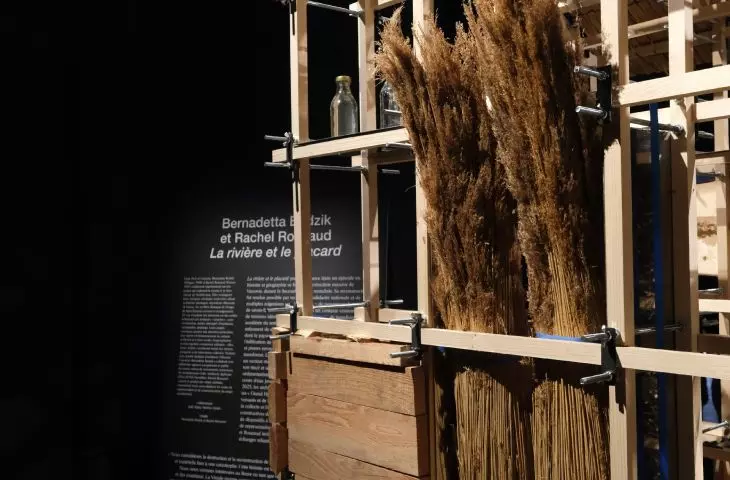
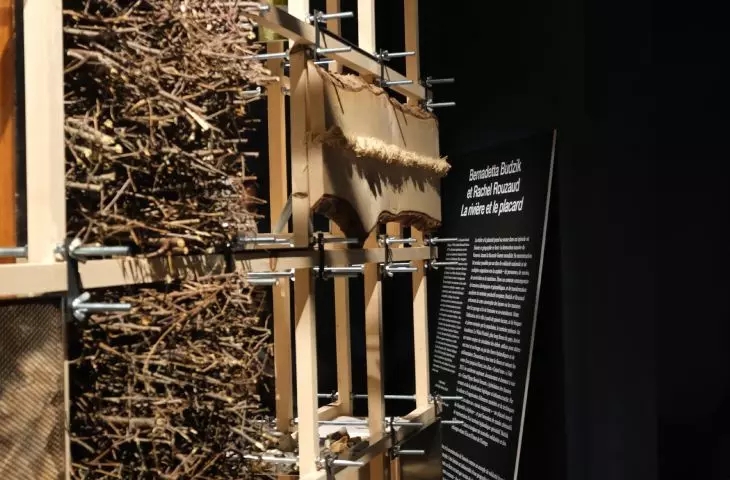
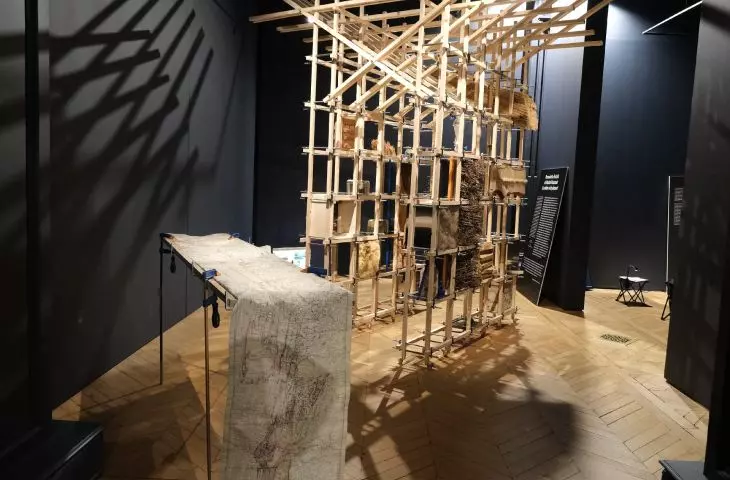
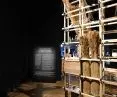
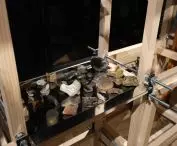
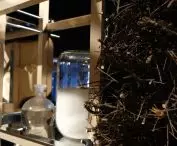
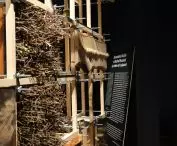
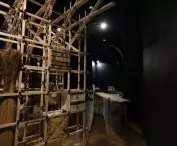
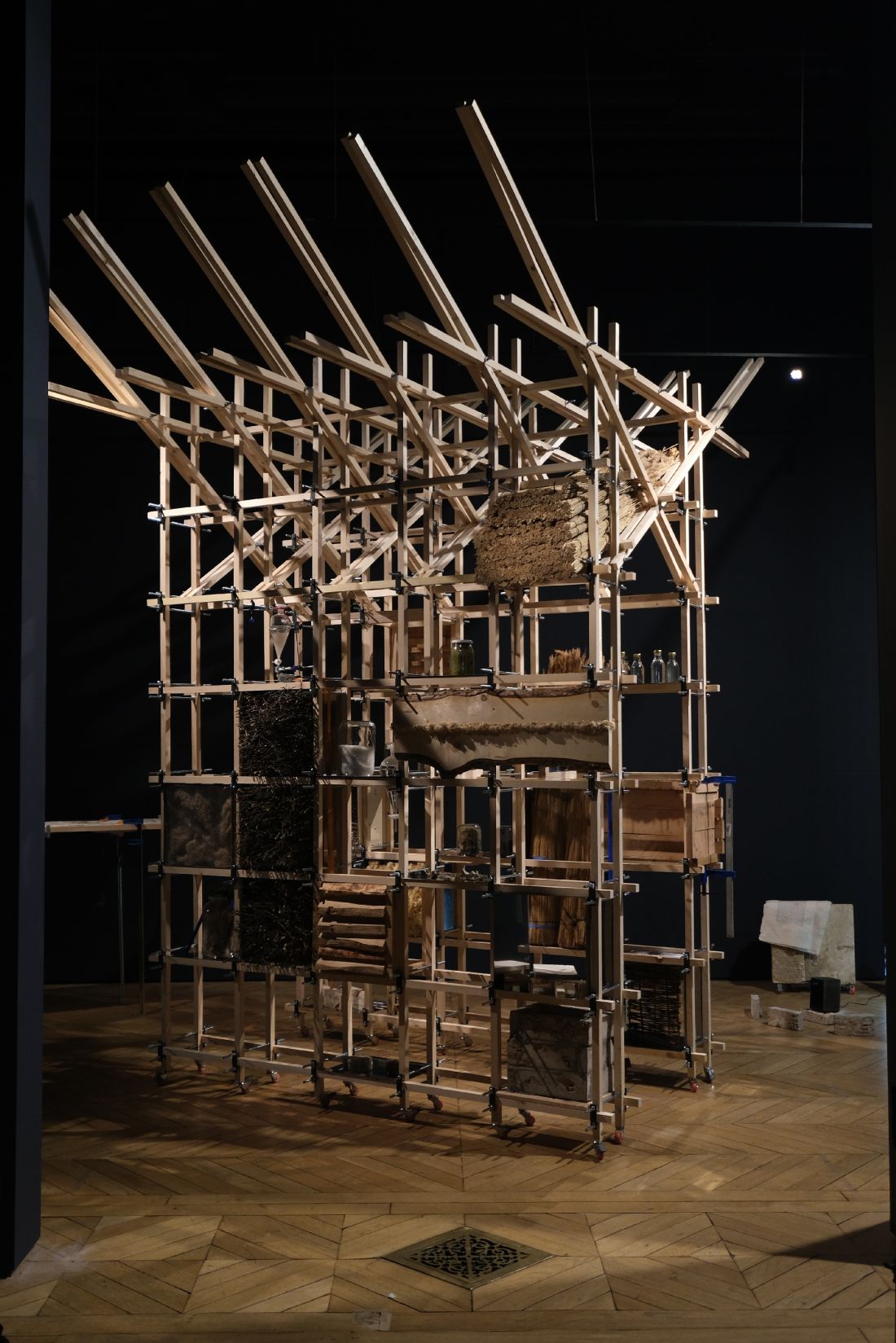
The cabinet is filled with samples of water, soil and materials
© Bernadetta Budzik
This insight allowed them to explore the idea of the water canal network as a common European collection, in which
resources, water and materials require shared care, interdependence and forms of solidarity across political divides.
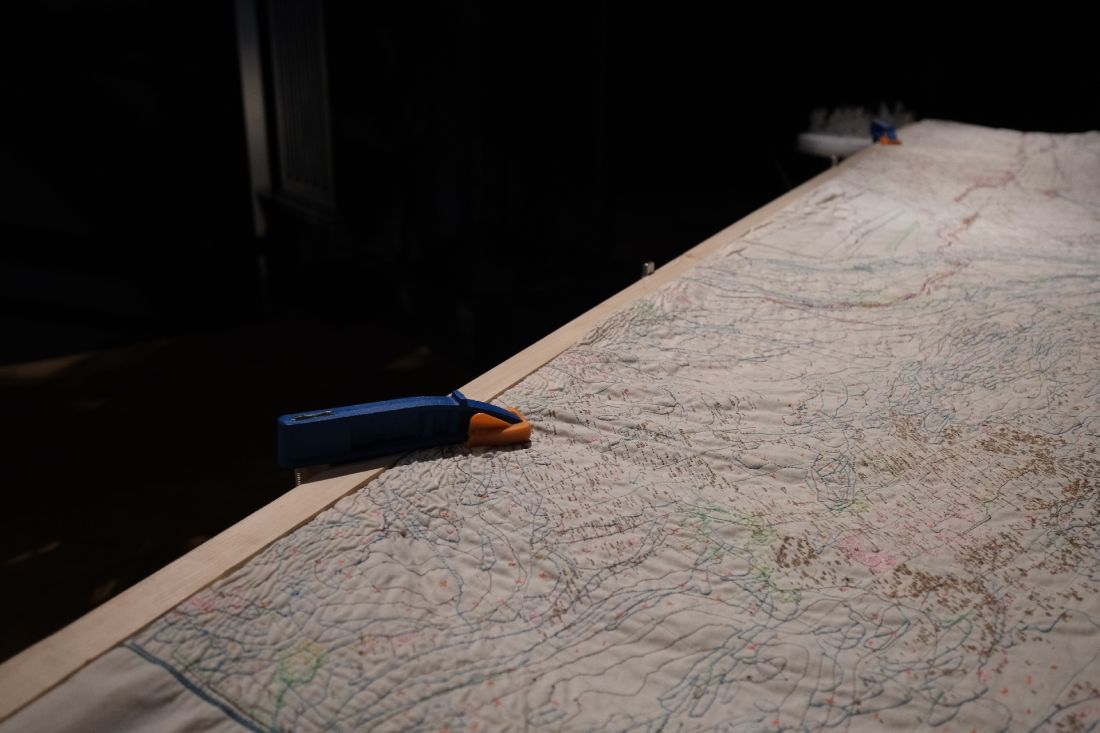
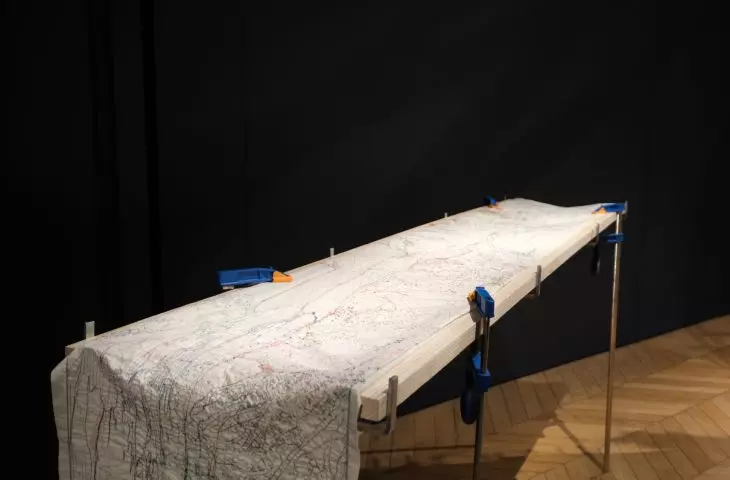
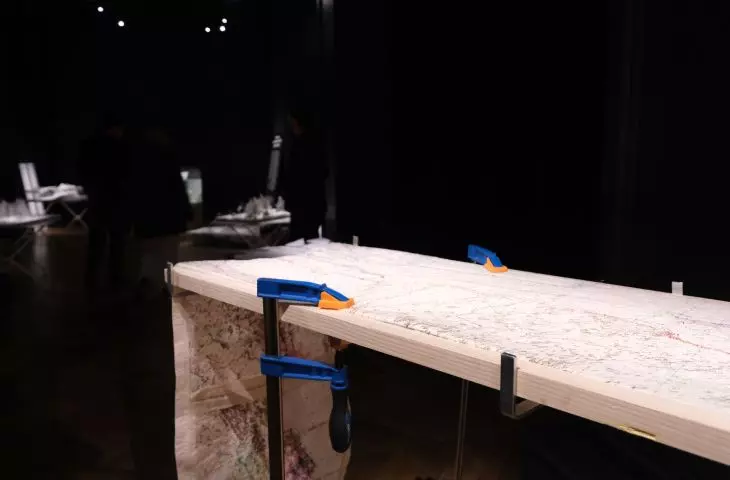
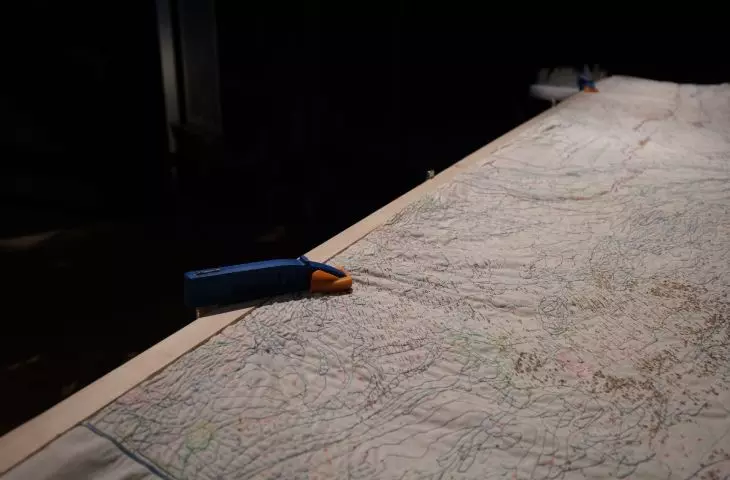
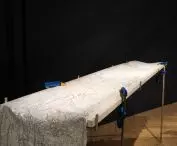
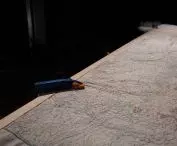
The embroidered map shows the network of rivers and canals, the stopping places and the relationship between territory, water and resources
© Bernadetta Budzik
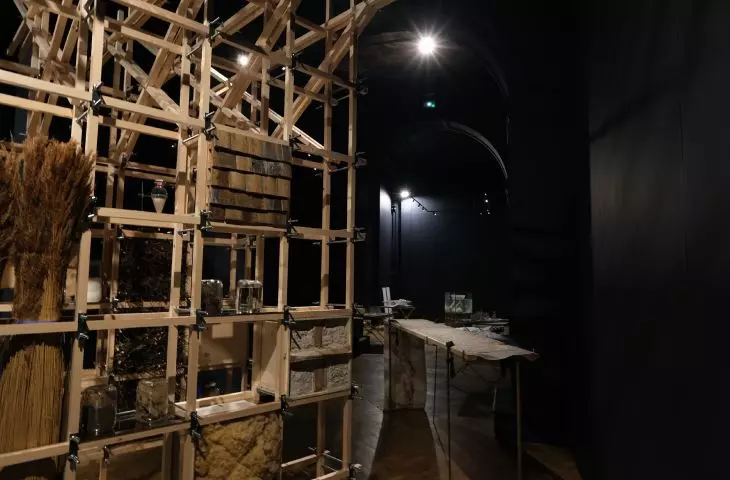
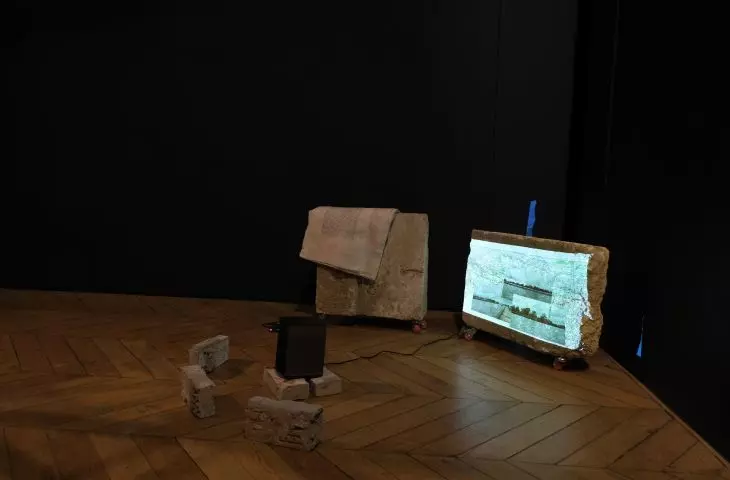
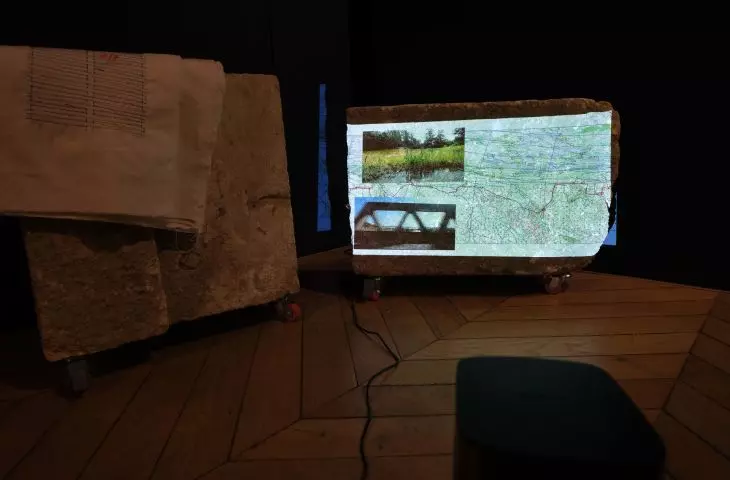
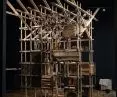
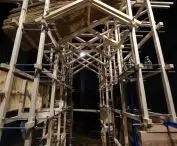
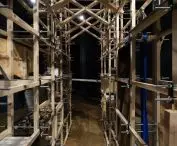
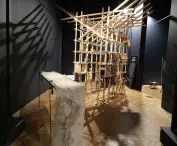
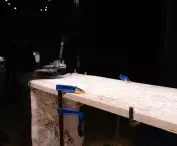
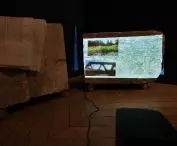
The project presented at the exhibition took three forms: a film projected on stone depicting the expedition along the rivers undertaken by the artists, an embroidered map showing the network of rivers and canals, stopping places and relations between territory, water and resources, and a cabinet, an archive of the journey in the form of an openwork wooden structure filled with samples of water, soil and materials collected along the way.
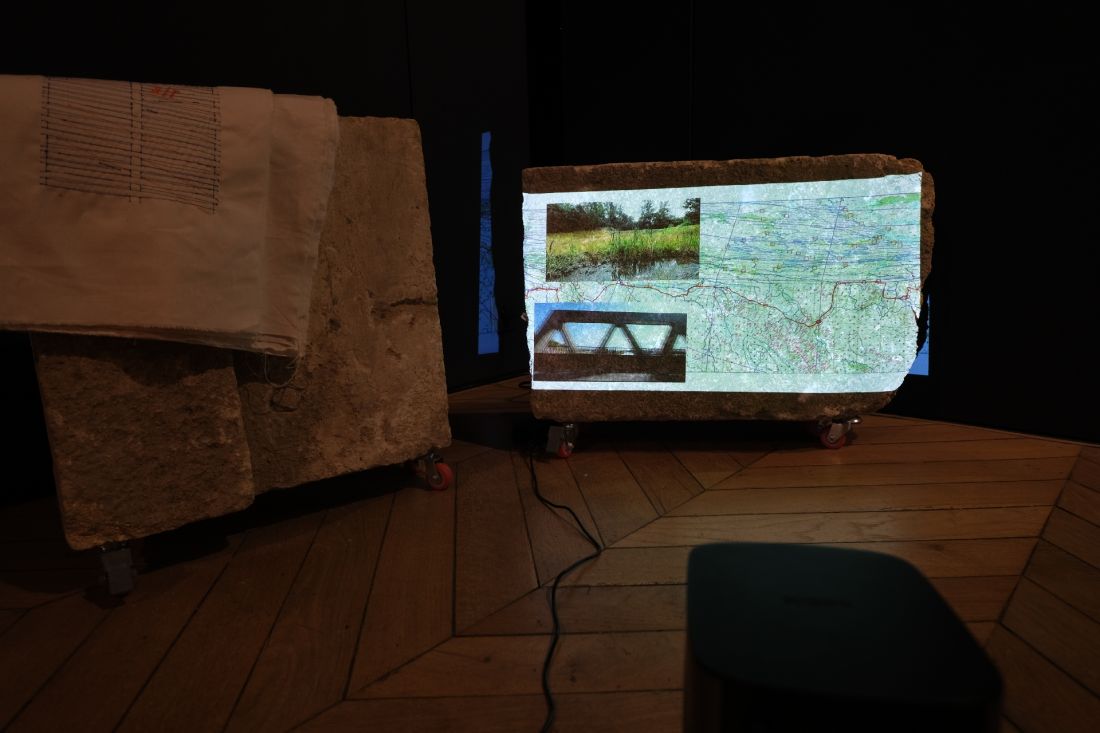
The film illustrates the expedition along the rivers made by the creators
© Bernadetta Budzik
This is not the first time Bernadetta Budzik has grappled with the theme of the river as a natural boundary and at the same time an excuse to seek connections. In her thesis, defended in 2021 at the Faculty of Architecture at the Cracow University of Technology, she uses this spatial barrier to create architecture designed to foster contact between residents near the Polish-German border.
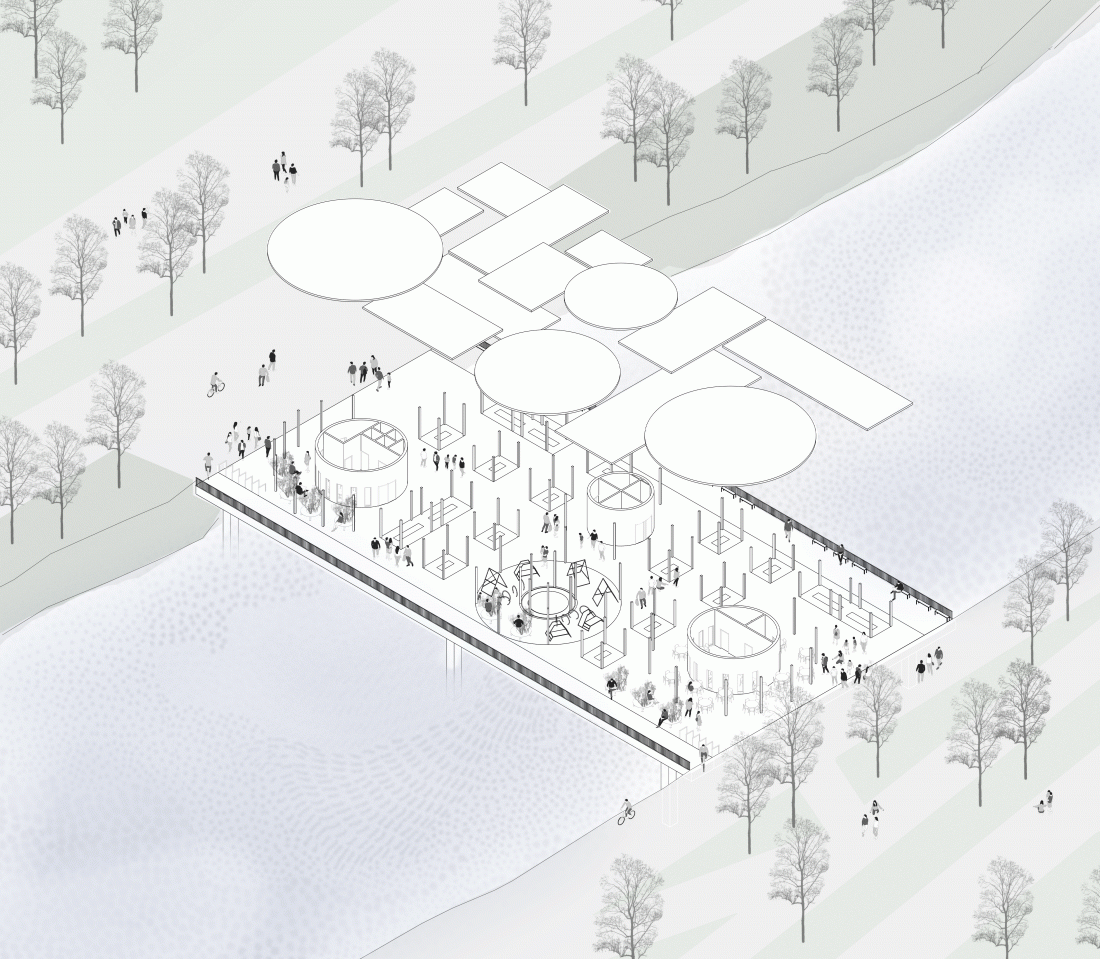
Architecture linking cultures. Concept of a vegetable market on the Lusatian Neisse River.
© Bernadetta Budzik