





We know from pre-war archives that Warsaw had a seasonal infrastructure. During the swell of the river, piers, floating pools and waterway stops were set up. For the winter, this infrastructure was rolled into the harbor. Now that we have moved the city to the river, the boulevards are besieged by people who have come to love spending time on the water, we need to think about how we can get back into the flow of the river.
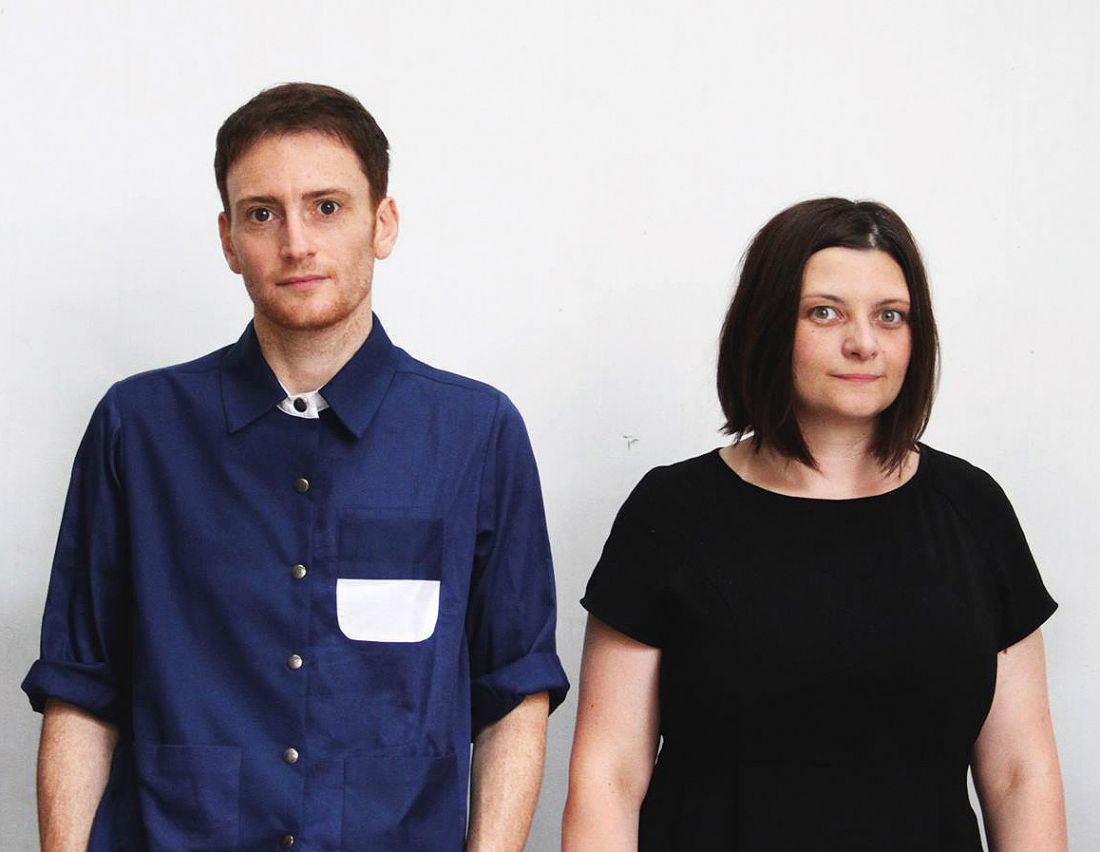
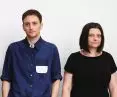
CENTRALA - Simone de Iacobis and Malgorzata Kuciewicz - creates projects under the motto "Amplification of Nature," based on the study of the relationship between architecture and natural processes. For them, architecture is a process, and gravity, water circulation, atmospheric or astronomical phenomena are its building blocks. In architecture that combines the intimate human scale with the scale of the planet, they see a tool that helps tune in to the rhythm of the world around us. With the idea of creating artisanal microclimates, they won the competition "Futuwawa. How we will live in Warsaw of the future" (2021). CENTRALA has presented its explorations in international exhibitions, including the Venice Architecture Biennale "Amplifying Nature, 2018; +/-1°C: In Search of Well-Tempered Architecture" (2023), London Design Biennale "The Clothed Home" (2021), Lisbon Architecture Triennale (2022), Gwangju Biennale "Postartistic Assembly" (2023). Since 2017, they have been steadily collaborating with the Kharkiv School of Architecture, implementing an original series of workshops. Together with the Bęc Zmiana Foundation, in 2024 they published "Workbooks: Light. Water. Wind. Gravity" encouraging people to go into the field, immerse themselves in the landscape and make careful observations.
Ewa Karendys: floodplains, charms, bogs, sedges, reed beds, reeds, rushes, sloughs, mudflats, marshes, bryophytes, mosses, moors, swamps, alders.... These terms associated with wetlands have long gone out of use. Why is this the case?
Malgorzata Kuciewicz: We have cut ourselves off from nature and natural phenomena. It seemed that the swamp was not an urban theme: the modern city provided sterility, predictability, permanence, all things with which the swamp was not associated at all. This has changed, however, due to climatic consequences. Today we know the important thermodynamic properties of wetlands, the important role they play in cooling the city, their impact on the microclimate. We are seeing a return to thinking about how the city soaks, how to restore hydrographic systems on oxbow lakes, how to create recreational areas along them.
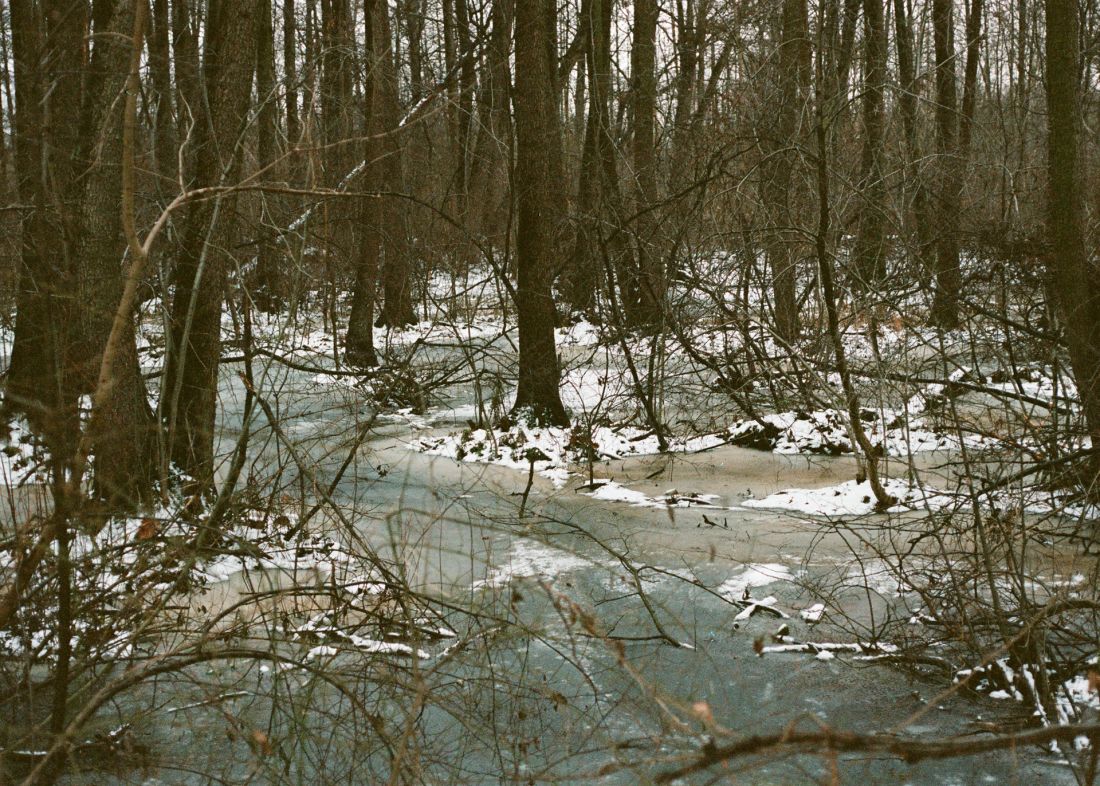
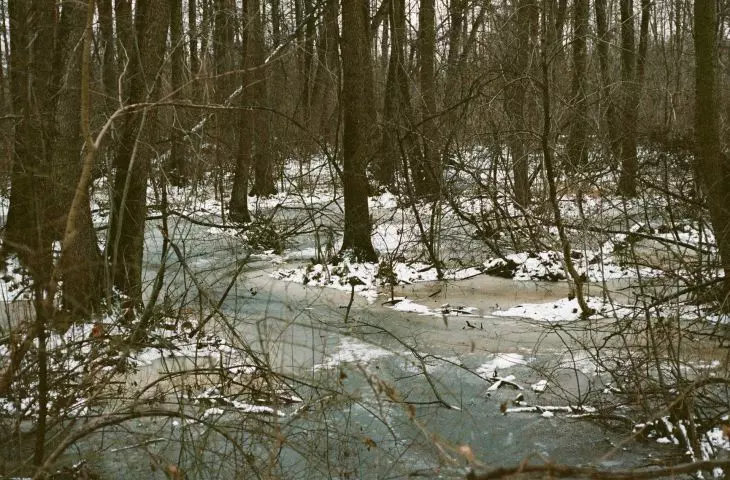
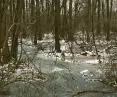
Ursynowska Escarpment reserve, 2023
Photo: Simone De Iacobis
Ewa Karendys: What is the situation of the swamps in the capital today? Are the authorities aware of their important function and where protection needs to be increased?
Simone De Iacobis: A part of Warsaw's wetlands is under protection. Together with the Center for Wetlands Protection, we have studied several existing marshes and those that have disappeared from the city's landscape. For example, at Zakol Wawerski, thanks to a grassroots initiative, the process of placing the area under greater planning protection is underway. We have to remember that the river is also a wetland, so the entire Vistula River corridor is protected as a Natura 2000 area. Many of these areas, such as the Bielansky Forest, the Ursynów Escarpment, have the status of a reserve, others are ecological uses or are in a Protected Landscape Area. Until a few years ago, the biggest obstacle was that the wetlands were seen as separate pieces, not as an urban system.
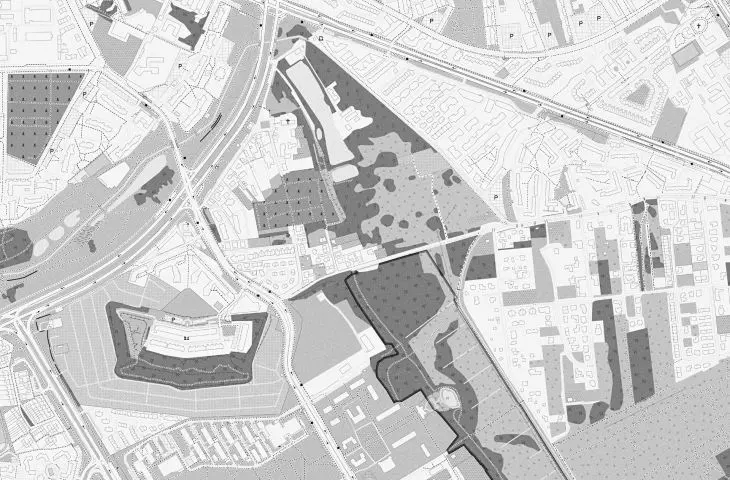
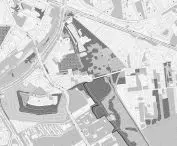
Malgorzata Kuciewicz: When it comes to water circulation, every scale counts, including the regional one, which is very important for sustaining hydrological systems. The beautiful area of Zakol Wawerski, the Warszawianka area or even the Royal Baths Park can be boldly treated as systems with wetlands. Thanks to the Wetlands Protection Center, which helped us create a map of Warsaw's wetland sites, we realized that we are dealing with one big organism. And this is how these areas should be perceived. Anyway, Warsaw, like very many cities, was founded on a swamp. The name of our land was originally Mazow and meant "muddy country."
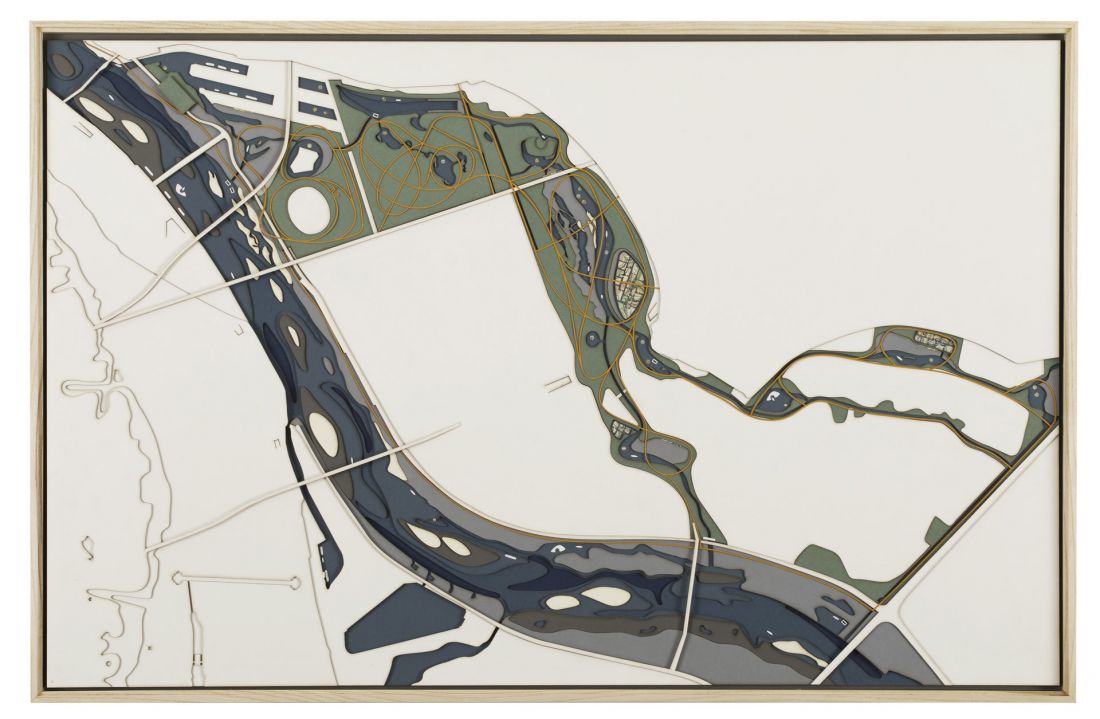
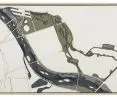
A vision of Warsaw, where, as an effect of the naturalization proposed in the project, floodplains are created parallel to the periodic swells of the Vistula River - mock-up: Kuba Morkowski, Adam Perka The work was created for the exhibition "Futurama Warsaw" (curator: Jakub Szczęsny), ZODIAK Warsaw Architecture Pavilion, December 2018-February 2019
Illustrations courtesy of CENTRALA Design Group
Ewa Karendys: What about sites that are not subject to protection? Are there sites that should be protected, but awareness of their value is still low?
Malgorzata Kuciewicz: The problem is money. For example, thanks to grassroots initiatives: art and nature activities, excursions, it has been possible to strengthen awareness of how important the Zakle Wawerski area is for Warsaw. Everyone understood that it should be protected, and the city passed a new local plan in 2022 to preserve the naturally valuable area. The trouble, however, is the issue of ownership - there is no budget to buy the land from the owners. As CENTRAL, we support the Zakole group, which takes care of the area. We are trying to program the area: show what a wetland park could look like, we have seen this type of solution in England or Bucharest, where the wetland was created in a huge concrete retention basin.
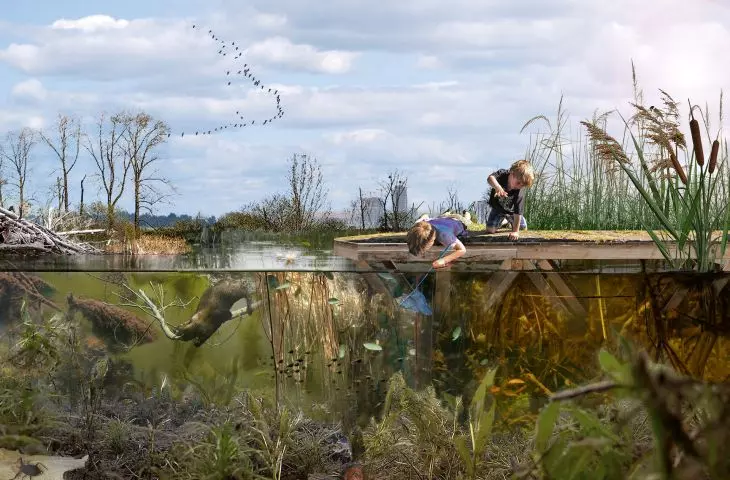
Simone De Iacobis: We show visualizations and cross-sections to help understand how diverse wetlands are, what happens under the water level. Such architectural tools help enhance the imagination. Wetlands are carbon stores: over the millennia, including in Warsaw, organic material has been rotting, deposited. So large deposits of carbon dioxide accumulated there, which would be released if the wetland was drained. Besides, any wetland counteracts the overheating of the city. The thermal inertia of the swamp ground heats up the cool night air, creating upward currents; during the day, the superheated air cools surface evaporation. Little, the marsh refuges are extremely diverse, rich in species of toads or other amphibians and reptiles that need the most protection today.
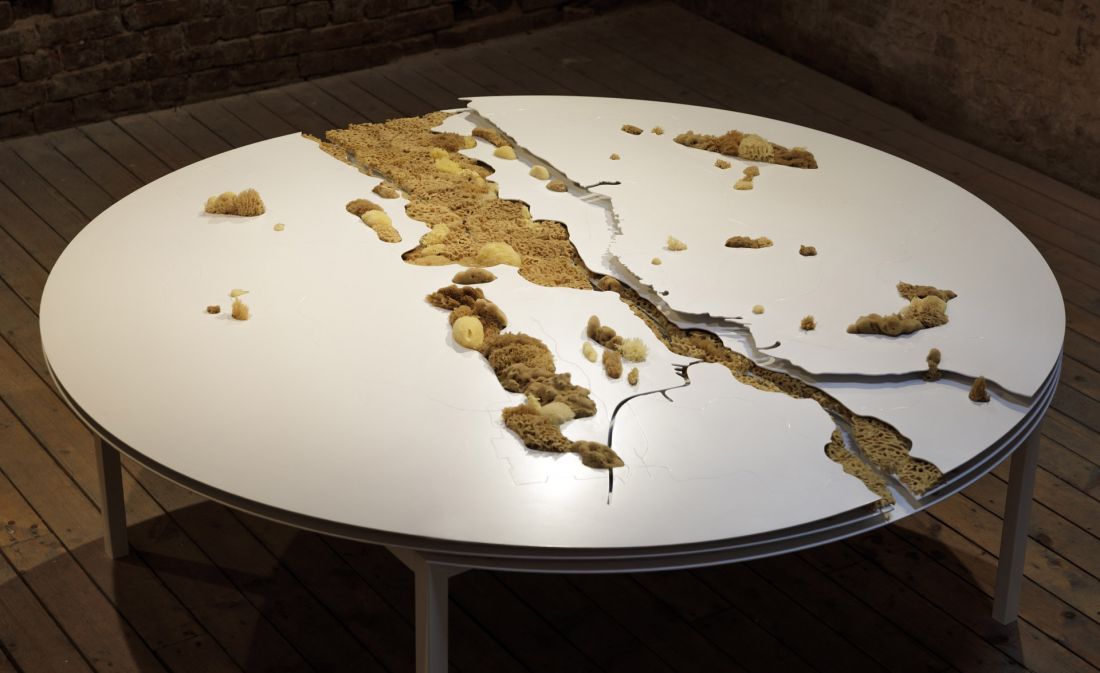
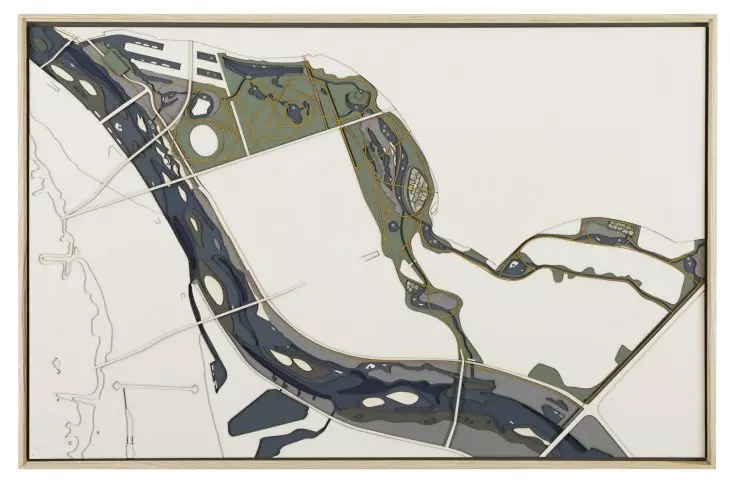
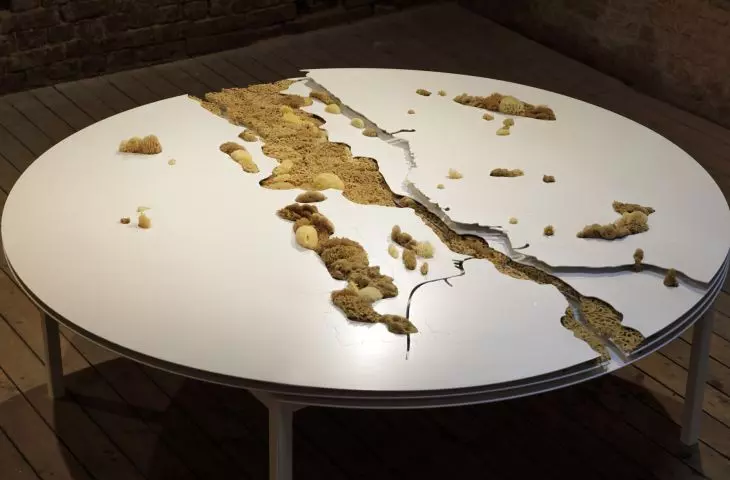
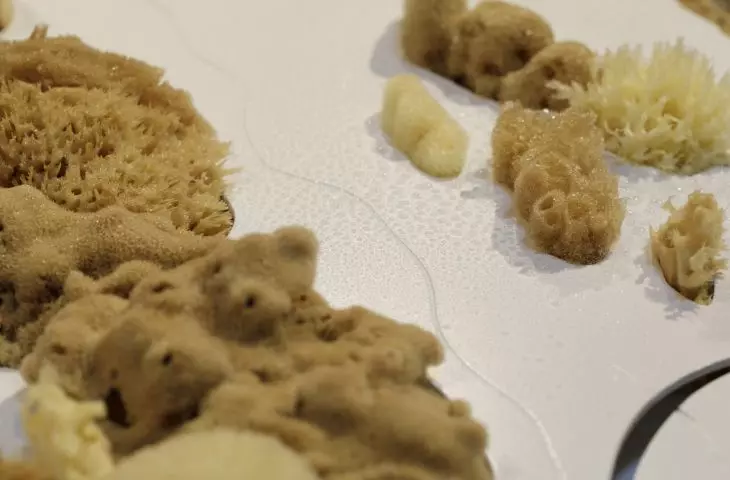
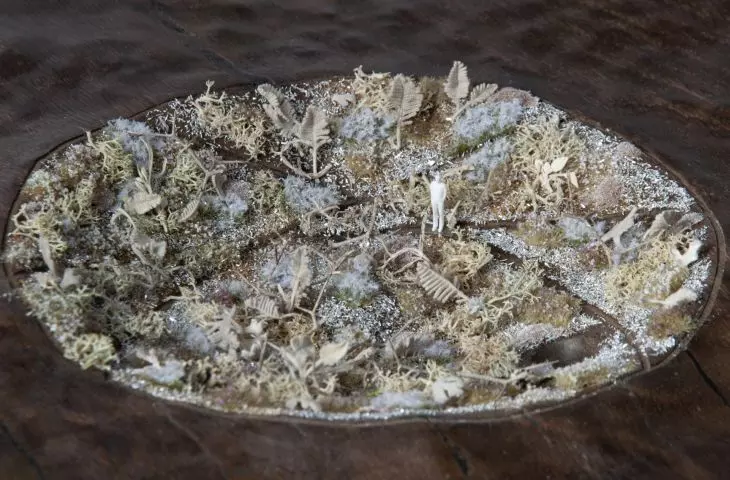
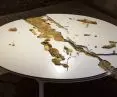
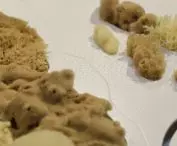
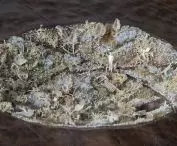
The Wetlands Tondo is a mock-up depicting Warsaw's wetlands, made of natural sponges that swelled when sprinkled with water; it was the reference point for expeditions with naturalists from the Wetlands Conservation Center
Photo: Michal Matejko
Ewa Karendys: There is also no shortage of myths related to the wetlands.
Malgorzata Kuciewicz: Indeed. We need to know that if an area is biologically balanced, mosquitoes do not breed in it, nor do all marshes emit an unpleasant odor. It is worth adding that wetlands live in a rhythm of soaking and drying up, which makes it possible to think of drift architecture. We know from pre-war archives that Warsaw had a seasonal infrastructure. During the swell of the river, piers, floating pools and waterway stops were set up. For the winter, this infrastructure was rolled into the harbor. Now that we have moved the city to the river, the boulevards are besieged by people who have come to love spending time on the water, we need to think about how we can get back into the flow of the river.
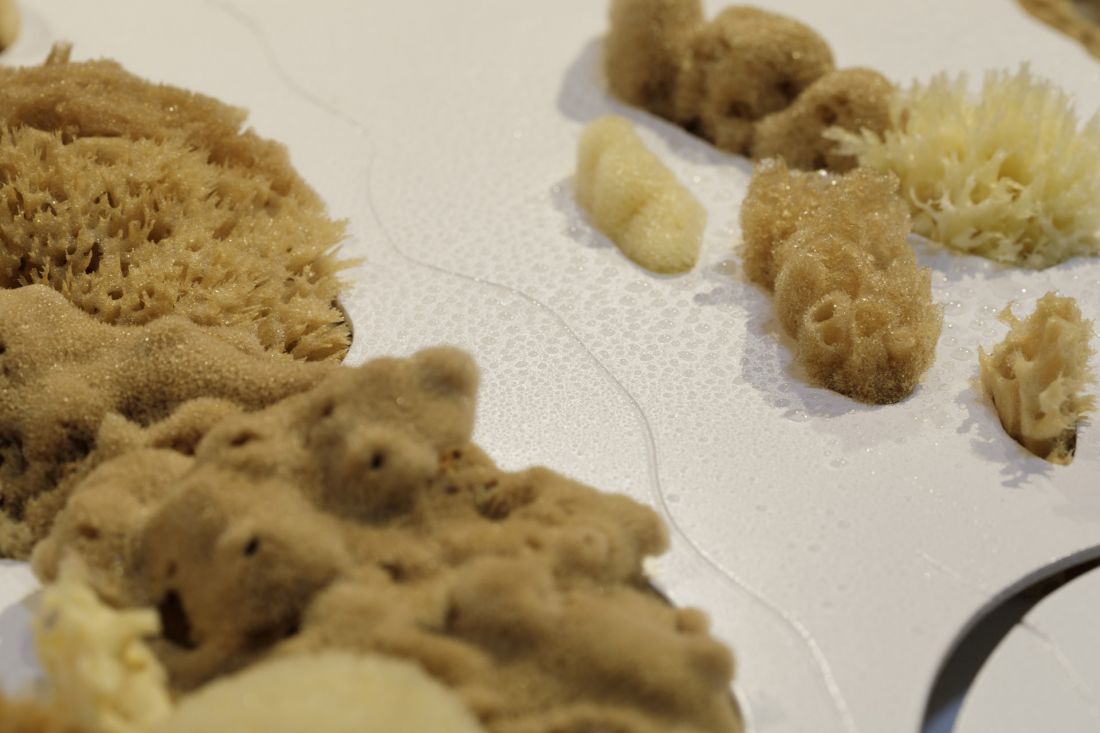
The Wetlands Tondo is a mock-up depicting Warsaw's wetlands, made of natural sponges that swelled when sprinkled with water; it was the reference point for expeditions with naturalists from the Wetlands Conservation Center
Photo: Michal Matejko
Simone De Iacobis: Together with the students, for example, we explored how part of the Warsaw escarpment outside the boundaries of the nature reserve could be transformed. The students were designing something that does not yet practically exist in Poland - a wetland park of the escarpment. The idea was to come up with a new program for these areas: such a park has not only natural values, but also recreational and educational ones. The designers proposed places for kids to safely wallow in the mud, the so-called mudflats, a rental shop for wellingtons or nurseries with water plants, plant propagators for household ponds or rain gardens. They also called for a technological solution to save some of the wetlands that have already been degraded and dried up. This involves topsoil removal - whereby the muck, the top dried layer of soil, is scraped off, allowing the land to regenerate and soak in.
Ewa Karendys: Can you imagine building a modern housing development over a wetland in the center of a large city, where the infrastructure is woven into the wetland?
Malgorzata Kuciewicz: The layouts of Warsaw's oxbow lakes were basically the backbone around which postwar planners designed residential neighborhoods. During the war, the landscape was one thing that could not be destroyed so easily. Of course, later, with the help of a great deal of rubble, there was a remodeling of the area, but in such a way as to think first about natural systems. Unfortunately, such design went away in the People's Republic of Poland, and then the areas began to be ripped out by the free market. For example, Miasteczko Wilanów was built on a wetland, it was the Royal polders. The area remembers - during torrential downpours water flows through riverbeds that have dried up, it happens that it breaks out in the basements of buildings built on watercourses. That's why the design community today strives to discover these ancient layouts and base new projects on them.
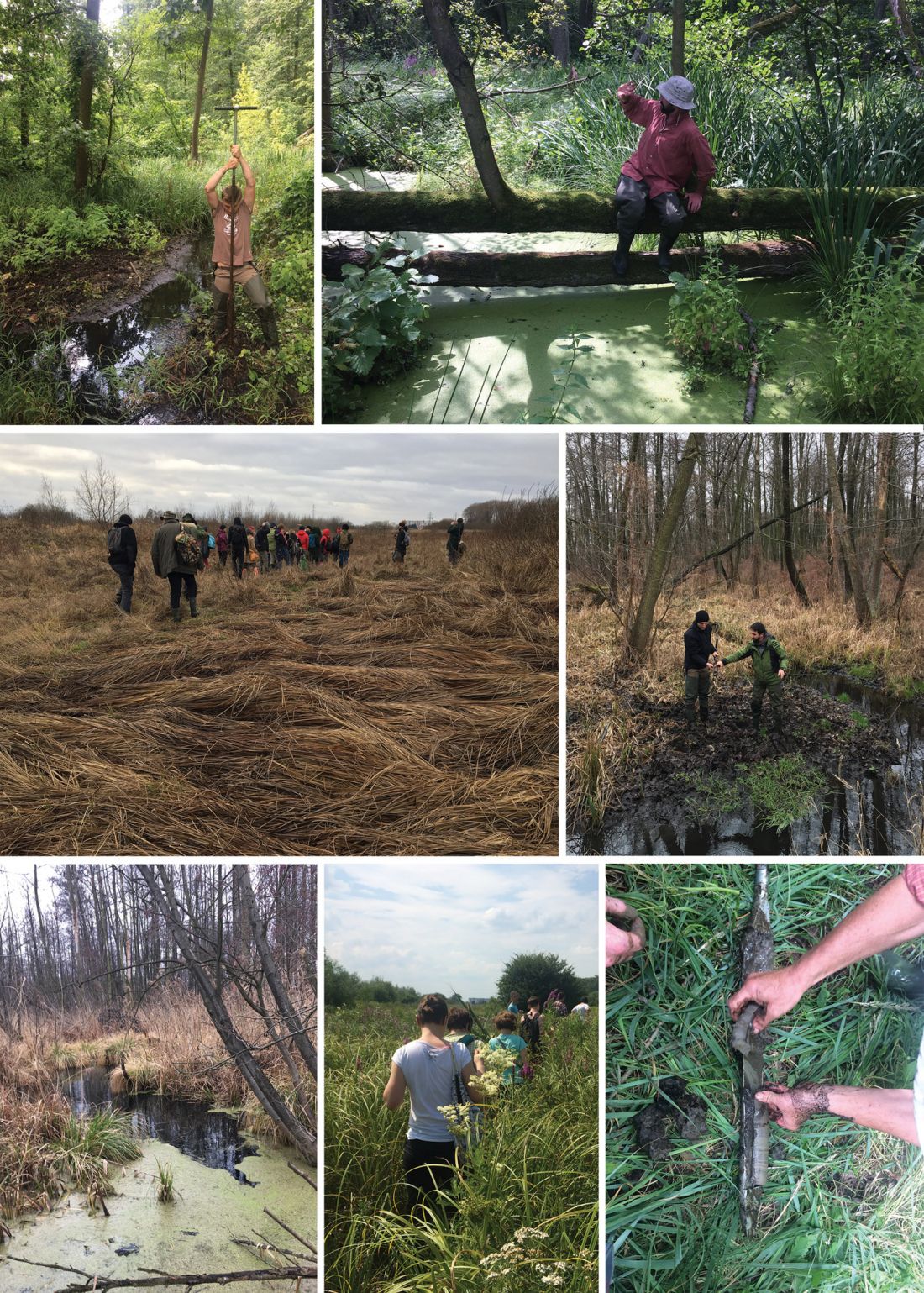
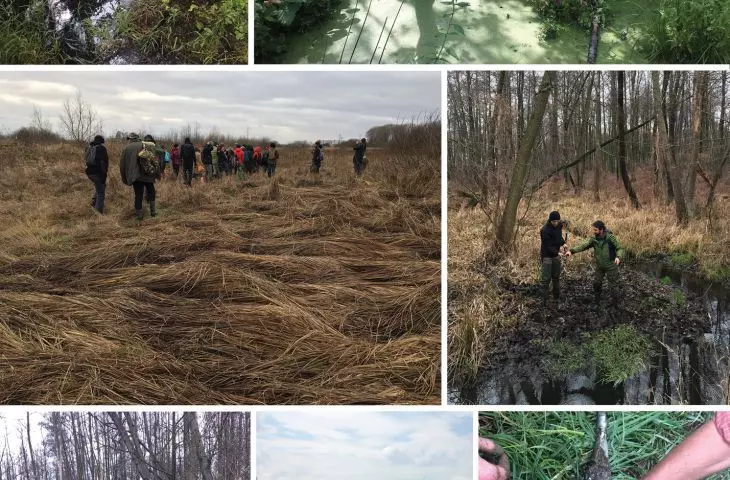
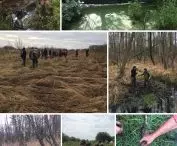
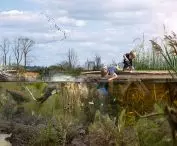
Social excursions through Warsaw's wetlands in summer and autumn 2019 - the project was part of the Jazdów Urban Garden edition "Take care of water and bathe with friends" (curator: Anna Czaban), July-October 2019, Center for Contemporary Art Ujazdowski Castle in Warsaw
Illustrations courtesy of CENTRALA Design Group
Ewa Karendys: There are more and more calls for rivers and streams to be uncovered. Will such renaturalization change anything?
Malgorzata Kuciewicz: Yes, it is good that this is being talked about more and more in our cities. An example is Łódź, where we have many rivers to be unearthed. But Poland is drying up, and digging up a stream involves taking responsibility for the entire habitat: we are not sure that the water will be there in five or ten years. When we talk to naturalists, we hear that we need to act prudently.
Simone De Iacobis: For me, the topic of rivers that are hidden under streets is very interesting: like the Zurawka in Warsaw, which was channelized in the 18th century. We could dig up this river, it would be an example of all the existing rivers that flow in the city, but you can't see them.
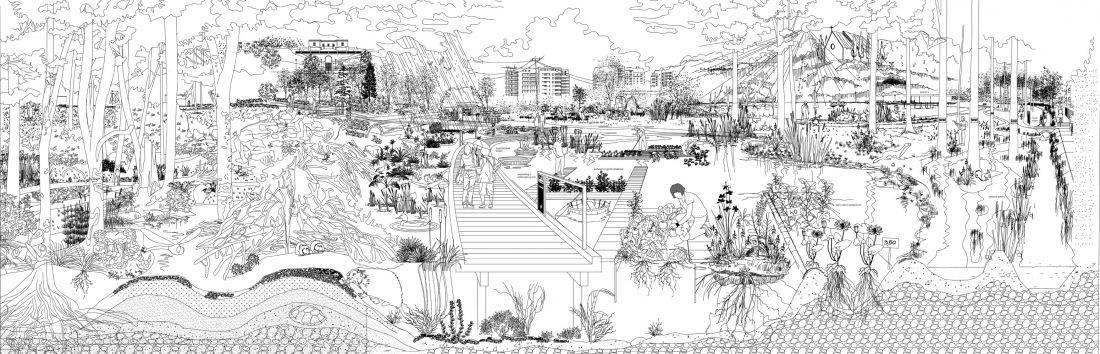
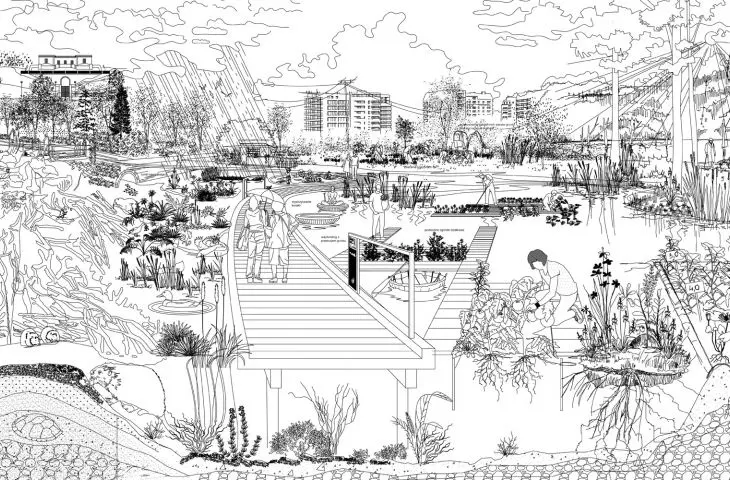
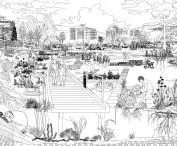
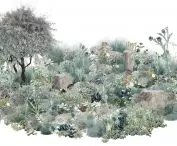
Podskarpia Wetland Park; a case study of the area at the Gucim Grove, illustrating the possibility of protecting and expanding existing saturated sites - Author team: Michalina Dębska, Martyna Kędrzyńska, Marta Lewicka, Wiktor Martin, Cezary Nagórski, Szymon Pałczyński. Tutors: CENTRAL The work was created as part of the project SKRAJOBRAZ. FORMS OF RESISTANCE AND THE LIMITS OF WARSAW'S GROWTH. Curatorial team: PROLOG +1 (Mirabela Jurczenko, Bartosz Kowal, Wojciech Mazan, Bartłomiej Poteralski + Robert Witczak). It was presented at the exhibition March 15-June 26, ZODIAK Warsaw Architecture Pavilion
Illustrations courtesy of CENTRALA Design Group
Malgorzata Kuciewicz: We also have many drainage canals in cities, which are corrupted old rivers. And this is where the greatest potential is: in the meandering of simple canals, as with the Sadurka River, which is now the Służewiec Stream. We also believe that even the smallest pond has meaning, and we see microbeads as part of architecture. We are courting places that were historically intended for aquatic plants, such as various neighborhood ponds. We believe that we need to irrigate the city at every scale. We take an optimistic view: we still have causality, we can build the future of Warsaw by supporting natural systems. At the same time, we know that we are in a bit of a bubble, in our cities the discussion is still mainly about greening cities, whether to plant trees in squares and streets.
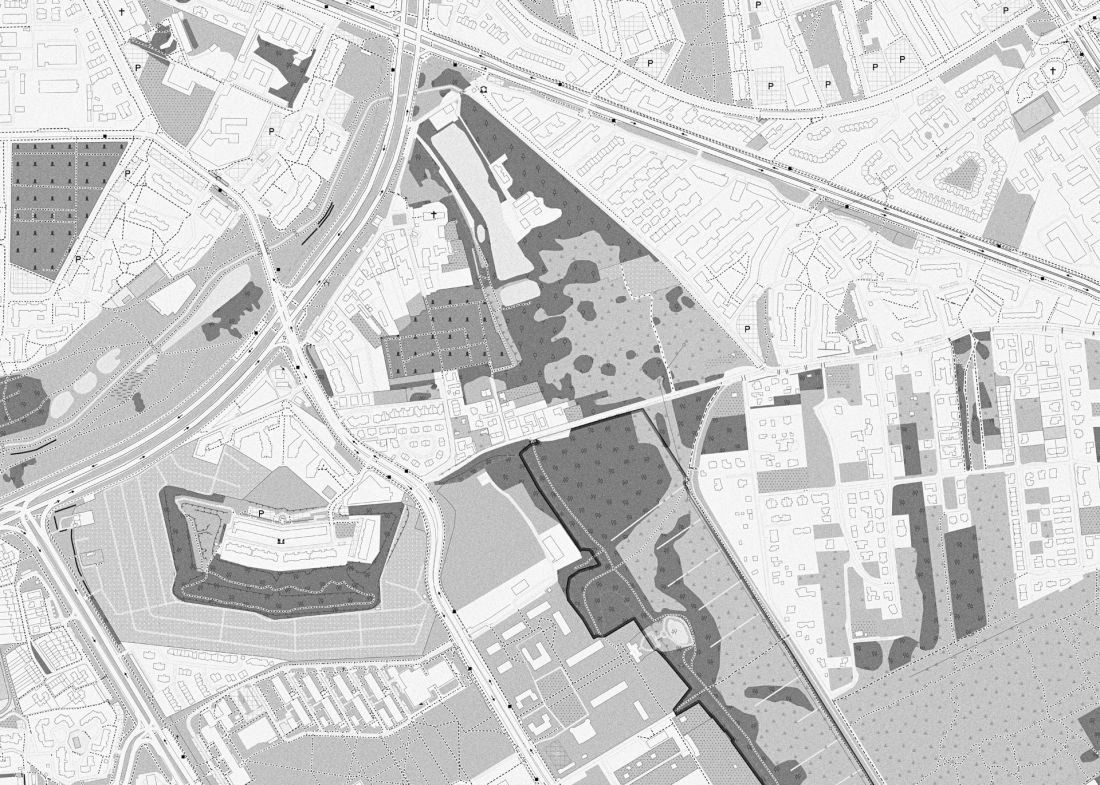
Podskarpia Wetland Park; a case study of the area at the Gucim Grove, illustrating the possibility of protecting and expanding existing saturated sites - Author team: Michalina Dębska, Martyna Kędrzyńska, Marta Lewicka, Wiktor Martin, Cezary Nagórski, Szymon Pałczyński. Tutors: CENTRAL The work was created as part of the project SKRAJOBRAZ. FORMS OF RESISTANCE AND THE LIMITS OF WARSAW'S GROWTH. Curatorial team: PROLOG +1 (Mirabela Jurczenko, Bartosz Kowal, Wojciech Mazan, Bartłomiej Poteralski + Robert Witczak). It was presented at the exhibition March 15-June 26, ZODIAK Warsaw Architecture Pavilion
Illustrations courtesy of CENTRALA Design Group
Ewa Karendys: At CENTRALA you also study how water affects the surrounding atmospheric space, including the appearance of the sky.
Malgorzata Kuciewicz: Indeed, initially, when we thought about water in the city, we first saw a liquid, a current, a corridor, a river valley. The next step in expanding the imagination, on the other hand, was to understand that we all live at the bottom of the air ocean and are immersed in water in a volatile state. We only need to look at optical phenomena in the atmosphere - simple things like sunset, its intensity, its colors - to see how the presence of water in the air affects the appearance of the sky. Following in this footsteps, we proposed non-binary observation sites for residents of the capital. As part of an art grant from the City of Warsaw, we designed ten architectural, outdoor and garden forms embedded in the structure of Warsaw.
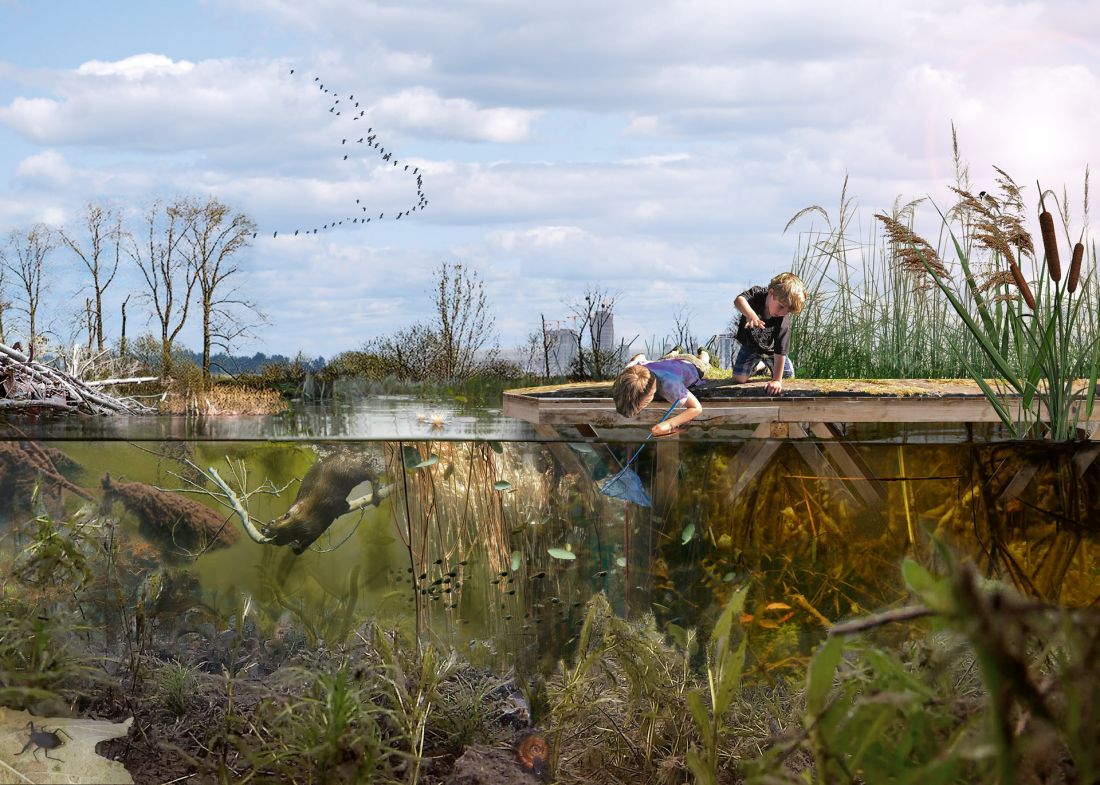
Visualization of Zakol, CENTRAL 2021 - cooperation within the framework of the "Wetlands of the City Coalition" ZAKOLE and work with the Zakol Wawerski area
proj.: Krysia Jędrzejewska-Szmek, Zuzia Derlacz, Olga Roszkowska, Ola Knychalska, Pola Salicka, Igor Stokfiszewski, Illustrations courtesy of CENTRALA Project Group
We know, for example, that the clouds will be increasingly pink at dusk, for the reason that we are drying out and there are no vapors in the atmospheric aerosol on which the red spectrum of light could be lost, so it is on the clouds that we will observe the so-called alpine glow. For Warsaw's Mlociny Forest, we proposed a platform for observing new clouds formerly unseen in Warsaw, such as asperitas (rough) and mammatus (bubbly). In the wet meadows of Zakol Wawerski, we propose dolmen for observing distortions of the Sun's disk, which reveal invisible stratification of the atmosphere, its structure. The greater the daily thermal contrasts, the more distorted the Sun's disc will be.
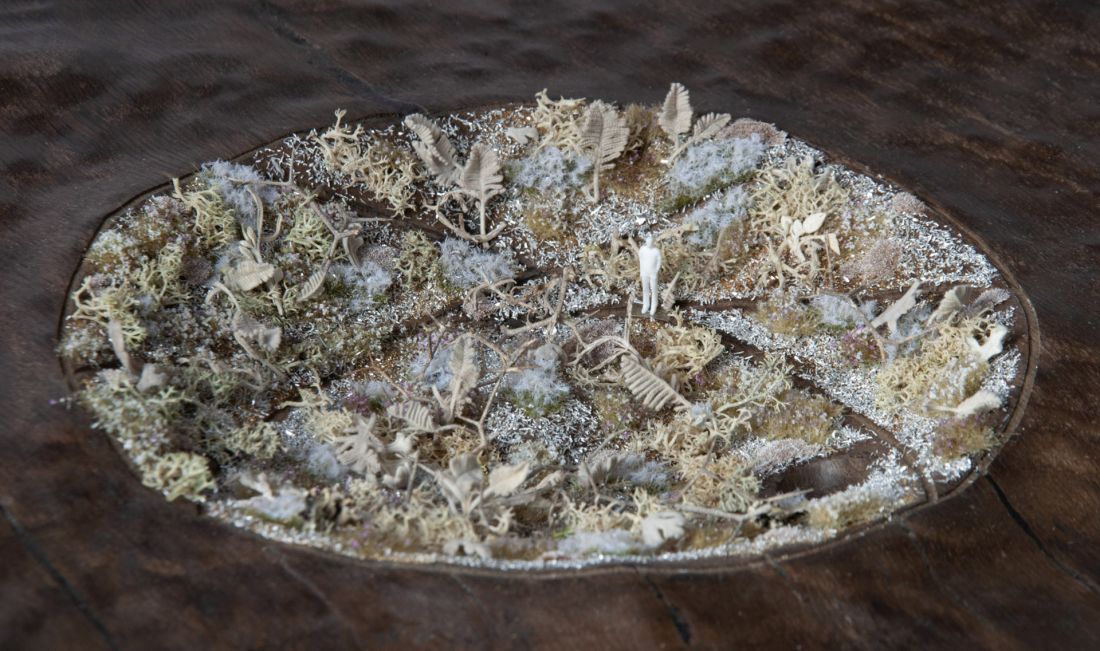
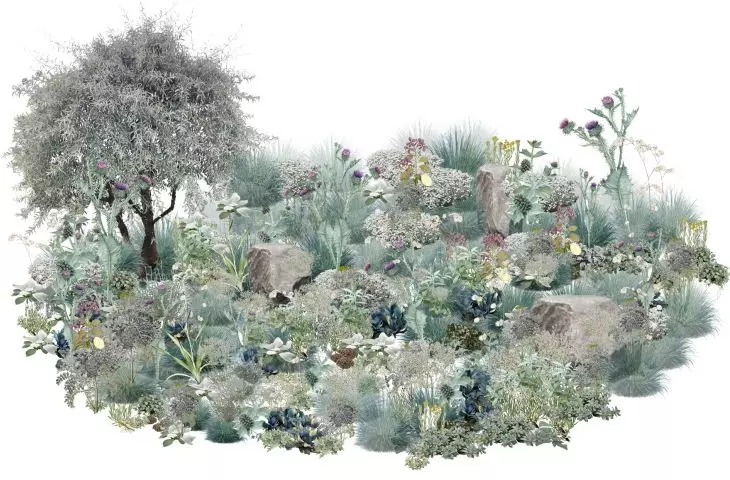
The Silver Garden, part of the diffuse observatory of atmospheric phenomena
Central 2024; mock-up: Onimo
We are also fascinated by such a phenomenon as the Moon's ashen glow - the glow visible on the unlit part of the disk, which comes from sunlight reflected from Earth's atmosphere. Monitoring the variability of this glow helps track the Earth' s albedo, an important indicator of global warming. The glow is particularly visible during the thin sickle phase. That's why we're thinking of parks to visit after dusk. We have designed a Silver Garden for observing the nuances of moonlight. It would be planted with vegetation with ashen, gray and silvery leaves, such as ash old ash, silver wirewort, lavender, hairy blanket, silver sage, angel's wings and narrow-leaved olivacea, which copes well with drought.
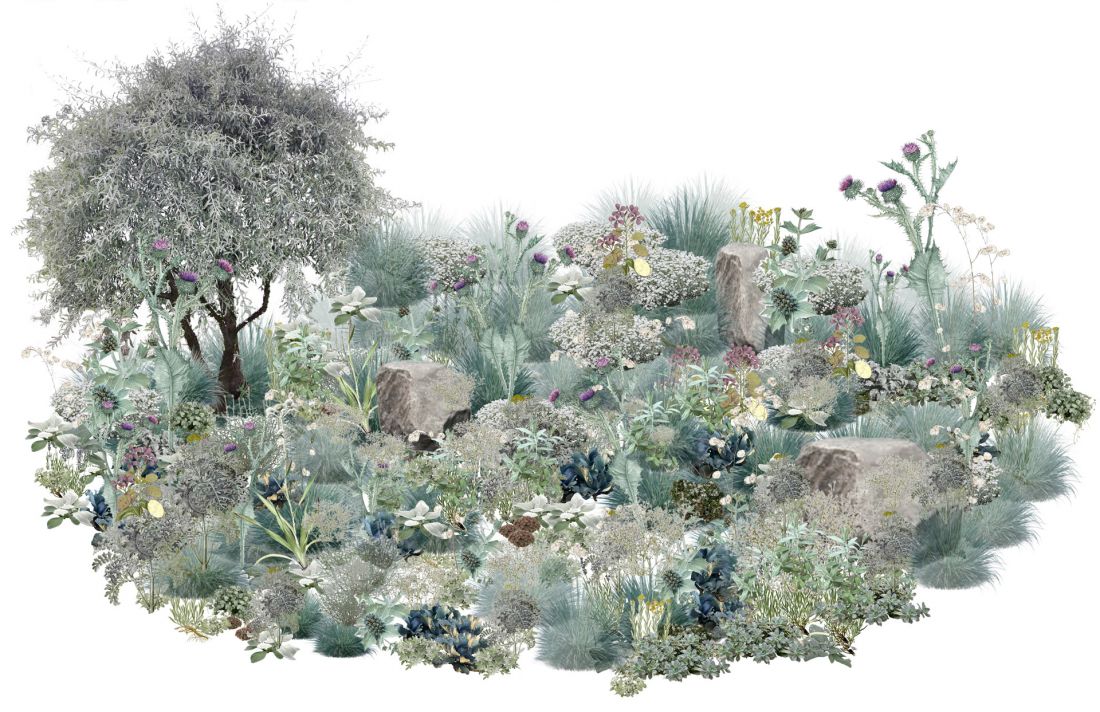
Silver Garden, part of a distributed observatory of atmospheric phenomena
Central 2024; cooperation: Karolina Borucka, Natalia Budnik
Ewa Karendys: Places of night recreation, where you will be able to cool down and relax are the future in design?
Malgorzata Kuciewicz: Yes, we are convinced that we will design areas that are getting wetter and wetter, but also dry enclaves like the Silver Garden, where you can chill out at night. We know that by rising temperatures we will also look for "cool burrows." In Warsaw, for example, grottos, off-road structures where ice was stored, have such potential. We are already considering to what extent these underground structures can be used as friendlier climatic spaces for the major heatwaves ahead.
Ewa Karendys: Thank you for the interview.
Ewa Karendys
more: A&B 6/2025 - WARSAW,
download free e-publications of A&B