








Headquarters of the State Opera
and the Hamburg Ballet,
designed by Bjarke Ingels Group (BIG).
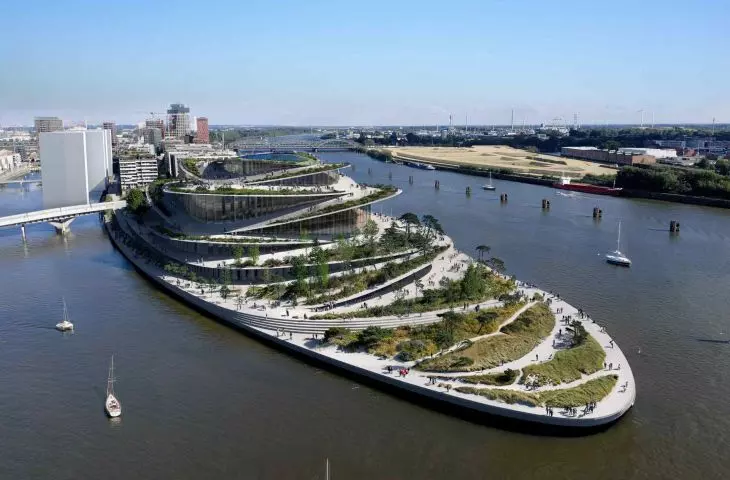
Hamburg has already proven that it can turn a waterfront into a cultural space. Now it is doing it again - and with flair. Following a decision by an international jury, the new headquarters of the Hamburg State Opera and Ballet will be designed by the Bjarke Ingels Group: BIG studio. The building will stand on the Baakenhöft peninsula in HafenCity, a place of unusually intense transformation. The new opera house will replace a 1950s edifice, responding to the needs of an institution whose activities require contemporary acoustic, technical and spatial standards. BIG proposes a form that is an extension of the urban landscape. The opera house will look like a landscape of concentric terraces spreading out like sound waves from a central musical heart.
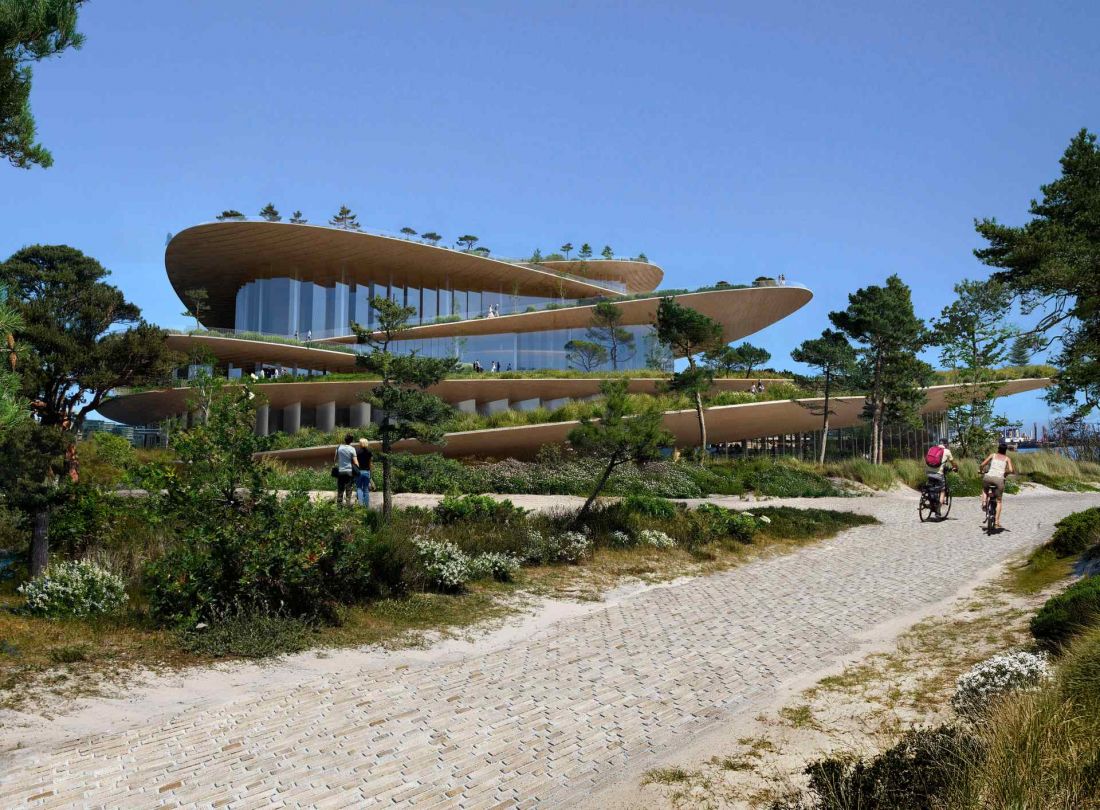
The headquarters of the Hamburg State Opera and Ballet
© Bjarke Ingels Group (BIG)
A space you want to walk around
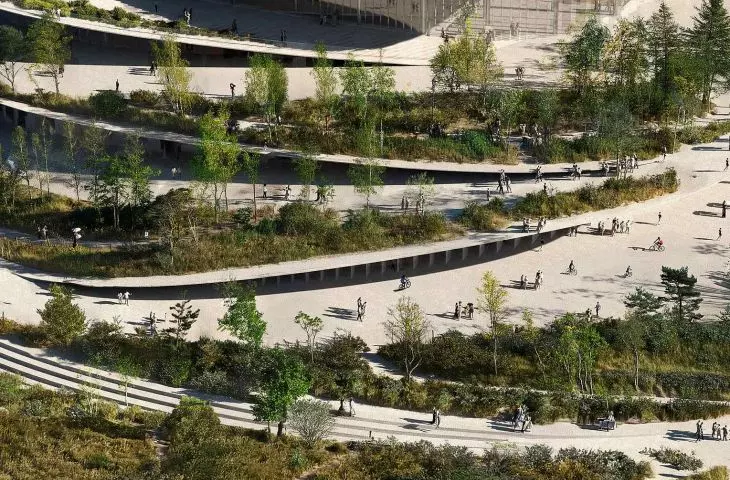
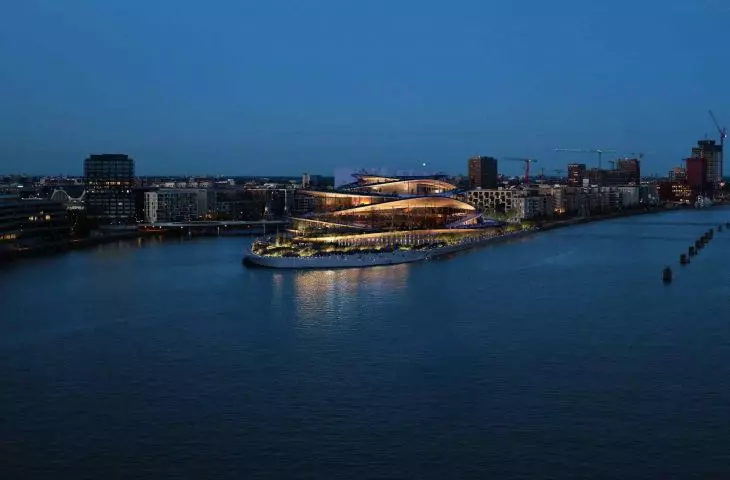
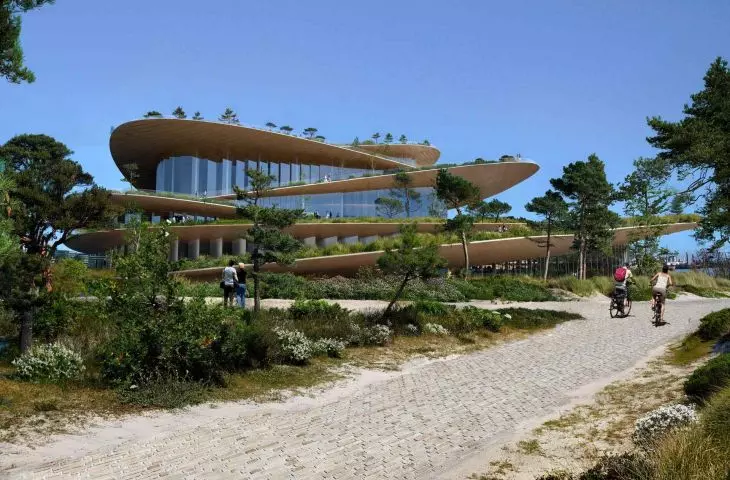
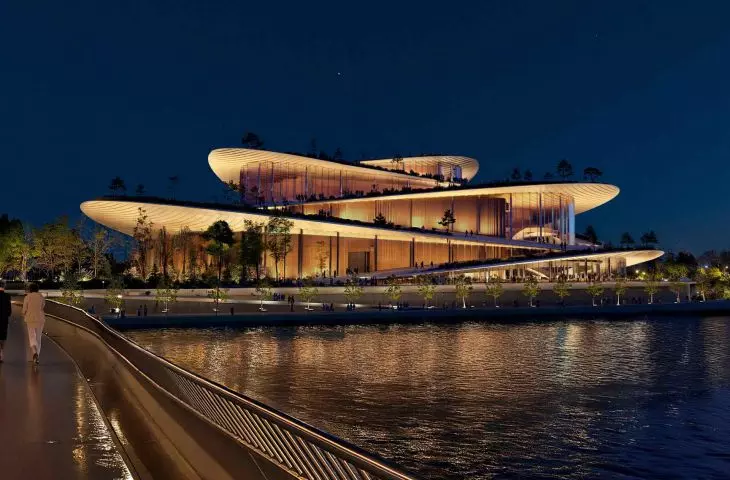
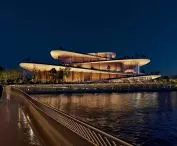
The most distinctive element of the project is its terraced topography. From above, the form resembles an ellipse opening toward the harbor, with successive levels arranged like natural landscape steps. This is architecture designed so that one can freely wander around it - from the level of the waterfront to the roof-gardens overlooking the city skyline. The projection is organized by a system of concentric platforms that guide users between levels. In the center is the main hall, providing a clear reference point for the entire building. The terraces are not an add-on - each influences the structure, communication and logic of the interiors, and their rhythm determines how visitors move between the foyer, terraces and gardens.
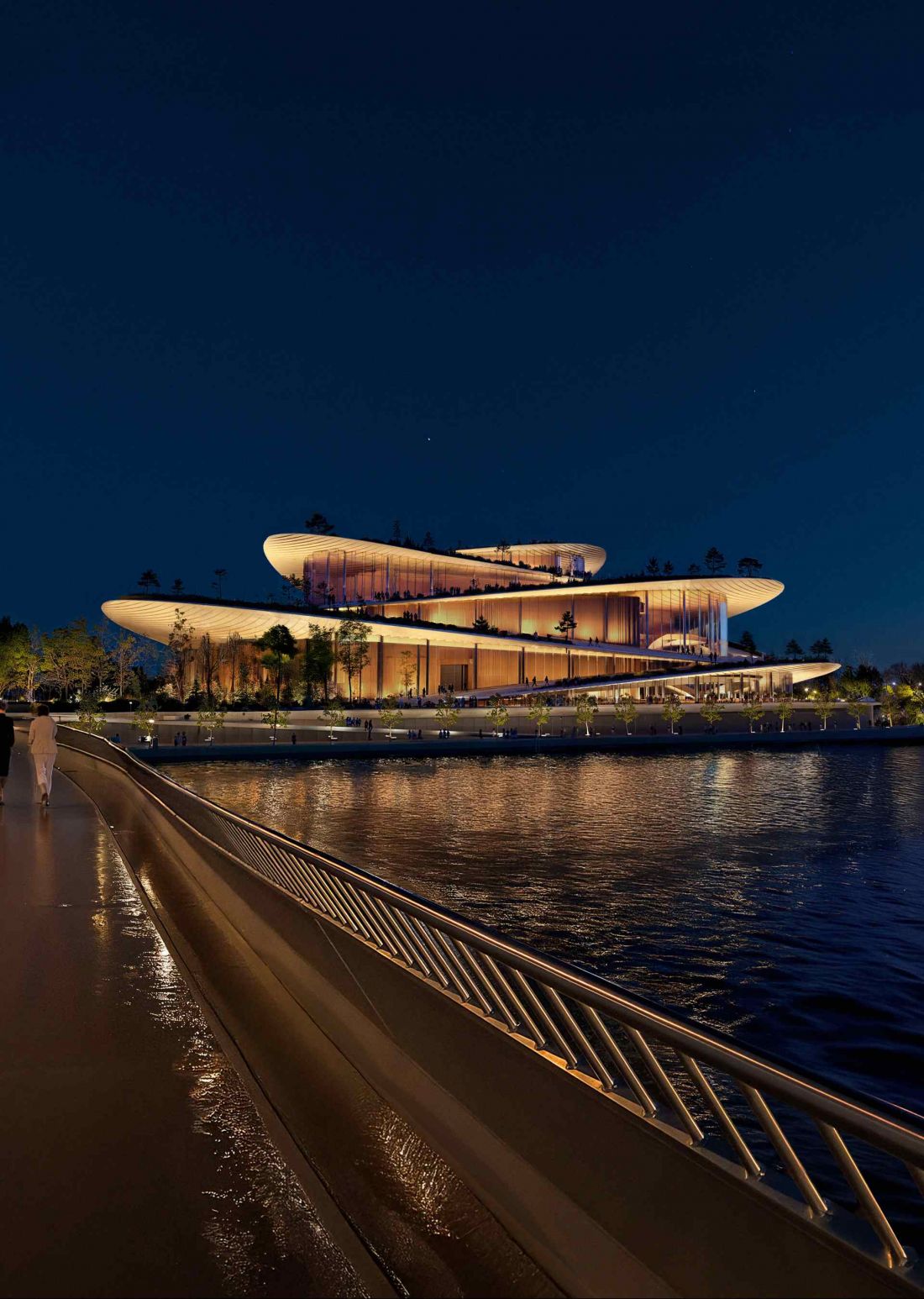
The headquarters of the Hamburg State Opera and Ballet - a view of the block at night
© Bjarke Ingels Group (BIG)
A building that has no front
- and therein lies its strength
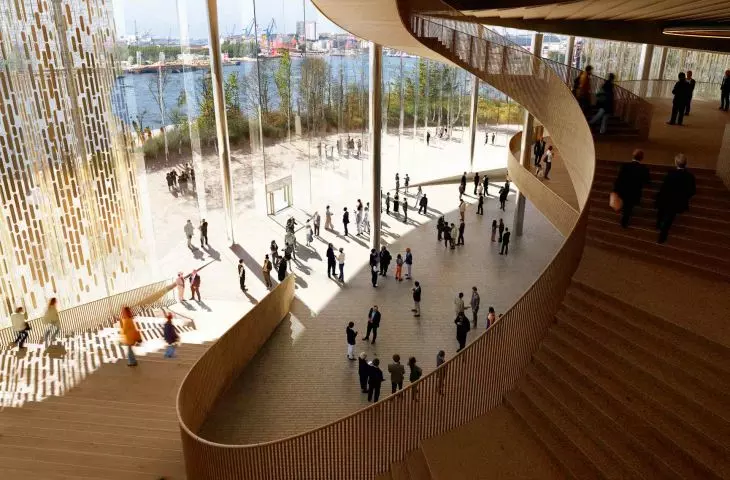
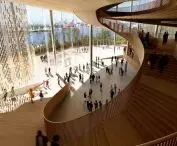
The new opera house was conceived as a place that does not impose a single, official entrance. The building can be reached from any direction - from the waterfront, the park or the street. Such a layout naturally inscribes the opera house into the daily traffic of the city. The main foyer, where stone paving from the exterior transitions seamlessly to the interior, was designed as an open and accessible space. Two-story wooden staircases continue through the building, revealing terraces, galleries and rest areas.
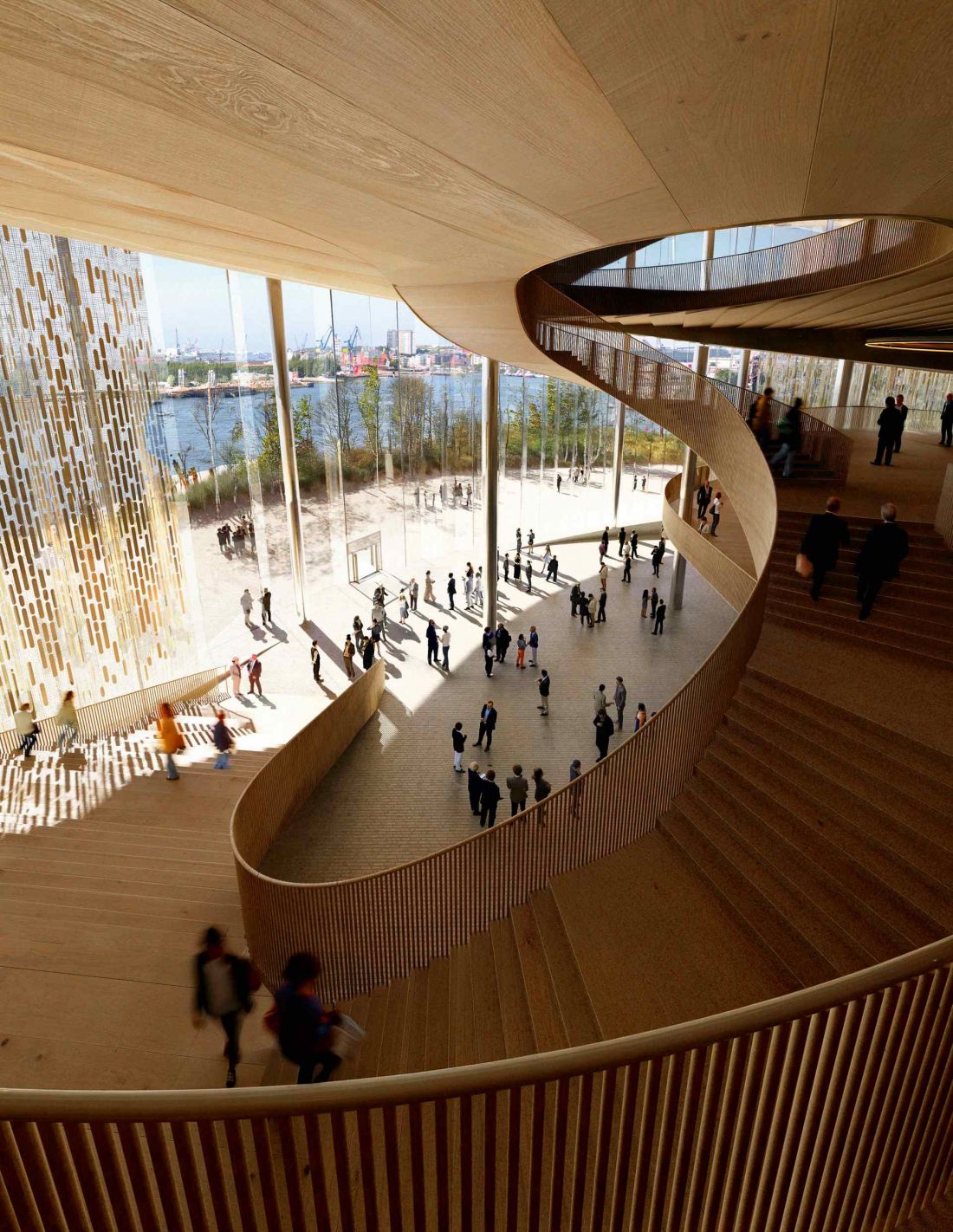
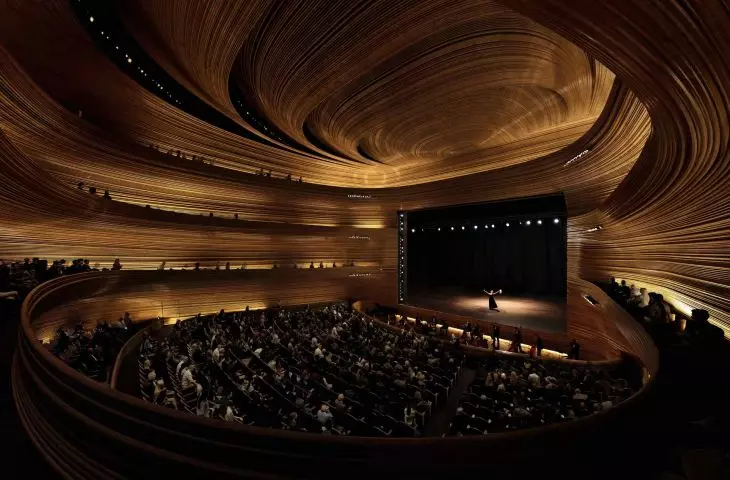
Headquarters of the Hamburg State Opera and Ballet - interior view
© Bjarke Ingels Group (BIG)
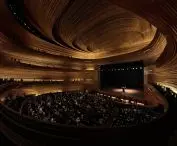
The heart of the project is the main hall. Jakob Sand mentioned that the main hall is the heart of the project - a space with superior acoustics and ideal stage visibility. Its interior is encircled by rings of layered wood, which act as an acoustic shell and at the same time organize the balcony system. This structure ensures that the audience and artists are not separated - the space creates a feeling of immersion in the performance. Behind the hall, a studio stage, rehearsal rooms and technical facilities were located, which were connected directly to the main stage. The project team focused on the fluidity of the institution - from rehearsals to preparations to evening performances.
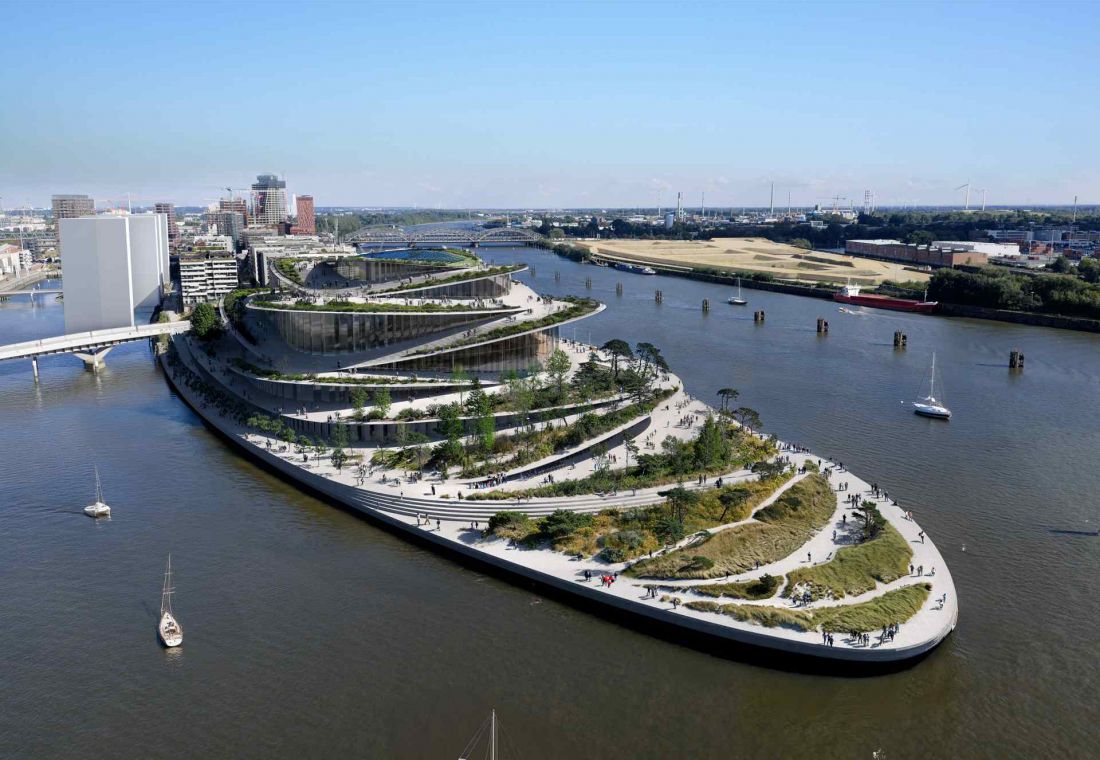
Headquarters of the Hamburg State Opera and Ballet - bird's eye view
© Bjarke Ingels Group (BIG)
A space where the city meets water
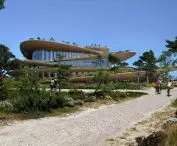
An integral part of the establishment is the park, which not only organizes the surroundings of the opera house, but also responds to the changing water conditions. Sloping terraces, water gardens, sand dunes overgrown with salt-water-tolerant vegetation - all this creates a system that absorbs the energy of the waves and protects the peninsula. At the same time, the park becomes a space where one can spend time without being connected to the spectacles. Terraces naturally lead toward the water, and paths are laid out as in a large public garden. Along them, rainwater retention basins have been placed to favor local fauna and vegetation.
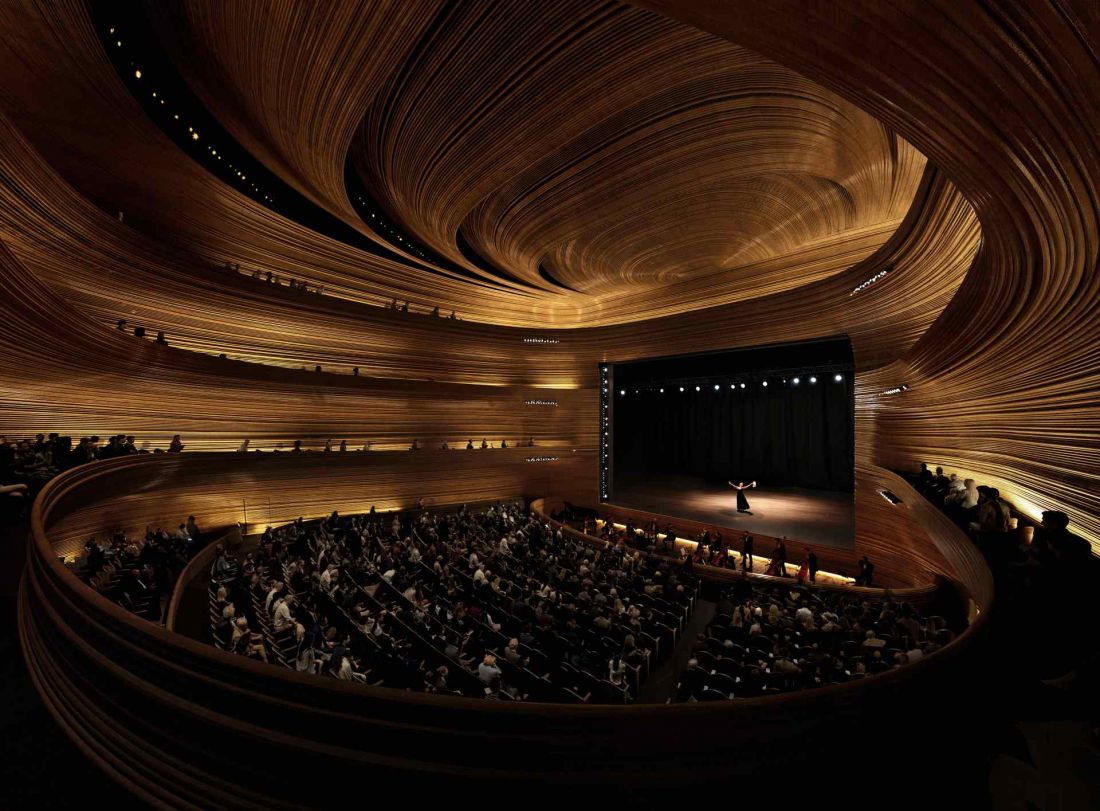
The headquarters of the Hamburg State Opera and Ballet
© Bjarke Ingels Group (BIG)
The new rhythm of HafenCity
Hamburg's new State Opera House became the pretext for creating not only a building, but also a place that combines the functions of culture, recreation and communication. With its concentric terraces, open approach to public space and connection to the waterfront, the BIG project is poised to become a new symbol of HafenCity - not a monumental object, but a living, everyday part of the city.