






Bruce Springsteen Center for American Music,
design: COOKFOX
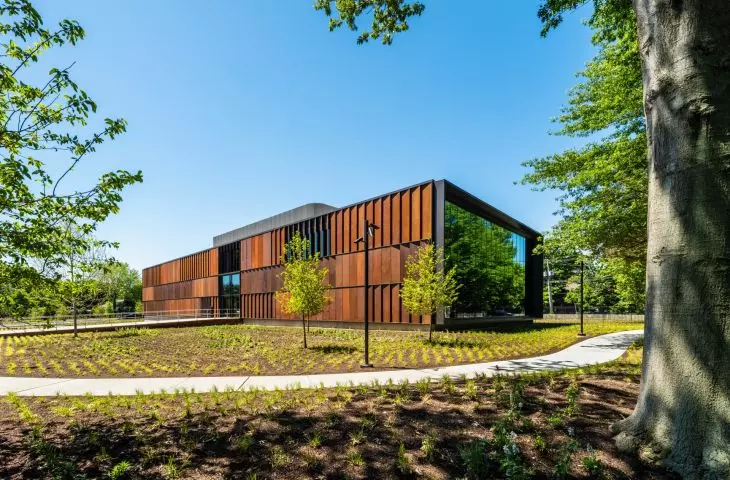
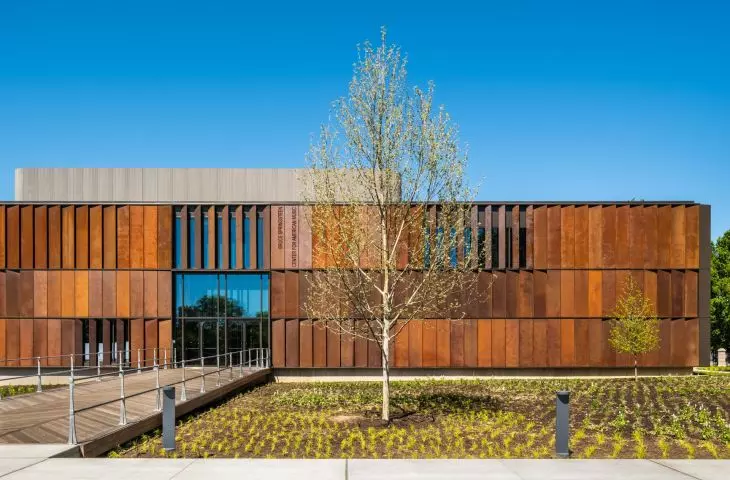
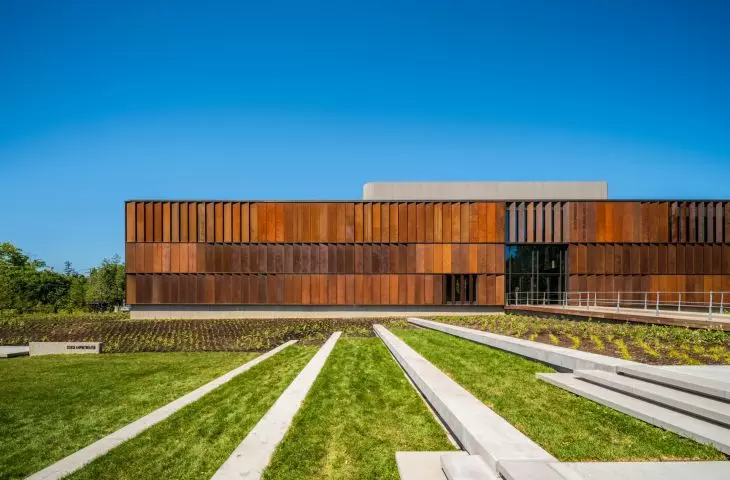
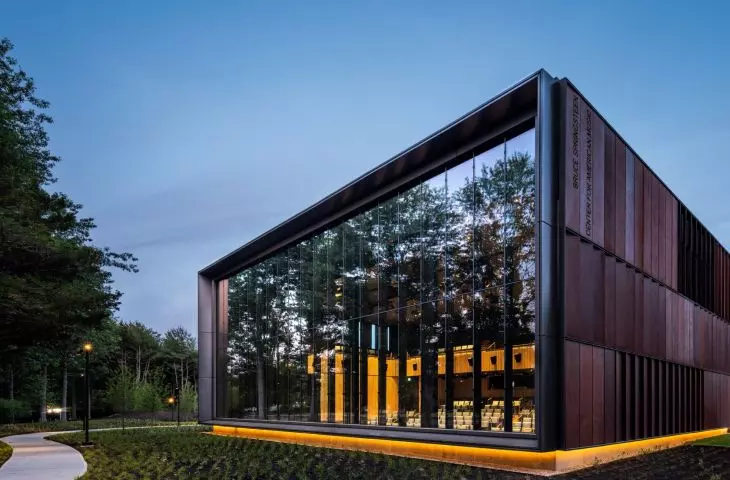
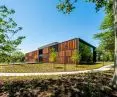
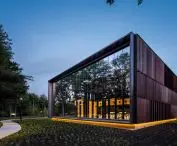
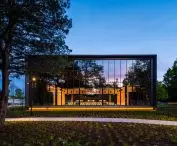
A museum dedicated to Bruce Springsteen could easily have turned into a monument to a single star. COOKFOX took a different approach: on the Monmouth University campus , they designed a center that combines the artist’s archive with the story of American music, exhibitions, educational programs, and concerts. The rust-colored facade made of patinated steel references New Jersey’s industrial landscape, while the exposed wooden structure gives the interiors a completely different, warmer character.
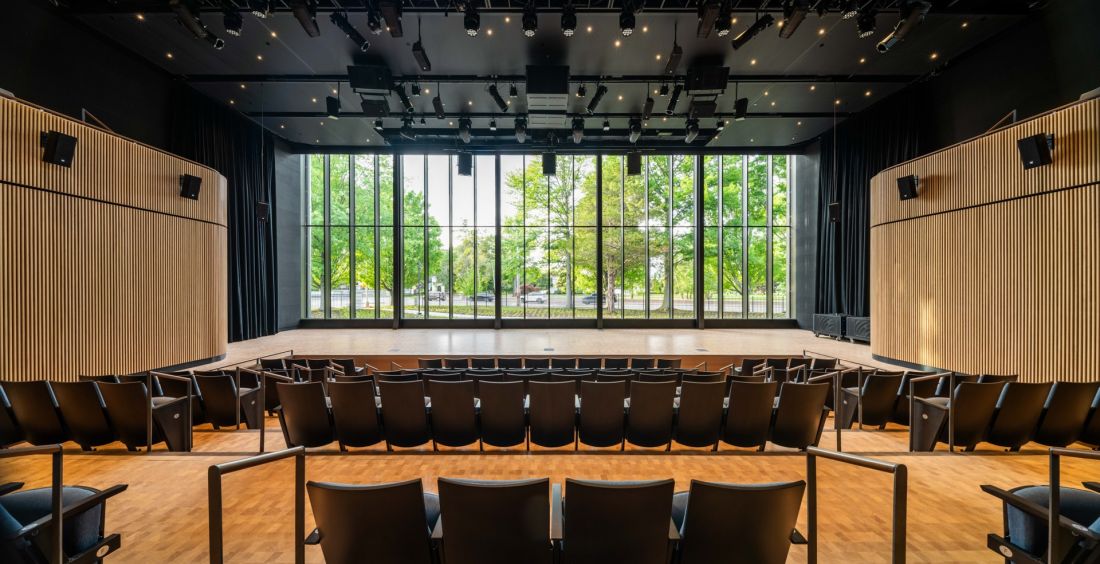
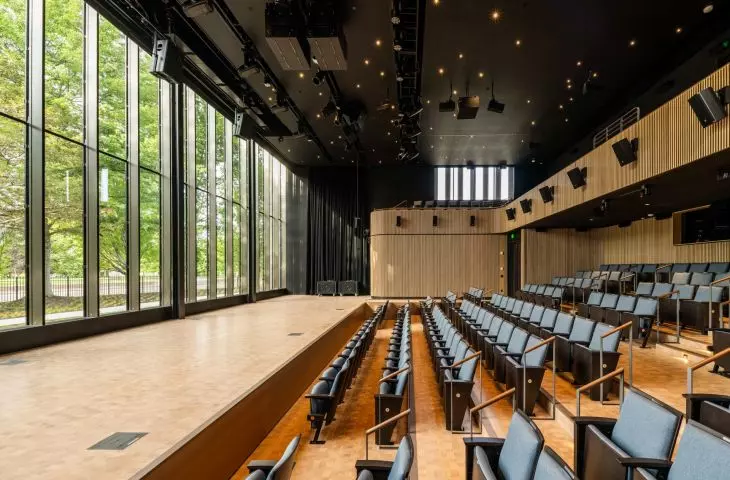
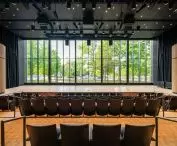
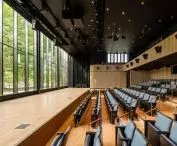
The auditorium was designed to host both concerts and film screenings, and the wooden slats on the walls conceal acoustic elements — ©Alex Ferrec
Not Just a Springsteen Museum
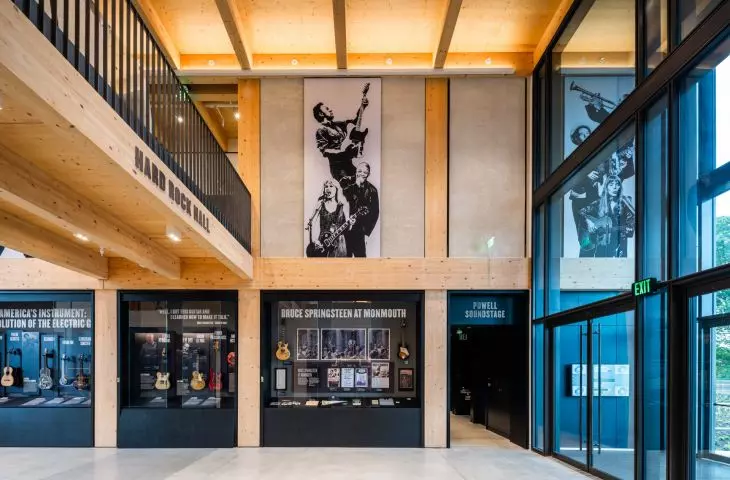
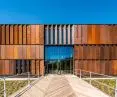
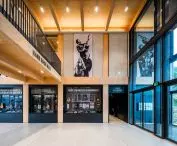
The Bruce Springsteen Center for American Music opened in June 2026. The building was constructed near places closely associated with the musician’s early career —Springsteen performed at Monmouth University, and a few blocks away he wrote “Born to Run.” Despite his name in the institution’s title, the center is not exclusively about him. It houses the official archives of Springsteen and the E Street Band, as well as galleries dedicated to the history and various genres of American music, educational spaces, an auditorium, and temporary exhibitions. COOKFOX organized the extensive program within a simple, two-story structure. The entrance axis leads through a long wooden promenade to a two-story-high lobby. Large windows open the space to the surrounding greenery and help visitors orient themselves within the building: the galleries are on one side, and the auditorium is on the other. Instead of a complex sequence of corridors, a clear layout was created that organizes the flow between the exhibitions, the archive, and the event spaces.
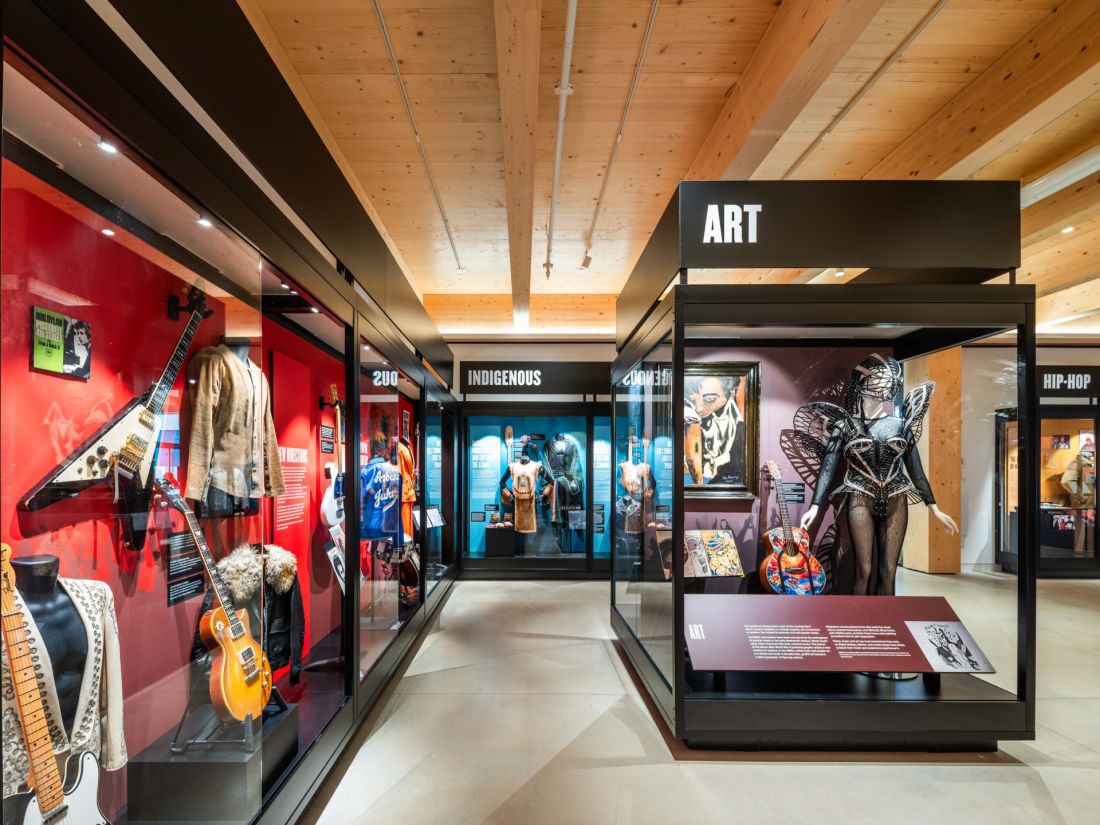
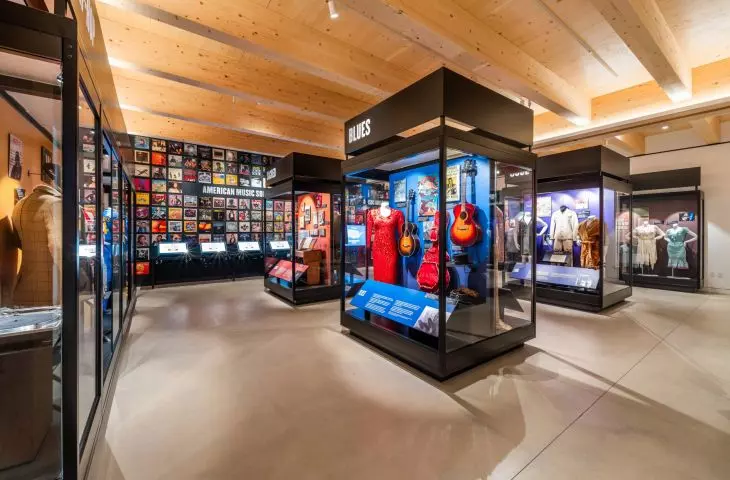
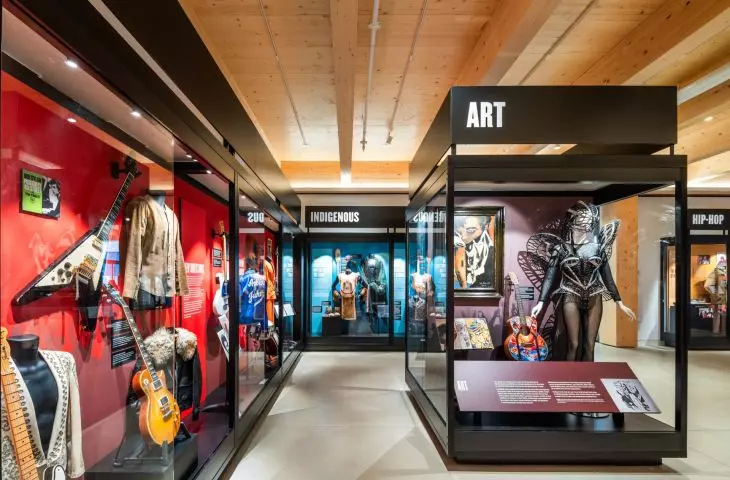
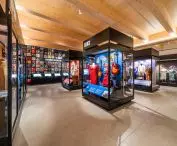
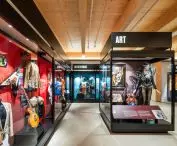
The exhibition, designed by C&G Partners, showcases various genres of American music through instruments, costumes, and other memorabilia — ©Alex Ferrec
Steel on the outside, wood on the inside
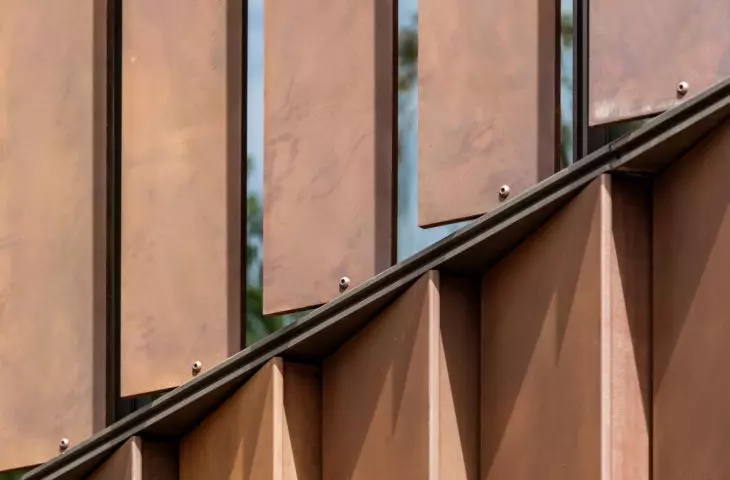
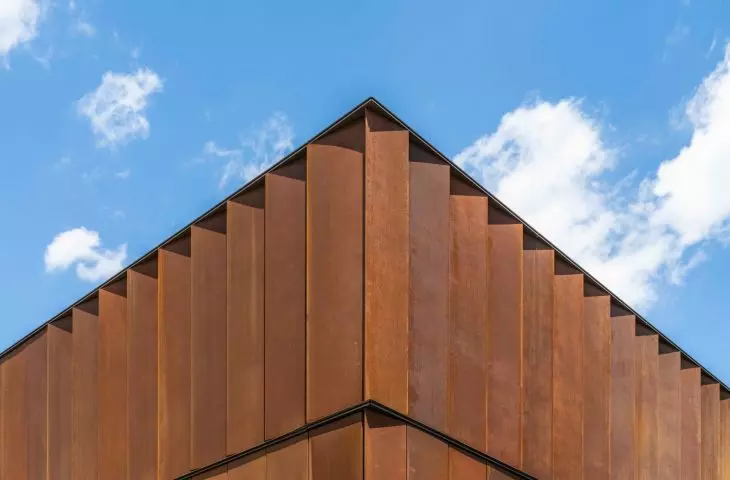
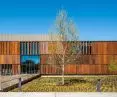
The most striking element of the facade is the weathering steel panels. Their rusty color evokes New Jersey’s industrial heritage—the shipyards, factories, and infrastructure that have shaped the region’s landscape for decades. Over time, the surface of the material will change, so the appearance of the facade will not remain static. The interior is based on contrast. The galleries and archives feature a hybrid construction of solid wood and a steel perimeter frame. Glulam columns and beams were used, as well as cross-laminated timber panels made of European spruce. The wood was left unstained, protected only by a clear coating, allowing its grain to remain visible.
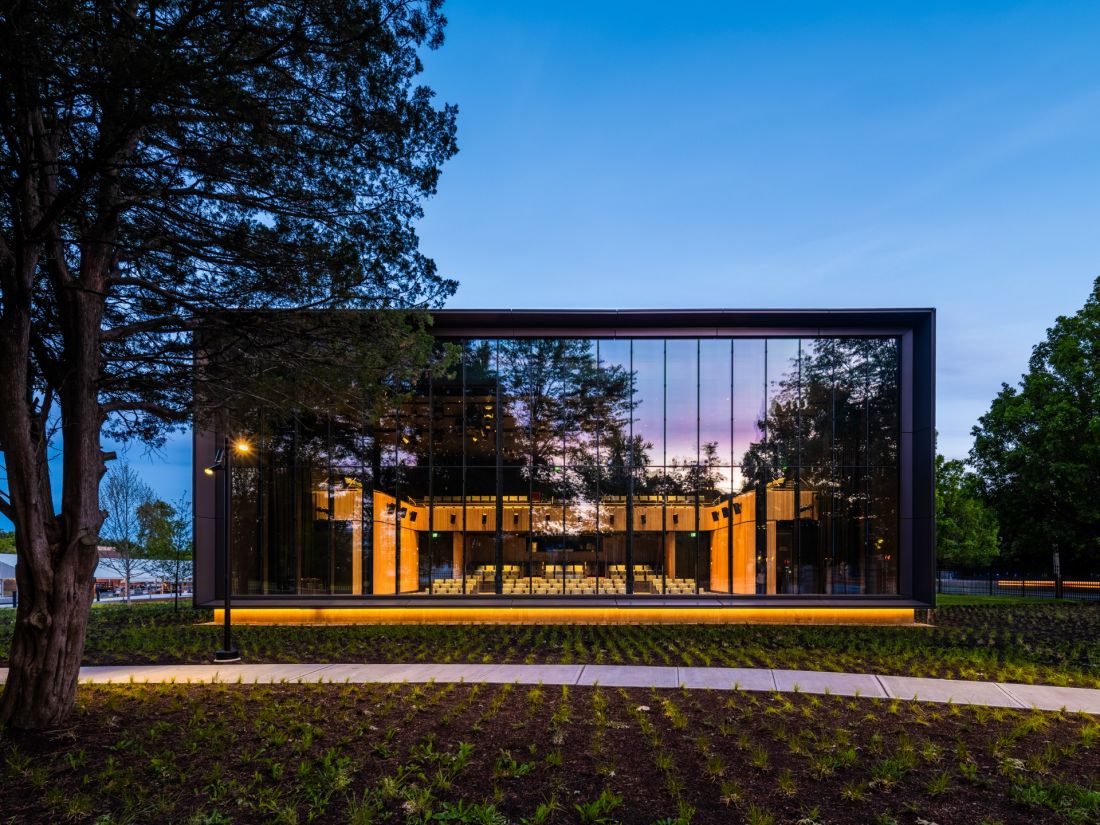
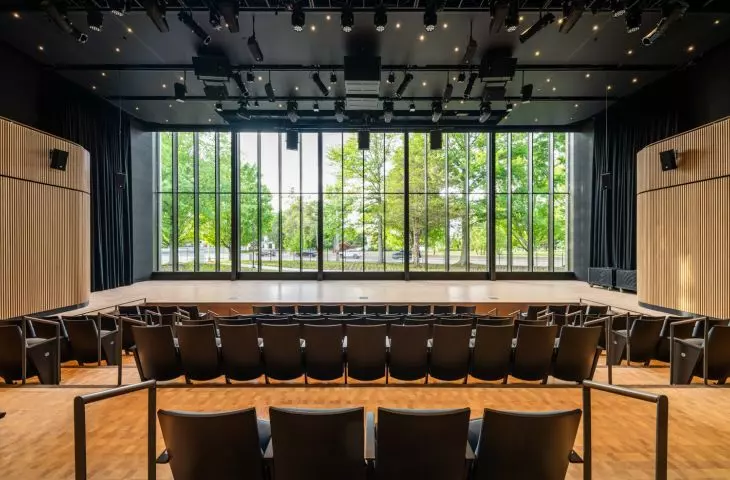
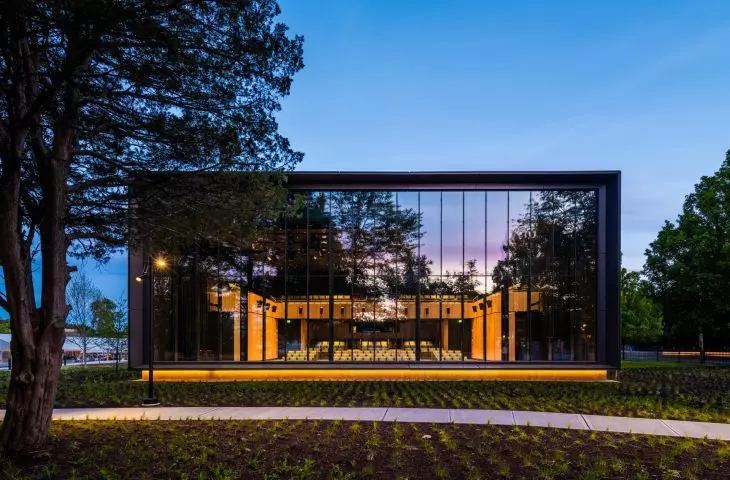
The glass wall of the auditorium opens its interior to the campus landscape surrounding the building — ©Alex Ferrec
a hall designed to serve both as a concert venue and a movie theater
On the opposite side of the lobby is a hall that seats approximately 240 people. Unlike the gallery section, it has a steel structure and was designed to host concerts, lectures, and film screenings. Its acoustics were developed in parallel with the architecture: the room’s geometry, wall finishes, ceiling elements, and the curtain were tested to assess their impact on reverberation and sound clarity. Vertical wooden slats line the walls, behind which acoustic elements are concealed, and a system of ceiling panels helps shape the interior’s acoustics. An adjustable stage curtain allows the conditions to be tailored for live performances or film screenings. A large glass wall behind the stage connects the hall to the campus’s greenery but is designed to limit the transmission of outside noise.
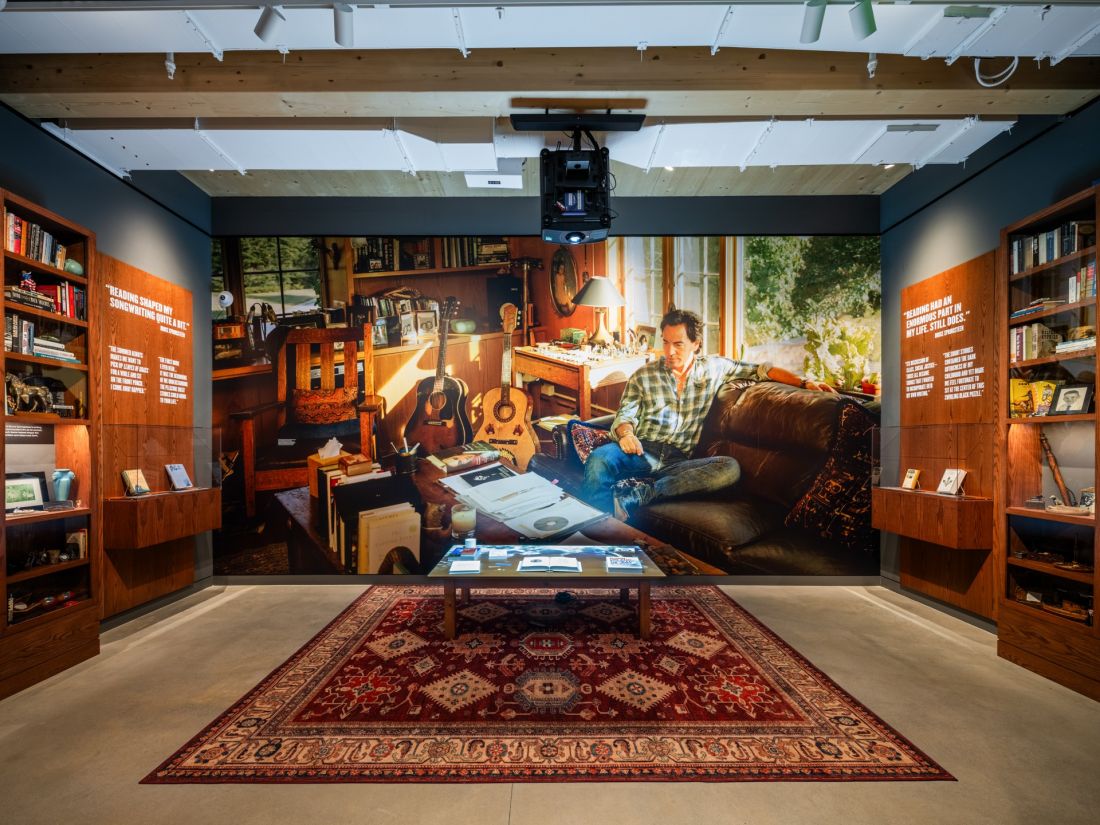
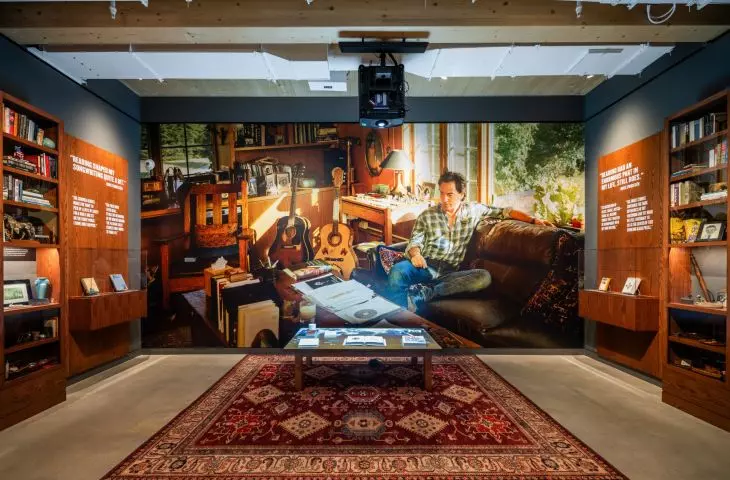
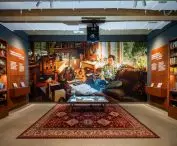
A section of the exhibition dedicated to Bruce Springsteen recreates the atmosphere of places associated with his work and creative process — ©Alex Ferrec
The Exhibition as Part of the Architecture
C&G Partners is responsible for the exhibition design and wayfinding system. Eight galleries combine memorabilia, photographs, interactive stations, a rehearsal studio, and a space that recreates the atmosphere of a concert. Among the items related to Springsteen are instruments, stage costumes, notebooks with lyrics, setlists, posters, and alternative album cover designs. A separate section explores the broader context of American music and its diverse genres. The exhibition’s graphic design draws inspiration from album covers, handwritten lyrics, and tour posters. Rather than limiting the display to neutral display cases, the designers have, in some places, used entire walls to tell the story of Springsteen’s creative process. Some spaces evoke the atmosphere of the places where lyrics are written, such as recording studios or concert stages.
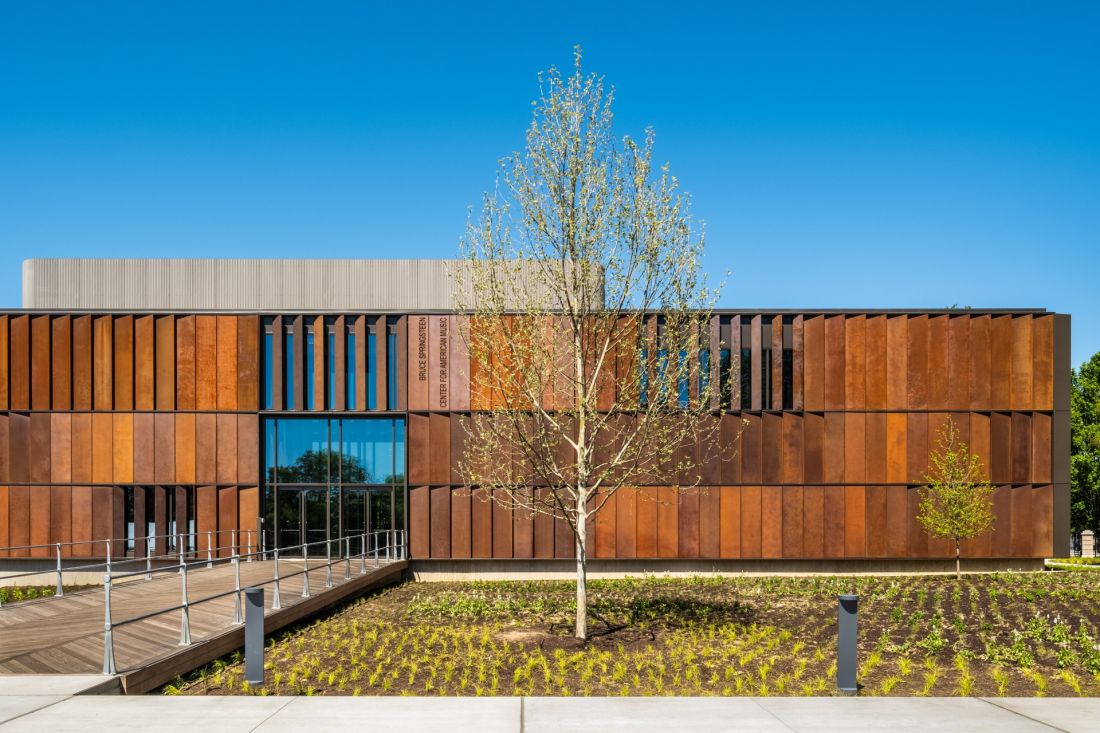
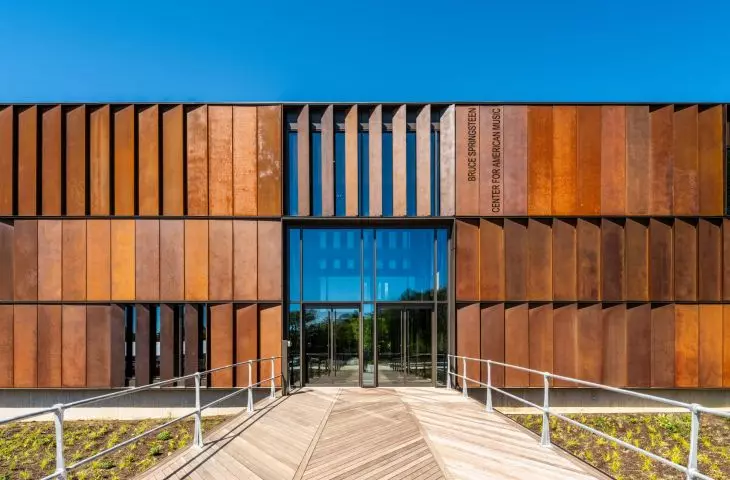
A wooden walkway leads to the main entrance of the Bruce Springsteen Center for American Music — ©Alex Ferrec
The landscape leads to the building
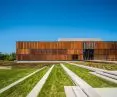
Just as important as the building itself is the path to the entrance. LaGuardia Design Group designed a wooden boardwalk inspired by the seaside boardwalks of Asbury Park. It winds through a vast meadow of native grasses and perennials, which serves not only as decoration but also supports biodiversity while functioning as part of the stormwater management system. Hidden within the landscaping are vegetation-covered basins that retain and filter water before it enters the retention system. The plantings include oaks, maples, and tupelos, among others, and one of the site’s key features is the “Memory Tree”—a sycamore that references a place Springsteen recalls in his autobiography as a space for reflection and creative inspiration. The landscape, therefore, does not merely serve as a backdrop for the architecture. It becomes the first chapter in the story of the musician and New Jersey, guiding visitors from the surroundings that shaped him to an interior dedicated to his work and the history of American music.