




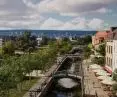
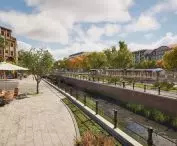

Built between 1773 and 1774, the Bydgoszcz Canal is one of Bydgoszcz's biggest tourist attractions and a popular leisure destination. On November 18, 2025, a conference entitled "The Bydgoszcz Canal - Hidden Potential" on the possibility of restoring the section of the Canal decommissioned in the 1970s was held in Bydgoszcz, organized by the Bydgoszcz Urban Movement, the Association of Polish Architects Bydgoszcz Branch and the Bydgoszcz Canal Museum. The special guest was Ben Nijssen, who together with a group of activists in 2020 led the restoration in Utrecht of the canal buried in the 1960s. The event was sponsored by the Embassy of the Kingdom of the Netherlands in Warsaw, Inland Waterways International and "Architecture & Business".
history of the Bydgoszcz Canal
Launched in 1774, the 26-kilometer-long Bydgoszcz Canal was built on the initiative of the then Prussian King Frederick II. It was on his orders that construction began on March 1, 1773. To carry out the investment, Franz Balthasar Schönberg von Brenkenhoff, who was the organizer, coordinator and chief supervisor, ordered the import of more than 8,000 settlers from the German states. Among other things, due to harsh working conditions, more than 2,000 of them died of fever and dysentery. Most of the construction work was done by June 9, 1774, when the first, as it later turned out, unsuccessful floating of the transport took place.
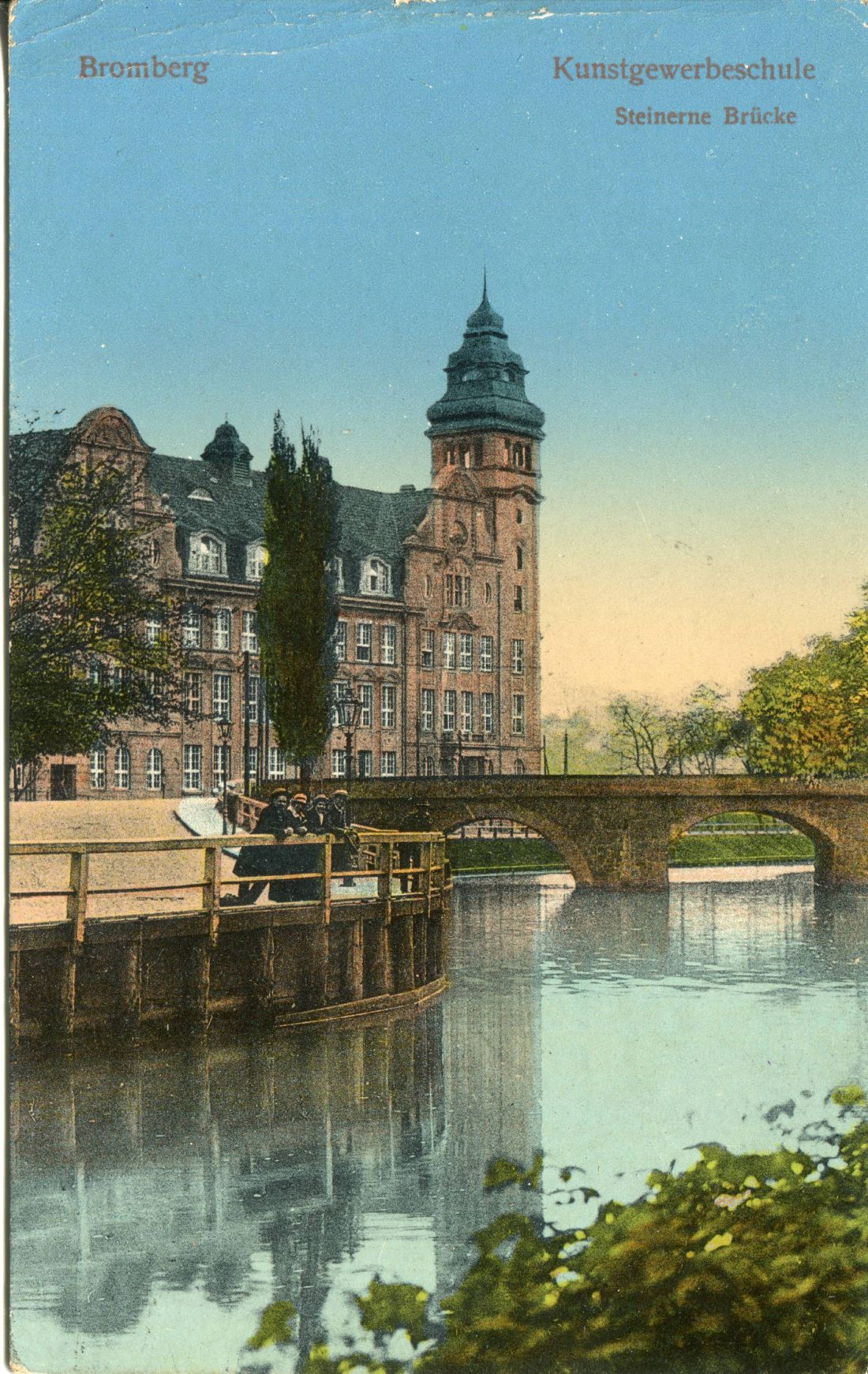
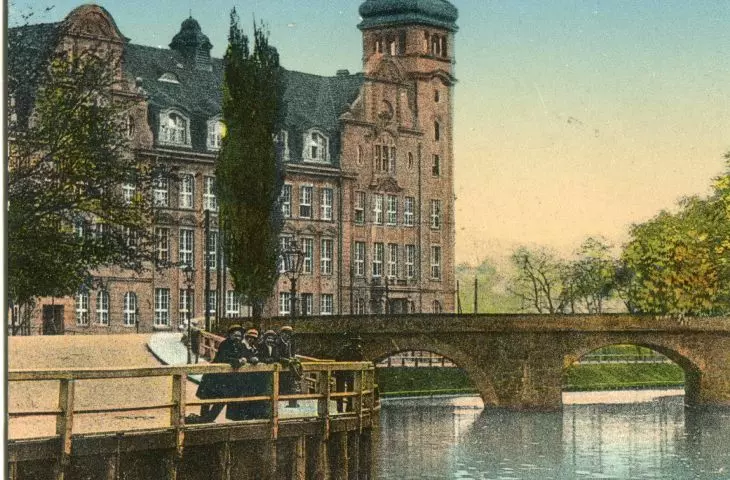
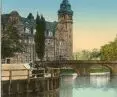
The building of the Royal-Prussian School of Arts and Crafts (today occupied by the Mechanical School Complex No. 1 in Bydgoszcz) - the Vladislav IV Bridge and a section of the canal that no longer exists; postcard issued around 1915
© Collection of the Bydgoszcz Canal Museum
In the end, it wasn't until September 14, 1774 that the first goods were floated, and the fathers of the canal - the Prussian king and Franz Balthasar Schönberg von Brenkenhoff - celebrated the success. Frederick II declared the project complete, despite the fact that the Canal required continuous investment, for which funds were constantly in short supply.
In the late 18th and early 19th centuries, a huge modernization was carried out, with wooden locks mostly replaced with brick, massive structures. We can see some of these hydrotechnical devices on the old section of the canal. They are the oldest monuments of their kind in this part of Europe. The new hydrotechnical structures were larger, with a headlight of 6.6 meters and a usable length of chambers of 48.9 meters.
In parallel with the reconstruction of the entire route, the wharves were wooded. In the 19th century, steam-powered ships appeared on the canal, greatly improving transport capacity. At the end of the 19th century, increased traffic on the shipping route determined the next need for modernization, which took place between 1908 and 1915. At that time, the locks on the existing route were rebuilt, and a new section of the canal was built, which connected the Brda through the Okole and Czyżkówko locks. This investment, taking into account the latest hydrological technology as well as the needs of navigation, created opportunities for the largest barges to navigate the canal.
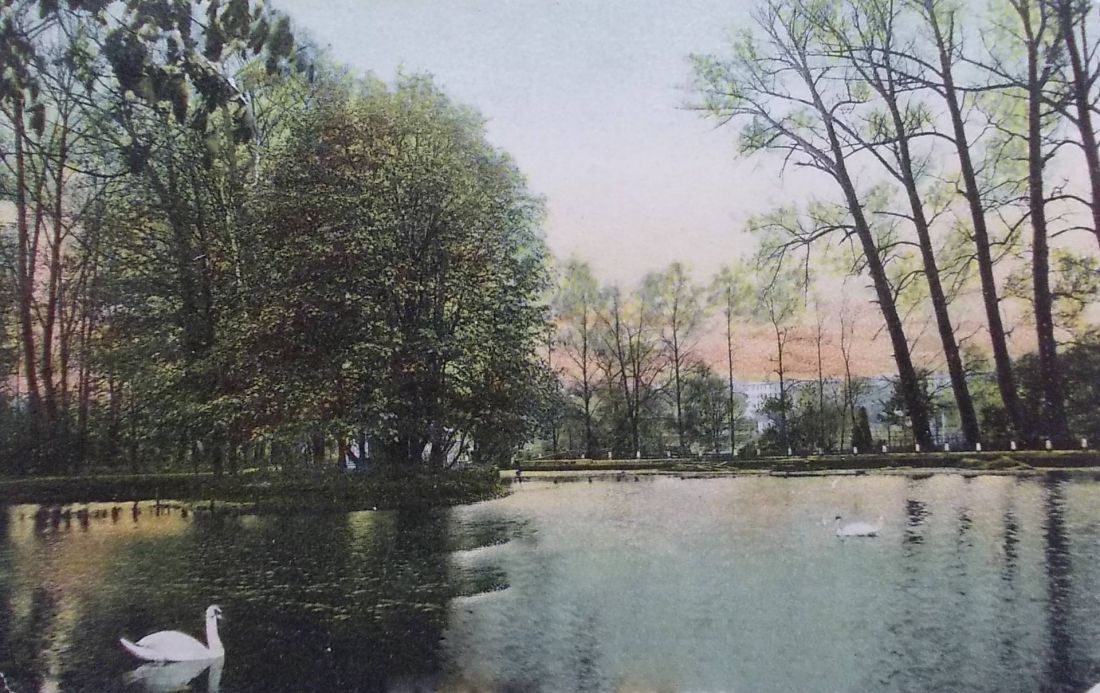
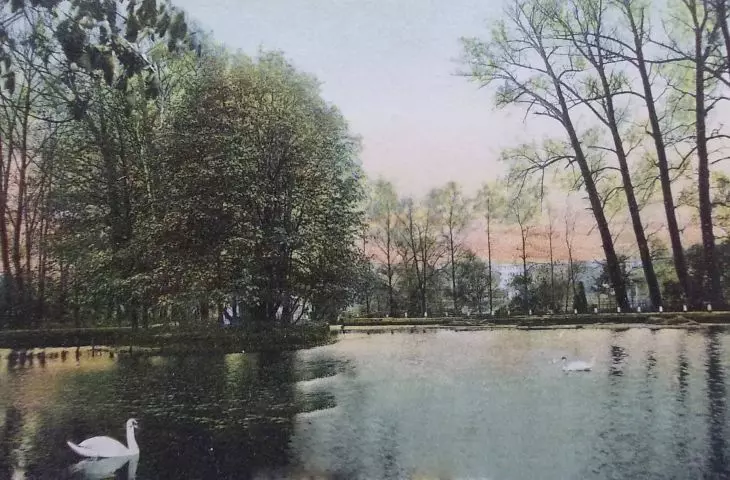
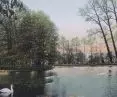
The floodplain behind the 3rd lock, where swans could often be seen; postcard issued around 1910
© Collection of the Bydgoszcz Canal Museum
It is worth mentioning that at the beginning of the 20th century, the entire route from the Vistula to the Oder was rebuilt, allowing barges of even more than 400 tons to travel along it. We can still admire the state from this last modernization, without major changes, today.
Over time, the canal began to serve - in addition to transportation - a recreational and leisure function, especially since the late 19th century. From the city center through the now defunct sluice gate, Bydgoszcz residents headed toward the most popular restaurants. Numerous attractions awaited them here - dance halls, playgrounds, boat rentals, plein air paintings, dog training shows or carousels. In winter, ice skating was very popular. All these attractions were reached by walking along waterfront promenades, including the most beautiful ones along a section of the old Bydgoszcz Canal, which does not exist today .
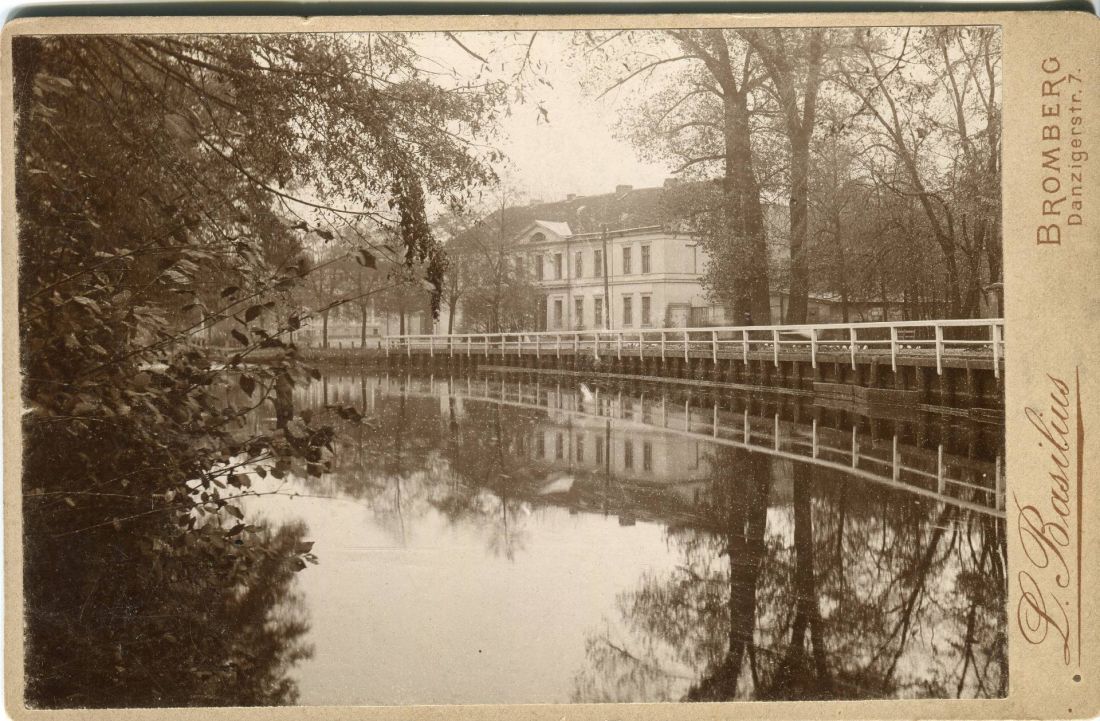
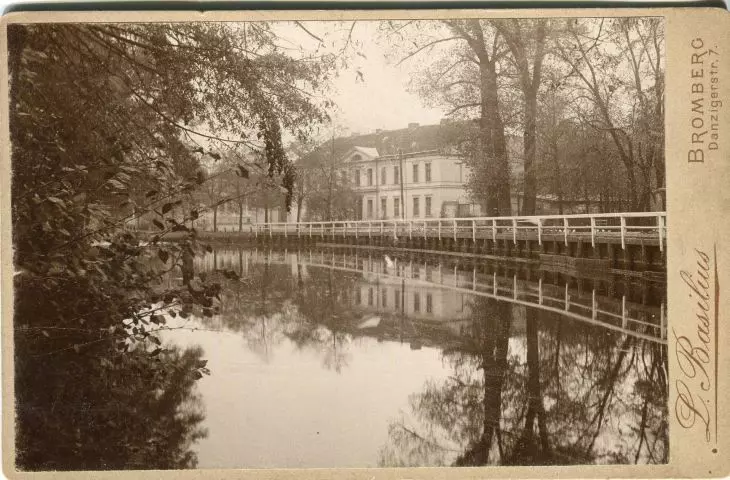
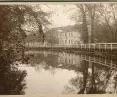
The southern promenade along the non-existent section of the Bydgoszcz Canal, with today's Marszałka Focha Street visible in the background; photograph from the turn of the 20th century
© Collection of the Bydgoszcz Canal Museum
The planty lost its importance only after World War II, due to increasing urbanization and consequent transportation problems. The filling in of part of the canal in the early 1970s was intended to secure the pressing transportation interests of local residents. To carry out the plan, the channel was drained and, particularly shocking today, as many as 300 trees were cut down along a short stretch. The Grunwald traffic circle was created here.
Tomasz IZAJASZ
Curator of the Bydgoszcz Canal Museum
vision for the future
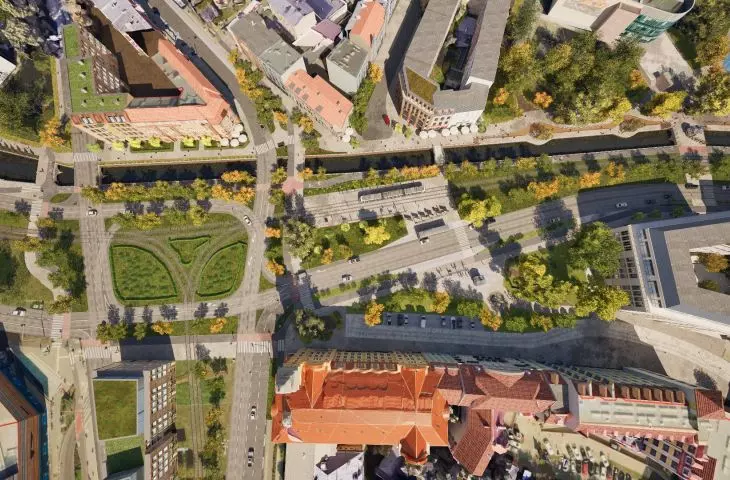
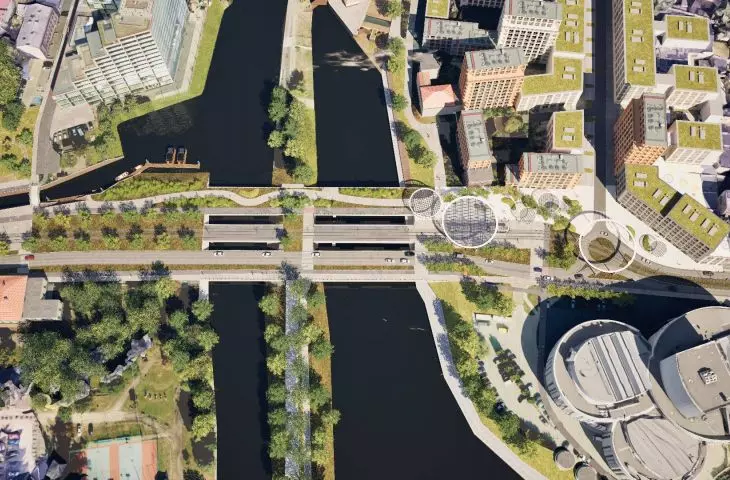
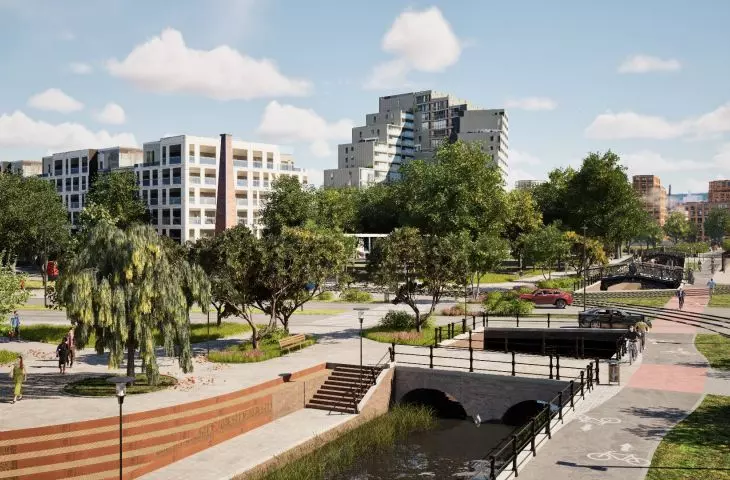
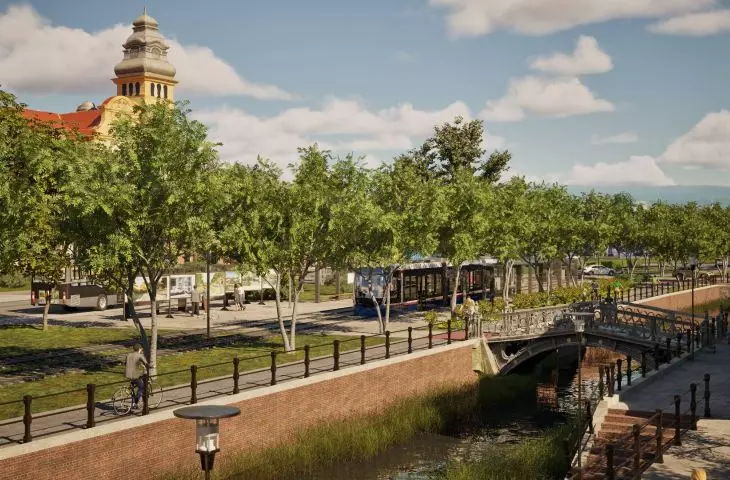
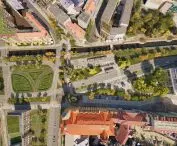
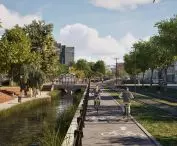
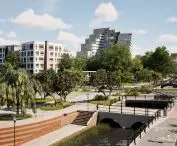
The project for the restoration of the Old Bydgoszcz Canal covers the section from the place where the canal bed hides in the ground in front of the Grunwald traffic circle, up to its former outlet to the Brda in the area of the bridge in the course of Marszałka Focha Street, near the Nova Opera House and the Nowy Port estate. The canal is being reconstructed in one of its historical courses, adapted to modern spatial and communicationneeds . In the section under Focha Street, it is planned to dig up the channel and introduce a clear water axis in place of today's multi-lane arterial. The cross-section of the street is transformed: the narrowed roadway and the orderly layout of traffic lanes and intersections free up space for quays, greenery and pedestrian and bicycle routes. the water mirror becomes the main compositional element, replacing the hitherto dominance of automobile traffic. In selected places, the terrain lowers, creating terraces descending to the water; in other sections, the edge of the canal receives a more urban character - with a distinct frontage of buildings, seasonal gardens, benches and trees.
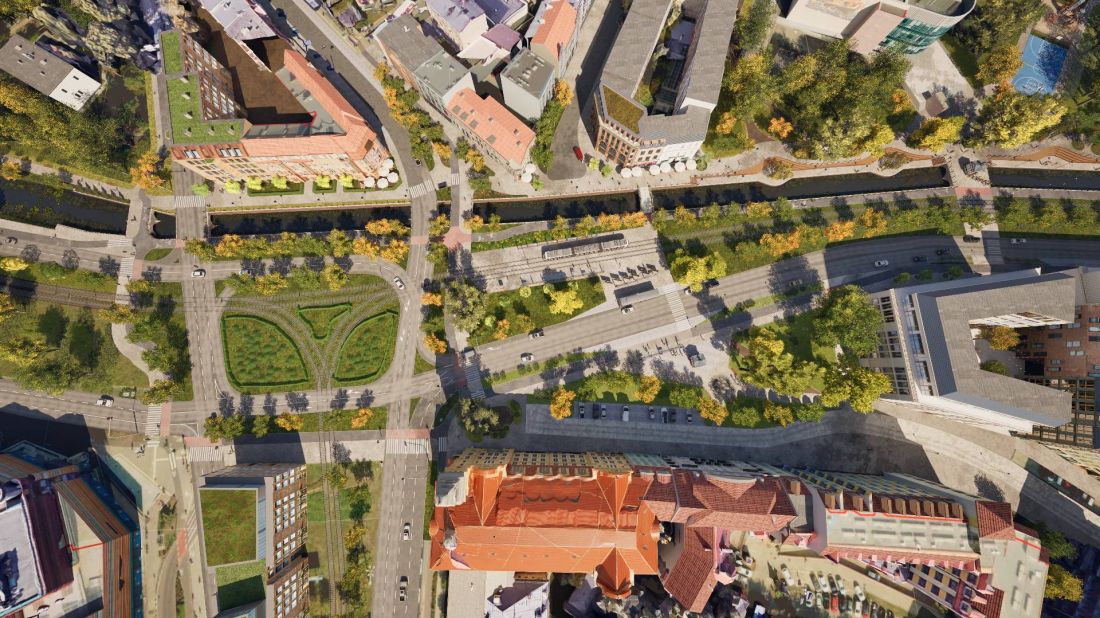
bird's eye view
by Pawel Mrozek © Bydgoszcz Urban Movement
The difference in water level between the Grunwaldzkie traffic circle area and the mouth of the Brda River is several meters and is leveled by two water cascades. The first, exposed, is located where the canal breaks off today - at this point the canal turns into a cascade, and the existing section west of this point is dammed up so as to fill it with water and give it the character of an attractive waterfront section. The second cascade is hidden under a new bridge in the area of the intersection of Królowej Jadwigi and Focha streets. Both structures are primarily intended to level the difference in the level of the water table, aerate it and support the migration of aquatic species.
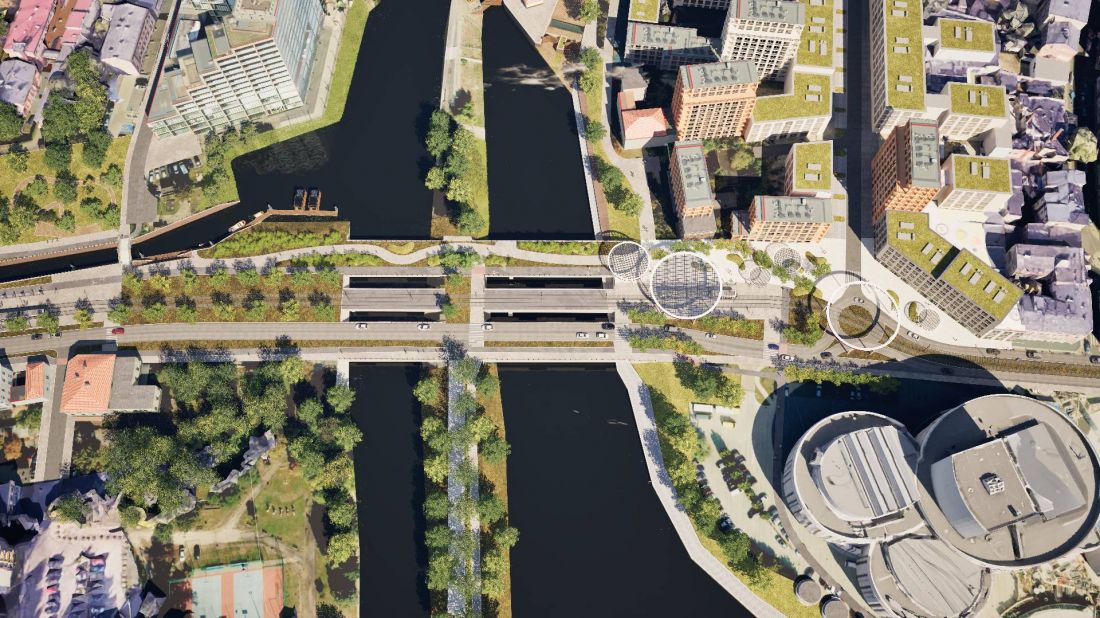
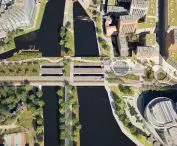
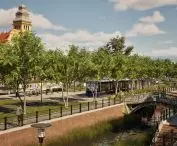
The mouth of the reconstructed Bydgoszcz Canal into the Brda River in the area of Opera Nova - a visible bridge with the northern thread transformed into a linear park and a new city square between the opera house and the emerging Nowy Port housing development
by Pawel Mrozek © Bydgoszcz City Traffic
The canal is not planned as a navigable route; only in the area of the estuary, by the Brda River, space is planned for a small marina for small recreational vessels. The restoration of navigability on the restored section is not necessary, as a section of the New Bydgoszcz Canal from Bronikowskiego Street is in operation, with two large locks, Czyżkówko and Okole, ensuring the flow of watercraft.
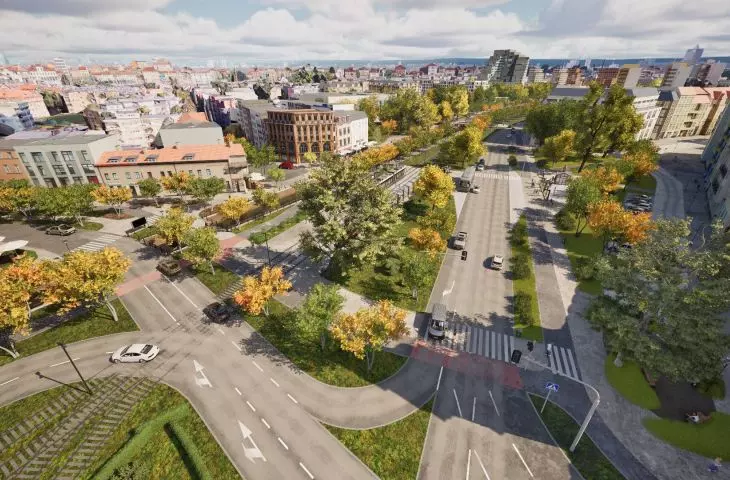
An integral part of the concept is the transformation of the structure of buildings in the vicinity of the canal. The project envisages the densification and reorganization of the urban fabric through the restoration of missing and neglected building quarters, especially in the area of the existing drive-thru premises and gas station, and in the vicinity of Królowej Jadwigi Street. Dense development frontages appear in places currently occupied by scattered buildings, wide exits and surface parking lots. The new quarters enclose broken urban assumptions and create a clear framework for public spaces along the canal and main streets.
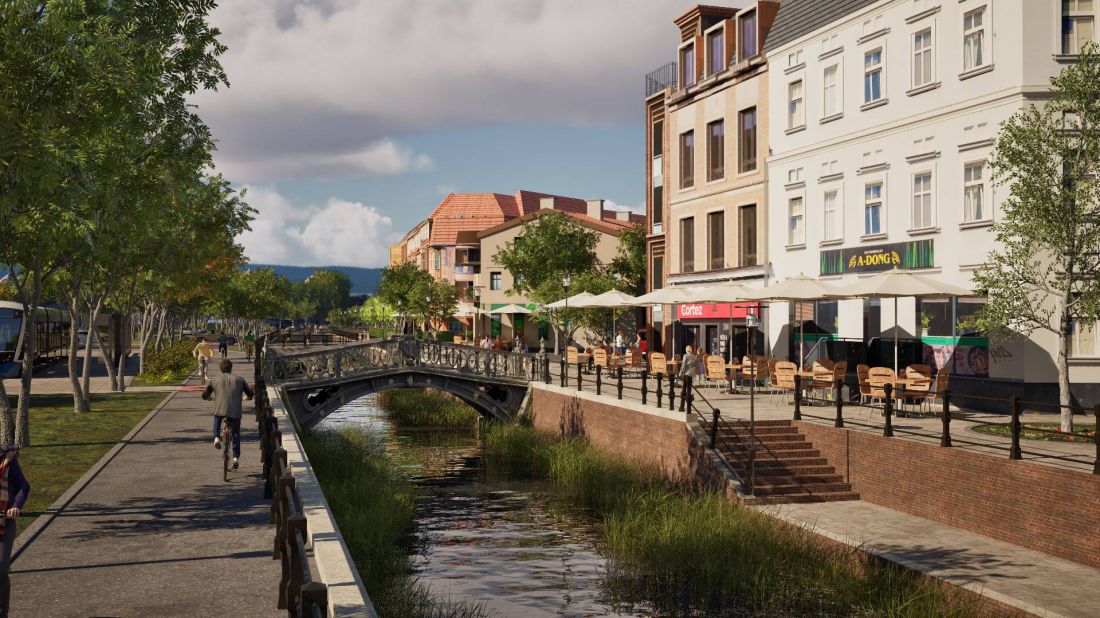
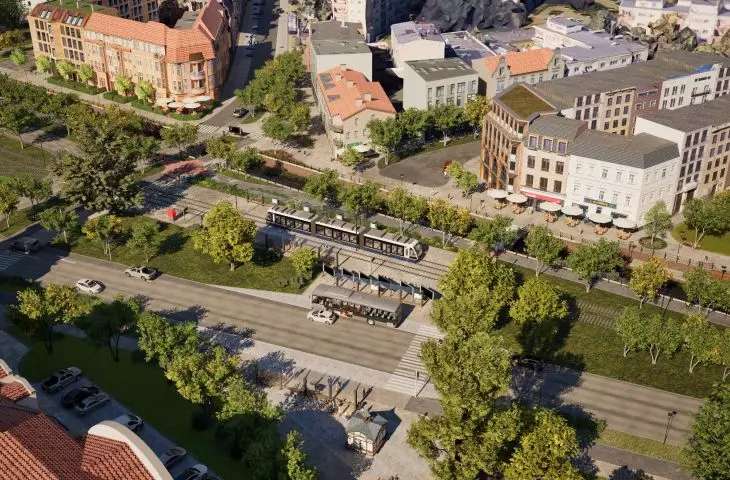
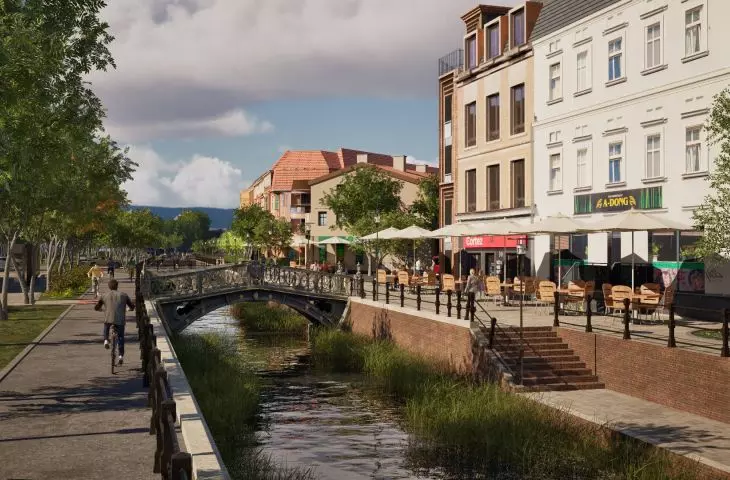
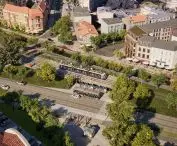
A view of the reconstructed Bydgoszcz Canal to the west, in the area of Maksymiliana Jackowskiego Street - the canal as an element activating downtown development - pedestrian routes, service establishments and direct contact of public space with water
author: Paweł Mrozek © Bydgoszcz City Movement
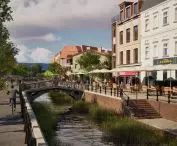
New developments shaped in the form of quarters and half-quarters mark a sequence of clearly defined urban interiors. Instead of amorphous "in-between" spaces, there are squares, squares and riverside streets with clear proportions, opening with view axes to the water mirror. The first floors of the buildings provide for service, cafe and cultural functions with direct access to the waterfront, which reinforces the daily use of the waterfront space and promotes its activation even outside working hours. Greenery and water management form an important layer of the project. Strips of tall trees with a layer of shrubs, perennials and aquatic plants are designed along the canal, complemented by sections of permeable paving both at the quays and inside the quarters. Existing old-growth trees, including natural monuments, will also be preserved. Greenery has a climatic and buffer function: it creates shade, improves the microclimate, filters pollution and separates vehicular traffic from the pedestrian zone.
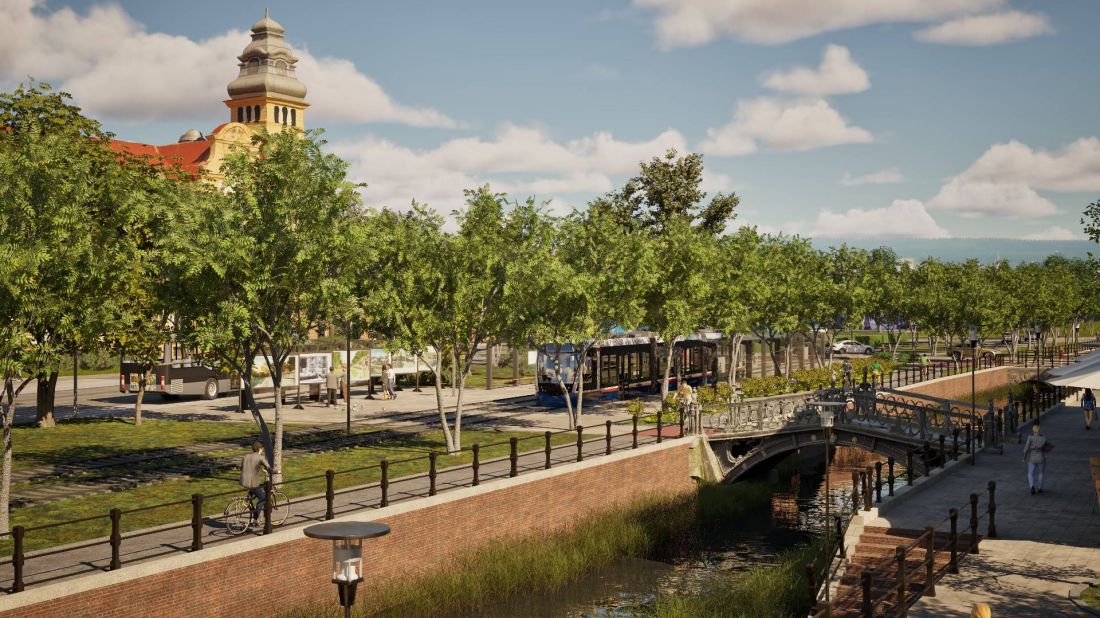
visualization
by Pawel Mrozek © Bydgoszcz City Traffic
The canal is integrated into a system of green-blue infrastructure - it captures some of the rainwater from roofs and streets, reducing overloading of storm drains and the urban heat island effect. The cascades integrated into this system act as technical and biological elements, while also acting as clear spatial accents.
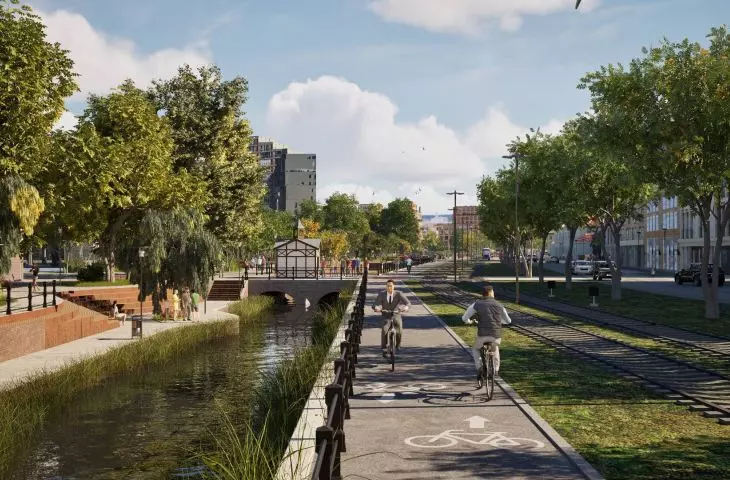
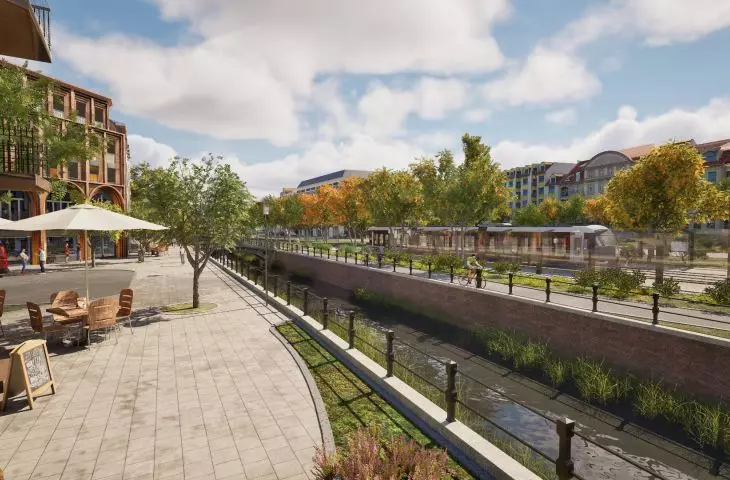
A high-speed bicycle route runs along the entire length of the premise, from the existing section of the canal west of the Grunwaldzkie traffic circle, along the designed channel at Focha Street, up to the bridge over the Brda River. It runs as close to the water surface as possible, continues on the transformed bridge, connects the western districts of Bydgoszcz with the city center, creating a convenient and legible axis of bicycle traffic with the standard of the main route. The pedestrian and bicycle route thus gains the rank of one of the most important active mobility corridors on a city scale.
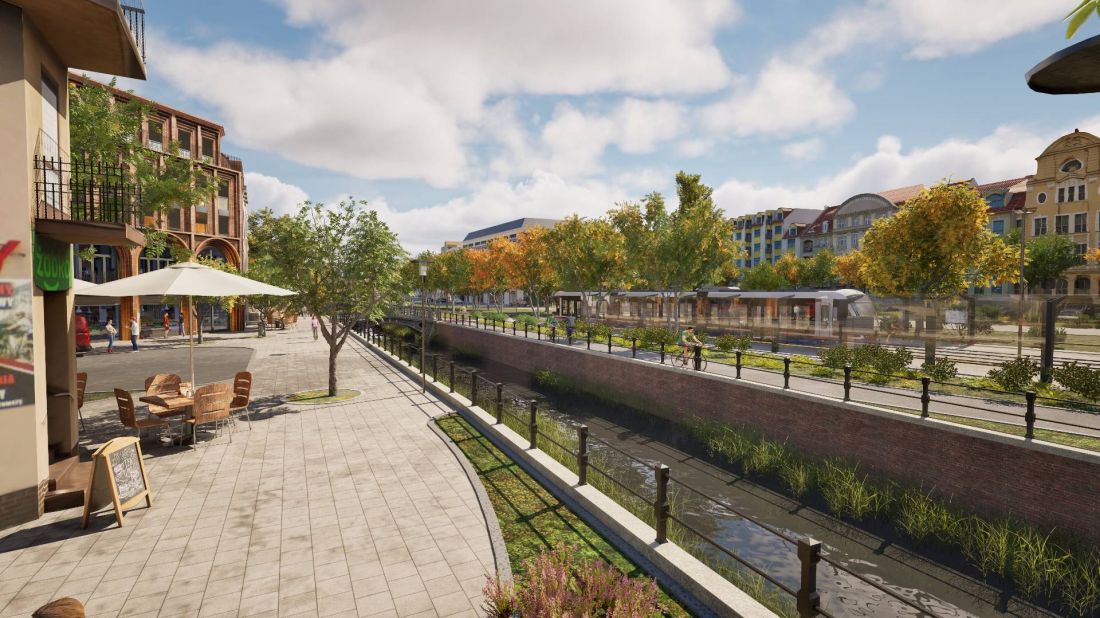
View of the reconstructed Bydgoszcz Canal in the eastern direction, in the area of Maksymiliana Jackowskiego Street - pedestrian and bicycle route, greenery and water as a coherent element of the new spatial structure of the city center
Author: Paweł Mrozek © Bydgoszcz City Movement
In the area of the mouth of the canal to the Brda River, the project includes the transformation of the bridge over Focha Street into a linear park. Automobile traffic is concentrated on the southern thread of the street, allowing the northern bridge structure to be used primarily for pedestrian and bicycle traffic. A wide "bridge-bulwark" is created, with greenery, seating areas and vantage points on the Brda River, Opera Nova and the New Port estate. The solution ties together a string of pedestrian and bicycle spaces along the canal with Bydgoszcz's riverside downtown and Mill Island.
On the other side of the river, the concept closes with a city square located in front of the Opera House and the New Port development. The square serves as a representative transfer point integrating pedestrian, streetcar and potentially water traffic. A covered streetcar stop has been proposed here, the form of which refers to the architecture of Opera Nova. The plaza is the final accent of the sequence: from the restored canal and new development quarters, through the linear park on the bridge and the high-speed bicycle route, to the riverside urban interior on the Opera House side. This layout has the potential to connect seamlessly with the square under construction as part of the Opera Nova's Fourth Circle and further with Theater Square, which will also change its face in the future.
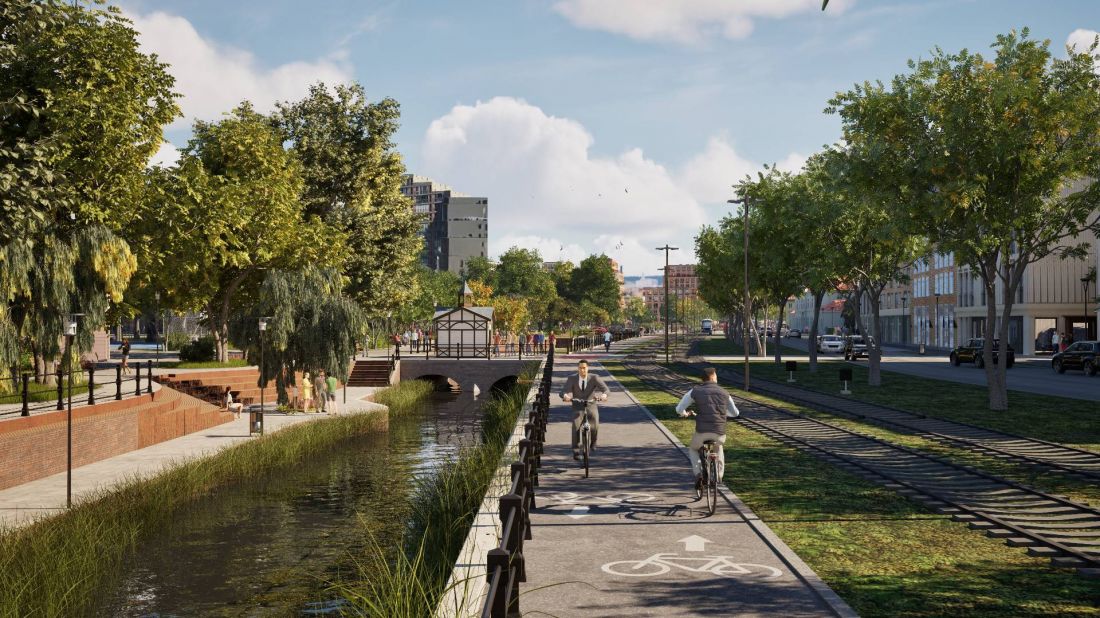
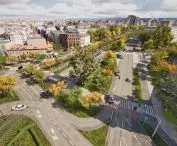
A view along the reconstructed Bydgoszcz Canal in the eastern direction, in the area of the Multikino - the canal as an element ordering the public space, with a pedestrian and bicycle route and urban greenery in the axis of the former water course
Author: Paweł Mrozek © Bydgoszcz Urban Movement
The whole project creates a coherent concept of reurbanization combining restoration of the canal, densification of development and linking the western districts of Bydgoszcz with the center on the Brda River into a unified, legible urban layout.
Paweł Mrozek
Architect, author of the concept, creator of the profile One Hundred Years of Planning.