





#IconsofPolishArchitecture
Instead of adorning the Silesian Park, today the hat is deteriorating, and funds for its renovation are in short supply. The first technical problems affected the hall shortly after it opened. Is the unique construction, which secured the building a place in the register of monuments, at the same time the main source of its troubles?
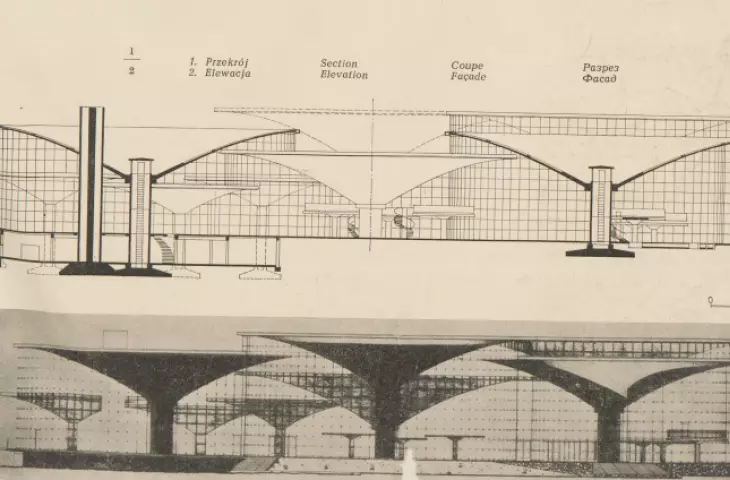
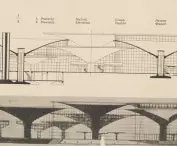
A completely different hall was to stand in place of the Hat. In 1965, the design of an event hall covered with "mushrooms", analogous to the railroad station in Katowice, was presented by Henryk Buszko and Aleksander Franta. Three types of structural "umbrellas" of different diameters housed exhibition spaces of different characters adapted to the needs of various events, and in the center - an amphitheater.
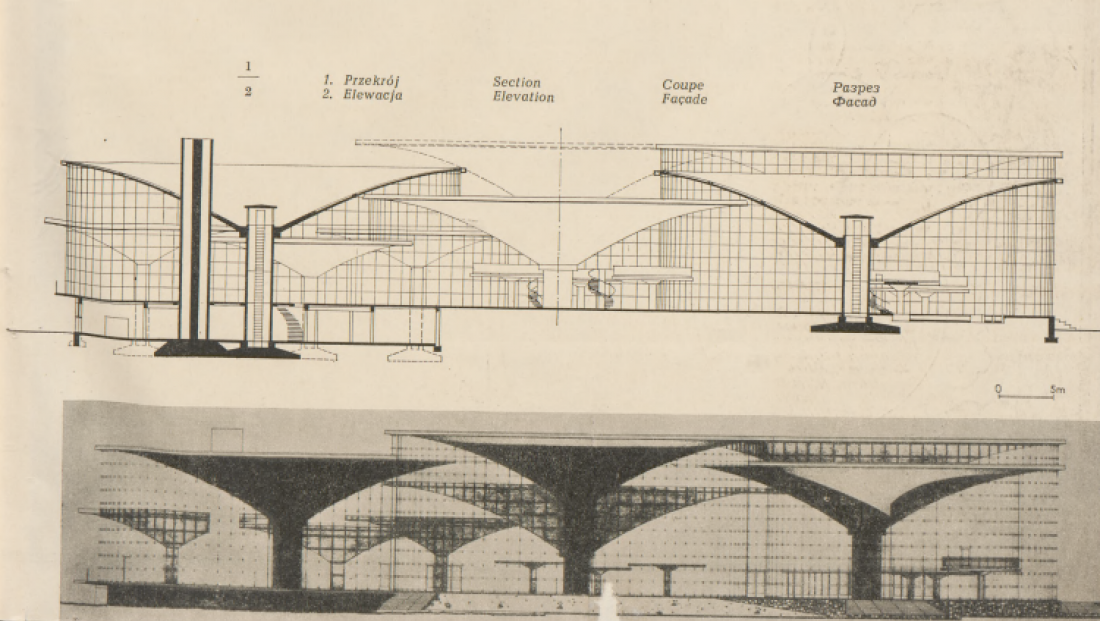
Cross-section and elevation, event hall design by Aleksander Franta and Henryk Buszko
Architektura. 1967 No. 5-6 = 234-235 (May-June) | Mazowiecka Biblioteka Cyfrowa
The project was not completed due to high costs. Instead, the order for the design of the hall, which was cheaper in execution, was given to the Katowice-based "Miastoprojekt". The design of the hall with a shape resembling a hat was presented by Jerzy Gottfried, an architect, long-time president of SARP in Katowice, who had previously cooperated with Buszko and Franta on projects such as the "Torkat" skating track in Katowice. On the exhibition hall project, he collaborated with designer Włodzimierz Feiferk. However, the work was not completely fresh - the project was designed for Jastrzębie Zdrój. The hall in Chorzow, however, was ahead of its prototype and was built two years earlier. Construction began in 1966.
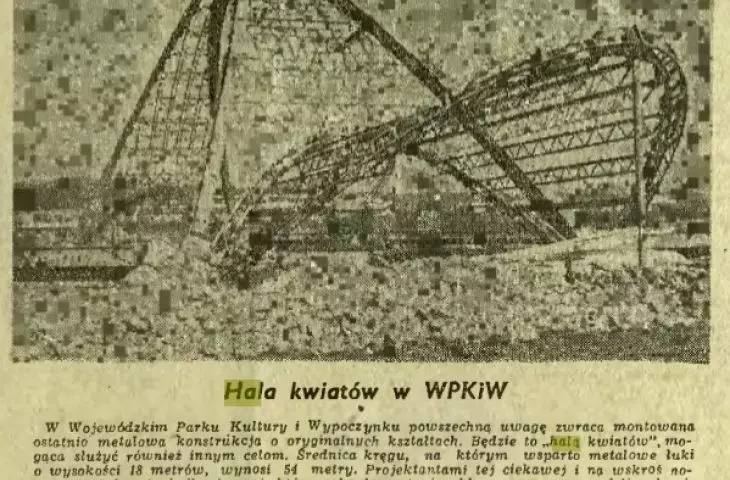
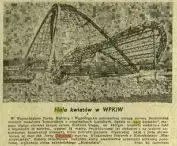
"[...] widespread attention is drawn to the recently assembled metal structure with original shapes. It will be a "flower hall" that can also serve other purposes. [...] The designers of this interesting and thoroughly modern hanging structure, which will be covered with shiny tar paper with aluminum foil, are Jerzy Gottfried, M.Sc. and Włodzimierz Feiferek, M.Sc. [...].
- announced the Silesian Workers ' Tribune in early April 1968.
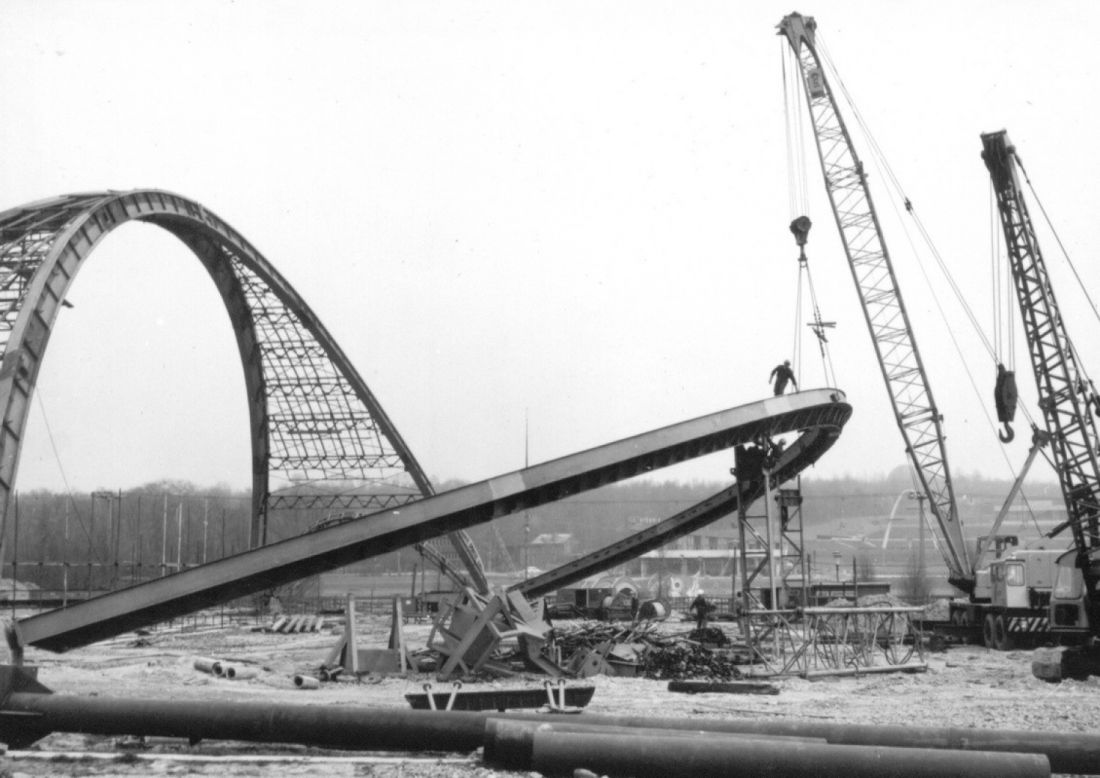
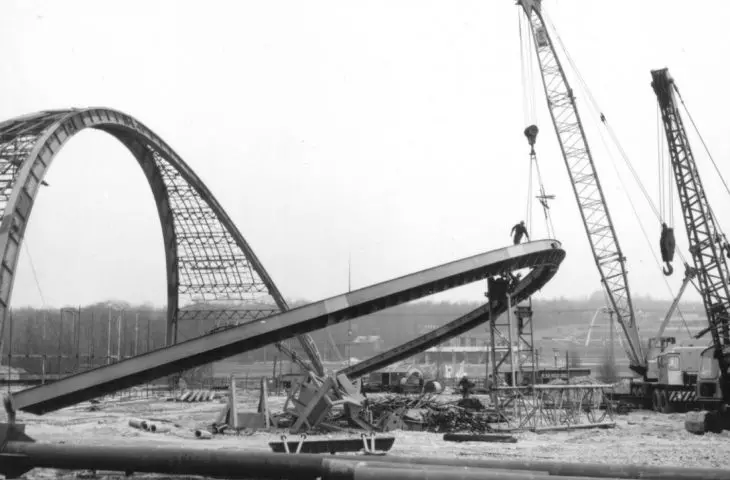
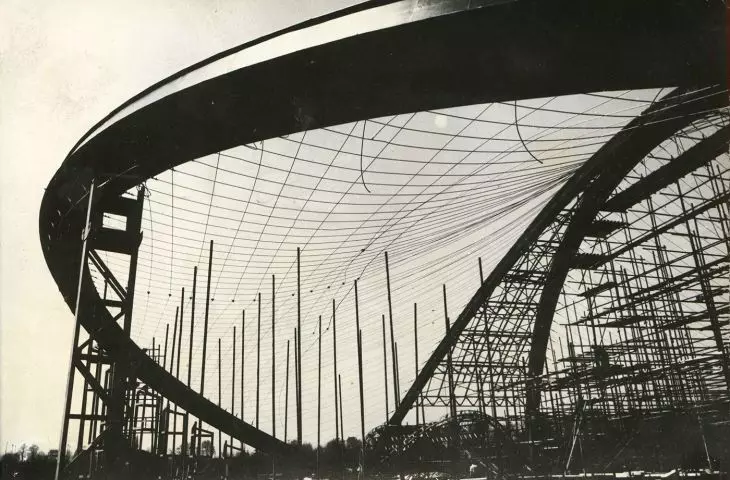
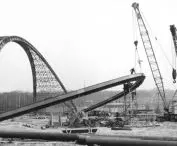
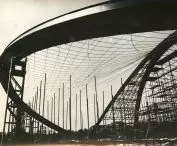
Construction of the Kapelusz hall, 1967-68
fotopolska.eu
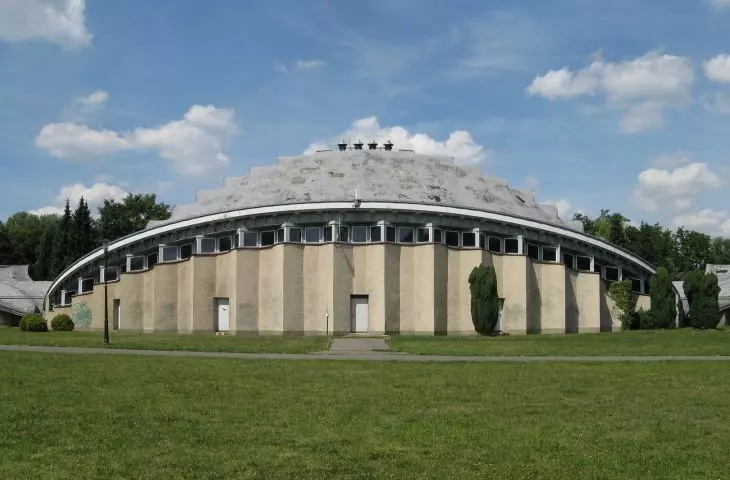
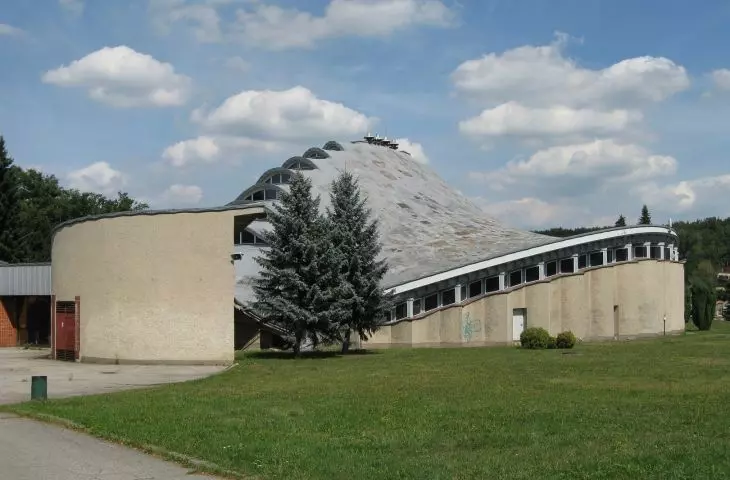
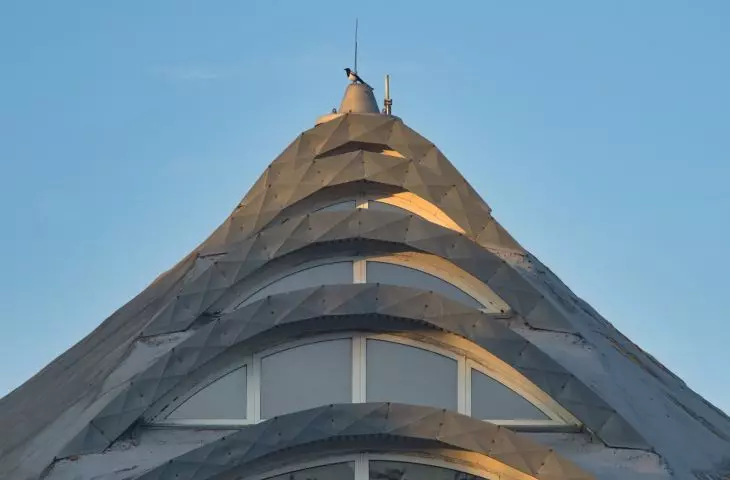
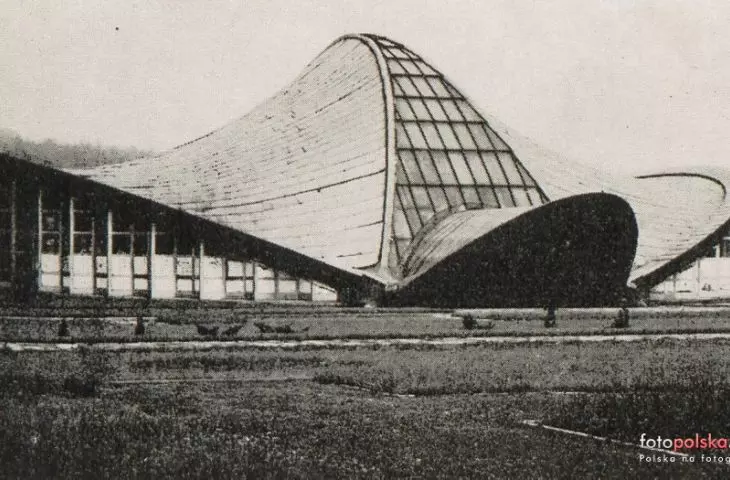
In the heart of the Provincial Park of Culture and Entertainment in Chorzow, a structure was built with a striking form and mass resembling the shape of a lady's headdress. It is formed primarily by a sloping, streamlined roof realized through the construction of taut load-bearing and transverse tendons forming a linear grid. Gottfried and Feiferek patented the design of the support trestle, which allowed the formation of braced parabolic arches, giving the final shape to the building's covering. The covering was formed by laminated fiberboard, which was attached to the tendon structure. Such a solution was not only impressive, at the same time it was responsible for protecting against the negative effects of mining on the building.
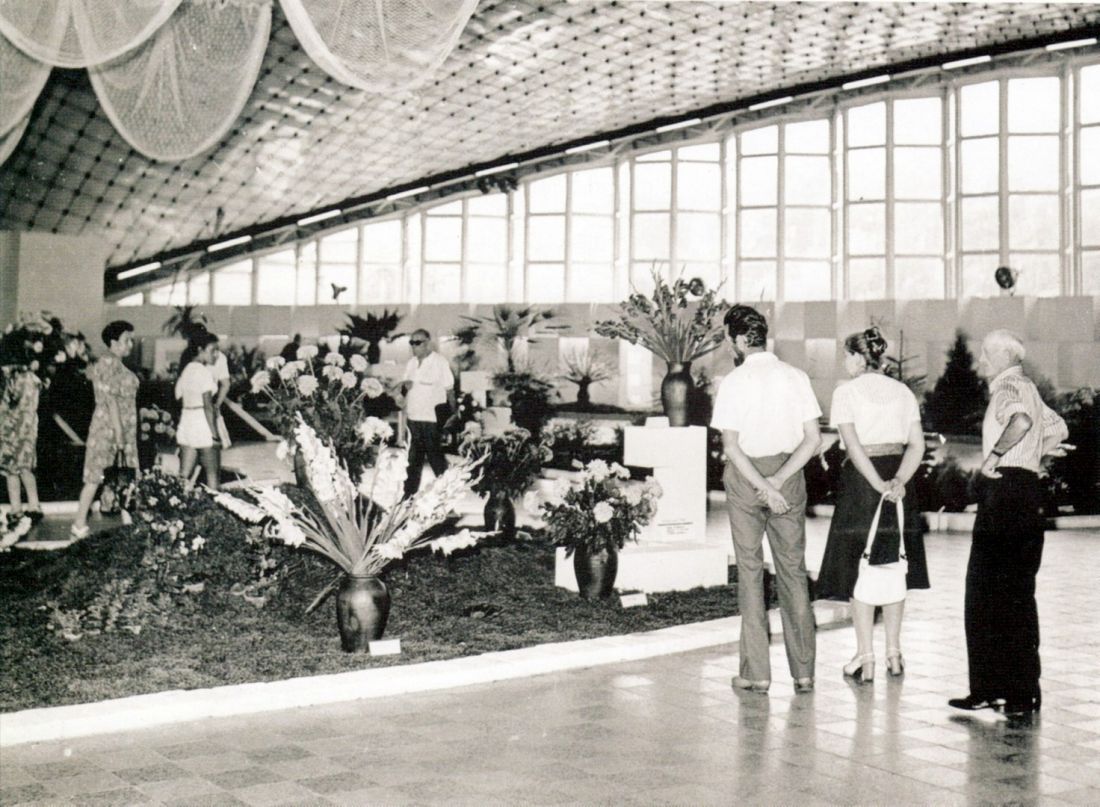
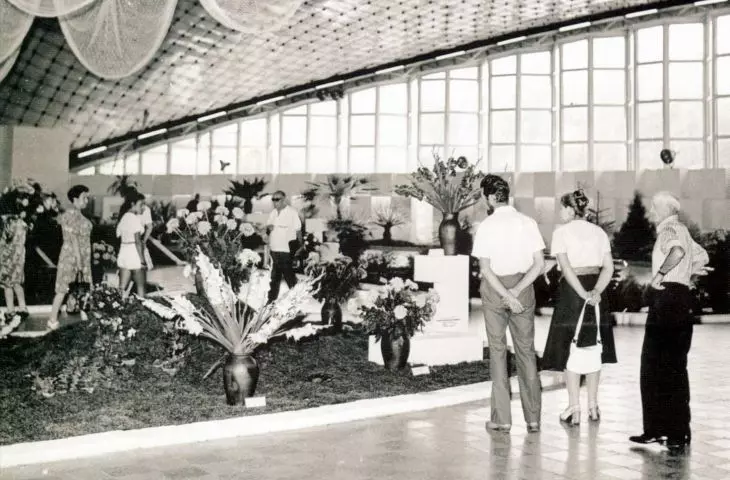
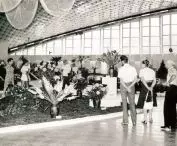
Flower exhibition in 1975, interior of the Hat Hall
photo: "Park of many generations" | fotopolska.eu
Tall and spacious, the single-space interior was well lit thanks to a skylight running through the trestle gap and the complete glazing of the side walls. The form, scale and lighting contributed to an impression of extraordinary power and expression
- reads an excerpt of the project description from the book "Silesian Park in Chorzów. Projects and Realizations from 1950-1989" by Aneta Borowik.
In the 1980s, additional entrances were added on the north and south sides - two crescents complementing the original body of the building covered with steel hanging roofs.
The hall opened in the summer of 1968, probably during the International Rose Exhibition, which lasted from June to October. The exhibition took place not only in the new hall, but throughout WPKiW, especially in the rosarium designed by Prof. Władysław Niemirski. In the same year, a tower greenhouse designed by Othmar Ruthner and a complex of greenhouses were built adjacent to the hall. The park, one of the largest in Europe, covering an area of more than 530 hectares, was created on the initiative of General Jerzy Ziętek, then governor of Silesia, known as the builder of Katowice. Construction of the complex began in 1951, and before the Kapelusz there had already been a stadium, a zoo, an amusement park, the "Elka" funicular railroad, a scout center with a shooting range, and the "Fala" swimming pool. Longer than the Kapelusz hall in the park also stands the largest and oldest planetarium and astronomical observatory in Poland - the Silesian Planetarium.
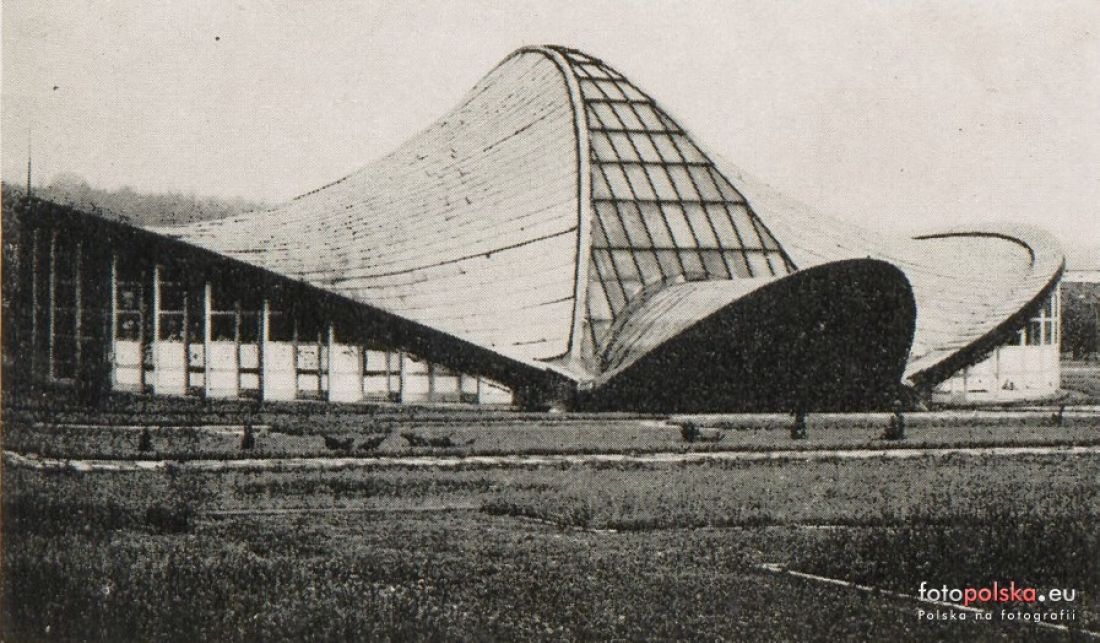
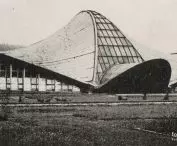
Kapelusz hall in 1970, the photo shows glazing, removed during reconstruction in 1982.
Photo: Architektura. 1970 no. 10 = 275 (October)
The original form of the Hat has not survived to this day. Back in 1982 it was damaged by fire, leaving only the steel structure of the building. At that time Jerzy Gottfried again made a design, this time for a reconstruction. The work took four years.
Thanks to the restoration according to the design of its original co-author, the unusual shape of the hall can be seen to this day, but the partial modernization deprived it of its essential glazing, which enhanced the futuristic character of the building and illuminated its exhibition interior. They were replaced by eyelid windows and new lighting. At that time, entrance pavilions based on a crescent-shaped plan were also built.
Hat's precarious hat
The Hat Hall operated until 2014. For almost 40 years it hosted not only annual international flower exhibitions, but also concerts, fairs and conferences. The building served until one of the girders supporting the roof broke.
At the time, it was thought that the damage was not extensive, and it was enough to weld the structure together. But a detailed inspection was also announced. Today it is clear that no events will be held in the hall this year
- reported Dziennik Zachodni at the time.
To prevent collapse, the hall structure was supported by wedging and reinforcing the steel flange arches.
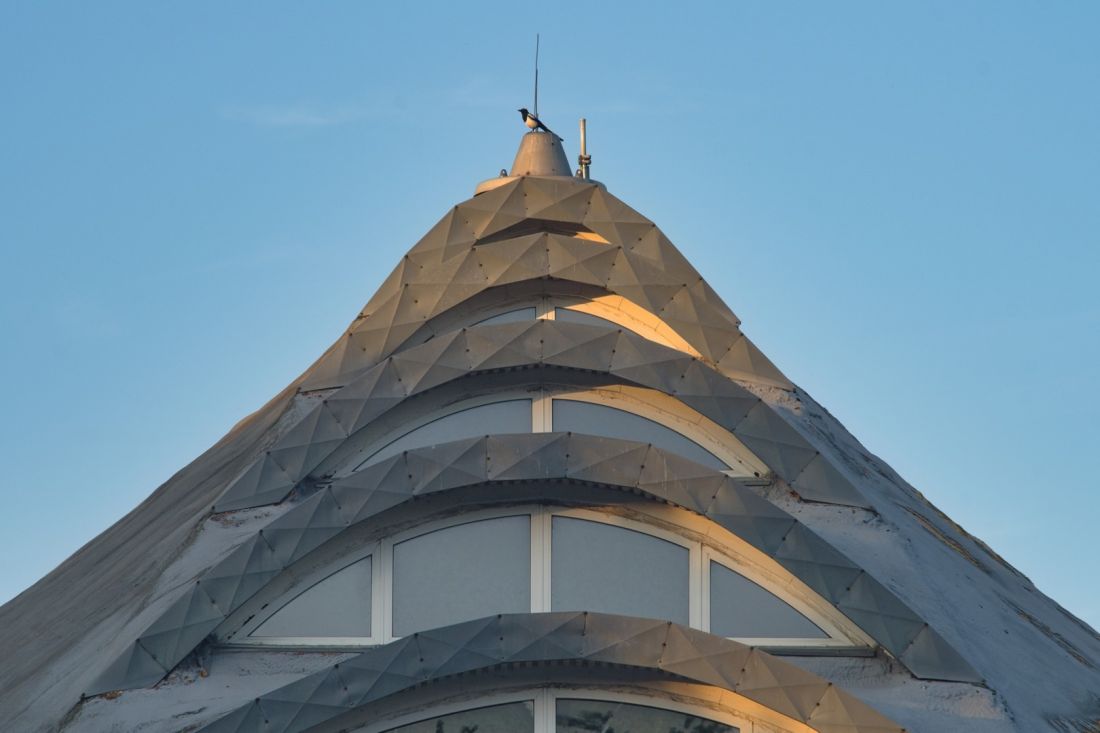
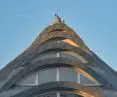
The roof of the Hat Hall, 2023.
Photo: Adrian Tync © CC BY SA 4.0 PL | Wikimedia Commons
Specialists took samples of the roof structure for analysis, prepared a computer model of the hall and presented an expert opinion - a thorough renovation of the building is necessary.
Heating such a large area is thousands of zlotys when it comes to the event, so is inefficient electric lighting, it still remembers those old times. We are thinking about the fact that when we know what the costs of renovating this hall are, where to fit in them possibly to make it more economical and adapted to modern times
- Lukasz Buszman, spokesman for the Silesian Park, said at the time in an interview with Polish Radio Katowice.
Concerns over the future of the hall were triggered primarily by the recommendation indicated in the expert report, according to which the steel structure along with the rigging should be reconstructed - that is, the building should first be almost completely demolished.
I think it can be successfully adapted for year-round operation, and this does not have to be at the expense of spoiling and destroying it. It is one of the symbols of the park
- commented Henryk Mercik, the municipal conservator of historic buildings in Chorzow.
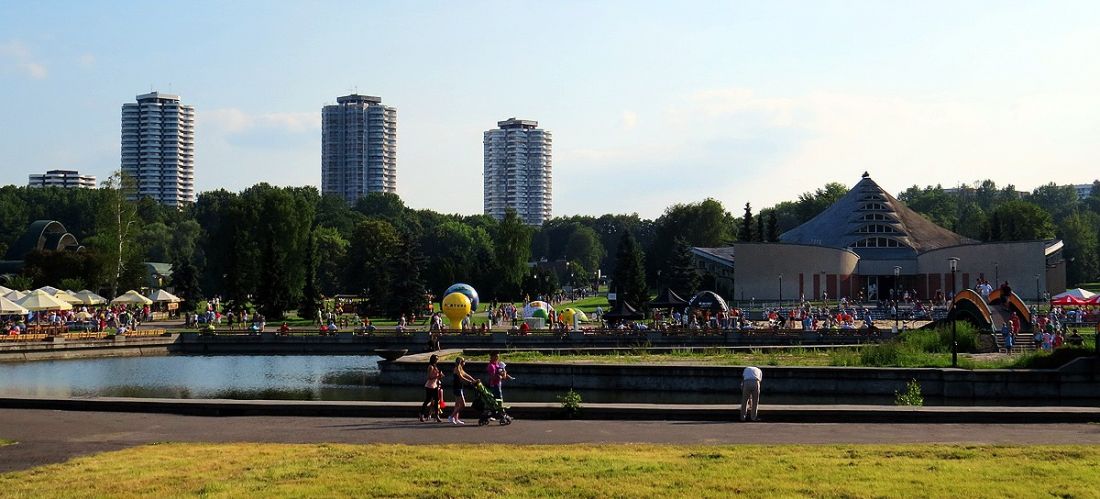
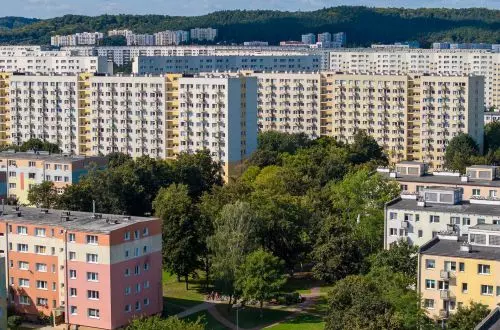
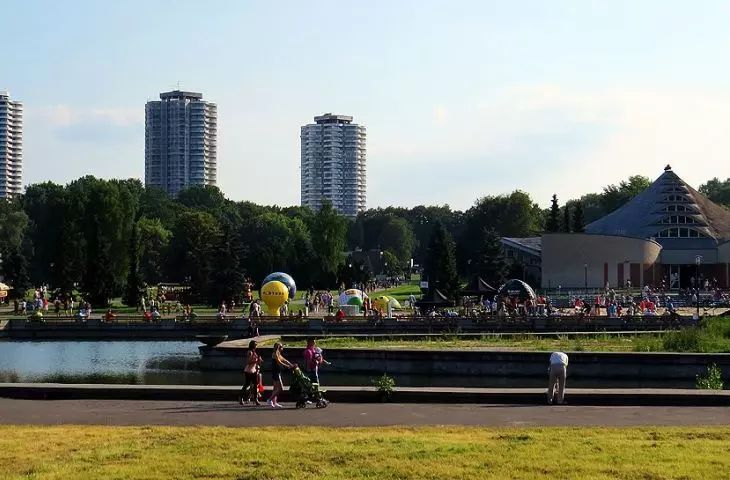
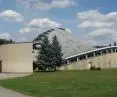
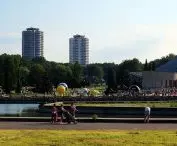
Silesian Park in 2013, in the background you can see the high-rise residential buildings "Kukurydze"
Photo: Sojomail © CC BY SA 3.0 PL | Wikimedia Commons
In January 2016, the Silesian conservator of monuments entered the Hat Hall in the register of monuments at the request of the Board of the Provincial Park of Culture and Recreation. The same park, but already under a different name - Silesian Park - in 2023 requested that the building be removed from the register. According to the company's estimates, the renovation of the object protected by the conservator could amount to as much as PLN 100 million. Removing this protection would reduce these costs.
Any "cheapening" will degrade this form, and a change in form will make it a different building. Certainly, the Park authorities must not be trusted to turn an old value into an appendage and kitsch
- Maciej Franta, quoted by the Chorzow Nasze Miasto portal, commented.
The renovation of the Hat Hall would complement a number of investments carried out in recent years in the Silesian Park, such as the construction of the Japanese Garden, the reconstruction of Elka - the cable car - or the rebuilding of the Planetarium, which has not been hindered by conservation protection.
The Planetarium is also listed in the Register of Historic Places, which certainly helped a lot in terms of renovation and reconstruction, as it enforced respect for its historic substance. It disciplined the contractor, who is known to want to make as much money as possible, and also disciplined the architects, who took part in the competition for the Planetarium's reconstruction in large numbers
- emphasized Henryk Mercik.
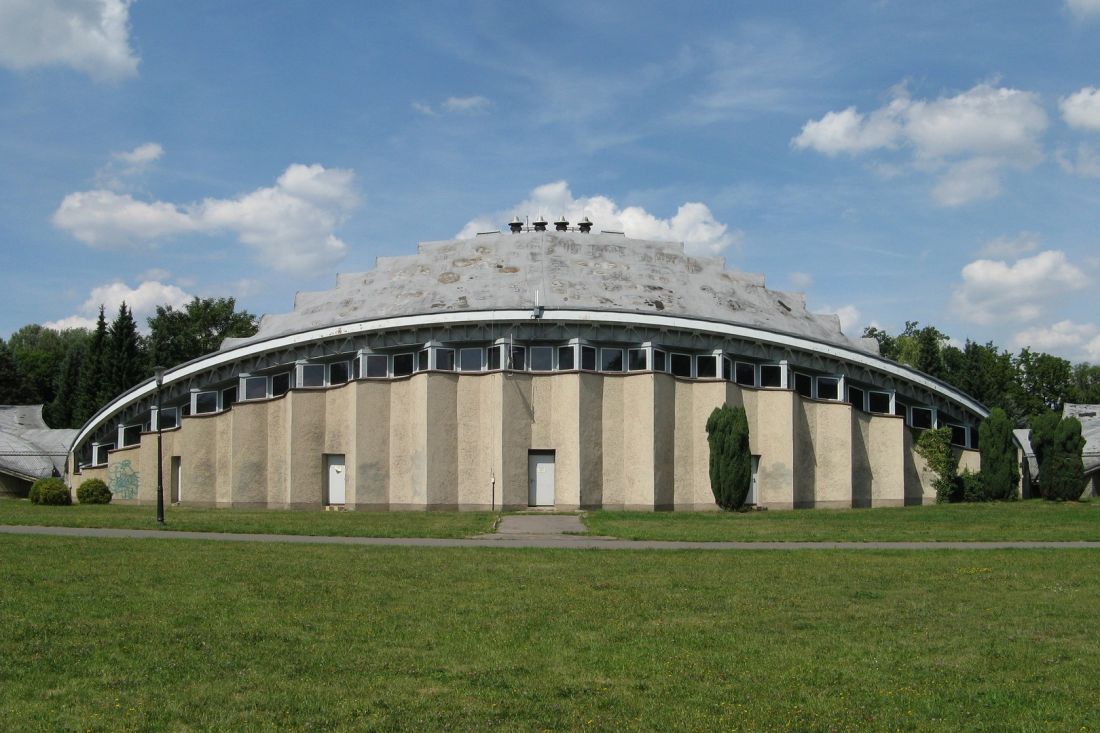
hat hall in 2018.
Photo: Adrian Tync © CC BY SA 3.0 PL | Wikimedia Commons
In the end, the hall remained on the register of historical monuments and attempts to remove it were discontinued. But how to finance the next such costly renovation work?
The company cannot count on funds from, for example, grants from the Ministry of Culture and National Heritage, due to the large number of applications for buildings with which our hall cannot compete. Applications receive few points due to the age of the facility. A modern hall (only 55 years old) in competition for funds for the preservation of historical and cultural values with centuries-old monuments (palaces, churches, manor houses) can not compete
- said Aneta Miler, spokeswoman for the Silesian Park 2023.
Hope for a better future for the historic building came in 2024, when the hall was included in the annex to the resolution on adopting the Municipal Revitalization Program of the City of Chorzow. The program envisages the renovation and reconstruction of not only the exhibition hall, but also its surroundings, in accordance with conservation guidelines.
The estimated 100 million zlotys to cover the costs can be obtained from regional FEE funds, national funds and the investor's own funds, and the most, about 85 million zlotys, from European funds. However, these are only projections. Although the work was expected to last between 2025 and 2030, so far there are no official reports on the receipt of funding.
Google Maps
The hat has become recognizable not only for Silesian Park, but for the entire region and its era. It is an original and unique realization, it is also a kind of sign that allows you to recognize the place
- Dr. Jacek Kurek, a historian and specialist in Silesian heritage, said of the hall.