




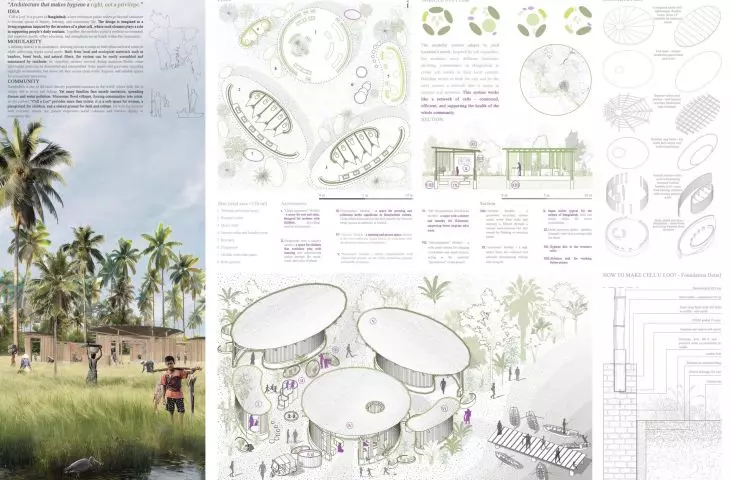
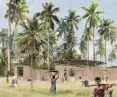

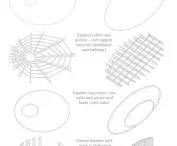
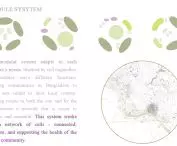
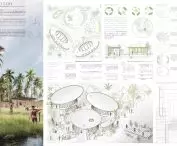

The "CELL U LOO" project by Julia Stepskaya was created as a response to the lack of access to safe sanitation in rural regions of Bangladesh. In many places, basic hygiene needs are still not met - makeshift toilets, lack of privacy and limited access to clean water lead to disease, social exclusion and real danger, especially for women and children. The architect proposes a solution that goes beyond utility function to create a space that supports health, safety and social relations.
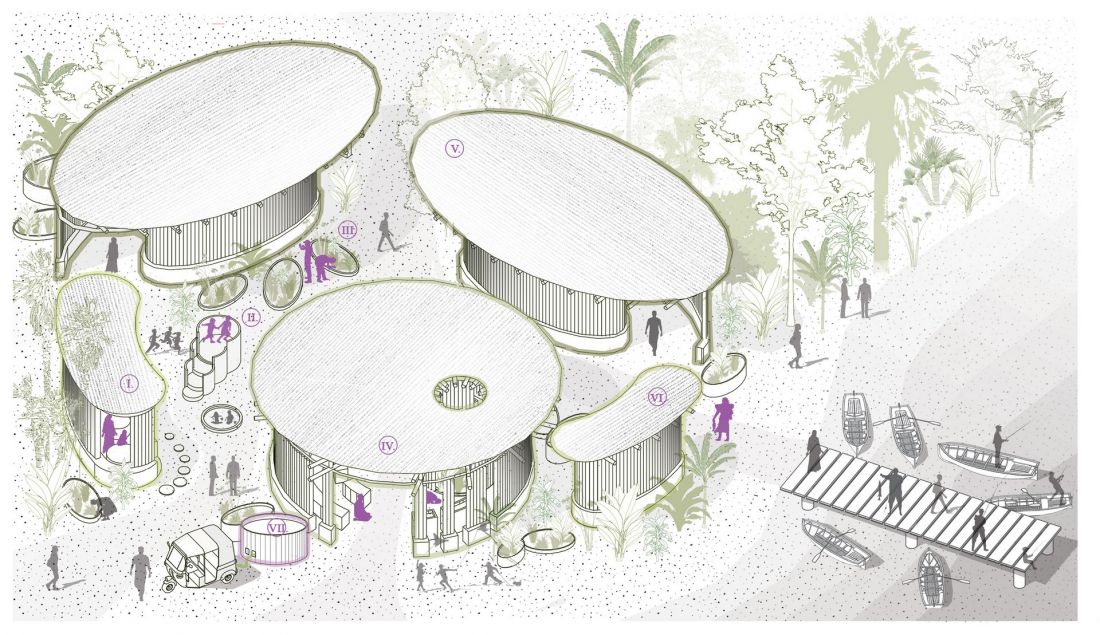
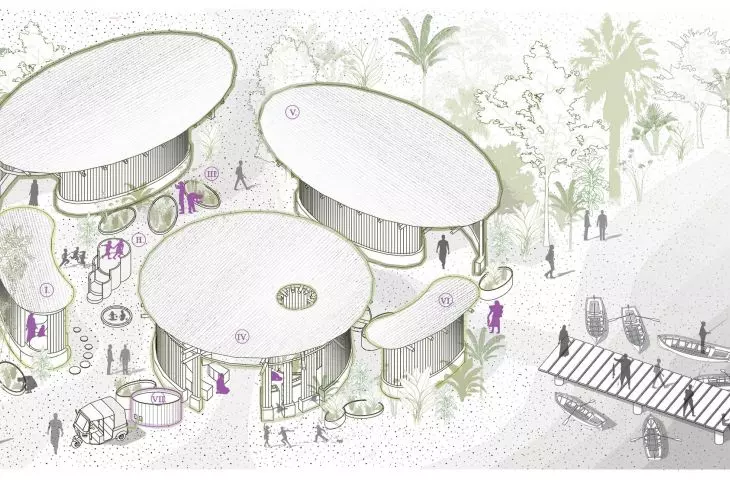
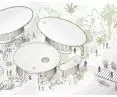
axonometry
© Julia Stępska
architecture inspired by nature
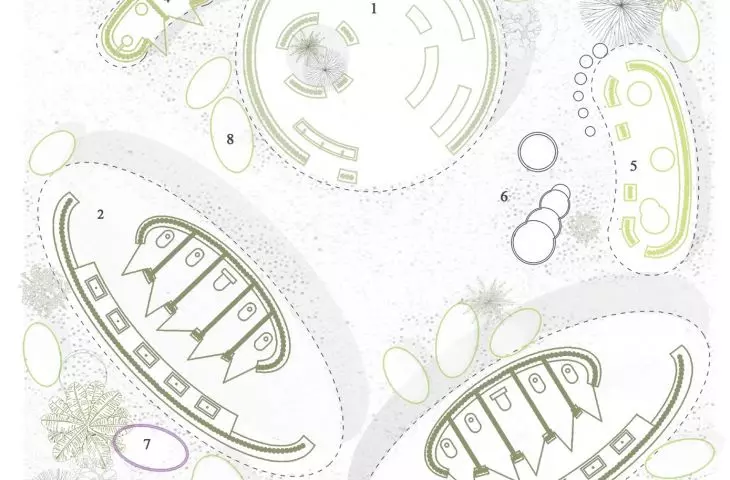
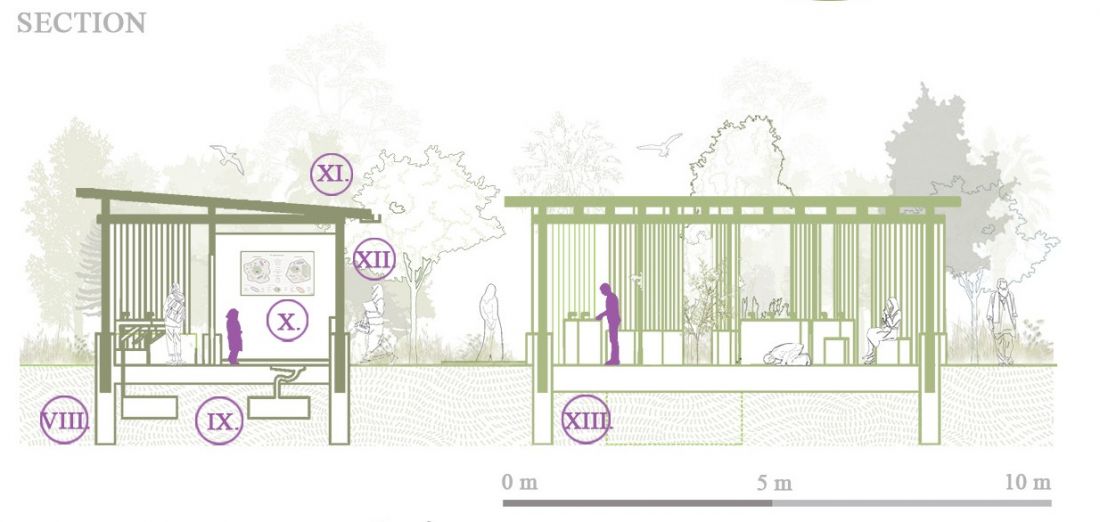
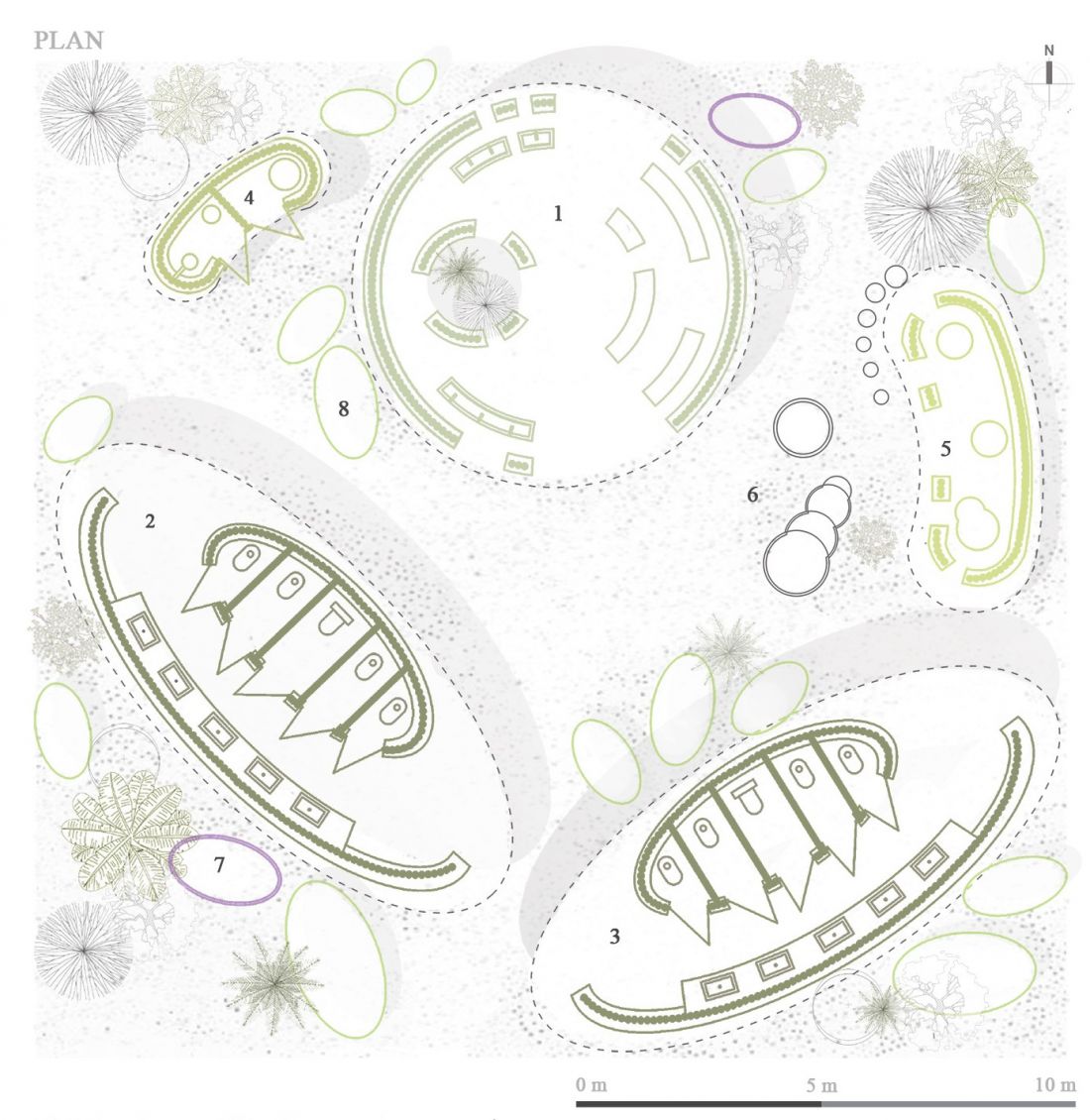
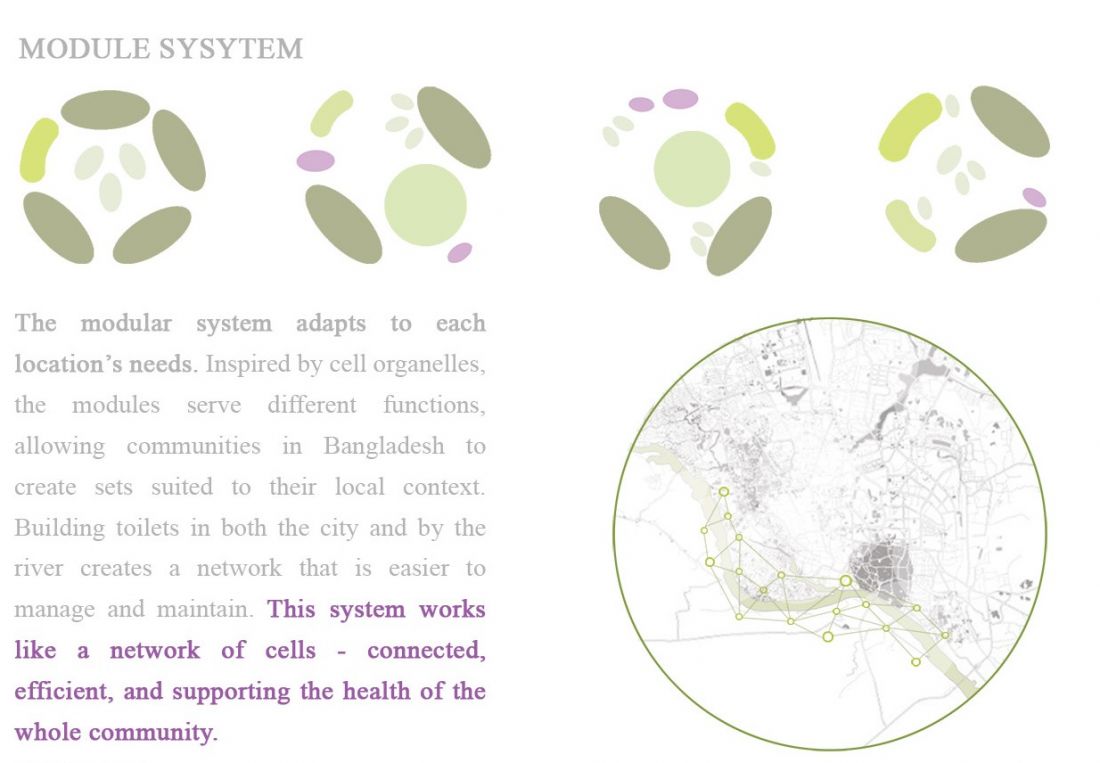
The design concept is based on the metaphor of a plant cell. The entire establishment functions like an organism, with individual modules - "cells" - corresponding to different functions, just like organelles. The central common space, acting as the "nucleus," integrates the community and becomes a place for meetings, rest and prayer. This is where social life is concentrated, building a sense of community.
Sanitary areas - toilets and washing areas - are designed with an emphasis on privacy and security for users, which is crucial in the local context. Access to decent hygienic conditions reduces the risk of disease and counteracts exclusion.
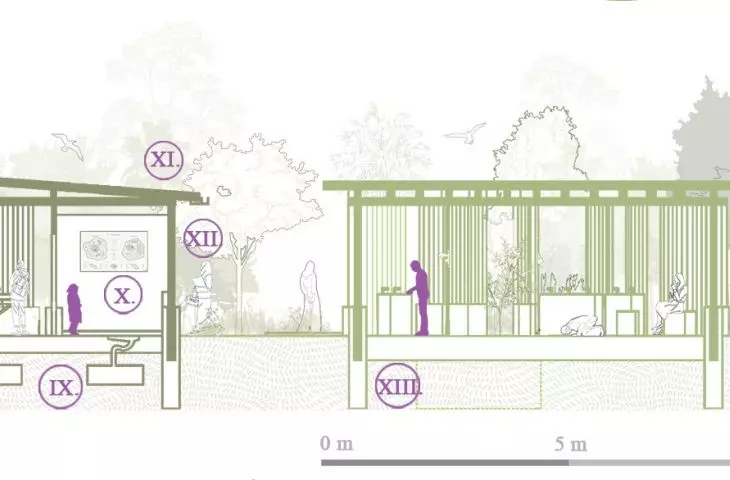
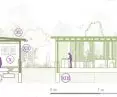
cross section
© Julia Stępska
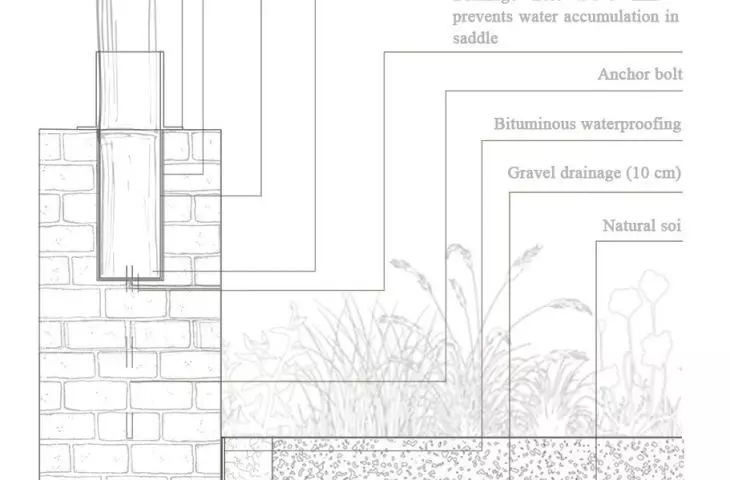
sustainability and simplicity as a foundation
The project takes advantage of natural resources and local climatic conditions. Rainwater harvesting systems, natural ventilation and adequate lighting are responsible for self-sufficiency and low operating costs. These elements perform a function analogous to chloroplasts - they sustain the life of the entire "organism."
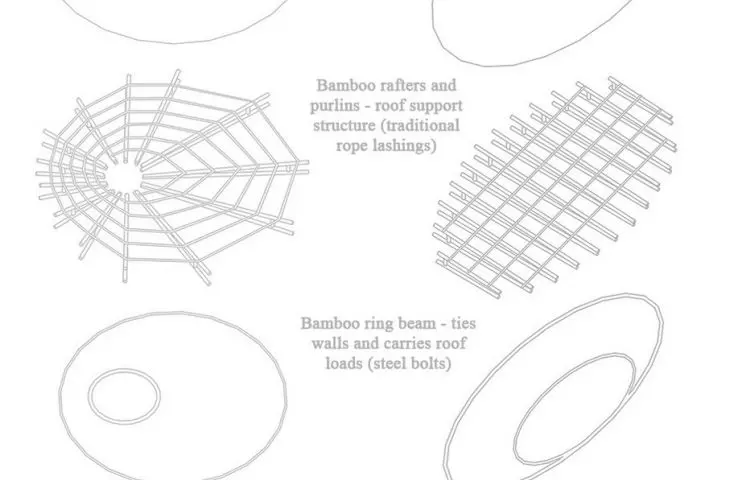
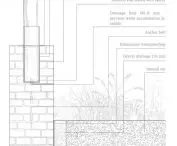
Materials such as bamboo and wood provide durability, while allowing easy construction and repair by the local community. The architecture does not impose itself technologically - on the contrary, it is accessible, understandable and implementable in various conditions.
projection
© Julia Stępska
safety in a changing climate
The buildings have been elevated above ground level, which protects them from flooding during the monsoon. The open and clear spatial layout increases the sense of security and facilitates orientation. Semi-open spaces are created between the modules to promote hygiene education and daily social interaction.
CELL U LOO is a low-budget and scalable project - it can be easily replicated and expanded as needed. It demonstrates that a small architectural intervention can realistically improve quality of life by making hygiene a basic right, not a privilege.
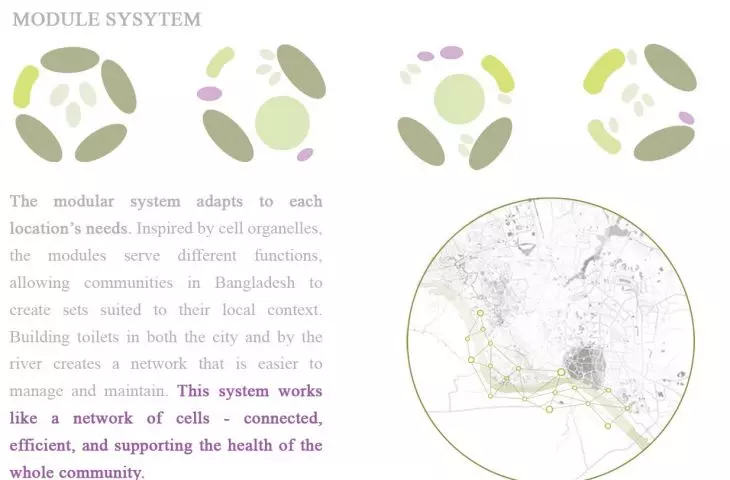
modeularity
© Julia Stępska
Julia Stępska's project was awarded and qualified for the finals of the international competition Little Big Loo 2025, organized by Volume Zero Competitions, confirming its importance in the global discussion of socially engaged architecture.