







After a slightly weaker period, the single-family home market is slowly rebounding. Although data from the beginning of the year do not herald a spectacular breakthrough, the first signs of recovery can be seen, especially when comparing the situation to the pandemic stagnation and deceleration of 2023.
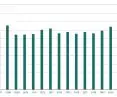
In January and February 2025, 30.3 thousand housing units were completed - slightly less than a year earlier [1]. Among them, 11.2 thousand were built as individual investments. This is more than 7 percent less than in the same period last year. Although the proportions still show the dominance of the big players, individual builders are holding strong, they are behind more than a third of all new housing completed.
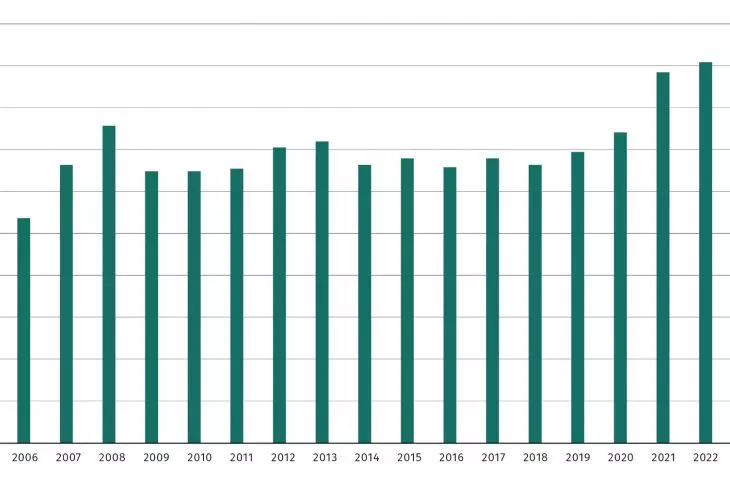
Interestingly, in 2024, self-builders set off with new investments on a larger scale than the year before. Almost 77,000 homes were started - an increase of more than 10 percent [2]. It seems, then, that after a period of uncertainty, more people were again choosing to turn plans into foundations. This is also confirmed by data on building permits. In all of 2024, nearly 100,000 decisions were issued for single-family homes - significantly more than in 2023, when the number fell to a level not seen in seven years [3]. Just a year ago, the situation resembled more the 2016-2017 era, but today we are slowly getting back on track for more activity.
In total, offices approved 79,100 building permits or applications for single-family homes of individual investors in 2024, up 9.3 percent from a year earlier [4]. However, when we look at data from the beginning of 2025, the enthusiasm wanes. Yes, the number of construction starts in January - more than 4,000 - was higher than in the same period and two years in a row, but still far from the results of the 2020-2021 pandemic boom [5]. At the same time, 5533 permits for single-family homes were issued, and this represents a slight increase over last year. In comparison, developers set off with a record number of new construction (more than 12,600), but at the same time recorded a decline in the number of permits - 13,100 in January, down 10 percent from a year earlier.
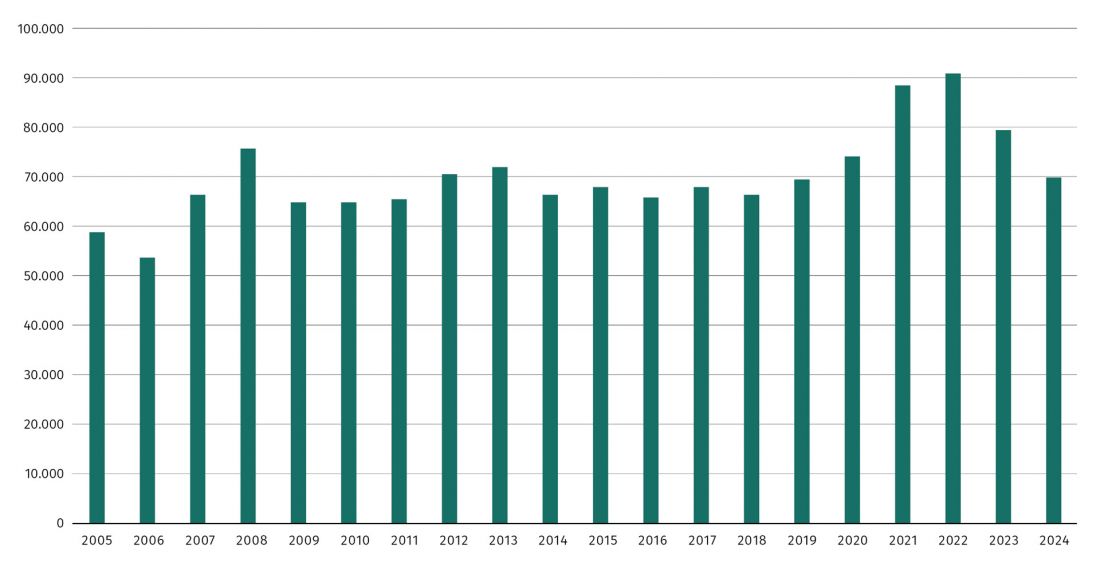
apartments completed
© Magdalena Milert
And where was the most construction taking place? In 2024, it was Mazovia that topped the list with more than 14 thousand permits for house construction. It was followed closely by Lesser Poland (11.3 thousand), Silesia (8.9 thousand) and Greater Poland (8.2 thousand). It was in these regions that the activity of individual investors was the highest. The smallest number of decisions was issued in Opole Province - only 1,775 [6]. The differences between regions show how strongly single-family construction depends on local conditions: availability of land, demand and development plans.
Behind the high numbers of permits and construction starts is often not only the need to own a home, but also a broader phenomenon. Suburbanization, i.e. the relocation of residents from cities to their outskirts, is not slowing down in Poland, but is gaining momentum every year. After 2020, this trend has intensified even further; the pandemic has not stopped it, but accelerated it. In 2020 alone, the number of building permits for single-family homes reached its highest level in a decade. The popularity of suburban locations has been driven by low interest rates, the rise of remote work and the need for more living space, among other factors. As a result, single-family development zones on city borders are expanding, and the landscape around metropolitan areas is changing at a rapid pace. This dynamic sprawl of settlements is unfortunately also followed by costs - financial, environmental and social. The sprawl hinders the organization of public transportation, increases the need for new road and network infrastructure, causes an increase in car commuting, and leads to the fragmentation of space. According to a report by the Polish Economic Institute, prepared in cooperation with the Polish Academy of Sciences, the effects of spatial sprawl cost at least PLN 84.3 billion a year [data from 2021 - editor's note]. This means an average of 2,200 zlotys per year per inhabitant; for a family of four, 8,800 per year more money spent due to ill-considered spatial structure.
If the scale of sprawl could be reduced, municipalities could save at least PLN 5.8 billion a year. That's money that today goes to prolonged investment in infrastructure, costly commuting and scattered services. Local governments are struggling to serve ever-larger areas, often populated by people expecting urban standards with rural dispersal. The inefficiencies of this model are becoming increasingly difficult to bear.
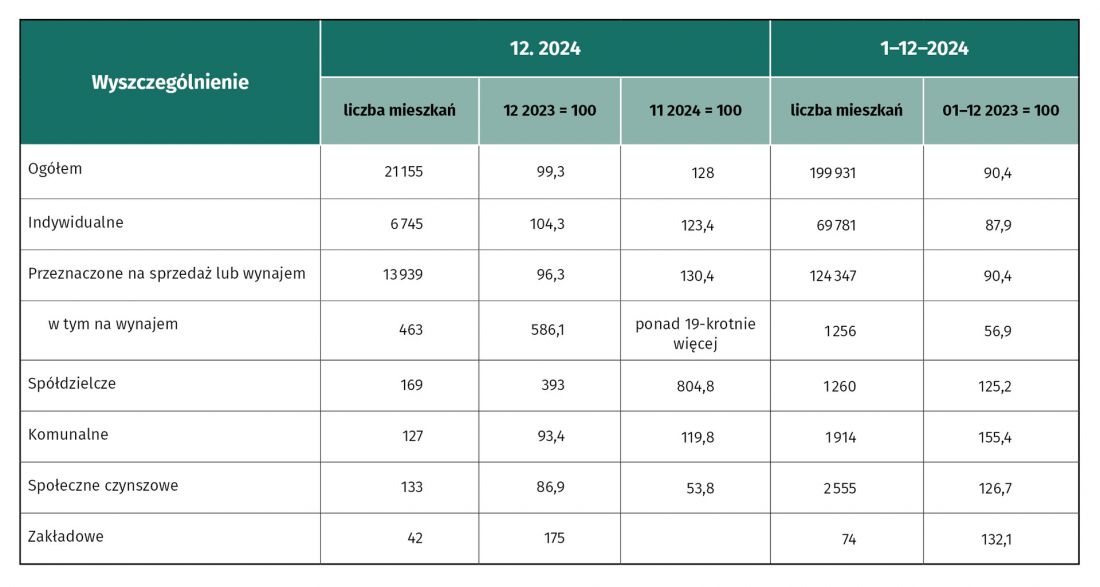
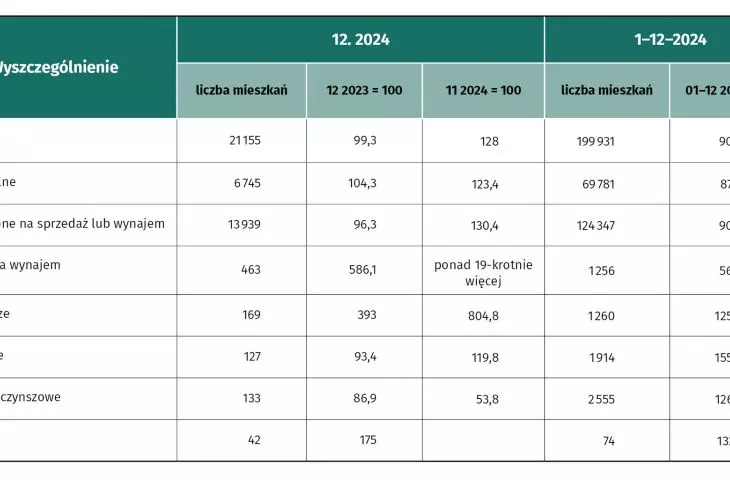
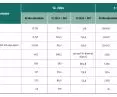
Housing 2024 - The table shows the number of housing units completed by form of construction in December 2024 and cumulatively from January to December 2024. - The column "Number of housing units" (for December and all of 2024) shows the actual number of housing units completed in the period. - The "12 2023 = 100" column shows how the number of housing units in December 2024 changed compared to December 2023. A value of 100 indicates no change, below 100 - a decrease, above 100 - an increase. - The column "11 2024 = 100" compares the number of housing units completed in December 2024 to November 2024. - The column "01-12 2023 = 100" refers to the whole year - it shows how the number of housing units completed from January to December 2024 changed compared to the same period of 2023.
© Magdalena Milert
a city without houses
How about banning the construction of single-family homes? An idea like from a dystopia? However, there are places where this is already happening. Outright bans are rare, but a range of regulations - from local development plans to minimum density standards - can effectively block the construction of new settlements of detached houses.
german cities without houses
In the northern district of Hamburg, Hamburg-Nord, no new plans for single-family housing developments have been approved since 2020. At the time, the local authorities, dominated by the Greens, recognized that such houses consume too much space and energy, and are simply inefficient with a growing population [7]. New developments are to be clustered around terraced and multi-family housing. The decision aroused considerable emotion: for some it was almost an assault on lifestyles, for others a sensible step toward urban responsibility. Other cities began to consider similar restrictions, and Hamburg's example became a benchmark in the German urbanization debate [8]. In 2021, the Greens proposed that such bans be extended to other urban areas.
In 2023, a similar move was made by Münster, a city in North Rhine-Westphalia known for its pro-climate ambitions and bicycle infrastructure. The city council (a coalition of the Greens, SPD and Volt) announced a sharp reduction in the construction of detached single-family houses [9]. Instead, the city is to develop terraced and multi-family housing - not out of ideological conviction, but for purely practical reasons. As one official explained, single-family homes simply take up too much space, meanwhile demand for housing continues to grow [10]. To meet its target of 2,000 new units a year, Münster needs to build more densely. The proportions speak for themselves: one hectare will accommodate roughly 25 detached houses or even 160 apartments in a four-story block. Therefore, the new neighborhoods will consist of segments and blocks rather than garden houses. Existing single-family homes - still accounting for about ⅔ of the city's housing stock - are to be gradually absorbed by the market when they go on sale. Münster has no plans to demolish them or restrict vested rights, but it is clearly signaling which direction it is heading. This example is increasingly being cited by other local governments looking for a way to combine housing availability with concern for space.
Wiesbaden, the capital of Hesse, is going even further. In 2023, work began there on a resolution that would introduce a minimum density of 80 housing units per hectare. In practice, this means the end of new single-family housing developments - it is impossible to achieve such a density by building only houses or semi-detached houses. New housing projects would have to be based on multifamily developments, and medium-rise buildings would be preferred. The motivation? To reduce urban sprawl and make better use of land. German urban planning is clearly moving toward compact, efficient space instead of sprawling villa-style suburbs.
Vienna: a model with no room for villa suburbs
The Austrian capital has gone even further. In Vienna, there is no need to ban the construction of single-family houses - it is enough that such areas simply do not exist. The city does not provide for zones designated exclusively for single-family housing [11]. In practice, this means that almost any residential plot can be used for multifamily housing. There, limiting the availability of land for low-rise development was deemed too costly - both in terms of space and housing policy. The result? Only about 9 percent of Vienna's housing units are single-family homes, mostly on the outskirts or in older neighborhoods. The remainder are mostly five- or eight-story blocks, which give the city a rhythm of compact, urban density. There are no gated suburbs with a house with a garden and two cars. There is also no allocation of land exclusively for low-rise buildings, which would be difficult to access and expensive to maintain.
Vienna has been consistently developing a model based on housing that is accessible to different social groups. Much of the new development is subsidized housing or built as part of a housing policy - not on the outskirts, but in well-connected places, often on reclaimed brownfield sites. The flagship example is Seestadt Aspern - once an airport, now a neighborhood for 20,000 residents. This model is sometimes cited as a model of urban courage: Vienna is not afraid to convert land to residential use and does not maintain zones that would impede denser forms of development. There is no need to fight spatial chaos here, because that chaos was never invited.
France says: no more
In France, there was no waiting for individual cities to deal with the issue. In 2021, a nationwide climate law was passed that makes it clear: no more urban sprawl. The watchword is "Zéro artificialisation nette," meaning zero conversion of natural areas by 2050 [12]. An intermediate step is to halve the rate of urbanization by 2030. In practice, this means one thing: France intends to gradually ban further urban sprawl. In particular, suburban neighborhoods of single-family homes extending to ever-further outskirts, often at the expense of farmland and woodland, are on target. It is this type of development - known as pavillonnaire - that for decades has been the main driver of the conversion of natural land to development [13]. One of the main culprits is the single-family home, a symbol of social advancement and the dream of having "one's own corner" among the greenery [14]. The French government has deemed this model too costly climatically, spatially and socially. The scale of the problem is difficult to estimate. In France alone, sealed land covers more than 50,000 square kilometers, or nearly 10 percent of the country's territory [15]. About 165 hectares of natural or agricultural spaces disappear there every day, replaced by roads, parking lots, houses and commercial zones [16]. Instead, they are promoting densification, brownfield redevelopment and construction within city limits. The reasons are simple: to reduce CO₂ emissions, protect agricultural resources and combat the effects of soil sealing, which accelerates flooding and exacerbates droughts [17]. Local authorities must now adapt their planning documents to the new rules. For many municipalities, this means a complete change in thinking: no more new suburbs, instead an emphasis on compact neighborhoods and the use of vacant land.
no houses in the open field from 2040
Flanders - the northern, Flemish-speaking part of Belgium, one of the most densely populated and spatially dispersed parts of Europe - has made a similar decision. For decades, the region's landscape resembled a mosaic: some fields, some houses, some warehouses and industrial halls - all crisscrossed by roads and canals. A new spatial policy, approved by the Flemish parliament in 2023, is expected to curb this once and for all [18]. The program, formerly called Betonstop and now officially Bouwshift (meaning "building change"), stipulates that from 2040 no new houses will be allowed to be built on greenfields at all. No houses in an open field, no estates overlooking a meadow. From that date, new developments are to be limited only to already developed or degraded (brownfield) areas. Why? For years, Flanders has been losing more than 5 hectares of undeveloped land every day - for roads, parking lots, houses and warehouses. The loss of open space has begun to undermine resilience to climate change. Concrete-covered soil does not absorb water, so the risk of flooding increases during rainstorms. That's why the Flemish environment minister described Bouwshift as "the biggest open space protection in history."
In practice, it's also a reevaluation of housing policy. Some 12,000 hectares of reserve land previously earmarked for development are to remain undeveloped unless needed. Local governments have gained the tools to deny permits on such plots. Owners will be compensated from a fund that will be injected with about 100 million euros a year. Costs have thus been built into the strategy, which in itself is rare in European spatial policy. New settlements are to be built within the boundaries of existing cities, and cities such as Antwerp, Ghent and Leuven are preparing to build upwards.
© Magdalena Milert
Balance instead of freedom? - New planning rules in Poland
By 2040, the Flemish landscape could undergo one of the biggest metamorphoses in Europe - from scattered single-family housing to a compact, urban structure. Meanwhile, things are beginning to happen in Poland, where suburbanization has long remained outside the attention of spatial policy, that seemed impossible just a few years ago.
With an amendment to the Law on Planning and Spatial Development taking effect in 2023, municipalities are required to adopt a master plan - a new document that will replace the existing study. The difference, however, is not just a name change. The general plan for the first time introduces an obligation to balance residential areas. This means that each municipality must count how many housing units it will actually need, and on that basis determine whether new areas are needed for development. If not, it cannot designate them. The balance must be within 70-130 percent of the demand taking into account demographics, planned investments and actual needs. Simply having vacant lots in local plans is not enough - the municipality must demonstrate that they are available, developed and usable. It's a seemingly technical change, but its effects could be significant, because the problem of suburbanization in Poland is not just a matter of smog or traffic jams under the city. It's also a gigantic oversupply of land for single-family homes that will never be built, yet blocks other opportunities to develop or preserve the land. Analysis shows that existing local plans contain about 60 percent of potential undeveloped demographic absorption [19]. If these figures were averaged across the country, one could even speak of land for homes for more than 21 million people. This is the result of writing more land into plans "for spare," with no thought as to whether it is really needed - and no tools to undo such decisions. Land once designated for development is very difficult to restore to agricultural use.
All this is compounded by a chaotic structure of spatial development. Studies conducted in the Warsaw metropolitan area have shown that new buildings are often built in isolation from the existing settlement grid, with large voids between houses, without an urban layout and with increasing levels of dispersion as one moves away from the center. All of this generates costs - social, environmental and infrastructural - that no one has so far tried to systemically reduce.
The amendment to the Planning Law is a result of the provisions of the National Reconstruction Plan. For now, a minority of the area of municipalities in Poland is covered by local plans. Most investments are made on the basis of decisions on development conditions - documents that do not require public consultation, and whose issuance often resembles a game without rules. One can buy a plot of land today with the conviction that there will be a forest next door, and after a few years have a neighbor with a workshop or warehouse, although most often a housing development is simply being built in a patchwork urbanism.
"There should be a full political consensus to stop this chaos, because in truth no one has done anything about it so far." - MP Jan Ardanowski [20] said during a meeting of parliamentary committees. At the time, MPs reviewed the results of the NIK audit, which covered 17 municipalities. The conclusions? Municipalities can't cope with planning, and even where the law gives them tools, local governments often fail to use them.
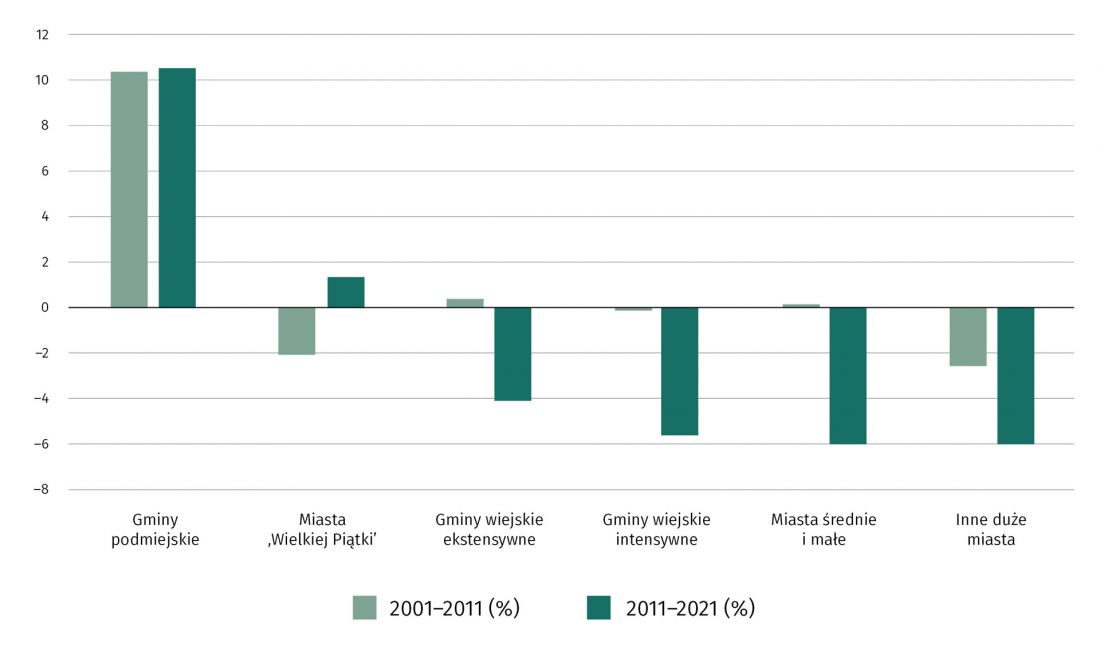
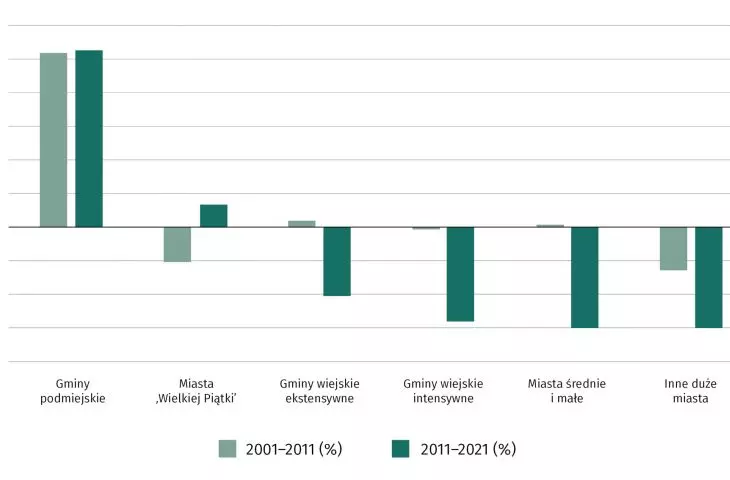
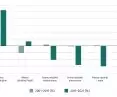
Average changes in registered population by type of municipality (in percent) between 2002, 2011 and 2021
© Magdalena Milert
how many apartments can be fit on paper?
It is worth adding that behind suburbanization in Poland is not only urban planning, but also hard demographics. Data from the Central Statistical Office and the results of the 2021 National Census show a clear division: most areas of Poland are depopulating, but suburban zones are growing. As many as 64 percent of all municipalities in Poland between 2011 and 2021 recorded a decrease in population of at least 2 percent, with this mainly affecting rural municipalities far from large cities and some medium-sized cities, especially in the eastern and northern parts of the country [21].
Suburban municipalities have recorded clear population gains - an average of 10.4 percent in each of the last two decades (2002-2011 and 2011-2021). Analyses of the National Census 2021 and studies by the Polish Economic Institute allow us to identify the most dynamically growing suburban areas.
In first place, of course, is Warsaw and its environs. Municipalities located in Legionowo, Pruszków, Piaseczyn or Wolomin counties are among the top growth areas. According to PIE data, as many as 5 of the 30 fastest-growing municipalities in Poland between 2002 and 2021 are in this zone [22]. Lesznowola, Nadarzyn, Marki - all are recording dynamic growth. The outlying districts of Warsaw itself are also growing at a rate exceeding the national scale: Wilanów increased its population by 268 percent, and Białołęka by 161.
The Poznań agglomeration is also showing strong suburbanization processes. As many as 7 of the 30 fastest-populating municipalities are municipalities in Poznań County. Dopiewo has almost tripled its population since 2002. Krakow and Malopolska have their spatial limitations (rivers, hills, protected areas), but despite this, municipalities such as Wieliczka, Zielonki, Niepołomice and Skawina are constantly attracting new residents. Due to the limited possibility of development in Krakow itself, suburbanization is spreading further, sometimes even reaching the Silesian conurbation. This one is more complex, a densely urbanized area with a polycentric layout of cities. Some of the central centers are losing residents, but at the same time the outer municipalities - especially in the Tarnogórski and Bieruńsko-Lędziński counties - are gaining in importance. Suburbanization in Silesia is taking the form of "dilution" of the urban core. Wroclaw and its surroundings are also experiencing a boom. The Wroclaw district brings together four municipalities from the national top 30 in terms of population growth. The Tri-City is also attracting new residents to its hinterland.
Will local governments take advantage of the new tools?
The phenomenon of suburbanization is also confirmed by migration data. Between 1989 and 2020, more than 13 million domestic migrations were registered, a significant part of which were moves from cities to the suburbs. The scale of this phenomenon is underestimated, as migration within a single county is often not recorded. As a result, about 40 percent of Poland's population today lives in rural areas, but the structure of this population is different from years ago. A smaller and smaller percentage are residents of agricultural villages, and a larger and larger percentage are residents of "suburban villages," which have the characteristics of small towns, single-family neighborhoods, gated enclaves or scattered spaces without infrastructure. This phenomenon is so extensive that it maintains the statistical stability of Poland's rural population, which, compared to European trends (rapid depopulation of villages), is a phenomenon. This seemingly positive indicator hides serious infrastructure, transportation and spatial problems - because a suburban village is not a village in the traditional sense. Balancing and new urban planning rules will therefore only make sense if they become a tool for informed policy, rather than another document for the drawer.
Will the master plan and balancing solve these problems? That depends on the decision-making courage of local authorities. The state gives a tool, but does not force it to be used. If local governments continue to "spare" planning more land for development, suburbanization will continue. Only that this time formally counted.
Magdalena Milert
more: A&B 7-8/2025 - HOAs: investor + architect,
download free e-issues of A&B
[1]. https://stat.gov.pl/files/gfx/portalinformacyjny/pl/defaultaktualnosci/5478/5/161/1/budownictwo_mieszkaniowe_w_okresie_styczenluty_2025_r..pdf (accessed 10/06/2025).
[2]. http://stat.gov.pl/download/gfx/portalinformacyjny/pl/defaultaktualnosci/5478/5/159/1/budownictwo_mieszkaniowe_w_okresie_styczen-grudzien_2024_r..pdf (accessed 10.06.2025).
[3]. https://biznes.pap.pl/wiadomosci/przemysl/liczba-pozwolen-na-budowe-wzrosla-w-2024-r-o-5-proc-gunb (accessed: 10.06.2025).
[4]. http://stat.gov.pl/download/gfx/portalinformacyjny/pl/defaultaktualnosci/5478/5/159/1/budownictwo_mieszkaniowe_w_okresie_styczen-grudzien_2024_r..pdf (accessed: 10.06.2025).
[5]. https://www.bankier.pl/wiadomosc/Deweloperzy-rozpoczeli-rok-z-przytupem-Najwiecej-nowych-budow-w-historii-8895323.html (accessed: 10.06.2025).
[6]. https://biznes.pap.pl/wiadomosci/przemysl/liczba-pozwolen-na-budowe-wzrosla-w-2024-r-o-5-proc-gunb (accessed: 10.06.2025).
[7]. https://www.tagesschau.de/wirtschaft/verbraucher/einfamilienhaeuser-112.html (accessed: 10.06.2025).
[8]. https://www.theguardian.com/world/2021/feb/16/german-green-mp-calls-for-ban-on-new-urban-single-family-houses (accessed: 10.06.2025).
[9]. https://www.tagesschau.de/wirtschaft/verbraucher/einfamilienhaeuser-112.html (accessed: 10.06.2025).
[10]. https://www.refire-online.com/markets/single-family-homes-are-they-on-the-way-out/ (accessed: 10.06.2025).
[11]. https://cityobservatory.org/housing-policy-lessons-from-vienna-part-ii/ (accessed: 10.06.2025).
[12]. https://batinfo.com/en/actuality/zero-net-artificialization-the-law-will-not-solve-all-the-problems-according-to-intercommunalites-de-france_24167 (accessed: 10.06.2025).
[13]. https://www.brusselstimes.com/521838/flanders-approves-construction-shift-plan-what-changes (accessed: 10.06.2025).
[14]. J. Lecomte, La Nature, singulière ou plurielle ? Connaître pour protéger, Versailles 2006.
[15]. https://www.lesechos.fr/2018/01/quand-la-ville-ensevelit-les-sols-981778 (accessed 10.06.2025).
[16]. https://www.actu-environnement.com/ae/news/trame-verte-bleue-kosciusko-morizet-comite-decret-13879.php4 (accessed 10.06.2025).
[17]. https://batinfo.com/en/actuality/zero-net-artificialization-the-law-will-not-solve-all-the-problems-according-to-intercommunalites-de-france_24167 (accessed: 10.06.2025).
[18]. https://www.brusselstimes.com/521838/flanders-approves-construction-shift-plan-what-changes (accessed: 10.06.2025).
[19]. P. Śleszyński, M. Stępniak, D. Mazurek, Estimating the effects of investment pressure and oversupply of construction land in the suburban zone of Warsaw on the example of the municipalities of the western band, "Geographical Review" 2018, no. 90(2), pp. 209-240.
[20]. https://serwisy.gazetaprawna.pl/nieruchomosci/artykuly/8680842,kontrola-nik-nadpodaz-terenow-pod-zabudowe-mieszkaniowa-ma-byc-wiecej-gruntow.html (accessed 10.06.2025).
[21]. https://tvn24.pl/biznes/z-kraju/w-ktorych-gminach-najszybciej-rosnie-liczba-mieszkancow-analiza-polskiego-instytutu-ekonomicznego-st6129156 (accessed: 10.06.2025).
[22]. https://tvn24.pl/biznes/z-kraju/w-ktorych-gminach-najszybciej-rosnie-liczba-mieszkancow-analiza-polskiego-instytutu-ekonomicznego-st6129156 (accessed: 10.06.2025).