







An architectural competition is a tool that - in theory - allows the selection of the most optimal solution for the planned buildings and public spaces from among the many concepts submitted. In practice, it is not always possible to achieve such an effect, as shown by the competitions for the edifices of the State Archives in Łódź and Piotrków Trybunalski. Why did one of them receive more than 5 times as many works?
Two architectural competitions to design buildings for the State Archives were settled at the end of October 2025. The new edifices are to be built in Piotrkow Trybunalski and Lodz. In the former, the architectural competition was organized by an experienced studio, in the latter by the investor, the State Archive of Lodz. The result? Twenty-two works were submitted to the competition in Piotrkow Trybunalski, and only four in Lodz. What was at fault?
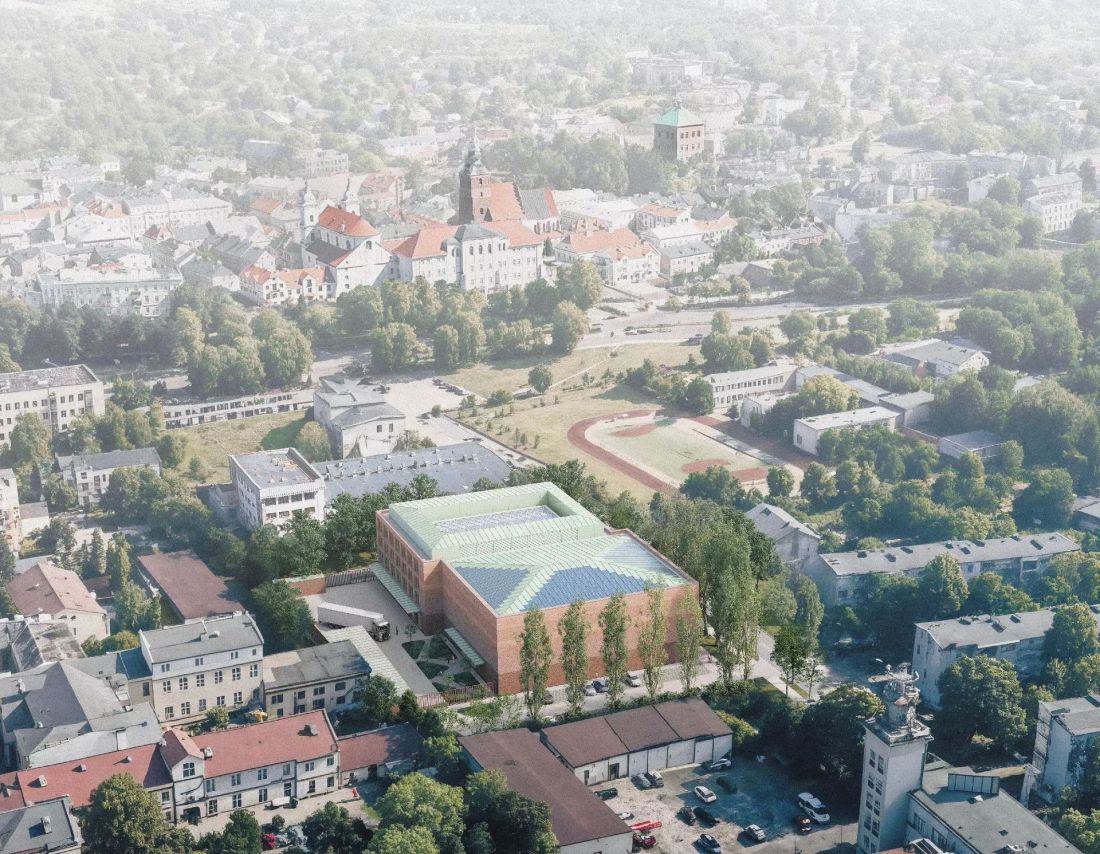
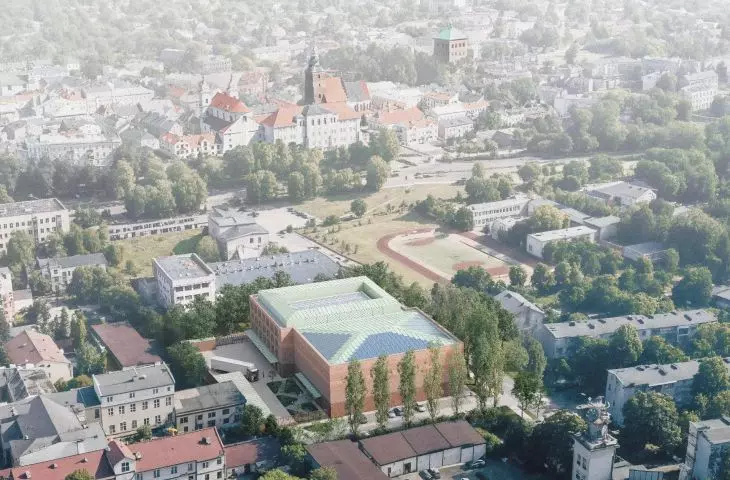
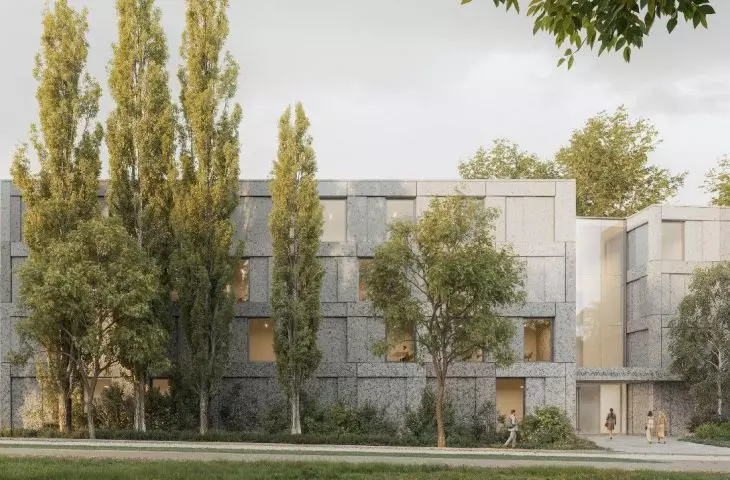
The design of the building of the State Archive in Piotrkow Trybunalski - first place
proj.: BDR Architekci © provided courtesy of the competition organizers
100 thousand to win, and almost no takers
One of the greatest advantages of organizing architectural competitions is the multiplicity of perspectives and the opportunity to choose the most optimal design from a wide range of concepts. Why did the architectural competition for the design of the State Archive building in Lodz only receive four entries? It turns out that it' s probably not about the amount of the prizes, because this in the case of both competitions was comparable, if we take into account the scale and location of the project (in Piotrkow Trybunalski for the first place one could receive 60 thousand zlotys, in the case of Lodz it was as much as 110 thousand). What was the reason for such a low turnout of the Lodz competition?
A good architectural competition needs efficient cooperation between the ordering party and the one conducting it, knowledge of the design services market, but also effective trust-building between the organizers and participants. In the competition for the building of the State Archives in Łódź, for example, initially the composition of the jury was unknown, and when it was announced, it turned out that it lacked people associated in the architectural community, whose presence would be a guarantee that the works would be evaluated by an experienced, competent team. Devoting two-three months to project preparation was a huge risk in this situation, and the studios had no guarantee that the effort would ultimately pay off.
- Explains Monika Arczynska, secretary of the competition for the building of the State Archives in Piotrkow Trybunalski.
It is worth noting that the preparation of the competition work involves large costs, which not all studios can afford. Wojciech Gajewski of the POLE Architects studio talked about this:
One has to really put in a lot of work and financial outlay to create a competition project, and there is only one winner. The level of architecture in Poland has risen tremendously recently. Even if we create a very good work, it is still likely that there will be a lot of better ones. This is a good sign and we are very happy about it, but at the moment our studio cannot yet afford to participate in competitions often. Working on a competition project is a great time, but also an investment that rarely pays off.
The competition for the building of the State Archive in Lodz was won by Heinle, Wischer und Partner Architects.
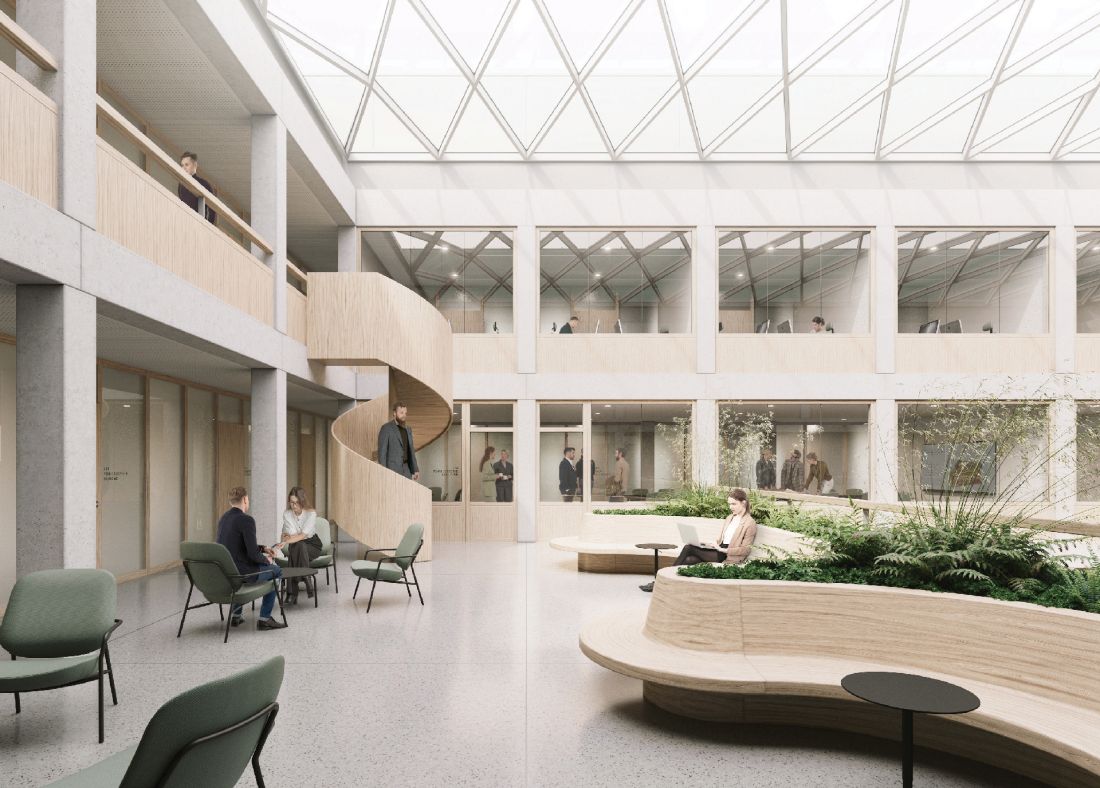
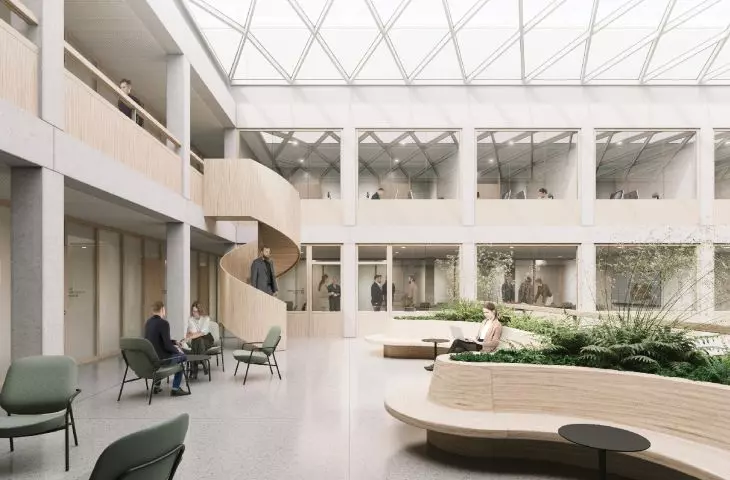
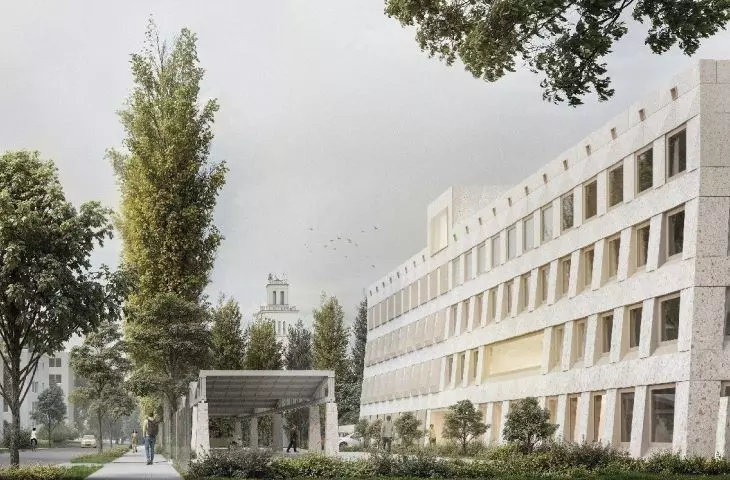
Design of the building of the State Archive inPiotrkow Trybunalski - 1st place
design: BDR Architekci © courtesy of the competition organizers
Success of the competition in Piotrkow Trybunalski
Things were quite different in the case of the competition for the building of the National Archives in Piotrkow Trybunalski, in which the BDR Architekci studio won. Twenty-two works were submitted for this architectural competition:
"In Piotrkow Trybunalski we had a very good jury, and we tried to formulate the guidelines precisely, realizing that an archive is a difficult function, and that some problems will come out only 'in the wash', when the participants already get down to designing. So we relied on efficient communication at the question stage - the ordering party was very involved, with most questions submitted being answered within 24 hours of receipt. It seems to me that it was these factors that made the participants trust us in the process and the level of complex concepts was so high.
- Monika Arczynska of A2P2 Architecture&Planning explains.
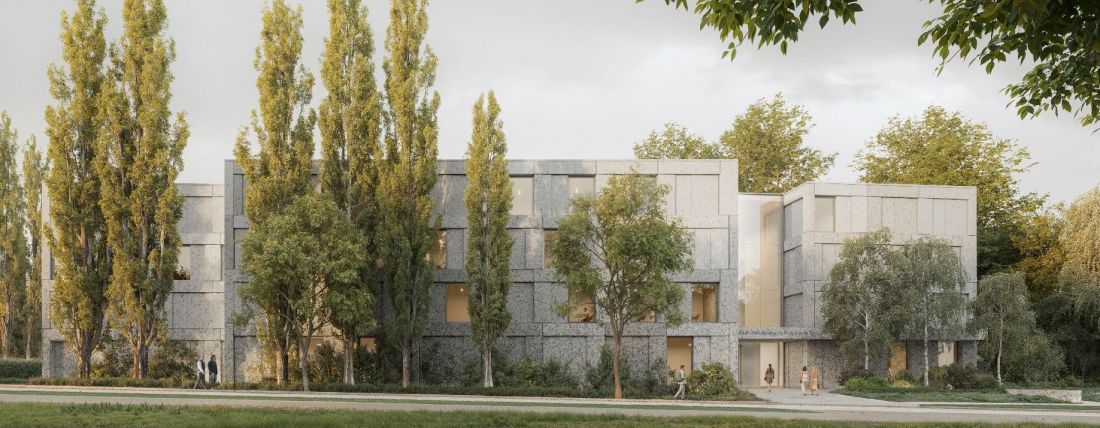
Design of the building of the State Archive in Piotrkow Trybunalski - 2nd place
proj.: WXCA © provided courtesy of the competition organizers
experience and example from local government
Why were the competitions for the archives prepared so differently? The experience of the organizers must have been key here. In the case of the Piotrkow Trybunalski competition, the organization was handled by A2P2 architecture & planning, the office responsible for preparing competitions for the building of the District Medical Chamber in Gdansk, the exhibition pavilion in Biskupin or the Family Activity Park in Wawer, Warsaw. The vast majority of successful architectural competitions in our country have been prepared by branches of the Association of Polish Architects. SARP has experience, properly selected competition judges, and operates according to the competition code.
So is SARP a guarantor of a well-organized competition? In a large number of cases. However, cooperation with SARP is not a necessity, as shown by the activities of the A2P2 architecture & planning team, but also by some local governments. Yes, in some cities local governments announce well-organized competitions that are very popular. Warsaw is arguably leading the way in this matter, where a number of important projects have emerged from a competition organized by the City Hall - Central Square (42 entries were submitted to the competition), Five Corners Square (30concepts), the Chamber of Remembrance at the Warsaw Insurgents Cemetery (107 architectural designs were submitted) or the Elementary School No. 406 in Bialoleka (18 works were submitted to the competition). There are many more Warsaw buildings and spaces in the pipeline whose projects were selected in the competition formula, they can be found on the A&B portal in the "Competitions" tab.
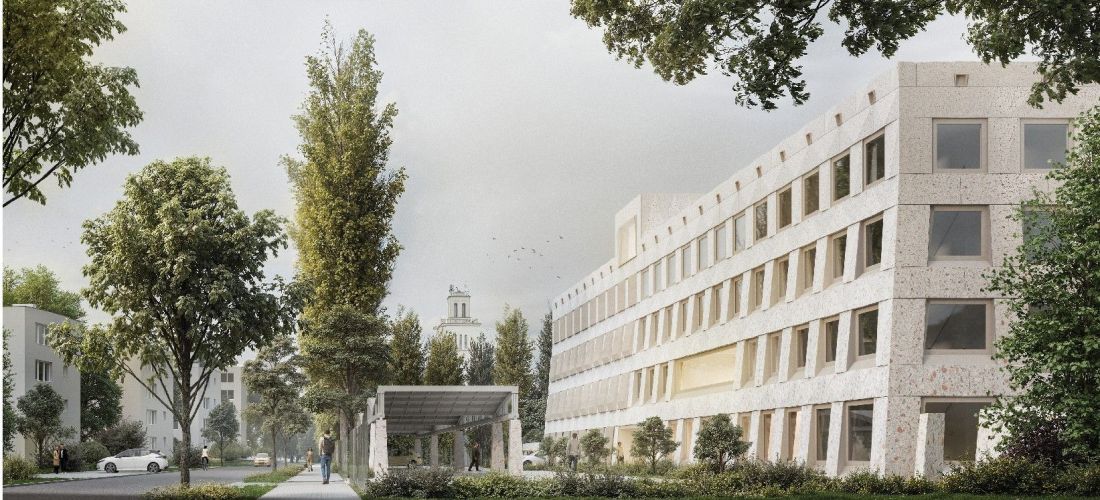
Design of the building of the State Archives in Piotrkow Trybunalski - third place
proj.: ANALOG © provided courtesy of the competition organizers
why are architectural competitions better?
Competitions are considered the most democratic, and often the best way to select designs for buildings that shape the space around us. What does holding an architectural competition give you?
In order to make an informed and wise decision about what is the best solution for a given place, it is necessary to compare different concepts and choose the best one. One will never know the answer to the question of whether the chosen solution for a given place is optimal if one does not have several, a dozen or sometimes dozens of comparable quality works. Such an answer is provided by an architectural competition
- says Marek Kaszynski, president of MPOIA, quoted by Katarzyna Jagodzinska in A&B.
Paradoxically, the competition is also a cheaper solution for the ordering party:
If we add up the work of all the studios that take part in the competition, including the intellectual work, and multiply it by a dozen or more works, it turns out that the competition pays for itself already at the stage of acquiring the concept - the competition simply pays for itself
- Marek Kaszynski adds.
As Katarzyna Jagodzinska writes, competitions also have a positive impact on the city's image:
[...] competitions are talked about not only in the architectural community (of course, also abroad), they are also publicized by the daily media, arouse the interest of residents and tourists.
An architectural competition - compared to a tender or design-and-build formula, gives the best chance for the investor to receive a project that will optimally solve the spatial problem. However, in order for competitions to be effective and actually guarantee the high quality of architecture emerging in our environment, they must be well organized. Will the situation that is taking place in the case of the competition for the building of the State Archive in Lodz become a lesson for investors thinking of a cheaper "shortcut"?