







#IconsofPolishArchitecture
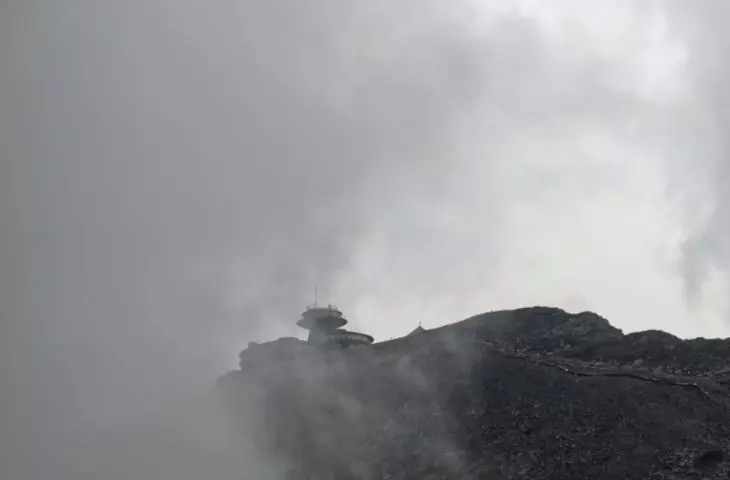
200 kilometers - visibility, 200 km/h - wind speed. The Arctic climate is a serious opponent for the icon of modernist architecture from the 1970s - the High Mountain Meteorological Observatory on Śnieżka. In October, MP Iwona Krawczyk of the Civic Platform submitted an interpellation on the implementation of the New Snezka program, which aims to modernize the historic observatory building. The response from the Minister of Infrastructure was received on November 18. Will the building live to see the promised renovation?
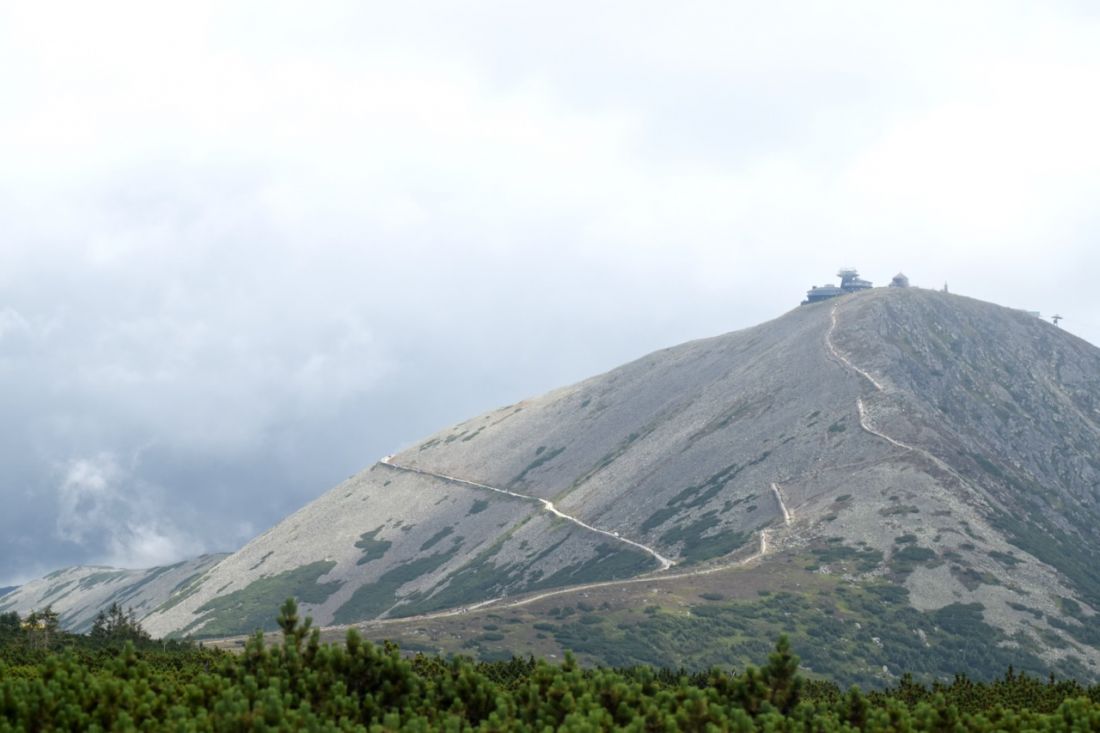
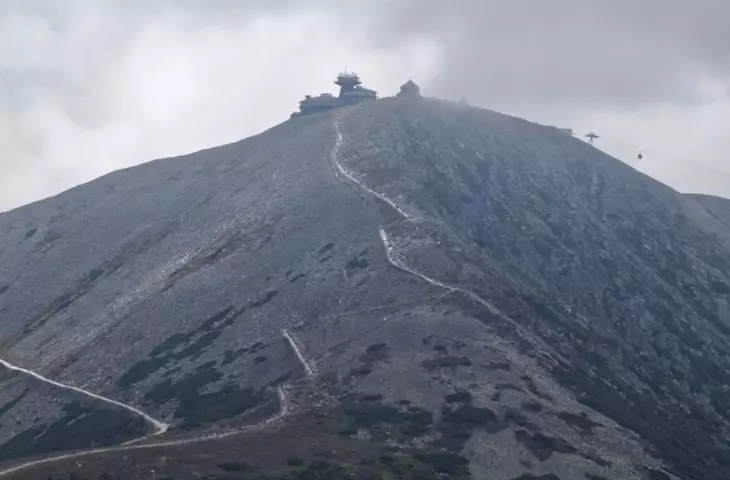
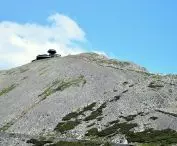
Sniezka
Photo: Maria Cipinska
"I have always been fascinated by curved lines and spherical spaces."
1950s - in the competition for the new headquarters of the meteorological observatory on Sniezka, the Association of Polish Architects chose the design of Witold Lipinski and Waldemar Wawrzyniak, two scientists from the Wroclaw University of Technology, later professors. Waldemar Wawrzyniak is an architect who, among other things, also designed the distinctive 1973 sculpted Church of the Holy Spirit in Wroclaw.
For both one and the other of the co-authors, the Karkonosze Observatory remains the most recognizable work. However, Witold Lipinski also has to his credit, among others, an igloo house and a "mushroom" house, which strengthened his career, ultimately sealed with an honorary award from the SARP branch in Wroclaw in 2020.[1]
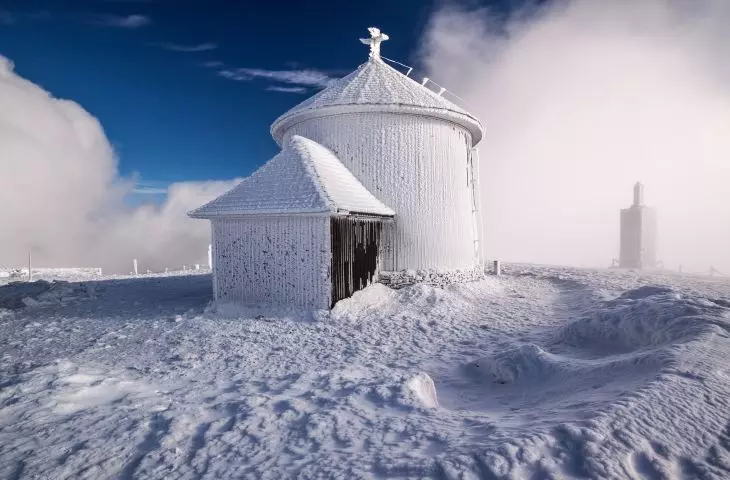
Lipinski was not only a gifted architect, but also a soldier in many armed organizations, as well as an avid glider. That's probably why he had a bird's-eye view of the summit of Snow Mountain and the St. Lawrence Chapel, which he referred to in the design of the observatory. The chapel has served as a shelter in the mountains since 1665, while as a station for irregular meteorological observations since 1824.
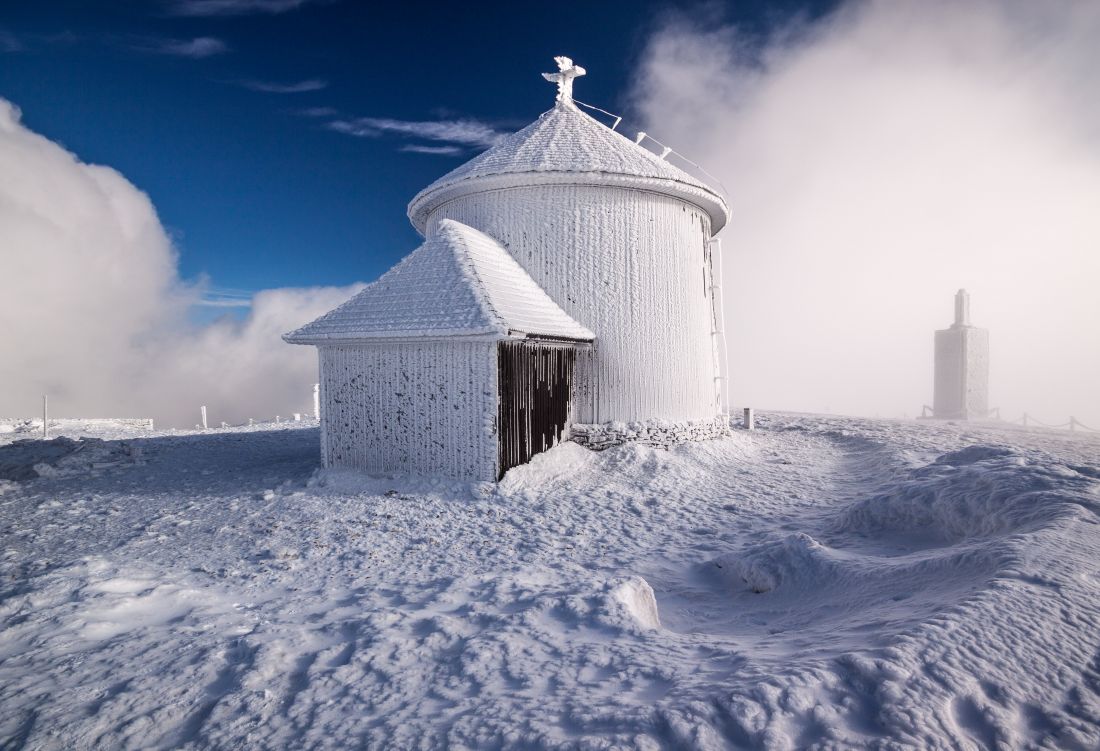
The chapel of St. Lawrence on Snezhka
Photo: Piotrekok 1602 © CC BY SA 3.0 PL | Wikimedia Commons
Their idea appealed not only to architects from the SARP, but also around the world - an extensive description of the project was included in an issue of the French "Le Figaro", and a mock-up of the project was presented at an exhibition during the Summer Olympics in Mexico.
Why was the design of an observatory shaped like three flattened spheres so surprising at the time?
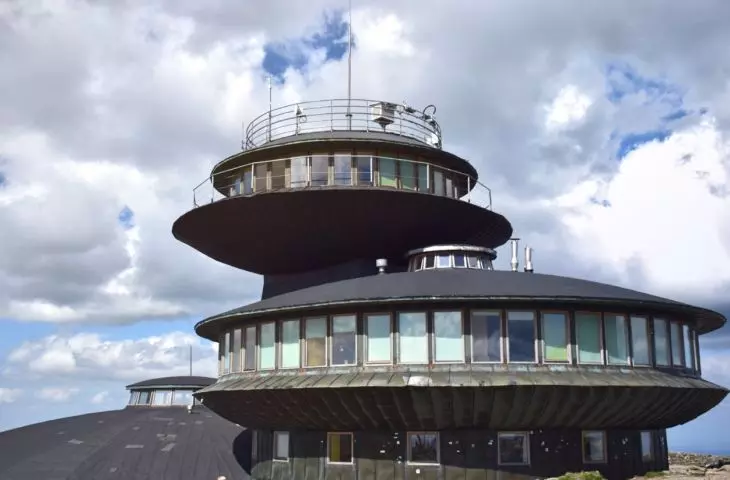
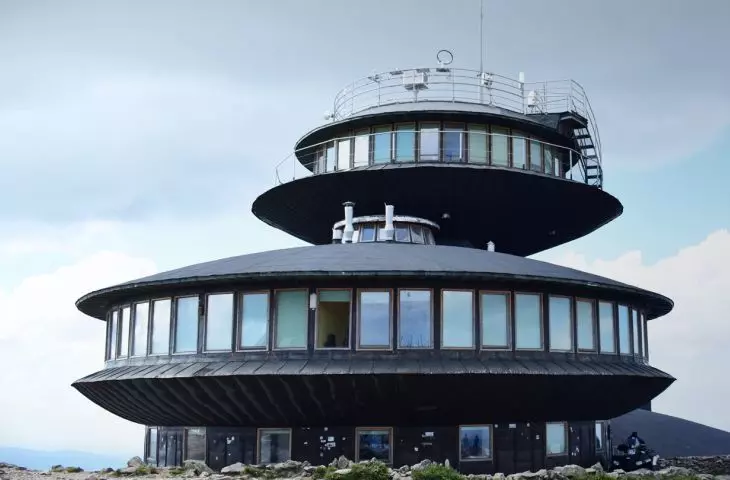
In the 1950s, there was a lot of talk about unidentified flying vehicles, and I was always fascinated by curved lines and spherical spaces - I decided that the PIHM observatory on Snow Mountain would be shaped like plates
-explained Witold Lipinski.
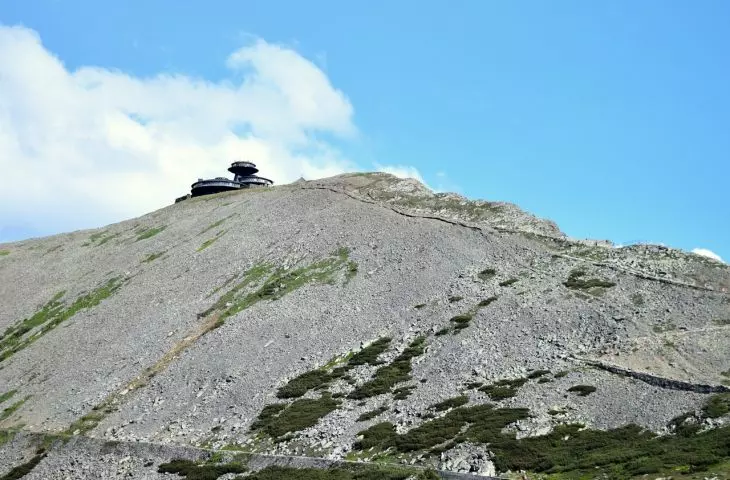
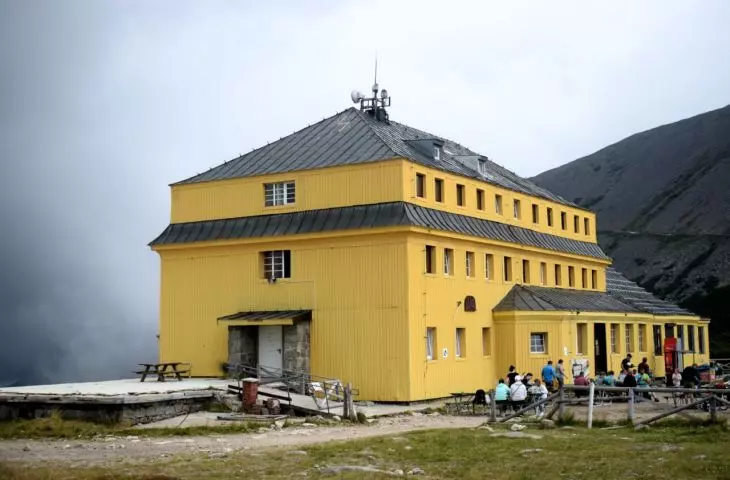
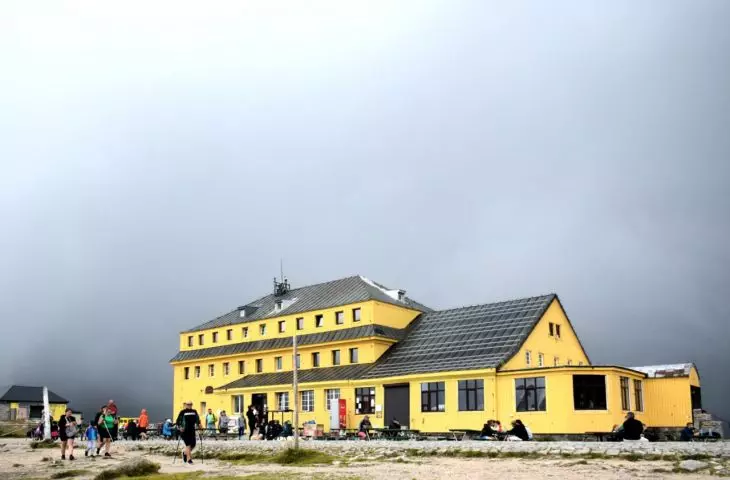
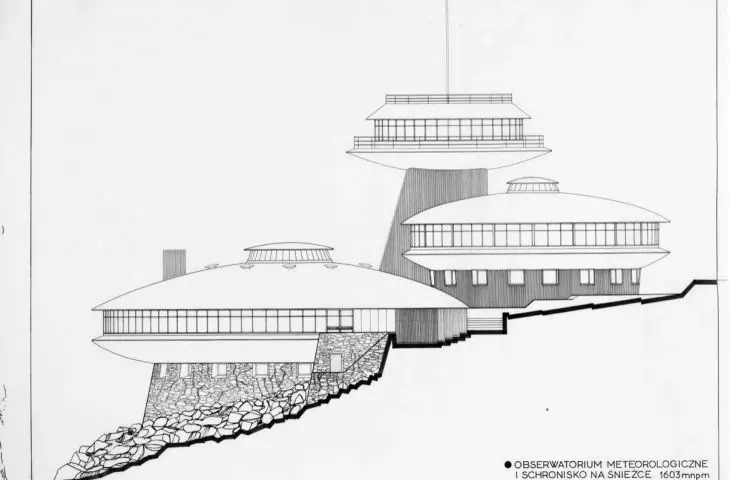
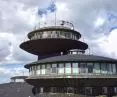
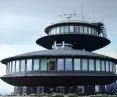
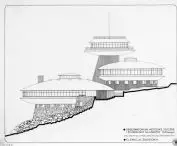
The buildingsstructure is a steel truss supported centrally on a concrete foundation. Its largest, lowest disk has a diameter of 30 meters. The wing has a basement and a skylight in its roof. Technical facilities, staff rooms and warehouses are located in the southern disk, which has a diameter of 20 meters. The road to it leads through a reinforced concrete shaft, on which the highest disk - the meteorological observatory - is located. It is diagonal around the entire perimeter and provides access to an outdoor roof terrace.[2]
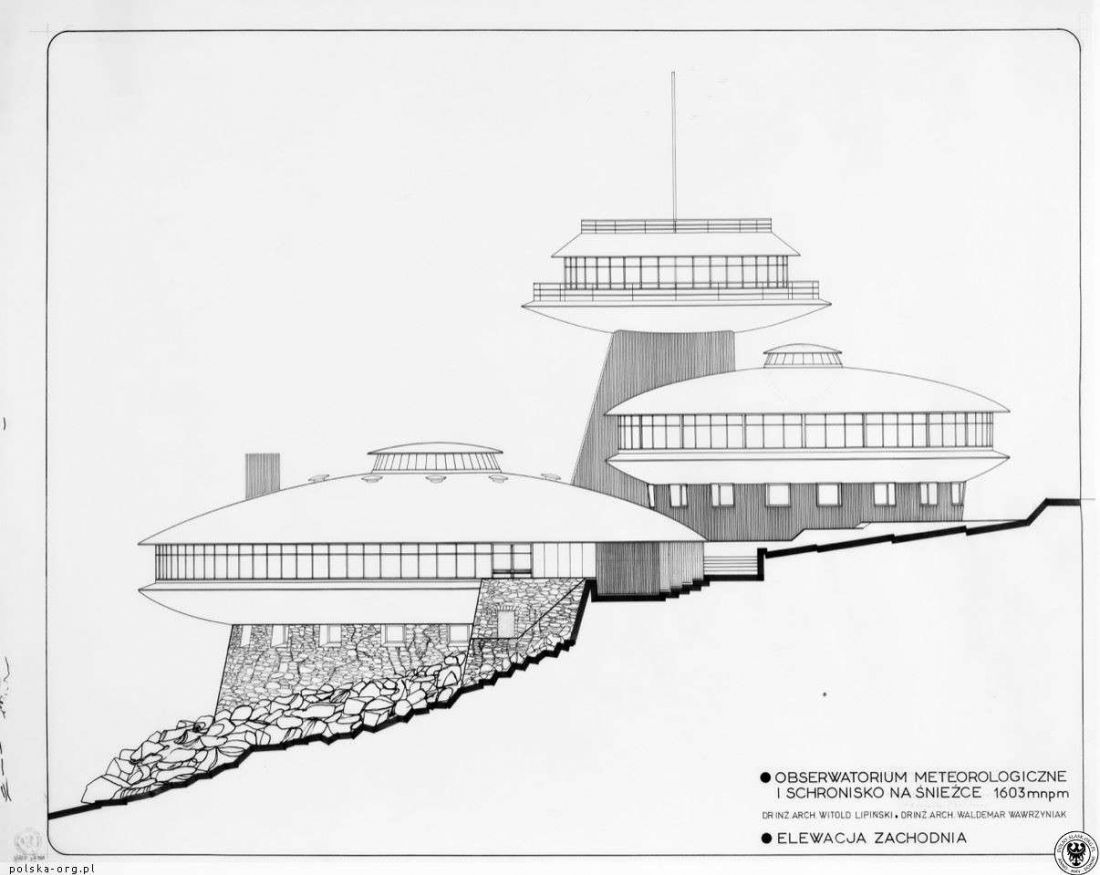
west elevation
© archive of Prof. Waldemar Wawrzyniak; polska-org.pl
The three disks on Sniezka are not the only cosmic reference in Polish architecture - it was preceded by the Spodek in Katowice, Poland, by several years.
From 885 to 1400 meters above sea level. How were the disks on Śnieżka created?
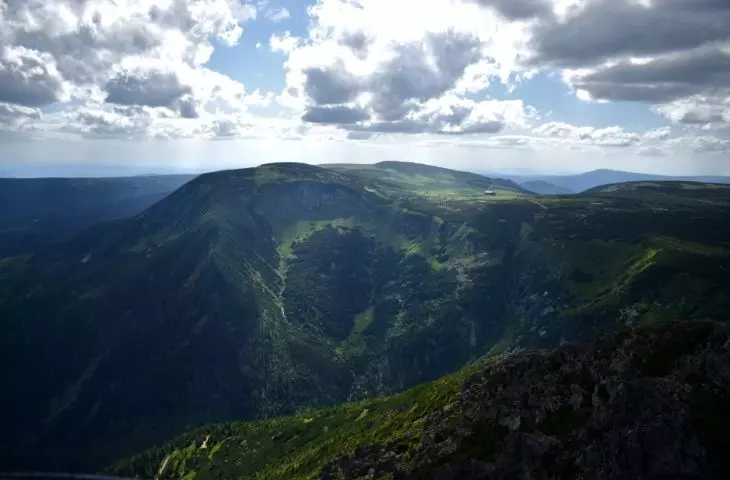
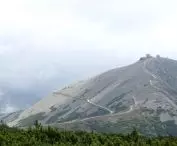
The construction of the "drives" could not start without a paved road to the top of the mountain. This one begins in 1964, but irregularities in documentation, improper equipment and extreme weather conditions mean that it is only three years later that the builders reach Sněžka. The mountain they want to conquer is not only the highest peak in the Giant Mountains and the Czech Republic - 1,603 meters above sea level - but at the same time the most outstanding in Poland - meaning that it counts the greatest difference in height between the top and the nearest, highest pass.
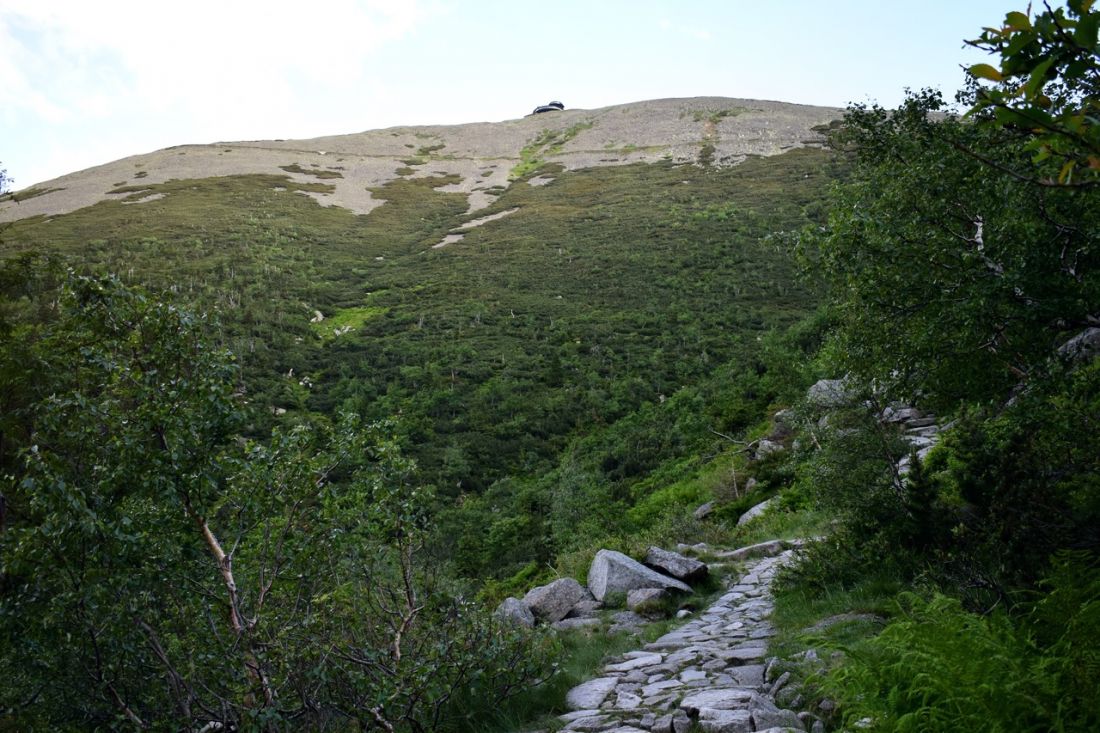
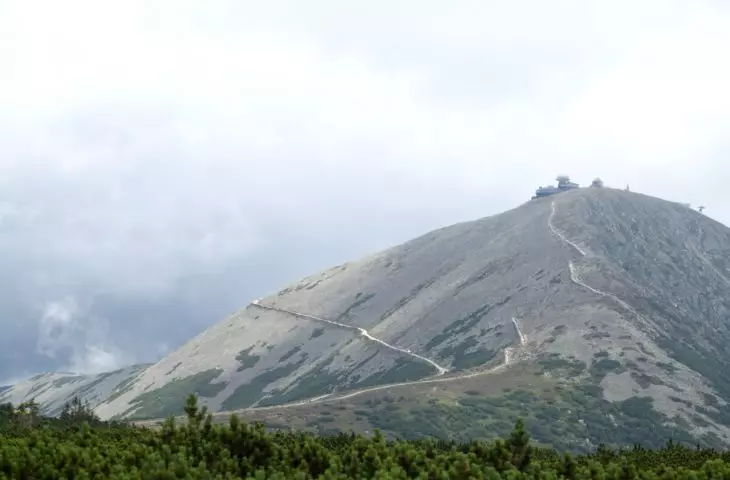
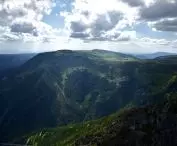
View of Śnieżka from Kotlo Łomniczki
photo: Maria Cipinska
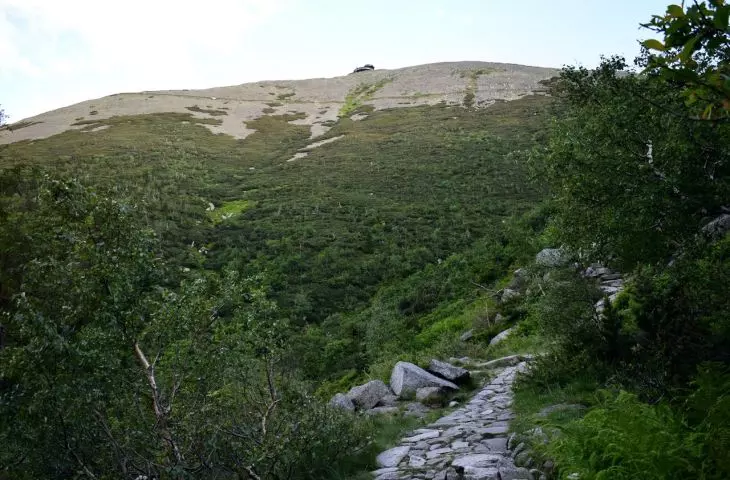
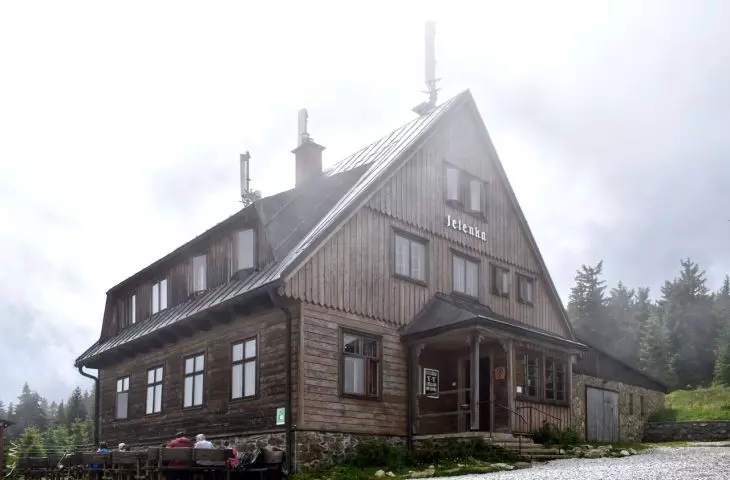
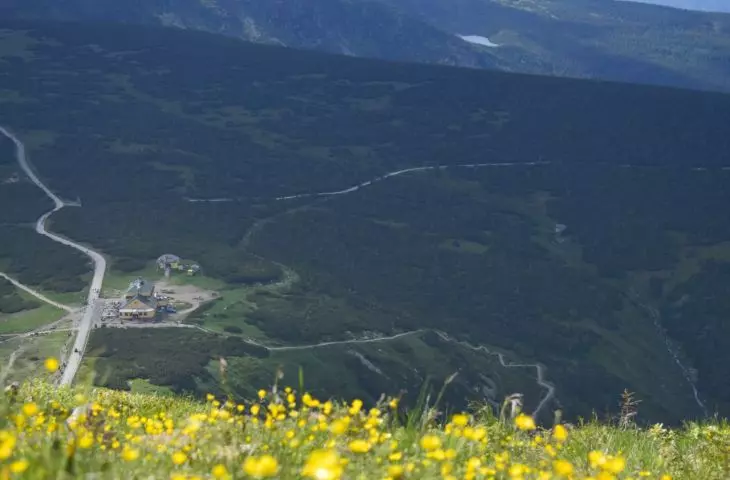
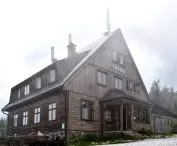
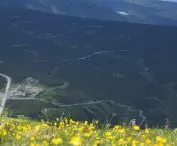
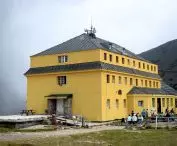
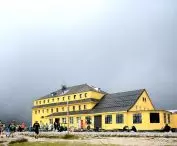
The shortest hiking route to the top of Sniezka from the Polish side leads from Karpacz through Lomniczka Valley and Lomniczka Basin - the deepest basin of glacial origin, characterized by numerous debris flows. Hiking from this side, just before the final approach to Sněžka, already during the construction of the observatory, one could stop at the mountain hostel "Dom Slaski." This shelter, as well as the "Jelenka" located on the opposite side of the massif , confirm one of the key objections to the modernist building under construction in the 1960s - the new observatory does not relate to traditional mountain and Sudeten architecture.
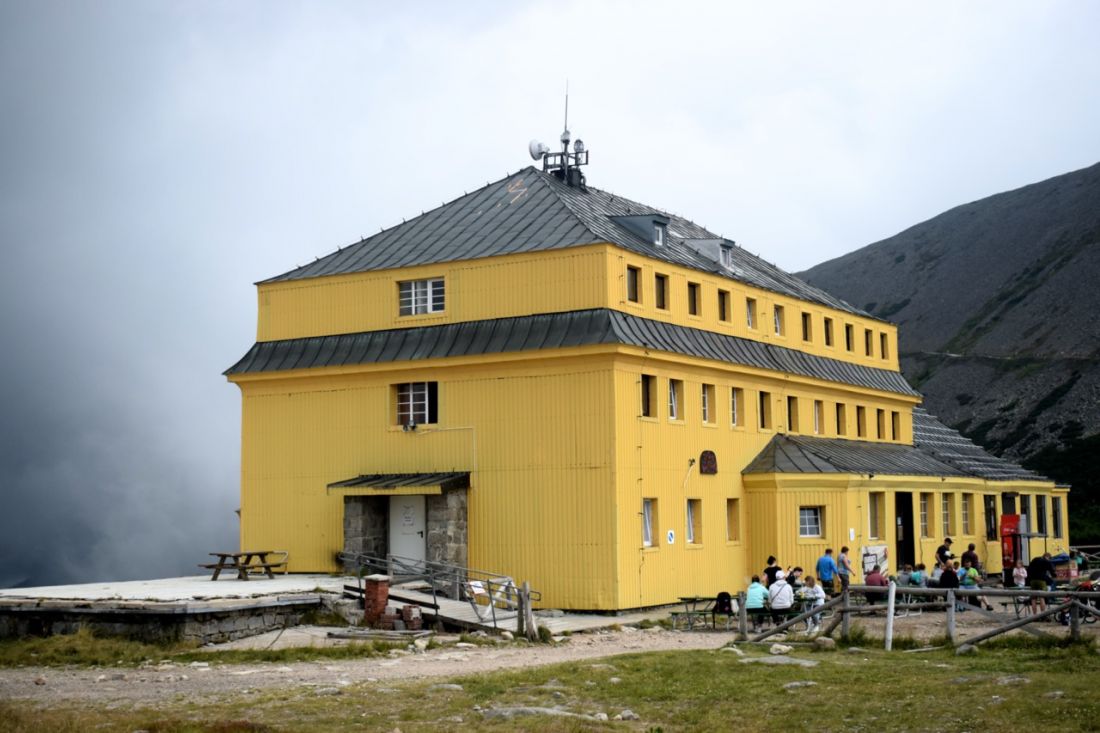
"Silesian House" mountain hostel
photo: Maria Cipinska
The futuristic, astronomical character of the observatory, however, is justified not only by the mountain slope's glacier-like surface of the moon, but also by the recent architecture of Poland's southern neighbors. For at the same time an equally unearthly mountain hotel with a TV transmitter was being built on Mount Ještěd in northern Bohemia, only 70 kilometers away. Its construction was completed only a year earlier than that of the observatory on Sněžka - in 1973.
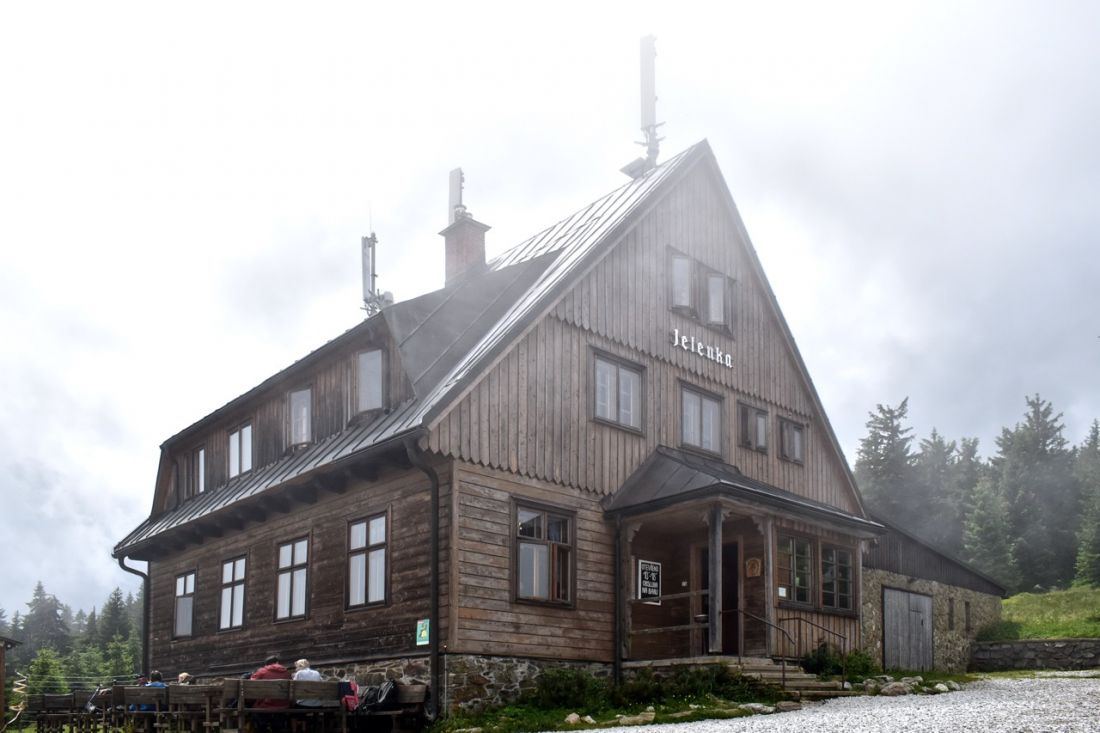
Jelenka chalet
Photo: Maria Cipinska
1603 meters above sea level. "The windiest place in Europe".
Although the construction of the modernist building was completed in 1974, until October 1976 measurements were carried out simultaneously in the old observatory, which had operated on Snezka since the beginning of the 20th century.
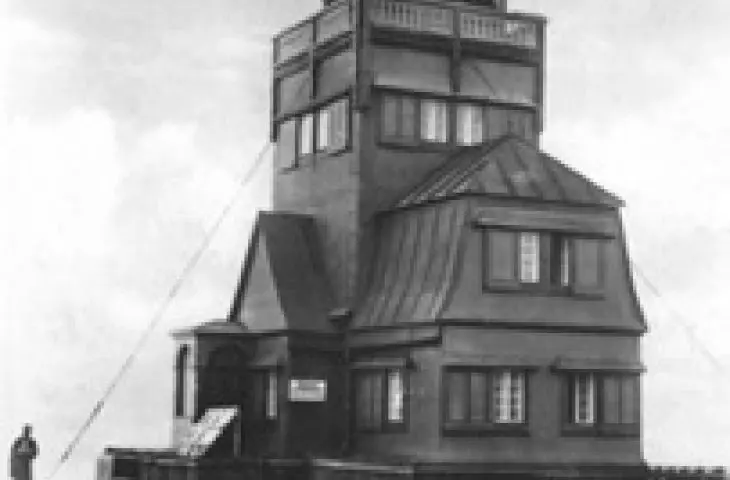
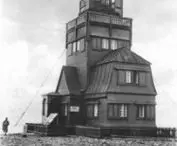
The three-story tower of the first observatory was erected on the initiative of the head of the Meteorological Institute in Berlin. It measured 16 meters and housed two terraces on the roof. Although its oak and larch skeleton was fastened by 4-meter-long bolts and filled with 18-centimeter-thick asbestos-cork cubes, the building regularly needed repair. The five-ton layer of stones stabilizing it was not enough to make the tower immune to the near-polar climate prevailing at the top.
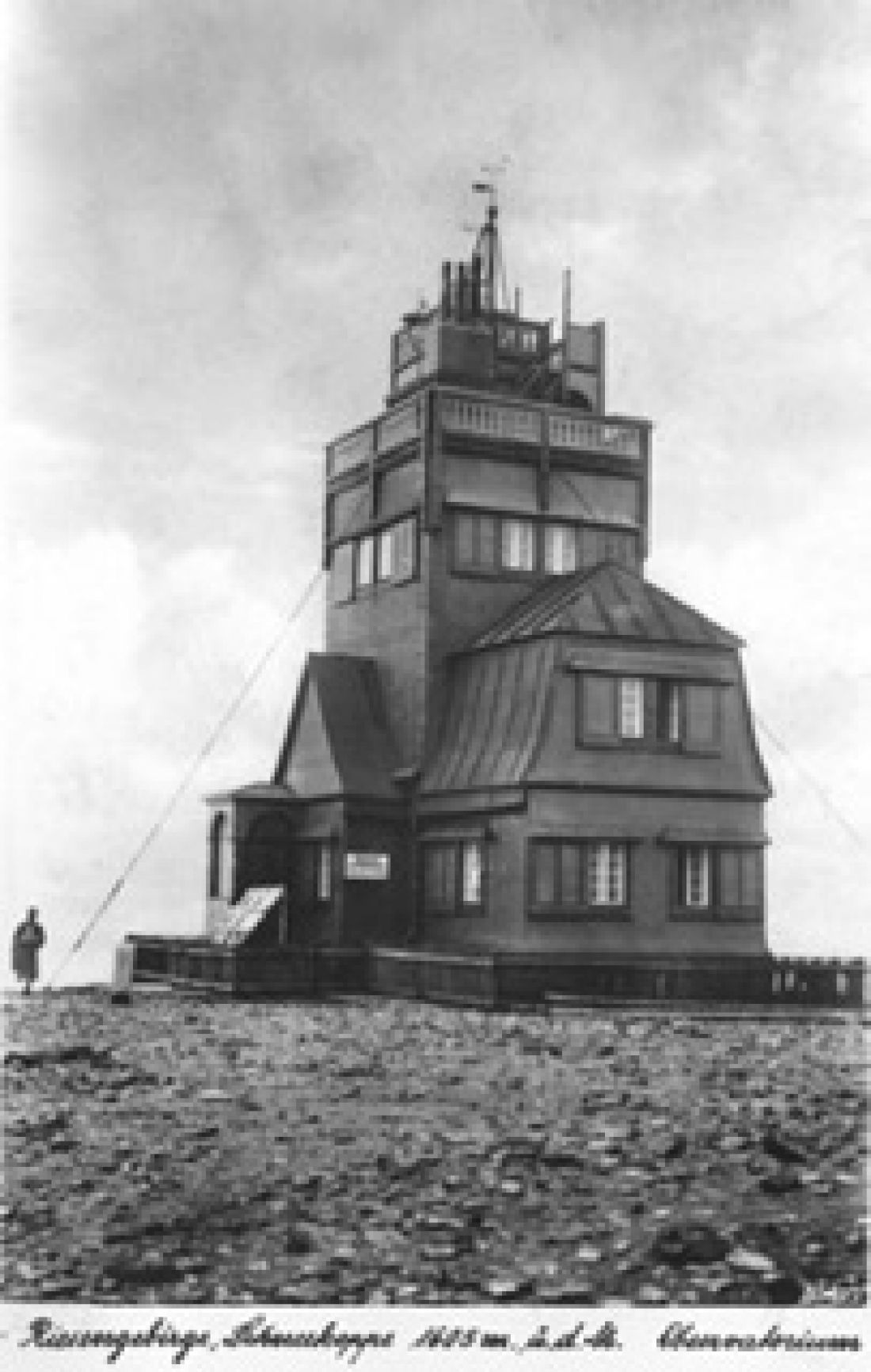
The first observatory on Sněžka, old postcard, 1942.
public domain
However, the building survived both the First and Second World Wars, after which it became the headquarters of Polish meteorologists. The construction of a new observatory meant demolishing the old one, moving it to Karpacz and changing its function to a museum. In 1978 it was handed over to the city of Karpacz "for a symbolic zloty". Lacking an investor, however, the building remained in its place until 1989, when it was demolished.
The beautiful idea of renovating the old observatory turned to ashes. This is the truth! No one will rebuild it anymore! It's sad, but true
-said Zbigniew Kulik, Director of the Museum of Sport and Tourism in Karpacz.
The new observatory, although innovative, also succumbed to weather conditions. Several Arctic winters were enough to completely damage the drainage pipes. As a result of their constant freezing and thawing, the interior of the observatory was flooded and the walls and roofing were unsealed. The gaps were covered with glass matting and bitumen-rubber compound.
1620 meters above sea level - what does the highest drive hide?
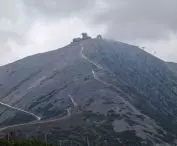
However, the extreme weather conditions at the top of Sněžka are the reason why the meteorological observatory is located there. The station belongs to the Institute of Meteorology and Water Management - National Research Institute (IMGW-PIB). It is thanks to the measurements there, among other things, that meteorological forecasts can be made and climate change can be assessed, along with the state of air pollution. A total of seven people work there - six observers and the manager, Piotr Krzaczkowski, who also serves as a chemist.
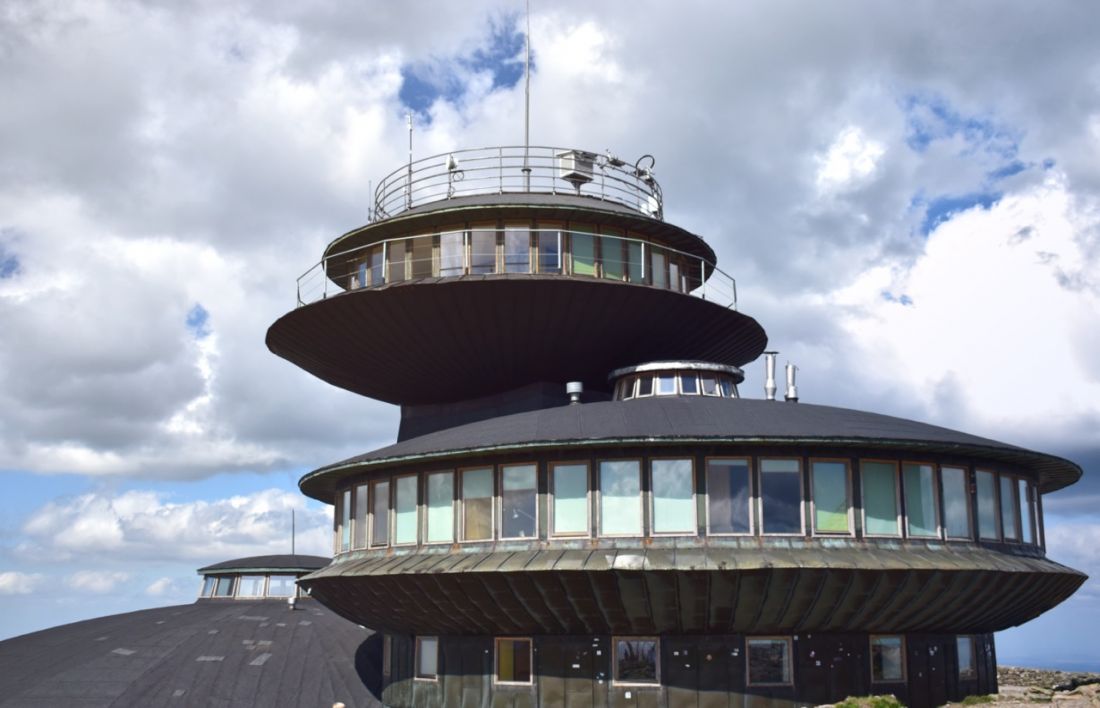
The observatory on Śnieżka
photo: Maria Cipinska
This is a wonderful place with a very difficult climate - the windiest place in Europe. More than once you had to crawl with a backpack to work, because there was no access. This shapes character and resistance to difficult conditions, physical and mental
-told Pawel Parzuchowski in the podcast "From Love to the Mountains," the current head of the Hydrological and Meteorological Station in Zakopane and on Kasprowy Wierch, who worked on Sniezka for 10 years.
In 1985, the observatory on Sniezka was named after Tadeusz Holdys, who was the first to serve as station manager for 25 years. It is from his name that the colloquial name of the building "Holdys" is also derived. It was during his lifetime that the best period of the facility's operation was to reign , according to one of the project's creators, Prof. Wawrzyniak. After all, a hostel with a restaurant operated in the lowest and largest drive until 2015. Prof. Wawrzyniak, above all, complained about its stylistic chaos even before 2009, when the upper disk collapsed.
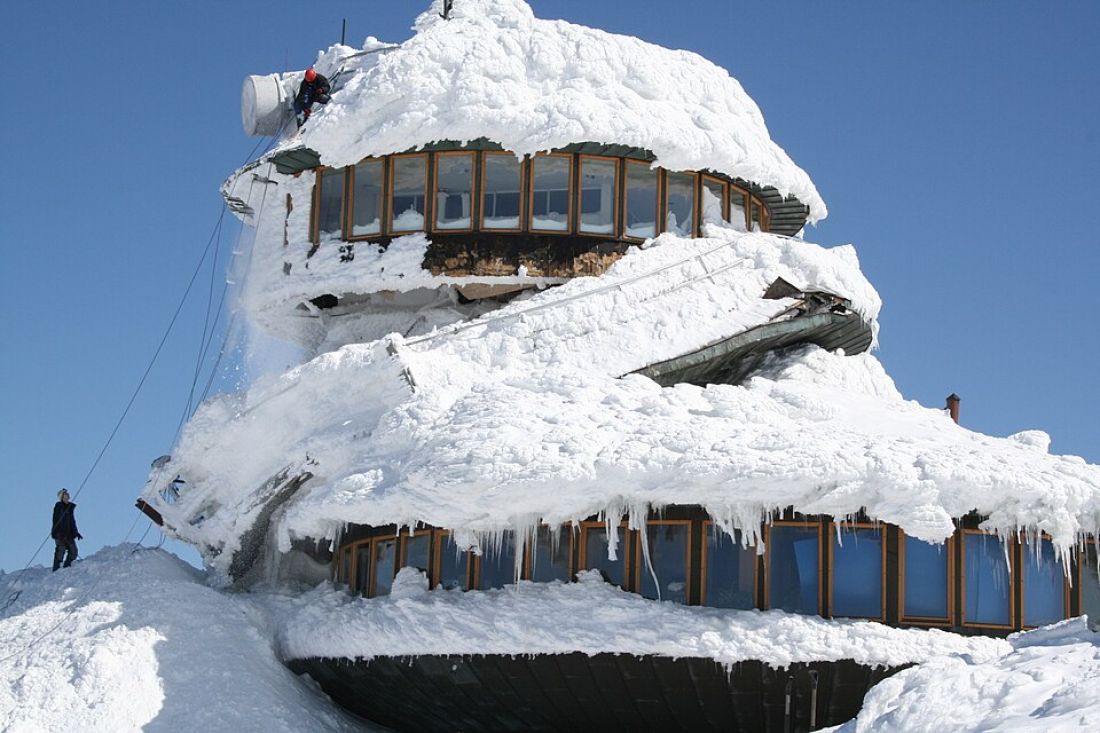
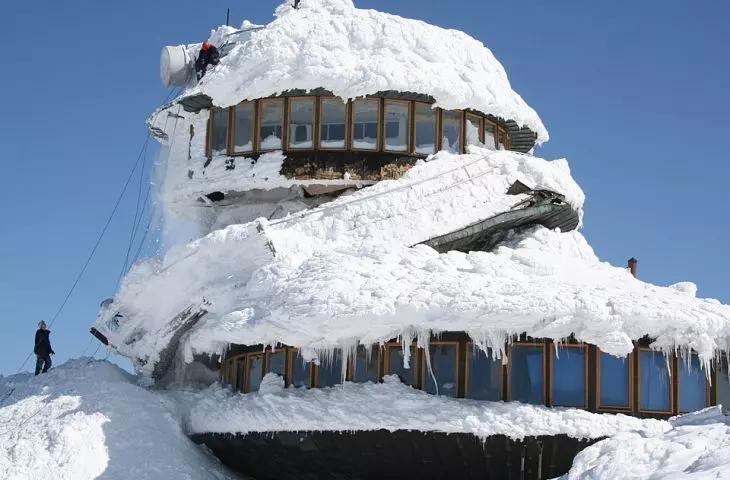
The observatory shortly after the construction disaster, March 2009.
Photo: Marek N. © CC BY SA 4.0 EN | Wikimedia Commons
The reason for the accident was excessive loading, not foreseen in the design - back in March the building was covered by snowdrifts, with icicles hanging from the edge of the roof.
The steel elements supporting the building were connected to each other by welds, not bolts, and in addition were not routed through the entire length of the platform. Therefore, the entire structure was not very flexible
- explained prosecutor Violetta Niziołek of the Jelenia Góra District Prosecutor's Office[3].
The event, however, allowed for repairs to be carried out, as a result of which the building was restored to its original condition.
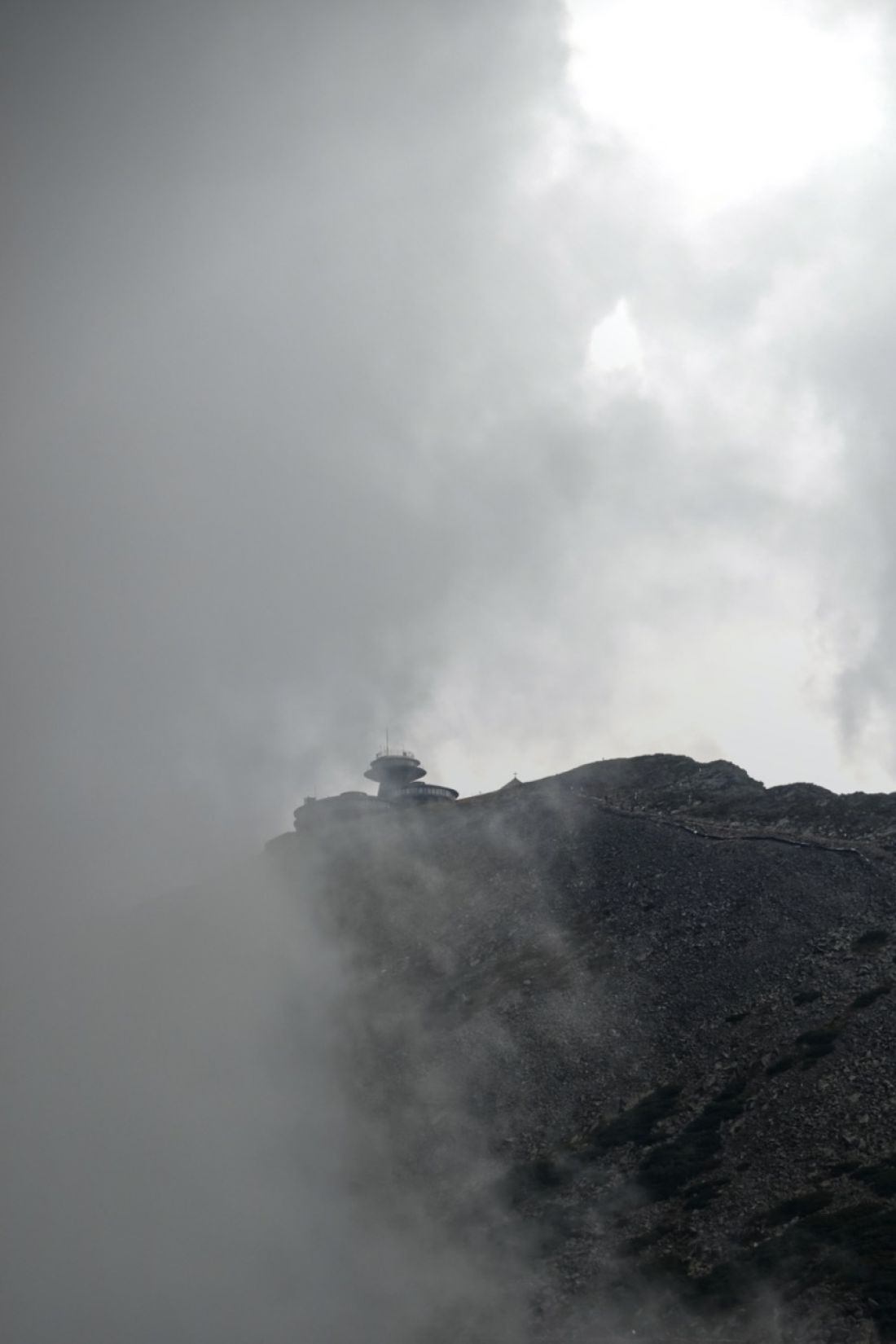
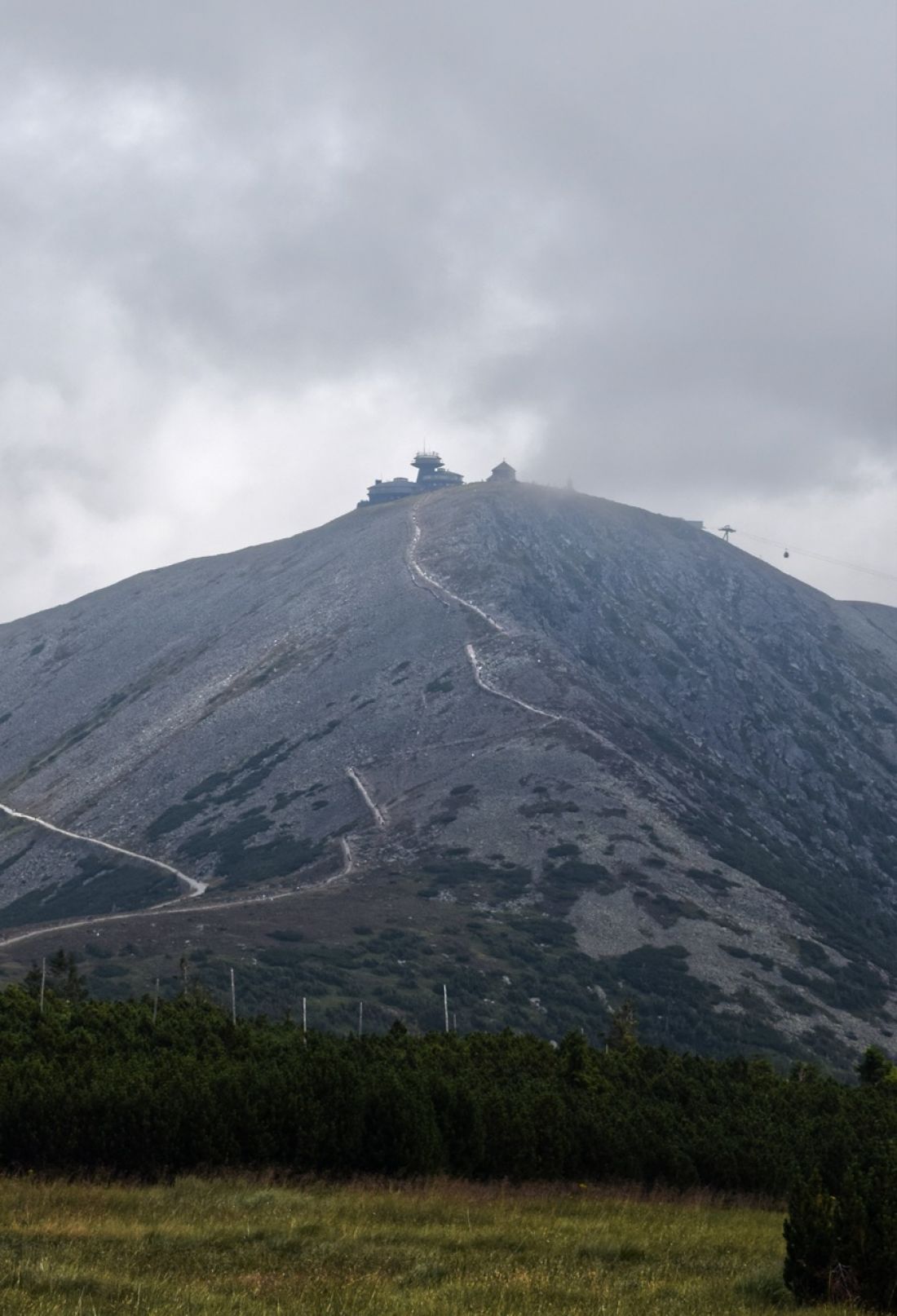
Snow White
Photo: Maria Cipinska
Professor Wawrzyniak (without Professor Lipinski, as the latter died in 2005) maintained the opinion that the renovation was still necessary in 2020. It was then that the tallest drive was damaged again - this time due to strong winds. Perhaps because of this, in June of the same year the observatory building was included in the register of monuments of the Silesian province. The conservator's decision was certainly influenced invaluably by the involvement of the building's co-author.
Unusual for the time, the project, which was inspired by the rugged landscape of the Karkonosze Mountains and the existing buildings on the summit, was realized in difficult mountain conditions. Its values are manifested in the building's external form, innovation and uniqueness; none of the neighboring Sudetenland hostels were built in such a style. The futuristic design correlates with existing buildings, including the 17th-century St. Lawrence Chapel, which was also founded on a circular plan. The form of the observatory building has become a permanent part of the landscape of Lower Silesia, the building has become a symbol of the region, an element identifying it. It is an important element of the mountain landscape, has great significance for the local cultural identity
-sounded the message of the Lower Silesian Regional Monuments Conservator.[4]
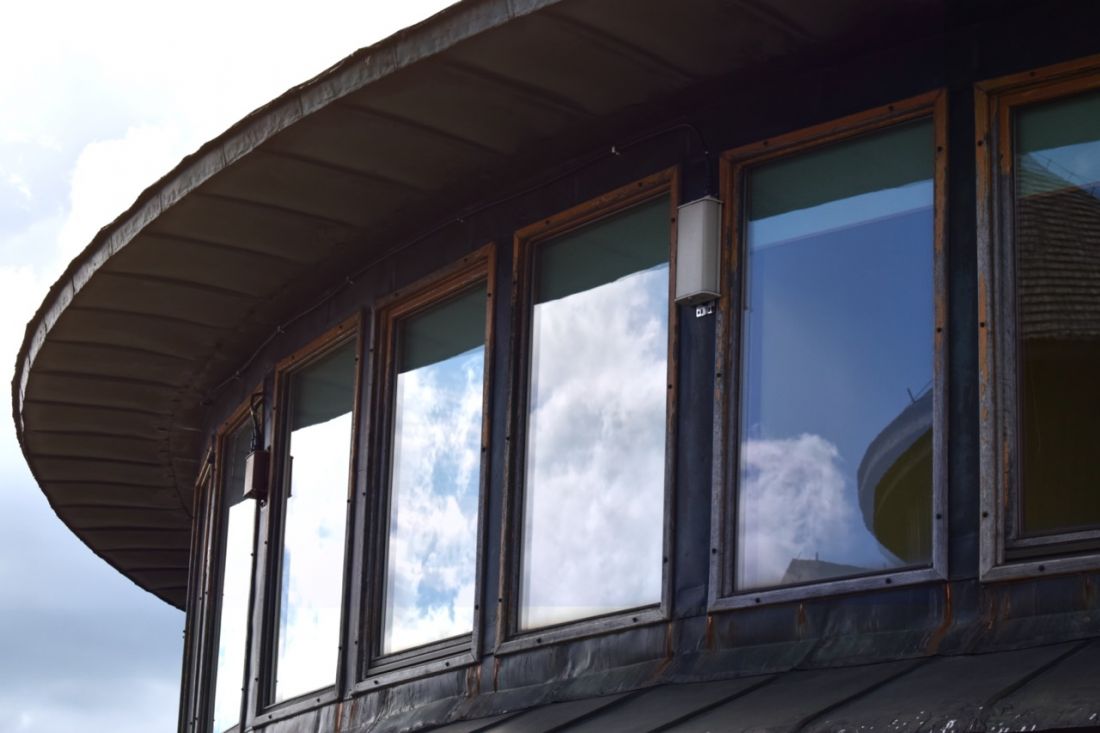
The observatory on Śnieżka
photo: Maria Cipinska
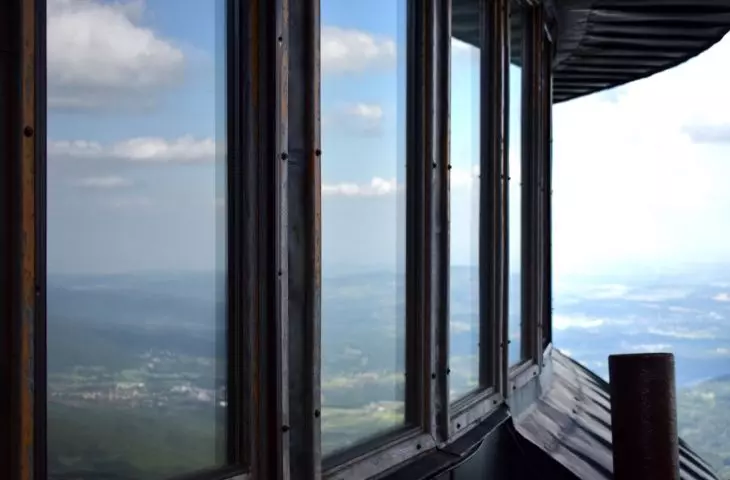
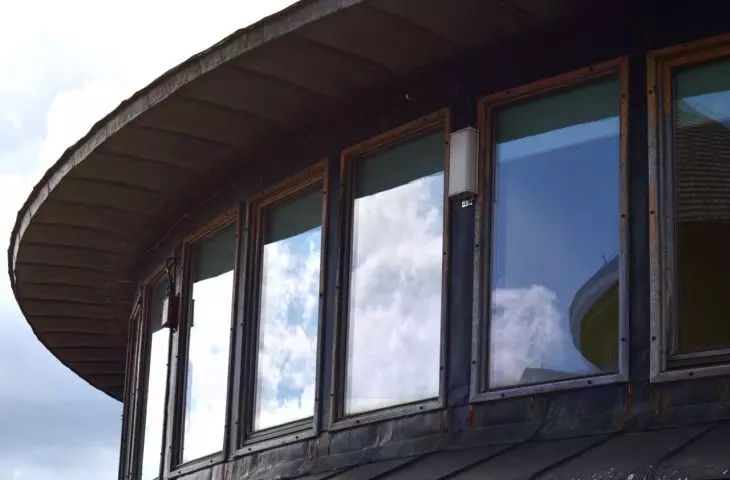
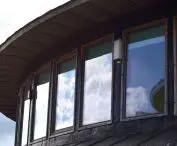
The Tadeusz Holdys High-Mountain Meteorological Observatory is not alone on Śnieżka. Although its original has been demolished, the wooden facade of the St. Lawrence Chapel is still reflected in the rounded panes of the disks. From the Czech side of the peak, since 2008, it has been possible to send a letter or postcard - for the Czech post office building "Anežka" replaced the mountain chalet that once existed there. The letter carrier can efficiently deliver it to the addressees, thanks to the upper station of the gondola railroad, which reaches the village of Pec pod Sněžkou.
New Sněžka - when will modernization begin?
In 2021, IMGW-PIB announced a several-year plan to renovate the observatory. The "New Sněžka" project was to be a priority, with a planned upgrade of €3.3 million. The Institute's director, Przemyslaw Ligenza, announced at the time that the work would last until 2025. In 2024, IMGW signed another agreement - at that time, the almost-finished project documentation envisaged a 2-year renovation - replacing the roof sheathing, renovating the lower drive and bringing in utilities, along with the construction of a sewage disposal system.
In October, MP Iwona Krawczyk filed an interpellation on the implementation of the New Snowbird program.
Final activities are currently underway for the final acceptance of the design documentation from the Contractor, along with the agreements and the decision approving the architectural and construction design and granting the building permit. The expected date of final acceptance of the above documentation is November-December 2025.
-reads an excerpt from the response of Przemysław Koperski, Undersecretary of State at the Ministry of Infrastructure. [5]
The tender is planned to be announced in the first quarter of 2026.
[1] M. Kokoszkiewicz, Outstanding architect, creator of Sniezka observatory honored with honorary award, 2020, Gazeta Wyborcza.
[2] M. Kowalska, Renovation of the Sniezka observatory later this year.
[3] Observatory on Śnieżka: Poland's architectural peak, 2025, Bryla.pl.
[4] Ibid.
[5] www.sejm.gov.pl