




Beata Mrówczyńska-Łozowska, architect and founder of Stacja Projekt studio, follows the latest trends in design, participates in trainings, conferences and trade fairs both in Poland and abroad, constantly expanding her competencies. In his work he is guided not only by technical knowledge, but also by intuition and empathy. She recognizes that interior design is often close to the work of a psychologist, and the key to success is the ability to listen to the other person.
How do you define the role of an interior architect today in the context of contemporary design challenges - functional, aesthetic and social?
The role of an interior architect today goes far beyond aesthetics. It is a profession that combines design, technical and social competencies. We are responsible for the quality of daily life of users ergonomics, comfort, light, acoustics, as well as responsible material and environmental decisions. Modern design is also the ability to listen, to understand the real needs of the investor and the cultural and economic context. The architect becomes a mediator between vision and budget, between aesthetics and function. For me, it is above all a responsibility to create spaces that are sustainable - not only visually, but also qualitatively.
Which aspects of daily design work do you consider crucial to maintaining high quality of execution, and which require the greatest flexibility from architects today?
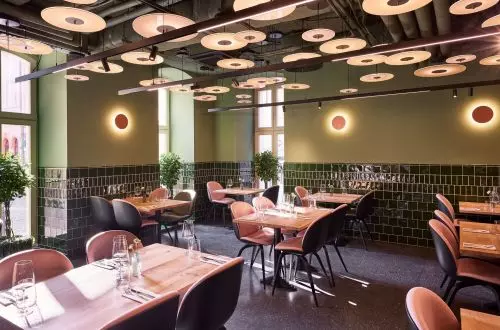
Design consistency and precise documentation are key. A well-prepared detailed design minimizes the risk of errors and increases the quality of the implementation. Communication - with the investor, contractors and suppliers - is also extremely important. The greatest flexibility is required today by changing market conditions: availability of materials, rising implementation costs or dynamic deadlines. The architect must react quickly, propose alternative solutions and at the same time not lose the original idea of the project. It's a balance between creativity and pragmatism. Such an example can be our realization of "Artus Court" in the old town of Torun.Historical building, full of details and requirements of the conservator of monuments and, on the other hand, the budget and expectations of the investor.
What directions of development - professional, design or business - do you consider the most important in the coming years?
I see great importance in sustainable design and in the conscious selection of technologies that support the comfort of users. Intelligent systems, energy efficiency and durability of materials
will increasingly determine design decisions. From a business perspective, it is important to build a strong, recognizable personal brand. As a lecturer of "Interior Design" at Nicolaus Copernicus University, I share not only theoretical knowledge. My teaching work helps me further understand how quality and consistent aesthetics, enhance trust and recognition in my industry, as well as build long-term relationships with audiences, which is of utmost importance to me.
How do you see your role as a Kontakt-Simon brand ambassador, and how does your design experience translate into informed collaboration with the interior design solutions manufacturer?
For me, the role of ambassador is all about responsibility and authenticity. I only work with brands whose products I realistically use in projects and which meet my quality standards. Design experience allows me to look at a product not only through the prism of aesthetics, but also installation, durability and functionality in everyday use. Cooperation with the manufacturer then becomes a dialogue, an exchange of knowledge and experience that can realistically influence the development of the offer.
What determined your choice of profession as an interior designer, and was there a mentor on your professional path that had a significant impact on your way of thinking about design and creative work?
My path towards interior design began in 1996, when I reached for the first trade magazine " My apartment".Since then, the systematic immersion in the subject of design has become my passion. In the following years, during my education at the Leon Wyczółkowski High School of Fine Arts in Bydgoszcz, it was my teachers who became my mentors, shaping my workshop, aesthetic sensitivity, ability to analyze space, as well as conscious selection of materials and colors.
What Kontakt-Simon products do you use most often?
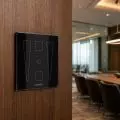
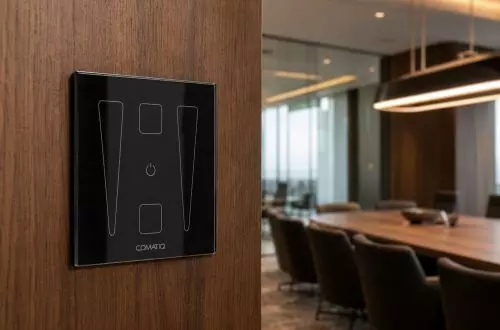
In projects, I most often reach for series that combine high aesthetics with flexibility of configuration, especially where the detail is important for the overall composition of the interior. That's why I most often use the Simon 55 series, I appreciate solutions with minimalist design, with a wide range of finishes that allow to match the fixtures to the character of the space. Here we have three lines of decorative frames that suit both modern apartments and commercial interiors. Also important to me is the quality of the materials and the consistency of the entire systems, which gives a sense of design and implementation security. And most importantly, here we have the possibility to use a smart home control system with a smartphone. With Simon GO we can replace ordinary switches with smart ones at any time and the design remains the same.