






Green walls are one of the more widespread trends in sustainable architecture in recent years. Despite their considerable price, complicated design and implementation process, as well as several other disadvantages, they are able to improve a building's thermal characteristics and occupants' thermal comfort, increase biodiversity and positively influence the well-being of users. They appear in the most spectacular developments - in major train stations, on university campuses and in office buildings. However, they are not an architectural invention of recent years, because in the form of wild vines they have been overgrowing buildings in cities and villages for many centuries. Although climbing plants bring a lot of good, they can't count on proper protection - the lack of it led to a showy mural in the center of Krakow instead of a green wall. What does this change bring?
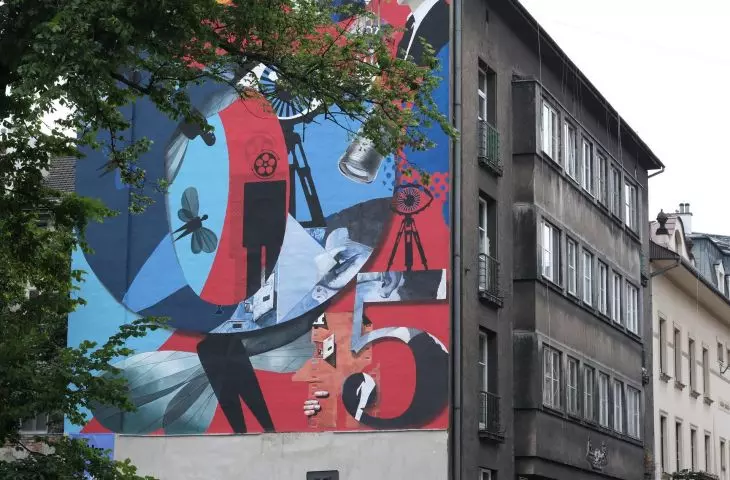
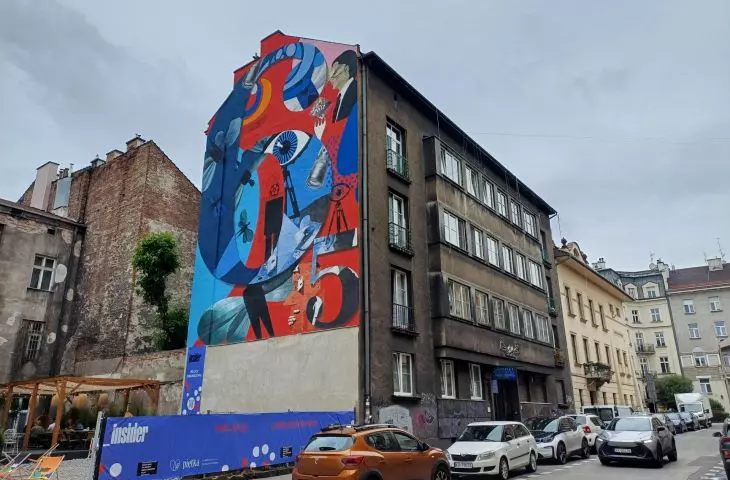
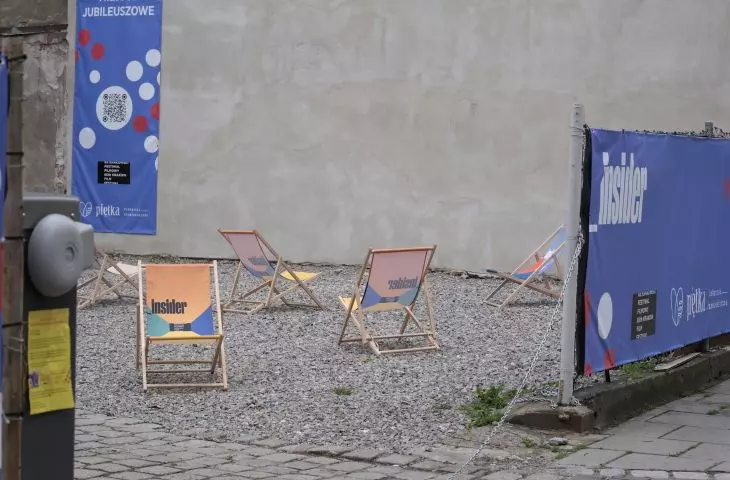
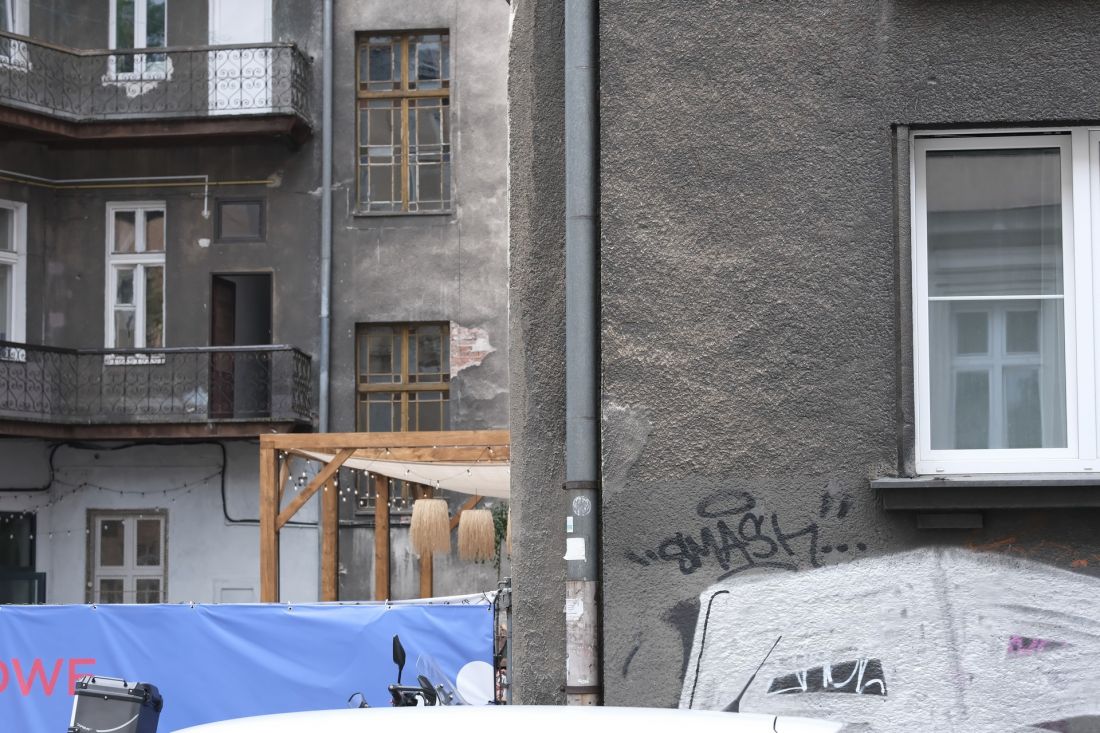
The Krakow Film Festival is an event permanently inscribed in the cultural space of the capital of Malopolska. Since 1961, the festival has screened the best short, documentary and animated productions in the city's cinemas, both indoor and outdoor. As the event's website states, "The Krakow Film Festival is one of the oldest events in the world dedicated to documentaries, short animations and short features." This year it celebrates its 65th birthday. To mark the occasion, a "jubilee site" has been created, located by the garden of the small craft bakery "Piętka" - several deckchairs have been set up in the gravel-lined square, and the fence has been covered with large tarpaulins, informing people about the city festival. Above them, on the wall of a tenement, there was a new urban "attraction".
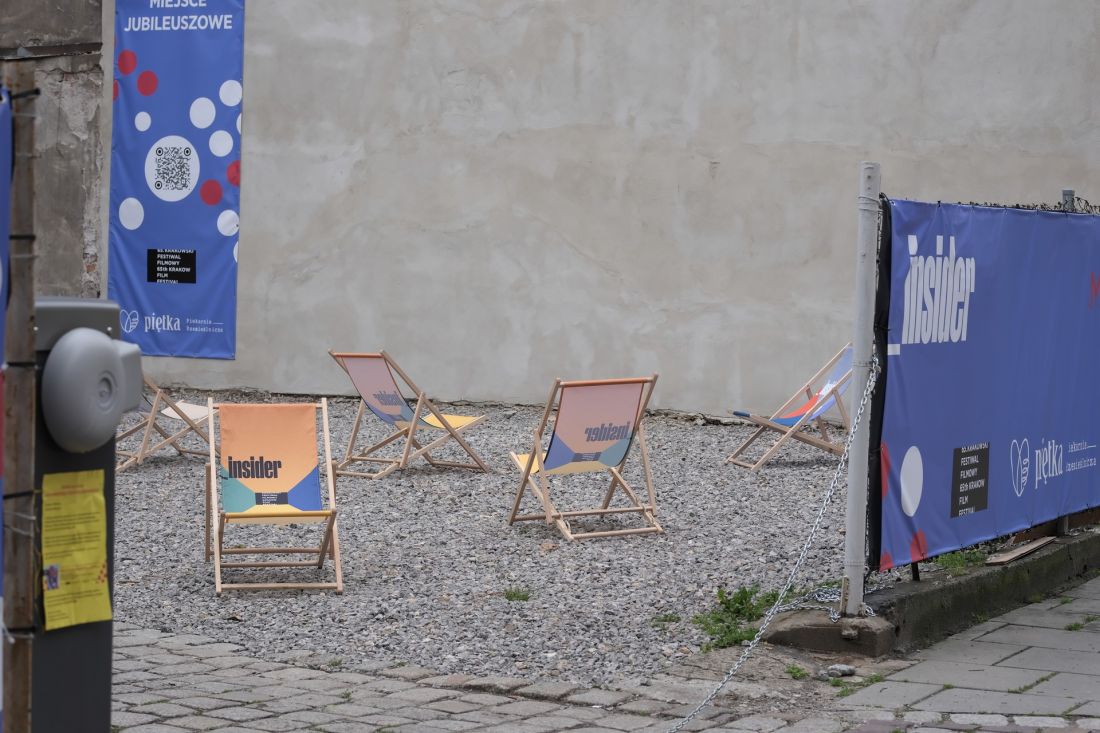
A new mural has appeared on Asnyka Street in Krakow
photo: Przemyslaw Ciępka
Vines on Asnyka Street
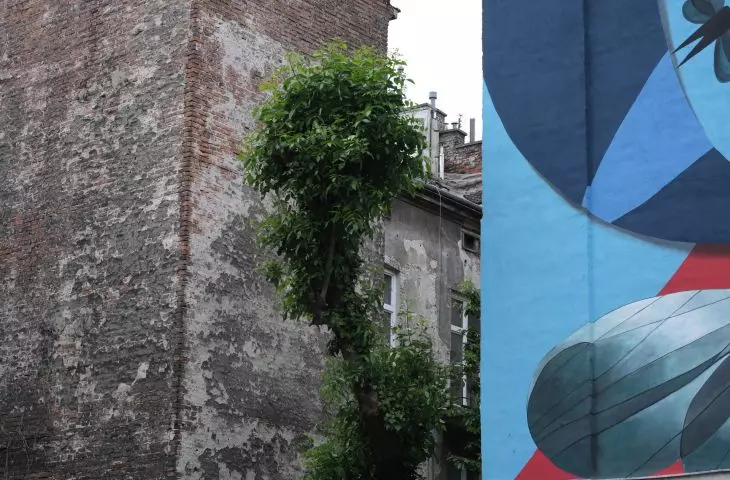
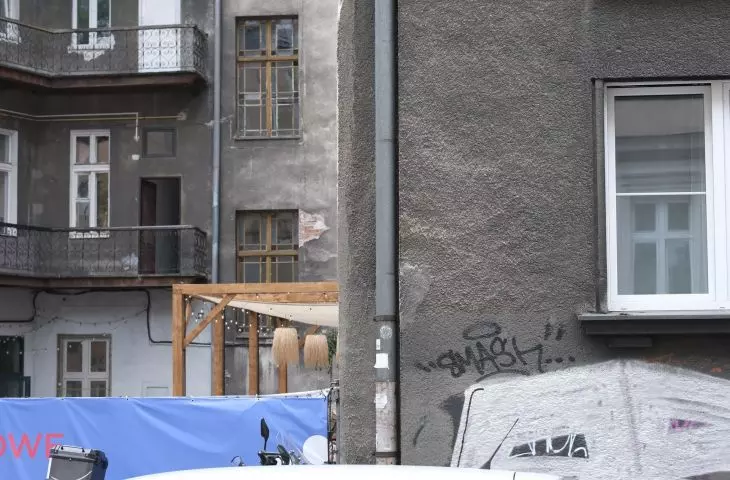
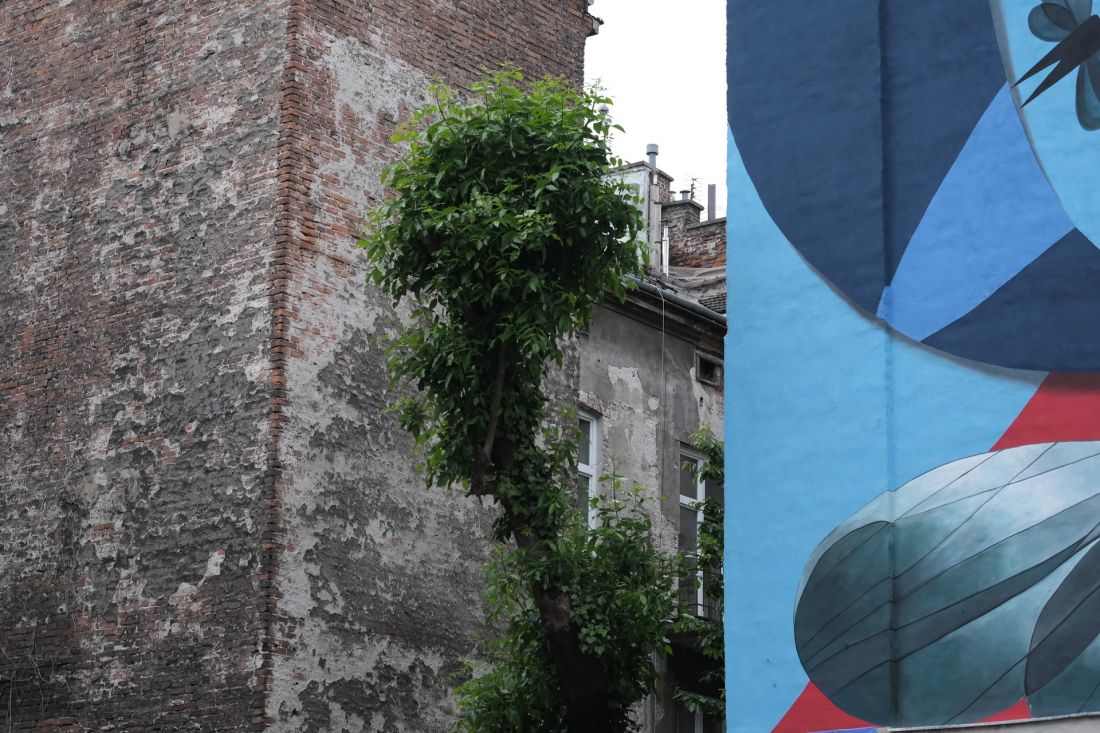
Similar in age to the Krakow festival were the vines of the grapevine, which overgrew the walls of the tenement house at 10 Asnyka St. For several generations it has greened the south wall of the building every spring, just like the trees and shrubs growing in the courtyard next door. This year, however, the greenery was absent. Instead, there was gravel and a mural honoring the 65th anniversary of the Krakow Festival. Where did the vines disappear?
The mural in place of the greenery
The premiere of the mural, designed by Przemysław Potoczny, a graduate of the Krakow Academy of Fine Arts, which fell on May 27 of this year, evoked different reactions - some residents rejoiced at thethe sight of the collage-like composition, combining fragments of the best festival posters from recent years, while others quickly recalled that the blind wall, instead of blue and red, had been dominated by green for the past several decades. Internet outrage quickly reached the city's official profile, which reported on the creation of the new mural.
No one would remove living greenery to make room for a mural. The mural simply covered up an empty wall left by previously dead ivy.
- replied the administrator of the Krakow PL profile to the accusations related to the cutting.
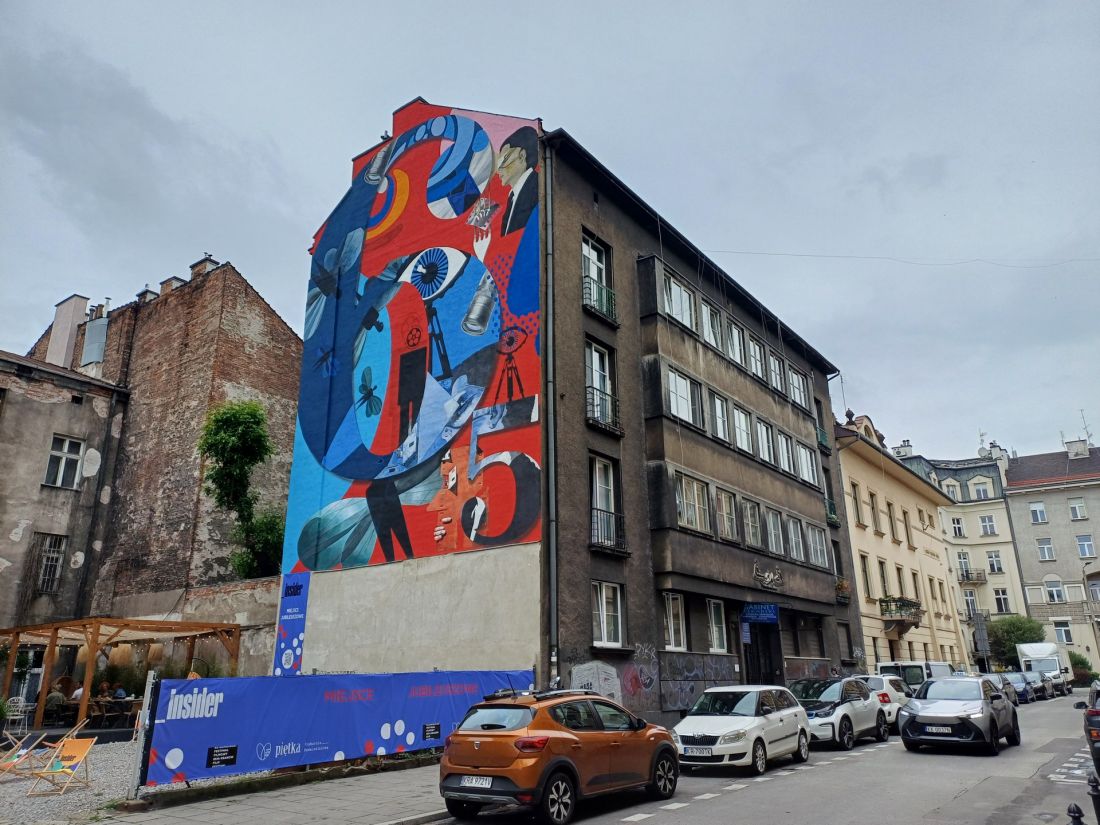
A new mural has appeared on Asnyka Street in Krakow.
Photo: Przemyslaw Ciępka
So who is responsible for the destruction of the green wall on Asnyka Street? The answer is hidden under one of the posts of the popular breakfast show - because it turns out that:
[...] the ivy was mistakenly damaged by the cleanup crew-its destruction was not our goal or plan, and we are as sorry for its absence as you are-we have already planted new ivy. Nonetheless, we are working all the time to make this corner unique, and we have not yet said the last word when it comes to the work that will take place here.
Various insinuations, unsupported by any evidence, have appeared on the web, speaking of a planned plot. But does finding the culprit matter so much? It turns out that whoever would not be responsible for this felling would not face any consequences.
A new mural has appeared on Asnyka Street in Krakow
photo: Przemyslaw Ciępka
They protect, though they themselves are not protected
Regardless of the area occupied, age and role in the urban ecosystem, ivy and other common climbing plants are not entitled to a form of protection similar to that afforded to trees, so it is not necessary to apply for an appropriate decision before cutting down such a plant. According to the definition of the Public Information Bulletin, climbing plants are also not shrubs, which require a cutting permit for groupings occupying more than 25 square meters, since a shrub is:
a perennial plant branching into many equal woody shoots, not forming a trunk or crown, not being a vine
Until 2014 , one of the most common climbing plant species, common ivy (Hedera Helix), was under species protection, so that its cutting required permission from the relevant authorities. Now, the disappearance of ivy or grapevine, even if it is extremely impressive and an important part of the city's greenery, will not make the cutter suffer the consequences. This does not mean, however, that the loss will be completely avoided, because the green wall in this classic version has many advantages.
A new mural has appeared on Asnyka Street in Krakow
Photo: Przemyslaw Ciępka
what gives ivy on a building wall?
Contrary to appearances, ivy, like a large part of other climbing plant species, in most cases does not harm the structure of the building it overgrows. What's more, it often provides protection for it, for example, from precipitation, including those that can potentially damage the building envelope, such as hail or snow. Vines improve the microclimate around the building, and their roots, growing along the perimeter walls, draw water away, thus drying the foundations.
A well-designed green wall of climbing plants can reduce air conditioning energy consumption by as much as 33% per year. Since the greenery surface does not cause the building's walls to heat up during the hot summer, the indoor temperature is reduced by up to 3°C. In winter, the green wall creates insulation, effectively retaining heat" (Wojciech Bobek Łukasz Byś Siudak Monika Madyda
- write Wojciech Bobek, Łukasz Byś, Angelika Siudak and Monika Madyda, authors of an article on the advantages of climbing plants in the city1
Greenery on the walls of buildings also affects acoustics in the interiors - walls covered with ivy reduce the amount of noise entering the building by up to 8 decibels, and in some cases even more. What's more, vines not only protect our homes - they themselves provide shelter for many living creatures:
Dense vegetation provides nesting sites and shelter for birds, bats and small mammals. Birds such as sparrows, finches and wrens can find safe places to build nests in the foliage. Bats, which play an important role in controlling insect populations, can roost in the cracks and hollows of the green wall structure. Small mammals such as squirrels and hedgehogs can also find shelter in vertical vegetation, creating a diverse urban habitat. Green walls also provide habitat for urban populations of snails and arthropods.
- Sylwia Niedziela-Wawrzyniak2 mentions in her paper.
Przemysław Ciępka
1 W. Bobek, Ł. Byś, A. Siudak, M. Madyda, Vertical greenery as a new plane in contemporary urban development. "Space/Urbanism/Architecture," 1, 2023, pp. 178-188.
2. S. Niedziela-Wawrzyniak, Green walls and biodiversity in the city - a literature review, "Zeszyty Naukowe Wyższej Szkoły Technicznej w Katowicach", 19, 2024, pp. 45-64