




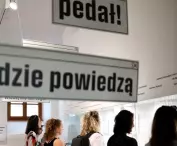
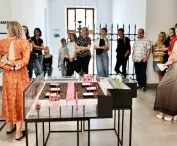
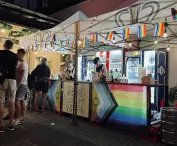
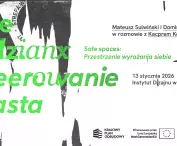

A safe space doesn't start with a symbol or "good design." It begins where someone takes responsibility for the rules and their enforcement. A conversation about queer spaces and cultural institutions shows that architecture can protect, but it can also escalate risk - and that visibility, so readily fetishized in the city, can sometimes be as problematic as its absence. This is the first meeting and conversation in the Mile widzianx - queering the city project .

Kacper Kepinski: Let's look at safe spaces from two perspectives: a grassroots, community-based one - where places are built by the community for the community - and an institutional one, where the city's cultural institution becomes a space that can offer not only a program, but also a viable place for self-expression under challenging conditions. To begin with, a question for Matthew: is it easy for LGBTQ+ people to find a safe space in Polish cities? And when does such a space actually become safe?
Mateusz Sulwinski (Stonewall Group): It depends - first of all, on what kind of city we are in. There are some cities where it's still a challenge to find a place that would agree to hold an after after Equality March at all. There are also cities where there are queer venues - not just "friendly," but queer in the full sense: run by queer people for queer people - and you can even choose where you go. And as for the very notion of safe space, I prefer to say "safer space," because in my opinion we can never guarantee one hundred percent that nothing bad will happen and to no one. That would be an unfulfillable promise.
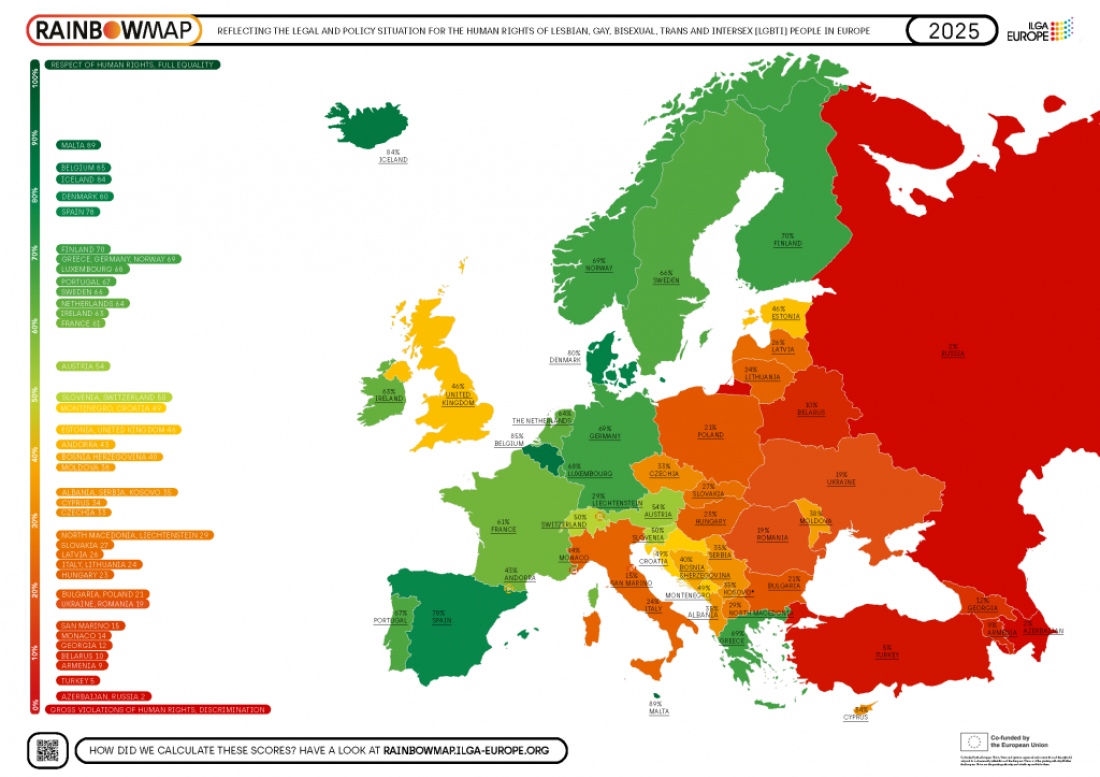
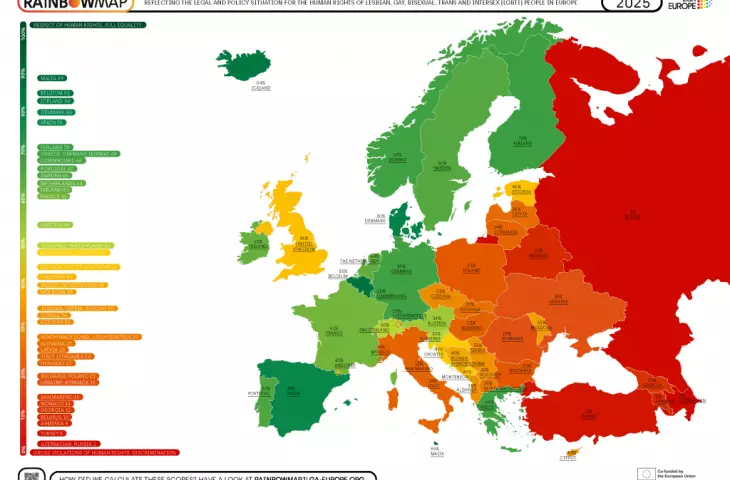
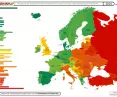
ILGA-Europe "s Rainbow Map 2025
ILGA
For me, this is a place where people in the community can feel comfortable and safe. It's a place where we can let off some of the tension we carry around with us every day. A place where we can hold a partner or partner's hand and not be afraid to do so. A place where we can be ourselves - use our pronouns, our name - without worrying about the consequences and how it will be received. And finally: it's a place where we know that if something bad happens, we have the knowledge of who to turn to so that this person will react - and we have the confidence to react. That is, it's a space where rules function and are enforced.
KK: And how do you - as a cultural institution - define the safety of your users and users, but also creative people: artists, artists, designers who co-create exhibitions and objects? Often these are people who are simultaneously in the minority. How do you understand security in a cultural institution in just such a context?
Dominika Janicka (Institute of Design in Kielce, Fair Building Studio): I will answer from the perspective of our institution. For our team, security is also about attracting as many local users as possible - that people want to come here. In Poland we are fairly recognizable, but locally even the name itself can be a challenge: "Institute" is associated with a university, "design" has only become more tame over time. We also have an unusual typology - we are neither a museum nor a theater - so for some people it is not immediately understandable. And this makes some of the audience not feel "by definition" comfortable here. That's why we also understand security as comfort: the comfort of being in the institution and the comfort of receiving our activities.
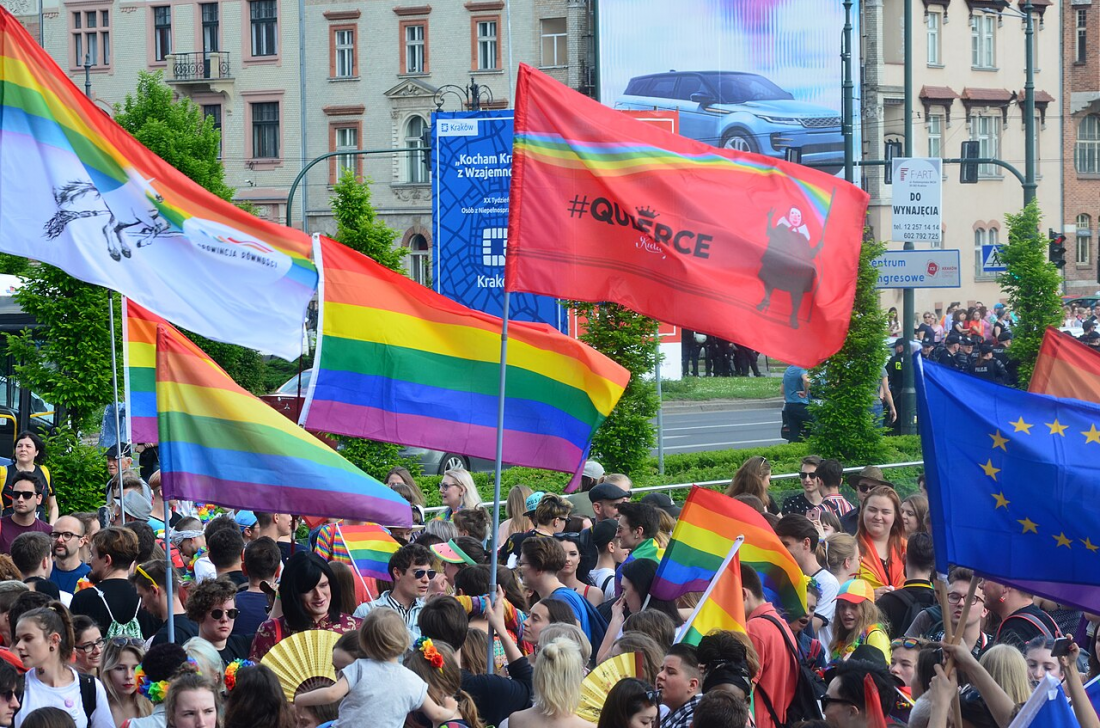
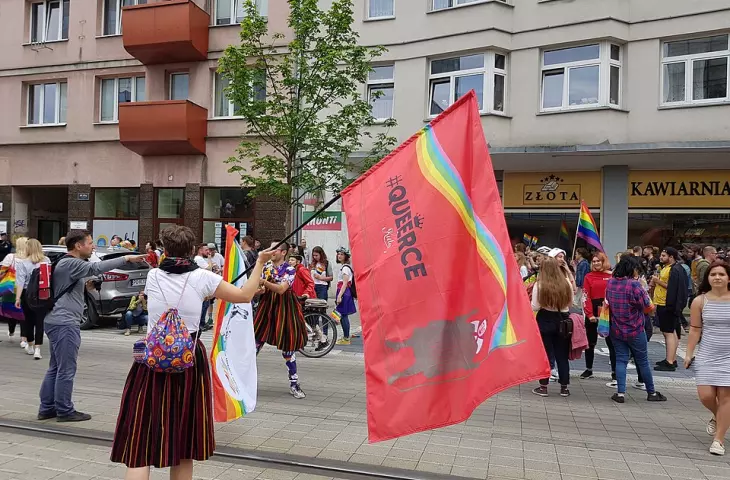
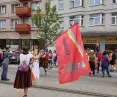
"Queerce" flag promoting the Kielce Equality March in Krakow.
Silar (Wikimedia Commons, CC BY-SA 4.0)
The language we use to communicate is very important. We try to keep an eye on forms and attentiveness, but also to talk about what we are doing as accessibly and simply as possible. The idea is not to build a distance or a barrier - so that someone feels safe also in the sense that they understand what we are talking about, and that they are not afraid to ask. So that we are an open institution. I can see that this works, because we get a lot of questions about the program, we support various initiatives. These are small but real gestures of openness and building a sense of security.
KK: From both of your statements, there is something that also appears in Lucjan Rostkowski's research: that safe space is often not so much a "place" as a process and a relationship between users, organizers, people in charge. What - in your opinion - determines the sustainability of such a space?
Why is the symbol not enough
MS: It depends, but I am speaking from the perspective of LGBTQ+ people. If we expand the definition of safe space to include other groups, we enter an area in which I don't feel I'm an expert. On the other hand, when it comes to safety for LGBTQ+ people, I think consistency and constancy is the deciding factor: that these are not one-time actions, but long-term action. And also resistance to political change. So that it's not the case that now we have such a local government and it's ok, and in a while we'll have another one and suddenly we withdraw because we're afraid of the consequences - for example, that we'll lose the ability to get grants or cooperation. In 2019-2021, we saw a big spurt of alliances, because there was a lot of bad stuff going on in politics at the time, and the LGBT+ topic was very present. This triggered allied people: there were signals of "we are friendly, we are allied, come join us." From my observations, there is less of that today. And the question: why? If I had to point out the most important factor that affects whether a space is safe, it would be consistency.
KK: And what does it look like in an institution where the organizer is the changing local government?
DJ: This is a long topic. We are publicly funded - our unit operates thanks to a grant from the City of Kielce's budget, and many things in practice are decided by the City Council. And during various political changes we have felt that activities that we feel are good and should be the standard of cultural institutions can be intercepted as a tool for building political capital. We see that politics today is largely based on pissing on minorities. In our country there was a period of pissing on refugees, on LGBTQ people, then on other groups. And we were never sure which event would be "taken" out of context and used in the political struggle - ridiculed, turned into fuel for scoring points.
Therefore, it is very important how the institution communicates its activities. Sometimes - when I was director - I wanted to communicate something more boldly, directly, but at the same time I am aware that we need to weigh words. If we want to do things, we need to move diplomatically in the political environment, because this can have real consequences for the institution. We had a situation where there was a press conference at the City Council about the abolition of the institute - after one of the actions supporting marginalized people. You have to be able to act effectively and navigate at the same time. It can be exhausting, but if you want to act consistently and in the long term, you have to take this into account.
KK: There aren't many institutions in Kielce that have consistently increased the visibility of queer and LGBTQ+ threads on the agenda. How do you build such visibility in an institution and at the same time not alienate people for whom this is not something hostile, but alien - so that they don't feel excluded from a space that as an institution is "for everyone"?
DJ: This is where I see the great potential of cultural institutions. We can create a safe haven and a safe space where different communities come together. Very often, resentment or hatred stems from the fact that someone doesn't know any LGBTQ+ person "in real life," has never spoken to an LGBTQ+ person, or a refugee person, for example - and then it's easy to accept simplifications. We try to do such events - whether exhibitions or design workshops - with a heavy dose of substance, explanation and context: why this is important and why taking care of the needs of LGBTQ+ people works to benefit society as a whole. When the most vulnerable feel safer, everyone functions better in a sense. A cultural institution can open people up in a safe, somewhat "monitored" space. And in my opinion, this is how cultural institutions in cities should operate.
visibility versus security
KK: I want to get hooked on the issue of visibility. Does it always work to your advantage? Does it always serve security, or can it sometimes be a threat? After all, there are places whose location is "hidden" as a rule. Where are the limits of visibility and the need to be present in public space, and where does the risk begin?
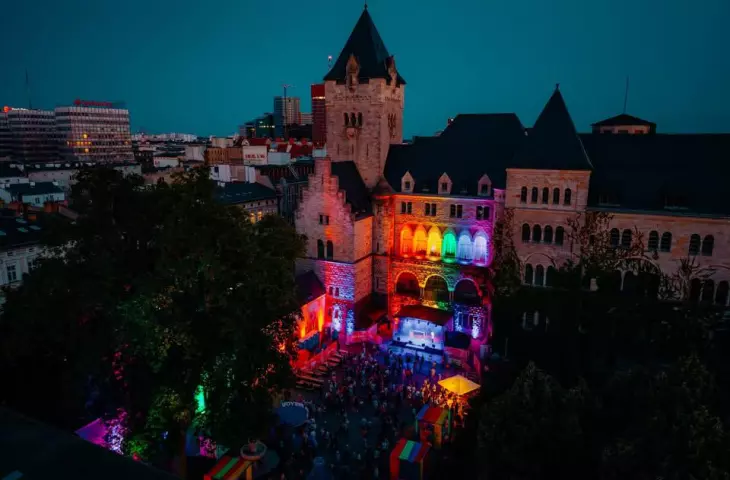
MS: In my opinion, safety takes precedence over visibility. Visibility is great, but you have to measure your strength against your strength. If we know that we can't enforce safety in a given space, then there is a legitimate question of how much of that space should be visible. On the other hand, visibility is important. Poznań is a city where this visibility is high. The Lokum Stonewall, which we run, is located in the Imperial Castle, right in the center of the city - by design, it is highly visible. Knock on wood, so far we haven't had big problems because of it. On the other hand, if the reality of Poznan were different, it would probably have to be organized in a different way.
There are countries where the LGBTQ+ community is very lively, but hidden: you need to know who to address, where to meet. This is due to socio-political realities. Poland gives a little more space for courage. I'm not valuing this, and I'm not saying that if someone is not ready for full visibility, they are "cowardly." Absolutely not. But I think there is space to experiment with visibility and go out into the city with your head held high.
KK: In Poland, a "rainbow neighborhood" has not developed - we don't have a neighborhood explicitly associated with queerness, like the Marais in Paris or similar places in other metropolises. On the other hand, Vienna doesn't have such a district either. Is dispersion ok, or is concentration an overexposure - a kind of "safety valve" that you can do more here and not necessarily elsewhere?
MS: It depends on many factors. And it's worth locating the Polish situation on a timeline. In Poznan ten years ago, in 2015, Wypas restaurant flew a rainbow flag to celebrate Pride as the first restaurant in the city. That was just ten years ago. And today the city of Poznań is the official co-organizer of Pride. I would give us some more time - maybe we will live to see such a district. Is this a better model than scattered LGBTQ+ venues? I don't know. I think it's shaping up naturally. For a year or a year and a half we were very close to creating something that could be called a "neighborhood" in Poznan: the first, small Lokum Stonewall was on Półwiejska Street, a hundred meters away was the big Lokum, next to it there was a Stonewall bookstore. Suddenly this part of Półwiejska Street was more rainbow than anything else - but it was short-lived, for logistical and organizational reasons. I have a sense that Poland is at the start of this road to the formation of spaces very strongly associated as queer, such as Soho in London.
institution under pressure from local government
KK: In Kielce, the rainbow benches - from the civic budget, city benches - also became victims of hejt and aggression. In such a context: when symbols appear in public space at the initiative of citizens, are implemented by the city, and then destroyed - do you see the role of the institution in mediating? Especially since this is a public space in which you yourself operate.
DJ: I see a huge educational potential. I've already talked about the educational role and what inclusive design is all about. However, in the case of this situation with the benches, you also have to see how the media works today - largely social media and clickable headlines. These benches, which were regularly destroyed, also had the effect that the heckling in Kielce's social media against LGBTQ+ people was abundant, and it went unchecked. It wasn't strictly our action - we are a city institution, but the benches were a different investment - so we didn't do a dedicated event "about the benches." Instead, we had a number of other activities about inclusive design and inclusive space, so it was more of a general, programmatic activity.
At the same time, I often asked myself while organizing various events or projects and seeing what happens afterwards on the Internet. It's not so much that "the institution gets peeled off" - that's what we've become accustomed to - it's that realistically they get LGBTQ+ people who read it, and no one controls it. And I haven't seen the city hall take more responsibility and communicate it more calmly: that it's simply benches for male and female residents, for able-bodied and non able-bodied, LGBT and straight. That this is a normal thing. Something trivial was used by local politicians as a tool in a very unpleasant way. And this is what I find difficult: well-intentioned actions that can realistically work are taken out of context, multiplied and used. This is how politics works today.
architecture as a field of conflict
KK: I want to move now to the perspective of the architect and the tools of feminist urbanism. What architectural tools do we have at our disposal to shape such spaces? In Lucjan Rostkowski's research, there were themes of buffer zones, hidden entrances, gradations of privacy. How do you look at this?
DJ: I will answer more broadly - about safe spaces in general, because the beneficiaries and beneficiaries of such solutions are many. Most of our spaces, cities or buildings over the years have been created for one "default" user - usually a fit man. Hence, older buildings lack facilities for people in wheelchairs or with baby carriages. Problems such as curbs, lack of elevators or adapted ramps still linger. This "default user" feels safer in the city - he doesn't need good lighting or more intimate public spaces. He, by definition, feels comfortable anywhere. So such general, "hard" measures in cities can be done a lot.
For example, the topic of lighting: paradoxically, in Polish law, which is binding on designers, there are not many standards for lighting, entrances or spaces around buildings. There is very little of that. And here I will smoothly move on to the unfortunate topic of toilets. As the BAL of Women Architects, we advocate a move away from the gender division of toilets, because it is outdated and does not guarantee safety. And under Polish construction law - in public buildings - you can see a large disproportion: women are guaranteed fewer "places" in toilets. For the same number of users, there are more options on the men's side, less on the women's side, even though women use the restroom more often, and often with children. Abolishing this archaic division could equalize the situation. But for me, it's also important to be open-minded, empathetic and attentive - and for design not to follow one user model.
Queering the place, not designing from scratch
KK: In Lokum Stonewall - in any of the spaces - did you use architects and female architects? Who made the arrangements? What was the process like?
MS: I'm not depreciating the role of architecture - I'm laughing more at our creative process. There was no room for the kind of thought that would allow us to use the services of an architect or female architect. I will briefly describe the context. The Stonewall Group opened the Lokum Stonewall clubhouse in 2019. The assumption was that the profit from the place would fund our activities - to get away a bit from grants and competitions, which are once in and once out. Then came the pandemic, and it turned out that these revenues are not guaranteed either, but somehow we survived it. It wasn't that we had a lot of money at the start and decided to "open a club." We entered into cooperation with an entrepreneur, Jakub Wieleczynski, who owned several clubs in Poznan. We signed a management agreement: he was the owner and employer, responsible for the stocking and paperwork, and we managed the place. We received one-third of the profit, but did not share in any loss.
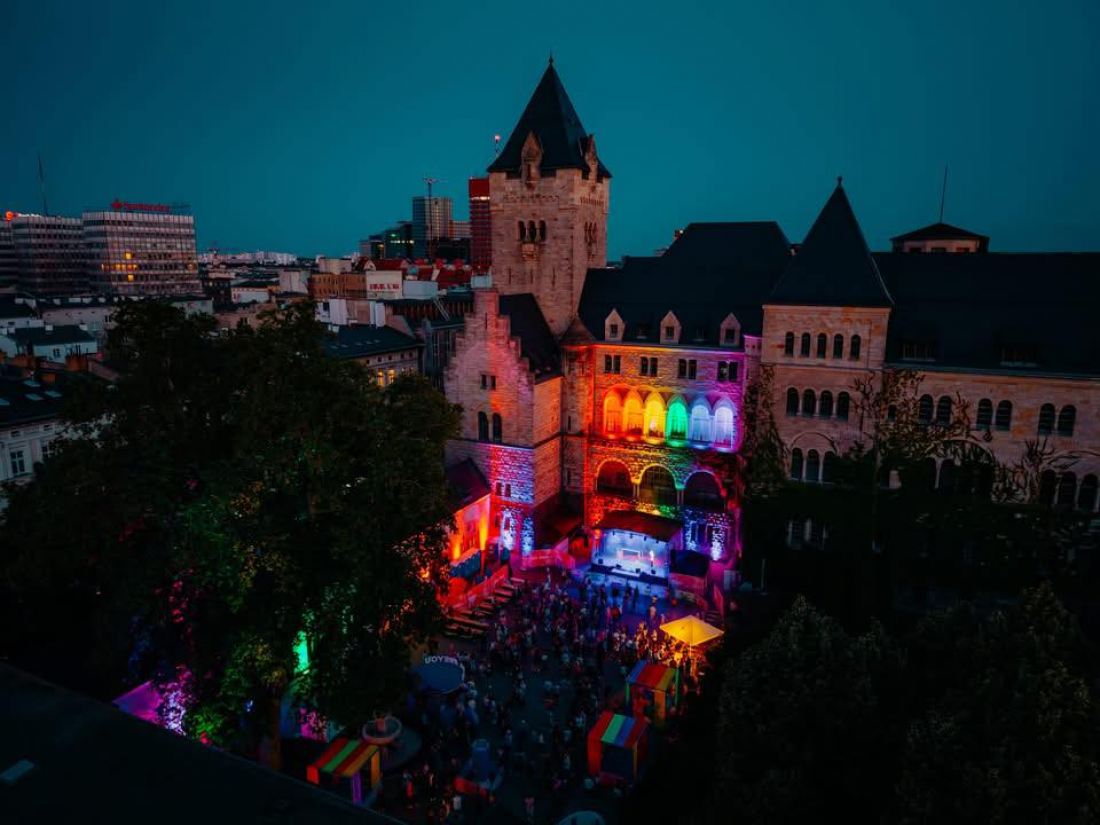
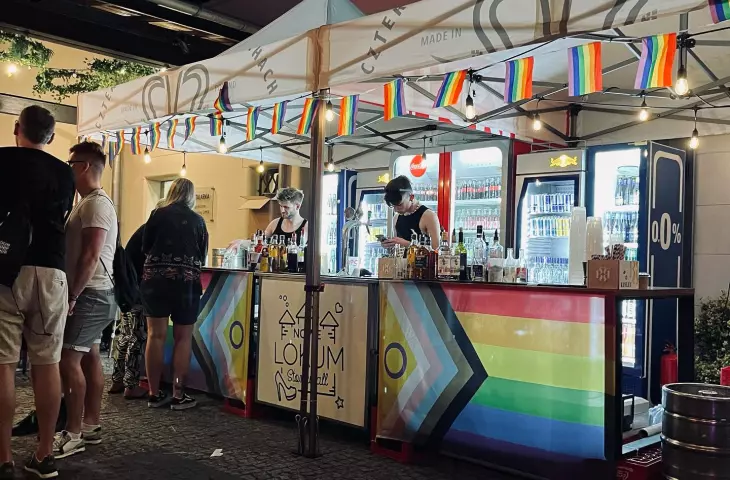
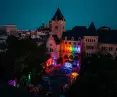
Stonewall's locum in the Imperial Castle in Poznan.
Stonewall Group
It was a good deal for us, because the locum could move and we could make money. This cooperation was difficult from the beginning and ended tumultuously, but at some point we broke it off. We already had enough capital that we said: okay, this is the time to go from A to Z to our own business. The person who ran the club in the Imperial Castle in Poznan showed up and said that it didn't work out for him, but maybe we wanted to come in. We saw the space and it turned out to be perfectly tailored to our needs: one large room, a kitchen, a small space with a stage. Basically, we could walk in and not worry about anything serious except the details. We saw the spaced and opened our premises in the Imperial Castle.
That's why I was amused by the question about architecture: the reality of how associations operate is that we buy paint, paint what we can, hire people and say, "okay, let's go, we have a locale." The fact that it's in such a place came out somewhat by accident - it wasn't part of a strategy to "queer Poznań." But to some extent there are no coincidences: no one protested, and the castle became a bit of our home.
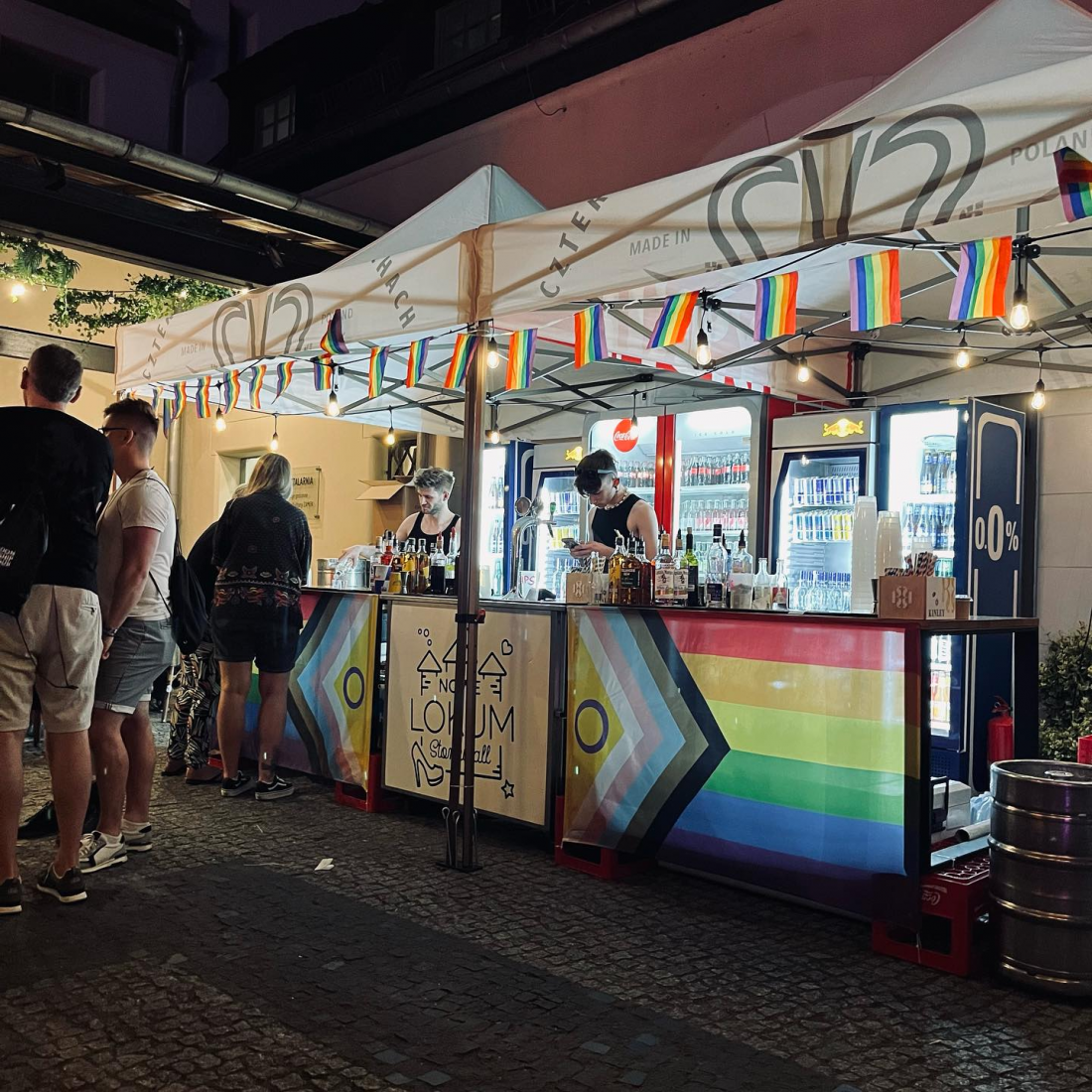
Lokum Stonewall
Stonewall Group
We hold prajda events there, we light up the castle in rainbow every year. And we didn't have that thought at all, that it had symbolic meaning. It wasn't until someone sent us a photo from a lecture at the University of Arts in Poznan: a comparison of a castle illuminated in rainbow and a castle from the Nazi era - because it was the castle where Adolf Hitler had his office. He was never there, but he had one. And this lecture was about how times change and how architecture changes with them. We had then: "wow." We did it without thinking about symbolism.
KK: Do you think architecture and design could be useful to you as a tool if you had the opportunity? I'm not asking about funding, I'm asking about usefulness.
MS: That's a difficult question. I wouldn't want to come off as a person who thinks it's a fad - absolutely not. It's just hard for me to answer, because "magic" is determined by something else. For example, the phrase "hidden entrances" was raised here. Just why? There can be a safe space with a hidden entrance, and there can be a safe space with a full-wall display window, where you can see everything inside and hang a big rainbow flag. Whether it's a safe space depends on a myriad of factors - not necessarily the type of entrance.
KK: I also ask about aesthetics: how can queerness manifest itself in a space? Do these spaces have to be patchwork, grassroots, "undesigned," and therein lies queerness? Is there room to consciously play with aesthetics?
MS: The queerness of a place is primarily determined by who runs it. And when it comes to aesthetic or functional elements, a rainbow flag hanging somewhere in the middle is an absolute must. It is simultaneously nothing and everything. In many places in Poland it's still a subversive gesture - sometimes even dangerous. That says a lot about Poznań. A member of our board, Pawel, has an apartment more or less in the center of Poznań and has always flown a rainbow flag on such a decent stick - very visible. One day he received a letter from the tenement administration. He opened it, expecting something "coarse," and it was a request to replace the flag with a new one, because the one is already unsightly. For me, it is also important not to adhere to the binary division of "gentlemen/ ladies" - for example, in the approach to toilets. We also have various small gestures: someone once wrote something on the glass, like "gays welcome," and I saw some men stop, read it and had: "what's going on here?". The strength of our current venue is also in the fact that it is in a space where people don't expect it: the Imperial Castle. This can be marked in various ways. For example, we have painted rainbow arches - you won't go wrong with that. In the summer, I see people who turn back when they see a rainbow flag, because they don't want to enter. I also see people who enter - very different. There was a restaurant in this place years ago, I think it was quite prestigious, and to this day 60+ people enter, sometimes they stay, sometimes they are disappointed because they came to "eat" and the card is more modest than they expected.
And there is another important factor: there is a favorable government in Poznan. I don't want to make a laurel to Jacek Jaskowiak here - especially in the context of his recent statement about Palestine - but you have to give him credit for being absolutely the most important mayor of a Polish city on LGBT+ issues. He's the first incumbent mayor to participate in the 2015 Equality March. He comes to Lokum, he shows up at election nights, he does pioneering things with a lot of freedom - things that other presidents would probably ponder for weeks. He just comes and dances the polonaise at Lokum, leading the parade and dancing with a transgender person. I sometimes look at it and have: "what's even going on here?". It creates a completely different atmosphere. I am aware that this has a huge impact. Running a friendly institution or place in a city where the right-wing - extreme or not extreme - is in charge is a completely different story. Much more difficult. It's more of a struggle for survival than a "spree" of visibility.
KK: And how can you - as an institution - communicate inclusivity not only programmatically, but also spatially: arrangement, graphics, atmosphere? You have held workshops on designing gender-neutral restroom signage, but these signs are not implemented. How do you make it not just declarative, but realistically present in the space?
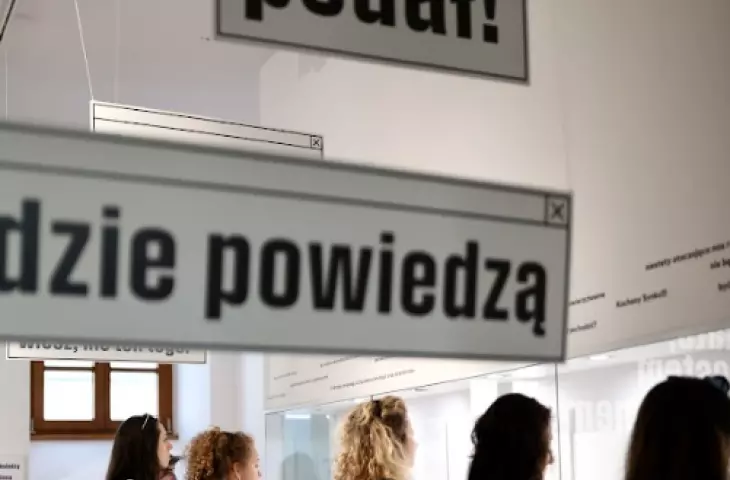
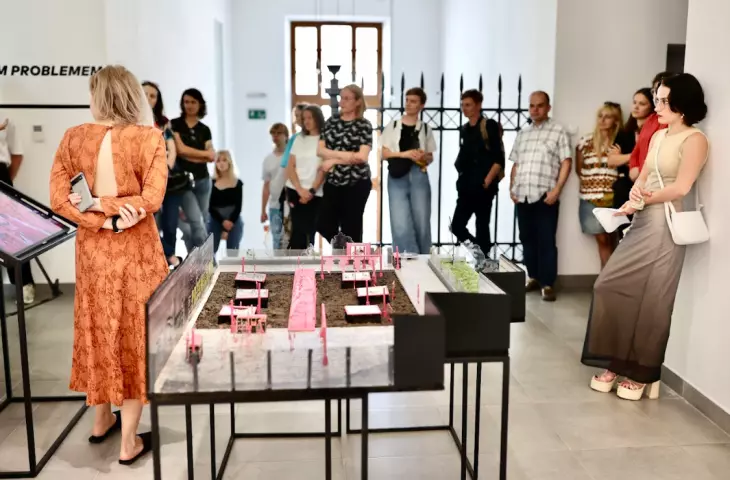
DJ: In the context of the LGBTQ+ community, it is not always possible to implement "hard" architectural measures in a simple way. Of course, there are general things: accessibility, driveways, design solutions - they are there or they are not. But here the atmosphere and program are very important. As for communicating through graphics: at the end of 2023 we had an exhibition by a very young graphic designer - it was his graduation. It was a campaign about how to do a coming out in front of parents: on the one hand dedicated to people who are experiencing it, on the other hand to parents, to sensitize both sides and facilitate the conversation. It was a project that had specific graphic solutions and was communicated in a specific way. The author, Maciej Gil, also included hejt prints in the exhibition arrangement. They work differently when printed - suddenly you can see the scale and weight. We had a great deal of feedback from viewers that this made a huge impression on them: that only then did they realize what these people have to live with.
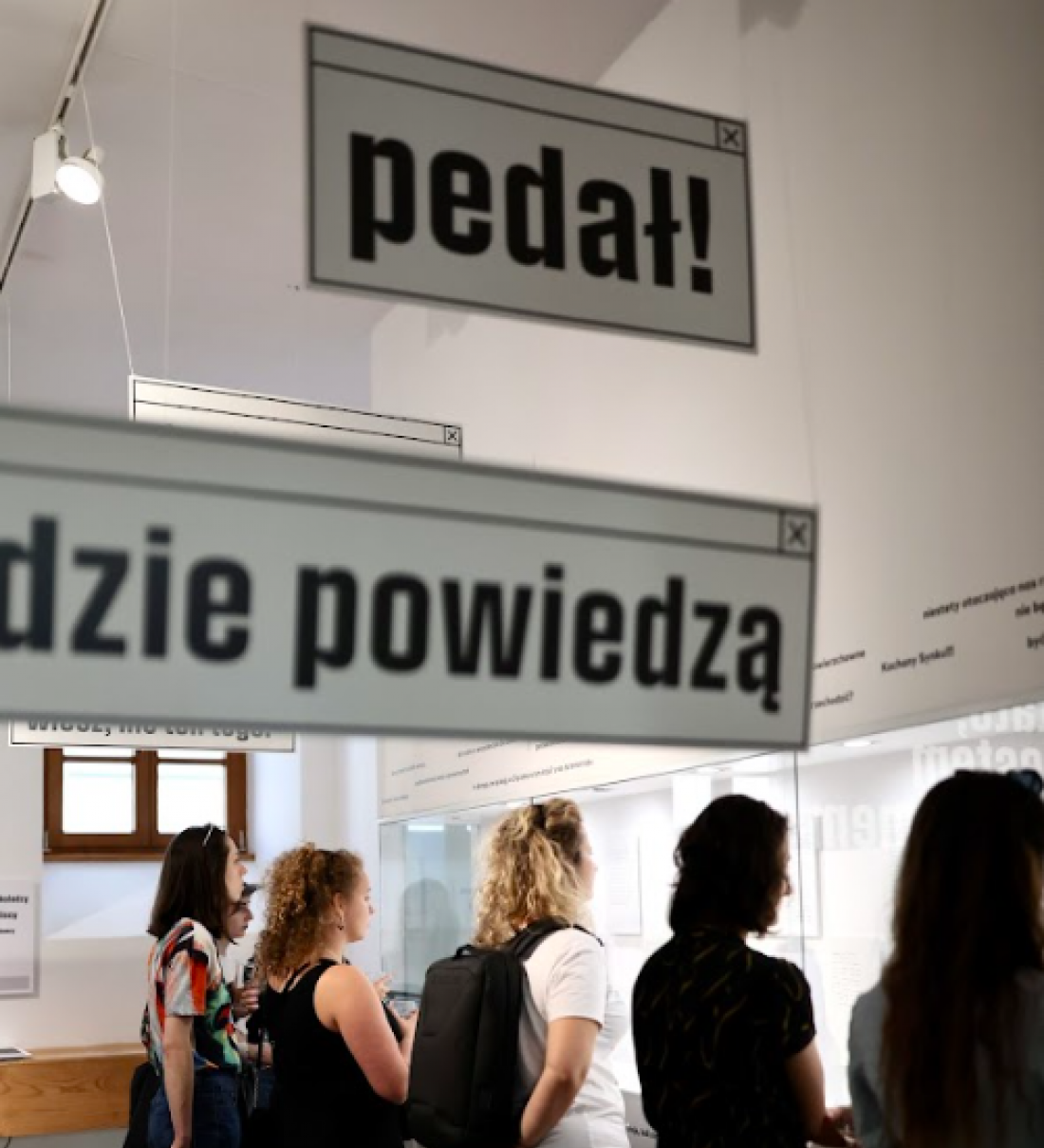
Mom, Dad, I'm a problem - an exhibition at the Institute of Design
Paula Dulnik
We also had an exhibition by Lucjan Rostkowski-Covington - dedicated to the Reverberation Club. In June, during Pride Month, we fly a "virtual flag" - we have monitors at the entrance with the program and then one of the boards is rainbow-colored. But this is not just a gesture. We try to do support activities throughout the year, and especially around June. We have a series called "Design for a Good Cause," in which we use design activities to raise funds for aid. In June, we dedicated one of the actions to support the local foundation organizing the Equality March in Kielce - the Equality Province. And there are also "architectural" actions in the sense of making space available: the Equality March in Kielce often starts from Zamkowa Street, from the top. It also happens that we make our interiors available in the evening or at night, when platforms, balloons and similar things are prepared.
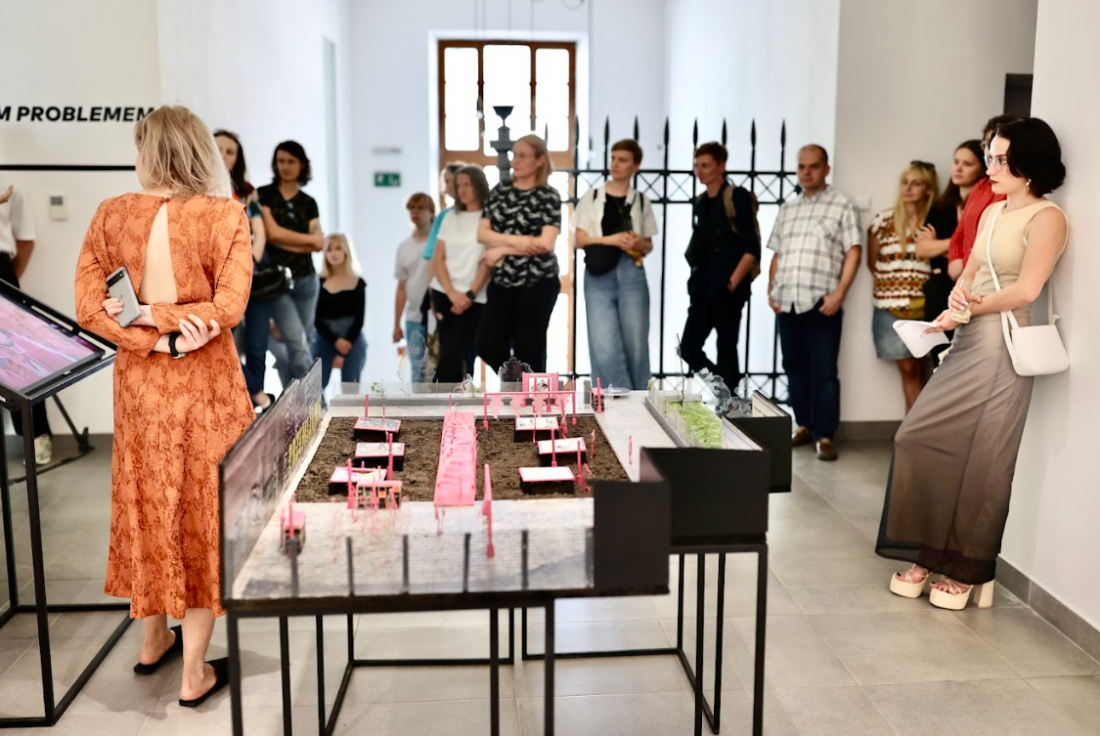
Commemorating Reverberation - an exhibition at the Institute of Design in Kielce
Paula Dulnik
And when it comes to marking toilets - that's ahead of us. This was an important lesson for me: I called it a "gender-neutral toilet pictogram design workshop." It's a term we should tame. But I remember that I weighed the words very heavily in the description, because I knew that parents with children were coming to us. And yet there was a huge attack - we faced the consequences for a long time. At the time, I wondered whether if it had been called something else - for example, "a toilet for all" - politicians would have paid attention at all. This is an ongoing dilemma: do we educate directly, using the right terms, or do we act "undercover." With every event, this has to be balanced. For me, the most important thing is to build relationships and send a clear message: with us these topics are present, there are exhibitions, there are workshops, inclusive design is important and is a priority.
KK: In a sense, just as Stonewall "queers" the Imperial Castle, you - through the program - are also filling a place with a difficult history.
DJ: This is an interesting thread, because our building has a very clear layering of history. We are part of a larger establishment on Castle Hill. There are two institutions under this name. The Institute of Design is one part of the building, and the other is the Center for Patriotic and Civic Thought, which nurtures the memory of the history of the place. For a very long time it was a prison building - especially during World War II and during the Stalinist era, when political prisoners and inmates, people fighting for freedom, were incarcerated here. For years the place was empty, neglected and was rightly badly associated as a space of suffering and violence. Especially at the beginning of our institution, more than sixteen years ago, many people had a strong opposition to the place. Our part is to give the place a more positive outlook for today and the future. It's my subjective opinion, but I see it as a kind of bracket: people who died here fought for a better Poland, and today we are doing activities for openness and equality. And interestingly, no one has ever rebelled against our actions with the argument that this is a "place of execution" and it is not appropriate. For me, it's also about showing architecture as layering and changing functions.
When space is no longer safe
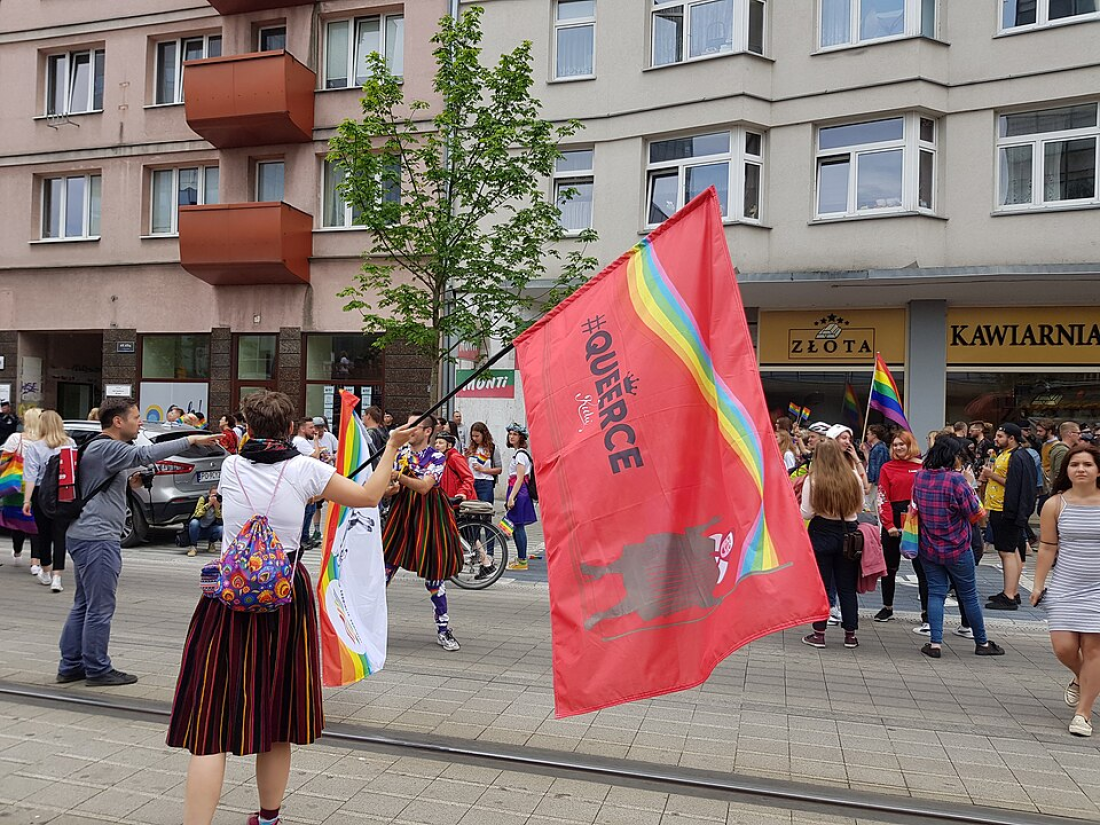
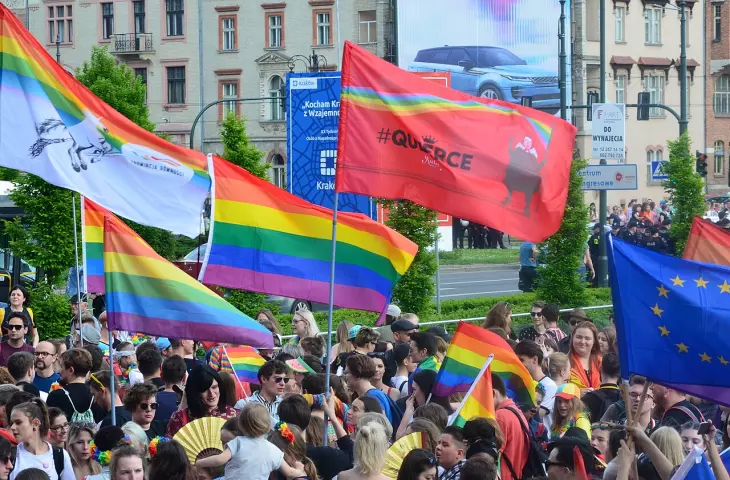
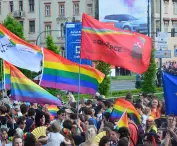
The "Queerce" flag promoting the Kielce Equality March in Poznan.
Ladsgroup (Wikimedia Commons, CC BY-SA 4.0)
KK: Can safe space become endangered when people from outside the community start using it? This is sometimes a discussion about these spaces "becoming safe for everyone" - straight people come in, then with partners - and the space ceases to be attractive to those for whom it was created.
MS: There's an anecdotal pattern: a queer club attracts straight women because they feel safe there, they can take a break from the patriarchy and from violence or harassment. Then straight men show up and the place loses its character. But in my opinion this is a simplification. A place ceases to be queer the moment the people who run it make that decision - consciously or not. This is a matter of decision. If we allow the program to become less queer, less dedicated to queer people; if there is less drag; if we start to tailor the offer to a new target group because it "brings in money." - that's when it becomes a problem. For me, the barometer is the people doing drag - not only drag queens, but also drag kings and other people performing drag. If they start to feel bad, it means something is up. Because if there's too much intensity of people from outside the community and there are no real mechanisms to react - for example, someone grabs you by the wig, and you're not sure if the staff will react - then the foundation of safety breaks. Different people come to Lokum. We sometimes even have people wearing Lech Poznan scarves who stop by for a beer. But as long as the backbone works: this is a queer place, there are rules and if you don't follow them, you get fired - then it's a queer place. And as long as there isn't this top-down decision that we start turning a blind eye because "it's money," then it's safe.
KK: Finally: do you see anything that - either as an association or as an institution - you "envy" about each other? What could an institution take from a grassroots model, and what could a grassroots model take from an institution?
DJ: I think there are many things we can learn from each other, and that both models should exist in parallel and complement each other. We have a certain stability of funding - it's every year, it gives sustainability. But because of this, we can't do certain things revolutionarily, only incrementally. There are times when things are slower, there is less spontaneity, because we have an institutional and bureaucratic framework. In an institution, you have to remember that this is not "my private decision" - these are public funds, we operate in a certain system of evaluation and settlement, and this also means reactions from the city government or city council. Any action must be implemented in a way that does not threaten the existence of the institution. We had a situation with an attempt to liquidate the Institute - formally such tools exist. And then you think about the whole team: that the institution gives financial security to a group of people, that you are responsible for the permanence of the place. This is a constant balancing of the security of the mission with the security of the institution's continuance.
Security as a decision, not aesthetics
KK: I think this is a good place to close this conversation. Safe space is neither an aesthetic, nor a declaration, nor a one-time gesture. It is a way of managing the space and being responsible for what happens in it - at the level of relationships, rules and reactions. Architecture can help or hinder this, but it never works alone. And I think that's why the conversation about safe spaces today needs to take place at the center of the urban debate, not at its margins.