











In recent years, the circular economy has rightly become an approach increasingly implemented in the architecture of Western countries that are in a state of relative stability. Rich societies are indulging in circular experiments to repair the environmental damage done by decades of unrestrained development. But it turns out that the idea of circularity can, and often must, play a special role in the reconstruction of countries and regions in crisis, not necessarily economic. Przemek Ciępka discusses the realities of reconstruction in wartime, grassroots work and applications of circular architecture in Ukraine with Victoria Caubet and Lidia Shymon, activists from Neo-Eco Ukraine.

Victoria CAUBET - Specialist in the application of sustainable solutions in architecture. Project manager for the reconstruction of a school and the construction of a shelter in the Mykolaiv region.

Lidiia SHYMON - Project manager at Neo-Eco Ukraine. Responsible for communication and representing the company at exhibitions and meetings in Ukraine.
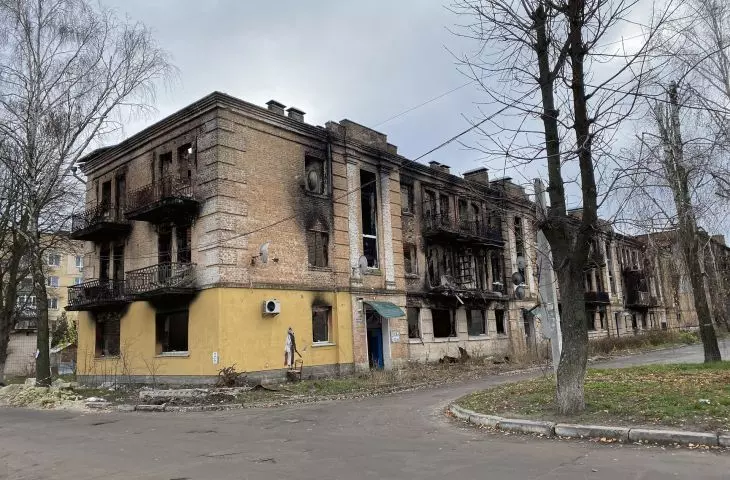
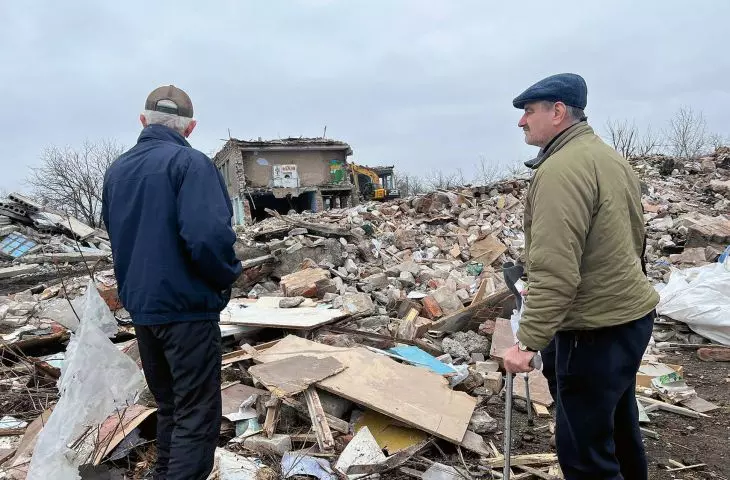
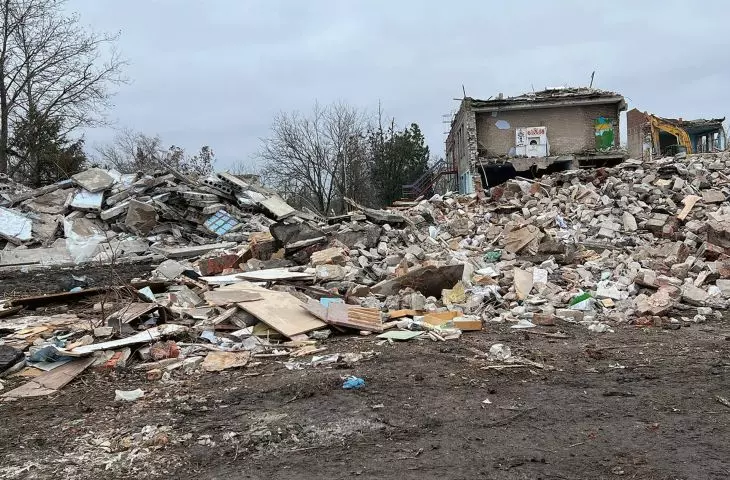
Przemek Ciępka: On February 24, 2022, Russia launched a full-scale invasion of Ukraine. Since the war broke out, countless people have lost their health and lives, thousands of families have been shattered. Ukrainian villages and towns have also suffered an uneasy fate - many of them have been turned to rubble. How large is the scale of destruction at this point?
Lidiia Shymon: As of December 2024, the direct losses Ukraine has suffered from the war launched by Russia have reached the equivalent of $176 billion, $24 billion more than in February 2024. The increase is due to continued attacks, which mainly target residential buildings, transportation and energy infrastructure, as well as educational and commercial facilities. In terms of housing stock, hostile actions contributed to the destruction or damage of 13 percent of residential buildings, which were used by more than 2.5 million households. Damage to the energy sector increased by 70 percent compared to previous years. Power plants suffered the most, but also transmission and heating infrastructure. The total cost of Ukraine's reconstruction is now estimated at $524 billion - almost three times Ukraine's GDP for 2024. The Ukrainian government has secured $7.37 billion for priority measures, but is still nearly $10 billion short of funding them all.
The invasion has also contributed to a number of natural disasters. More than 3 million hectares of forest have been affected by the hostilities, one million of which are protected natural areas. Russian troops cut down trees, dug trenches and mined natural areas, contributing to a decline in biodiversity and increased carbon emissions from fires in forested areas. Since the outbreak of the war, Ukraine's greenhouse gas emissions are estimated at 230 million tons of carbon dioxide, generating environmental costs calculated at 40 million euros.
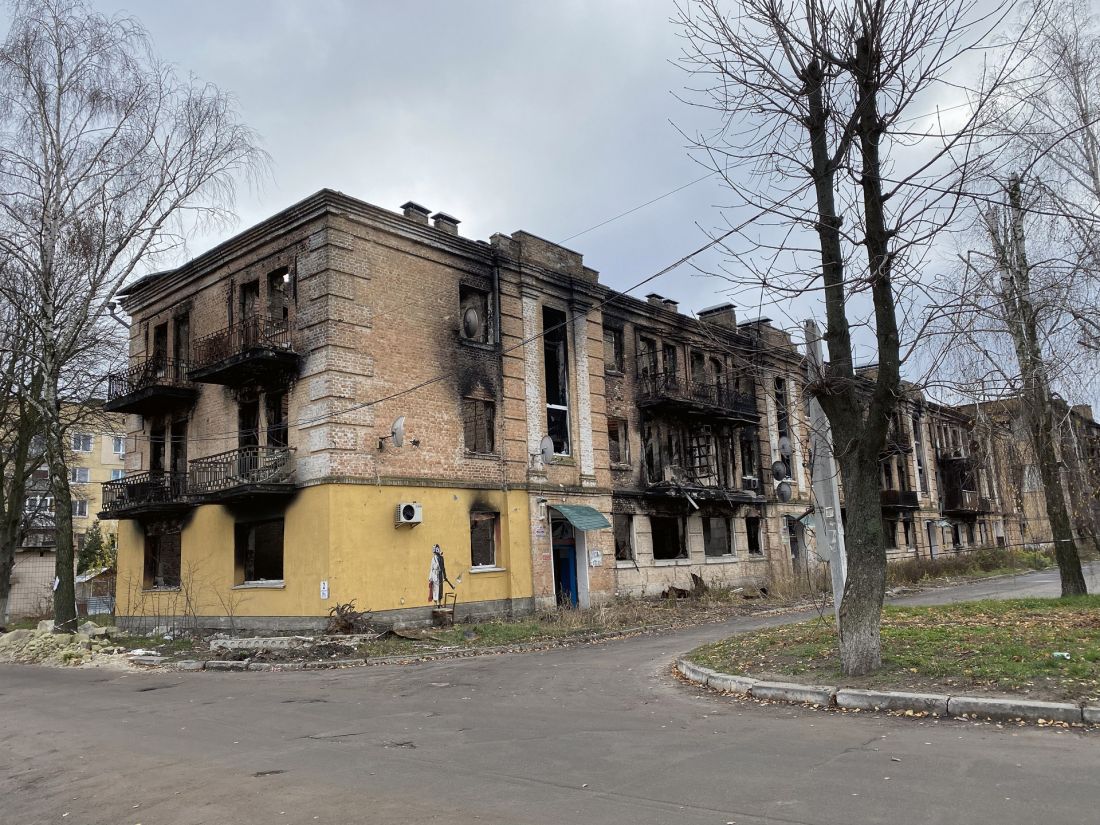
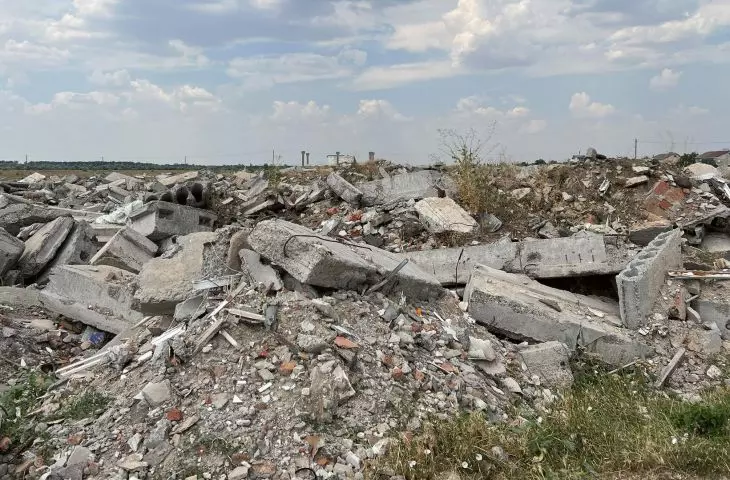
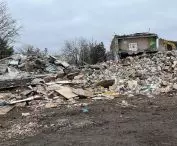
Damage to Hostomel caused between January and March 2022 as a result of the Russian invasion of Ukraine
Photo: © Dmitro Verovkin
Przemek Ciępka: Reconstruction will be a serious challenge for Ukraine's future. Is Neo-Eco currently the only initiative that is rebuilding the country in the spirit of the circular economy, or is it part of a broader trend?
Lidiia Shymon: When we started, the circular economy was not very popular among architects and investors. Neo-Eco was actually one of the first companies to focus on the idea of circularity and sustainable reconstruction in Ukraine. However, the popularity of this approach is growing thanks to attempts to bring new buildings in Ukraine up to European Union standards. We are very pleased that we are not alone in these efforts.
Przemek Ciępka: So more and more buildings in Ukraine can be built within the circular economy. How is the rubble from buildings destroyed by warfare different from that which can be obtained from demolition carried out under normal conditions? Does it complicate your work?
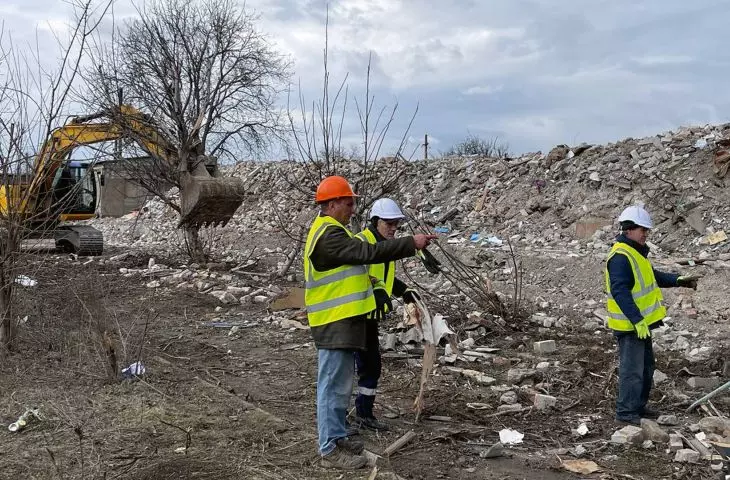
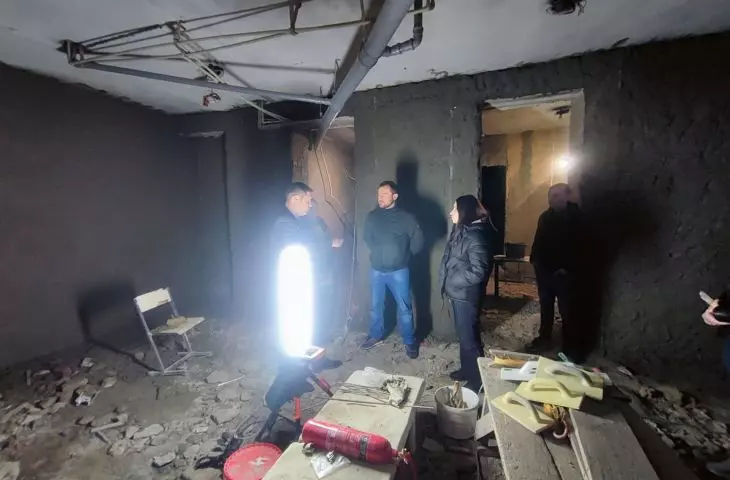
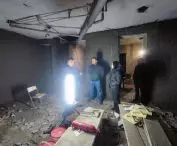
Lidiia Shymon: The challenge that arises at the very beginning of working with such material is just getting into the buildings to be demolished - the construction site must first be demined. In our projects carried out jointly with the Mica veterans, we often found that even after we received reports indicating the location of mines, the areas where we carried out demolitions were not completely safe. Such conditions require additional preparatory work and extreme caution, which generates a huge amount of additional work.
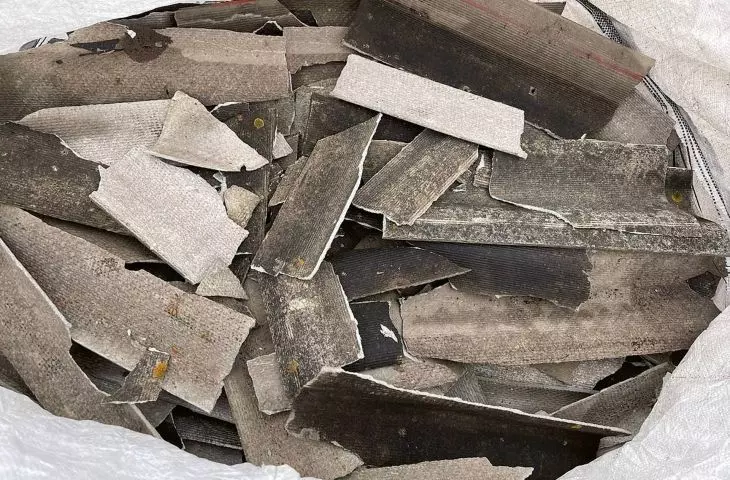
Under wartime conditions, sorting debris becomes another challenge. When a shell hits a building, all the materials from which it was created are mixed. Such a mixture contains a lot of unnecessary elements, such as plastic, asbestos or materials that have been burned. Our job is to remove this waste, an extra effort compared to sorting rubble from standard demolitions. Nevertheless, as our work demonstrates, achieving the required degree of cleanliness is not unfeasible.
Victoria Caubet: The fires that digest buildings destroyed during the war also play an important role - high temperatures affect the surfaces of building materials, sometimes even melting them, making the whole process even more difficult.
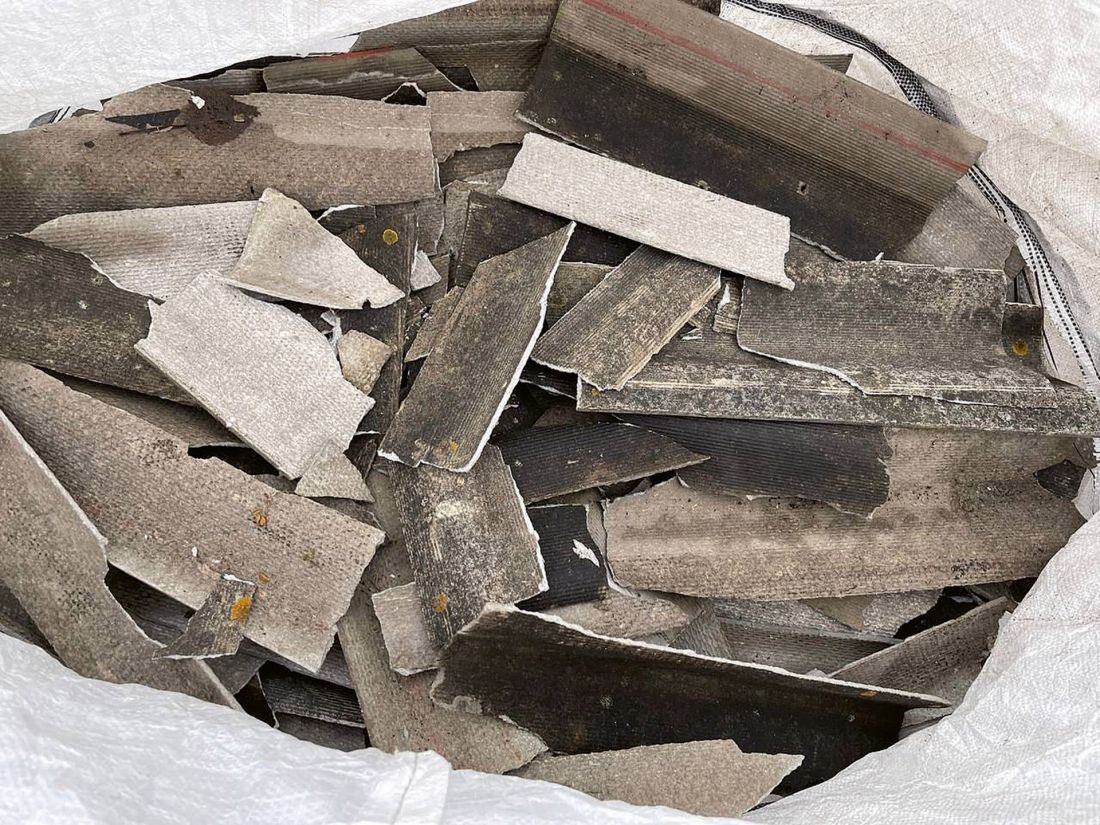
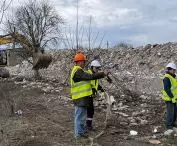
Sorting rubble from destroyed buildings at Hostomel
Photo: © Dmitro Verovkin
Przemek Ciępka: Do these materials have the same properties as ordinary, new concrete? Do buildings built using concrete made from war debris have similar durability, acoustic parameters and energy efficiency, but is there a price to pay for its reuse?
Victoria Caubet: It all depends on how well the rubble has been sorted, milled, screened and finally reprocessed. If all these steps are carried out correctly, the resulting material behaves similarly to ordinary concrete. Its energy efficiency is comparable, with the use of aggregate from ground concrete saving energy and reducing greenhouse gas emissions during production. In addition, concrete absorbs carbon dioxide all the time, which, along with the recycled aggregate, is "built" into the structure of the new material. The mechanical properties of such concrete depend on the mixture used - in construction we use about seven hundred recipes, and each of them has its own purpose. Above all, proper processing of the rubble is important; lack of care translates into a large number of "weaker" fractions, which reduce the quality of the concrete.
Lidiia Shymon: I believe that the quality of such material is not exactly the same as that of new construction. It is impossible to use it for building bridges or hundred-story skyscrapers. However, this does not mean that we should stop working with circular concrete. On the contrary, we need to use recycled concrete wherever we can. Even if we can't make a building's load-bearing structure out of it, it's still great for partitions or decorative elements.
Victoria Caubet: A lot also depends on the experience of the recycler. In Switzerland, Germany, France or Belgium, such companies have been perfecting recovery techniques for the last forty years and today are able to build skyscrapers or airports just using recycled concrete.
Lidiia Shymon: An important factor determining the possibility of using such building material is also the construction law.
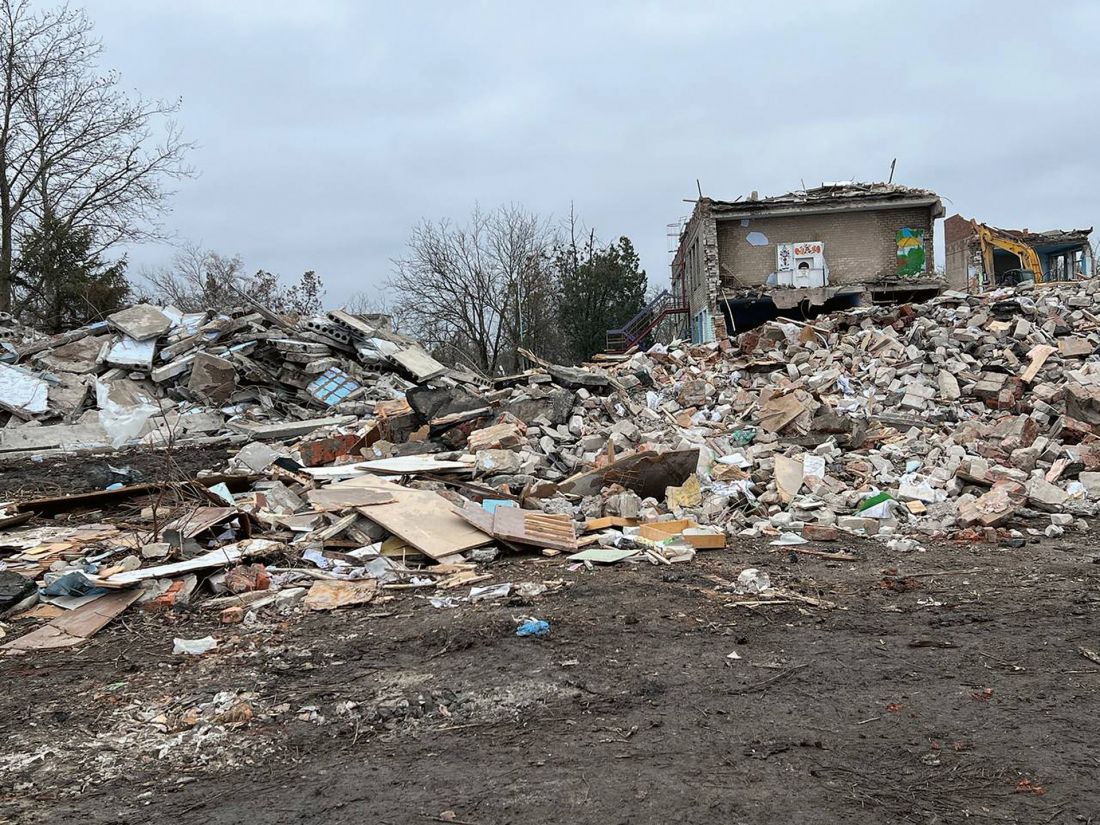
"Cleaning up rubble with veterans" project in Pervomaisk
Photo: © Dmitro Verovkin
Przemek Ciępka: How does it work on these issues in Ukraine?
Victoria Caubet: Working on various projects, I came to the conclusion that there is no law that explicitly prohibits the use of recycled concrete. This does not mean that there are no differences in this regard - we have to conduct tests on the construction site to prove that the material meets certain quality standards. Certification poses a problem, as building materials must be approved in order to get permission for use. This whole process sometimes falls into a legal gray area.
Lidiia Shymon: Our government could act faster on this issue. We have new regulations on shelters or asbestos use, but there is still a great deal of work to be done. Standardization is extremely important, but it can delay innovation.
Victoria Caubet: Time is a big issue in this case. We need to rebuild Ukraine as quickly as possible, and legislation has not kept up with technological advances.
Przemek Ciępka: And besides the obvious environmental benefits, is the circular approach also economically sound? If not, how can you make it more cost-effective?
Lidiia Shymon: Buying new building materials is almost always more cost-effective than recycling. Here it all comes down to legal considerations. In France, for example, all construction projects must be built using a certain amount of recycled materials. In Ukraine, we don't have such regulations, so nowadays the easier and cheaper way is usually chosen. But after the war, dumping all that rubble in a landfill or, worse, in the forests, will not be possible. Circular economy will become crucial, and making Ukrainian society aware of this is part of our mission.
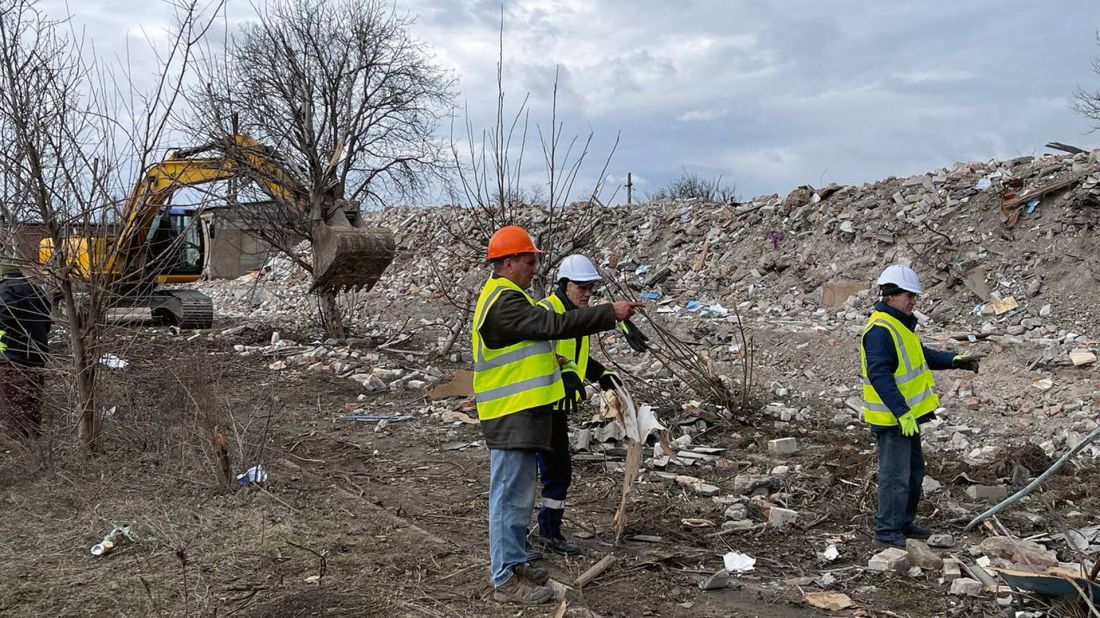
"Cleaning up debris with veterans" project in Pervomaisk
Photo: © Dmitro Verovkin
Przemek Ciępka: Neo-Eco started its activities in Ukraine with a project aimed at inventorying debris in Hostomel. What did you learn during this project?
Lidiia Shymon: This pilot project was crucial for us - it made us realize that we cannot stop our activities in Ukraine. Working in a specific area helped us understand the problems and needs of the local communities, and inspired us for future projects. Even though we didn't manage to implement all the plans at Hostomel, we still achieved great results - for eight weeks we demined buildings, recovered materials and made sure that war debris didn't end up in the woods. Now we are starting work on more initiatives.
Przemek Ciępka: What is the future of the materials you have produced? Will it be possible to use them again, for example, in a hundred years?
Victoria Caubet: That's actually the essence of circular materials, they can be used again and again. Recycled concrete is able to last at least a hundred years, if not longer. The most important thing is to build energy and carbon dioxide into the structure of the new building material. Cement, sand or slag still need to be added to the new mix, but recycled aggregate significantly reduces greenhouse gas emissions, absorbs carbon dioxide and provides adequate strength.
Przemek Ciępka: We have focused on concrete, but can other materials be recycled from buildings that were destroyed during the war effort?
Victoria Caubet: In principle, most of them are reusable. Everything depends, as in the case of concrete, on the experience and skills of the recycling company and the creativity of the architects behind the project using such materials. Reclaiming bricks or ground concrete is already standard, and we now have technologies that make it possible to reuse even whole sections of walls. Prefabricated materials, such as panels, boards, cladding or moldings, also lend themselves to this.
We usually recycle concrete, mixed construction waste, combustible and those from earthworks, wood, metal components, gypsum, cellular concrete, concrete and silicate blocks, and glass. One material that we are unable to recycle are those destined for incinerators: primarily mineral wool insulation, composite materials or plastic. Architects should avoid using these in new buildings; with any demolition, these materials will be destined for incineration. One more type of waste that is not recycled is inert waste.
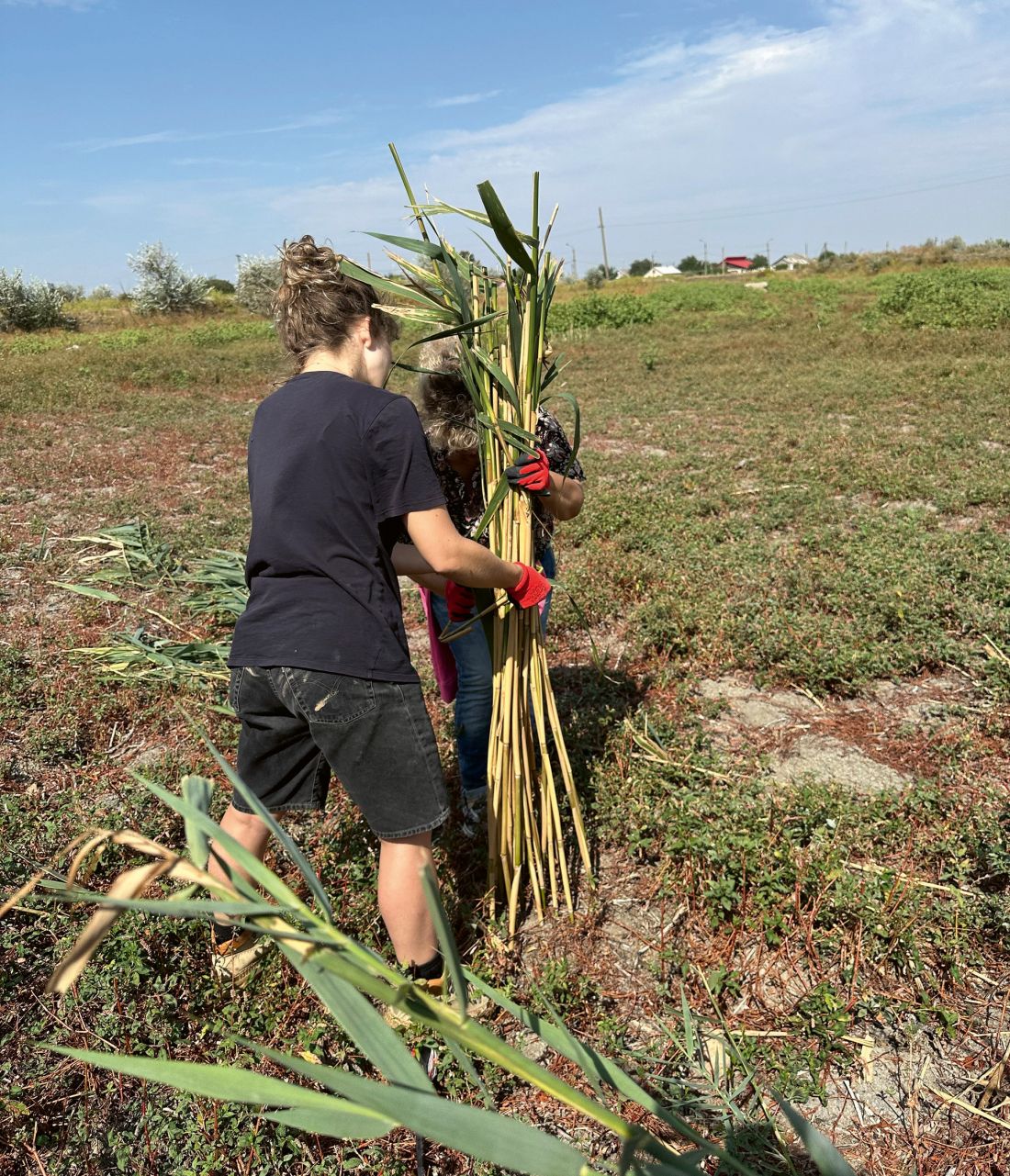
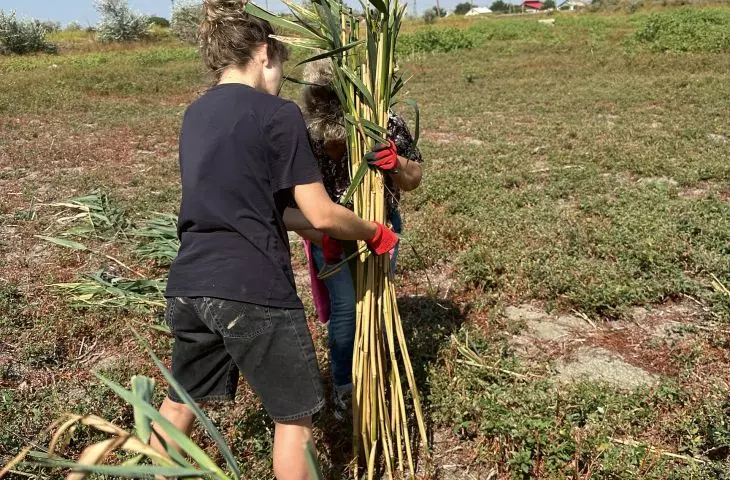
Sourcing reeds for the reconstruction project of the destroyed school in Zeleny Haj
Photo: © Antonina Zajka
Przemek Ciępka: Your most important project in Ukraine is the reconstruction of the destroyed school in Zeleny Haj. Can you tell a little more about this project?
Victoria Caubet: As part of the project in Zeleny Haj, located in Shevchenkovo hromada in the Mykolaiv region, we plan to reconstruct the school, build a dual-purpose shelter and a center for the local community. Before the war, the school was the only educational and cultural institution in the village. In 2022, it was destroyed as a result of two rocket attacks that took the lives of many residents, including Mayor Mykola Sturynskyi and school director Oleksandr Hnedka.
The opportunity to work with the village community is a great honor for us. These are tenacious people, deeply involved in the reconstruction of their settlement. In the design of the school, we decided to use modular construction, which will allow for quick construction, and give the possibility to expand the facility later. This solution will also minimize the negative impact on the environment and reduce the amount of waste generated during construction. We plan to use prefabricated elements cast from concrete produced using slag and aggregate from the rubble of the previous school building.

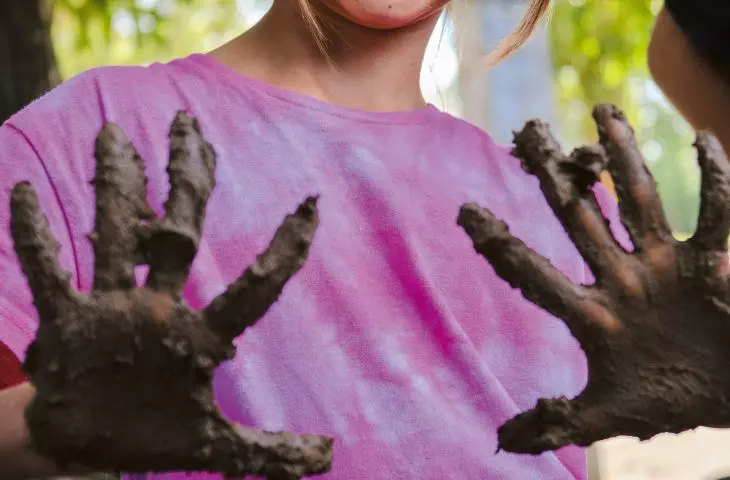
Exploring the decorative potential of the earth during a workshop in Zleny Haj
Photo: © Natasha Swan
Przemyslaw Ciępka: Does the community of Zleny Haj also participate in your project?
Victoria Caubet: Community involvement is very important to us. We have organized workshops for the children of the village, who have not had the opportunity to attend school for five years, first through the pandemic and later due to the Russian invasion. Education in war-affected areas is a major challenge, so we are arranging activities that help children readapt and integrate into society. We are planning to organize English lessons or trainings to help develop soft skills, and we are also thinking about how to involve children in the process of building a new school.
Przemyslaw Ciępka: Where do you get the money for all this?
Victoria Caubet: Funding for the project comes from the Lithuanian Development Cooperation and Humanitarian Aid Fund and the Taiwan Representative Office there. The Central Project Management Agency in Lithuania and the Ukraine Resilience Project in cooperation with our NGO, Neo-Eco Ukraine, are also helping.
Przemek Ciępka: When do you expect construction to begin?
Victoria Caubet: We plan to start work in June 2025. As with most such projects, we are prepared for delays, but we anticipate that construction will be completed by February 2026.
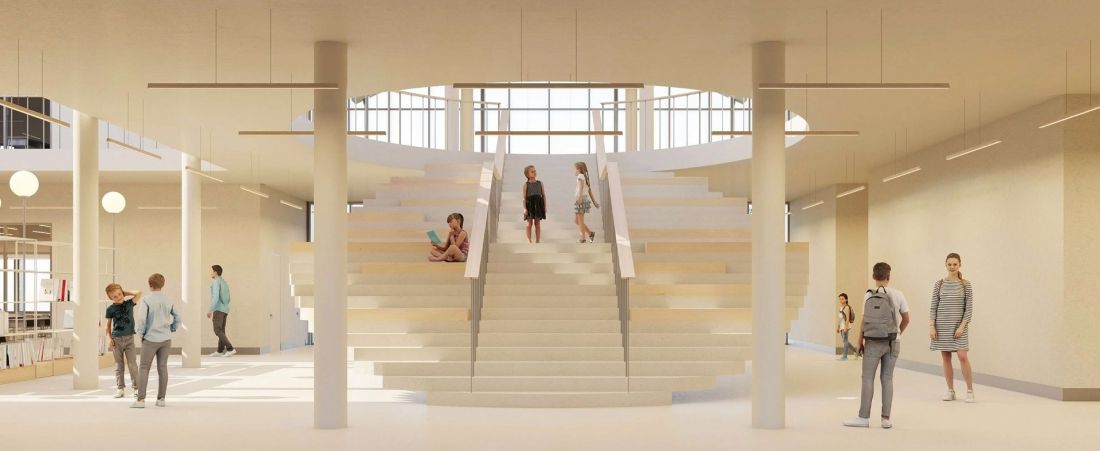
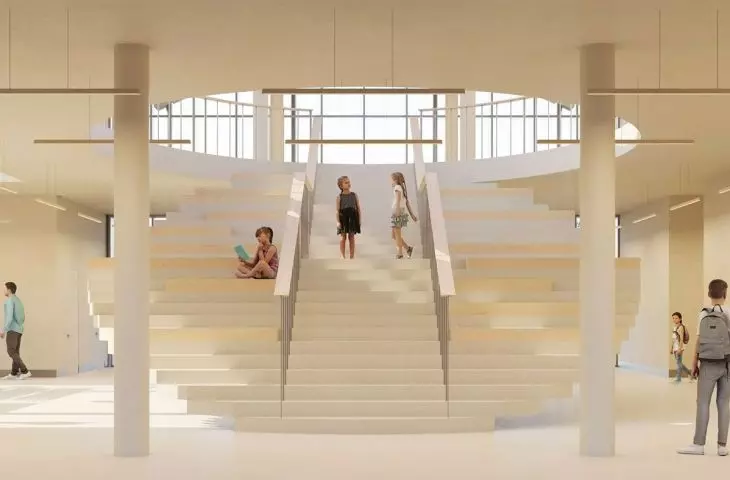
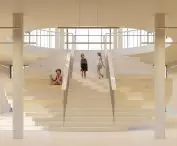
Reconstruction project for the destroyed school in Zeleny Haj, view of the staircase
vision: © Martin Duplantier Architects
Przemek Ciępka: The methodology you are using for the reconstruction of the school in Zleny Haj is quite detailed and firmly rooted in the local context when it comes to sourcing building materials. You primarily use raw materials that are available locally. Do you think it's possible to create standardized protocols to use the circular approach regardless of location?
Victoria Caubet: Of course, this is part of our practice at Neo-Eco. I started working on these kinds of protocols already in France, and later prepared similar documents in Belgium. For many bioregions, maps already exist that report on the availability of specific raw materials. The first step in creating such a map is to identify the oldest building in the area, so we are able to find out what materials are available nearby. The lessons that vernacular architecture gives us cannot be underestimated.
In Ukraine, however, I focused more strongly on the issues of circular architecture and demolition. Here we need protocols and infrastructure that will allow us to sort debris efficiently. This is a key issue. Currently, we have methods for crushing and recovering concrete at demolition sites, but the resulting aggregate is of much lower quality than that obtained at professional plants that have air screens, sieves and other technologies to get rid of asbestos, plastic and dust, elements that negatively affect the properties of concrete. One more important issue in post-war reconstruction is the question of rubble properties. It must be determined to whom this rubble belongs and how it can be returned to those who need it for reconstruction.
Lidiia Shymon: We encounter this problem very often. People sometimes hesitate when we propose to demolish a damaged building and then produce materials from the resulting waste. There is a concern that without material proof in the form of a previous building, they will not be able to prove that they own the building material produced from it. In most cases in our practice, the rubble becomes the property of the local community.
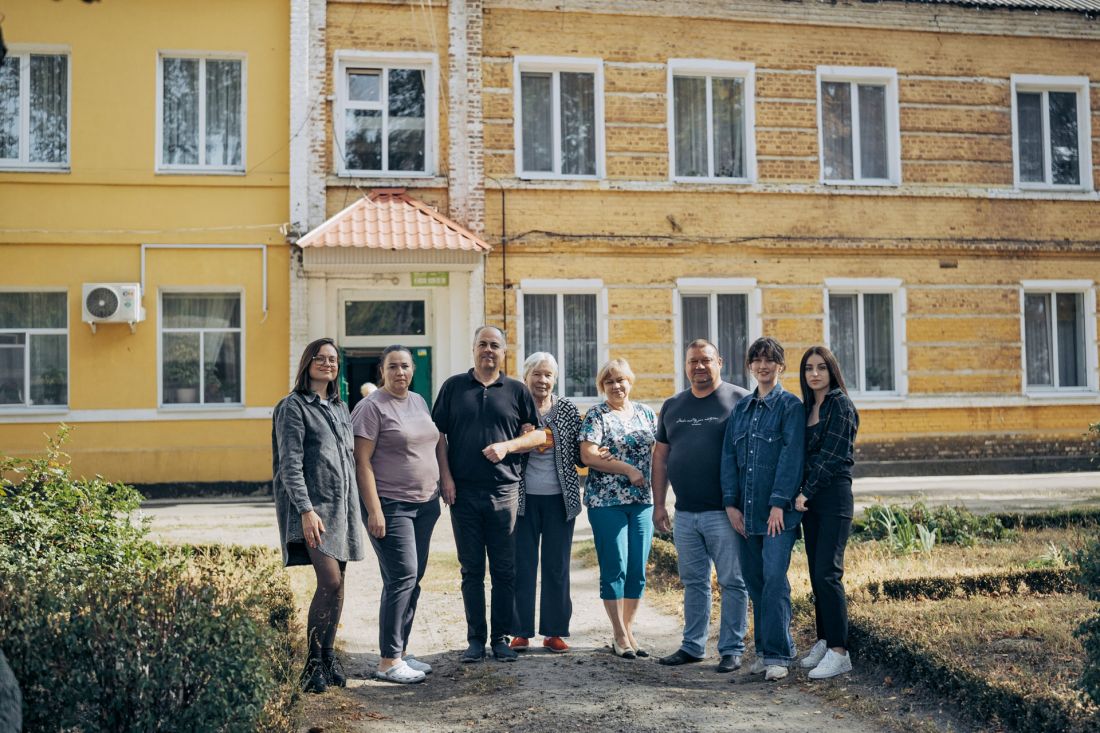
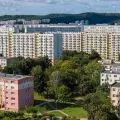
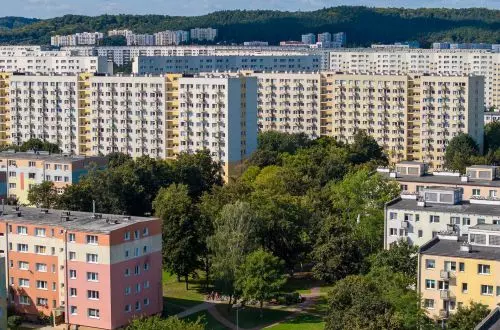
Thermal modernization of Soviet blocks of flats in Chernigov as part of the "Panelka Teplo" project
Przemek Ciępka: Are methods that are part of the idea of circular economy also applicable in the renovation of buildings?
Lidiia Shymon: As much as possible. We are currently working on a project funded by the European Commission, operating under the name Panelka Teplo. Plenty of Soviet-era buildings were built using a minimal amount of insulating materials, which makes them well suited for renovation in the spirit of circular architecture. We're retrofitting these buildings with biopanels with integrated windows, improving their energy efficiency and aesthetics. This is our pilot project, and we hope to share our experience with Ukrainians and Ukrainian women once we complete it. I think this will happen at the end of this year.
The first principle of circular architecture is to avoid erecting new buildings whenever possible. The second is to renovate existing buildings, which we are doing in the case of the Panelka Teplo project, and the third is to use recycled materials if we already have to build. Lower in the hierarchy are downcycling, incineration and - as a last resort - landfilling.
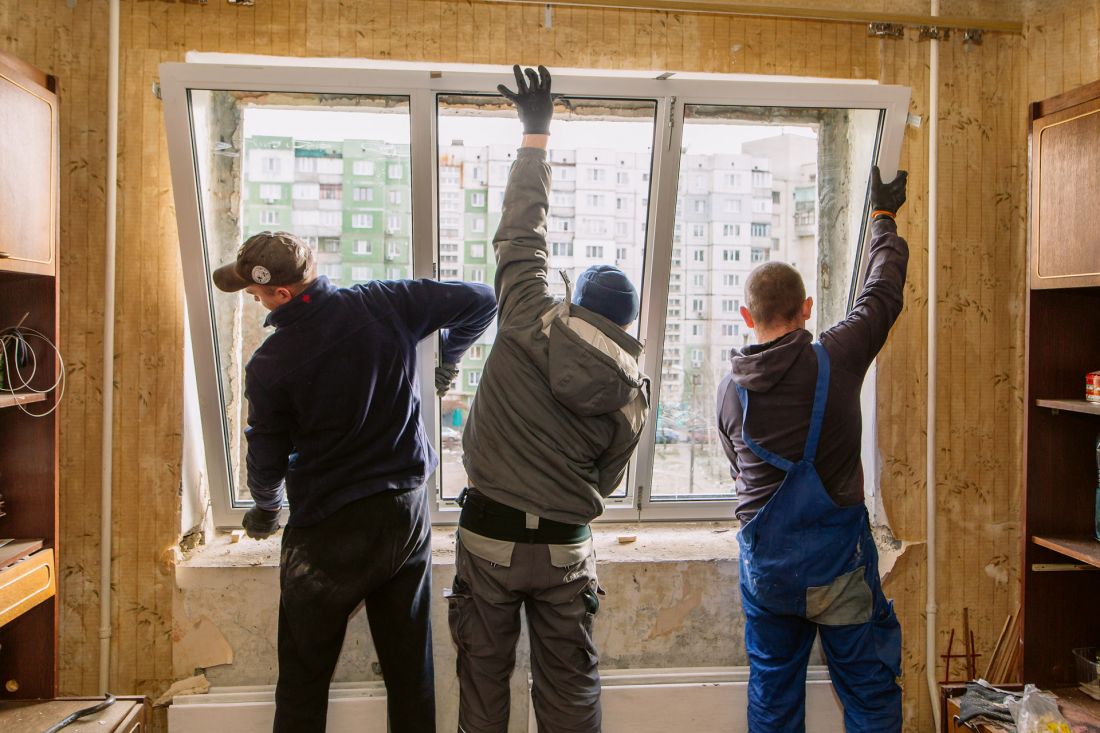
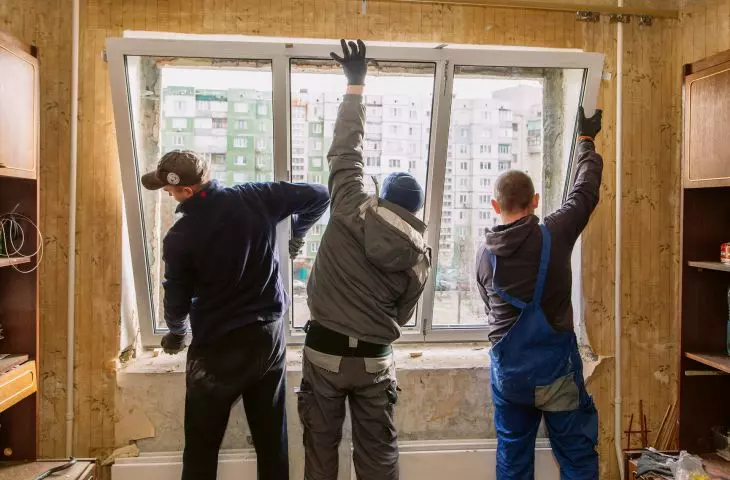
Installation of low-emission windows in Sumy
Photo: © Katerina Linnik & Anton Moskovchenko
Przemek Ciępka: Your initiatives go far beyond the production of building materials from recycled materials. Can you talk a little more about the social dimension of Neo-Eco's activities in Ukraine?
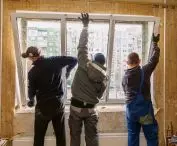
Lidiia Shymon: Working with local communities, we often receive requests for help that go beyond literal environmental protection. We recently completed a project in Sumy together with the Helvetas aid organization. Due to the constant rocket attacks in that city, there is a very great need to replace windows whose glass panes are falling out from shocks and flying debris. As part of the project, we installed fifty-six eco-friendly windows in the homes of the lowest-income families and other people in need.
In addition to our work with children in Zleny Haj, we also run the Rebirth project, which helps female war veterans, focusing on issues of social and gender inequality and supporting mental recovery. We treat our social initiatives as important elements of pro-environmental activities - an educated and healthy society is paramount to prosperity understood through the lens of sustainability. People often ask us for help, so if we can help them with something, why wouldn't we?
Przemek Ciępka: The KyivBuild Ukraine 2025 construction fair took place in mid-February. How has the Ukrainian construction sector changed in the wake of the war?
Lidiia Shymon: Despite the complicated political situation, Ukrainian manufacturers have significantly increased the quality of their products and are offering more and more sustainable materials, including those created from hemp, wood or recycled materials. During KyivBuild, I was also very surprised by the growing presence of European companies in our market. I met many of my European colleagues who declare their readiness to start working in Ukraine, regardless of the difficult conditions here. Such situations give me strength and hope for a better future.
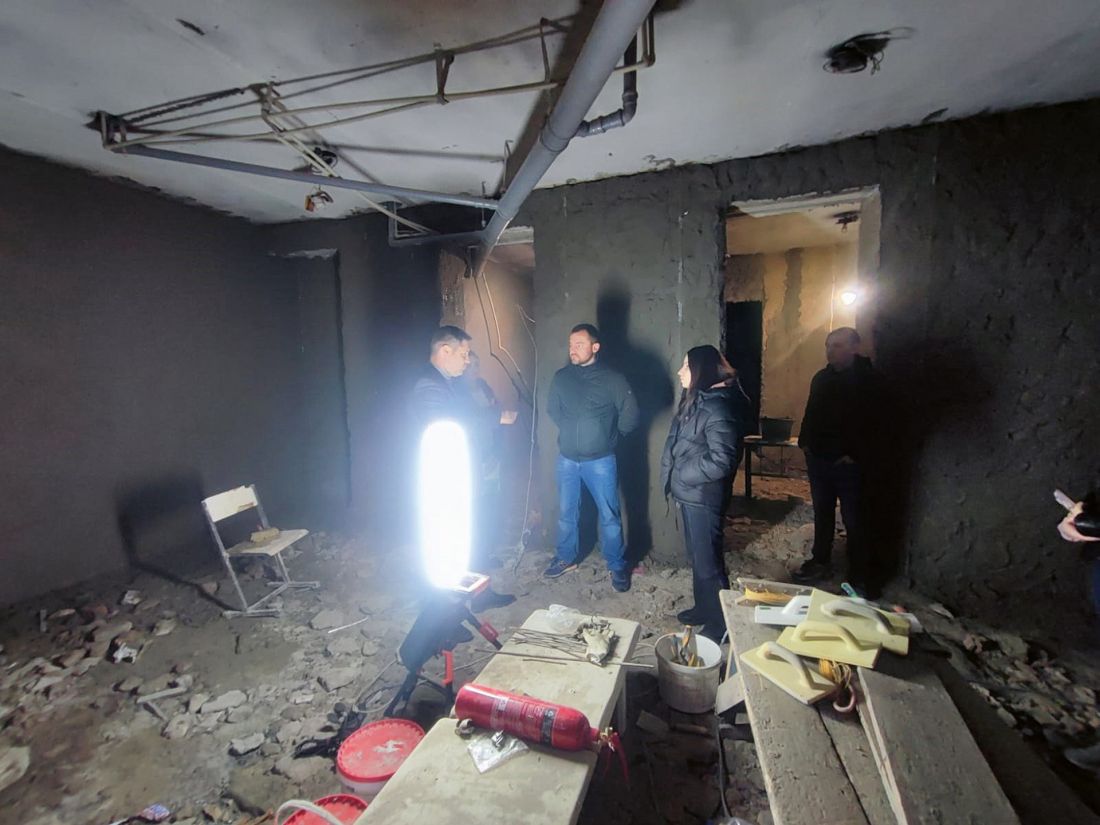
Construction of a dual-purpose shelter according to a project created during a workshop with the participation of children
Przemek Ciępka: Ukraine is not the only country affected by war. Do you think the experience you are gaining here can be useful in other conflict-ridden places, such as the Gaza Strip?
Lidiia Shymon: Circular architecture solutions can be applied in any country. Recently, our colleague from France completed a sustainable reconstruction project in Turkey, which was hit by earthquakes two years ago. As Neo-Eco, we don't use these solutions just because war broke out in Ukraine - France and other European countries have been using circular methods for years. It's a proven strategy that should be used as widely as possible. The circular economy offers the best solutions for reconstruction, and the knowledge gained in this way should be transferred between countries to promote global prosperity.
Przemek Ciępka: What plans does Neo-Eco have in Ukraine?
Lidiia Shymon: At the moment we are working on establishing an ecological concrete factory in the Mykolaiv region. In addition, Victoria is spearheading the reconstruction of a school in Zeleny Haj, and I am managing the Panelka Teplo project in Chernihiv, where we are insulating Soviet blocks of flats. We are also planning to set up an asbestos laboratory in Crooked Horn, and we have already managed to get half of the funds we need for this purpose. My colleague Natalie is working on accessibility solutions at metro stations and pedestrian crossings in Kharkiv, and part of the team working in France is involved in the Rebirth project supporting female war veterans. In addition, we have recently completed the design of a dual-purpose shelter for children, and we hope to make this concept a reality. Neo-Eco has a lot of great initiatives. I hope we can find the strength to continue the work.
Przemek Ciępka: Thank you for the interview!
interviewed: Przemysław Ciępka
more: A&B 4/2025 - RE-USE + architects' rates,
download free e-publications of A&B