






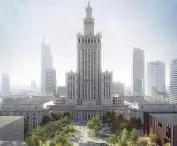
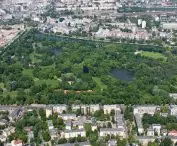

It has long been my belief that Warsaw is the European capital of landscape. I switch into landscape mode counterintuitively, especially since concrete pours so generously here today. Seen through the prism of landscape, Warsaw reveals its true, unique identity - the imitation of Western metropolises gives way to a consciously shaped city of gardens.
I am an urban planner by training, so I should focus on buildings. However, the thought of Warsaw's landscape regularly recurs: during walks along the Skarpa River, abroad when I talk about my city, or in my own vast backyard when I show visitors around and they ask for "something uniquely Warsaw." We always end up with architecture inextricably intertwined with the landscape. If not the Lazienki Park, then the Uprising Mound.
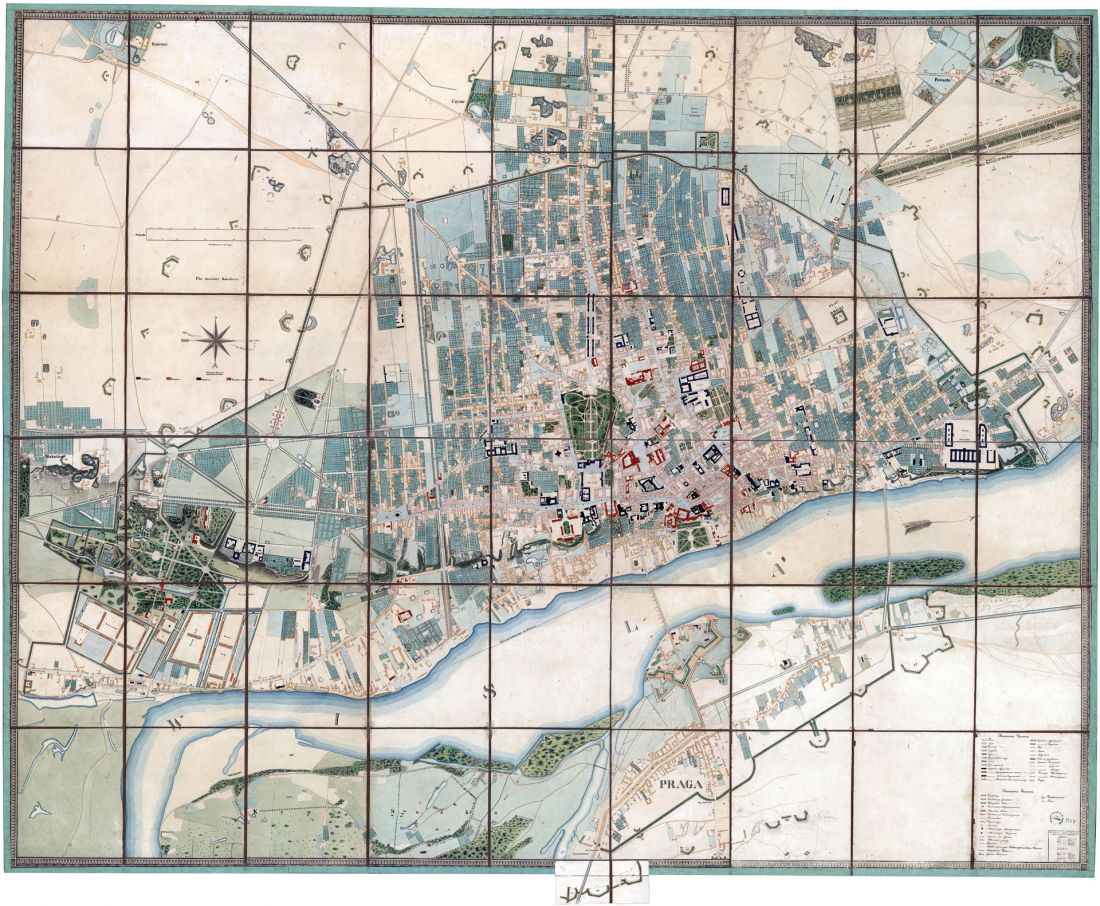
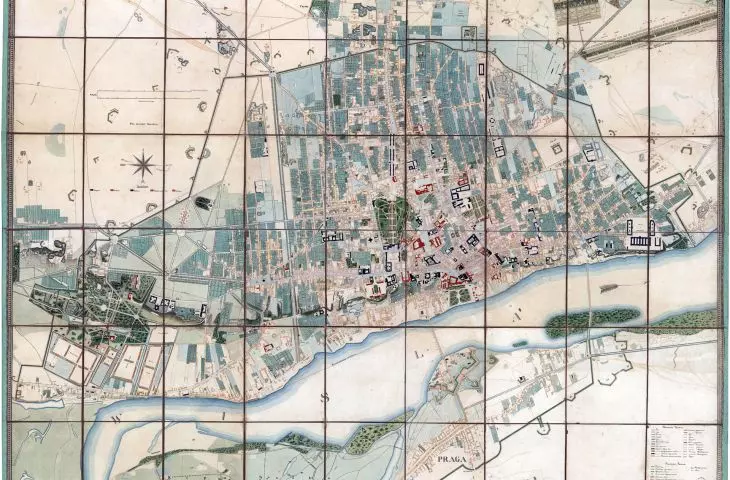
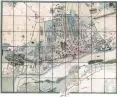
The power of green - orchards, gardens, parks; Warsaw, plan of the city and fortifications 1829-1831, Army Corps of Engineers
Source: the National Archives of the City of Warsaw.
My main hypothesis is simple: the urban planning of Warsaw is distinguished from other European cities primarily by its landscape. It is nature, not architecture, that has always played first fiddle here. In the best examples of Warsaw architecture, greenery design has received at least as much attention as buildings. We look with envy at Paris, Berlin, Barcelona, not necessarily aware that the landscape there is only an addition to the dominant architecture. The uniqueness of Warsaw's space was not born by accident, nor is it merely the result of wartime destruction. On the contrary - it has its roots deep in the subsoil of our culture. Successive generations have consciously shaped Warsaw as a city of gardens.
***
At the dawn of its history, Warsaw was a typical medieval town: founded under German law, with a central market square, narrow streets and compact, bourgeois buildings. For several centuries it developed similarly to other cities in the region. Its urban uniqueness emerged only after it was cast as the political center of the Republic. It was then, already in the modern era, that Warsaw spilled beyond its medieval core. It was surrounded by a wide ring of suburbs, mainly palaces, mansions and magnate residences. Their total area was several times larger than the compact area of the medieval center. The palatial suburbs became a symbol of Warsaw's power and importance.
Thus, the elemental parts of modern Warsaw were not houses, tenements or urban quarters, but palaces surrounded by a park or garden. It did not experience planning of compact buildings, its development consisted of a build-up of palace-garden compositions. That's why today's downtown Warsaw is stitched together from park layouts; in this patchwork, architecture plays a secondary role. This is alternative urbanism: if the basic modules of a Western European city are quarters, squares and streets, in Warsaw they are courtyards and gardens.
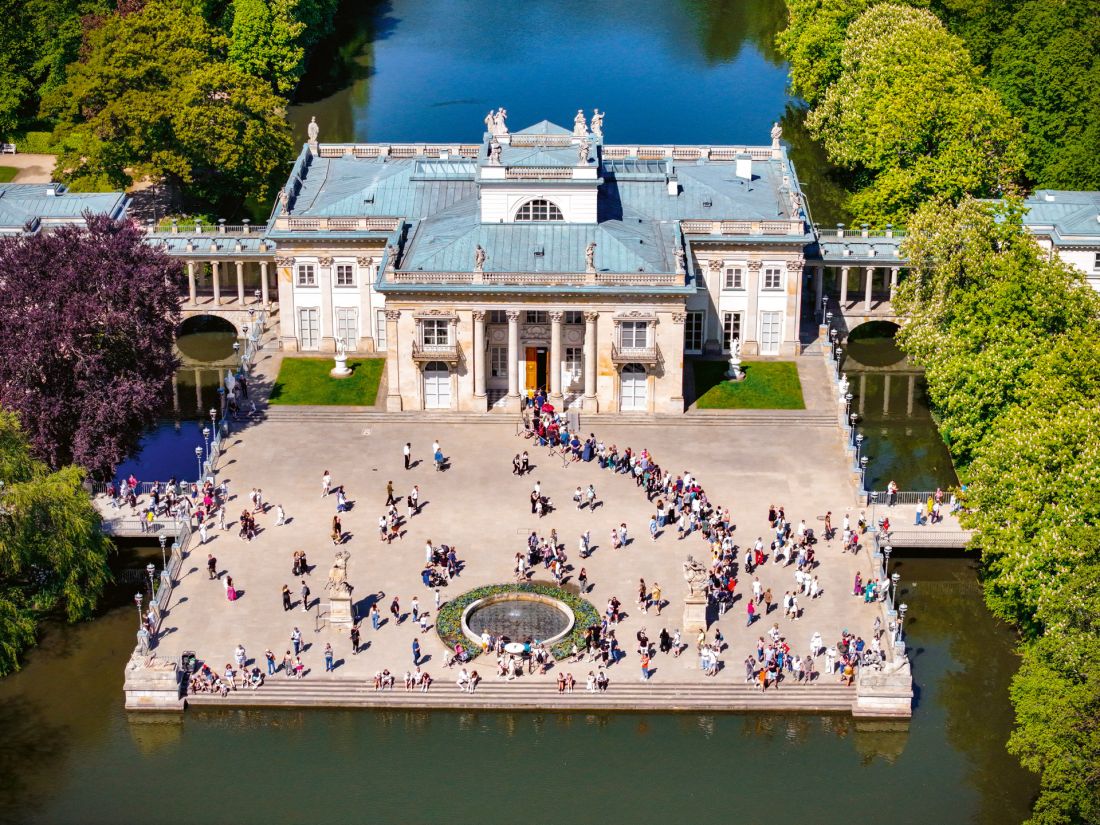
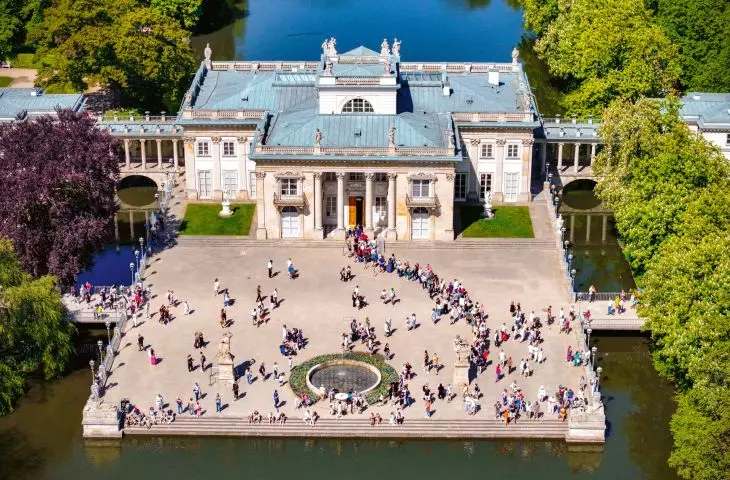
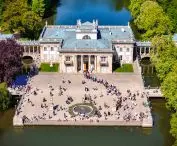
Warsaw's most beautiful square - the Palace on the Island in Lazienki Park.
Photo: Pawel Czarnecki © Royal Łazienki Museum
Warsaw's historic urban planning was long treated as a mistake, an oversight, a disorder. Professionals, including Tadeusz Tolwinski - the founder of the Polish School of Urban Planning - criticized Warsaw, preferring fragments planned in the Western European spirit over those that emerged from chaos. Echoes of this outlook still echo in the architects' statements today, despite the fact that in an era of climate crisis and a turn to green solutions, Warsaw's landscape urbanism is extremely appealing.
As early as the 18th century, private gardens were gradually transformed into public spaces. At the same time, a sizable portion of the gardens were swallowed up by the growing city and tenement houses sprouted in the place of trees. Both processes significantly accelerated during the Partitions. Under the influence of urbanization, Warsaw of the late 19th and early 20th centuries began to resemble typical European cities. However, the reconstruction formula after World War II restored Warsaw's landscape character. The restoration of damaged 19th-century tenements was consciously abandoned, not only for political reasons, but also for aesthetic reasons - architects of the time looked unfavorably on the dense 19th-century buildings. So they "reset" the center of the city to a pre-abor spatial layout, in which greenery dominated over architecture.
The process of making the former palace gardens public was taken to an extreme during the reconstruction era. The reconstructed and interconnected green areas have transformed into sprawling parks in the heart of the city. The most spectacular, of course, is Warsaw's Skarpa - a true green downtown. One can walk there for hours, moving from park to park with almost no contact with the buildings. This luxury used to be enjoyed only by kings and princes, but today it is available to every resident of Warsaw on a scale unparalleled in any other European city.
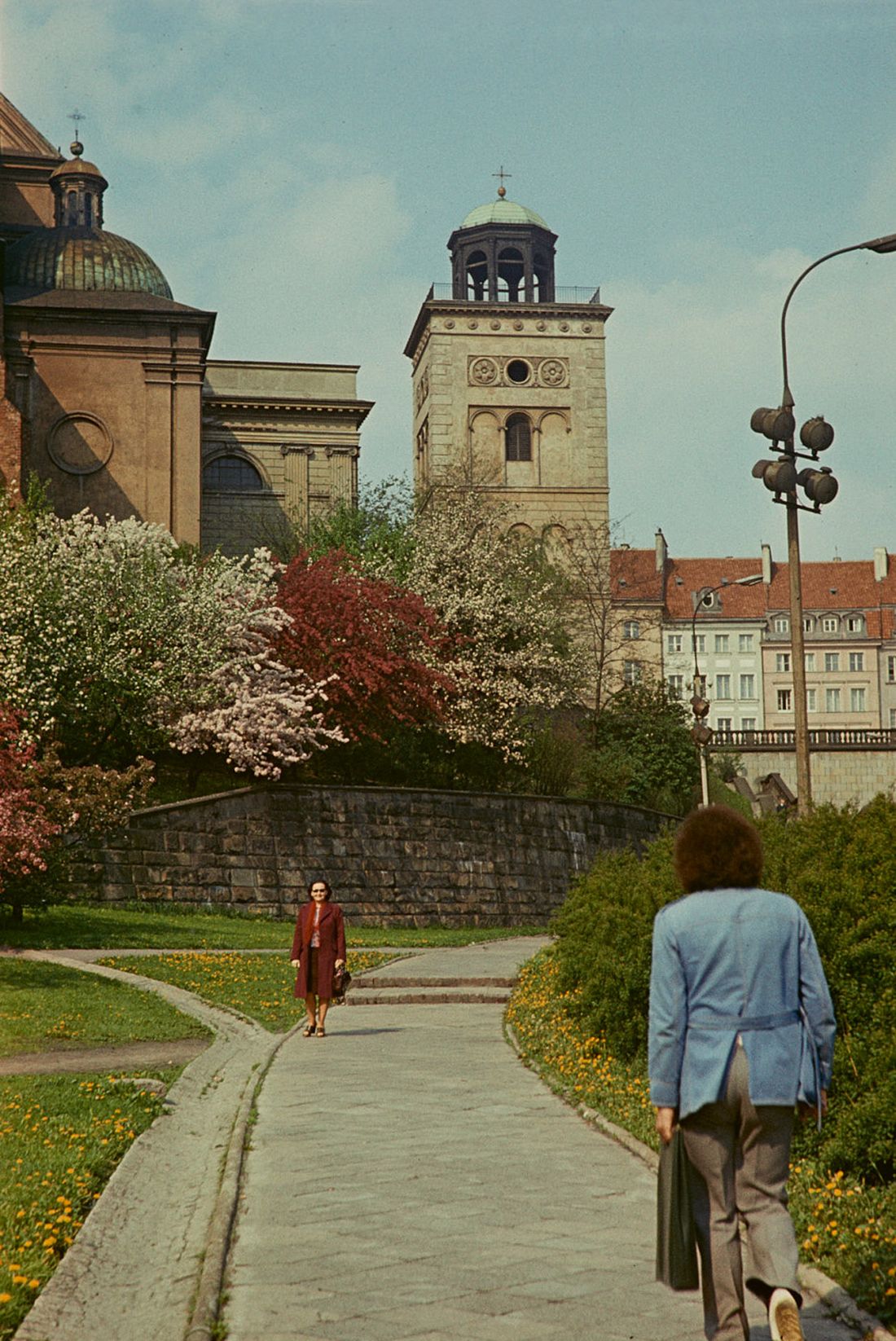
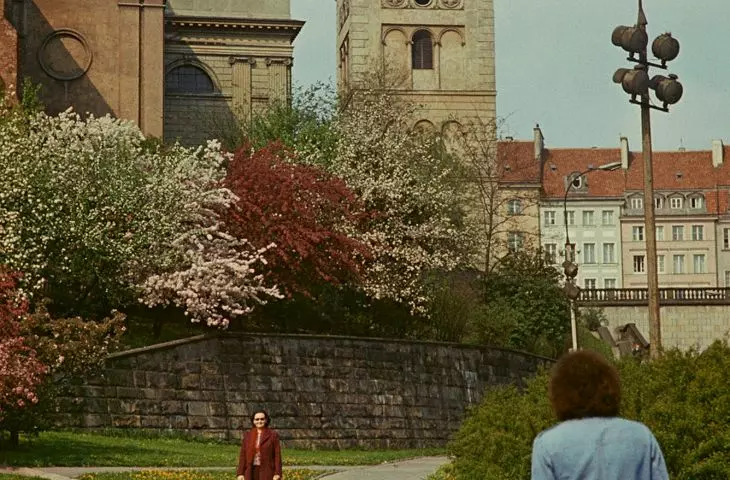
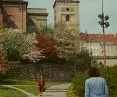
Greenery design: Alina Scholtz - W-Z route from the side of Nowy Zjazd street; flowering pear and apple trees give the Old Town a unique character;
photo: © Tomasz Smolinski, 1970s
The construction of the new Warsaw coincided with the era of modernism - a trend that placed access to greenery, air and light at the center of thinking about the city. During the modernist era of the People's Republic of Poland, the landscape character of Warsaw urban planning grew even stronger. Subsequent housing developments - from Muranów, Wyzwolenia Avenue and Żoliborskie Orchards, to later Stegny and Ursynów - were consistently designed as landscape assumptions. From the beginning, architecture coexisted there with parks, meadows and forests. Each decade of postwar development enriched the green Warsaw patchwork with more unique elements.
***
But why am I writing about landscape architecture and not simply about greenery? Because Warsaw's greenery is not accidental. It is a consciously shaped space, to which successive generations have given the form that satisfies them. The diversity of Warsaw's greenery is easiest to grasp by walking through the parks along Ujazdowskie Avenue. It is enough to cross the gateway between Ujazdowski Park and the Jazdów estate to find yourself in a completely different world - different in mood, character and function. I call this part of the city the green downtown. There are so many parks here that they almost crowd each other like tenements in a 19th-century city, brandmauers touching each other.
Conscious landscape design has a long tradition in Warsaw. In the Sarmatian culture (16th-18th centuries), the garden held a special place. The ideal of the nobility was the countryside - morally purer and in every way better for living than the city. The importance of the gardening culture of the time is evidenced by the numerous translations into Polish of treatises on garden design and plant care. Warsaw gardens were a status symbol and, above all, an expression of a deep fascination with the landscape. The Republic was a rural culture, and Warsaw was its idyllic metropolis. Hundreds of years of culture nurturing the urban landscape have not gone away without a trace. They shape the way we perceive Warsaw today. Greenery arouses the most emotions and lively discussions in this city. Purely architectural topics pale next to it.
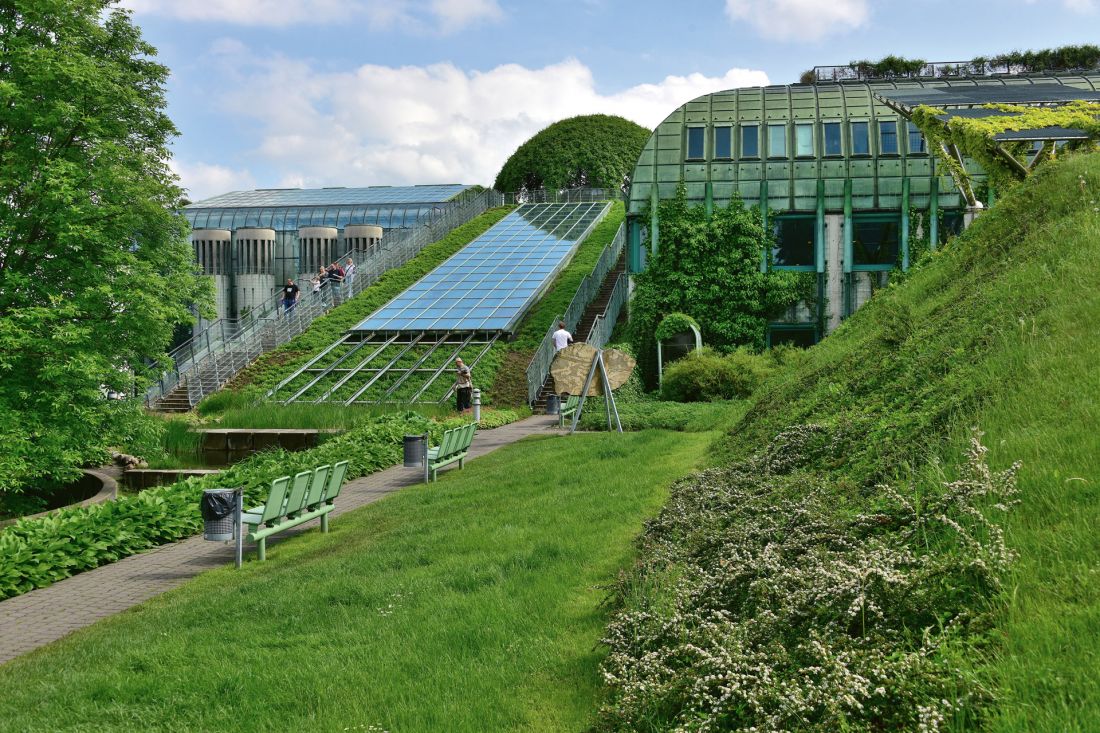
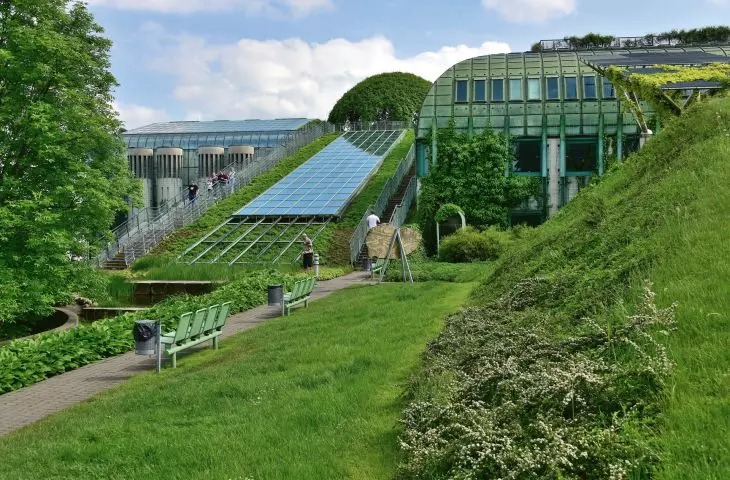
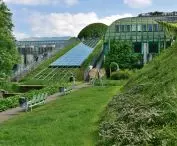
The garden on the roof of the Warsaw University Library is one of the most recognizable icons of contemporary Warsaw architecture - (designed by Marek Budzyński, Zbigniew Badowski, landscape architect Irena Bajerska)
photo: Adrian Grycuk | Wikimedia Commons © CC BY-SA 3.0-pl
In the West, urban activists are fighting to preserve green spaces, while Warsaw activists are going further. They discuss how to design parks, since the necessity of their existence is not in doubt. Recently, a wave of criticism was heaped on Warsaw officials for the design of the Golędzin park. Activists were concerned that turning the semi-wilderness into a traditional park would lower its nature value. In terms of its approach to greenery, Warsaw has long and far diverged culturally with the West: Jane Jacobs, the mother of modern urban movements, has written about designing urban quarters; her Warsaw counterpart Jan Mencwel seems to have written most about the Vistula, the natural landscape spine of the capital.
Although there are sometimes sparks between activists and officials, both sides can think alike. A few years ago, I met with then-city architect Marlena Happach. She was working on a new study of Warsaw at the time. It was memorable what she said before I had time to sit down: "I would like every resident of Warsaw to see greenery from their window." Today, walking around the city center, I can see the effects of her vision: tens of kilometers of streets and squares are just now being planted with trees. These are not isolated actions - this is a consistent strategy of the city, the fruit of our deep cultural attachment to greenery in the city.
Warsaw artists and local NGOs have also been focusing attention on the landscape for years. It inspired Joanna Rajkowska to create her installation Dotleniacz. The activities of the Bęc Zmiana Foundation are often linked to it. The CENTRALA design group, which balances on the border of art, has been discreetly setting the tone of the Polish discussion on architecture for a decade and has just as long drifted away from typical construction topics. Today it is preoccupied with rivers, wetlands and urban ecosystems. CENTRAL 's intellectual work on the Warsaw landscape balances the urban narratives we have unreflectively imported from the West over the years. The icing on the cake of contemporary landscape efforts is, of course, the award-winning Warsaw Uprising Mound. A park, not a building, as a symbol of Warsaw's contemporary architecture confirms my intuition.
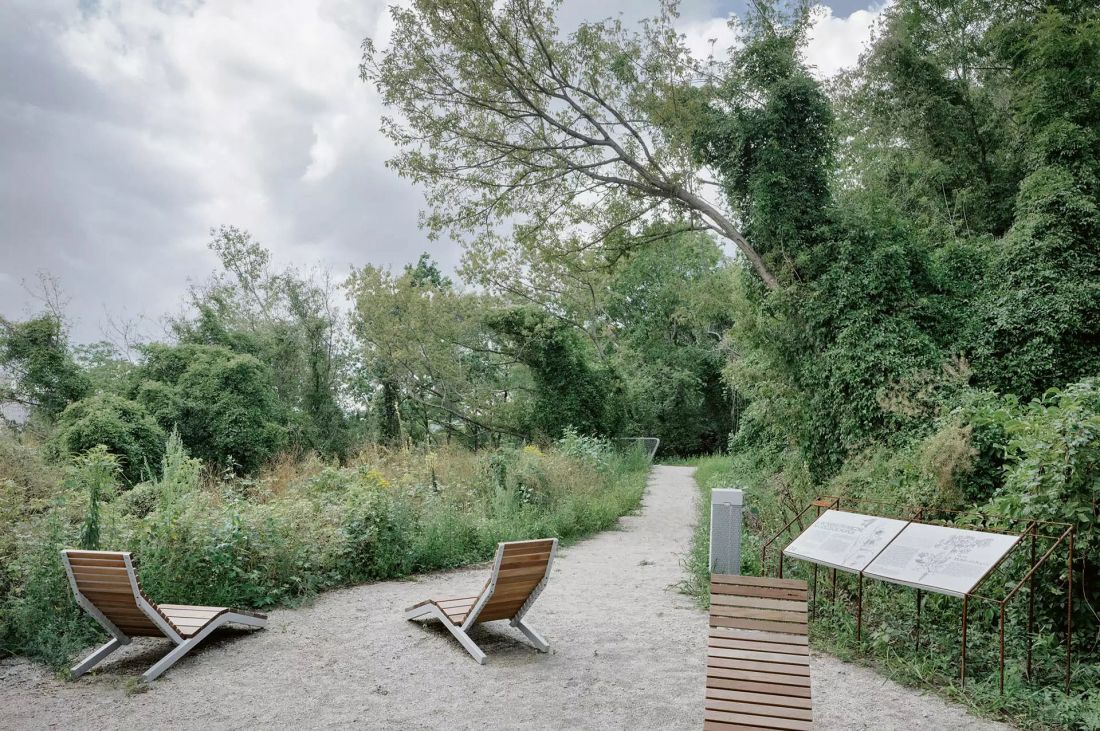
The "Storm" Action Park under the Warsaw Uprising Mound by Archigrest and topoScape studios - winner of the European Award for Urban Public Space 2024
Photo: Michal Szlaga | Illustrations courtesy of Archigrest studio
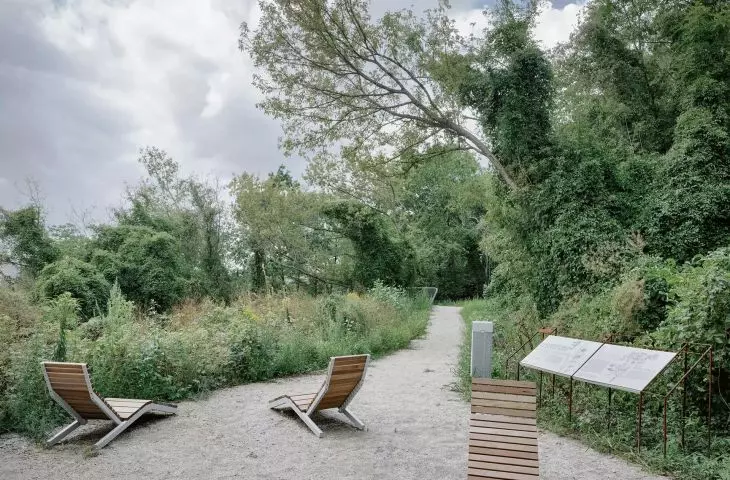
I have been developing it for many years, although unconsciously at first. Visitors from abroad often asked me to show Warsaw. After several years of trying, I finally created the perfect architectural walk. It captures what is unique about our city and sets it apart from other European capitals. The backbone of the route is the Skarpa, and each section tells a different story: Lazienki - the political visions of Poland's last king; Ujazdowski Park - a symbolic garden from the time of the partitions, a miniature of the Polish landscape with the Tatra, Vistula and Baltic rivers; Swiss Valley - a remembrance of pre-war glitz; Rydz-Śmigły Park - reconstruction, socialist realism and prominent designer Alina Scholtz; Jazdów - contemporary Warsaw activism.
Other variants of the walk include: Pole Mokotowskie,the Służewiec horse racing track, the green areas around the Citadel, the phenomenal Skaryszewski Park. To international students I show Ursynów, and to real connoisseurs - Warszawianka. I recently confided in an architect friend about my method of showing Warsaw. To my surprise, she boasted that she - although she deals with buildings on a daily basis - does the same thing. Could it be that it is in the landscape, not the buildings, that the most interesting Warsaw stories are hidden?
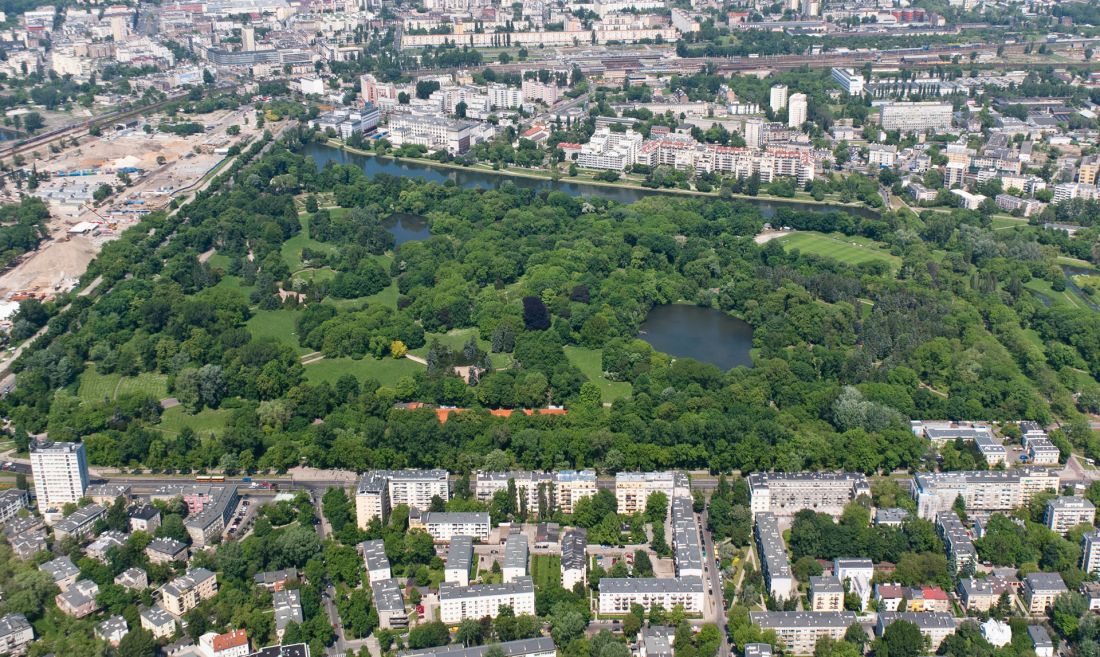
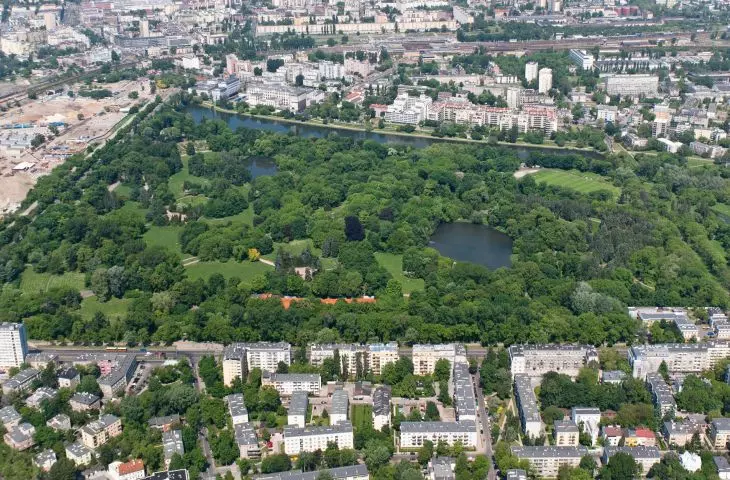
Skaryszewski Park - bird's eye view
Photo: Adam Kliczek, http://memoriesstay.com | © CC-BY-SA-3.0
The subconscious ability to perceive the landscape as an integral part of the urban fabric - and the proficiency in shaping it - is a true superpower of Polish architecture. From 2018 to 2021, I was the Curriculum Director of the Kharkiv School of Architecture. My task was to create a program for the new Ukrainian university from scratch and to invite the best lecturers from all over Europe. Poland donated CENTRAL to Kharkiv. Students fell in love with the classes on designing in harmony with rain, wind and other elements. Graduates to this day remember them as among the most important.
A few months ago, Bogna Swiatkowska and I were asked by the Lithuanian Embassy to plan the international conference "Planning Cities Amid Uncertainty." Choosing offices from Poland, we focused on those that most consciously shape the landscape. Listening to the lectures of Natalia Budnik, Zygmunt Borawski and Marcin Maraszek, I clearly felt for the first time that Polish architecture has a chance for its own international distinction. It is precisely the ability to design architecture and landscape simultaneously.
***
Dear architects, do not immediately reject my view of Warsaw. Give it a chance. The next time you walk around Warsaw, squint your eyes and try to look at it through the prism of the landscape, not the frontage of buildings. Turn the Warsaw schwarzplan over in your mind and focus your attention on its white spaces. And when someone asks you what the most beautiful square in the city is, don't automatically answer that every good square must have four walls. After all, Warsaw's most beautiful square, the one in front of the Palace on the Island in Lazienki Park, has only one. The rest is greenery, water and air.
Kuba SNOPEK
urban planner, author of books on 20th century architecture, founder and current employee of Direction. A graduate of the Strelka Institute and the University of California, Berkeley. From 2018-2021 he was program director of the Kharkiv School of Architecture.
Read more: A&B 6/2025 - WARSAW,
download free e-publications of A&B