


How can simple geometry be used to create a lighting fixture that allows the user to shape the light themselves? Oliwia Dziedzic, a student at the Academy of Fine Arts in Kraków, designed the “UFO” lamp—a minimalist decorative object whose form evokes cosmic associations, while its construction allows users to experiment with the direction and character of the light. The project was developed as part of the Furniture and Interior Design Studio led by Prof. Marek Błażucki and Paulina Pasztaleniec. The assignment’s theme was lighting in the broadest sense. The designer opted for a simple, geometric form that not only serves a decorative purpose but, above all, allows the light to be adjusted to individual needs.
© Oliwia Dziedzic 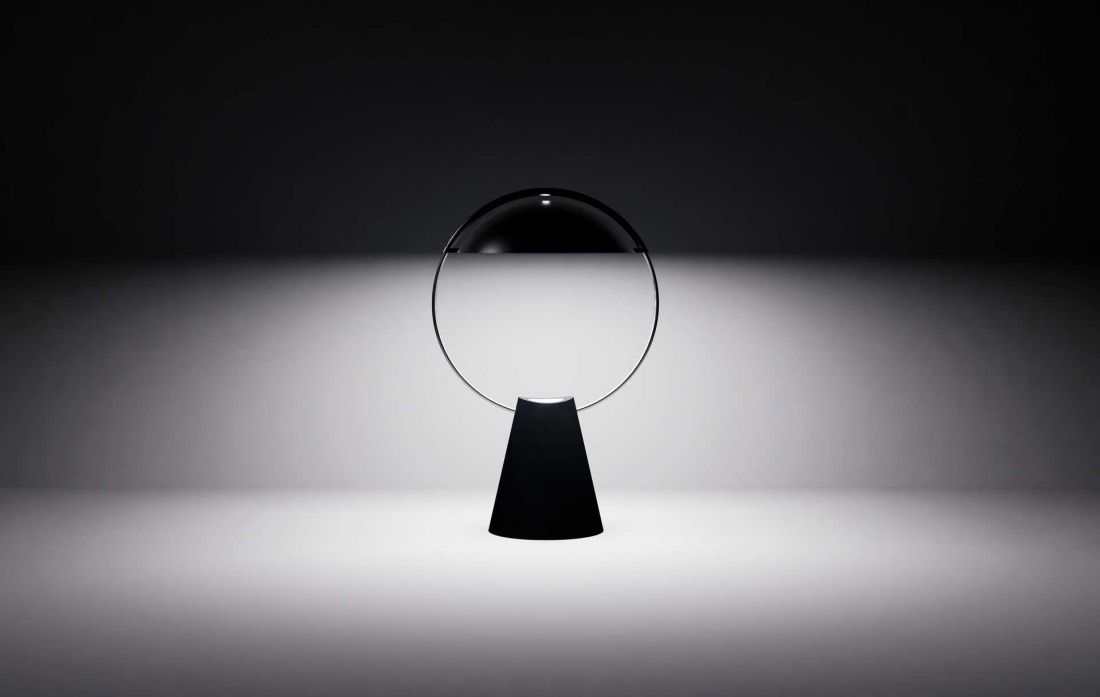
a form inspired by space
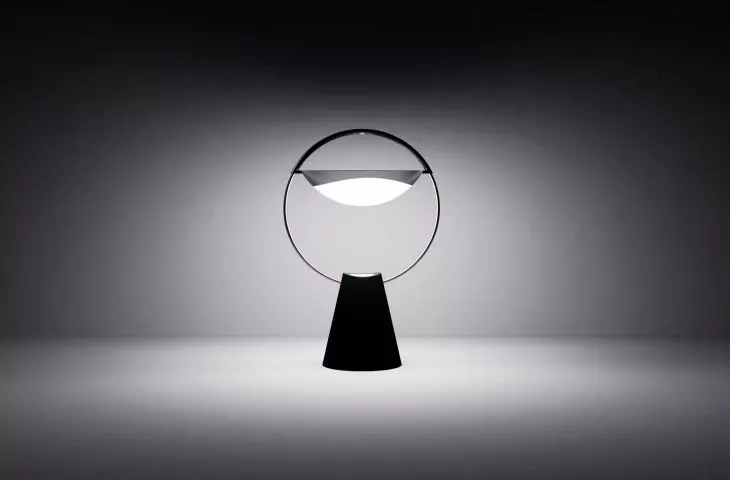
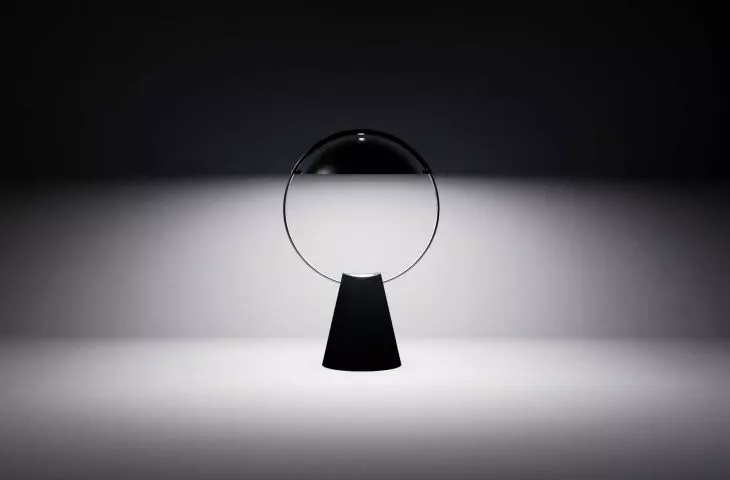
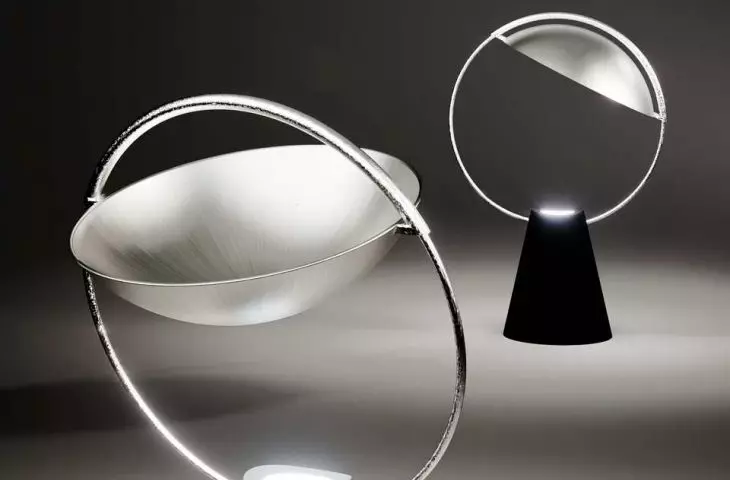
The project’s name refers to a distinctive element of the lamp—a metal disc that moves in a circle. Its form reminds the designer of flying objects, and the minimalist construction emphasizes the geometric nature of the design. The lamp consists of a base, a circle, and a metal plane that is a section of a sphere. The light source is concealed within the base. The light bulb directs the beam onto the metal element, which reflects and shapes the light. Depending on the position of the disc, the light can be diffused by its convex side or focused and confined by its concave side.
The most important feature of the design is the ability to adjust the metal plate in three ways. The first involves removing and rotating it. The plate is attached to the metal circle with a magnet, allowing you to quickly change which side reflects the light.
The second adjustment method allows the disc to be moved along the circle, which acts as a sort of track. The third option is to rotate the entire circle around the axis connecting it to the base. Thanks to these solutions, the user can modify both the direction of the light and its character. The design requires no additional components or complicated operation. The individual parts can be adjusted intuitively, and changing their position allows you to achieve various lighting effects.
Experiments with Materials and Proportions
An important part of the design process involved trials to determine how even slight changes in materials, proportions, and light sources affect the final result. As the designer emphasizes, achieving the intended result required extensive experimentation and analysis of individual solutions.
The texture of the metal surface and the radius of the sphere were of particular importance. The slightly matte finish reduces harsh light reflections while retaining the properties that allow light to be redirected. In turn, the proportions and dimensions of the individual elements were selected to maintain compositional balance and enable the widest possible range of lighting effects.
© Oliwia Dziedzic 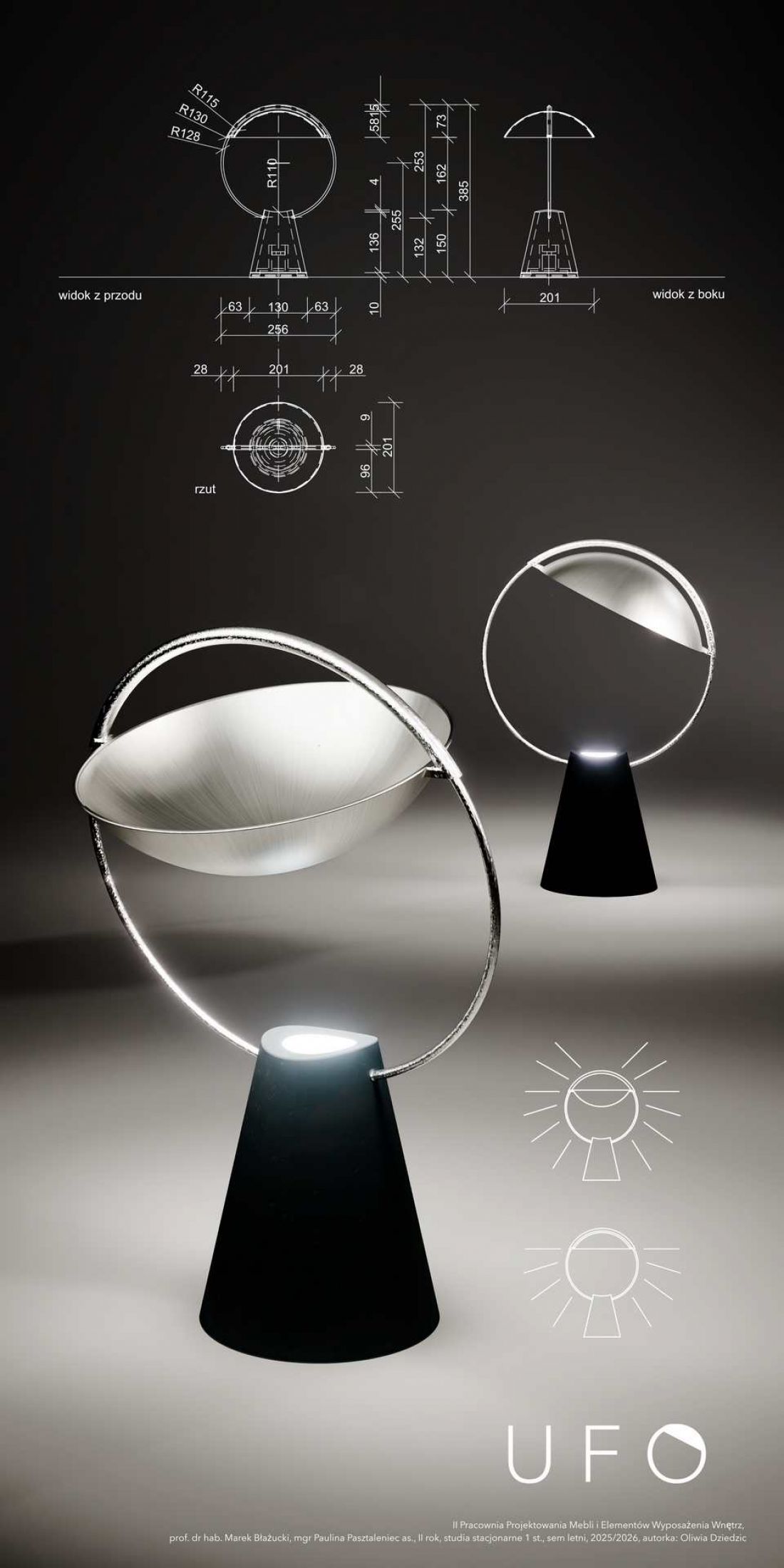
A decorative and functional object
“UFO” combines a minimalist form with the ability to actively shape the lighting. Instead of a traditional lampshade, which dictates a specific way for light to spread, the design uses a movable reflective element. Users can experiment with its positioning themselves, adjusting the effect to their own preferences.
Oliwia Dziedzic’s design demonstrates how a simple structure and well-thought-out geometry can form the basis of a lighting fixture with numerous practical applications. The character of the lamp is determined not only by its form and materials, but also by its interaction with the user, who influences the way the light functions by adjusting the position of individual elements.