




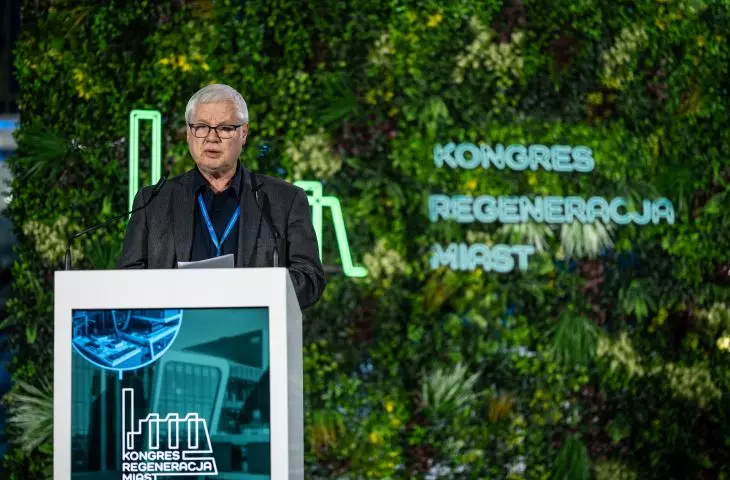





"It is the cities that should become the key level of management of the future." - Katarzyna Kacperczyk, Undersecretary of State at the Ministry of Health, said at the opening of the International Congress on Urban Health Regeneration . There could hardly have been a better summary of the debates that took place for two days at EC1 Lodz. Experts from the fields of health, urban planning, science, technology, business and administration jointly diagnosed a problem that only a few years ago rarely appeared in the center of public discussion: modern cities have become one of the most important factors affecting human health.
More than 1,100 participants registered for the Congress. The program included 59 debates, sessions and speeches with 132 speakers and speakers from Poland and abroad. Because health - as was repeatedly emphasized during the Congress - does not begin in the hospital.
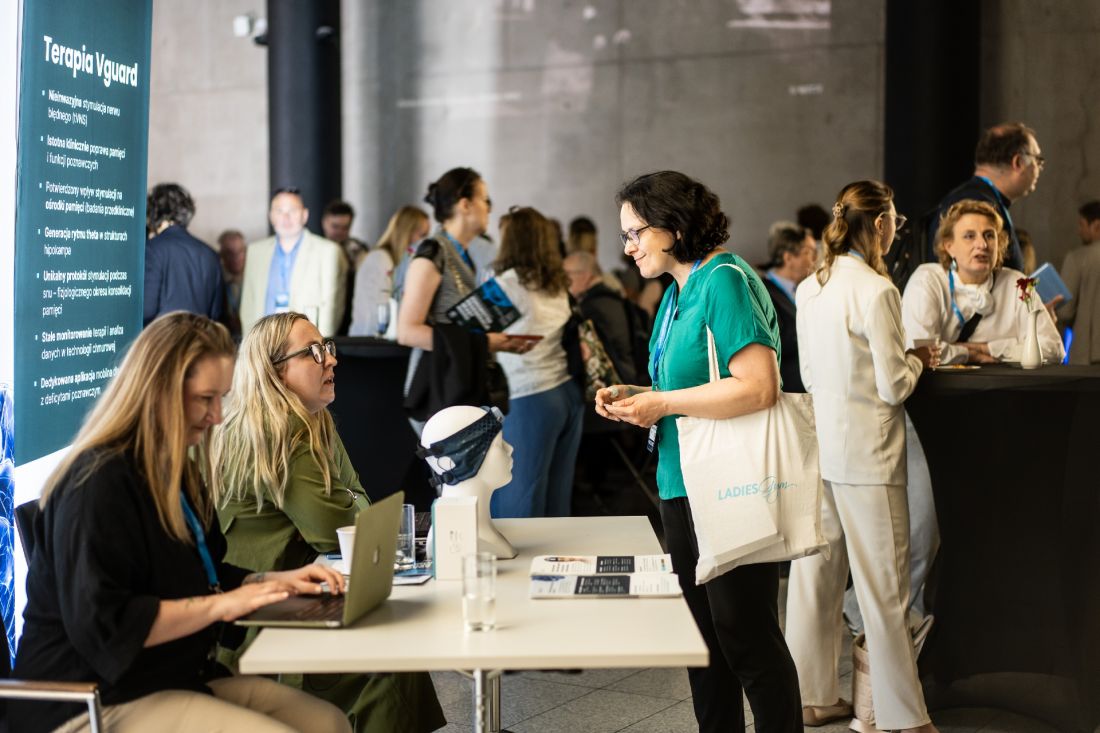
VI International Congress on Health Urban Regeneration
© organizers archive
We need a new model of thinking about cities [...], in which health is measured through quality of life and quality of the environment
-said Katarzyna Kacperczyk.
As the representative of the Ministry of Health emphasized, cities are increasingly concentrating the effects of three great transformations: demographic, climate and social.
The scale of the challenges discussed in Lodz resounded during the opening session. Data were cited showing that more than 56 percent of people between the ages of 18 and 23 show symptoms of probable depression. At the same time , according to WHO data cited at the Congress , only 23 percent of boys and 14 percent of girls between the ages of 11 and 15 meet minimum physical activity standards.
One of the strongest resounding themes of the Congress was the need for a new look at public health - not through the lens of the health care system itself, but the everyday experience of living in a city. After all, the quality of life of residents is increasingly determined not only by hospitals or access to doctors, but also by urban planning, transportation, access to greenery, social relations or the quality of public spaces.
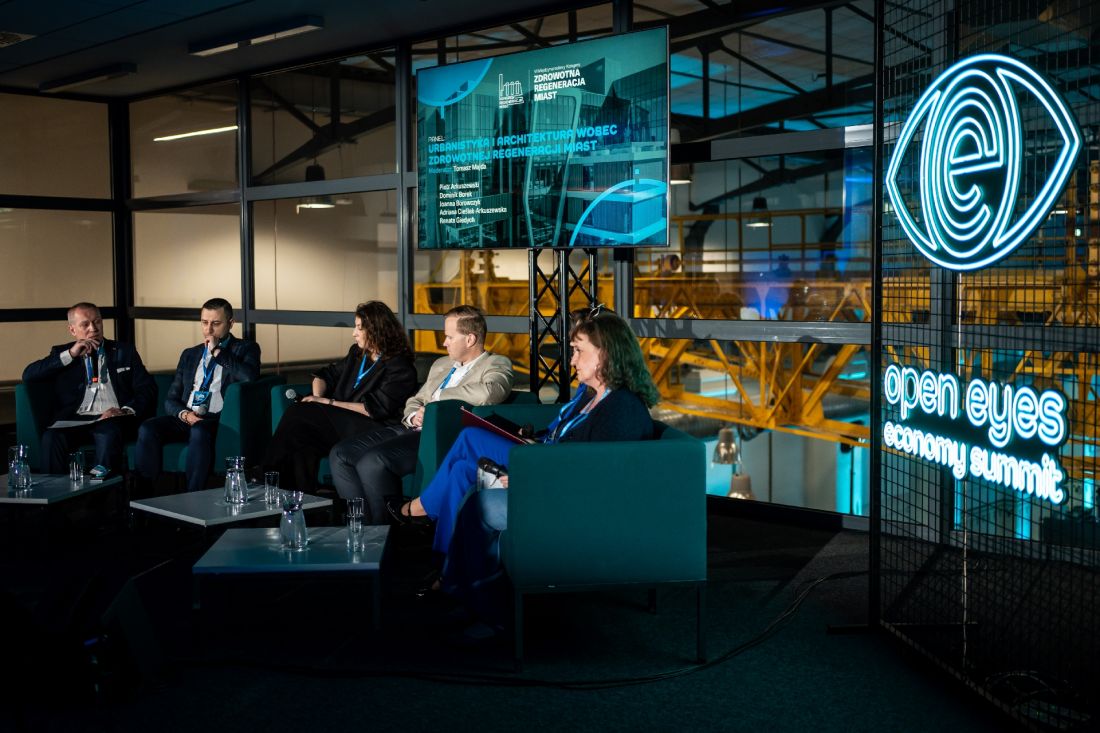
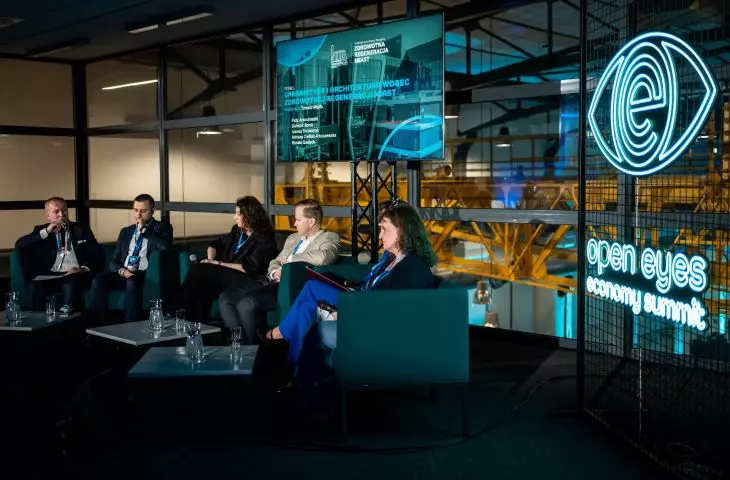
Panel "Urban planning and architecture in the face of healthy urban regeneration".
© organizers archive
Cities today are the most important health ecosystem and at the same time the place where the greatest health risks of the 21st century accumulate ," said Anna Rulkiewicz, president of the LUX MED Group, vice president of the Lewiatan Confederation and president of the Employers for Health Association. - A healthy city is not an infrastructure project. A healthy city is a governance model.
In a similar vein, Paulo Morgado Sousa, coordinator of the eMOTIONAL Cities project and representative of the Urban Health Cluster, spoke about urban space, emphasizing the importance of public spaces as critical health infrastructure and the need to design cities through the lens of the human experience and well-being of residents.
During the Congress, the question of whether modern cities are still designed with the human being in mind returned repeatedly. Smog, noise, overcrowding, mental health crisis, loneliness, aging populations and growing health inequalities were discussed. Many of these problems , according to participants , are not solely due to the condition of the health care system, but to the very way urban space is designed.
The theme of aging cities and the growing care needs of residents resonated particularly strongly.
We need to create such conditions for people to recover in a safe environment
- said Pawel Jedrachowicz, acting director of the Department of Health
and Social Affairs Department of the City of Lodz.
During the discussion, attention was paid to the problem of senior citizens' loneliness, the lack of long-term care places, and the need to adapt city policies to demographic changes and an aging population.
Let's look at health as a key category of city development ," said Jerzy Hausner, chairman of the Congress Program Council. - The health of the individual depends to a large extent on the health of the collective.
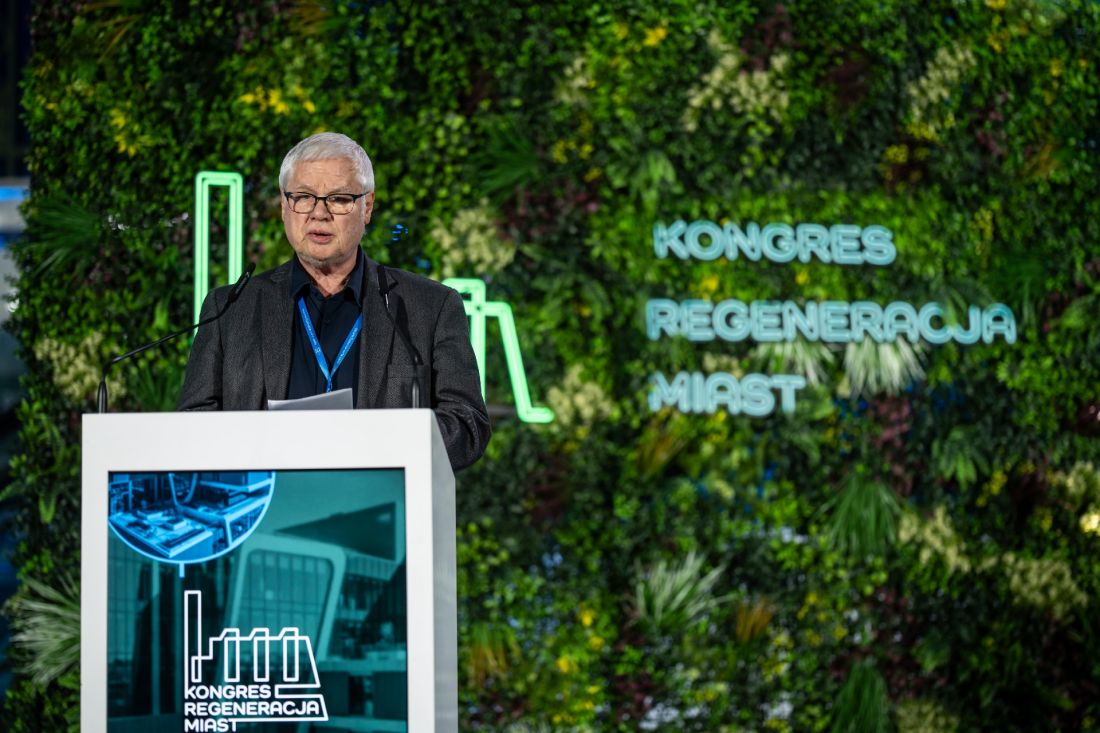
Prof. Jerzy Hausner
© organizers archive
The theme of green and blue infrastructure also resonated strongly. Experts argued that access to greenery is no longer an aesthetic addition to the city, but an element that affects the physical and mental health of residents.
We should treat public spaces as health infrastructure
- was emphasized during one of the discussions devoted to planning
spatial planning and urban adaptation to climate change.
The role of data and new technologies in public health management was also an important theme of the Congress. During the speech "Cities in the Data of the National Health Fund," Filip Urbanski, director of the Department of Analysis, Quality Monitoring and Optimization of Benefits of the National Health Fund, spoke about the growing importance of data in analyzing the health needs of the population and designing more effective public policies.
Much space was also devoted to health in the workplace. During the presentation of the Healthy Companies Index, it was emphasized that employee well-being is increasingly becoming part of the strategic management of an organization, rather than just an add-on to HR policies. During the panel "How to be a healthy company?" business representatives discussed the responsibility of companies for mental health, social relations and organizational culture.
Being a good, healthy, responsible company is a permanent, long-term activity, embedded in the company's strategy
- said Magdalena Kandefer-Kańtoch, director of communications
and spokeswoman for bp in Poland.
Building a strong organizational culture today is becoming one of the most important elements in supporting the well-being of male and female employees
- emphasized Joanna Warmuz, senior expert of the Department of Organizational Culture
ING Bank Śląski.
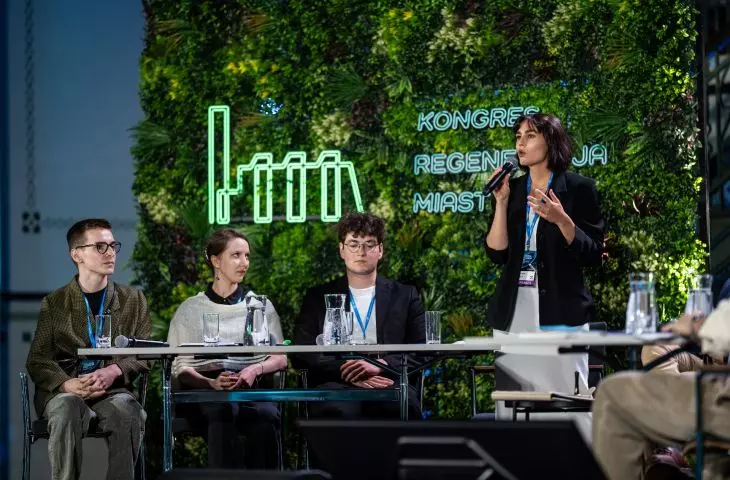
The symbolic finale of the Congress was the Oxford debate "The city extends life". Students from Lodz universities argued about whether modern cities support the health of their residents, or rather exacerbate social and health crises. The very fact that it was young participants who closed the Congress gave a good indication of the scale of the challenges facing cities of the future today.
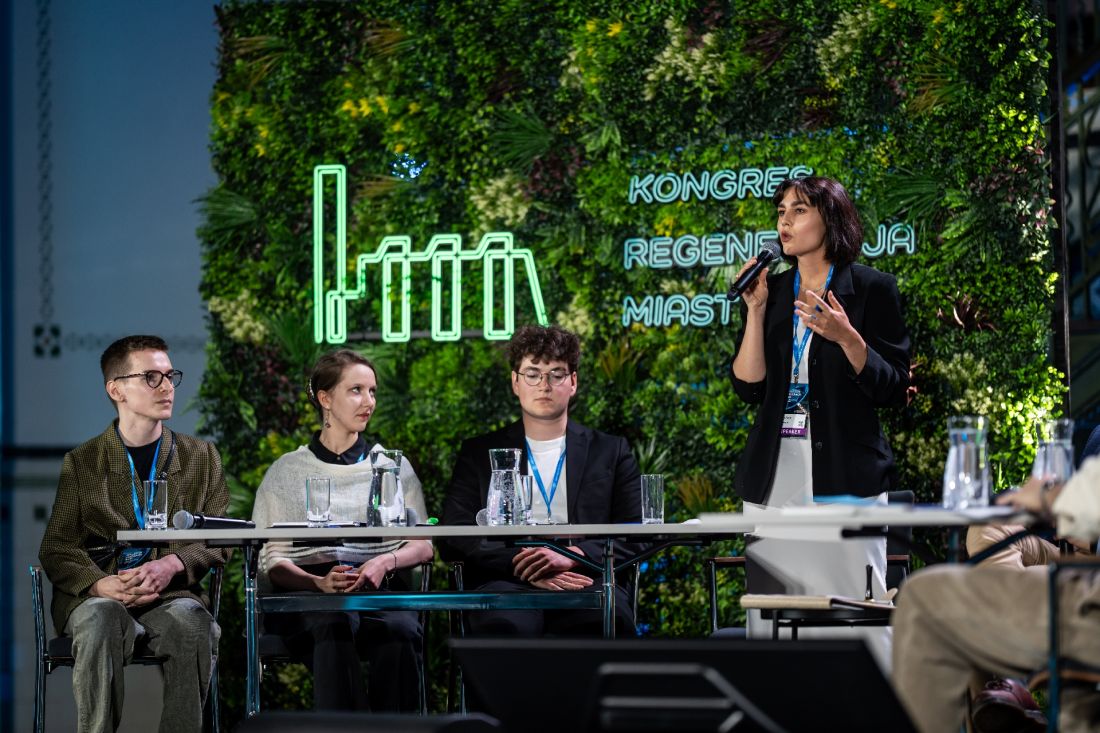
Oxford debate "The city extends life".
© organizers archive
The 6th International Congress on Urban Health Regeneration showed that the conversation about health is increasingly moving beyond the health care system. And that the question about the future of cities is simultaneously becoming a question about the length and quality of life of their residents.
The event was organized and co-organized by the Open Eyes Economy Summit, Lodz, the University of Lodz, the Technical University of Lodz and the Medical University of Lodz.