

















"It demonstrated the role of an architect as a flexible advocate for social issues," commented the thesis supervisors of {tag:studenci}, a graduate of The Bartlett School of Architecture in London, who designed a complex supporting women's reproductive rights.
The "Roundabout for Women's Rights " project is a response to changes in abortion law in Poland and the protests that followed. The thesis promoters were Elizabeth Dow and Izabela Wieczorek.
The title symbolizes the never-ending struggle for women's rights, a struggle in which we often retreat instead of moving forward. The project addresses this theme both through the creation of spaces of support and care, and through the architecture of resistance expressed in the form of protest
- explains the author.
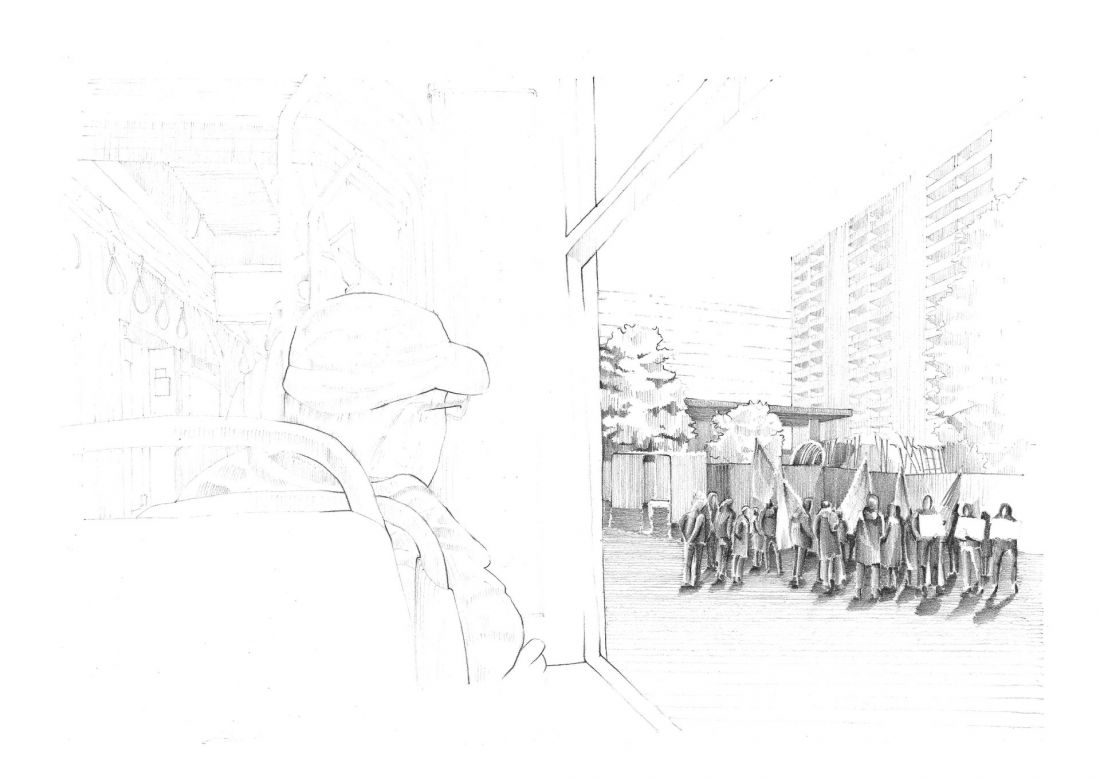
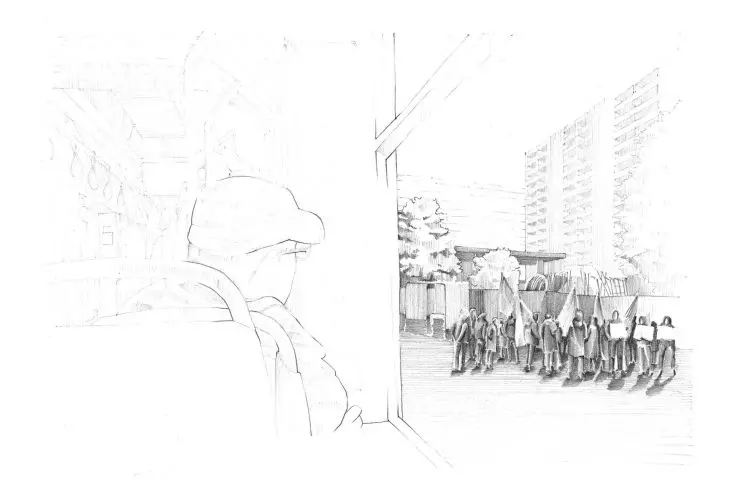
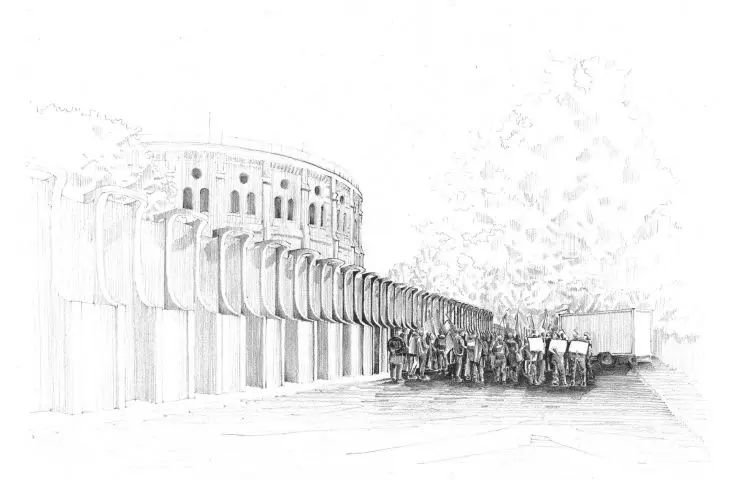
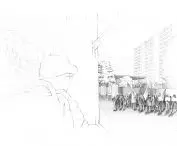
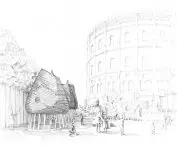
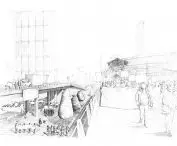
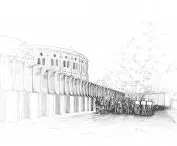
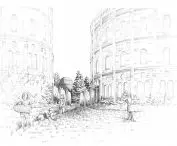
drawing - access to Daszyńskiego Roundabout
proj.: Karolina Adamiec
architecture that supports
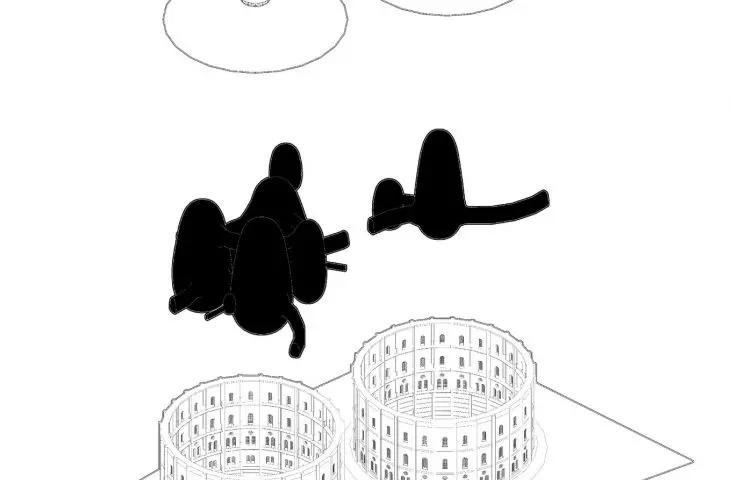
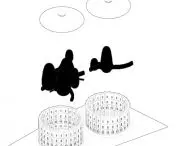
The work consists of a design for a protest camp at Daszyńskiego Square in Warsaw, an abortion clinic along with a support center located in the Wolski Rotunda, as well as mobile facilities scattered throughout Poland.
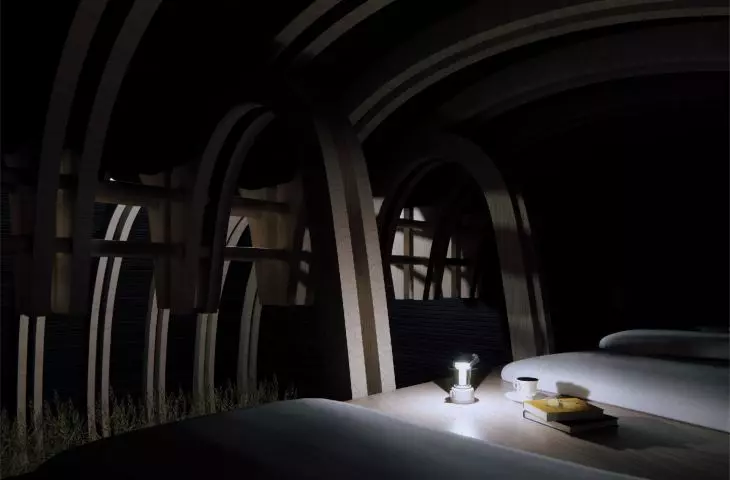
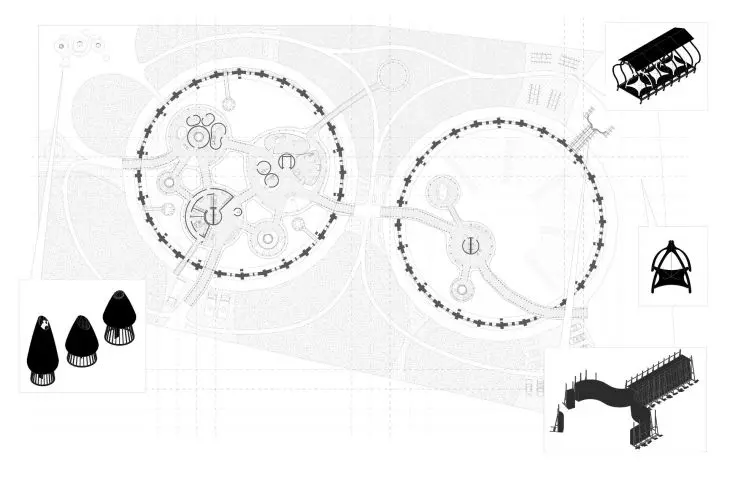
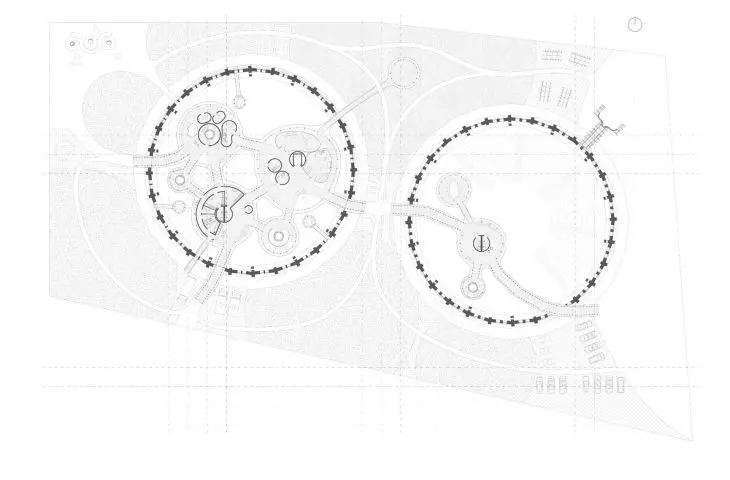
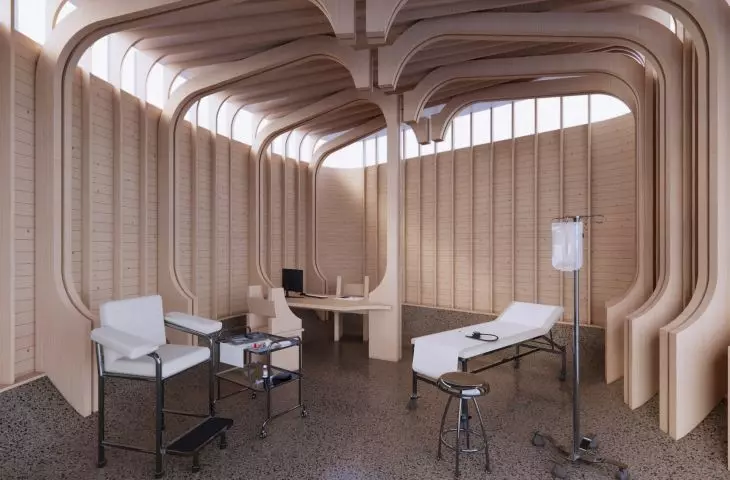
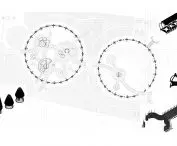
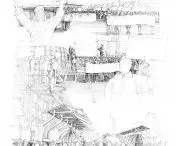
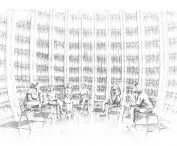
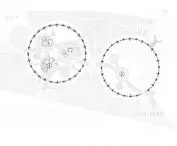
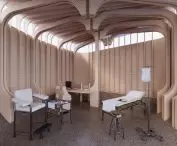
The Support Center is located in a convenient location, a five-minute walk from the Warszawa Zachodnia railroad station. The facility has been divided into zones depending on its purpose. The first rotunda houses a lecture hall, rooms for support groups and therapy rooms. The second, on the other hand, serves as a gynecological clinic. "The Companion Organ" wing is designed for women coming with children and includes playrooms and feeding and changing areas, while "The Sovereign Organ" is a wing designed for women visiting the clinic alone. Another area is "The Recovery Organ," which offers accommodations and serves as a space for rest and recuperation.
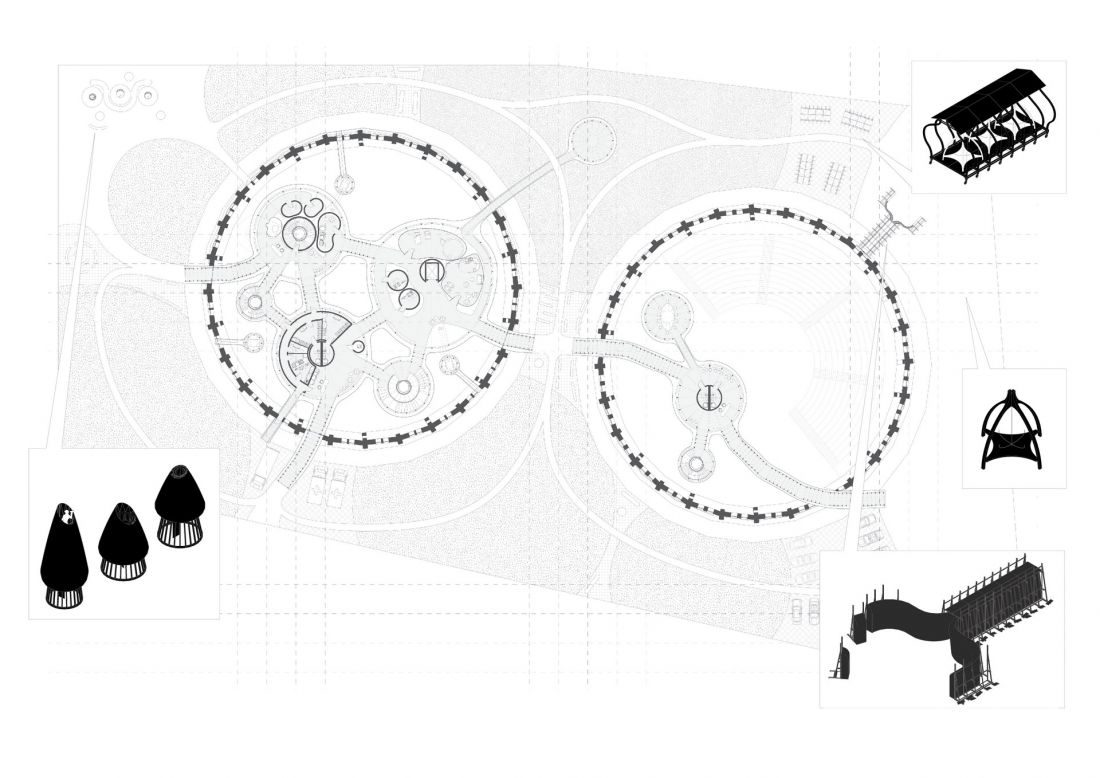
plan - diagram
design: Karolina Adamiec
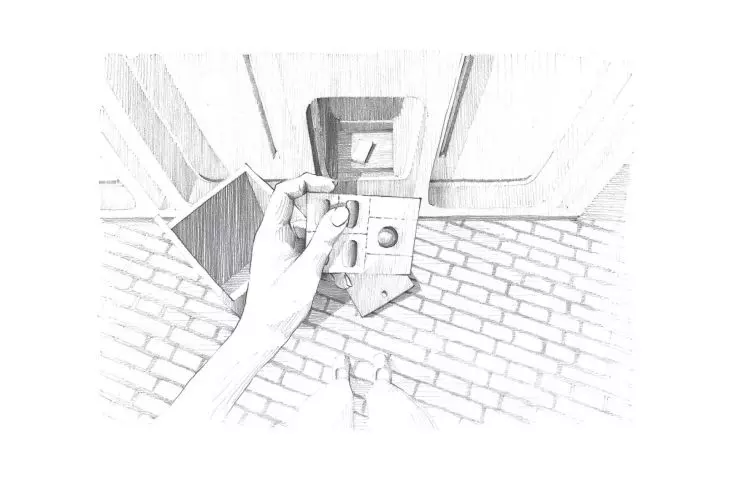
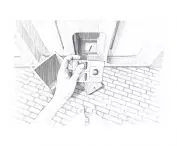
Protests by abortion opponents are already frequent in the vicinity of the clinic, so the author designed additional hidden entrances to the clinic. Thanks to them, people in need can discreetly and safely access the facility.
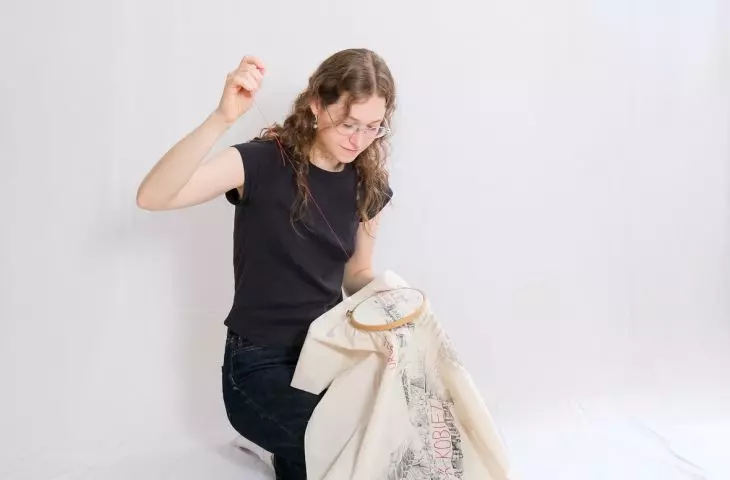
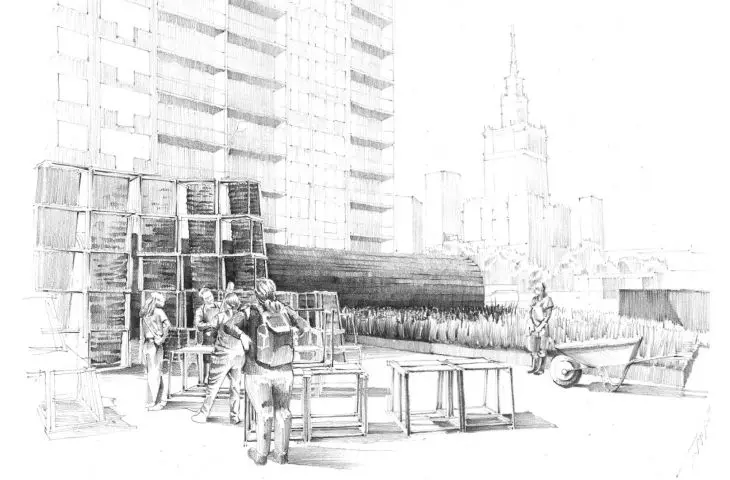
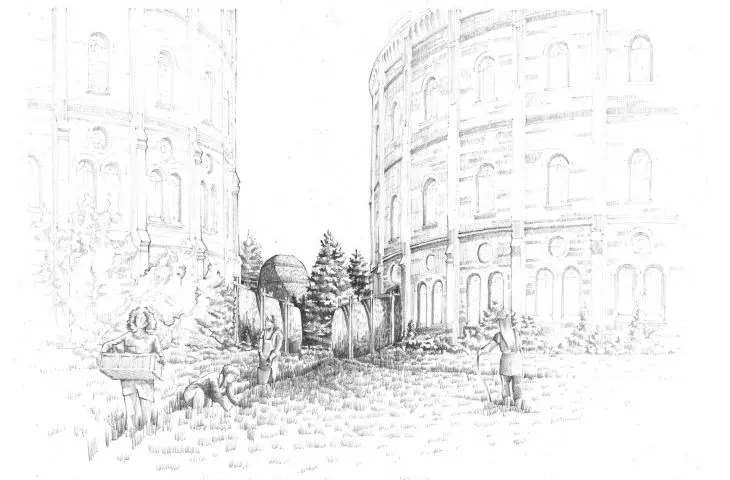
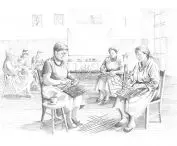
A space for growing plants, a playground and recreational areas were also planned around the facility. A memorial space called "The Embroidery Sanctuary" was also created next to it, featuring symbolic fabrics that visiting women can embroider at will.
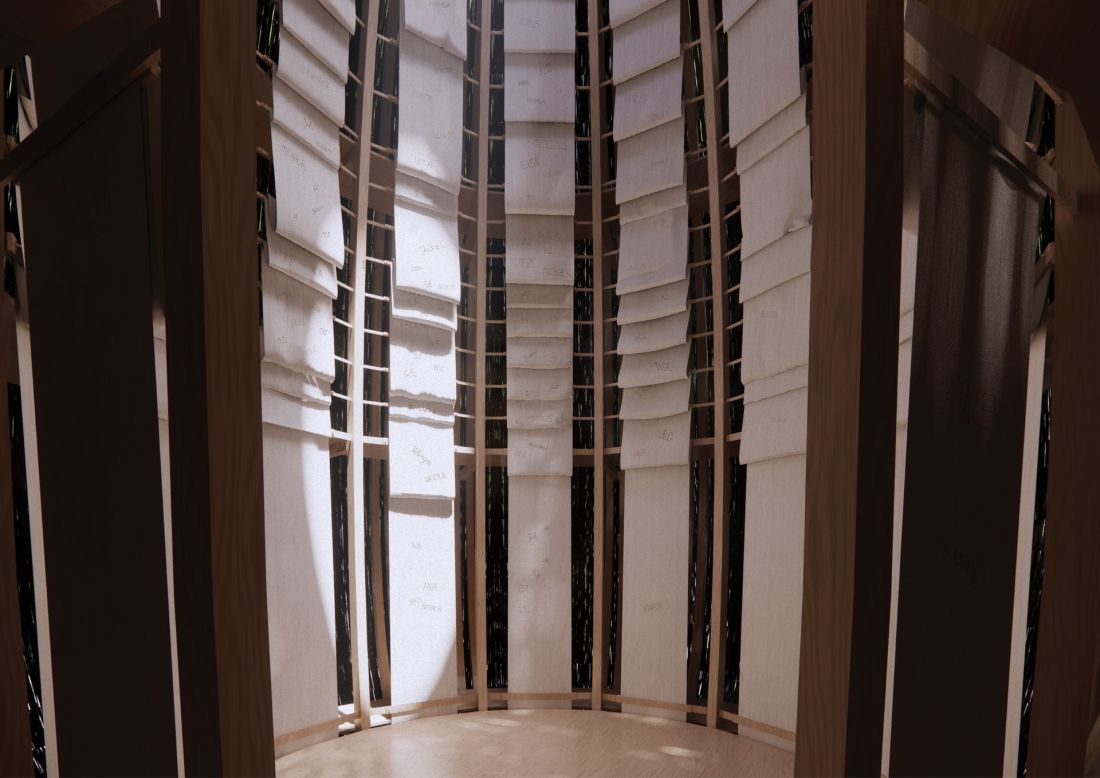
The Embroidery Sanctuary - a place of remembrance
proj.: Karolina Adamiec
when a building becomes a protest
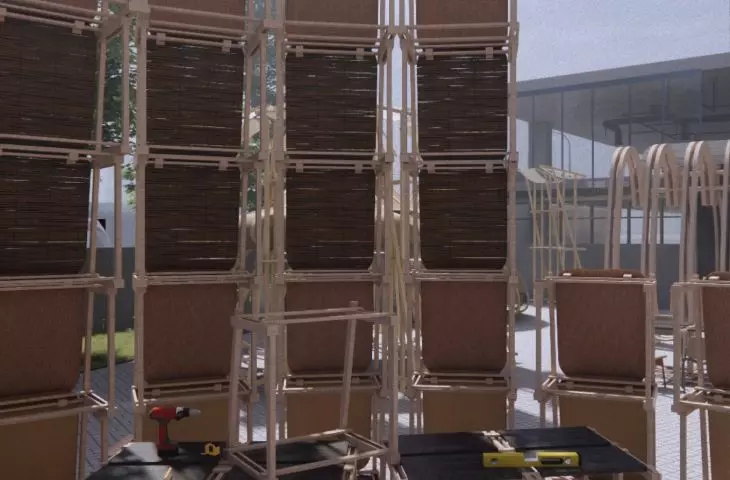
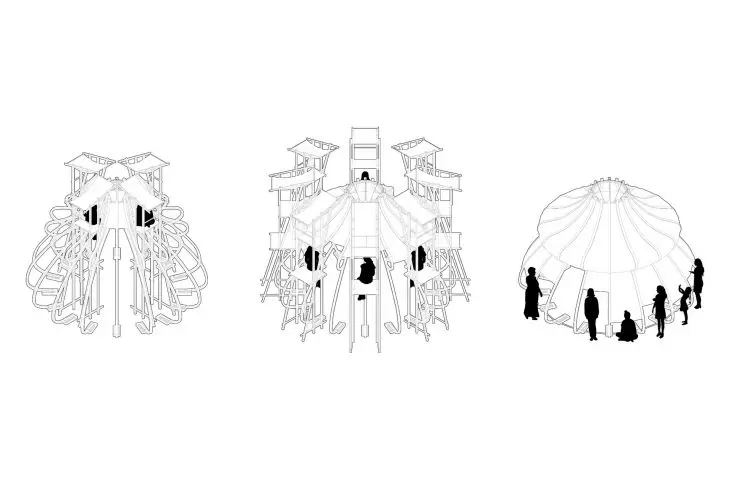
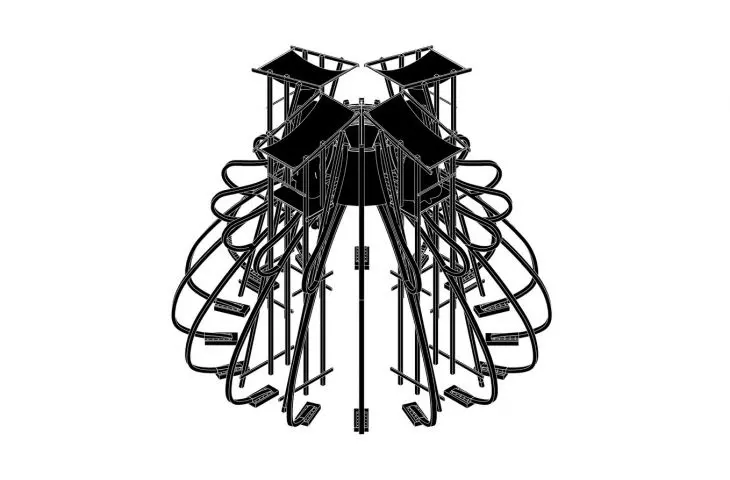
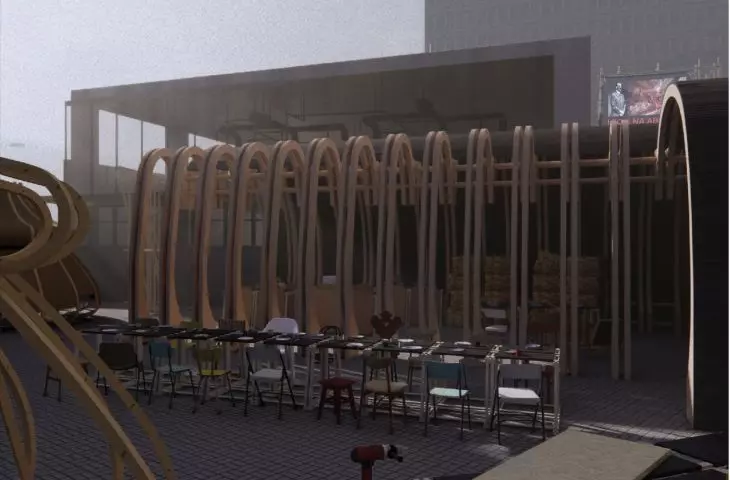
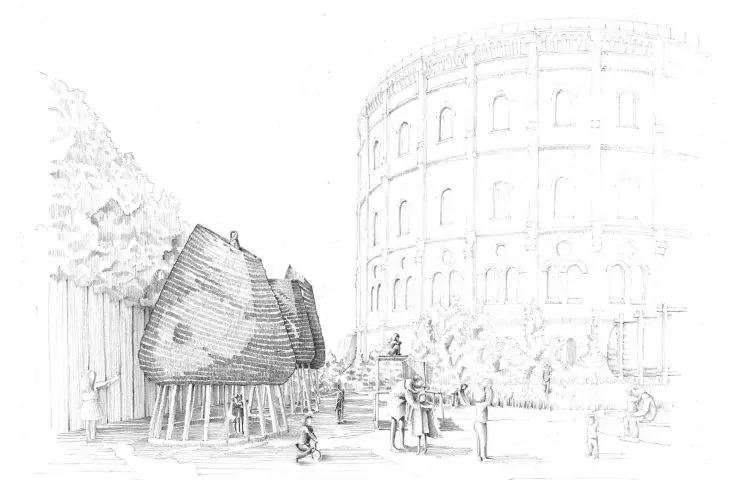
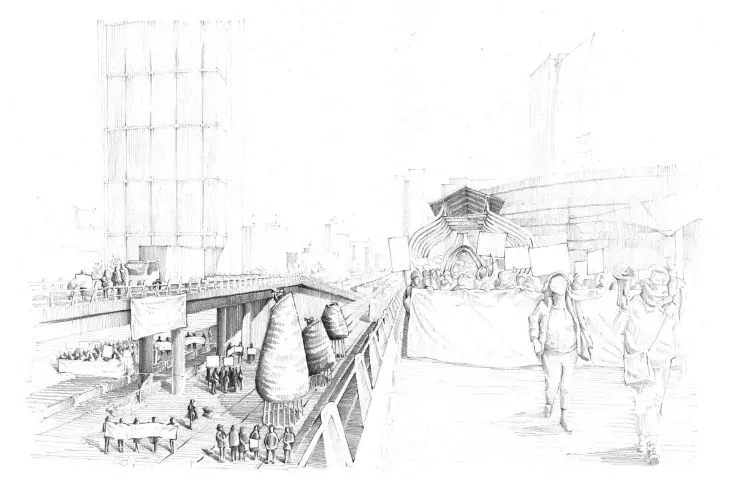
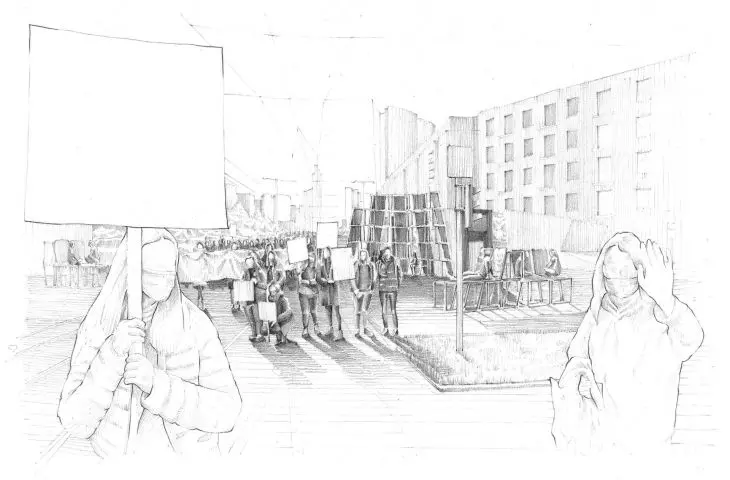
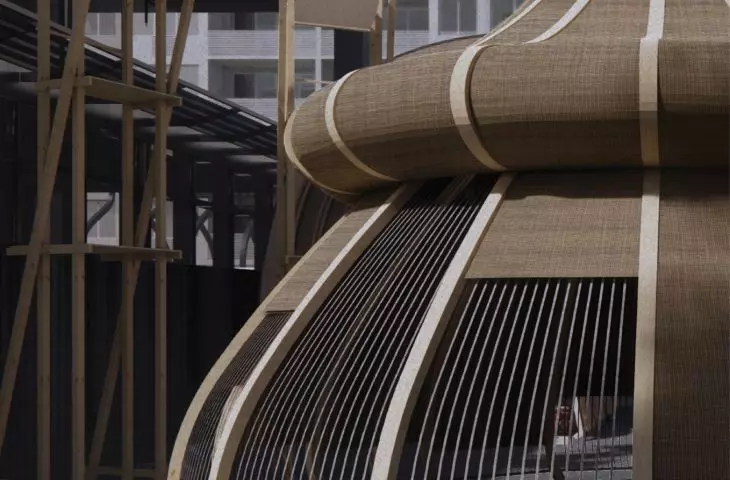
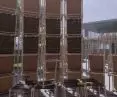
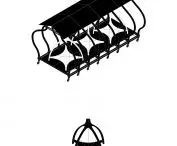
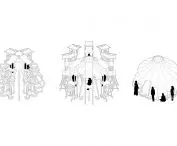
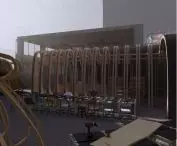
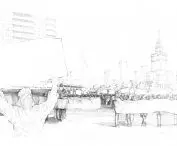
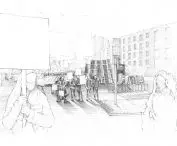
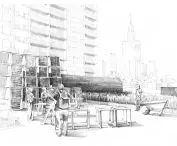
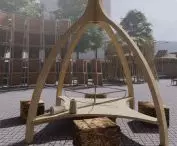
Another element of the project, the protest camp, is a temporary structure located at the traffic circle, which can be moved at any time. In addition, the buildings can also function as an agricultural use - the plants grown inside are then used to produce wicker.
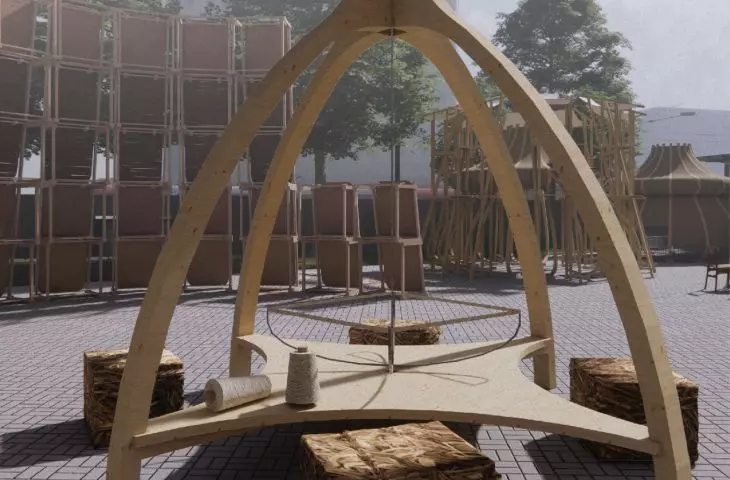
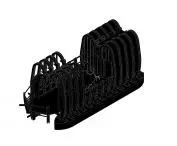
The lump of the temporary structure "Wickered Forum" resembles a device used for tensioning linen, but enlarged. In this way, it refers to handicraft traditions and encourages conversation.
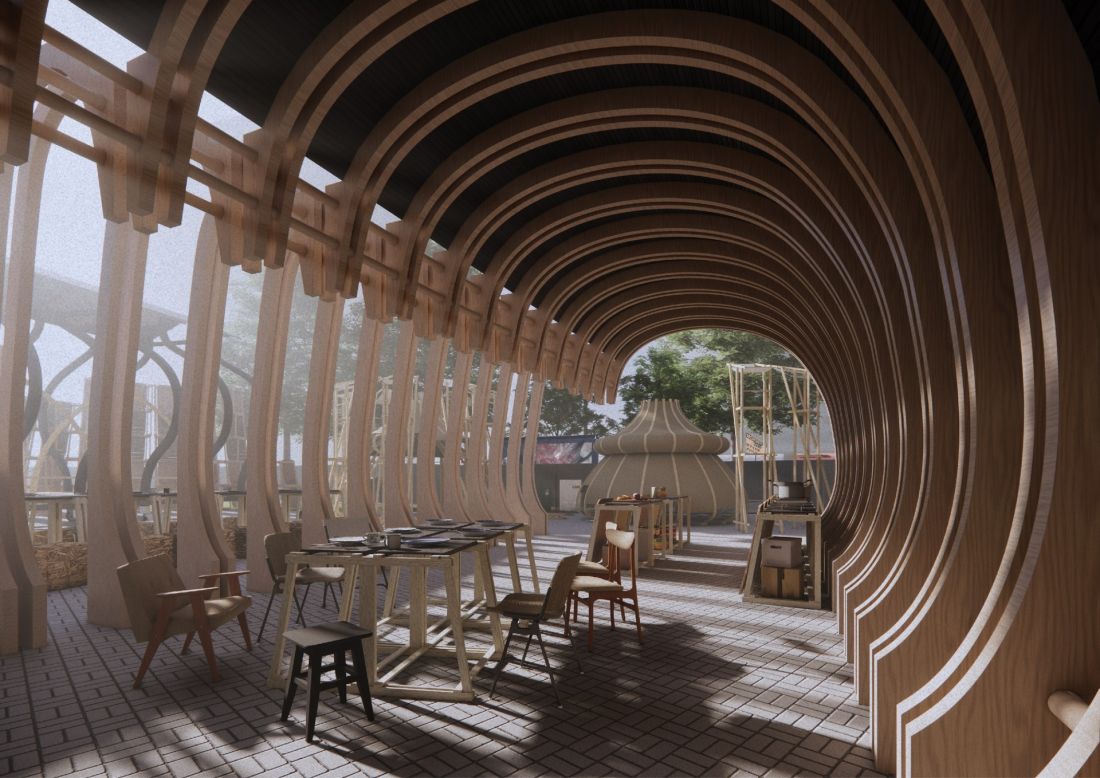
Morning at Daszyńskiego Roundabout
proj.: Karolina Adamiec
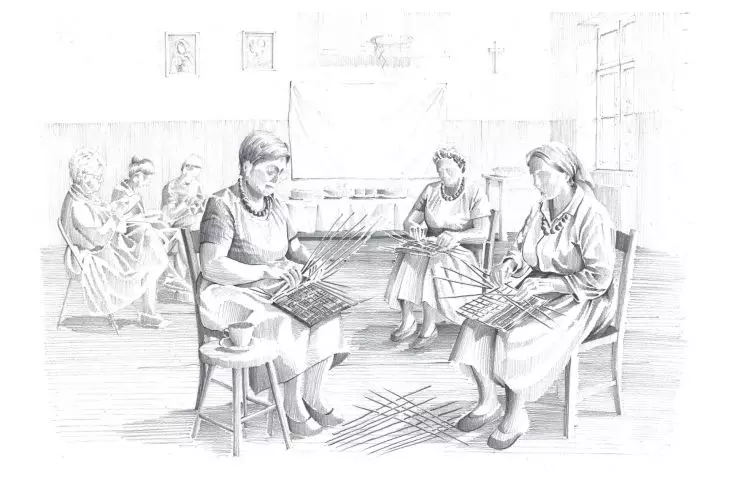
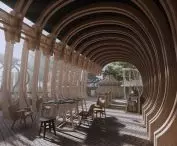
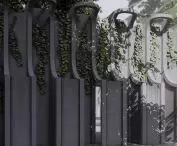
Rooted in the village-urban dialogue, the project weaves together moments of everyday life and domesticity in its architectural language through the use of tactile materials such as wicker, building an atmosphere of shared craftsmanship and emotional closeness. The architecture encourages reflection and "gentle" activism - offering an alternative to confrontational protest through intimate gestures that enhance local grassroots action. The project sensitively connects two different communities through materials that evoke solidarity, quiet strength and shared experience - especially in the context of rural women's groups
- reads an excerpt from a commentary from thesis supervisors Izabela Wieczorek and Elizabeth Dow.
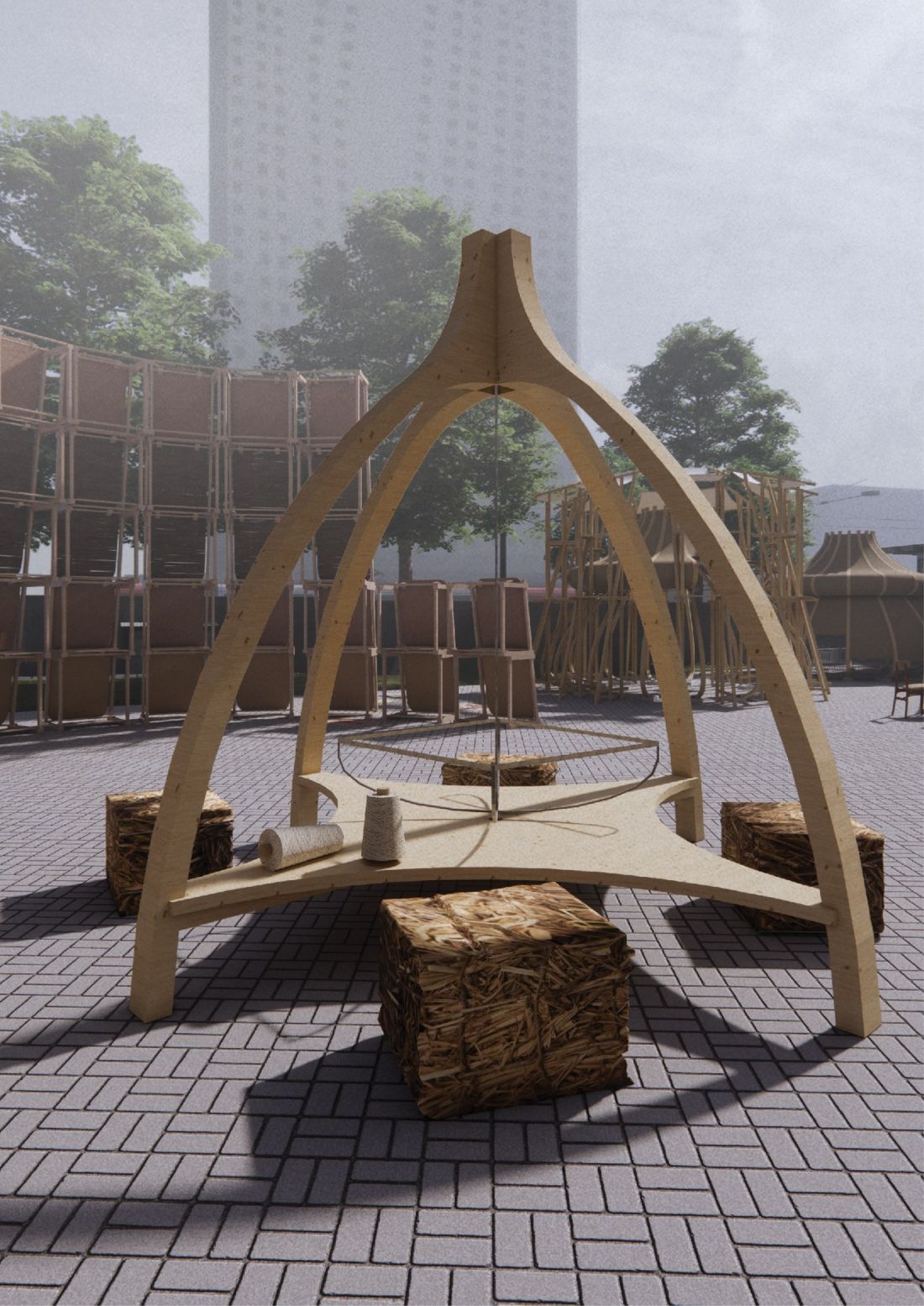
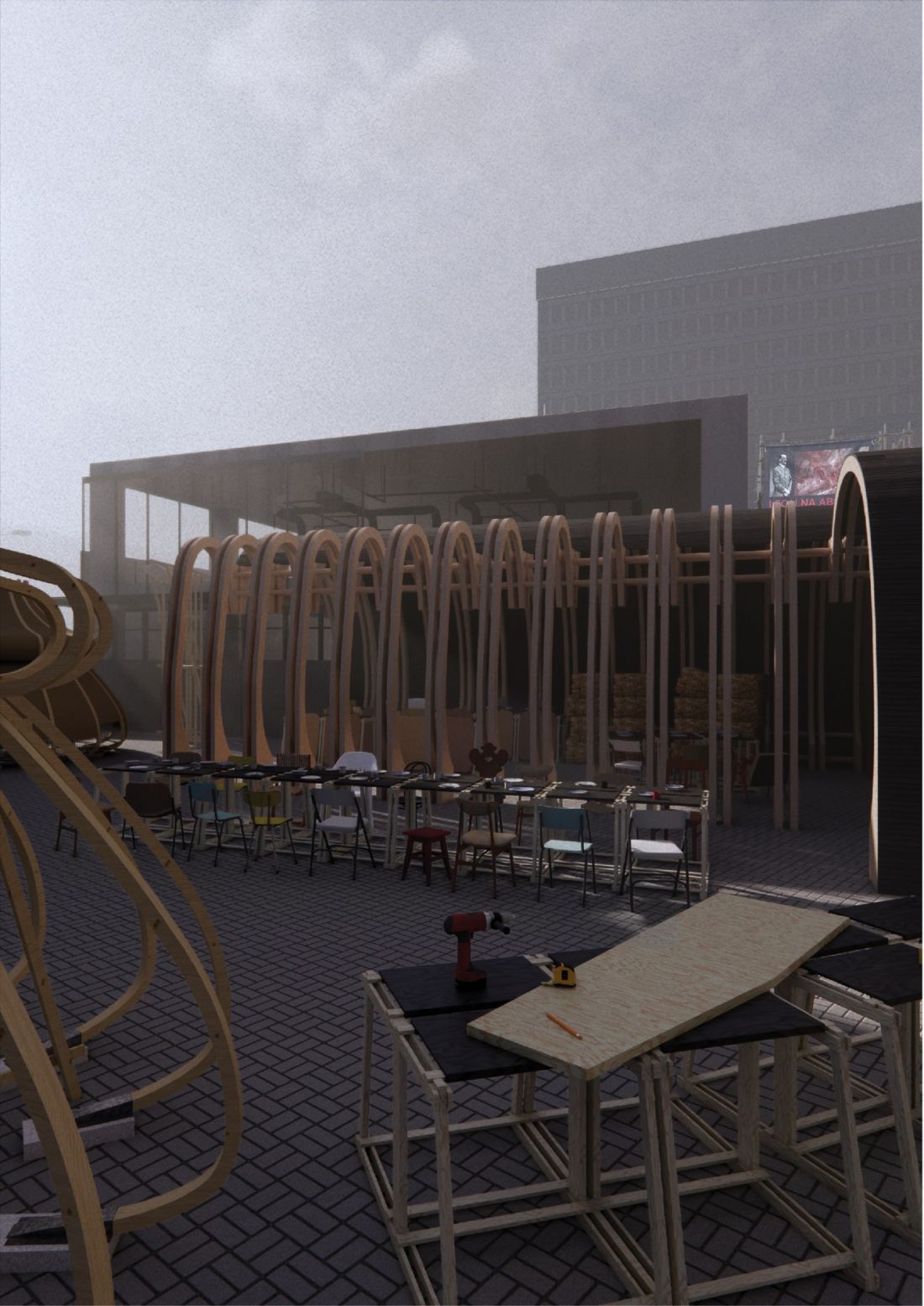
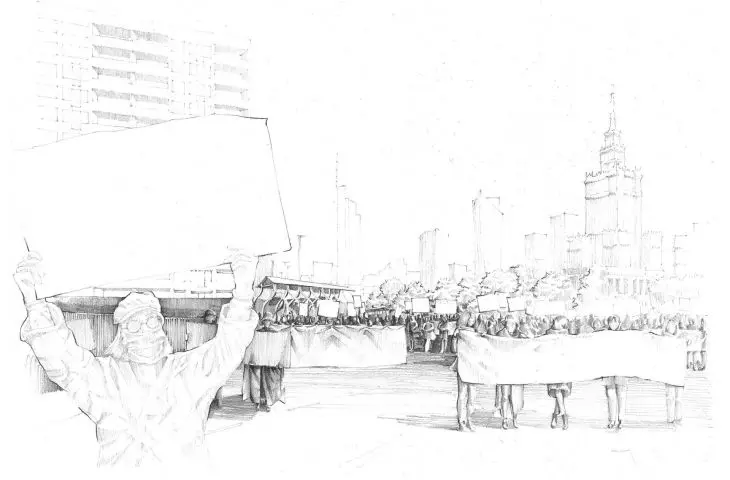
The Common Thread
proj.: Karolina Adamiec
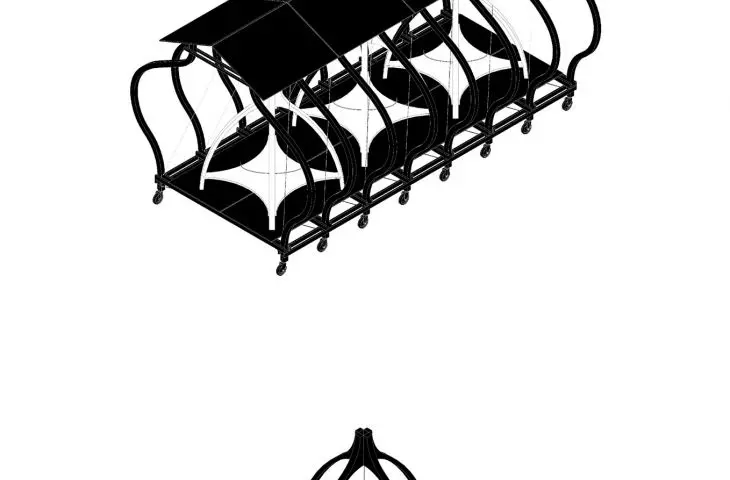
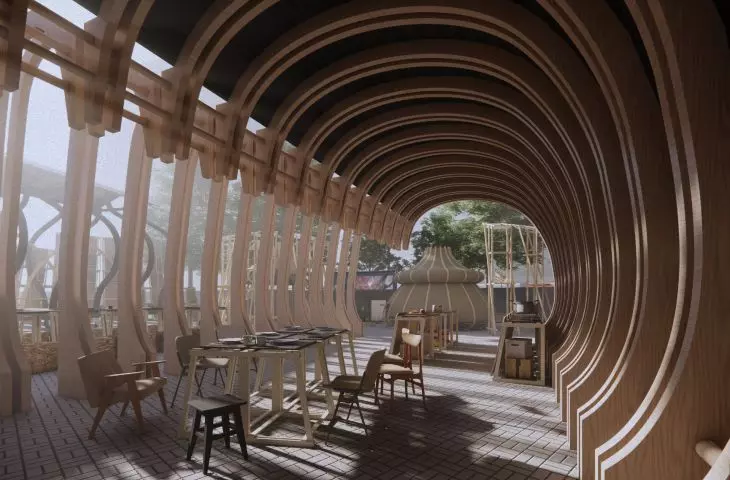
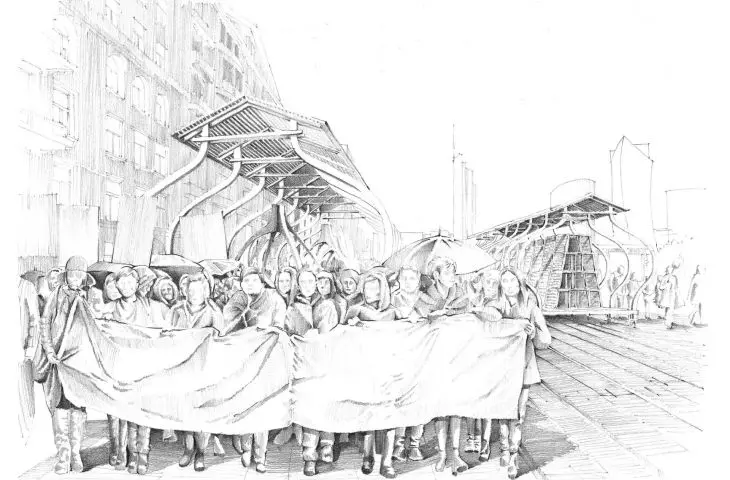
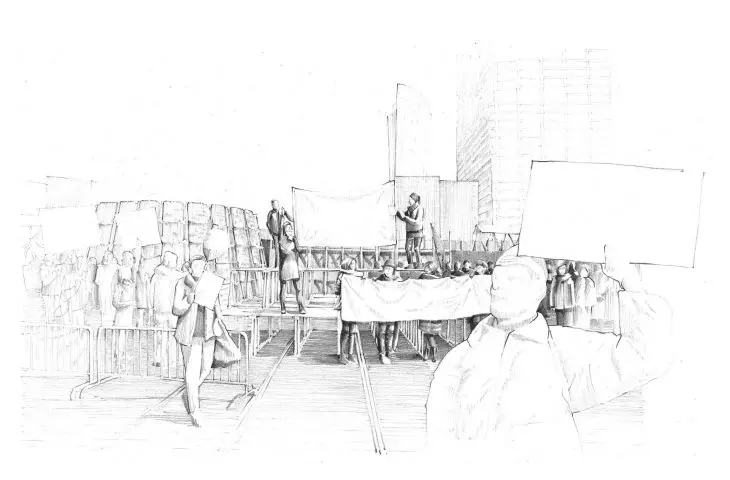
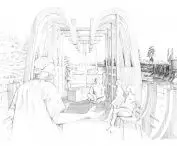
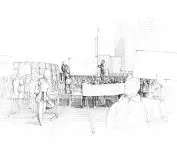
Encampment
proj.: Karolina Adamiec
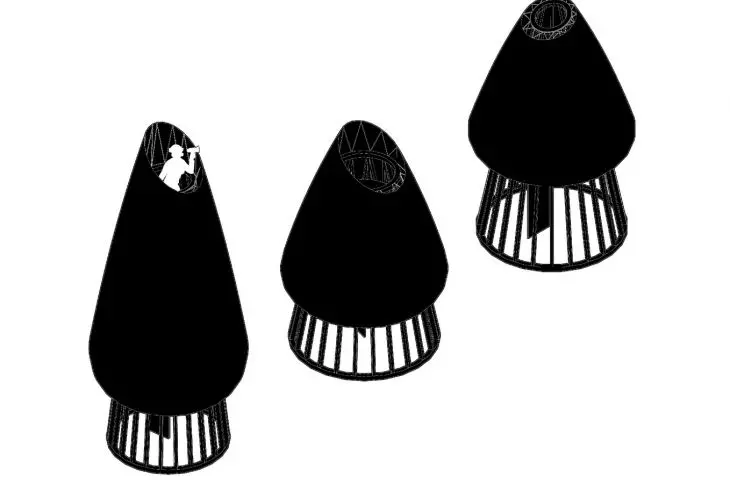
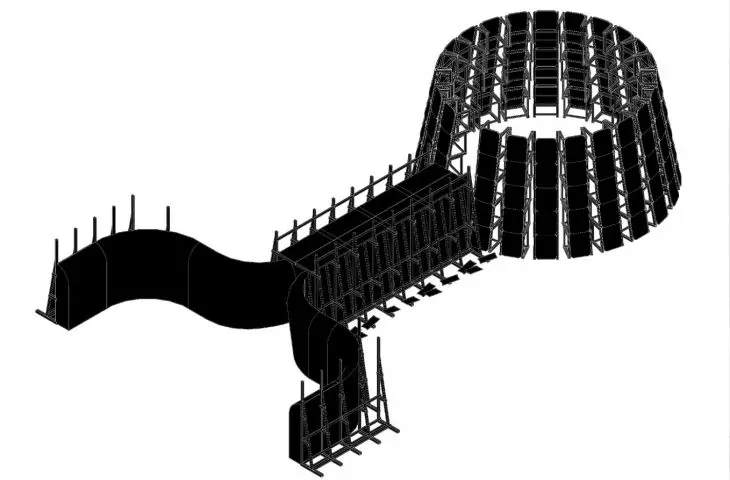
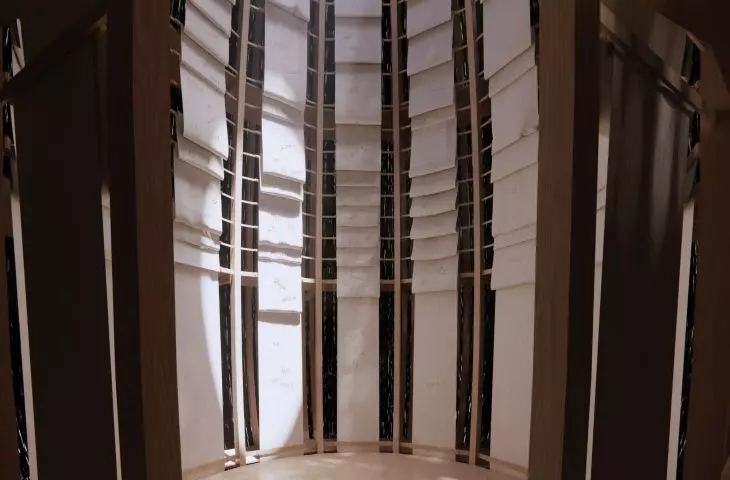
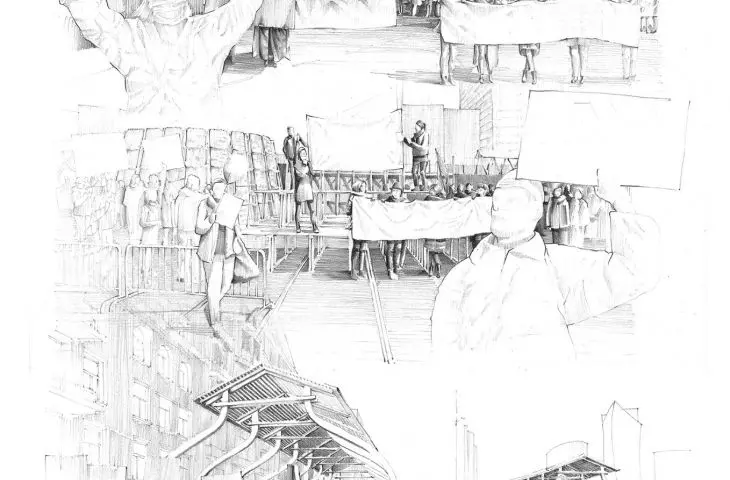
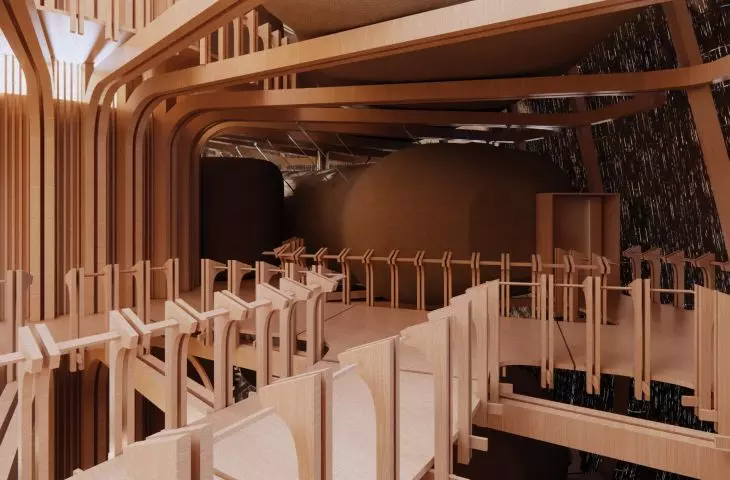
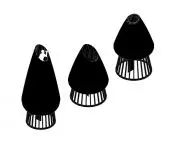
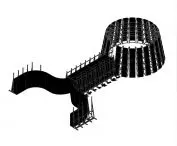
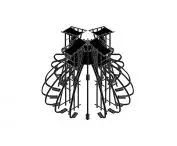
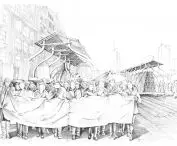
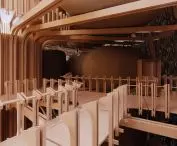
Another element of the project is "Femme Maison" - a mobile structure whose black roof refers to black umbrellas - one of the main signs of protests on women's rights in Poland. It is adapted for transportation during a protest march. Symbolic structures may stand in its way, "The singular Trio," which is three wicker platforms designed for speakers, "Microscales of Dissent," spaces where people can stop and quiet down, and "The Path of Shared Steps," a structure at the end of which is a spacious meeting room, lined with wicker panels made by women from all over Poland.
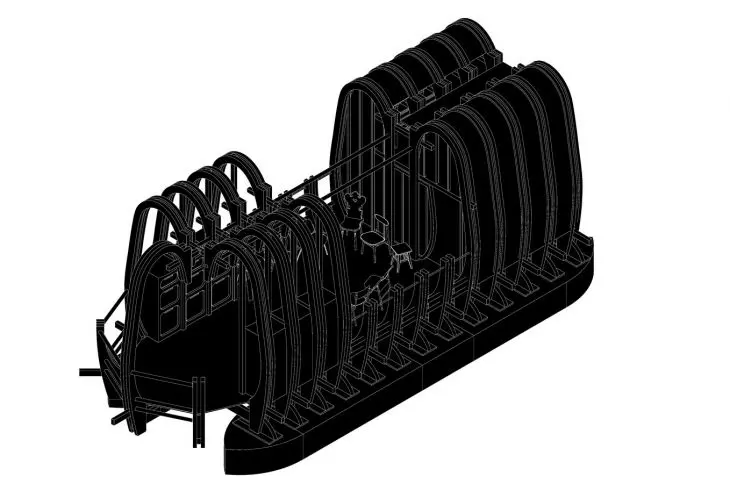
help arrives by water
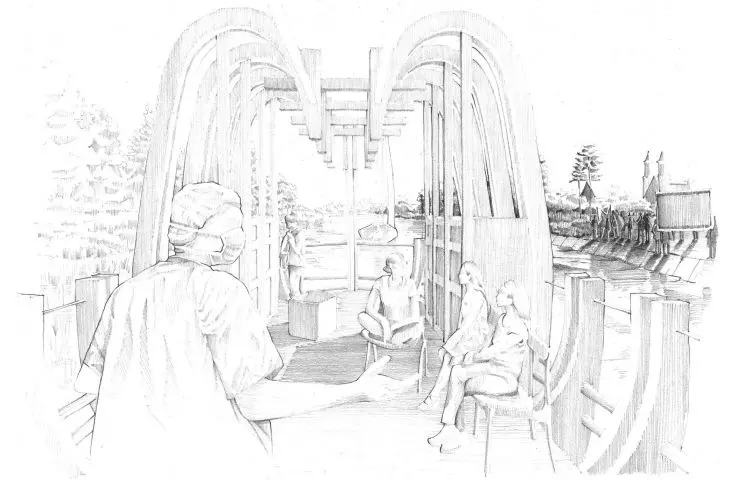
The project also includes mobile structures roaming rivers across the country. These floating structures serve as support units, and are safe spaces where one can receive psychological help or obtain discreetly needed medication. The units are adapted to summer and winter conditions, so they can operate year-round.
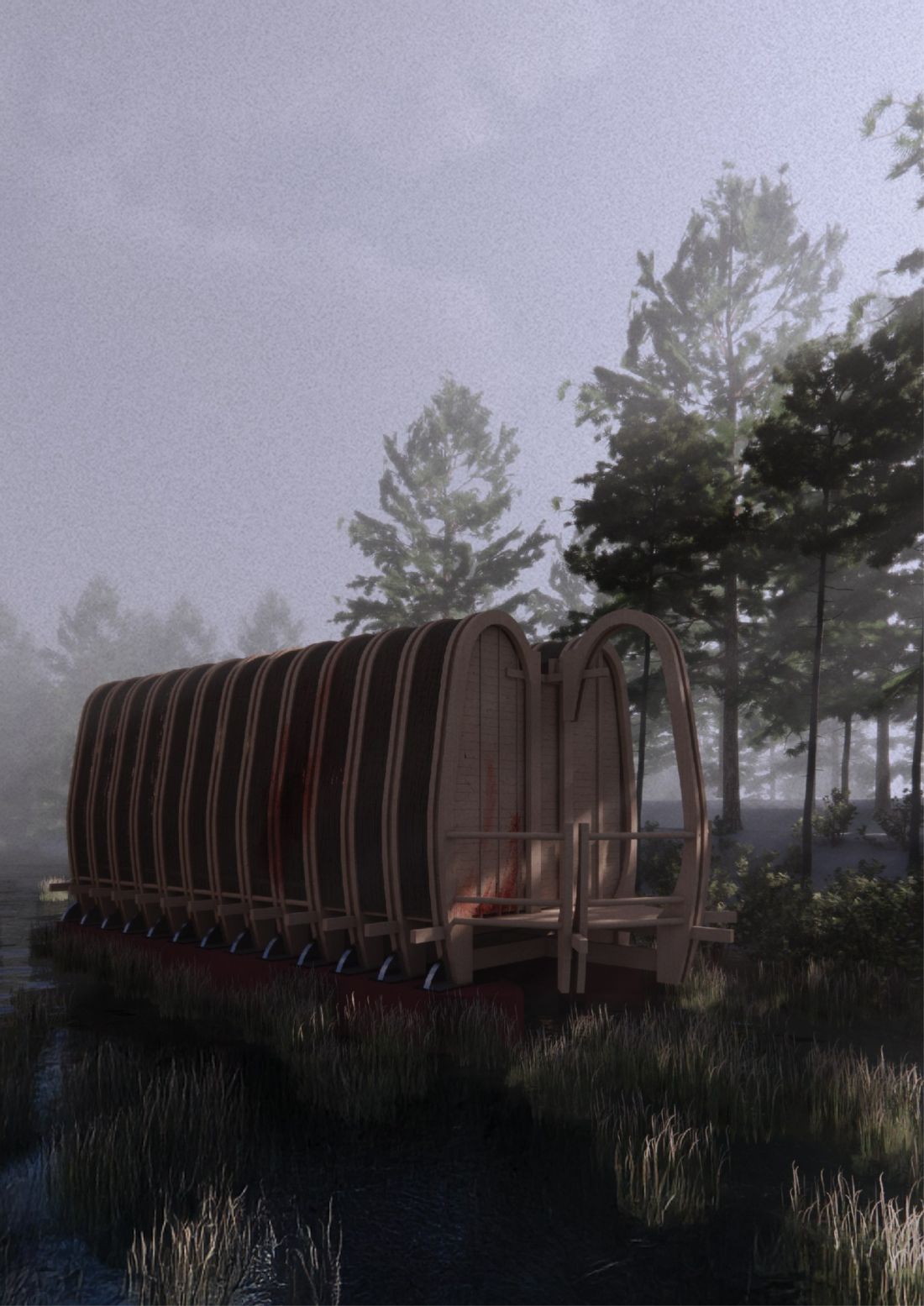
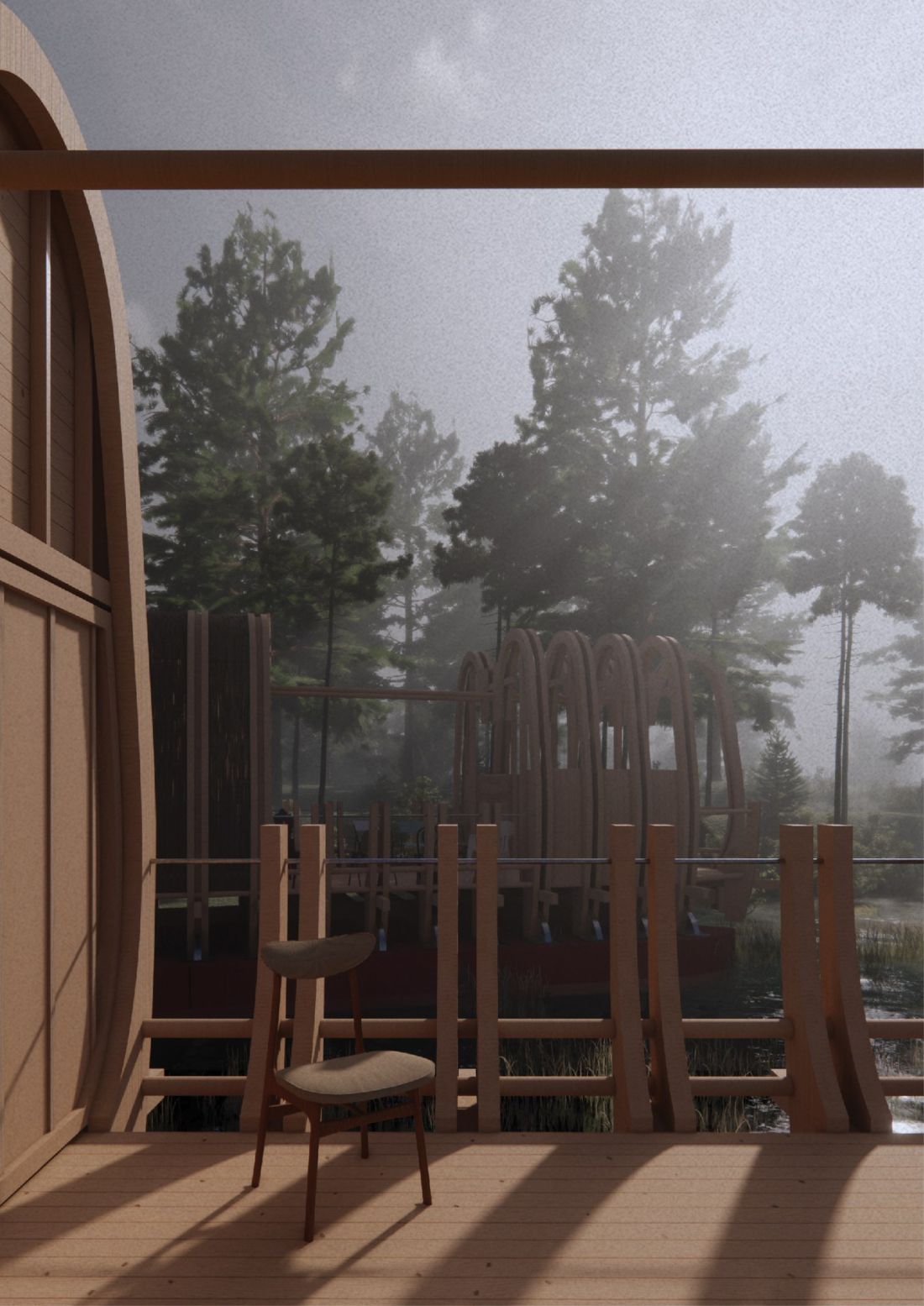
boat
design: Karolina Adamiec
The author treated the topic of women's rights with great sensitivity - in both urban and rural contexts - taking into account cultural and geographical differences. She also identified legal gaps - both in health care and construction laws - especially with regard to temporary structures. Testing these "gaps" with architectural proposals, she demonstrated the role of the architect as a flexible advocate for social issues
- add the thesis's promoters.
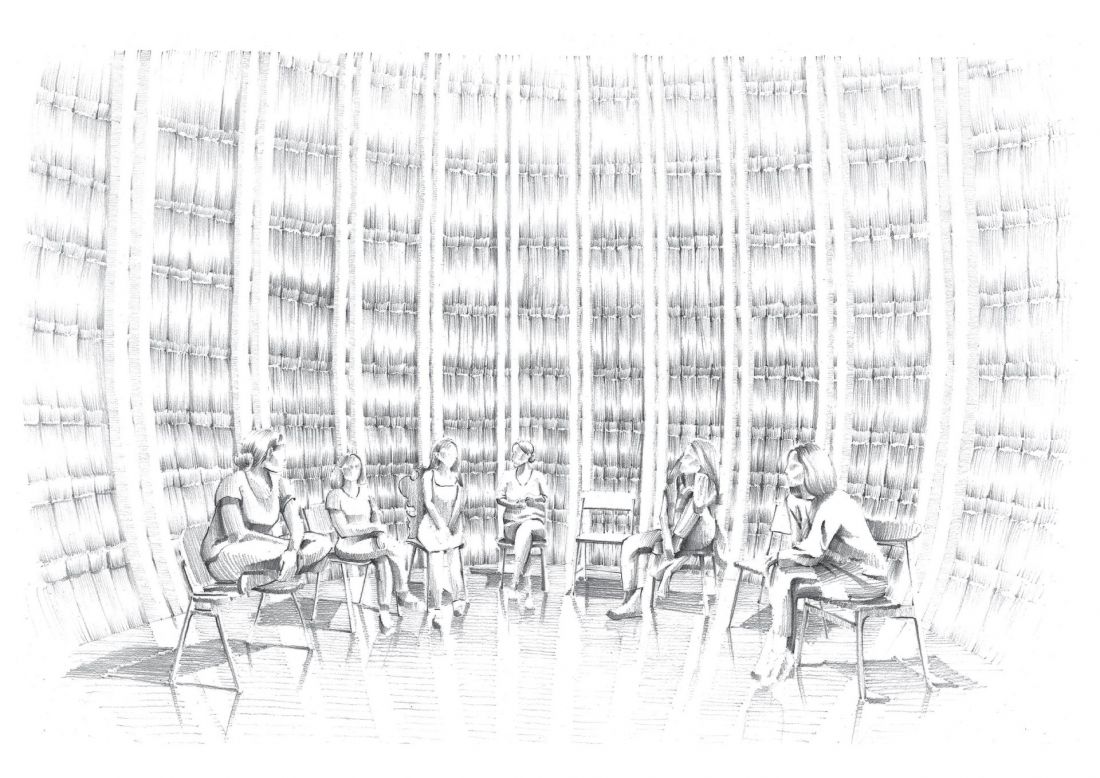
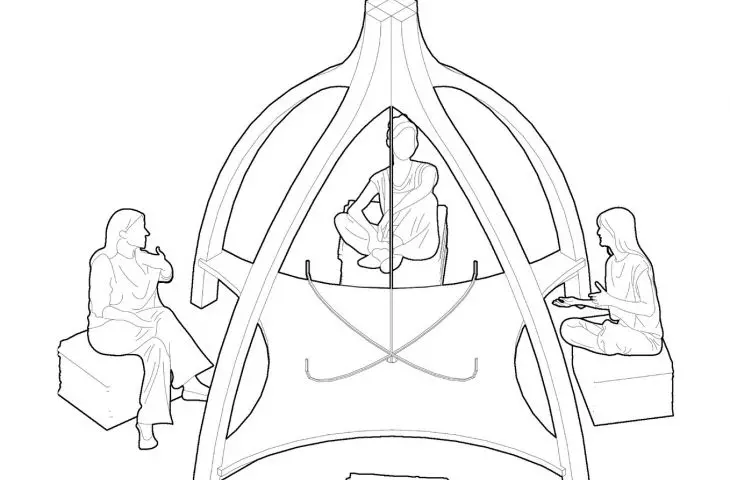
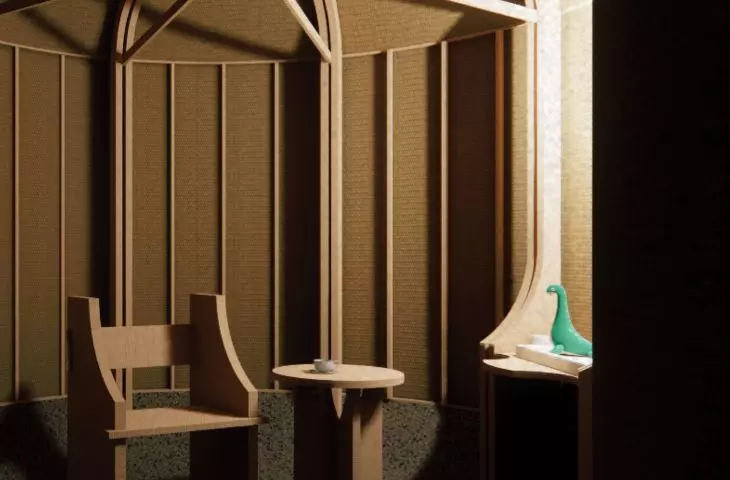
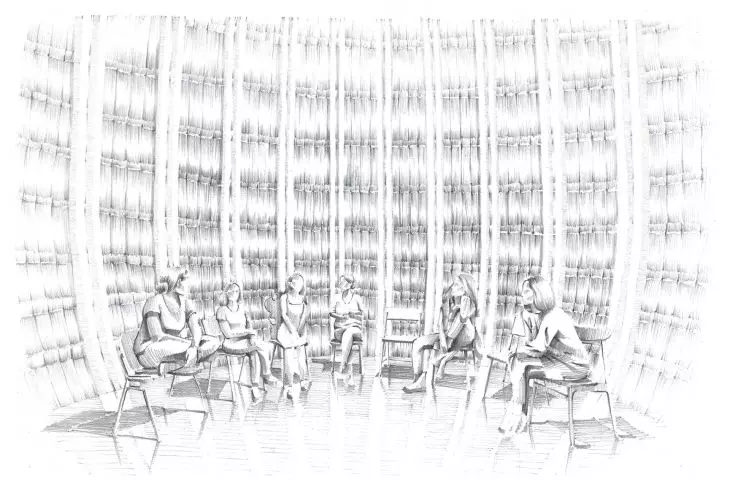
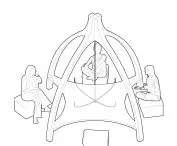
drawing - support group meeting
proj.: Karolina Adamiec
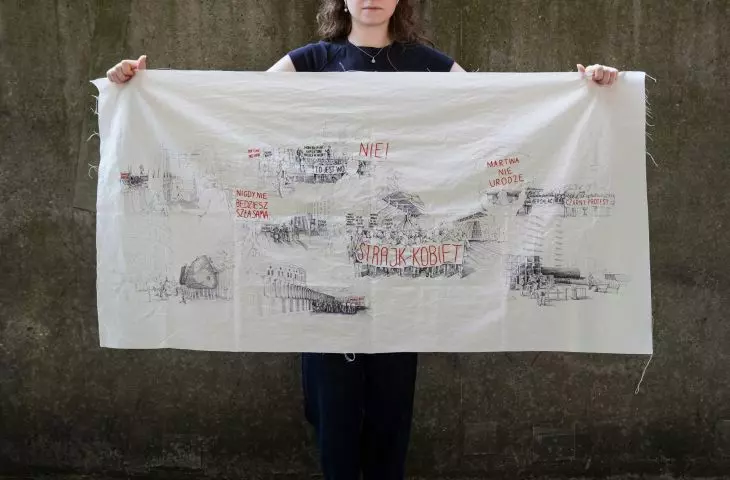
The author also attached an embroidered banner to the work, with which she alludes to the aesthetics of the protests, and at the same time is a symbolic combination of resistance and care, based on collective action.
The Women's Rights Roundabout is not only a project, but also a manifesto. Karolina Adamiec has shown how important a social role should be taken by architecture, whose primary purpose is, after all, protection.