





How to bring life back to the city center? As part of the Erasmus program, students from Spain, Italy, Romania and Politechnika Lubelska designed concepts for revitalizing the area around the train station and the old town in Lublin.
The Lublin University of Technology hosted a five-day BIP Erasmus+ program with the theme "Revitalization of the area of the former bus station in Lublin with emphasis on sustainable urban development and new utility functions."
The program was attended by students from the University of Malaga, University of Granada, Mediterranea University of Reggio Calabria, and "Gh.Asachi" Technical University of Iasi.
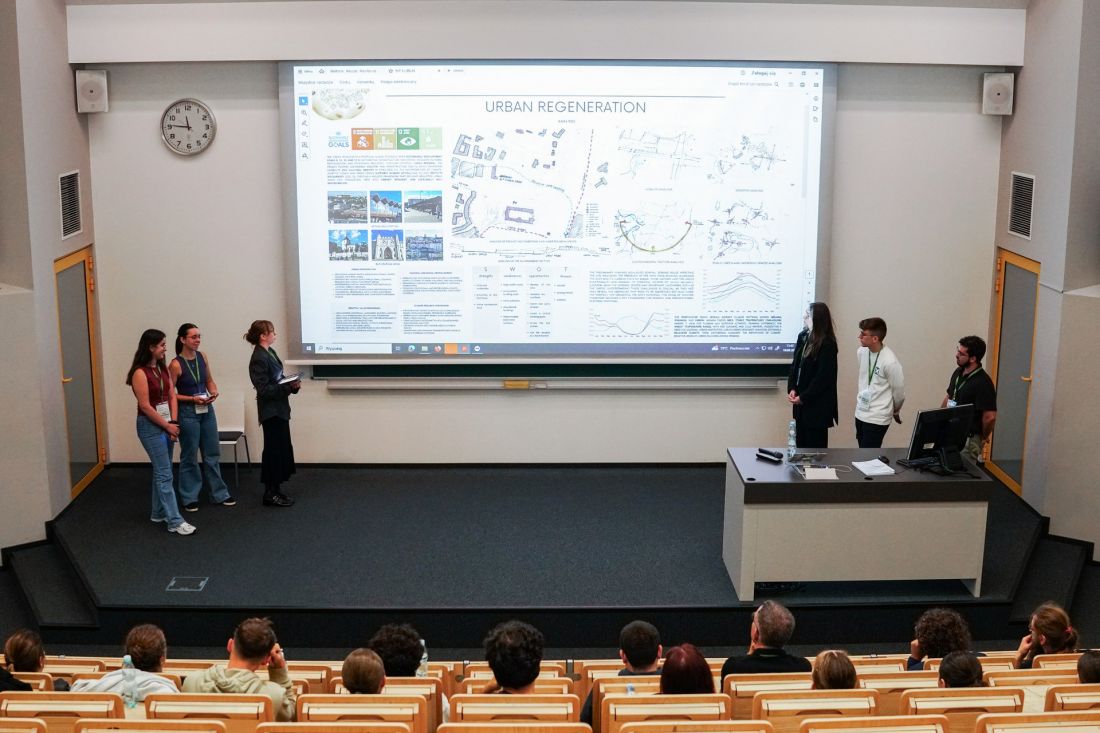
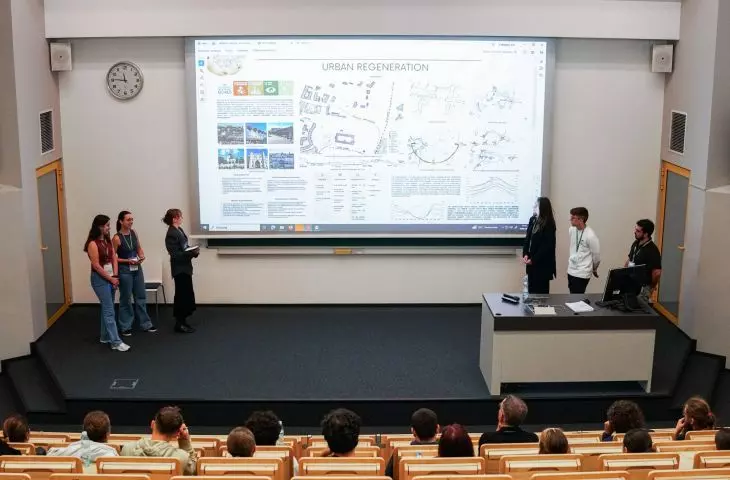
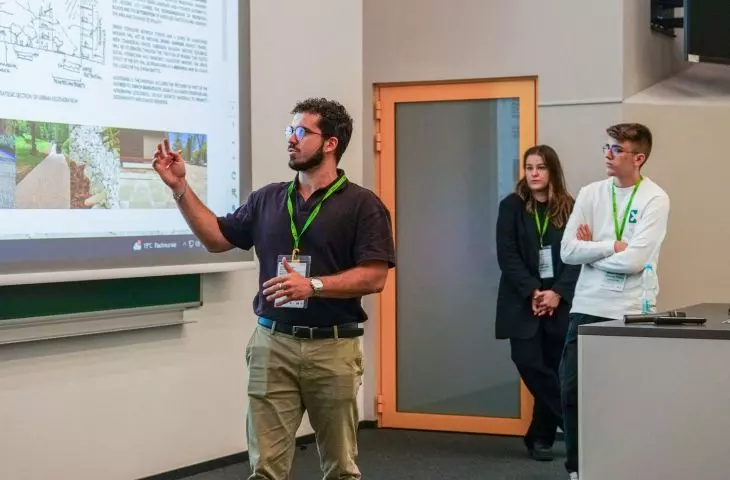
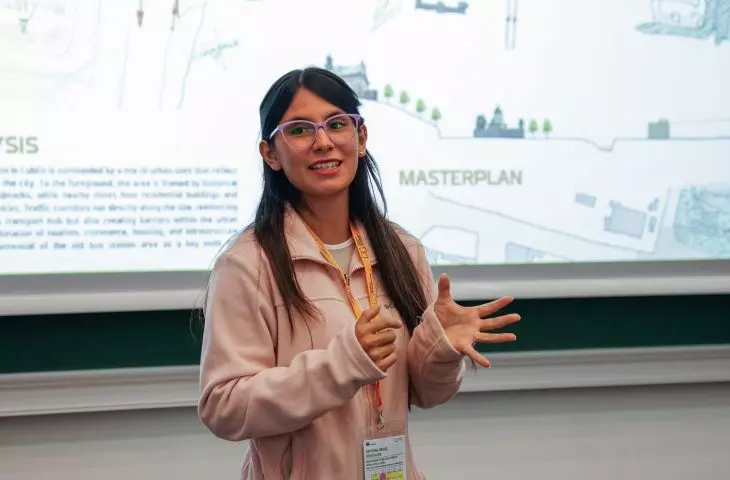
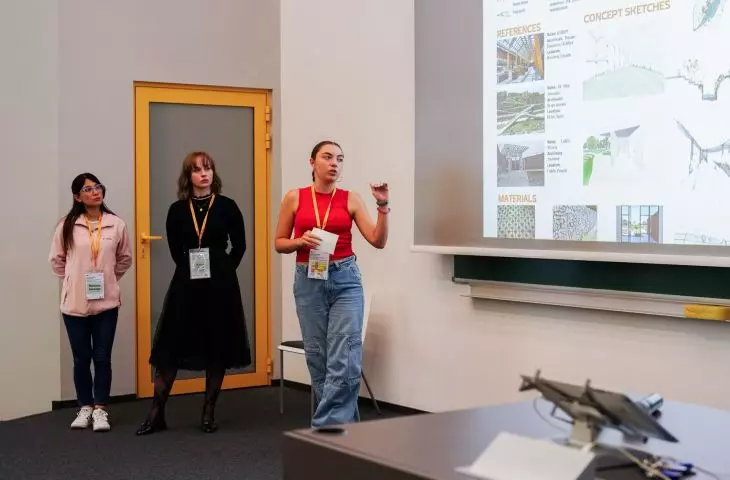
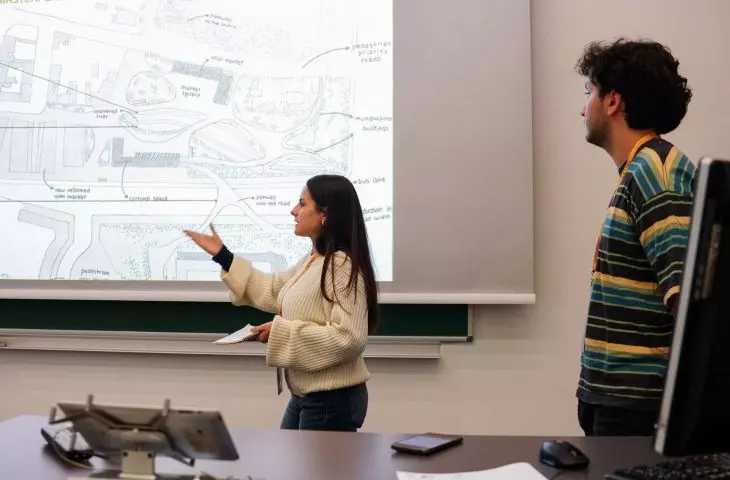
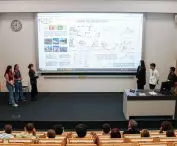
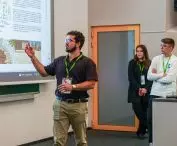
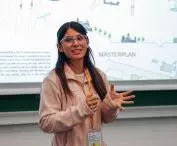
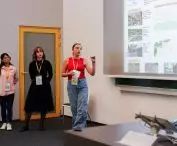
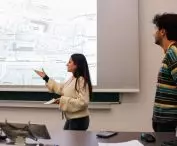
presentation of projects
photo: Tomasz Maślona
They unanimously assessed that the space of the old train station should be revitalized as soon as possible, as it has high potential. Meanwhile, impressions today are not positive. Looking from the side of the castle one sees an area that is degraded and not very well designed. This is a huge contrast with the beautiful view of the Old Town
- says Malgorzata Kozak of the Department of Contemporary Architecture at Lublin University of Technology.
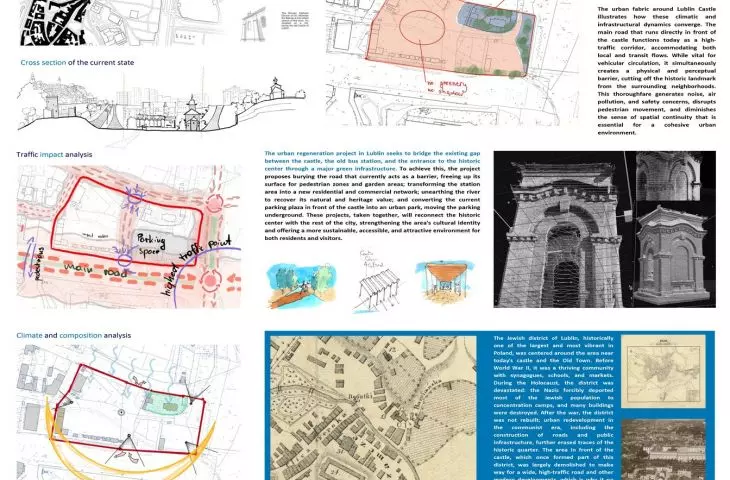
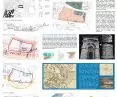
The program produced four projects - all of which point out that the two-lane road between the train station and the castle hill creates a barrier. However, each group presented a different approach to the bus station itself.
green above cars
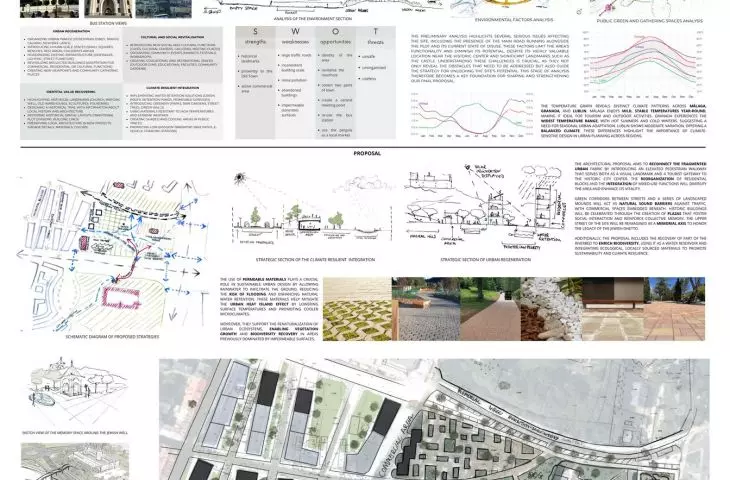
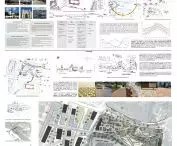
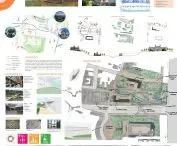
The "Green Team" group - Lucia Garcia, Celia Patino, Miguel Angez Alvarez, Daniel Sanchez, Gabriella Majdanska and Dominika Lisiewska - relied on permeable materials. The students highlighted their key role in designing a sustainable city, reducing the urban heat island effect and preventing flooding.
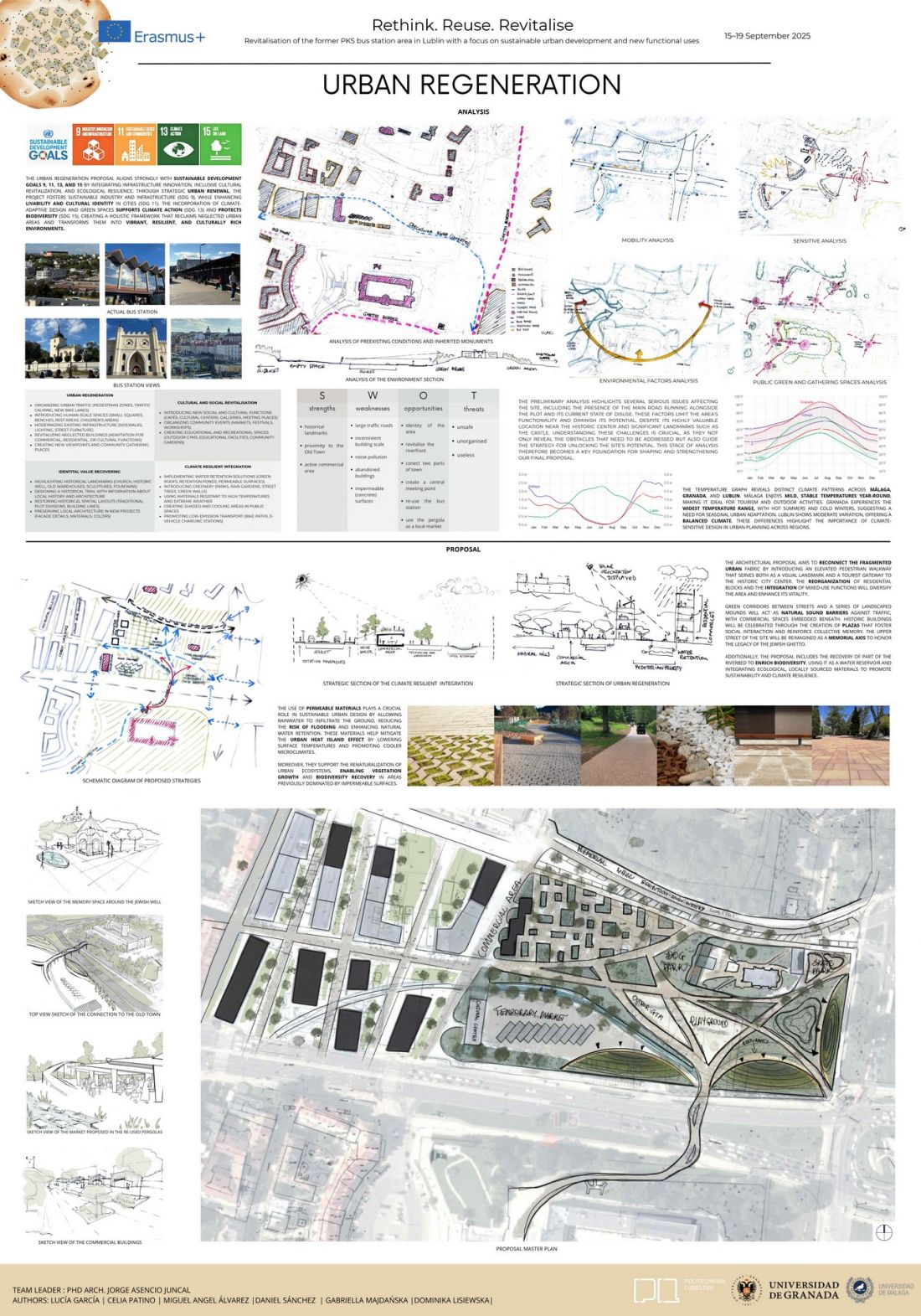
board
proj.: Green Team
The project involves reconnecting the urban layout by introducing an elevated pedestrian bridge. It is intended to serve as both a landmark and a tourist path to the historic city center.
The students also proposed the introduction of natural sound barriers - green corridors between streets and hills. What's more, the project also includes restoration of the riverbed to enrich biodiversity.
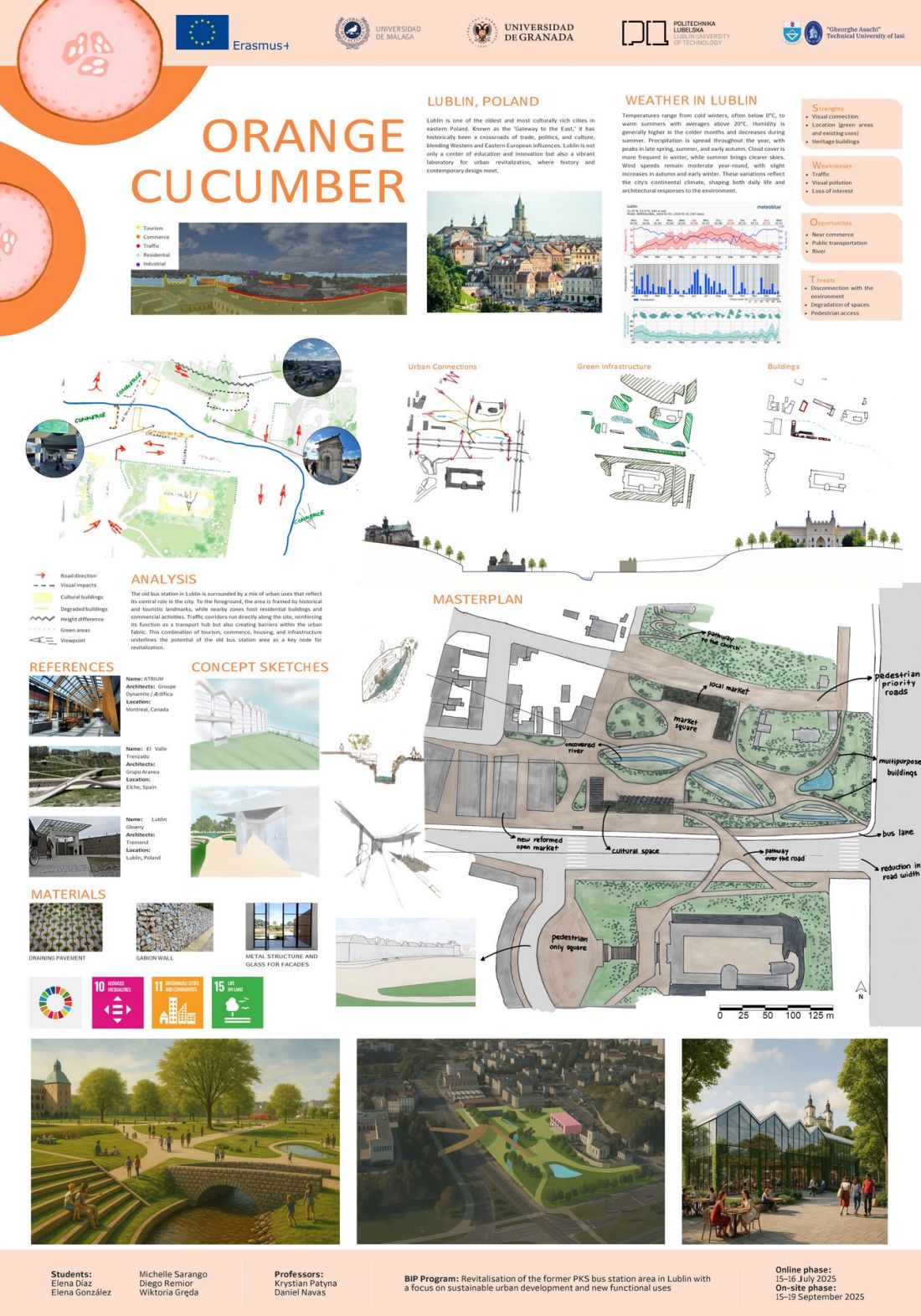
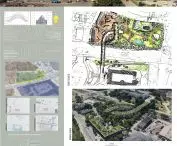
board
proj.: Orange Cucumber
The Orange Cucumber team consisted of Elena Diaz, Elena Gonzalez, Michelle Sarango, Diego Remior and Victoria Grêda. In their project, the train station and the main market are also connected by an above-ground footbridge. The market, however, envisions uncovering the riverbed and greening a significant part of the development.
return of the river
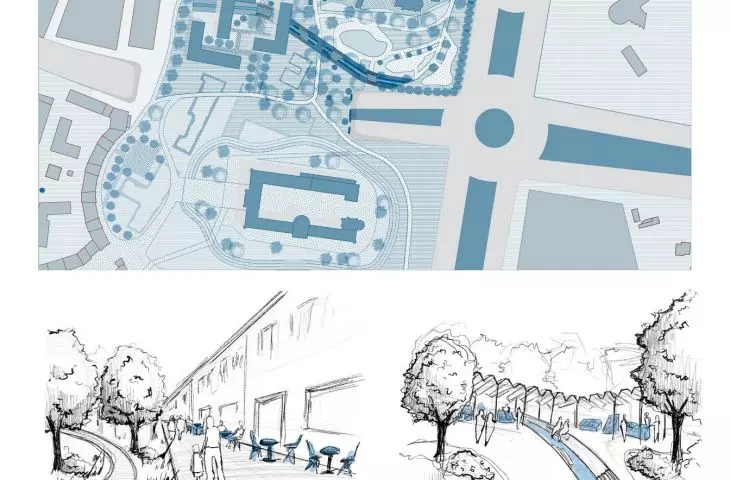
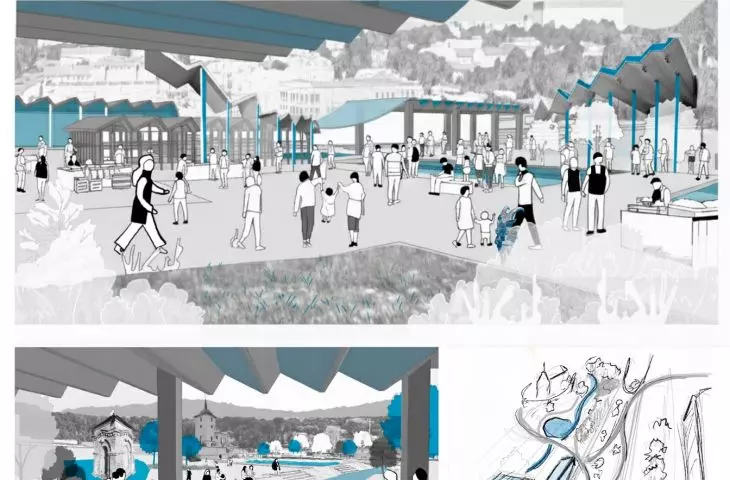
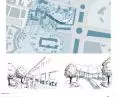
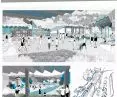
A similar concept was proposed by the "Blue Team" group (Pablo McMahon Gallego de Lerma, Adrian Martin Zufri, Maria Nechita, Magdalena Coroi, Aleksandra Typek and Blazej Krakowski). In their design, the restored river became the heart of the central city. Along its bed, recreational spaces were designed - seating on steps and viewing terraces.
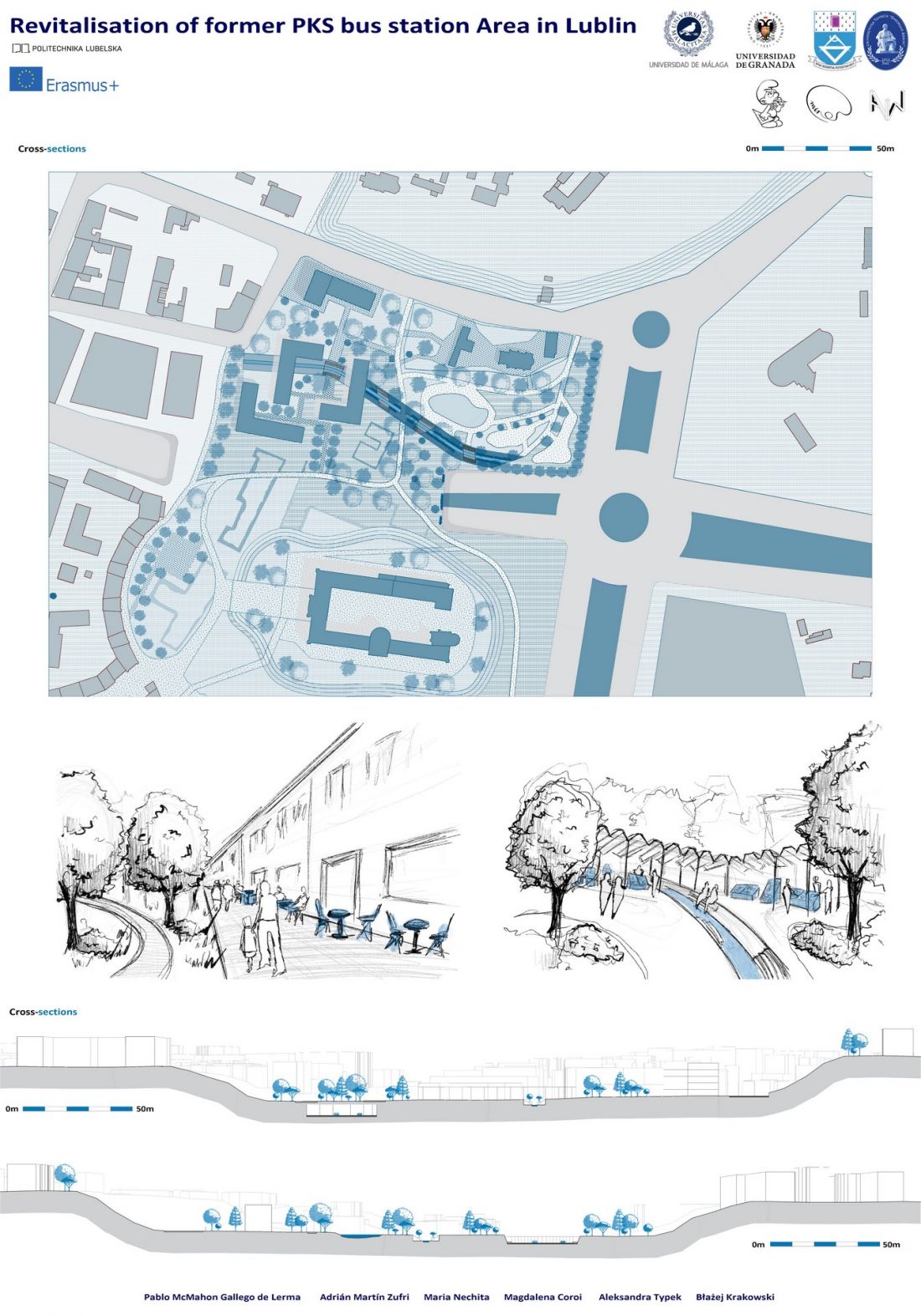
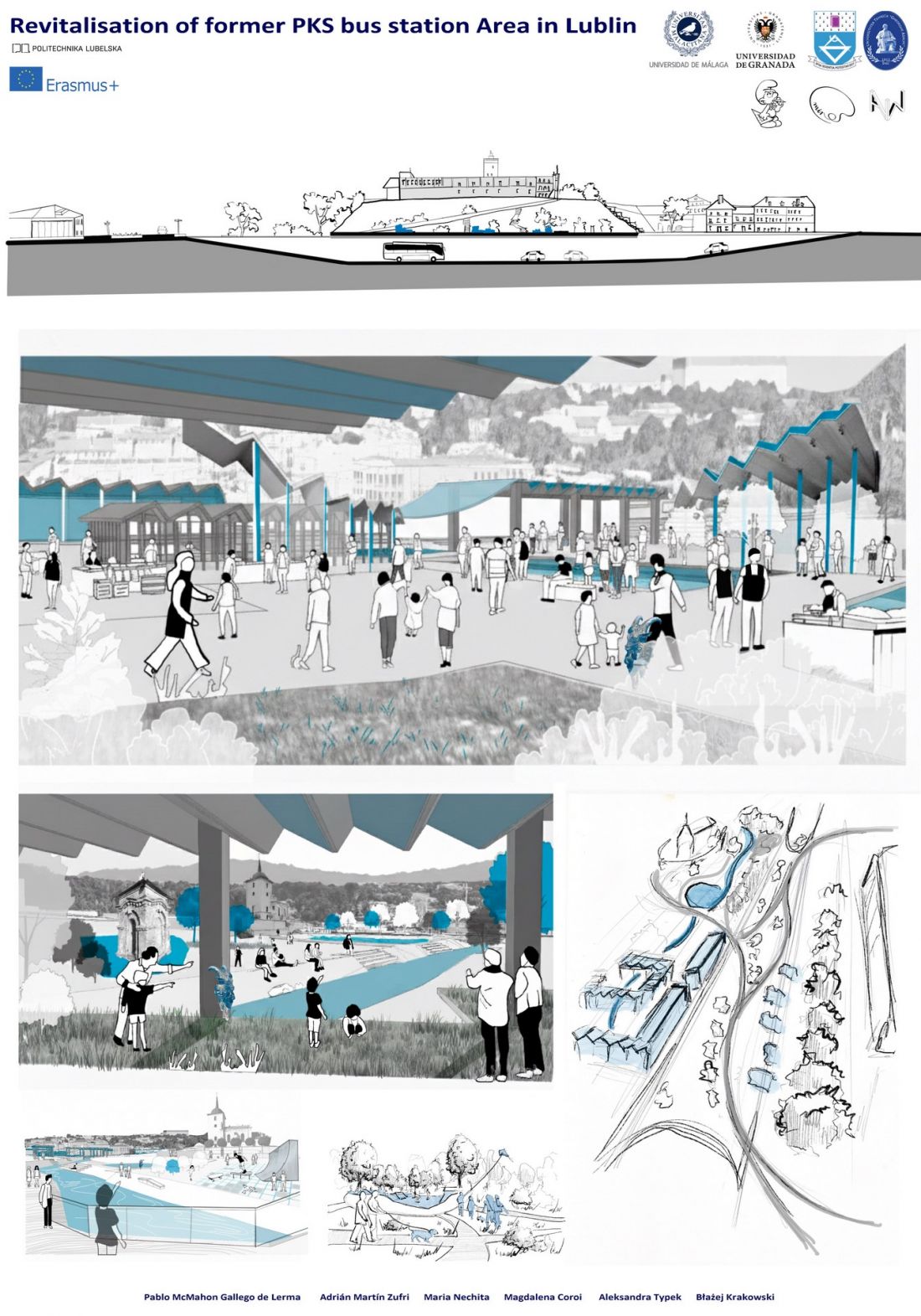
boards 2 and 3
proj.: Blue Team
The group also proposes demolishing a section of the road near the bus station and transforming its area into pedestrian space and gardens.
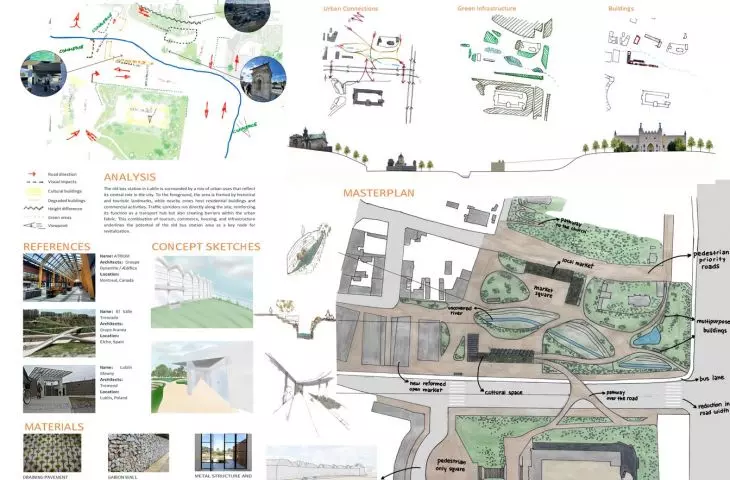
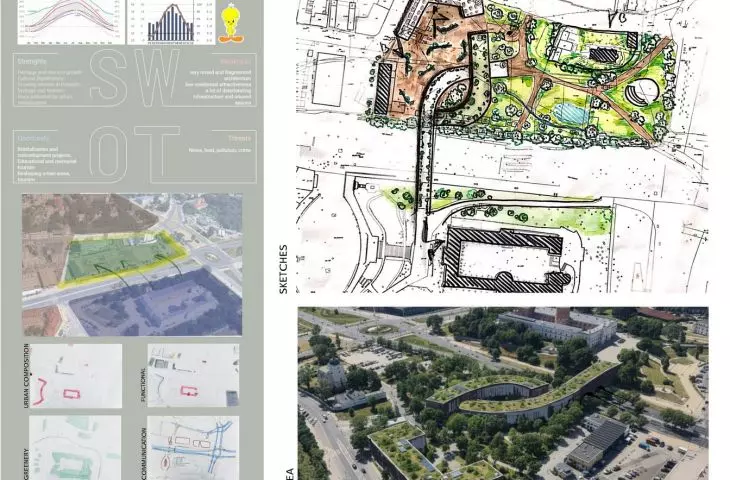
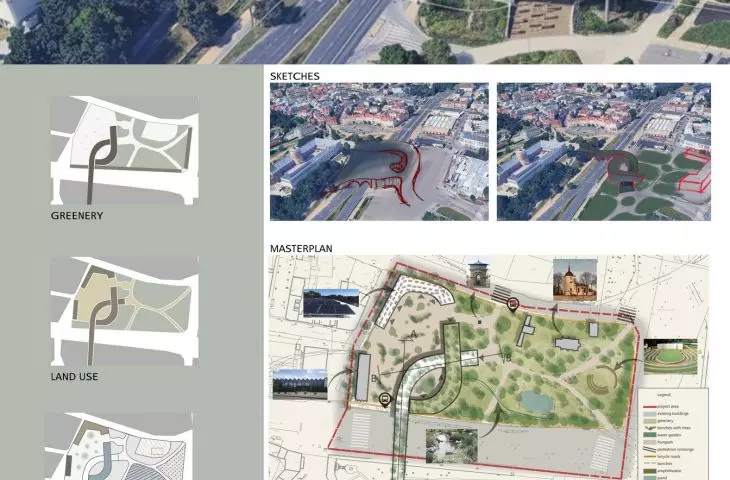
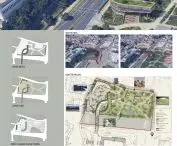
"Team Piolin," made up of Luna Navarro garcia, Marta Negron Gomez, Daria Kryshnivska, Boghita Marina Alexandra and Tuca Ionut, has created a project in which instead of a footbridge over the street, a greened bridge is created, extended by two multi-story buildings with an oblong body.
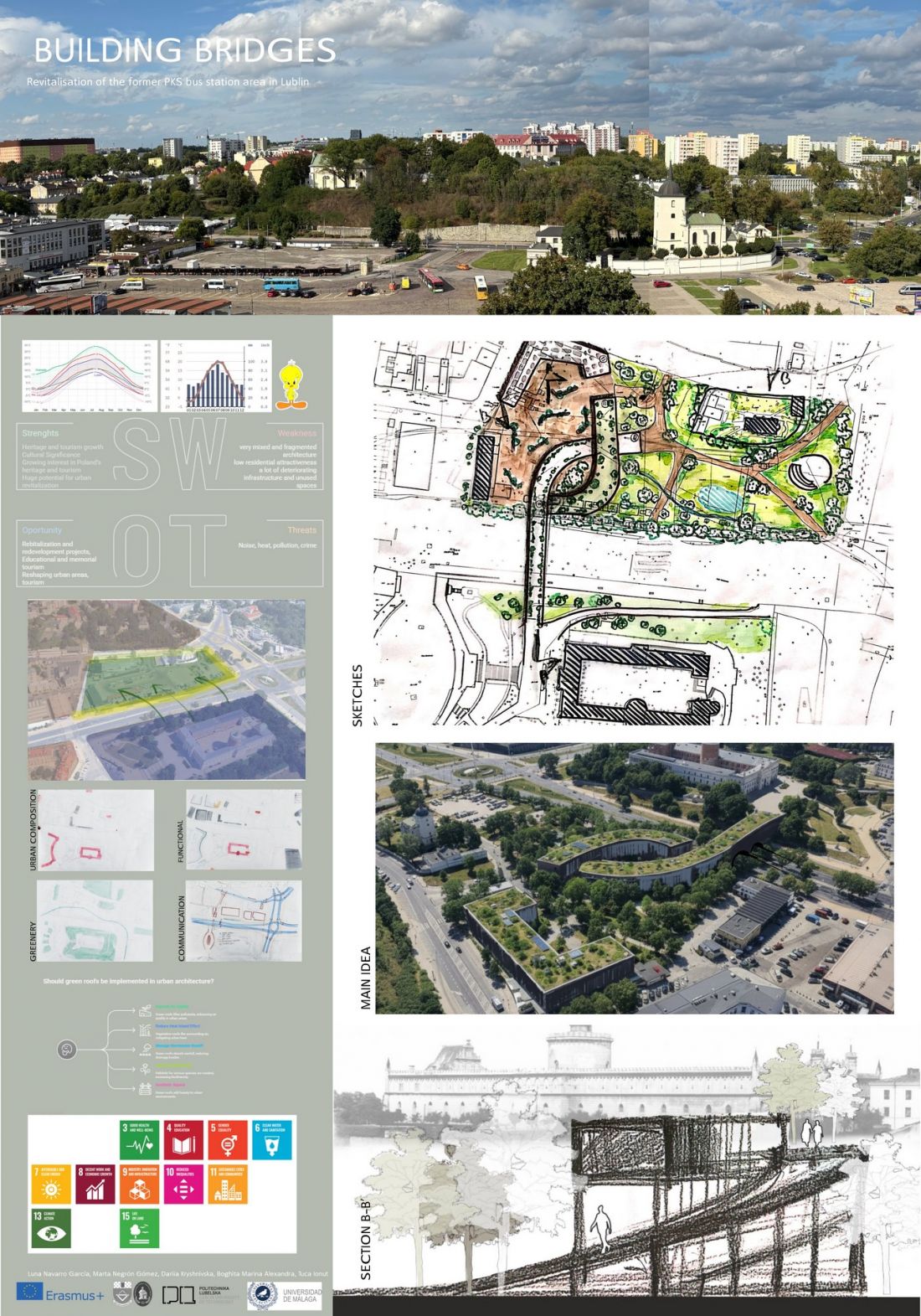
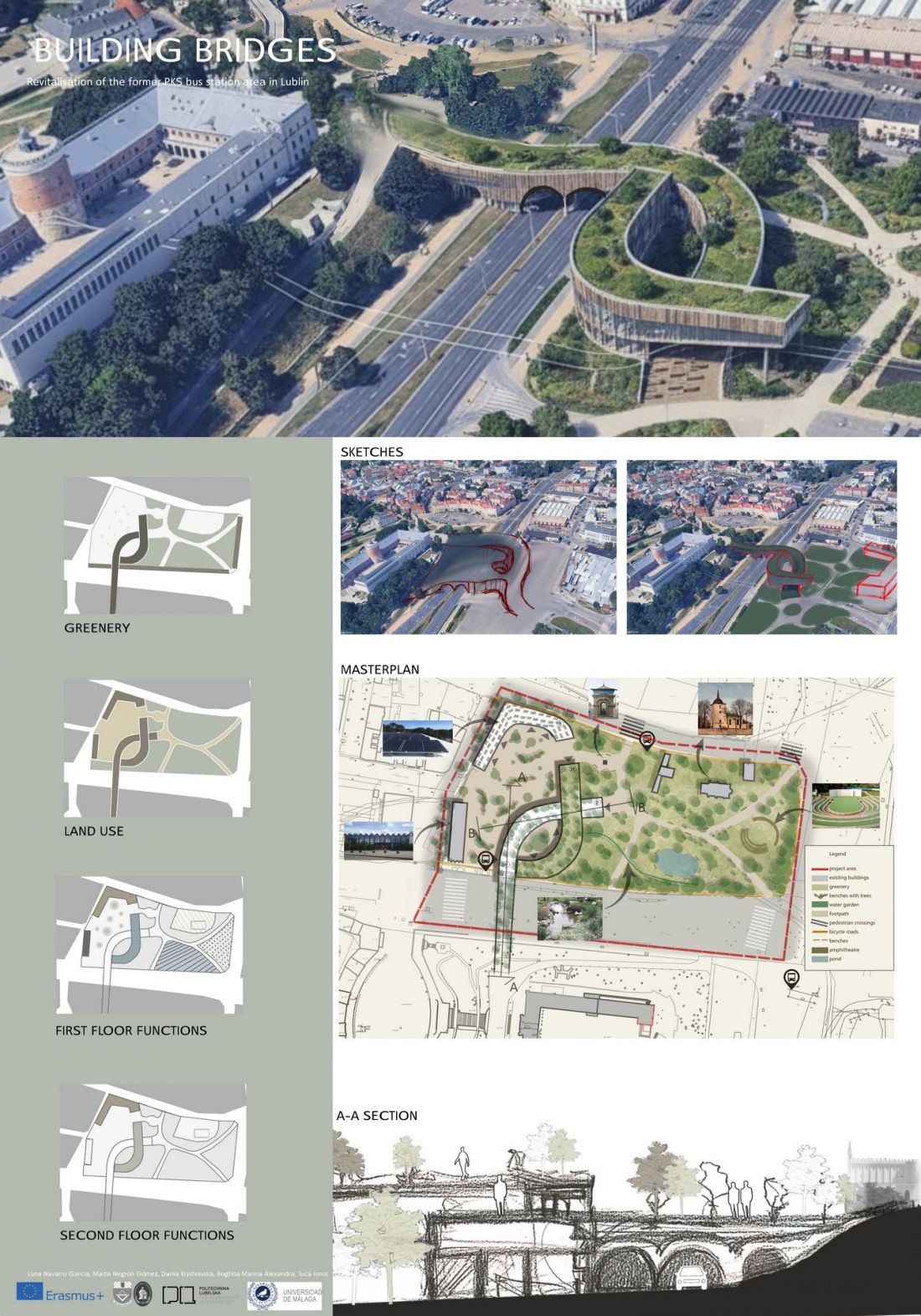
boards 1 and 2
proj.: Team Piolin
BIP Erasmus+ is a formula whereby students from universities in different countries can meet in one place and work together on a specific topic.
These are week-long stays in partner universities combined with a virtual component. During them, unique topics and solutions are worked on. Their topics do not have to be connected to studies. Sometimes they relate to interests or passions. However, it always allows you to gain international experience, openness to the world, but also to learn completely non-standard methods of work
- explains Dr. Celina Handzel, head of the Office of International Education at Lublin University of Technology.