




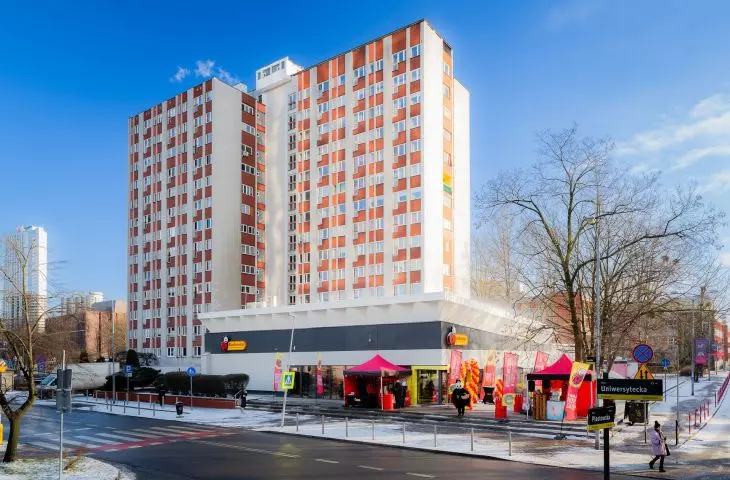




When the modernist building "showed its teeth" during the renovation of a supermarket in Katowice, the media, architecture lovers and even the restorer himself stood up for its unusual decoration. Today "Biedronka" boasts a store opened on December 30, 2025 in a pavilion designed by a prominent Silesian architect. The renovation allowed to preserve what was most valuable in it, but was not without compromises. Could it have been better?
The author of the building in question was Stanislaw Kwasniewicz (1930-2006) - one of the most important representatives of the "Silesian school of architecture," responsible for the design of numerous buildings and architectural complexes in Katowice and other cities of the later Upper Silesian-Zagłębi Metropolis. On the very avenue of Wojciech Korfanty in Katowice, he designed the BWA pavilion, the skyscraper "Slipper" and the office building "Separator." The Brutalist headquarters of the Silesian Institute of Science and the postmodern edifice of the Silesian Library, designed together with Jurand Jarecki and Marek Gierlotka, were also built according to his concept.
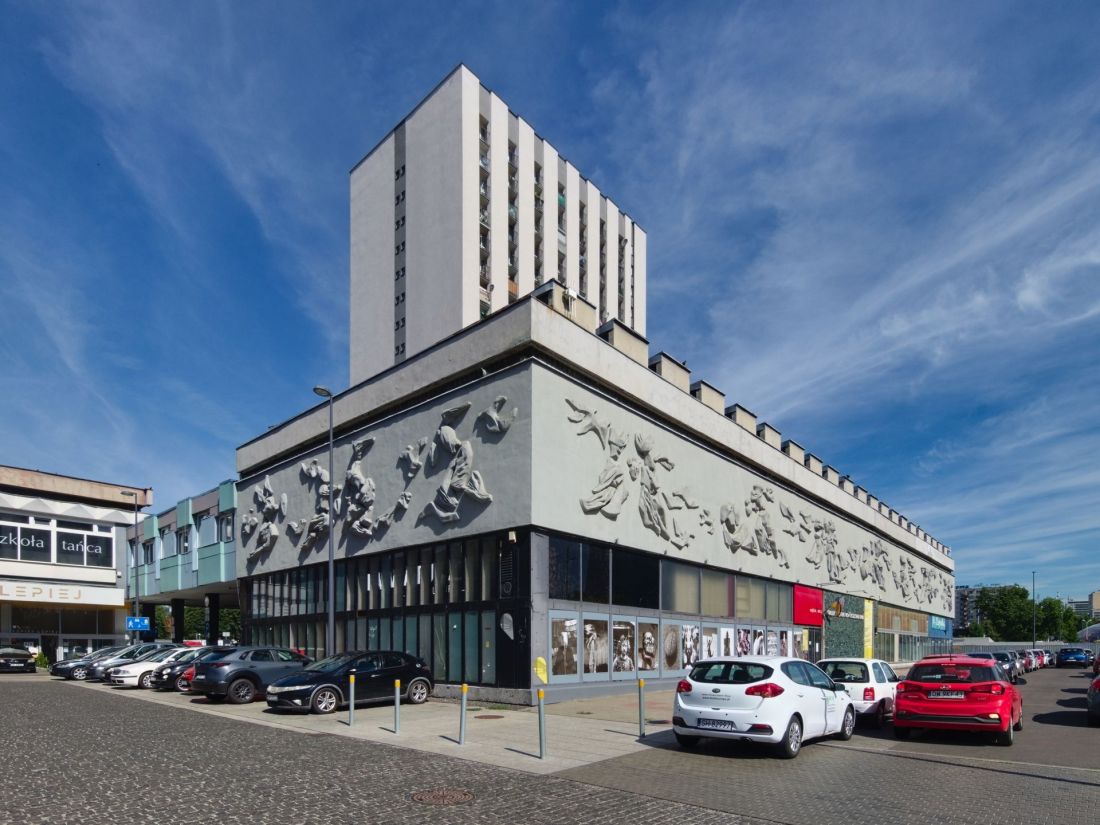
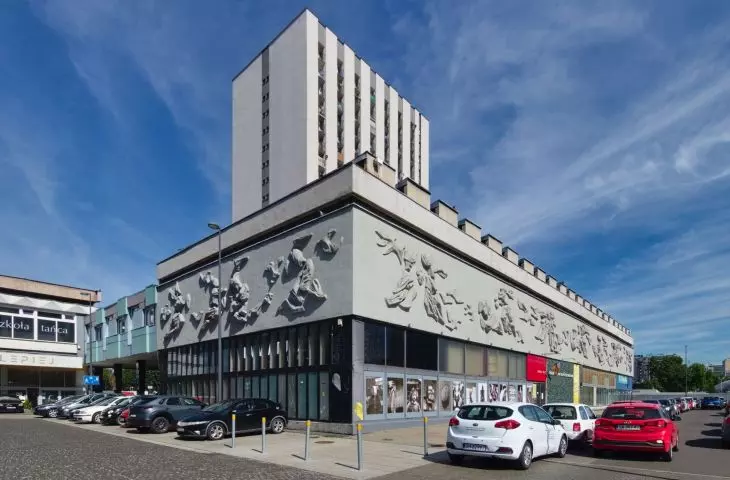
BWA Art Exhibition Office Pavilion in Katowice, 1966 - designed by Stanislaw Kwasniewicz.
Photo: Adrian Tync, © CC BY-SA 4.0 | Wikimedia Commons
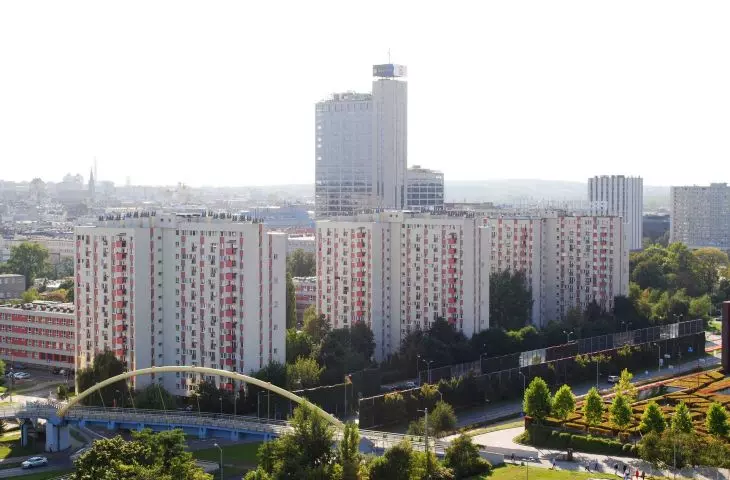
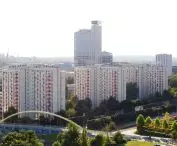
Stanislaw Kwasniewicz was also the author of many temples with distinctive, deconstructed bell towers, including those in Wrzosowa (the Church of the Most Holy Body andBlood of Christ, together with Marian Ficenes), inSosnowiec (Church of the Visitation of the Blessed Virgin Mary Sosnowiec) or in Bażanowice, where he designed the Evangelical Church of the Holy Trinity together with Karol Gasie . An important part of his architectural output was residential construction. In Katowice, he designed, among others, the characteristic Blue Blocks in Koszutka, the Paderewskiego estate and the Kopalniana estate, known as the "Dolarowcy" or "Dewizowców" estate in reference to the PKO bank, which was an investor in one of the buildings. It was within the latter complex, located on Uniwersytecka Street, that the characteristic pavilion with teeth on the facades was built.
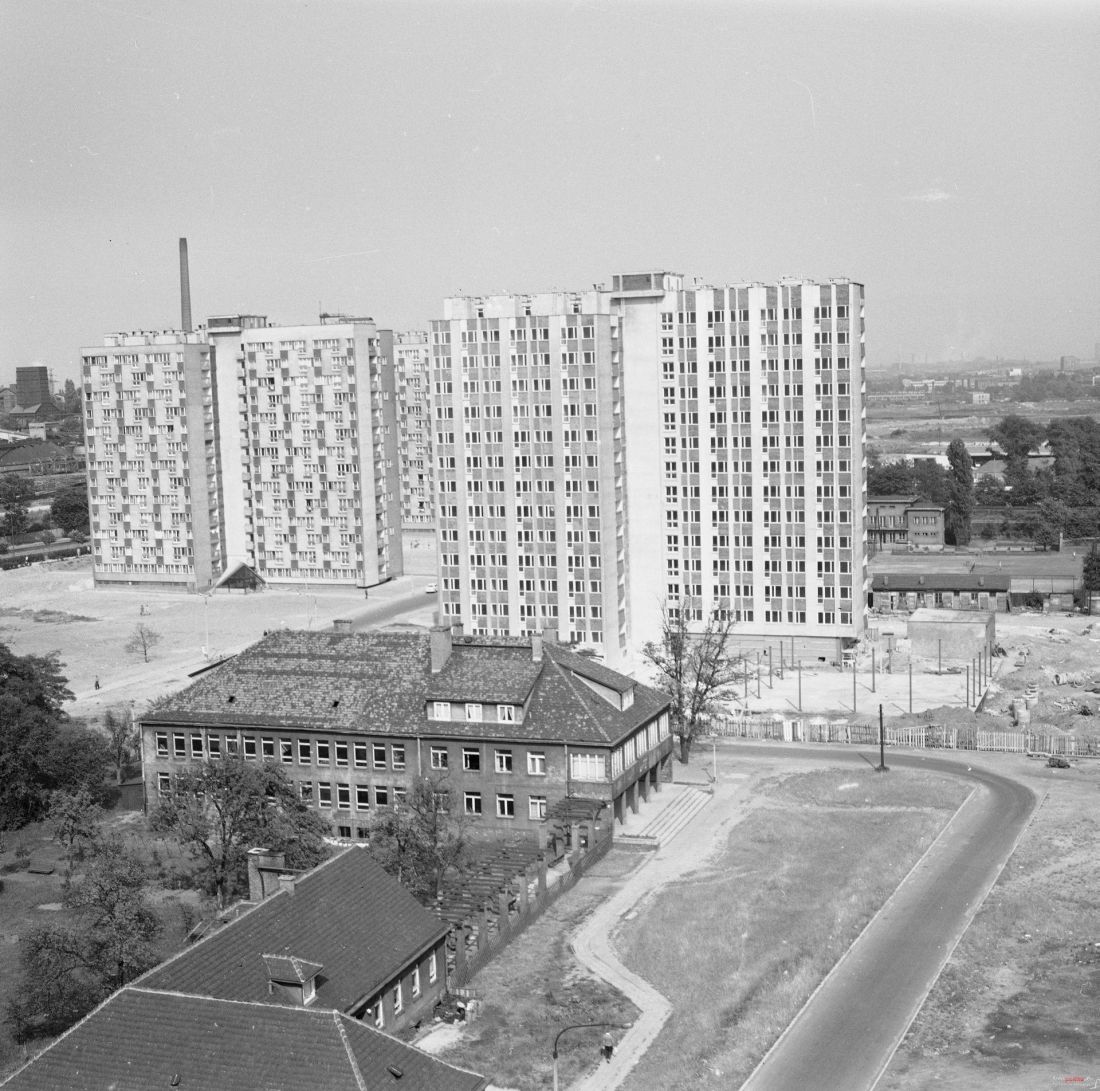
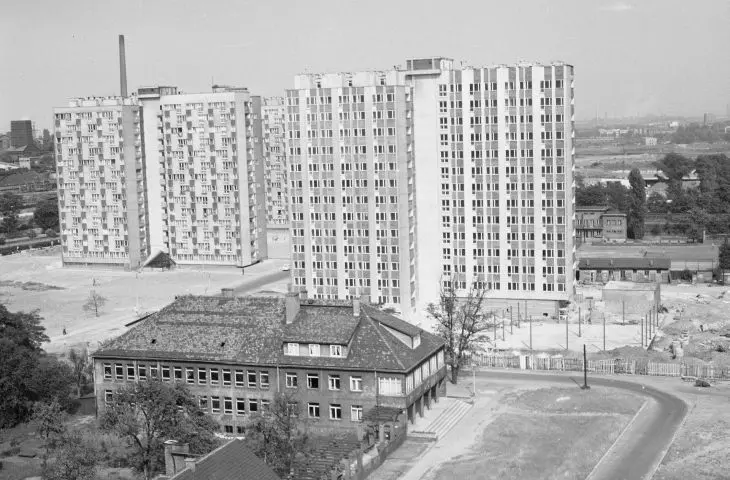
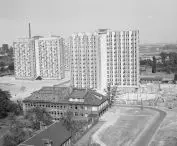
View of the Kopalniana housing estate, on the right the square where the PeKaO pavilion is under construction - design: Stanislaw Kwasniewicz
photo: Grażyna Rutowska, © NAC
Pewex among Dolarowcy
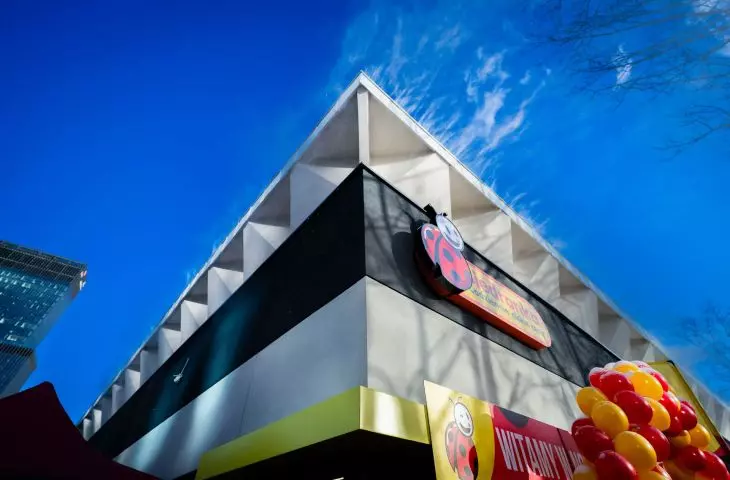
The building at 12 Uniwersytecka Street was designed as a two-story pavilion with a truncated, slightly sloping roof and a heavily glazed front elevation. Its most characteristic element was the crowning cornice, which took the form of geometric concrete "teeth", framing the building on all sides. As we learn from drawings made available by the Institute of Architecture Documentation of the Silesian Library, the felted plaster on the individual planes of the detail was painted in three tones - white, gray and black, which was probably intended to enhance the chiaroscuro effect.
The two-story pavilion, located at 12 University St., at the foot of one of the "Dollar Shops," was built in 1964. Initially it served as a PeKaO foreign exchange pavilion, later - until the 1990s - it housed Pewex. The building was transformed many times, and eventually housed the "Biedronka" market, owned by the Jeronimo Martins chain.
in defense of the toothy pavilion
Biedronka is systematically modernizing its retail facilities, so there was no surprise when it became known that the store on Uniwersytecka Street in Katowice would also be renovated. Jeronimo Martins received a positive decision to the application for permission to expand and modernize the Stanislaw Kwasniewicz pavilion as early as April of this year. When work began in early autumn, distinctive concrete "teeth" emerged from under the panels previously obscuring the upper part of the building. Local media quickly picked up the story, and the issue was also publicized by the Institute for Architecture Documentation of the Silesian Library. Eventually Boleslaw Błachuta, the Municipal Conservator of Monuments in Katowice, intervened and sent a letter to the Jeronimo Martins board of directors:
As a result of the current work, the original finial of the building's body, designed by the prominent Silesian architect Stanislaw Kwasniewicz, has been exposed. I request that the original crowning form of the building be permanently exposed and exposed. Such a change to the facade - not requiring a change to the building permit - would certainly be beneficial to the aesthetics of the building
- proclaims the content of the letter quoted by Wyborcza.
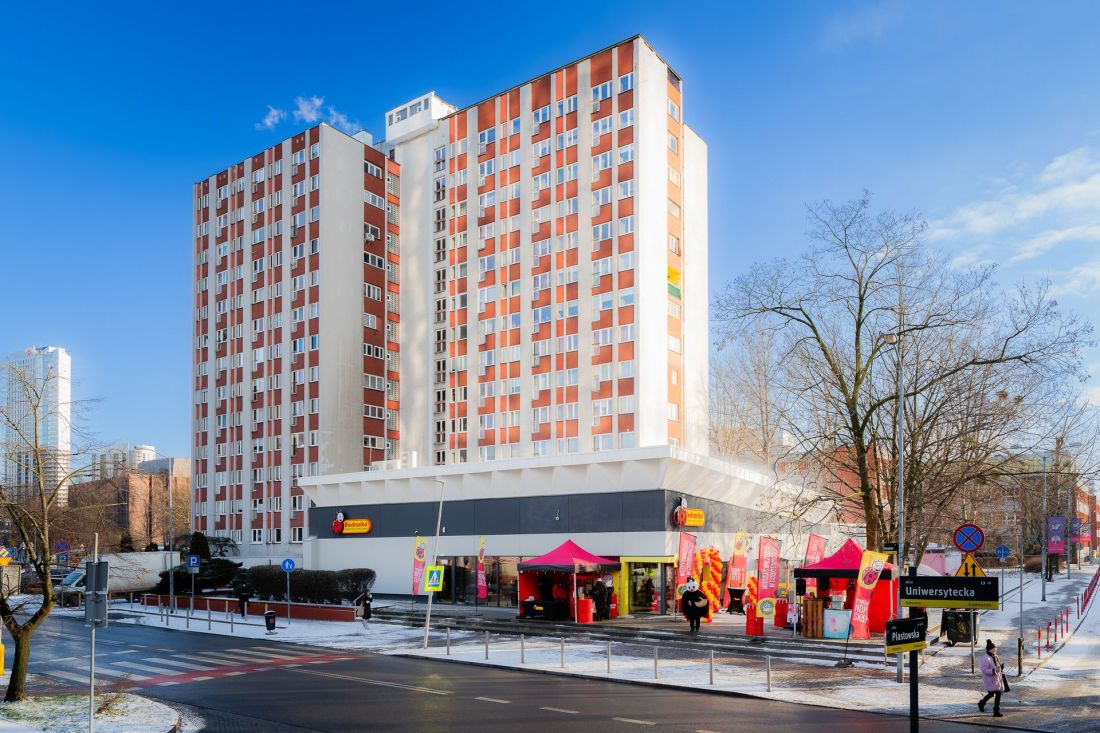
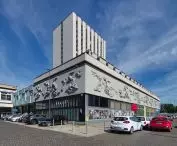
Biedronka market in the pavilion at 12 Uniwersytecka Street in Katowice - designed by Stanislaw Kwasniewicz.
© press mat. / Biedronka
cooperation pays off
The response to the call of residents, institutions and conservation services turned out to be positive, and the original project was modified.
As the Biedronka chain for 30 years, we do everything to be a good neighbor and a responsible participant in the life of local communities. We listen to their needs and to the voice of the local government. Therefore, during the renovation of the building, we decided to restore the original architectural details that had remained hidden for decades. Thanks to them, our store regained its unique character, which was positively received by the residents and residents of Katowice. Due to the historical aspect of the modernization of this building, we conducted the renovation work in dialogue with the Katowice City Hall and with the participation of the city's preservation services.
- says Grzegorz Kozub, Operations Director at the Biedronka chain
As a result, the distinctive detail crowning the Kwasniewicz pavilion was restored to its glory days, and the store was ceremonially opened on December 30, 2025. In a press communiqué, the chain stresses the importance of the benefits that can be derived from cooperation between entrepreneurs and local government. Knowing the stories of many other demolished or significantly modified post-war buildings of significant architectural value, it is hard to disagree with this statement. Unfortunately, however, in the case of the pavilion on the Kopalniana estate, it was not without some compromises.
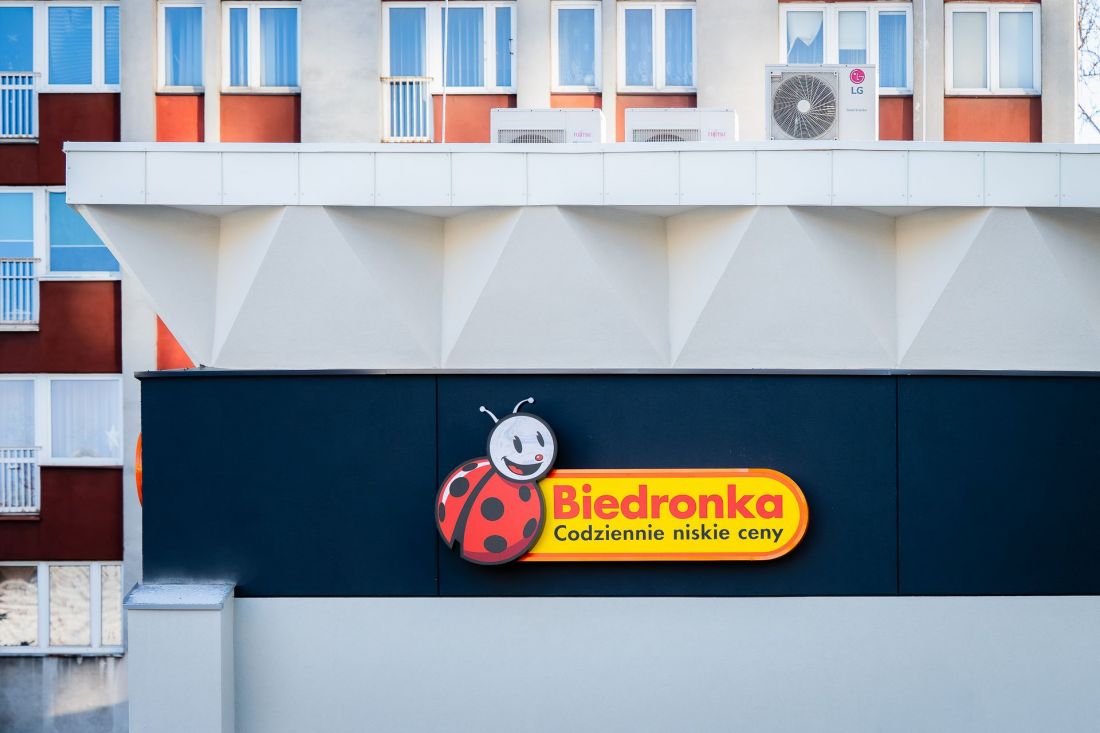
Biedronka market in the pavilion at 12 Uniwersytecka Street in Katowice - designed by Stanislaw Kwasniewicz.
© press mat. / Biedronka
red-yellow compromise
The management of the chain of stores with the friendly insect in the logo successfully (and to the benefit of the architectural heritage) took advantage of the media hype that arose around the Kwaśniewicz pavilion at the moment when modernist "teeth" emerged from under the dismantled shutters. Although the building's most important feature has been properly restored and highlighted, and its continued existence guaranteed by the economic viability of doing business, one would like more from this modernization.
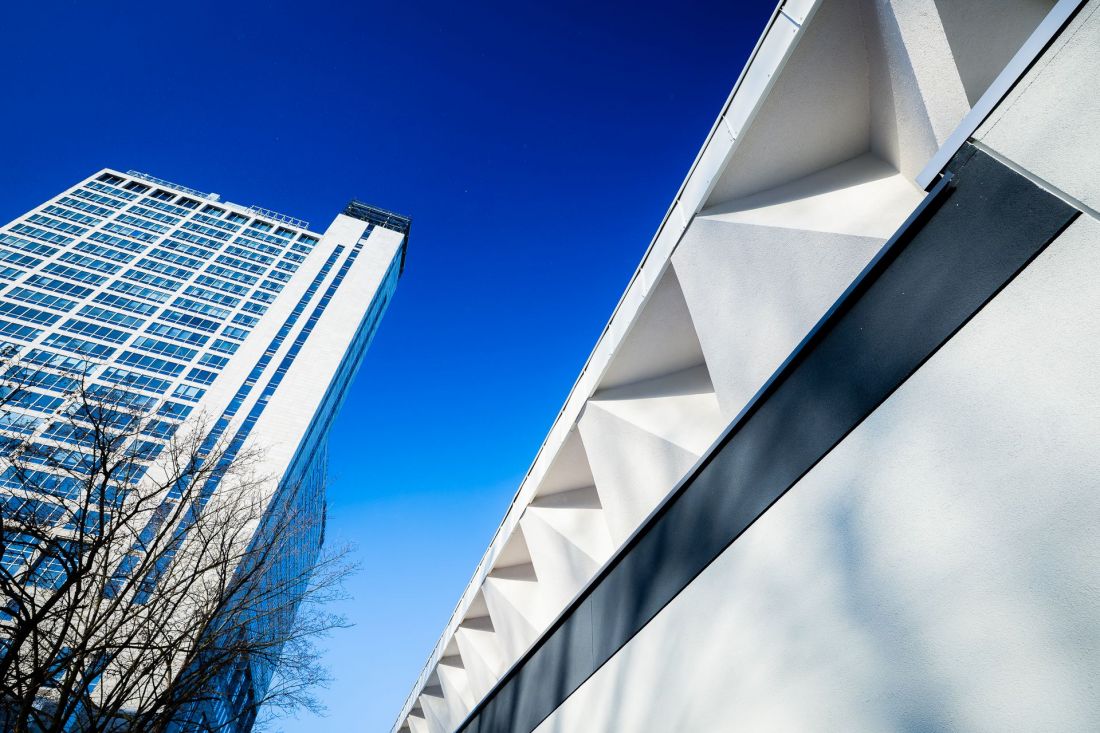
Biedronka market in the pavilion at 12 Uniwersytecka Street in Katowice - designed by Stanislaw Kwasniewicz.
© press mat. / Biedronka
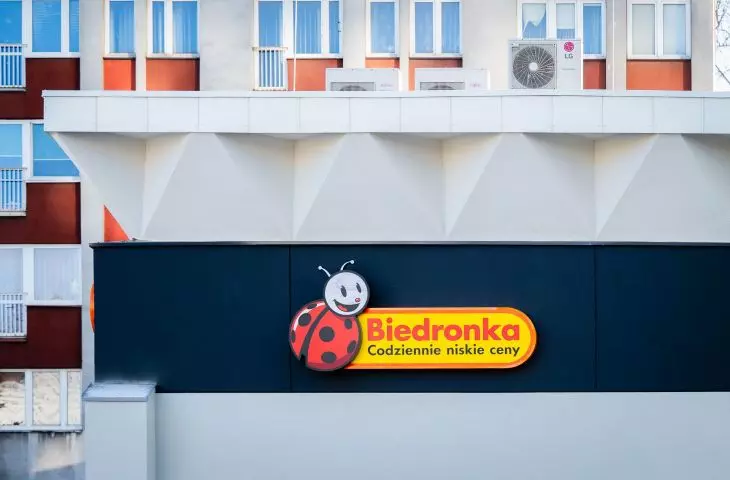
Apart from the finial , little remains of the pavilion's original, once almost fully glazed facade. Today the facade, like the rest of the facade, is largely blind. Reminders of the facade's original composition are the dark panels on the side walls, whose lower edges coincide with the outlines of the upper story's glazing before the alterations.
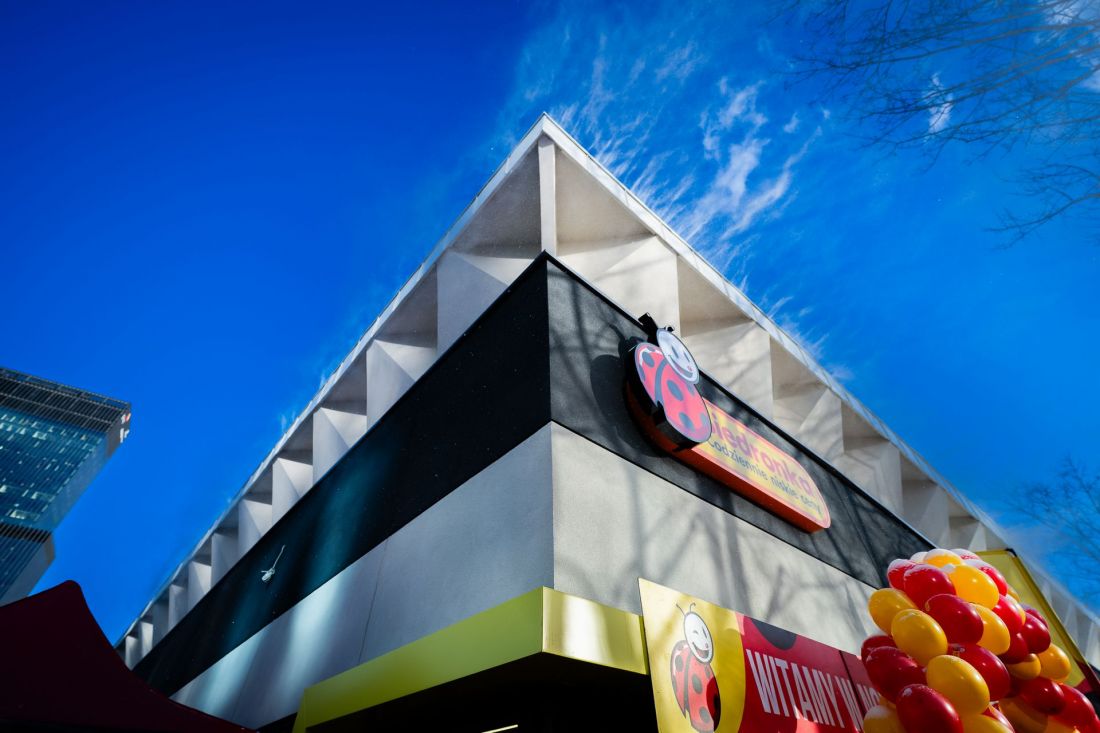
Biedronka market in the pavilion at 12 Uniwersytecka Street in Katowice - designed by Stanislaw Kwasniewicz.
© press mat. / Biedronka
What stings the eyes, however, is the yellow-and-red "Biedronka" signboard, which is a clear interference in the architectural expression of the building. Its presence is not surprising, of course - after all, as in hundreds of other stores of the chain, the bright logo is the basic element of visual identification, informing about the location of the store. However, there are places where the chain has done without the yellow-red message.
An example from Krakow
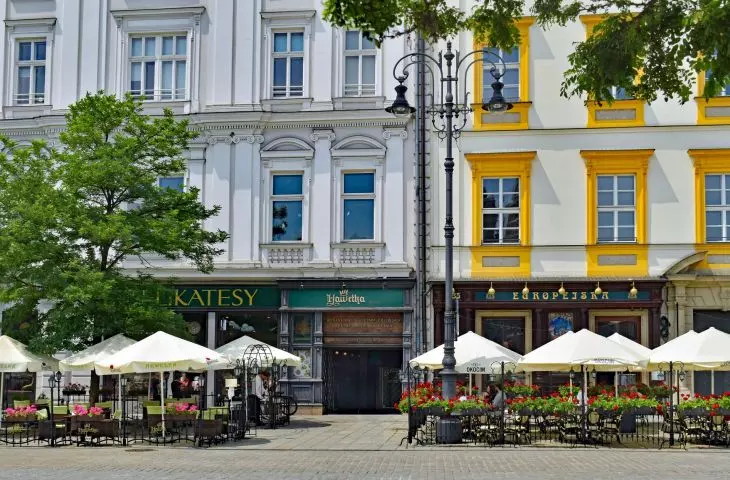
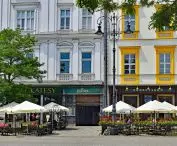
Biedronka on the Main Square in Krakow can serve as an example. When it opened in October 2017, occupying the premises in the Spiski Palace after the Hawełka Delicatessen, there were both voices of approval and outrage in the media and among commentators. The new Biedronka on the market was even considered in terms of a symbol of "Krakow's decline." Today the store no longer arouses such extreme opinions, it has "melted" with its surroundings and serves both visitors and residents of the Old Town.
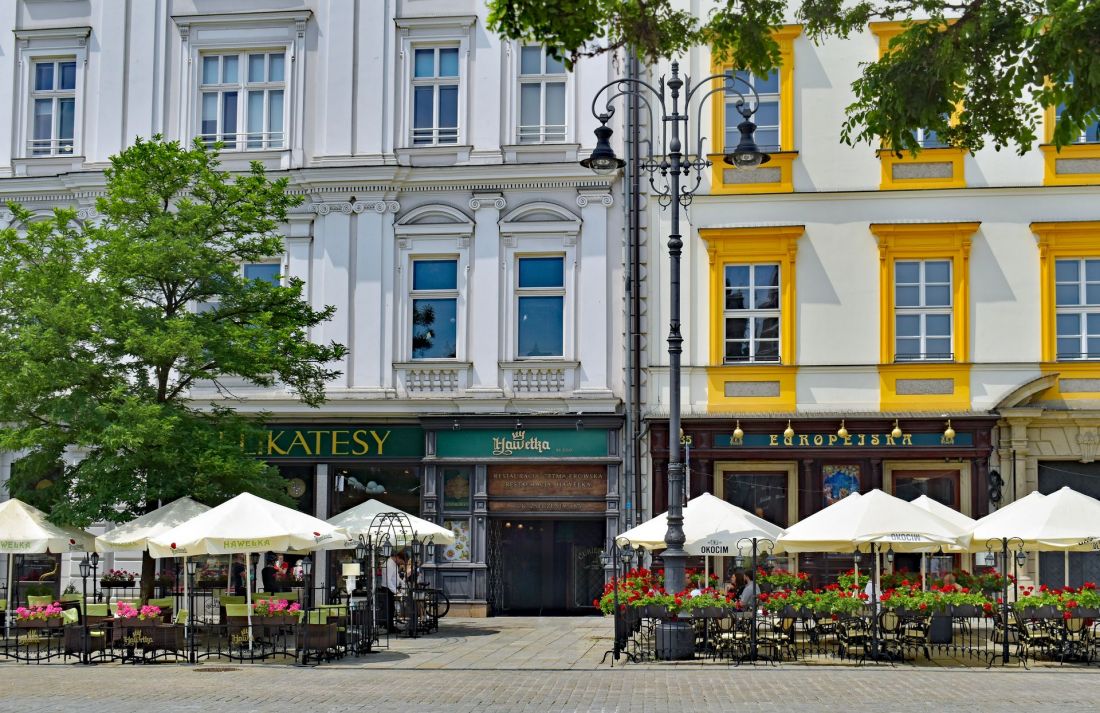
Spiski Palace in Krakow
Photo: Zygmunt Put © CC BY-SA 4.0 | Wikimedia Commons
Undoubtedly, the way the store's standard visual identity was modified is largely responsible for the effect. The chain's signboard was placed behind the glass, and in line with the conservationist-approved design, the likeness of the titular insect was dropped in favor of a monochromatic, elegant logotype. Similarly "gentrified" are Biedronki in other cities - for example, in the Old Market in Bydgoszcz or on Jainty Street in Bytom. In all of these places there were conservation restrictions, which were missing in the case of the Katowice market. It's a pity that at Uniwersytecka Street the chain didn't decide to give a nod to the perhaps less effective, but neutral identification of the store in the renovated Stanislaw Kwasniewicz pavilion. Or perhaps all advertising in public spaces should appear in more subdued colors?