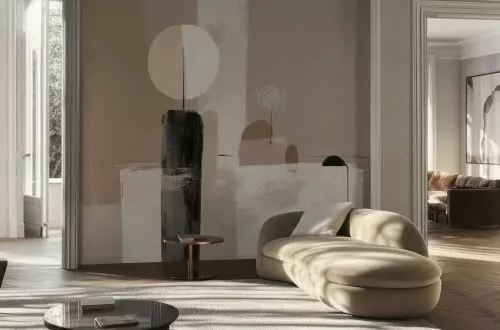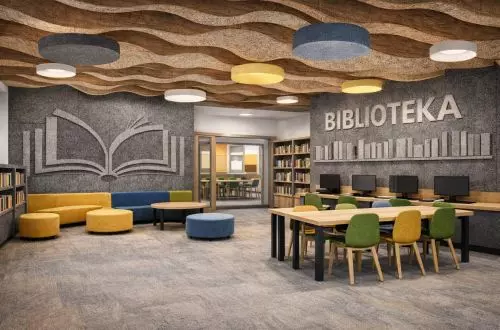








Can architecture affect concentration, emotions and feelings of safety? The "NeuroFriendly Space" project from Gdansk University of Technology and SWPS University proves that yes - and that in the case of children with ADHD, this is of fundamental importance. The initiative developed by an interdisciplinary team of female architecture and psychology students tackles a topic that is still marginalized: the impact of the spatial environment on the daily functioning of neurodiverse users and users.
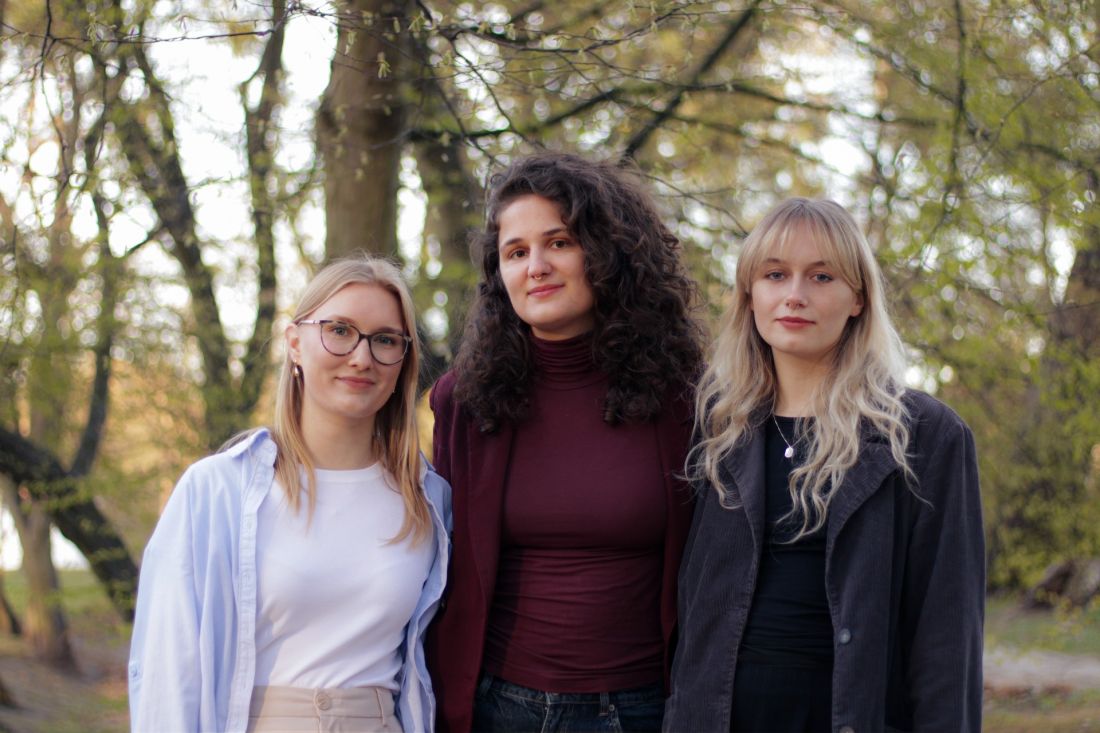
Neurodiva team
© Marcelina Rudzińska, Weronika Przychodzeń, Jagoda Gawryś
interdisciplinarity as a foundation
The starting point was not theory, but practice. The creators of the project noticed that even in facilities with high-quality specialized care, space often works against children - generating excess stimuli, noise and chaos. It was this gap that spurred the creation of a tool that would realistically help design better.
The NeuroDiva team is behind the project:
Marcelina Rudzinska (leader), Weronika Przychodzeń and Jagoda Gawryś, working under the supervision of Dr. Dominika Wroblewska. Combining architecture, mathematics and psychology, they created an approach based on data, research and real user experience.
It is the interdisciplinarity that becomes crucial here - space is not analyzed solely formally, but as an environment that affects human functioning.
space as a tool for support
The aim of the project is to create a freely available design guide in the form of an e-book with specific guidelines for architects, teachers and parents. The study will cover, among other things:
-
acoustics and noise reduction,
-
lighting and its effect on concentration,
-
color schemes to reduce overexposure,
-
ergonomics and space organization,
-
sensory zones to support emotion regulation.
The most important thing, however, is that the solutions are practical and implementable, not just theoretical.
The project is developed based on the Design Thinking methodology. This means one thing: the user co-creates the solutions. Parents, teachers and children are involved in the process, whose experiences become the basis for formulating guidelines.
This approach avoids designing "from above" and creates spaces that respond to real needs.
ADHD as a "space quality sensor"
One of the most interesting findings of the project is to look at people with ADHD as natural indicators of environmental quality. Their greater sensitivity to stimuli makes them quicker to reveal design flaws - excess noise, bad light or lack of places of tranquility. What is a problem for them affects everyone - only often less noticeably.
inclusive architecture of the future
The project is in line with the idea of inclusive design, in which architecture ceases to be a background and becomes an active tool of support. Neuro-friendly spaces are not a niche solution - they improve the comfort of all users, regardless of diagnosis.
At this stage, the team is conducting research and inviting both users and institutions. The result will be a free guide that has the potential to become a real tool for change in the design of educational and domestic spaces. It's a project that shows that good architecture starts with attention to people.
Aleksandra Skorupa
Are you a parent of a child with ADHD?
We invite you to take part in a survey to better understand how conditions at home affect the functioning of a child with ADHD and what solutions help or pose barriers.
The survey is anonymous and takes about 10-15 minutes.
Link to the survey: https://forms.gle/GunZoU3fakawsC218