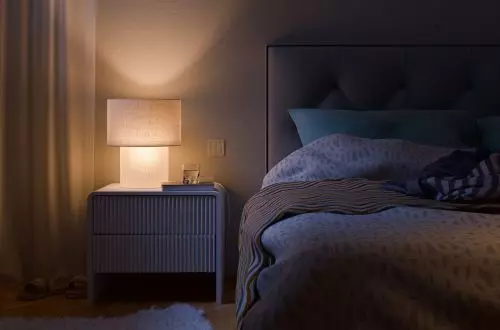











Mass short-term rentals are increasingly no longer seen as an add-on to the local economy. In many European cities, it is becoming a factor in the availability of housing, the structure of neighborhoods and the daily lives of residents.
When people talk about the fight against tourism, it's probably easiest to fall back on mentions of Barcelona, which has been trying to combat the mass influx of tourists for years. Meanwhile, it is another city in the country that can be considered the most progressive on this issue.
a new benchmark in the fight against touristification
"Valencia intends to put an end to tourist apartments and implement the most restrictive regulations in all of Spain," said City Planning and Housing Councilor Juan Giner. In doing so, he added, "Valencia is not against tourism, as it is one of the engines of the economy and creates jobs, but this must be done without harming the residents of our city."
The whole policy of limiting tourism is about fulfilling 5 points that, on the one hand, will be a path to some sustainability in the city, and on the other hand, will avoid the tourist over-saturation that has occurred in some neighborhoods.
In doing so, the councilman stressed that the previous government did not introduce overall limits, which effectively resulted in the occupation of up to 50% of each district's resources, and that the 10% limit introduced in the only district (Cabanyal) was simply a failure, as the number of tourist sites there reached a rate of almost 35 per 100 residents. Giner also pointed out that the previous government's policies led to the creation of more than 10,000 illegally registered apartments on rental platforms.
New legislation passed earlier this year restricted rentals, allowing only 2% of the farms in each district to be made available for tourism purposes. Up to five mechanisms have also been introduced to further limit the growth of tourist accommodations in the city. This will ensure that 98% of properties in each district will be for residential or commercial and recreational purposes.
New limits on short-term rentals
The first two restrictions state that the city imposes the same accommodation saturation threshold - 8% in relation to the number of registered residents - but applies it at two different territorial levels. On the one hand, it applies to entire districts, where once it is exceeded, no new tourist sites will be allowed to be created at all, and on the other hand to individual districts, where the ban will apply even if the entire district formally remains below the limit. Such a solution is intended to prevent both the overburdening of large areas of the city and the spot concentration of tourist apartments in specific districts, which would be easily overlooked in aggregate statistics.
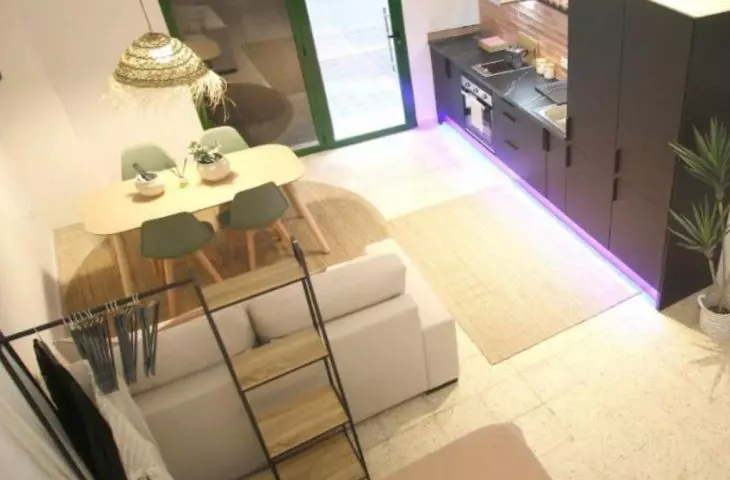
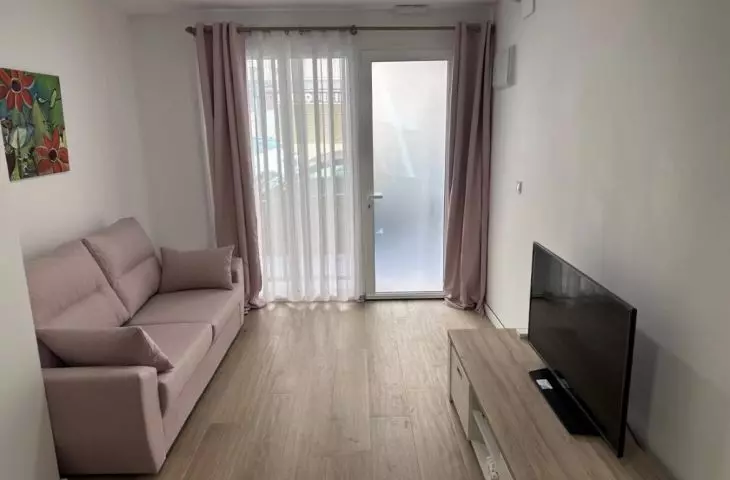
Photo of an example of a tourist apartment in Valencia. - Photo taken from one of the apps offering accommodation reservations. 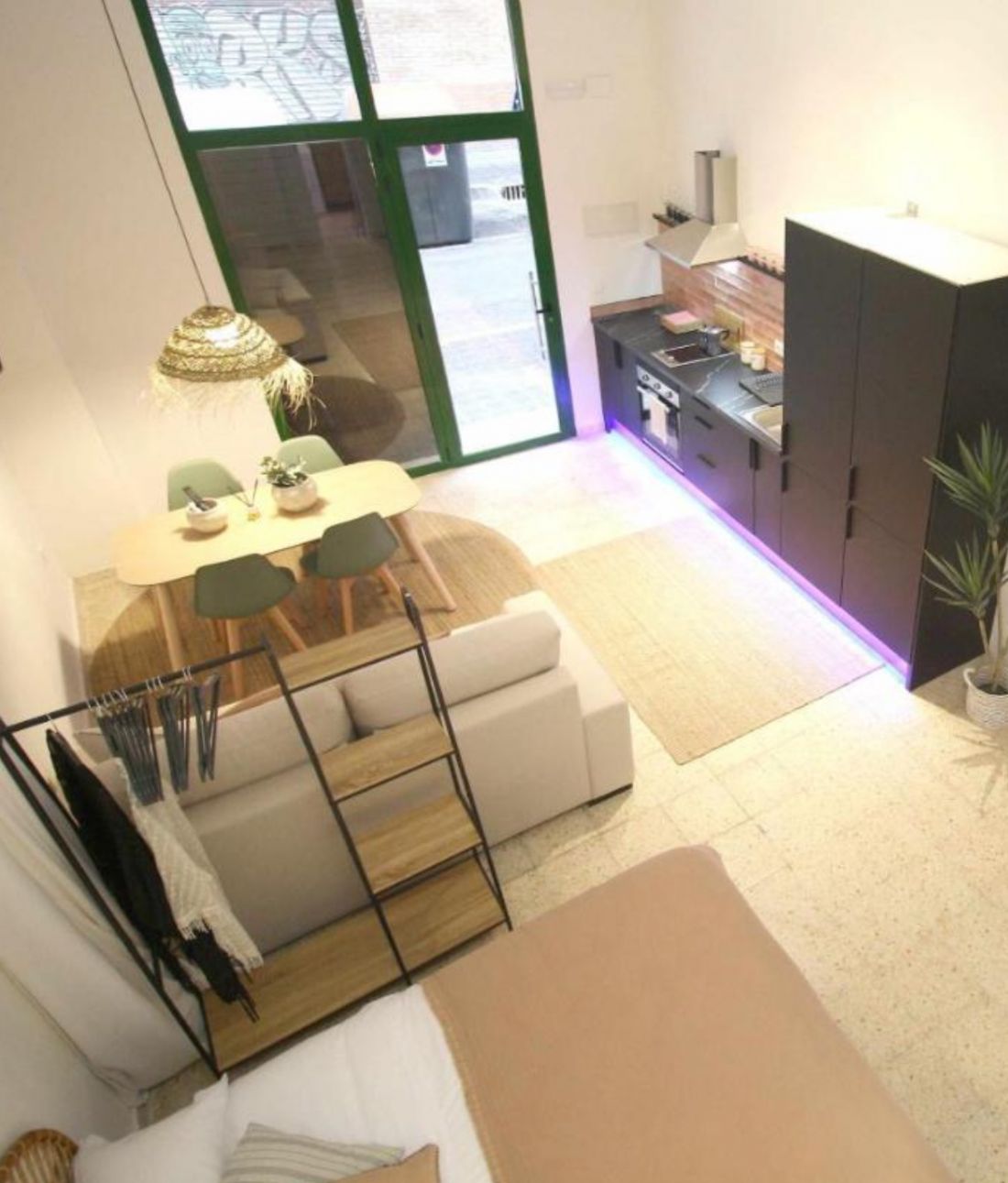
In addition, in order to prevent the loss of the residential function in the city and its widespread replacement by the tourist function, a third protection measure has been introduced, according to which the number of tourist dwellings and apartments may not exceed 2% of the number of dwellings in each district. The exception is Ciutat Vella, where separate regulations approved by the current administration apply.
The fourth pillar of safeguards applies to individual quarters of development: tourist apartments cannot exceed 5% of all apartments in a single manzana.
The fifth element, meanwhile, limits to 15% the number of units in each quarter that can contain tourist housing. 85% of the units are to be used for other services, such as offices, restaurants, bars, hair salons, optical salons, pharmacies or clinics.
In addition, a ban on the use of apartments in multi-family buildings was also pursued. The new regulations require that units for tourists have independent entrances and do not connect with corridors for residents in the building. At the same time, the premises for short-term rentals must always be "under the residential units" or "under the entire building." Simplifying - we can say that the apartment for tourists must be on the first floor, optionally on the second floor. However, bold plans for its creation may not come to fruition anyway, if the housing community rejects the application for its creation (with the fact that this must be noted in the statutes of the community).
If we are going to look for a vacation apartment here, let us not be frightened only by offers of ground-floor units. After all, most of the proposed "apartments" resemble ground-floor stores equipped not with bookcases, but a kitchenette and a bed. You'll have to scramble to find a place that guarantees daylight - a significant number of premises have only one entrance, directly onto the sidewalk and street.
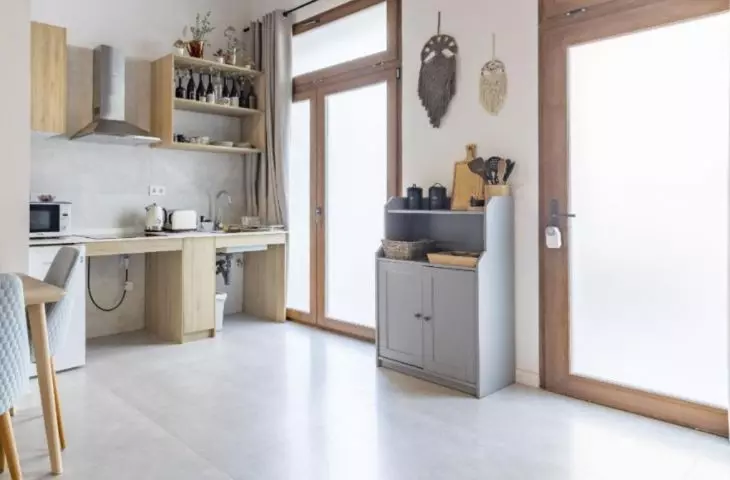
Photo of an example of a tourist accommodation in Valencia. - Photo taken from one of the apps offering accommodation reservations. 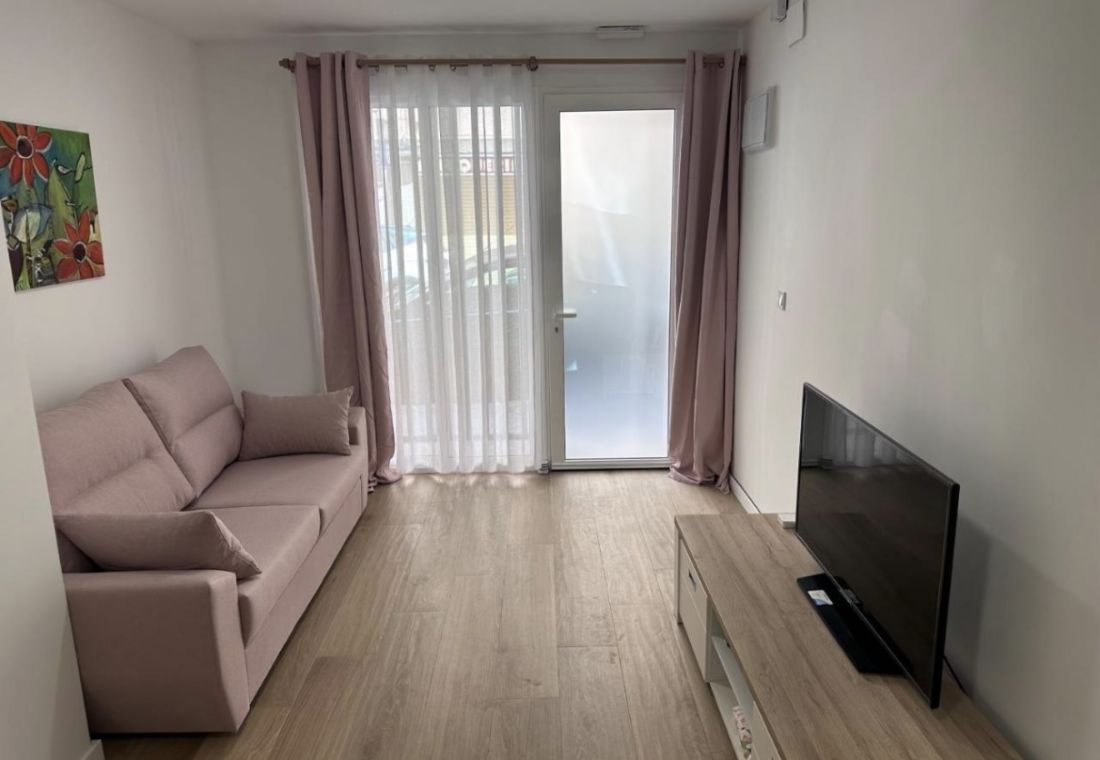
It's a good idea to spend a little more time and look for a "wagon" type of apartment, which, while long and moderately lit, allows for a more peaceful sleep, thanks to a bed deep inside, away from the street bustle. Maybe we'll even get lucky and find a place with a window on the side of the courtyard?There are far fewer such solutions, and they're selling like fresh buns. With all this, the thought may cross our minds that this is a traveling nightmare, the real end of comfortable rental housing. However, nothing is created in a vacuum, and we must remember that this is a firm response to the conditions that tourists have put up in previous years.
window on data
Valencia, like other tourist cities, has so far faced a discrepancy between declarations and the actual number of tourists and permanent residents. The situation called for decisive government action. In response, the Single Digital Window for Rental in Spain was introduced and went into effect on July 1. According to the Ministry, this is a system that allows for the collection and exchange of data on short-term rental services in order to improve transparency, support regulatory actions and increase the availability of housing.
Thus, it is fair to say that the Spanish government is consistently moving forward in regulating the tourist rental market. This is served by the implementation of Regulation (EU) 2024/1028 of the European Parliament and the Council of April 11, 2024 and Royal Decree 1312/2024 of December 23, which organizes the procedure for the uniform registration of rental contracts and establishes the aforementioned Digital Rental Window. The new system is expected to enable the effective collection and exchange of short-term rental data, increasing market transparency, supporting more responsible tourism management and improving housing availability.
One of the most important changes is the mandatory registration of all tourist and seasonal rental units in the Unified Rental Register. This will provide each property with unique identification, and give local and national administrations a tool to facilitate inspection and enforcement. The Digital Rental Window, meanwhile, simplifies paperwork by concentrating the registration process and access to data in one place, which is expected to make things easier for both owners and authorities.
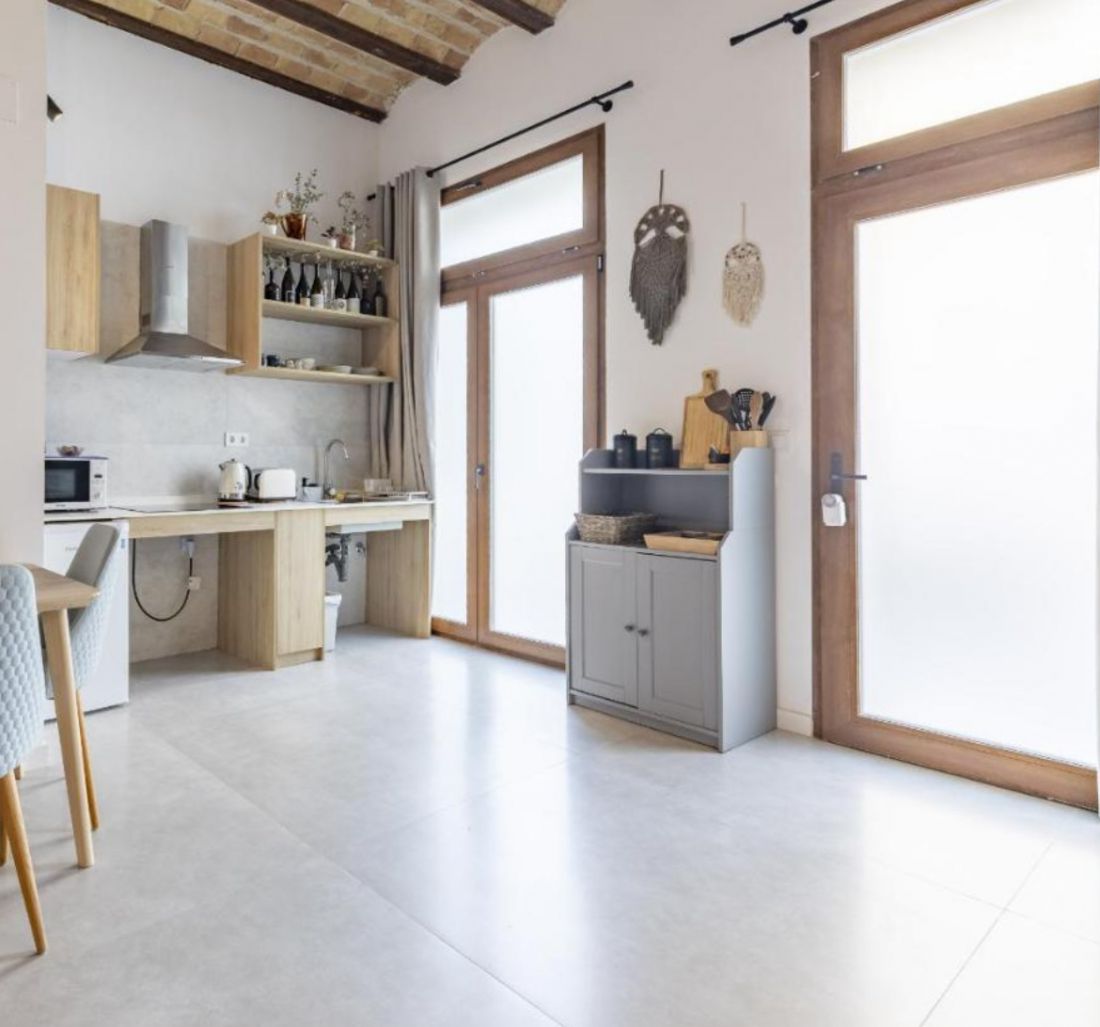
Photo of an example of a tourist property in Valencia. - Photo taken from one of the apps offering accommodation reservations.
The new obligations will also extend to digital platforms, which will be required to regularly report data on the accommodations offered to the system. This is expected to reduce illegal rentals and increase the market's compliance with existing regulations, without shifting all responsibility to local governments.
The aim of the solutions being introduced is to strike a balance between tourism development and the protection of the constitutional right to housing. Better access to data will allow administrations to plan spatial policy more effectively, control the scale of tourist rentals and tighten the tax system, while reducing the shadow economy.
Spain is among the countries with the fastest and most comprehensive implementation of new European and national regulations in this area. These measures are expected to improve the housing situation, increase security for both landlords and tenants, and organize the rental market in a fairer and more predictable manner.